

 Michael Satterfield
Route 66 has always been about more than reaching a destination. It is about what happens between the starting point and the state line: the roadside diners, neon signs, motor courts, service stations, souvenir stands, and mechanical contraptions built to attract motorists traveling at 45 miles per hour.
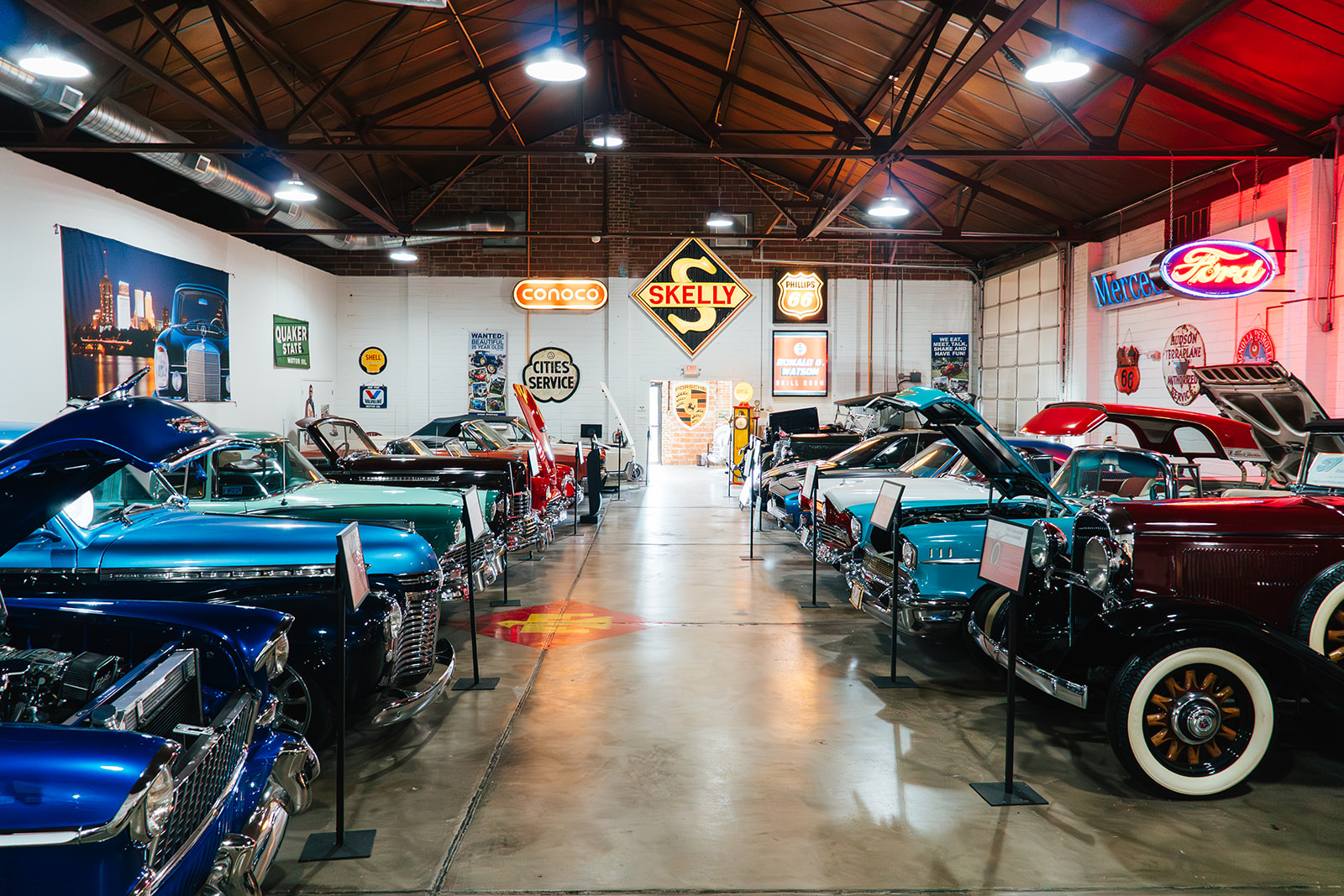
At the Heart of Route 66 Auto Museum in Sapulpa, Oklahoma, that history is told through the automobile.
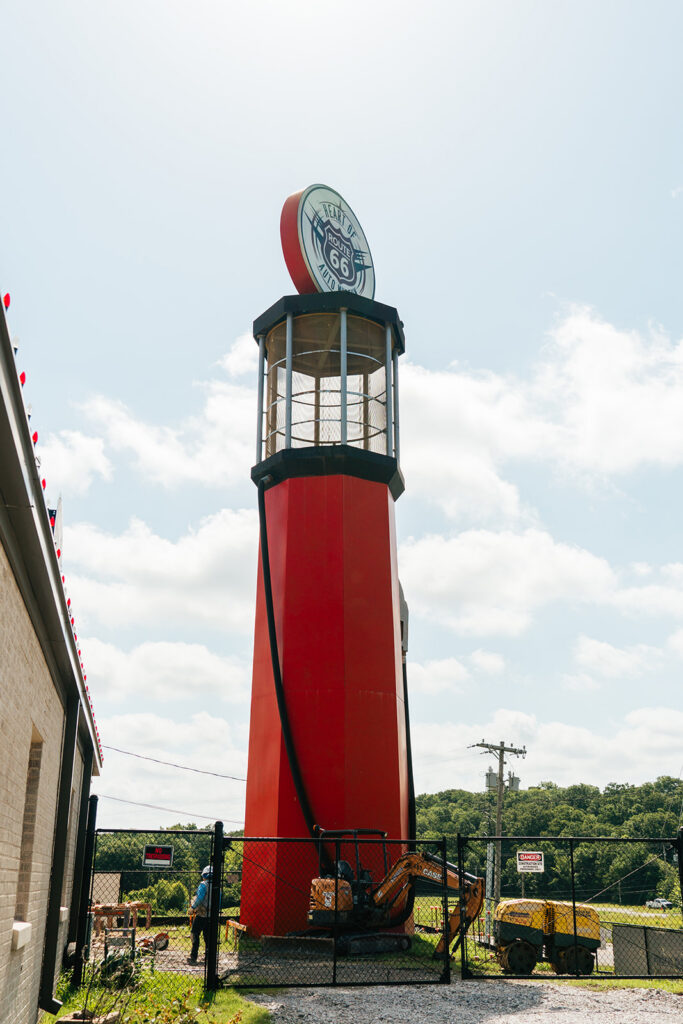
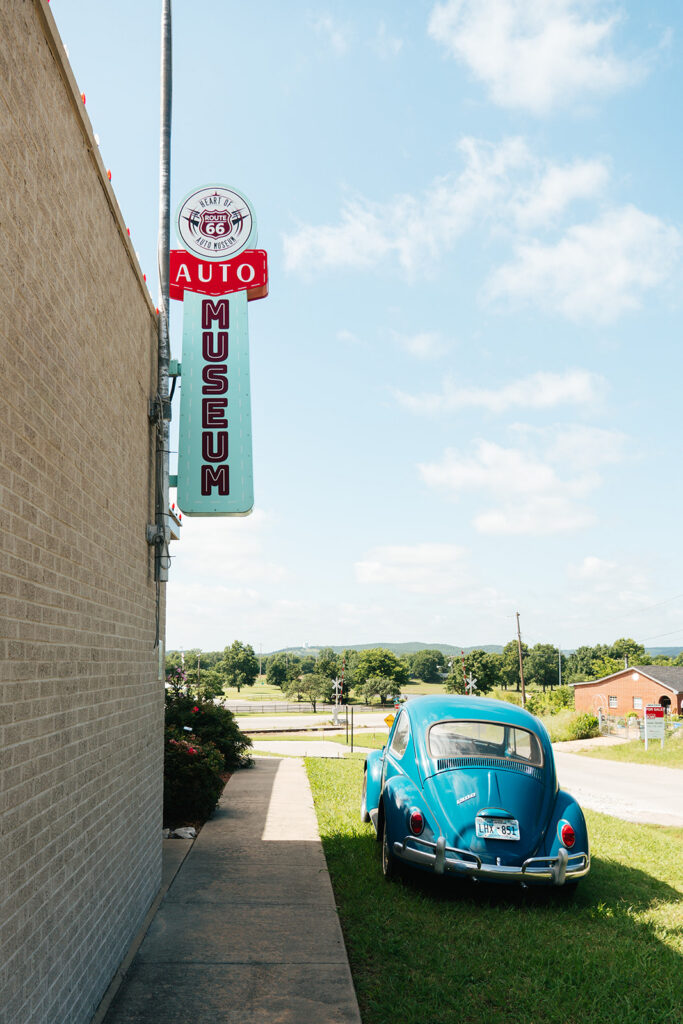
Located just west of downtown Sapulpa, the museum occupies a former military armory near the intersection of Sahoma Lake Road and historic Route 66. Outside, a 66-foot-tall replica gas pump rises above the property, serving as both a roadside beacon and an appropriately oversized tribute to the old highway. It is billed as the world’s tallest gas pump, although, disappointingly for anyone arriving on fumes, it does not actually dispense fuel.
The museum has become one of northeastern Oklahoma’s most engaging automotive attractions, combining restored cars, unusual machines, vintage signs, gas station memorabilia, and stories from the long age of American motoring.
In 2026, that mission carries added significance. Route 66 is celebrating its 100th anniversary, placing new attention on the communities and attractions that continue to preserve the road’s history.
Celebrating 100 Years of Route 66
U.S. Route 66 was officially designated in November 1926 as part of the original numbered federal highway system. Running roughly 2,400 miles from Chicago to Southern California, the highway connected the industrial Midwest with the Great Plains, Southwest, and Pacific Coast.
Oklahoma businessman Cyrus Avery, often called the Father of Route 66, helped champion the route and understood that a memorable number could become a powerful marketing tool. He was right. Over the next century, the black-and-white Route 66 shield became one of the most recognizable symbols in American travel.
The highway played several roles during its working life. During the Dust Bowl and Great Depression, it carried families west in search of jobs and stability. During World War II, it helped move military personnel and equipment. In the postwar years, it became a vacation highway, feeding a growing network of restaurants, motels, service stations, tourist courts, and roadside attractions.
Route 66 was removed from the federal highway system in 1985 after the interstate system had largely replaced it. Yet the road refused to disappear. Communities began restoring signs, buildings, bridges, and surviving sections of pavement. Travelers returned, increasingly drawn by the slower pace and personality that modern interstates had engineered out of the journey.
Oklahoma has an especially important claim to the story. The state contains the longest drivable stretch of historic Route 66 and was home to Avery, whose advocacy helped place the highway on the map. Throughout 2026, museums, communities, preservation groups, and tourism organizations are marking the centennial with road festivals, cruises, exhibitions, and special events.
The Heart of Route 66 Auto Museum is well placed for the celebration because its story mirrors that of the highway itself. It exists because a group of enthusiasts refused to let an important piece of American transportation history fade away.
From a Car Collector’s Dream to a Route 66 Landmark
The museum began with Tulsa attorney and automobile enthusiast Richard Holmes. In 2012, Holmes assembled an advisory board made up of collectors and fellow car enthusiasts who shared the goal of establishing an automobile museum in the Tulsa area.
Initially called the Tulsa Auto Museum, the organization spent approximately four years searching for a suitable home. Members toured multiple properties, but none proved practical. The project was nearly abandoned before an unexpected connection led the group to Sapulpa.
Tim Dye, curator of the Pontiac-Oakland Automobile Museum in Pontiac, Illinois, had previously been contacted by Sapulpa officials about using a decommissioned armory as a museum. Dye had already moved his collection to Illinois, but he passed the opportunity along to Holmes and the Tulsa group.
The old armory stood on Sahoma Lake Road, close to Route 66. The location offered room for cars, access for visitors, and a direct connection to the highway the museum hoped to celebrate. There was only one major condition: with the move to Sapulpa, the Tulsa Auto Museum needed a new name. It became the Heart of Route 66 Auto Museum.
Transforming the former armory required considerable work. Interior walls were removed, ceilings were raised, bathrooms and kitchen areas were rebuilt, and the electrical systems were modernized. The renovation preserved elements of the building’s military character while creating a practical space for displaying automobiles.
The finished museum opened softly in spring 2016 and began regular operations that August. Its roughly 10,000-square-foot interior included three large garage doors, allowing cars to rotate in and out of the collection. The former drill floor became the main exhibition area, while another portion of the building documented the armory’s use by the 45th Army Reserve and its connection to the surrounding region.
Inside the Heart of Route 66 Auto Museum
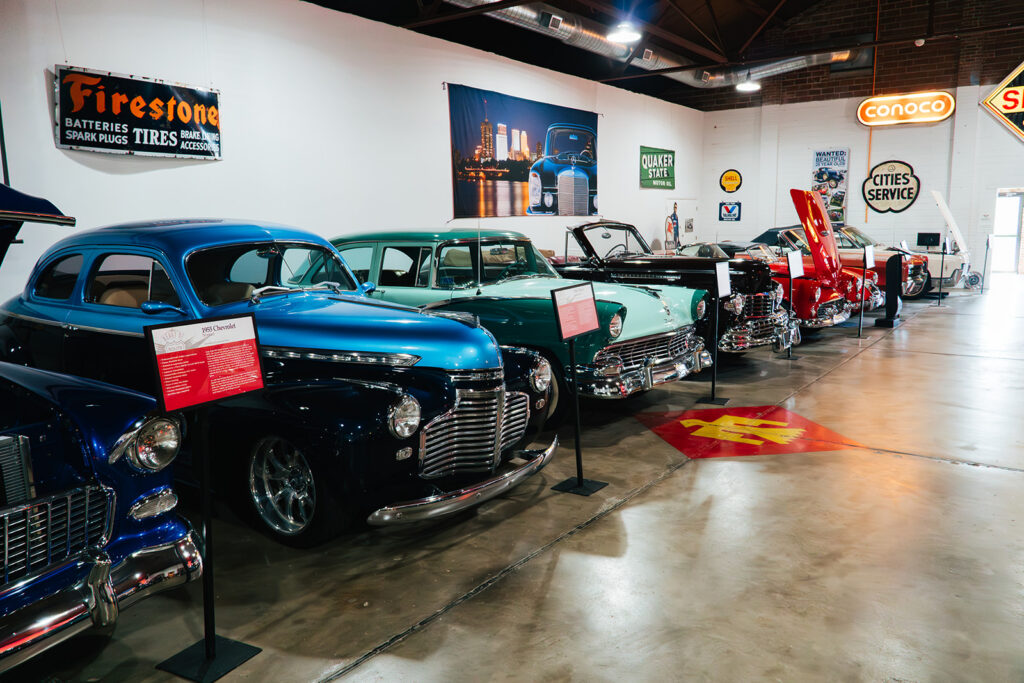
The collection is intentionally varied. Rather than concentrating on a single manufacturer or period, the museum explores the broad sweep of automobile history.
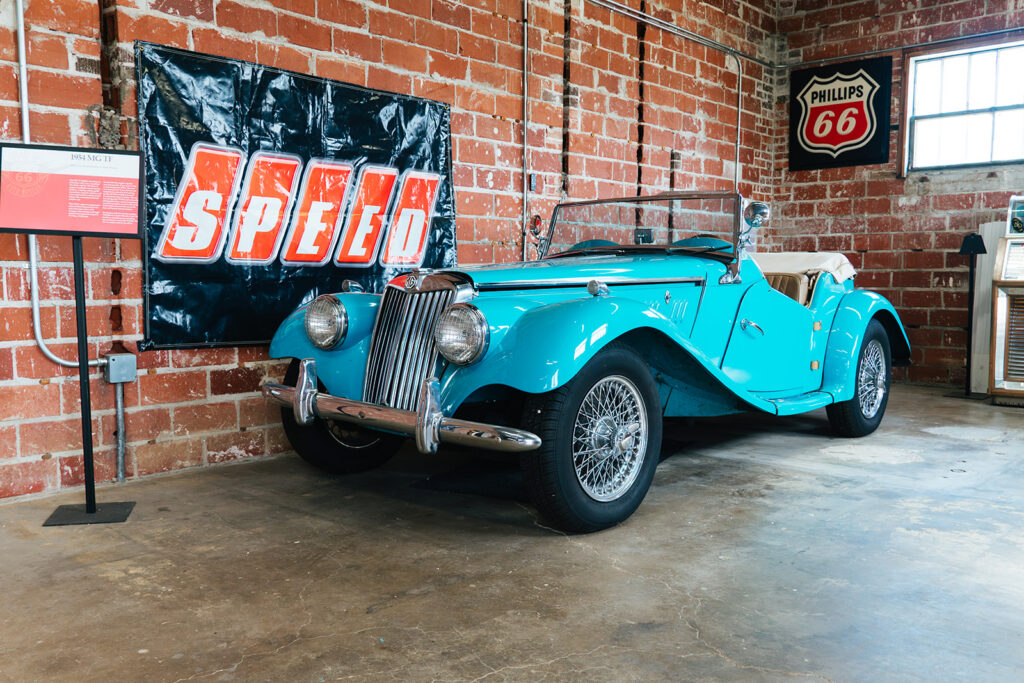
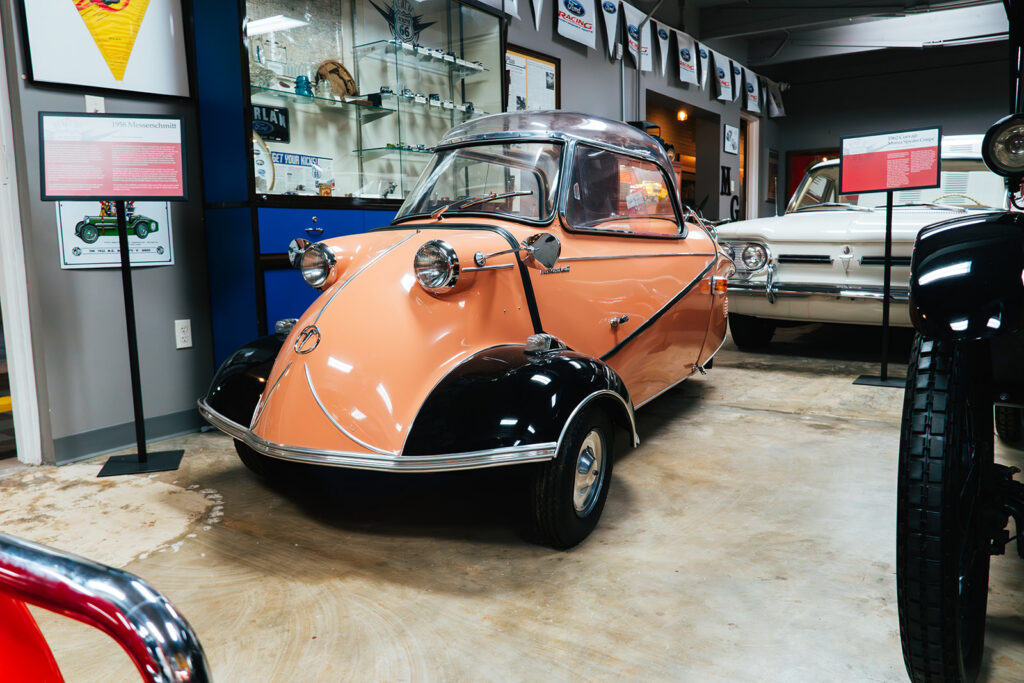
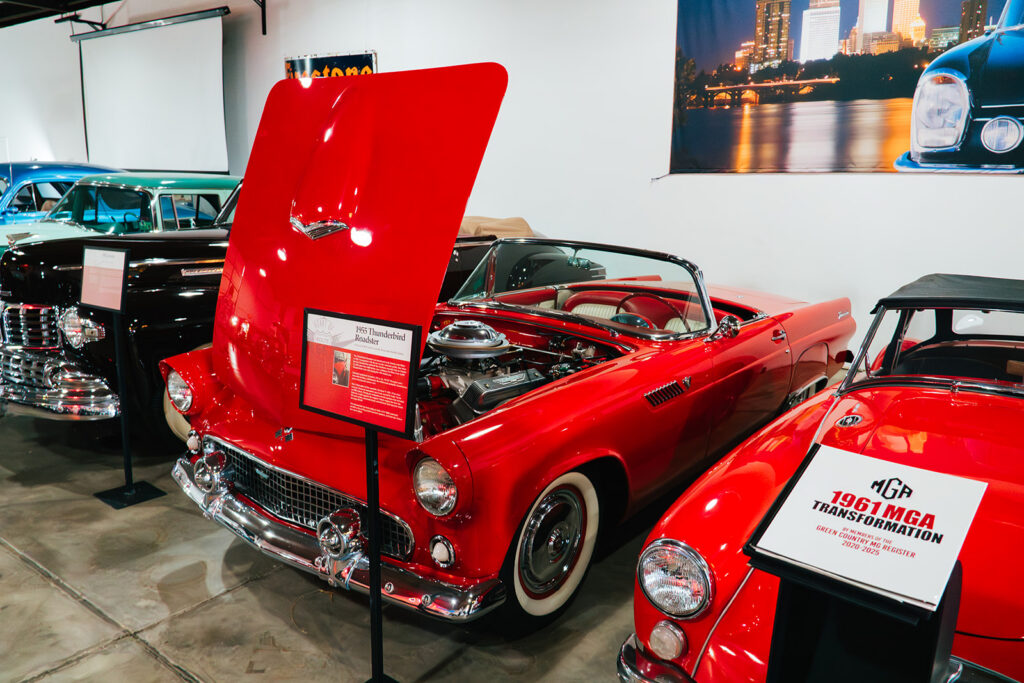
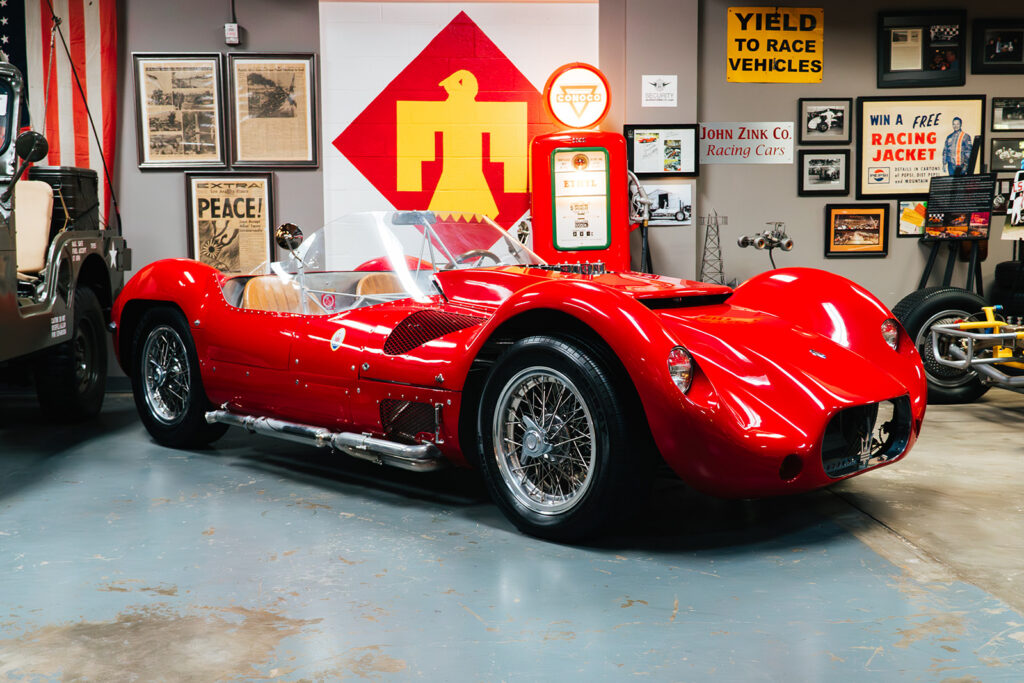
Depending on when you visit, the display may include early motorcars, postwar cruisers, sports cars, experimental vehicles, custom builds, and cars representing both the glamorous and ordinary sides of motoring.
Past and rotating exhibits have included vehicles as diverse as a 1905 Cadillac, a 1924 Austin, a 1967 Amphicar, and a rare GM EV1 electric car. The museum has also displayed the Chip Foose-designed “Imposter,” a radically reimagined 1965 Chevrolet Impala that reportedly cost more than $1 million to create.
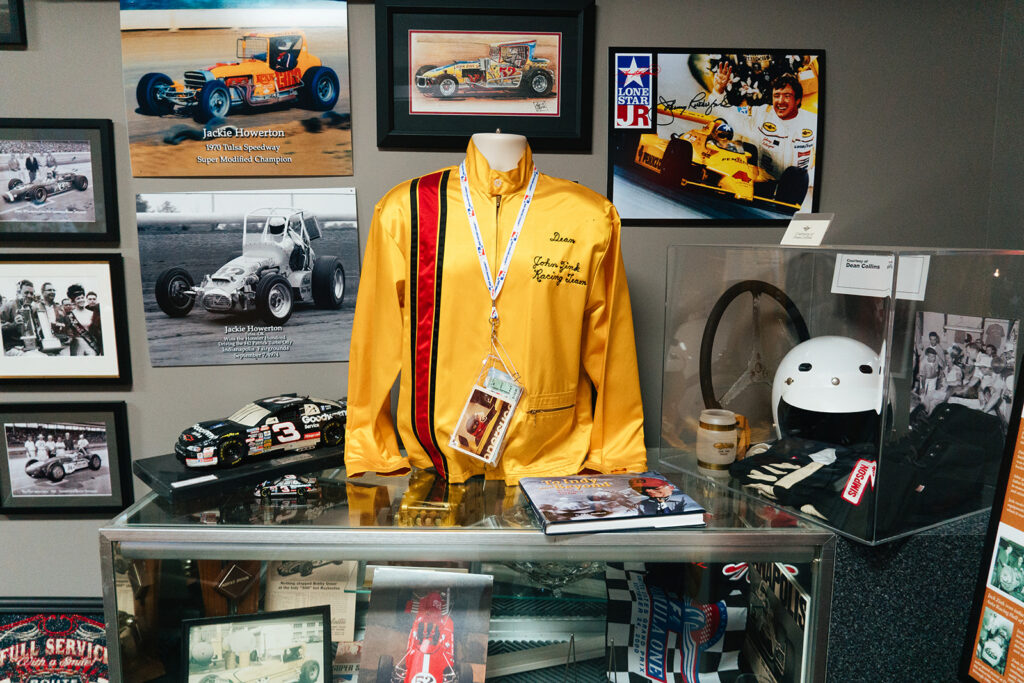
That variety is part of the museum’s appeal. A pristine show car can sit near a humble Volkswagen project, reminding visitors that automotive history is not limited to concours winners and championship race cars. It also belongs to family sedans, mechanical experiments, home-garage restorations, and the vehicles people remember from childhood.
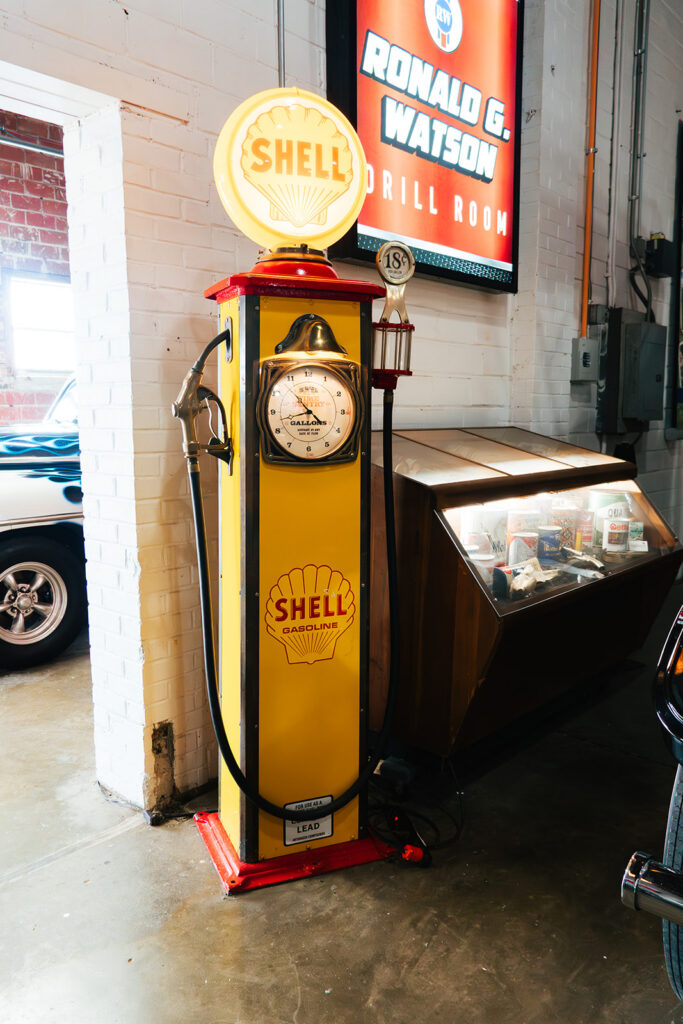
Vintage petroleum signs and automotive advertising cover the walls, including familiar names from the service-station era. The signs help place the cars in their original environment, when a road trip involved paper maps, regional oil companies, uniformed attendants, and a fair chance that the next gas station sold both fan belts and pecan logs.
The museum is operated as a nonprofit organization and relies heavily on volunteers, donors, collectors, and vehicle owners willing to loan cars for display. Because the exhibits rotate, a return trip may reveal an entirely different set of vehicles.
More Than a Static Collection
The museum has also worked to make historic motoring an active experience rather than something observed from behind a rope.
Its vintage-car programs have included rides in an early Packard, an initiative that earned a first-place award from the National Association of Automobile Museums for event and public promotion. The museum also offers a Model T driving experience that introduces participants to the unusual controls and techniques required to operate Ford’s pioneering automobile.
Driving a Model T makes clear just how much motorists once had to know. Modern drivers complain when their phone refuses to connect to Bluetooth. Early drivers had to manage hand throttles, spark advance levers, pedals that performed unfamiliar functions, and roads that frequently resembled suggestions.
These experiences help connect the museum’s cars with the broader story of Route 66. The highway was not created for stationary exhibits. It was built for movement.
Expanding for the Centennial Era
As Route 66 enters its second century, the Heart of Route 66 Auto Museum is preparing to grow.
In late 2025, the museum received $1.08 million through the Oklahoma Department of Commerce’s Route 66 Revitalization Grant Program. Construction began in 2026 on a 5,000-square-foot expansion, with additional space planned for exhibits, automobiles, memorabilia, and special events. The project also includes a new outdoor plaza area.
The museum has remained open during construction.
The expansion arrives at the ideal moment. Route 66’s centennial is drawing new generations of travelers, including international visitors who often understand the romance of the Mother Road better than Americans rushing past it on the interstate.
Adding exhibit space allows the museum to preserve more vehicles and tell more complete stories. It also strengthens Sapulpa’s place within Oklahoma’s Route 66 corridor, giving travelers another reason to stop rather than treating the town as scenery between Tulsa and Oklahoma City.
Planning a Visit
The museum is located at 13 Sahoma Lake Road in Sapulpa, Oklahoma, just off historic Route 66. The towering red gas pump makes the property difficult to miss, which is precisely what a Route 66 roadside attraction is supposed to accomplish.
Current hours are Monday through Saturday from 10 a.m. to 4 p.m. and Sunday from noon to 4 p.m. Children age 12 and younger receive free admission. Visitors should confirm current admission prices, holiday closures, special events, and construction updates directly with the museum before traveling.
A complete visit can comfortably fit into a larger Route 66 drive through northeastern Oklahoma. Sapulpa is close enough to Tulsa to make the museum an easy day trip, but the better approach is to continue along the historic highway, looking for surviving bridges, old alignments, neon signs, diners, and roadside landmarks.
After all, Route 66 was never meant to be experienced one attraction at a time. The road itself is the attraction.
Keeping the Cars and Stories Moving
A century after Route 66 received its number, the highway remains powerful because it represents something increasingly rare: travel with texture.
The modern interstate is faster, smoother, and more efficient. It also has a remarkable ability to make Oklahoma look exactly like Missouri, Illinois, or New Mexico from the exit ramp.
Route 66 is different. It directs travelers into communities rather than around them. It preserves old businesses, encourages conversations with strangers, and rewards anyone willing to stop when something unusual appears on the horizon.
At the Heart of Route 66 Auto Museum, the cars tell that story in steel, chrome, rubber, and gasoline. The museum may be housed inside an old armory, but its subject is freedom: the freedom to move, explore, improvise, and see what waits beyond the next curve.
For Route 66’s 100th anniversary, there may be no more appropriate way to celebrate than getting back in the car and following the shield.
Quick Facts: Heart of Route 66 Auto Museum
- Location: 13 Sahoma Lake Road, Sapulpa, Oklahoma 74066
- Opened: Regular operations began in August 2016
- Museum Type: Nonprofit automotive and Route 66 museum
- Building: Renovated former military armory
- Current Exhibit Space: Approximately 10,000 square feet
- Expansion: An additional 5,000 square feet under construction in 2026
- Signature Landmark: 66-foot replica gas pump
- Hours: Monday through Saturday, 10 a.m. to 4 p.m.; Sunday, noon to 4 p.m.
- Children: Admission is free for children age 12 and younger
- Phone: 918-216-1171
- Best For: Automotive enthusiasts, Route 66 travelers, families, photographers, and history fans
- Recommended Visit Time: 60 to 90 minutes, longer during special events or driving experiences
- Accessibility: Accessible parking, entrances, and exits are available
Frequently Asked Questions
Where is the Heart of Route 66 Auto Museum?
The museum is located at 13 Sahoma Lake Road in Sapulpa, Oklahoma, just west of downtown and close to historic Route 66.
When did the Heart of Route 66 Auto Museum open?
The museum held a soft opening in spring 2016 and began regular operations in August 2016.
What can visitors see inside the museum?
The museum features a rotating collection of classic, antique, custom, experimental, and historically significant automobiles. It also displays vintage gas station signs, automotive advertising, Route 66 memorabilia, and exhibits related to the building’s former military use.
How tall is the gas pump outside the museum?
The replica gas pump is 66 feet tall, a deliberate reference to Route 66. It is promoted as the world’s tallest gas pump.
Is the museum expanding?
Yes. Construction began in 2026 on a 5,000-square-foot addition supported by a $1.08 million Oklahoma Route 66 Revitalization Grant. Plans include additional exhibit and event space, along with an outdoor plaza.
What are the museum’s hours?
The museum is generally open Monday through Saturday from 10 a.m. to 4 p.m. and Sunday from noon to 4 p.m. Hours may change for holidays or special events.
Is the museum suitable for children?
Yes. The museum is family-friendly, and children age 12 and younger currently receive free admission.
How long should I plan for a visit?
Most visitors should allow between one hour and 90 minutes. Enthusiasts who enjoy reading every display or attending a special program may want additional time.
Why is Route 66 celebrating its 100th anniversary in 2026?
Route 66 was officially designated in November 1926 as part of the original United States numbered highway system. The year 2026 marks 100 years since that designation.
Is Route 66 still drivable through Oklahoma?
Many historic sections and alignments remain drivable. Oklahoma promotes its portion as the longest drivable stretch of historic Route 66 in the country, although travelers should consult current maps because the original route changed alignments several times.






Going to have have to add this to my list.
So many auto museums I have never heard of.