
 Michael Satterfield
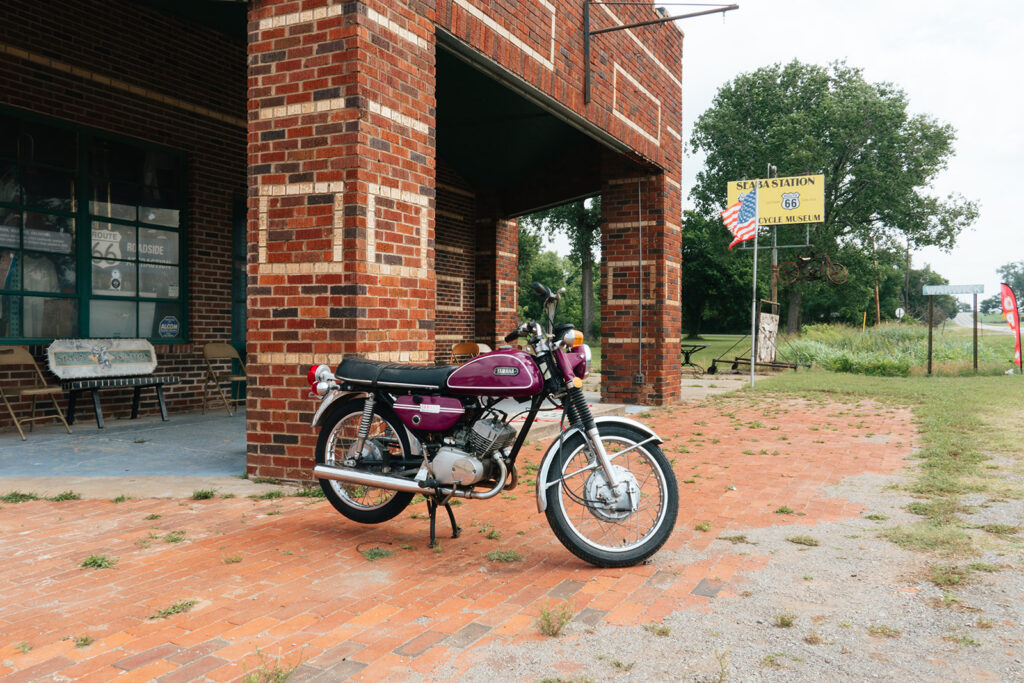
There are places along Route 66 that announce themselves with neon, giant fiberglass mascots, or a billboard promising the world’s largest something. Seaba Station Motorcycle Museum does not need that kind of roadside theater. The old brick service station sits quietly along Route 66 near Warwick, Oklahoma, the sort of place you could miss if you were didn’t know it was there.
I stopped there on my recent trip down Route 66, part of a Mother Road run through Oklahoma from El Reno toward Tulsa. By then, I had seen onion burgers, small-town centennial banners, roadside museums, and enough two-lane pavement to remind you why Route 66 still matters. But Seaba Station felt different. It was not just another stop. It felt like a garage that had been waiting for the right person to walk in.
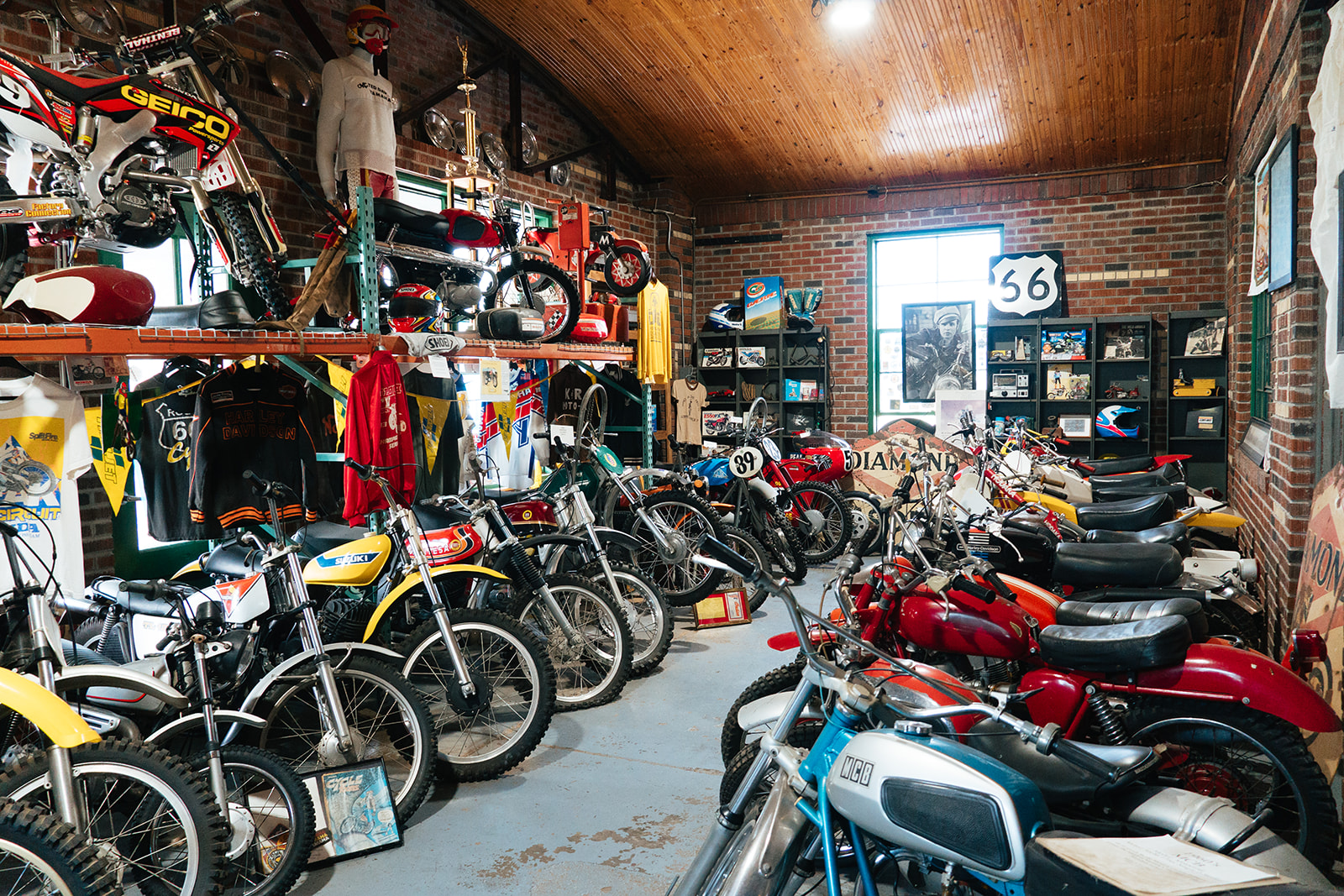
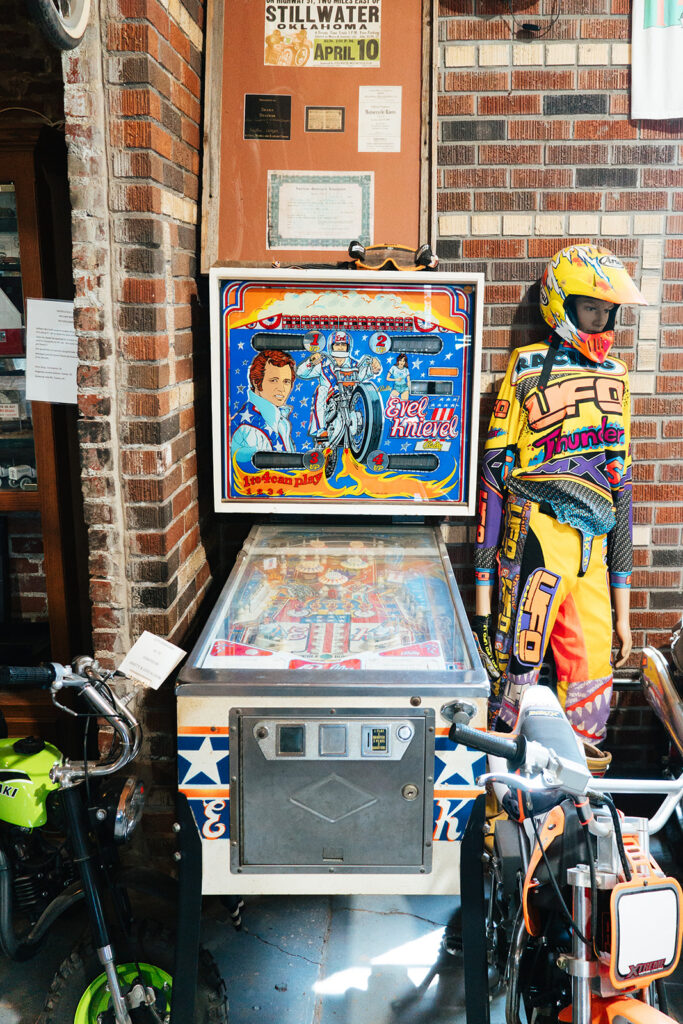
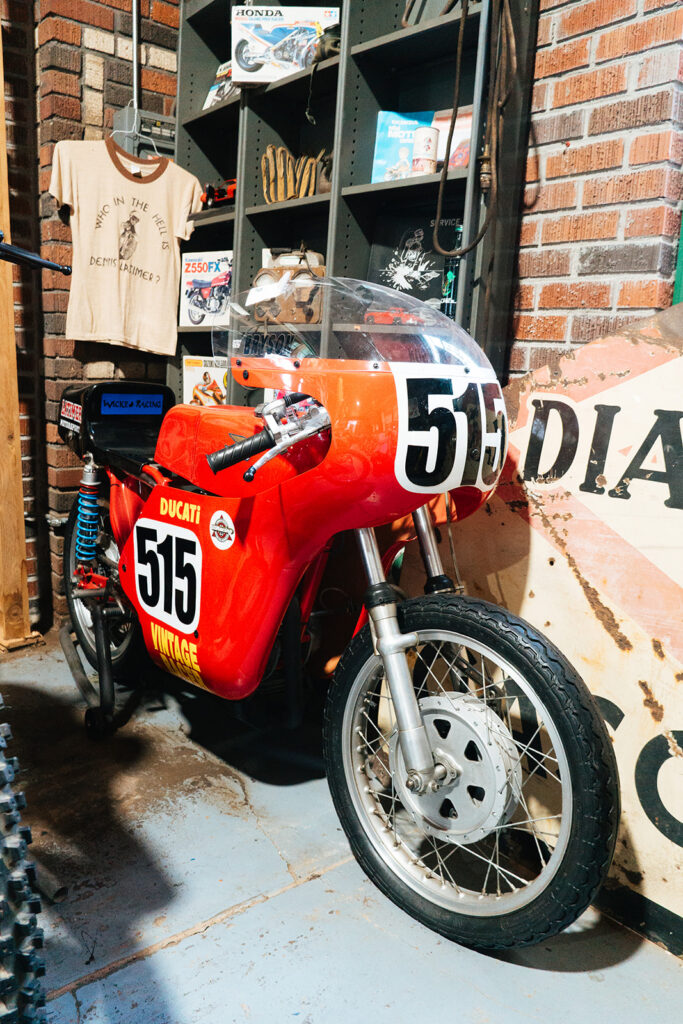
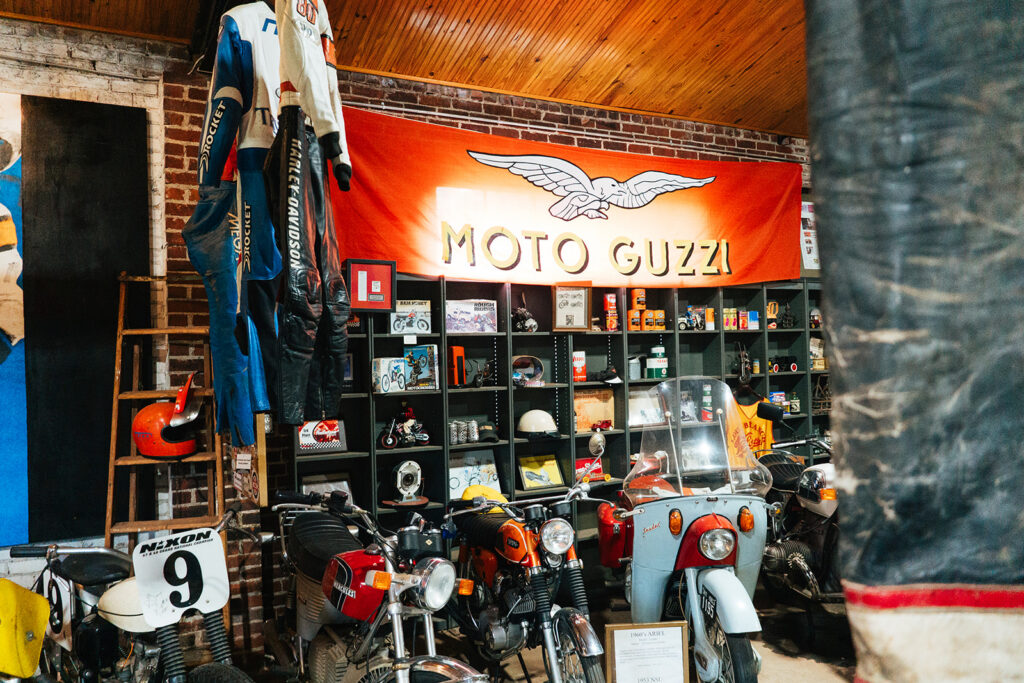
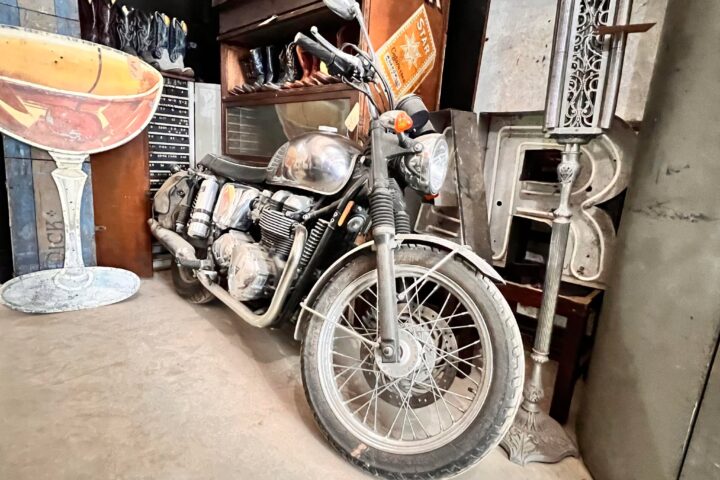
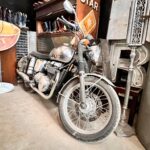
Inside, the place is packed with motorcycles, memorabilia, old signs, bicycles, model cars, parts, helmets, photographs, and the kind of mechanical odds and ends that make grown men stop mid-sentence. It is part museum, part time capsule, and part clubhouse. The motorcycles are the draw, but the building is the soul of the place.
The Museum’s Historic Service Station
Long before it became a museum, Seaba Station was built by John and Alice Seaba in 1921, five years before U.S. Highway 66 was officially designated. The station started life as a rural filling station serving early motorists, farmers, and travelers making their way through Lincoln County. This was the age before interstate exits and travel plazas, when a roadside business did not just sell fuel. It kept people moving.
The building itself still carries that early automobile-era character. The brickwork, the former service bays, the old station layout, and the surrounding rural setting make it feel less like a restored attraction and more like a survivor. It was later known as Seaba Engine Rebuilding and Machine Shop, and that second life became just as important as the first.
As traffic increased along what became Route 66, John Seaba expanded beyond gasoline. He bought and assembled Model T Fords, repaired engines, and by 1934 had moved into rebuilding engines. During the late 1930s, as the Mother Road carried more traffic through Oklahoma, the business grew to around 18 employees. During World War II, gasoline rationing changed the filling station business, but Seaba adapted again, taking on government-related repair work and shifting deeper into engine rebuilding.
That ability to change with the times is what kept the building alive. While countless other rural service stations disappeared, Seaba Station remained. It was placed on the National Register of Historic Places in 1995, recognized for its connection to Route 66 commerce and its rare survival as a rural service station and machine shop.
After decades of mechanical work, the building entered another chapter when Sonny and Sue Preston restored it and operated Seaba Station Antiques & Gifts. For Route 66 travelers, it became one more reason to slow down near Warwick. Then, in 2007, Gerald Tims and Jerry Ries bought the property and began transforming it into what it is today.
The Motorcycle Museum Era
Tims and Ries were not simply collectors looking for somewhere to store machines. They were motorcycle people. Tims owned Performance Cycle in Bethany, Oklahoma, along old Route 66, and had spent his life riding, racing, wrenching, and collecting. Ries, a retired schoolteacher from Nicoma Park, shared that same enthusiasm. Together, they saw the old station and understood something important: a motorcycle museum belonged here.
That decision was not just clever branding. It made sense. Route 66 has always been about motion, independence, machinery, and the romance of going somewhere just because the road is there. A motorcycle museum inside a former filling station on the Mother Road is almost too perfect, like finding a leather jacket that already has your name stitched inside.
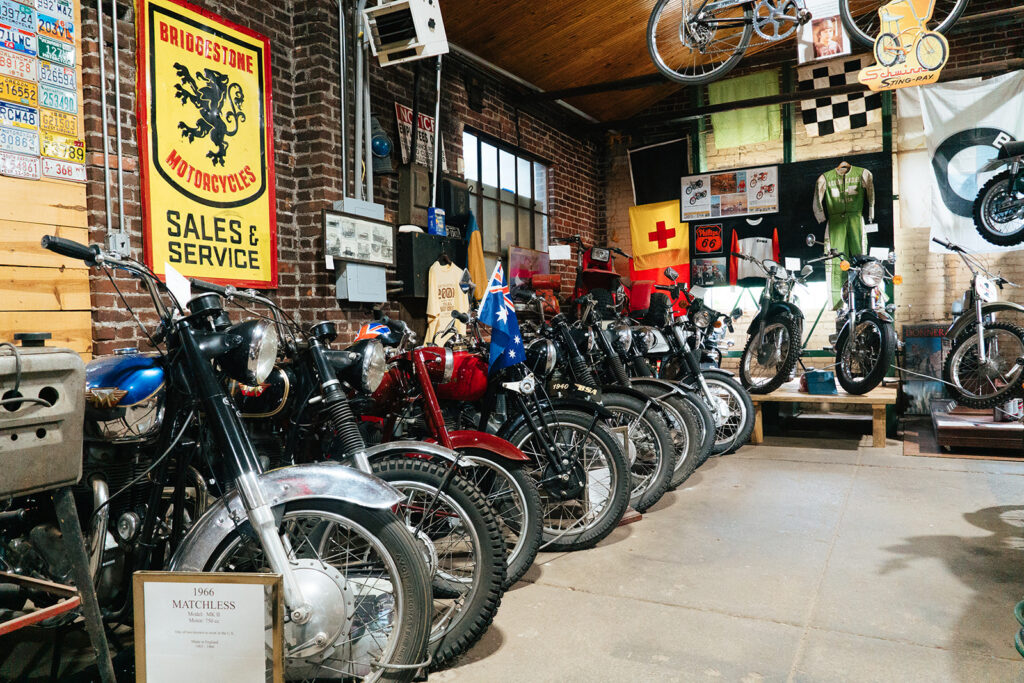
The museum opened in 2010, and over the years, it has built a reputation as one of Oklahoma’s great Route 66 stops. Depending on the source and the rotation of displays, the museum has been described as having more than 65 motorcycles on display, with a broader collection that has included more than 125 vintage and classic machines. What matters when you walk in is not the exact number. It is the range.
You will find road bikes, dirt bikes, racing machines, restored antiques, foreign brands, American iron, oddball machines, and bikes that make you wonder who looked at an engine, two wheels, and a frame and thought, “Yes, this seems perfectly safe.” That, of course, is the entire history of motorcycling in one sentence.
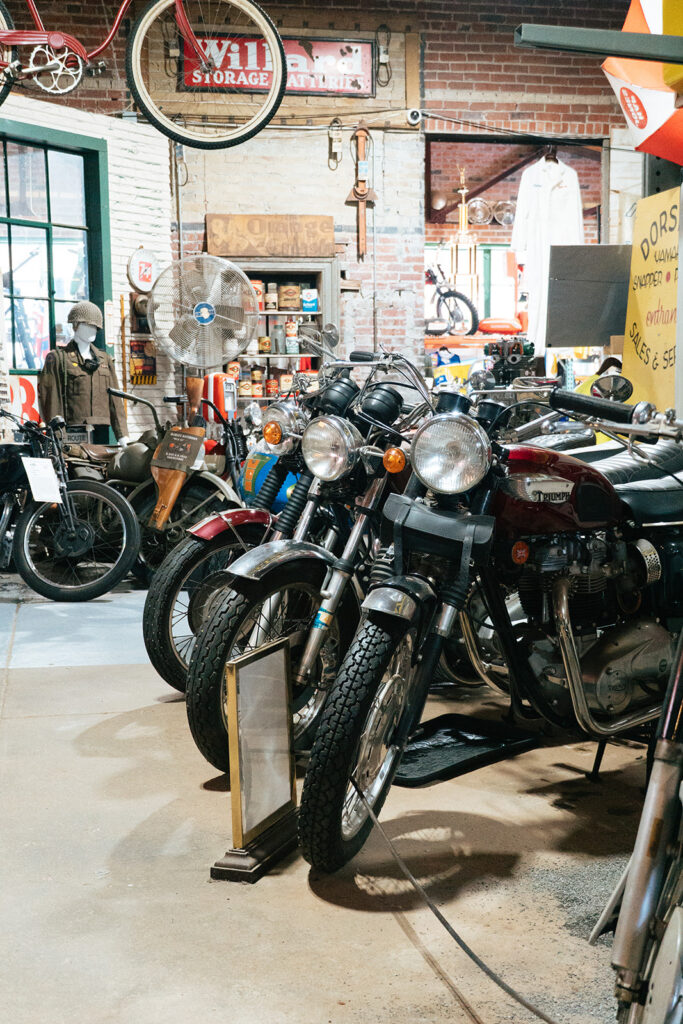
Among the pieces of note are a 1972 Jawa Golden Sport, a 1979 Triumph still in its original dealer delivery crate, and a custom “Hydra” bike from the film Captain America. The displays are approachable, not precious. You do not feel like you are walking through a sterile gallery. You feel like you are wandering through the collected memory of riders who knew that motorcycles are not just machines. They are mile markers in a person’s life.
That is part of Seaba Station’s charm. It does not just appeal to riders. Even if you have never owned a motorcycle, there is enough here to pull you in. The bicycles, toys, old advertising, Route 66 material, and mechanical artifacts give the museum a broader roadside Americana feel. It is the kind of place where one person studies a vintage Triumph while another is staring at an old sign, both equally convinced they found the best thing in the room.
Outside, the story continues. The station’s restored rock outhouse is one of the great oddities of the property. Built in the 1920s, it was unusually elaborate for a roadside restroom of its day, with cast-iron toilets and plumbing that was advanced for a rural stop of that era. Route 66 has always had a sense of humor, and Seaba Station’s historic outhouse is proof that even the bathroom can have a backstory.
For years, Seaba Station has also hosted motorcycle swap meets in May and October, drawing vendors, riders, collectors, and curious travelers. Those events helped make the place more than a museum. It became a gathering point. A good roadside museum preserves objects. A great one preserves community.
That is why the news about its future hits harder than expected. During my visit, I was told that the museum is expected to close in early 2027 as the owner retires, with most of the collection and the building expected to be sold. For anyone planning a Route 66 trip, that turns Seaba Station from “add it to the list” into “go now.”
There is a particular sadness that comes with the closing of small independent museums. Big institutions have boards, budgets, curators, and endowments. Places like Seaba Station often run on passion, persistence, and one or two people who decide that something is worth saving. When those people step away, the future becomes uncertain.
That does not mean the story is over. Route 66 has a way of reinventing itself, and the best old buildings seem to attract new caretakers. Seaba Station has already lived several lives: filling station, machine shop, antique store, motorcycle museum. With the Route 66 Centennial bringing renewed attention to the Mother Road, one can hope the building finds another steward who understands its importance.
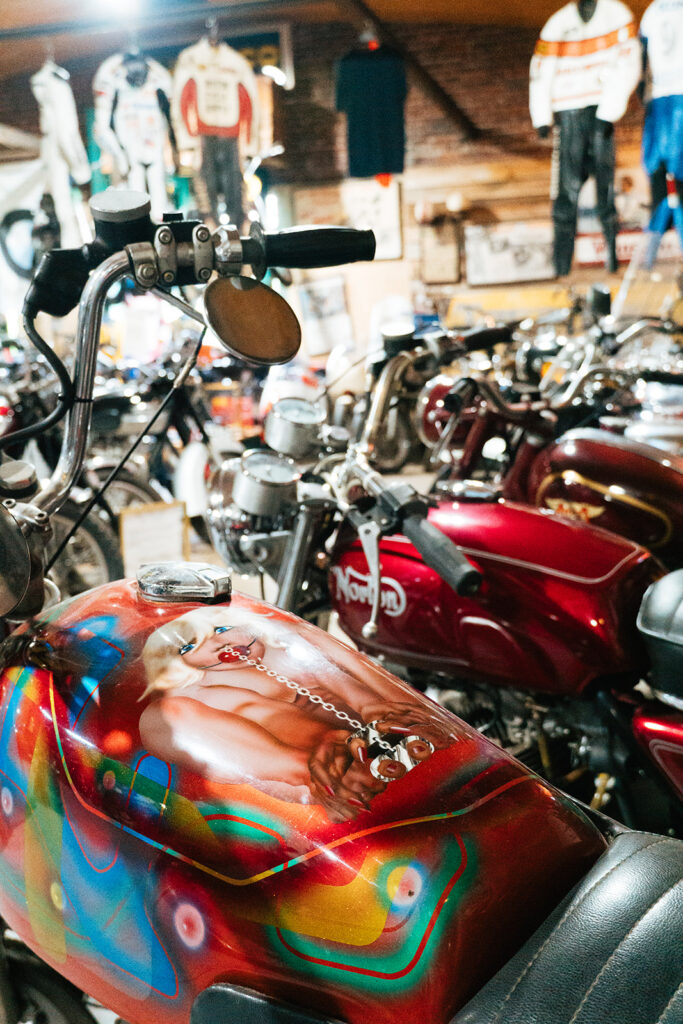
But the museum, in its current form, is a limited-time opportunity. The motorcycles, the memorabilia, the stories, the swap meets, the casual conversations with fellow travelers, all of that is what makes Seaba Station special right now. Once the collection is dispersed, it will not be the same.
That is the truth about Route 66. It is not preserved by pavement alone. It survives through diners that still serve coffee, stations that still keep their signs, museums that open their doors, and travelers who take the time to stop. The interstate was built for speed. Route 66 was built for stories.
Seaba Station Motorcycle Museum is one of those stories. It began with John and Alice Seaba serving early motorists in 1921, grew into a machine shop that helped keep America moving, and found new life as a motorcycle museum thanks to Gerald Tims and Jerry Ries. Now, as it approaches what may be its final ride as a museum, it deserves a place on every Route 66 itinerary.
So if you are driving Oklahoma’s stretch of the Mother Road, do not just pass through Warwick. Pull over. Walk through the old brick station. Look at the motorcycles. Study the signs. Leave a donation. Take a few pictures. Buy the sticker. Ask a question.
Route 66 rewards the people who stop.
Quick Facts
- Name: Seaba Station Motorcycle Museum
- Location: 336992 East OK-66, Warwick, Oklahoma
- Route: Historic Route 66, west of Chandler
- Original Building: Built in 1921 by John and Alice Seaba
- Original Use: Filling station, later engine rebuilding and machine shop
- Historic Status: Listed on the National Register of Historic Places in 1995
- Museum Opened: 2010
- Founders/Owners: Gerald Tims and Jerry Ries
- Collection: Vintage and classic motorcycles, bicycles, Route 66 memorabilia, toys, signs, and motorcycle artifacts
- Admission: Traditionally free, with donations accepted
- Estimated Visit Time: About 45 minutes to 1 hour
- Important Note: The museum is expected to close in early 2027 as the owner retires, with most of the collection and the building expected to be sold.
FAQ
Where is Seaba Station Motorcycle Museum?
Seaba Station Motorcycle Museum is located on Historic Route 66 near Warwick, Oklahoma, west of Chandler. The address is 336992 East OK-66, Warwick, Oklahoma.
When was Seaba Station built?
The building was constructed in 1921 by John and Alice Seaba as a rural filling station, several years before Route 66 was officially designated in 1926.
Why is Seaba Station historically important?
Seaba Station is significant because it served early motorists on what became Route 66 and later operated as an engine rebuilding and machine shop. It is one of the surviving examples of a rural service station tied to Route 66 commerce in Oklahoma.
Who owns Seaba Station Motorcycle Museum?
The museum was founded by Gerald Tims and Jerry Ries, both motorcycle enthusiasts. Tims owned Performance Cycle in Bethany, Oklahoma, while Ries was a retired schoolteacher from Nicoma Park.
What can you see at Seaba Station Motorcycle Museum?
Visitors can see vintage and classic motorcycles, racing bikes, off-road motorcycles, bicycles, toy cars, Route 66 memorabilia, old signs, motorcycle artifacts, and the historic filling station building itself.
Is Seaba Station Motorcycle Museum closing?
The museum is expected to close in early 2027 as the owner retires. Most of the collection and the building are expected to be sold, so travelers should plan to visit before the museum changes or closes.
Is there an admission fee?
Seaba Station Motorcycle Museum has traditionally been free to visit, though donations are accepted and encouraged.
How long should I plan for a visit?
Most visitors should plan for about 45 minutes to an hour, though motorcycle fans and Route 66 history buffs may want more time.
Is Seaba Station worth stopping at on Route 66?
Yes. It is one of the most authentic Route 66 stops in Oklahoma, combining a historic 1921 filling station with a wide-ranging motorcycle collection and classic roadside Americana.



Needs more Scooters in the mix, where are the classic Vespas and Lambrettas?
Wonder if they would do a package price if someone wanted to keep the museum running?
Where is your next stop on RT 66?
Are they going to be selling the leathers and other stuff?
Sad to see these places going up for sale, hope someone else comes along and turns it into something cool for future travelers of Route 66.
Going to have to keep my husband away from here.
Awesome! I am pretty sure I saw a a few Nortons in there. Might need to make a trip.
So I need a truck and some cash…
Thanks for sharing this, added to my list for Route 66 later this year.
Sad to see that Seaba is closing, but the owners are getting up there and retirement must be looking pretty good.
This was always a fun stop, calling a museum is a stretch it was more like grandpa’s motorcycle shop full of cool stuff.