

 Michael Satterfield
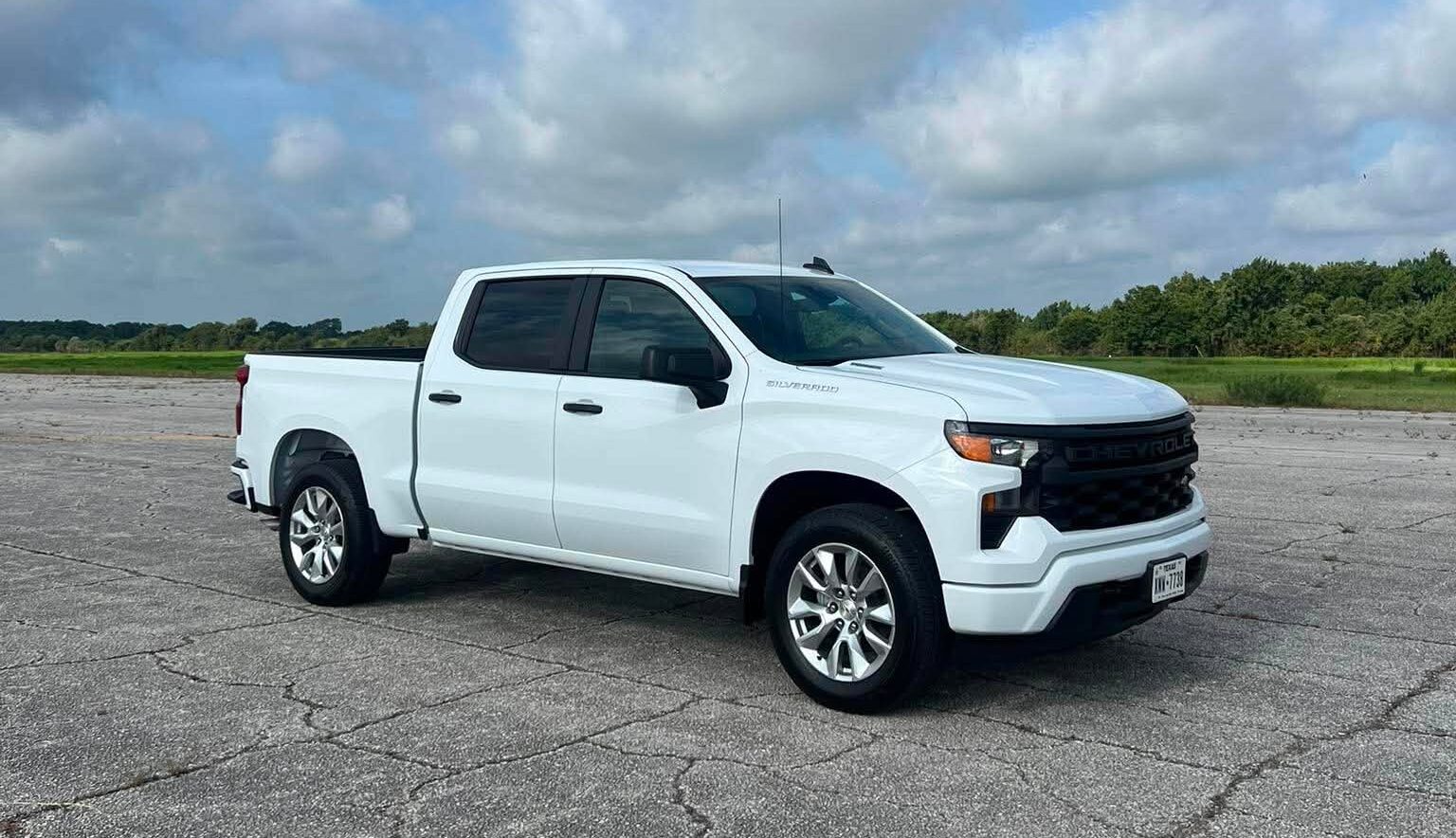
There are a lot of ways to review a pickup truck. You can compare horsepower numbers, measure rear-seat legroom, debate touchscreen sizes, or spend an afternoon arguing about whether a truck really needs 33-inch mud-terrain tires. In our case, the review became a little more practical. We actually bought one.
Before making that decision, I spent time in a 2026 Chevrolet Silverado ZR2 that Chevrolet provided as a test vehicle. The ZR2 is arguably the most interesting Silverado in the lineup, with Multimatic DSSV dampers, locking differentials, a factory lift and genuine off-road capability. It was also complete overkill for what we needed.
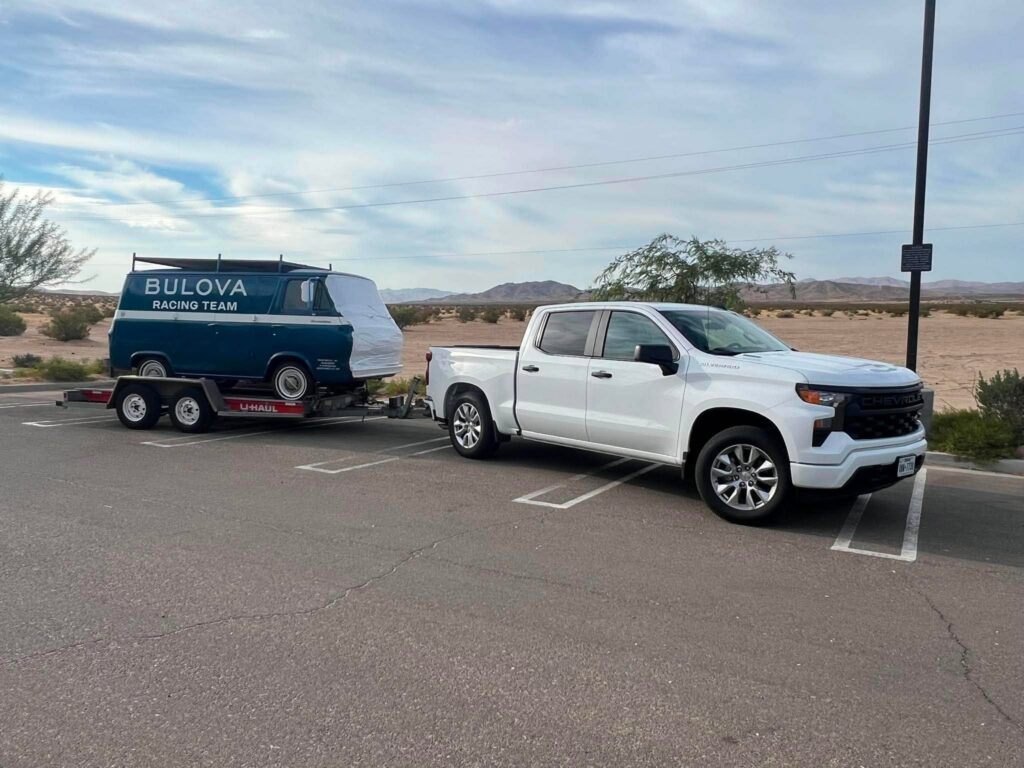
Our company wasn’t shopping for a truck to crawl over rocks or charge across the desert. We needed something that could comfortably tow cars and equipment, handle long highway trips, carry gear, and still make financial sense as a business vehicle. After driving so many different new trucks over the years, that experience helped clarify what we actually wanted. We didn’t need the most extreme Silverado. We needed the right Silverado. And that is ultimately why we bought one.
There Is a Silverado for Almost Everyone
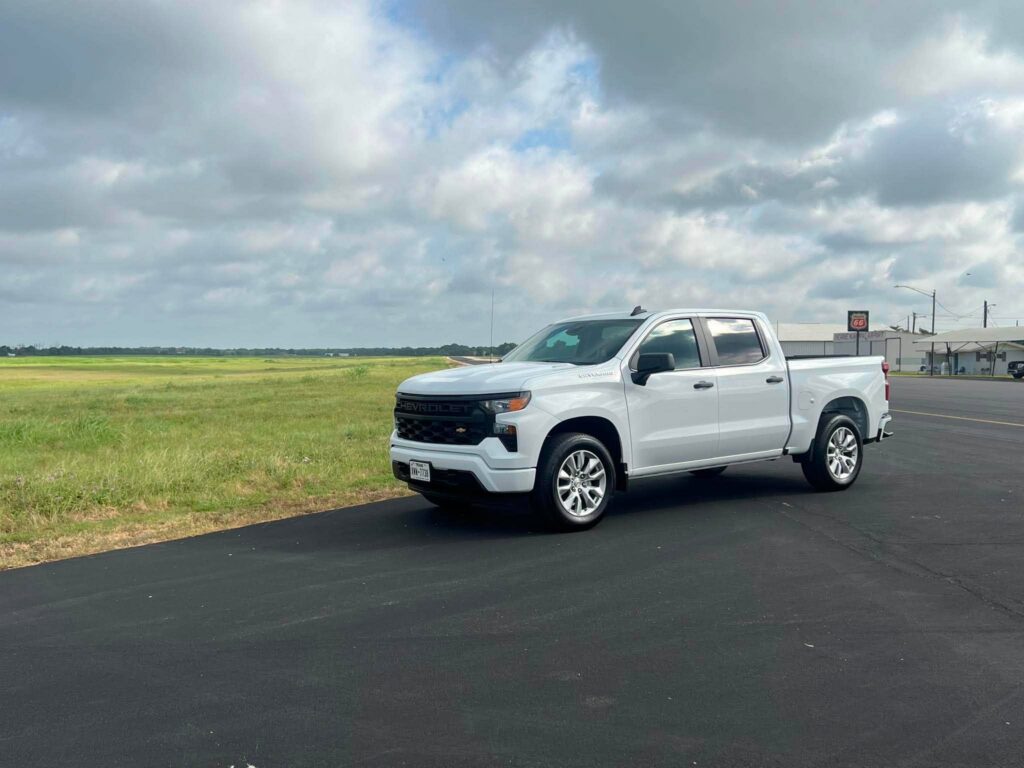
One of the Silverado’s biggest strengths is the sheer breadth of the lineup. The 2026 Silverado 1500 ranges from the straightforward Work Truck to the off-road-focused ZR2, with Custom, Custom Trail Boss, LT, RST, LT Trail Boss, LTZ and High Country models filling the space between them. That means Chevrolet hasn’t forced every pickup buyer into the same increasingly expensive luxury-truck formula.
The WT, or Work Truck, remains the basic tool of the Silverado family. It is aimed at people who care more about payloads, trailers and equipment than premium leather.
The Custom adds convenience and better styling without getting too far away from the work-truck formula. For small businesses and fleet buyers, it may be one of the most compelling values in the range.
The Custom Trail Boss adds real off-road hardware, including a 2-inch factory lift, Z71 equipment, a two-speed transfer case, skid plates and aggressive tires.
The LT is where the Silverado begins feeling noticeably more modern inside. Chevrolet’s 13.4-inch touchscreen and 12.3-inch digital instrument cluster make a significant difference without moving all the way into luxury-truck territory.
The RST takes a more street-oriented approach, with body-color exterior trim and access to a wide selection of engines and options.
The LT Trail Boss combines the more comfortable and technology-focused LT interior with much of the Trail Boss hardware. It is a good choice for someone who actually needs off-road capability but spends plenty of time commuting or traveling.
The LTZ moves further into the premium end of the market, adding leather, additional safety technology and access to Chevrolet’s extensive camera system.
The High Country is the luxury Silverado. With premium materials and available Super Cruise, it can easily serve as both tow vehicle and high-end daily driver.
Then there is the ZR2, which is the truck we had as a press vehicle.
Living With the Silverado ZR2
If your idea of a good weekend involves dirt roads, rocks and places where cell service disappears, the ZR2 is the Silverado to have. The truck features a 2-inch factory suspension lift, Multimatic DSSV dampers, front and rear electronic locking differentials, skid plates and 33-inch tires. The result is a full-size truck with legitimate off-road capability straight from the dealership.
It looks fantastic, too. There is no mistaking a ZR2 for the base Silverado your local plumbing company ordered by the dozen. But spending time with the ZR2 also highlighted something that often gets lost when reviewing trucks: more capability isn’t always better.For what we needed, the ZR2 simply didn’t make sense.
Its suspension, tires, ride height and hardware are designed around off-road performance. Those features are impressive when you use them, but they add cost and complexity when your primary mission involves towing trailers down the highway. We weren’t building an overlanding rig. We weren’t planning to spend weekends crawling through Moab. Most of the truck’s life would involve pavement, trailers, road trips and work.
The ZR2 helped us figure out that we wanted the Silverado underneath all of that specialized off-road equipment. Just not all of the specialized off-road equipment.
Four Engines and Four Different Approaches
The Silverado 1500 offers four engines, and choosing the right one probably matters more than choosing the right badge on the fender.
The standard 2.7-liter TurboMax four-cylinder produces 310 horsepower and an impressive 430 lb-ft of torque through an eight-speed automatic. Yes, a four-cylinder in a full-size Chevrolet pickup still sounds strange. But 430 lb-ft is serious torque. In fact, the TurboMax produces more torque than the Silverado’s 5.3-liter V8.
Properly equipped, it can tow as much as 9,500 pounds. For a lot of buyers, that is more than enough truck.
The 5.3-liter EcoTec3 V8 produces 355 horsepower and 383 lb-ft of torque and is paired with a 10-speed automatic. Properly configured, it can tow more than 11,000 pounds. It is the traditional middle ground of the Silverado lineup. It sounds like a truck, drives like a truck and provides substantial towing capability without stepping up to the larger 6.2-liter engine.
The 6.2-liter EcoTec3 V8 produces 420 horsepower and 460 lb-ft of torque. This is the one enthusiasts will naturally gravitate toward. There is effortless power, plenty of personality and enough capacity to tow as much as 13,200 pounds when properly configured.
Then there is the 3.0-liter Duramax inline-six diesel, producing 305 horsepower and 495 lb-ft of torque. For someone planning to spend significant time pulling a trailer on the highway, the Duramax makes an extremely compelling argument. Properly equipped, it can tow as much as 13,300 pounds while also offering excellent highway fuel economy for a full-size pickup.
The important lesson is that you don’t necessarily need the biggest engine to get a useful tow vehicle, just like you don’t necessarily need the ZR2 to get a capable Silverado. You need to match the truck to the job.
Why Towing Became the Deciding Factor
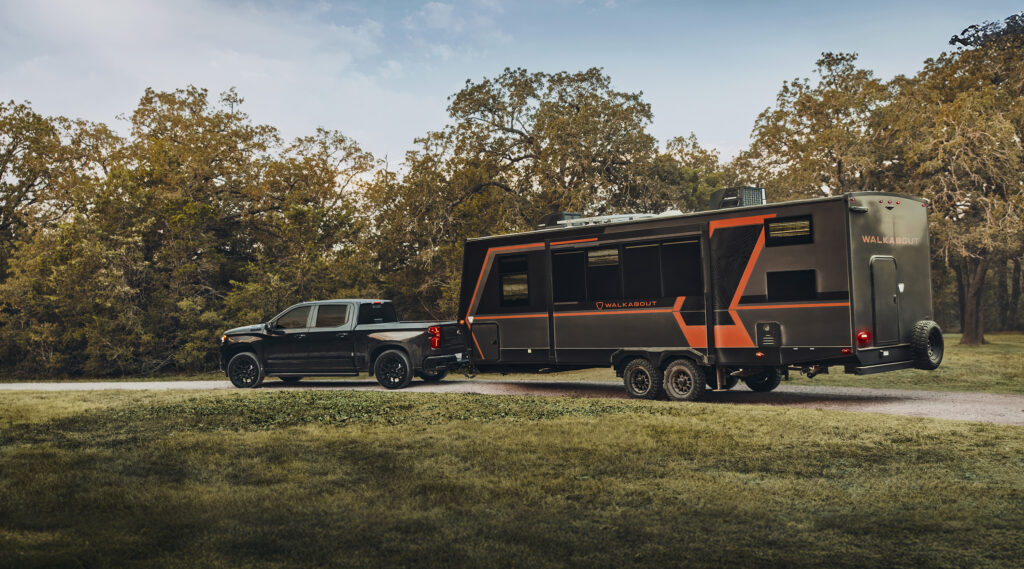
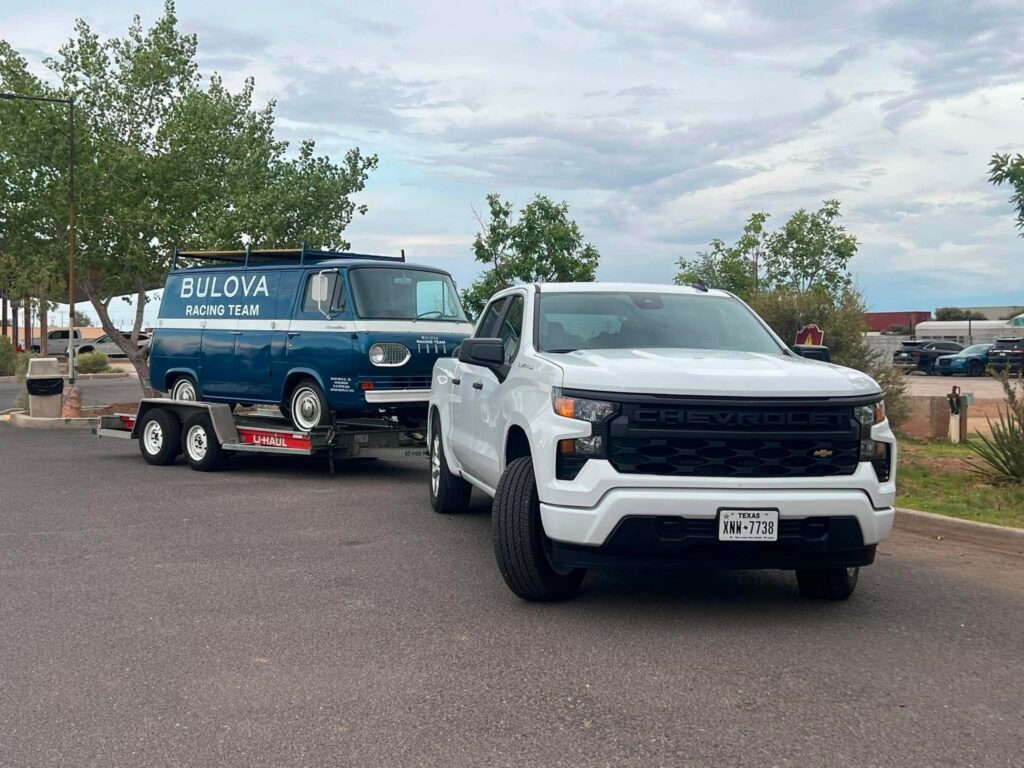
Our search centered heavily on towing. We needed a company truck capable of pulling cars, equipment and trailers without feeling like we were constantly operating at the edge of what the vehicle could comfortably handle.
Maximum tow ratings are useful, but they don’t tell the entire story. Cab configuration, bed length, drivetrain, axle ratio and options all affect the actual towing capacity of an individual truck. If you’re buying a Silverado specifically to tow, check the rating of the actual truck rather than assuming every truck equipped with a particular engine can pull Chevrolet’s advertised maximum.
What I also like about the Silverado is that Chevrolet has put considerable thought into the experience of towing, not just the maximum number. Properly equipped trucks can offer up to 14 different camera views. Trailer Side Blind Zone Alert can account for a trailer while monitoring traffic, and Chevrolet’s available Trailering App allows drivers to create trailer profiles, work through pre-departure checklists, check trailer lights and monitor other information.
Those aren’t glamorous features. They are useful ones. Anyone who regularly hooks up a trailer knows how quickly something like a good hitch camera becomes more important than another decorative interior option. For a working truck, that matters.
On the Road
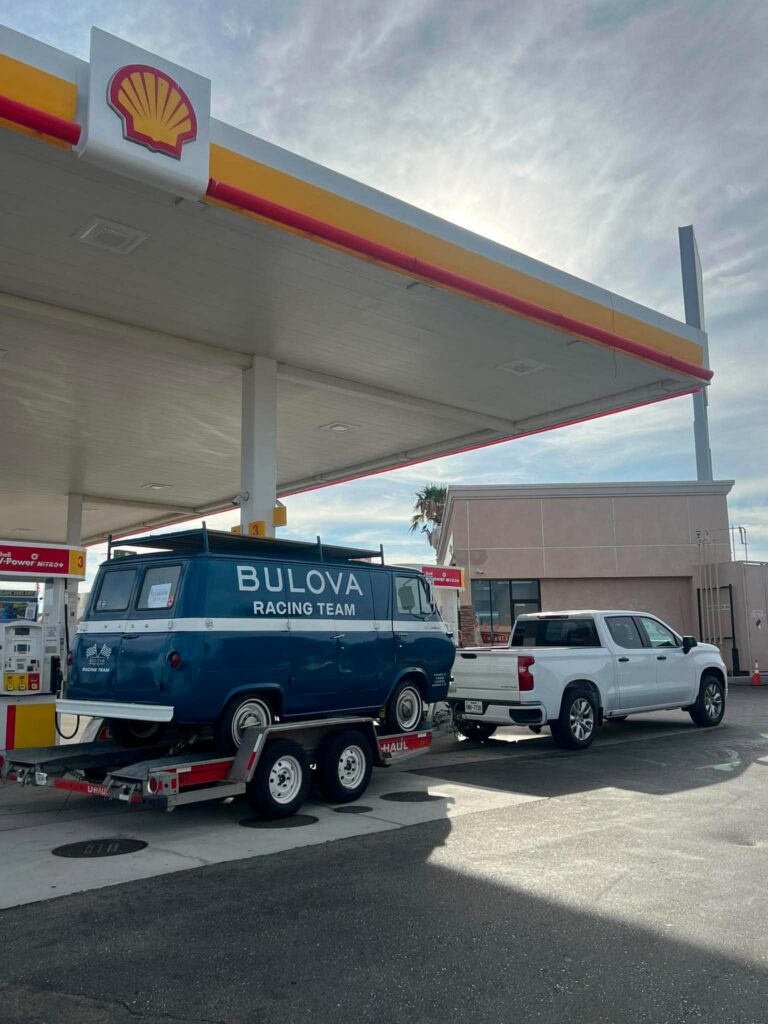
The modern half-ton pickup has a difficult assignment. It needs to tow and haul like a truck while also working as a commuter, road-trip vehicle and mobile office. The Silverado handles that balancing act well.
Once you move into the LT and higher trims, the interior technology feels thoroughly modern. The available 13.4-inch center display is large without completely overwhelming the dashboard, and the 12.3-inch digital instrument cluster can display the information you actually want while towing.
Wireless Apple CarPlay and Android Auto make daily life easier, and the overall control layout is relatively straightforward. More importantly, the Silverado still feels like a pickup. I consider that a good thing. There is something reassuring about climbing into a truck that hasn’t forgotten why trucks exist. The seating position is upright, the bed is useful, the controls make sense and the Silverado doesn’t require a thirty-minute orientation before you can put it to work.
After spending time in the ZR2, the differences between a specialized truck and a more road-oriented Silverado also become obvious. The ZR2’s aggressive tires, suspension and ride height are part of its charm off-road. On pavement, however, they are solutions to problems we didn’t have. For a company tow vehicle that is going to spend most of its life traveling highways, I would rather put the money into the powertrain, towing equipment, comfort and technology we will use every day.
Why We Bought a Silverado
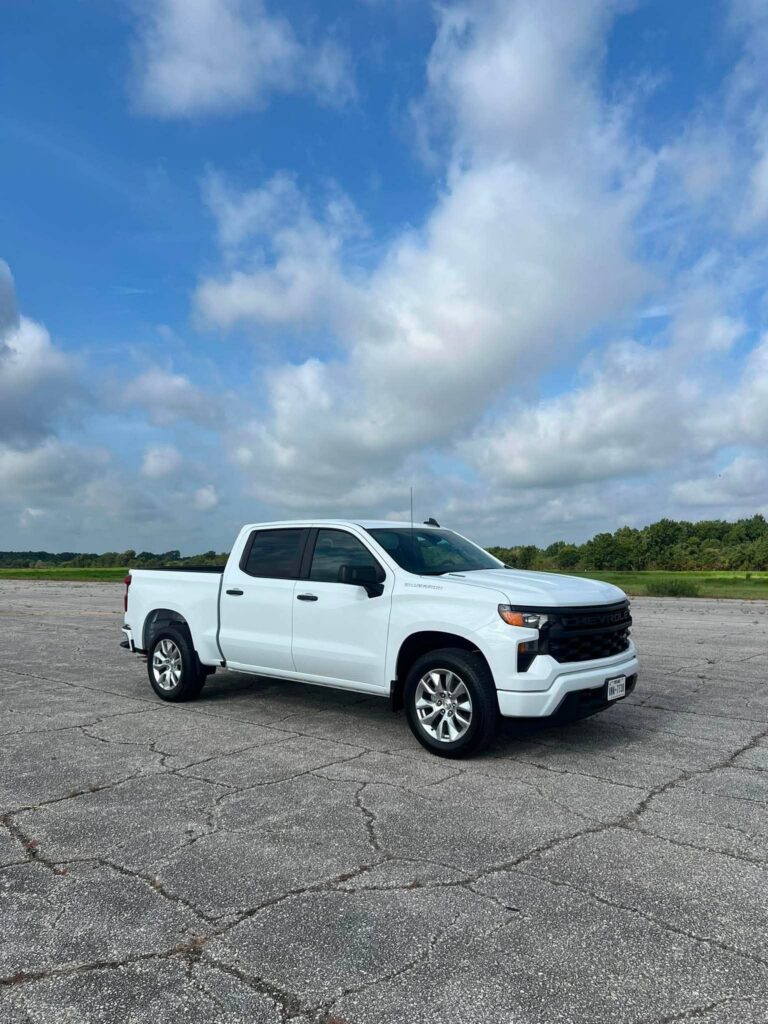
Automotive journalists get used to driving expensive trucks for a week and handing the keys back. That makes it easy to praise things that are fun but not necessarily practical. Writing the check changes your perspective. We needed a new company tow vehicle, so instead of asking which truck was most exciting, I had to ask which one I actually wanted to own.
I have driven trucks from just about every major manufacturer. There are competitors with excellent interiors, impressive engines and clever technology. The full-size pickup segment might be the most competitive corner of the American automotive market. But I kept coming back to the Silverado. The ZR2 press truck played a big role in that decision because it demonstrated just how good the fundamental truck is. Once I mentally removed the expensive off-road equipment we didn’t need, the Silverado underneath it checked nearly every box.
It offered the towing capability we needed. It was comfortable enough for long trips. The cabin technology was good. The bed and trailering features were designed around actually using the vehicle as a truck. I didn’t have to get a glass roof or other packages just to get some basic upgrades like a power seat and a nice screen.
And perhaps most importantly, the numbers made sense. There are trucks that may win one individual category. One might have a nicer dashboard. Another might produce more horsepower. Another may have a feature Chevrolet doesn’t offer. But we weren’t buying a specification. We were buying a truck that needed to go to work. For our needs, the Silverado offered the best balance of quality, towing capability, useful features and value. That balance is ultimately what earned it a place in our fleet.
What About the Silverado HD?
If your towing needs go beyond what a half-ton can reasonably handle, Chevrolet also offers the Silverado 2500HD and 3500HD. Those trucks are available with either a 6.6-liter gasoline V8 producing 401 horsepower and 464 lb-ft of torque or a 6.6-liter Duramax diesel making 470 horsepower and a massive 975 lb-ft of torque. Properly configured, the diesel Silverado HD can tow as much as 36,000 pounds. That makes the HD the obvious answer for large enclosed trailers, heavy equipment, fifth wheels and commercial towing.
But capability always comes with a tradeoff. An HD truck is heavier, larger and generally less pleasant to drive unloaded. If your actual trailer weight comfortably fits within the capabilities of a properly configured Silverado 1500, the half-ton makes a far easier everyday vehicle. That was part of our calculation as well. We wanted enough truck without buying too much truck. It was the same lesson we learned from the ZR2.
And the Silverado EV?
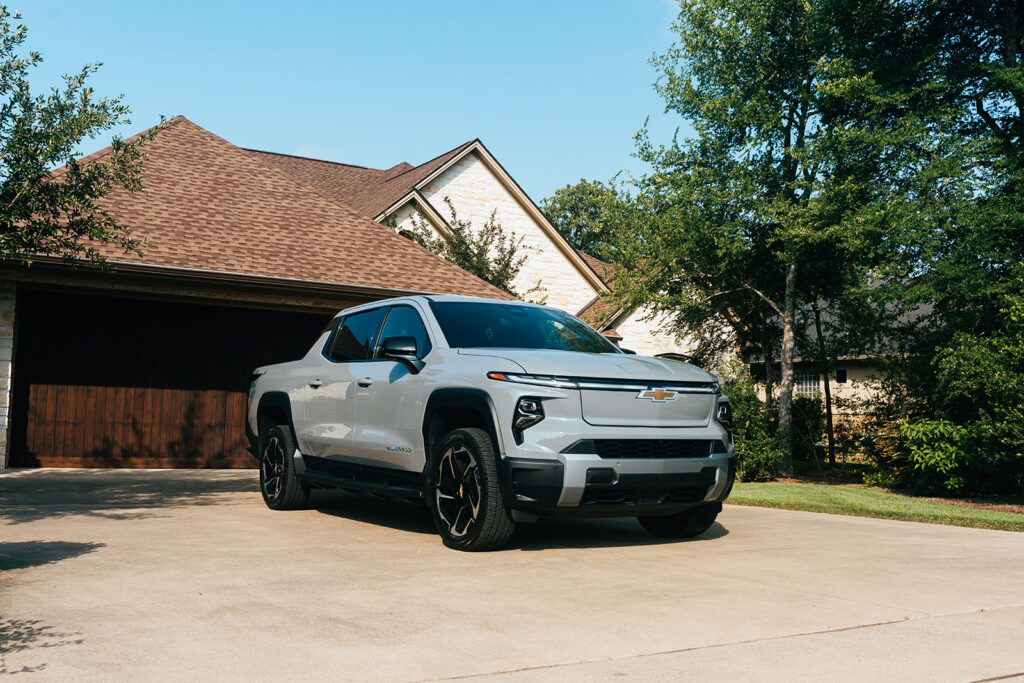
The Silverado name now extends into the electric market as well. The Silverado EV offers enormous torque, substantial range in certain configurations and towing capability that puts it firmly in the full-size truck conversation. For local businesses with predictable routes and access to charging, it could make a lot of sense.
Long-distance towing introduces more complicated questions. Trailer weight, aerodynamics, charging availability and whether a charging station can accommodate a truck with a trailer all become part of the trip-planning process.
For the kind of travel and towing we expect to do, a gasoline or diesel Silverado remains the more practical choice.
The Case for Buying the Truck You Actually Need
Pickup trucks have become lifestyle products almost as much as work vehicles. Manufacturers know buyers love lifted suspensions, giant tires, leather interiors and enormous horsepower numbers. I like those things too.
The Silverado ZR2 is proof of that. Given an empty desert, a set of keys and someone else’s fuel card, I would happily spend the day in one. But I wasn’t buying a vehicle to off-road across the desert or impress the local guys at the Country Club. The question wasn’t what is the coolest truck. It is what truck will do the job. That is where the broader Silverado lineup shines.
You can buy the ZR2 if you need serious off-road capability. You can buy a High Country if you want luxury. You can buy a Trail Boss if you want something between the two. You can step into an HD if you need huge towing numbers. Or you can build a relatively straightforward Silverado around the things that really matter.
The 2026 Chevrolet Silverado isn’t perfect. Higher trims become expensive quickly. The lower trims can feel utilitarian compared with some competitors. Buyers need to pay close attention to configurations when determining towing capacity. And some people still won’t accept the idea of a four-cylinder engine in a full-size Chevrolet truck, no matter how good it is.
But the Silverado’s greatest strength may be that Chevrolet gives buyers enough choices to find the truck that fits their actual life. Our time with the ZR2 showed us just how capable the Silverado platform can be. It also showed us how much capability we didn’t need. For a tow vehicle, we wanted something comfortable on the highway, capable with a trailer, well equipped without being excessive, and priced so that using it for work actually made financial sense.
After driving a long list of new trucks, the Silverado was the one we chose. Not the wildest Silverado. Not the most expensive Silverado. Just the one that made the most sense. And for a truck that is going to earn its keep, that might be the highest praise of all.
Quick Facts: 2026 Chevrolet Silverado 1500
- Available trims: WT, Custom, Custom Trail Boss, LT, RST, LT Trail Boss, LTZ, High Country, and ZR2
- TurboMax 2.7L: 310 hp and 430 lb-ft of torque
- 5.3L EcoTec3 V8: 355 hp and 383 lb-ft of torque
- 6.2L EcoTec3 V8: 420 hp and 460 lb-ft of torque
- 3.0L Duramax diesel: 305 hp and 495 lb-ft of torque
- Maximum Silverado 1500 towing: Up to 13,300 pounds when properly configured
- TurboMax maximum towing: Up to 9,500 pounds when properly equipped
- Available transmission: Eight-speed automatic with TurboMax or 10-speed automatic with select V8 and Duramax powertrains
- Available trailering technology: Up to 14 camera views, Trailer Side Blind Zone Alert, trailer profiles, trailer-light testing, and available trailer tire monitoring
- ZR2 highlights: 2-inch factory lift, Multimatic DSSV dampers, electronic locking differentials, skid plates, and 33-inch tires
- Silverado HD maximum towing: Up to 36,000 pounds when properly configured
- Best reason to buy: One of the broadest combinations of engines, trims, towing capability, and price points in the full-size truck market
- Our verdict: The ZR2 was impressive but more truck than we needed. A less specialized Silverado offered the right balance for our company tow vehicle.
FAQ
Is the 2026 Chevrolet Silverado a good tow vehicle?
Yes. The Silverado 1500 can tow up to 13,300 pounds when properly configured, making it capable of handling many car trailers, recreational trailers, boats, and work equipment. Chevrolet also offers extensive trailering technology designed to make hooking up and towing easier.
Which 2026 Silverado engine is best for towing?
The 3.0-liter Duramax diesel is one of the strongest choices for frequent towing because it produces 495 lb-ft of torque and can tow up to 13,300 pounds when properly equipped. The 6.2-liter V8 is another excellent option, particularly for buyers who prefer gasoline power.
Can the four-cylinder Silverado tow a trailer?
Yes. Chevrolet’s 2.7-liter TurboMax four-cylinder produces 430 lb-ft of torque and can tow up to 9,500 pounds when properly equipped. That makes it surprisingly capable for a standard full-size truck engine.
Why did you choose a Chevrolet Silverado as a company tow vehicle?
After driving trucks from numerous manufacturers, we felt the Silverado provided the best overall balance of towing capacity, comfort, technology, quality, and value. Since the truck will regularly tow vehicles and equipment while also covering long highway distances, versatility was more important than having the most extreme specifications.
What did you think of the 2026 Silverado ZR2?
The ZR2 was an impressive test vehicle. Its Multimatic suspension, lockers, 33-inch tires, factory lift, and off-road hardware make it one of the most capable Silverados available. For our needs, however, most of that capability would rarely be used, making the ZR2 more truck than we needed.
Is the Silverado ZR2 good for towing?
The ZR2 can tow, but its primary focus is off-road performance. Buyers whose trucks will spend most of their time pulling trailers on highways may be better served by a more road-focused Silverado configuration.
What is the difference between the Silverado 1500 and Silverado HD?
The Silverado 1500 is Chevrolet’s light-duty full-size pickup and is sufficient for many personal and commercial towing needs. The Silverado 2500HD and 3500HD are heavier-duty trucks designed for significantly larger trailers and payloads, with properly configured models capable of towing up to 36,000 pounds.
Is the 2026 Silverado comfortable for long trips?
Yes. LT and higher trims in particular offer comfortable interiors, large digital displays, modern infotainment, wireless smartphone integration, and available driver-assistance technology. That makes the Silverado well suited to long highway trips in addition to towing and work duties.
Which Silverado trim offers the best value?
That depends on how the truck will be used, but the Custom and LT trims are particularly compelling for buyers looking for capability without paying for luxury or specialized off-road equipment. The LT adds significantly more interior technology while remaining well below the price of upper trims such as High Country and ZR2.
Would you buy the Silverado again?
Based on our experience and the decision to purchase one as our own company tow vehicle, yes. After testing many new trucks, the Silverado’s overall combination of capability, comfort, useful features, and price ultimately made it the truck we wanted to own rather than simply review.











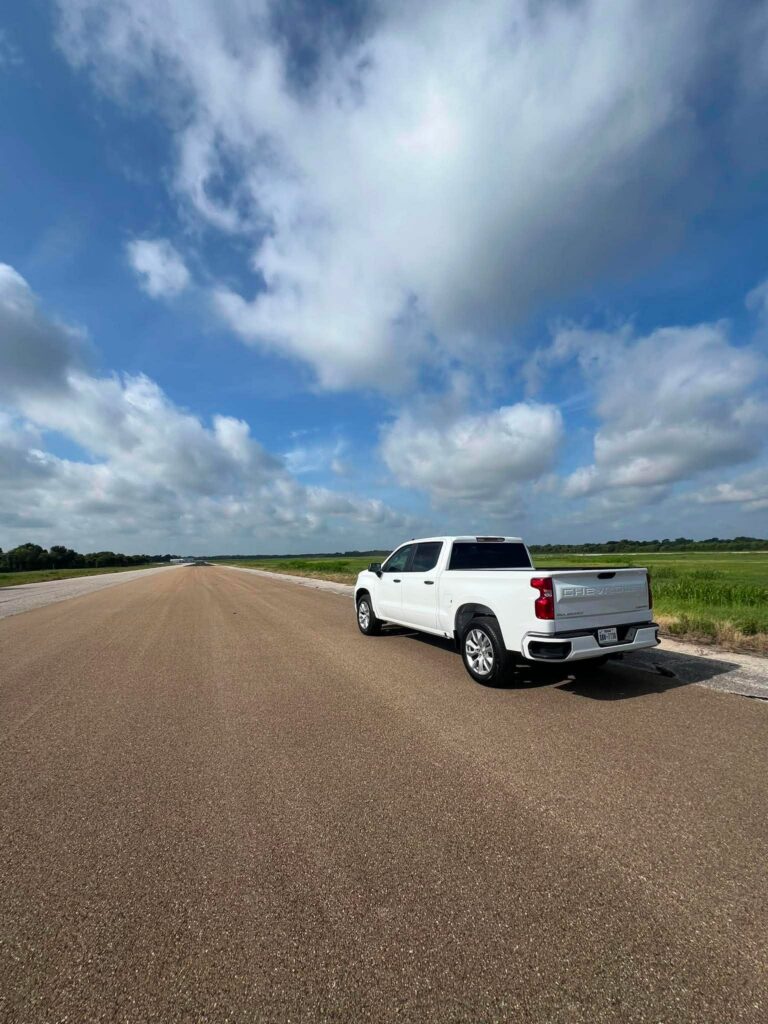
what engine did you get in silverado ?
We went with the Turbo Max 4-cylinder; it made the most sense for how we use the truck, but it still has the torque to tow when we need it. JUst got back from a 3,000 mile road trip towing to and from car week with a vehicle and had zero issues.