
 Michael Satterfield
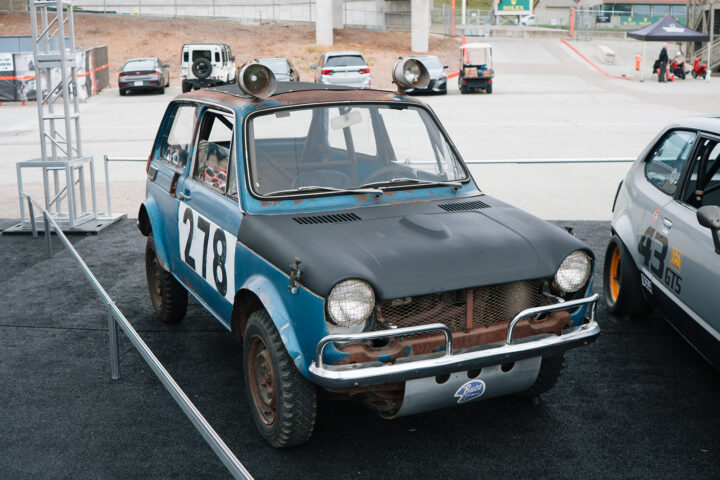
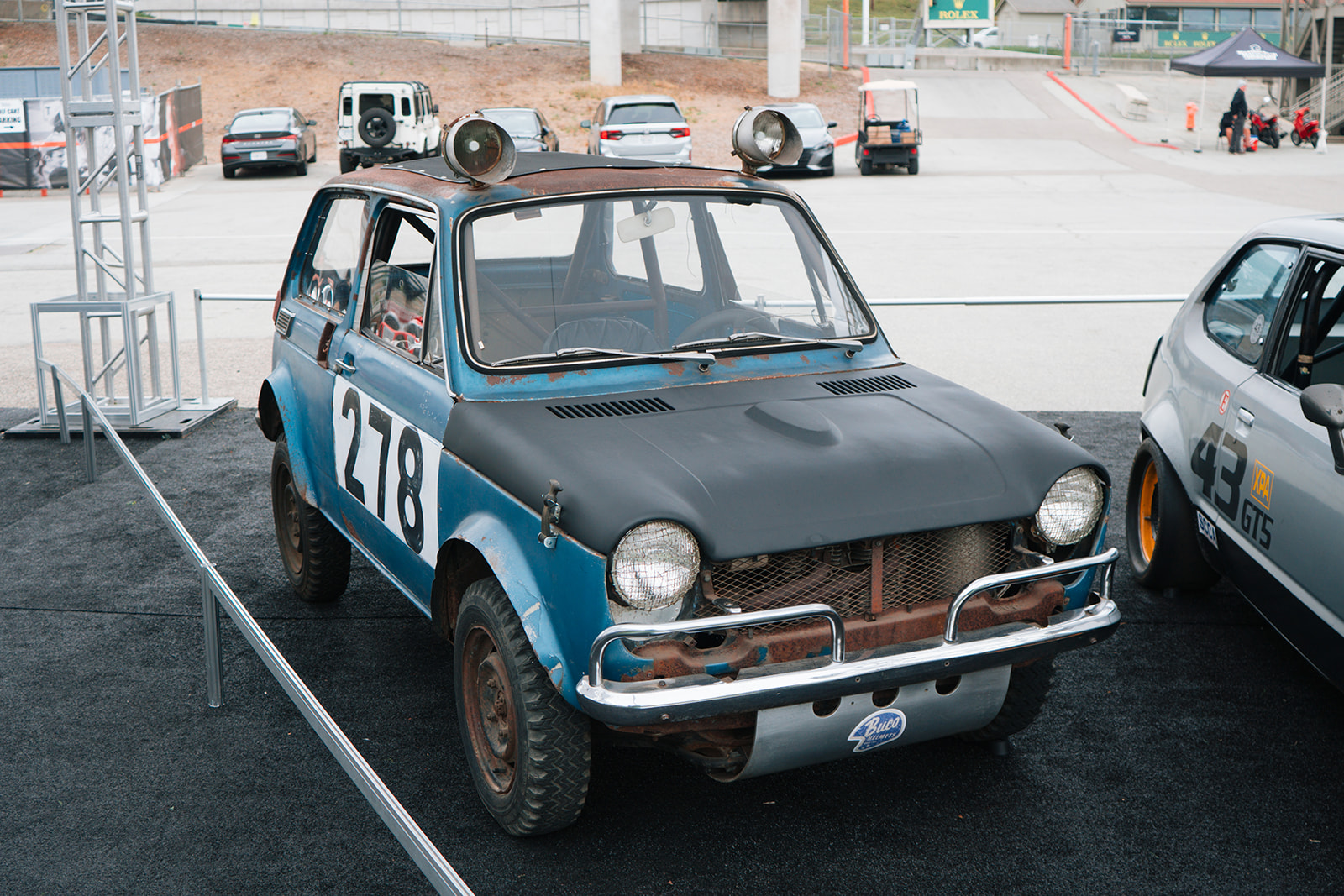
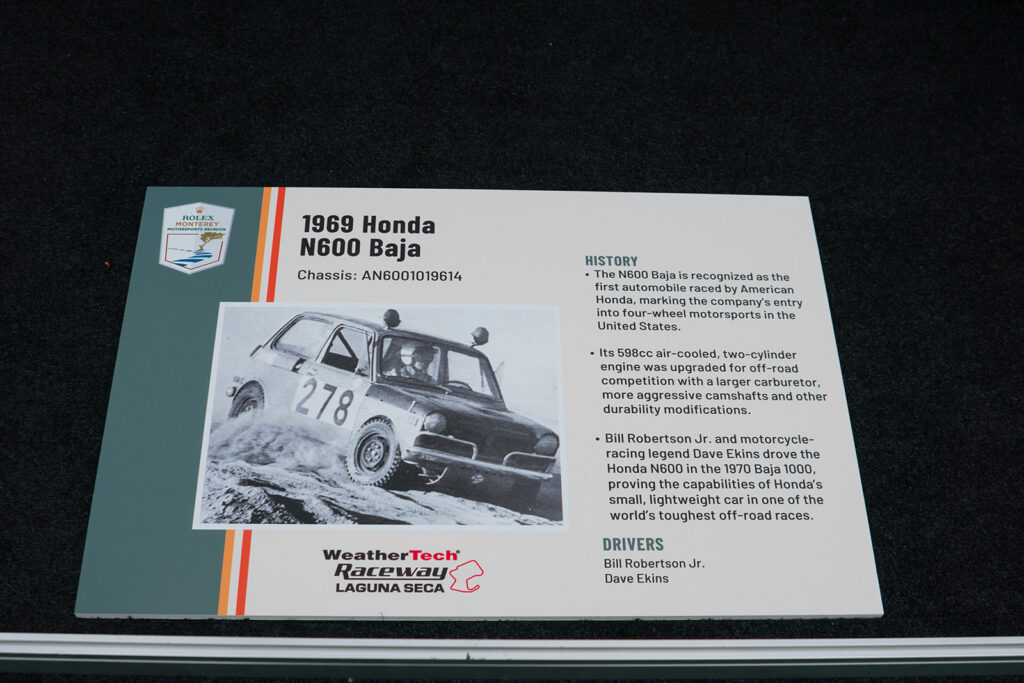
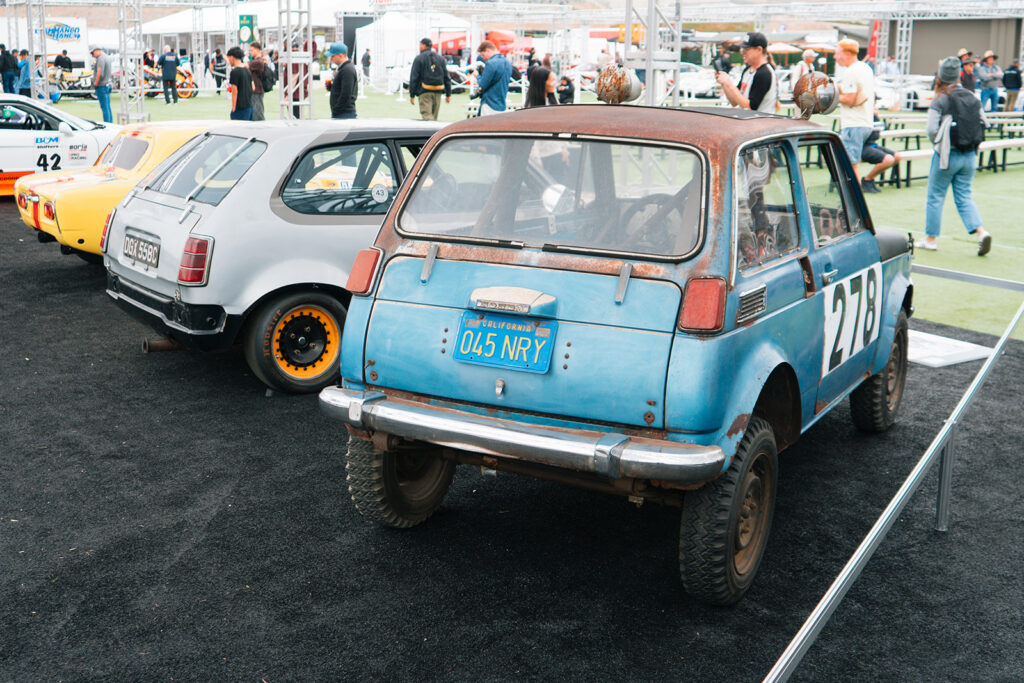
At the 2026 Rolex Monterey Motorsports Reunion, surrounded by machines with more cylinders, more victories, and considerably more swagger, sat a tiny Honda with an enormous story. The placard identified it as a 1969 Honda N600 Baja, chassis AN6001019614. To anyone unfamiliar with Honda’s earliest American automobiles, it could have been mistaken for a novelty act. The N600 is scarcely larger than the oversized tires fitted beneath it, and its air-cooled, two-cylinder engine would be overwhelmed by the powerplant in a modern side-by-side.
Yet this little Honda occupies an important place in American motorsports history. In November 1970, motorcycle racers and desert pioneers Dave Ekins and Bill Robertson Jr. entered it in the NORRA Mexican 1000, the race now commonly known as the Baja 1000.
The car did not win. It did not finish. In fact, it traveled only about 68 miles before a persistent driveline problem ended the attempt.
Still, American Honda recognizes it as the first automobile raced by the company in the United States. Every Honda and Acura competition car that followed, from IMSA prototypes and NSX GT3s to championship-winning Indy cars and Baja racing trucks, can trace at least a small part of its American lineage to this improbable little machine.
Honda N600 Baja: Before The Civic
Honda was already an established motorcycle manufacturer when it began testing automobiles in the United States during the late 1960s. Its first official American-market car was the N600, a larger and more powerful version of the Japanese-market N360.
The N600 established a formula that Honda would refine with the Civic: compact dimensions, an efficient engine, front-wheel drive, and a surprisingly useful interior.
In production form, the N600 weighed approximately 1,100 to 1,200 pounds. Its 598cc air-cooled two-cylinder engine produced somewhere between 35 and 45 horsepower, depending on specification, and drove the front wheels through a four-speed manual transmission.
It was economical, maneuverable, and unusually clever. It was not, however, the obvious foundation for a desert racer. The Baja car started life as a 1969 N600, although it is frequently described as a 1970 model because it competed that year and the N600 reached American showrooms as a 1970 model. Its chassis number, AN6001019614, provides the clearest way to identify the surviving vehicle.
The Men Who Helped Create Baja Racing
The N600’s drivers were far more experienced than their tiny race car might suggest. Dave Ekins was an accomplished off-road motorcycle racer and the younger brother of Bud Ekins, the racer and Hollywood stuntman closely associated with Steve McQueen. Dave competed in major desert races, the Catalina Grand Prix, international trials, and the Greenhorn Enduro. He was inducted into the AMA Motorcycle Hall of Fame in 2001.
Bill Robertson Jr. was part of the family behind Honda of Hollywood, one of the important early American Honda dealerships. Robertson was also an accomplished motorcycle rider with extensive desert experience.
Their involvement with Baja began in 1962, before the Mexican 1000 existed. American Honda wanted to demonstrate the durability of its new CL72 250 Scrambler motorcycle. Bud Ekins proposed a timed run from Tijuana to La Paz, but other commitments prevented him from making the trip. Dave Ekins and Bill Robertson Jr. took on the assignment.
There was no organized race, electronic timing, GPS navigation, or established network of pit crews. The riders recorded their departure at the telegraph office in Tijuana and had their arrival time stamped at the telegraph office in La Paz. Ekins completed the run in 39 hours and 54 minutes. Robertson arrived later after losing one cylinder near the finish.
Their ride helped establish the Baja Peninsula as the ultimate proving ground for motorcycles and automobiles. Other manufacturers and competitors soon followed suit, and in 1967, Ed Pearlman and the National Off-Road Racing Association organized the first Mexican 1000. Eight years after their pioneering motorcycle run, Ekins and Robertson returned to Baja in another small Honda. This time, they brought twice as many wheels.
Building a 600cc Desert Racer
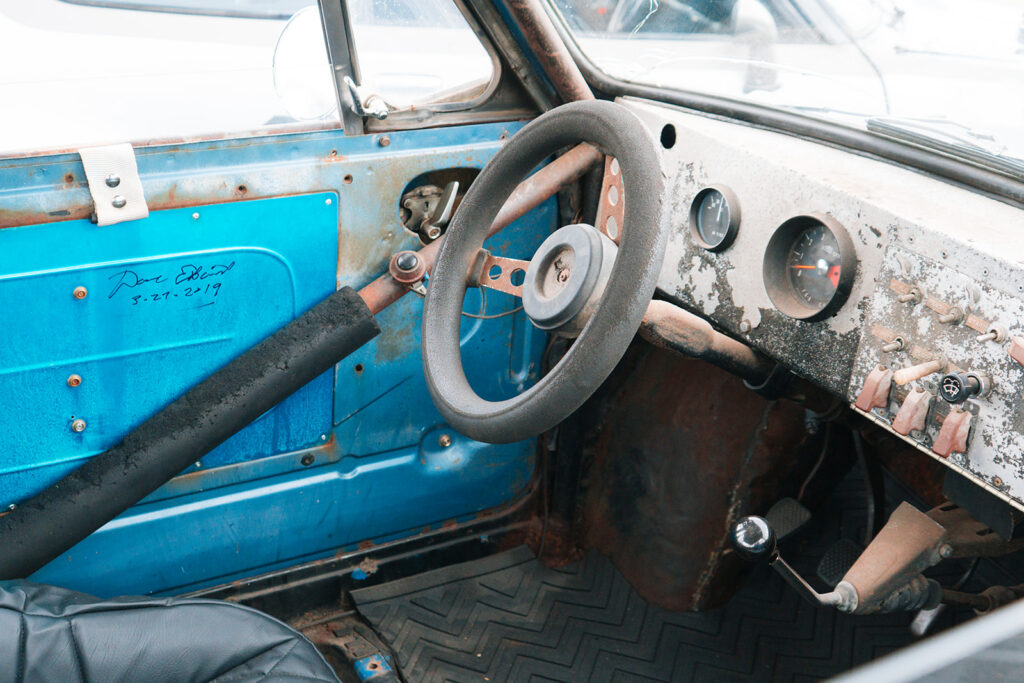
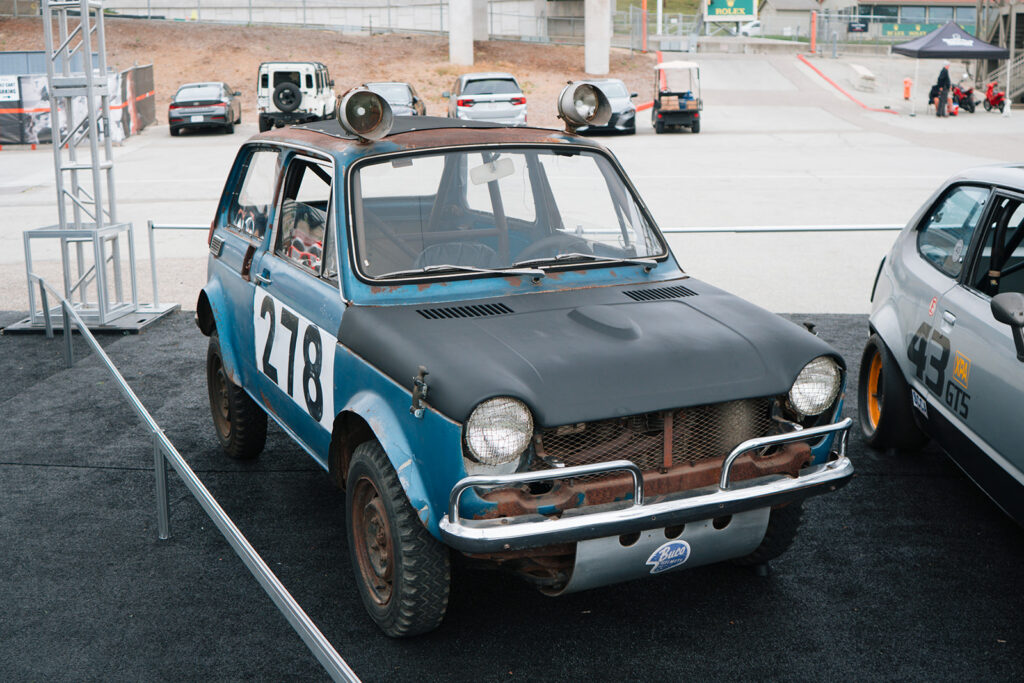
The N600 was reportedly prepared by a road-racing operation in Michigan. That background may explain both the cleverness of the finished car and the weakness that eventually stopped it. The production interior was stripped, and a substantial roll cage was installed. The car received oversized off-road tires, auxiliary lighting, an enlarged fuel system, competition instrumentation, and approximately four inches of additional ride height.
Its 598cc engine was modified with a larger carburetor, more aggressive camshafts, and durability improvements. Estimates place output at approximately 50 horsepower. That figure seems modest today, but it represented a meaningful improvement over the production engine. In a car this light, it was enough to make the Honda surprisingly lively.
The Baja equipment pushed the car’s weight to an estimated 1,500 pounds. A roughly 15-gallon fuel cell gave it considerably more range than the production N600, which carried less than seven gallons. Published estimates suggest a maximum speed near 90 mph and a potential range of approximately 225 miles. No surviving period dynamometer sheet or complete factory build record has surfaced, so those numbers are best considered informed estimates rather than verified specifications.
The underlying concept had merit. The N600 was light, economical, and narrow enough to maneuver around obstacles that larger vehicles might have to climb over. It carried less mass through deep sand and consumed relatively little fuel. There was just one problem. Raising a car’s suspension and preparing it for Baja are not necessarily the same thing.
Number 278 and the 1970 Mexican 1000
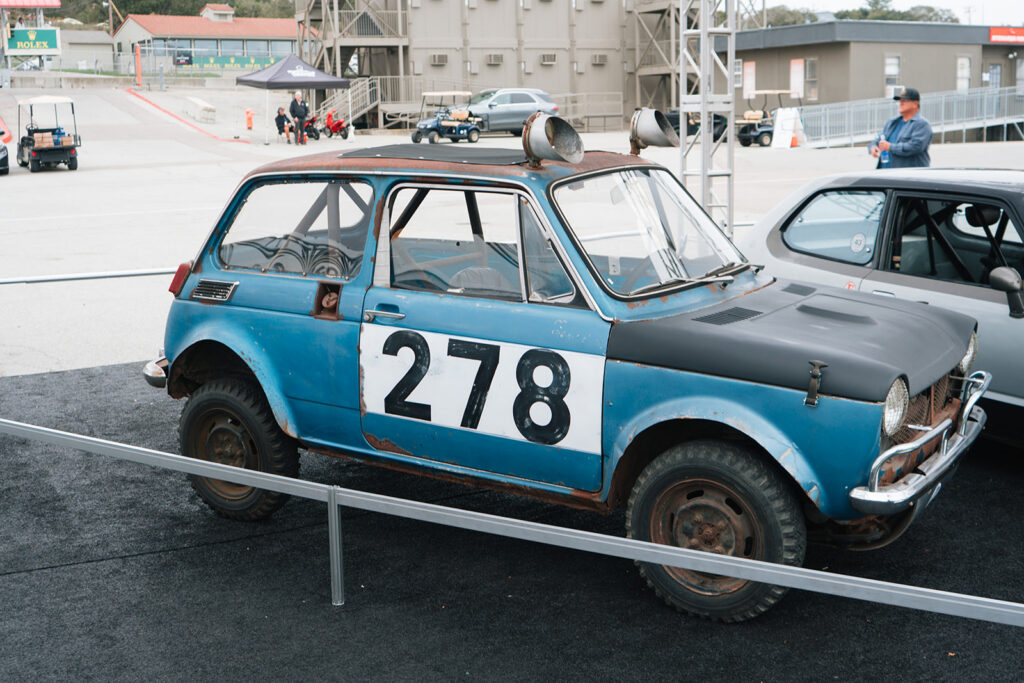
The little Honda carried race number 278, a number associated with Steve McQueen’s motorcycle competition career. Dave and Bud Ekins had both competed alongside McQueen in international motorcycle events. The number connected the N600 to the Southern California racing community that brought together motorcycle dealers, desert racers, Hollywood stuntmen, and weekend competitors.
Period photographs show the number prominently displayed on the doors as the car bounced through the Baja landscape. It was a subtle nod to McQueen, but it also reflected the informal nature of the era. In those days, the distance between Hollywood and the desert could be covered with a motorcycle, a pickup truck, and a good excuse to leave town.
The race took place from November 3 through November 6, 1970, and ran from Ensenada to La Paz. Officially, it was the NORRA Mexican 1000. NORRA organized the event from 1967 through 1972, before SCORE became the sanctioning body most closely associated with the Baja 1000.
The 1970 field reportedly included 271 vehicles. Purpose-built Volkswagen-powered buggies raced alongside Ford Broncos, motorcycles, production-based cars, and an assortment of machines that sometimes appeared to have been created after a particularly optimistic afternoon in somebody’s garage.
Drino Miller and Vic Wilson won the four-wheel competition in a Volkswagen-powered Miller special, completing the route in approximately 16 hours and seven minutes. The N600 would not be among the finishers.
The Failure That Ended the Race
Before the event, Ekins was allowed to test the Honda on a dry lake bed in the Mojave Desert. The car appeared to work well enough. Unfortunately, a dry lake is smooth. Baja is not.
The N600’s suspension had been raised approximately four inches, but its original suspension stops and basic front-wheel-drive geometry remained. When the car crested a rise and became airborne, the suspension extended to full droop.
That additional movement allowed the CV axle or drive-hub assembly to separate. The car would land without power being transmitted properly to one of its front wheels. Robertson would climb out, crawl underneath the Honda, force the hub or axle back into place, and send the car down the course again. At the next substantial jump, the assembly could pull apart once more. The cycle repeated through the night.
“We made it about 68 miles,” Ekins later told Road & Track. He explained that the Honda needed considerably more testing and development, but the team had to use the car it had been given. Eventually, Ekins and Robertson decided to retire rather than risk becoming stranded farther down the peninsula. The engine had not failed. The little car’s primary weakness was the relationship between its modified suspension travel and production-based driveline geometry.
A revised axle arrangement, stronger hub retention, properly limited suspension droop, and more testing over rough terrain might have produced a very different result. Instead, the N600 recorded a DNF after approximately 68 miles.
The Race Car That Disappeared
Disabled competition cars were sometimes abandoned in Baja because recovering them cost more than the cars were worth. The Honda was fortunate. It was retrieved and returned to the United States. Then it disappeared. For years, the car was believed to have been lost or destroyed. Eventually, it surfaced in a repair shop in the Seattle area, deteriorated after decades of storage and packed with spare Honda parts.
Honda N600 specialist Tim Mings recognized the car’s importance. Mings is widely known for restoring N600 serial number 1000001, the first of Honda’s American evaluation cars. He transported the Baja racer from Washington to Southern California in a Ford Transit. Among the items found with it was an original wiring diagram, another useful piece of evidence supporting the car’s identity.
Mings recommissioned the mechanical systems and installed a safe replacement fuel cell. The battered body, period roll cage, competition modifications, dents, and corrosion were largely preserved. When the Honda appeared at the 2018 Japanese Classic Car Show, it looked less like a restored museum piece and more like something pulled from behind an abandoned desert gas station. That was part of its appeal. Dave Ekins was later reunited with the car and signed one of its door panels.
The N600 presents the sort of question that increasingly confronts collectors and museums. Should an important racing car be returned to immaculate, as-new condition, or should its accumulated history remain visible? A complete cosmetic restoration would make the Honda prettier. It might also erase part of what makes the car important.
Its dents, improvised construction, worn components, and old repairs document how an early American Honda race car was actually built and used. It was not a modern heritage project created by a corporate marketing department. It was an earnest attempt to take one of America’s smallest automobiles through one of the world’s toughest races.
Mechanical stabilization makes sense. Active corrosion should be arrested, unsafe components should be replaced discreetly, and every original detail should be documented.
Turning it into a glossy replica of its 1970 appearance would be more complicated. The N600 does not need to look new to tell its story. Frankly, Baja did not look new when it met the Honda, either.
Honda’s First American Race Car
Calling the N600 Honda’s first race car requires one important qualification. Honda had already raced automobiles in Japan and entered Formula One during the 1960s. This was not the first competition car in the company’s global history.
It is recognized as the first automobile raced by American Honda and the company’s first factory-backed American automotive competition entry. That distinction gives chassis AN6001019614 an importance far beyond its performance in the 1970 Mexican 1000.
Honda would go on to win Formula One races and championships, dominate eras of American open-wheel competition, capture major sports-car victories, and develop successful off-road racing programs. Its American racing machinery would eventually produce hundreds of times the N600’s estimated 50 horsepower. The Baja car began that lineage without a podium, trophy, or finish.
It simply showed up. There is something wonderfully American about that. Take the smallest car in the showroom, fit tires that look absurdly large, paint a racing number on the doors, and point it toward La Paz. The Honda traveled only 68 miles through Baja. More than half a century later, its story is still going.
Quick Facts: 1969 Honda N600 Baja
- Model: 1969 Honda N600
- Chassis: AN6001019614
- Race number: 278
- Engine: 598cc air-cooled two-cylinder
- Estimated output: Approximately 50 horsepower
- Transmission: Four-speed manual
- Drivetrain: Front-wheel drive
- Estimated race weight: Approximately 1,500 pounds
- Fuel capacity: Approximately 15 gallons
- Drivers: Dave Ekins and Bill Robertson Jr.
- Event: 1970 NORRA Mexican 1000
- Race dates: November 3-6, 1970
- Route: Ensenada to La Paz
- Result: Did not finish
- Distance completed: Approximately 68 miles
- Retirement cause: Repeated CV axle and drive-hub separation
- Historical significance: First automobile raced by American Honda
- Recent appearance: 2026 Rolex Monterey Motorsports Reunion
Frequently Asked Questions
What is the Honda N600 Baja?
The Honda N600 Baja is a modified 1969 Honda N600 entered by American Honda in the 1970 NORRA Mexican 1000. Honda recognizes it as the first automobile raced by American Honda.
Who drove the Honda N600 in the 1970 Baja 1000?
Dave Ekins and Bill Robertson Jr. drove the car. Both were experienced off-road motorcycle racers who had completed a pioneering timed ride from Tijuana to La Paz on Honda motorcycles in 1962.
Did the Honda N600 finish the Baja 1000?
No. The car retired after approximately 68 miles because its CV axle or drive-hub assemblies repeatedly separated when the suspension extended over jumps.
What engine was in the Baja N600?
The car used a modified 598cc air-cooled two-cylinder engine. It reportedly received a larger carburetor, more aggressive camshafts, and durability modifications, producing an estimated 50 horsepower.
Why was the N600’s race number 278?
Number 278 was associated with Steve McQueen’s motorcycle racing. Dave and Bud Ekins competed with McQueen, and the number connected the Honda to that Southern California motorcycle and desert-racing circle.
Is the original Honda N600 Baja still in existence?
Yes. The car was rediscovered in a Seattle-area repair shop and recovered by Honda N600 specialist Tim Mings. It was returned to running condition while retaining much of its original body, roll cage, competition equipment, and weathered appearance.
Was this Honda’s first race car?
It was not Honda’s first competition automobile worldwide. Honda had already raced cars in Japan and Formula One. It is recognized as the first automobile raced by American Honda.
Where was the car displayed in 2026?
Honda displayed the N600 Baja at the 2026 Rolex Monterey Motorsports Reunion at WeatherTech Raceway Laguna Seca as part of its American motorsports heritage presentation.