
 TGR Staff
Some project cars begin with a spreadsheet. Others begin with a questionable idea that somehow survives long enough to become brilliant. Jimmy Oakes’ latest build falls firmly into the second category.
Known online for his hands-on automotive builds, engine swaps, drifting content, and approachable workshop style, Oakes has built a major YouTube following by taking ambitious ideas and actually finishing them. His newest project, however, may be his wildest yet: a 1978 Porsche 911 SC powered by a Ferrari-built Maserati F136 V8.
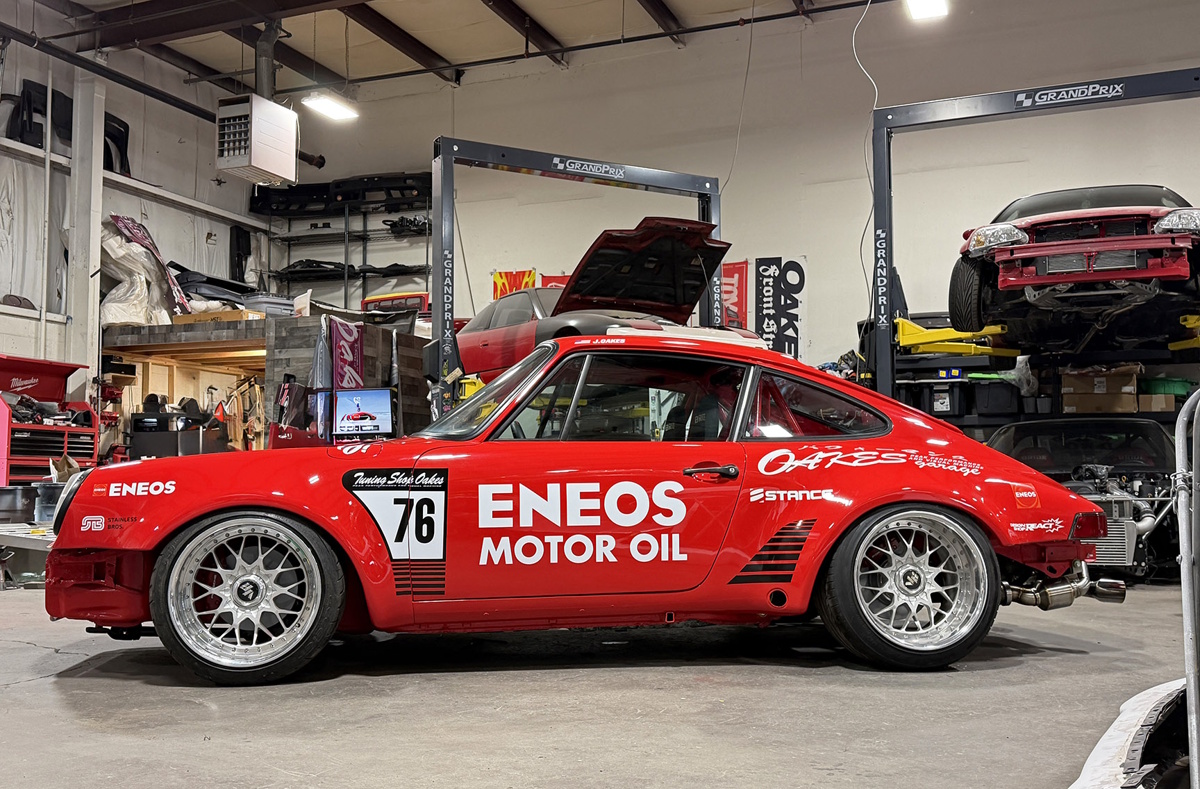
Nicknamed the Porrari, the car made its public debut with ENEOS Motor Oil during Formula DRIFT Connecticut at Stafford Motor Speedway, held June 18-20, 2026. The event marked Formula DRIFT’s first visit to the historic Connecticut oval, bringing both PRO and PROSPEC competition to Stafford Springs for a weekend of tire smoke, paddock traffic, and the kind of machinery that makes people stop mid-sentence.
Oakes’ Porsche fit right in. Not because it is a drift car in the conventional sense, but because it captures the spirit that has made drift culture so influential: build the car you want, make it work, and let the internet argue about it later.
Meet The Porrari
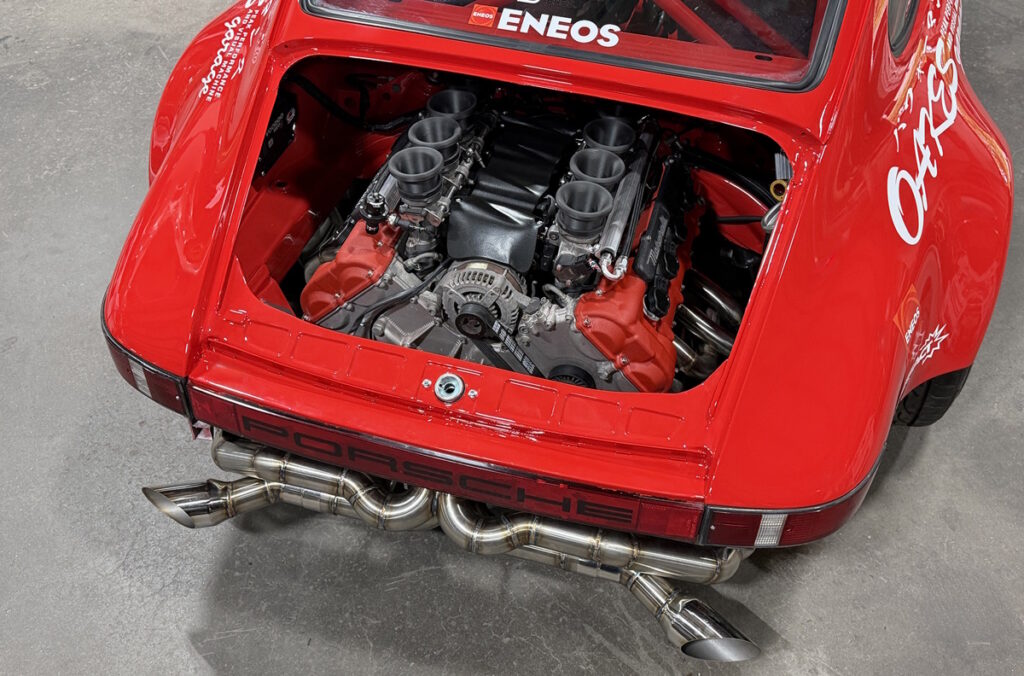
At the center of the build is a naturally aspirated Ferrari/Maserati F136 flat-plane crank V8 sourced from a 2007 Maserati Quattroporte. In stock form, the engine is good for roughly 400 horsepower, which is more than double what a late 1970s Porsche 911 SC produced when new.
That alone would be enough to make the project interesting, but installing the engine in the back of a 911 is where things get properly complicated. The original 911 SC used an air-cooled 3.0-liter flat-six. The F136 V8 is water-cooled, physically larger, and from an entirely different engineering universe. This was not a weekend swap. This was a full reimagination of the car.
Before the team could even focus on performance, the 48-year-old Porsche needed a complete restoration. The chassis was stripped and repaired, and the roof was replaced with a carbon fiber roof skin from EP9 Autosport. Anthony Mendoza handled much of the bodywork and paint, helping bring the car back to life before the custom fabrication could begin in earnest.
How Do You Put A Ferrari-Built V8 In A 911?
Carefully. Then probably again.
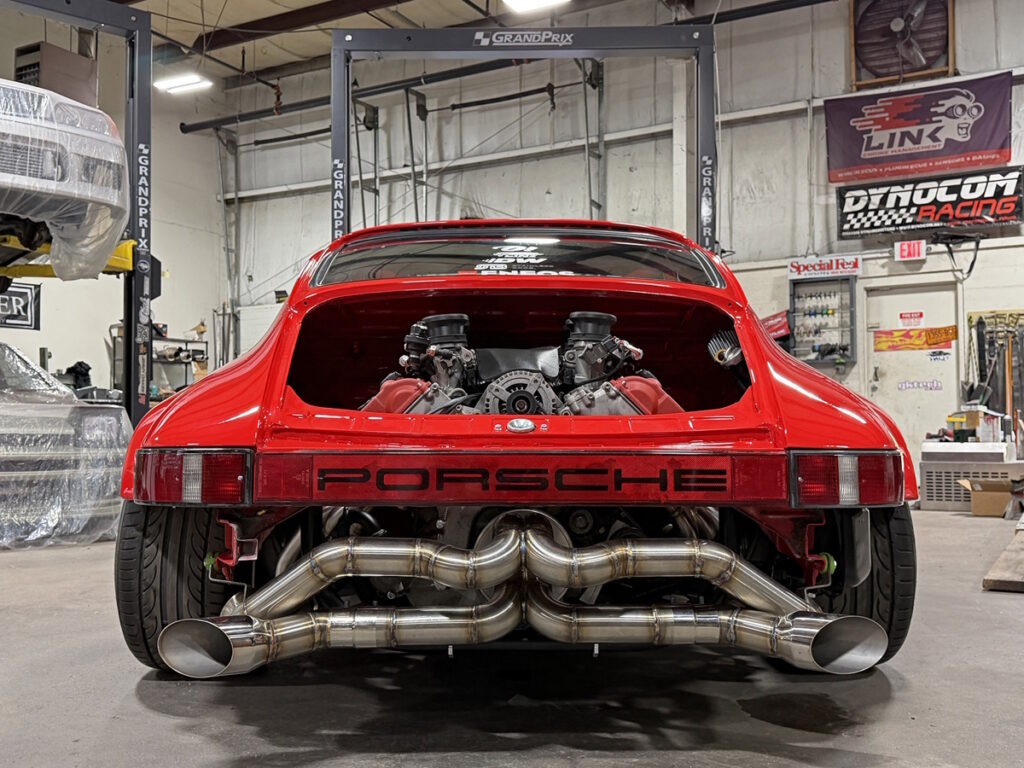
Oakes and his crew fabricated a custom cradle to support the V8 and mate it to a Porsche 996 transmission. Kennedy Engineered Products supplied the bellhousing, along with a custom clutch and flywheel package. That allowed the Ferrari-built engine and Porsche gearbox to function together, which is exactly the sort of sentence that makes purists reach for a paper bag.
The factory wiring was essentially gone during the extensive fabrication, so Wired by Trap created a custom harness to support the ignition, engine systems, and Link ECU G5 Voodoo Neo 6 engine management. In a build this unusual, wiring is not glamorous, but it is the difference between a running car and expensive garage sculpture.
The exhaust was another major challenge. With the F136 wedged into the rear of the Porsche, the car needed custom headers and an exhaust system to breathe properly. James “Bopper” Moran fabricated the system using Stainless Bros materials, giving the engine the sort of voice a flat-plane V8 deserves.
Then Jimmy Oakes took it a step further.
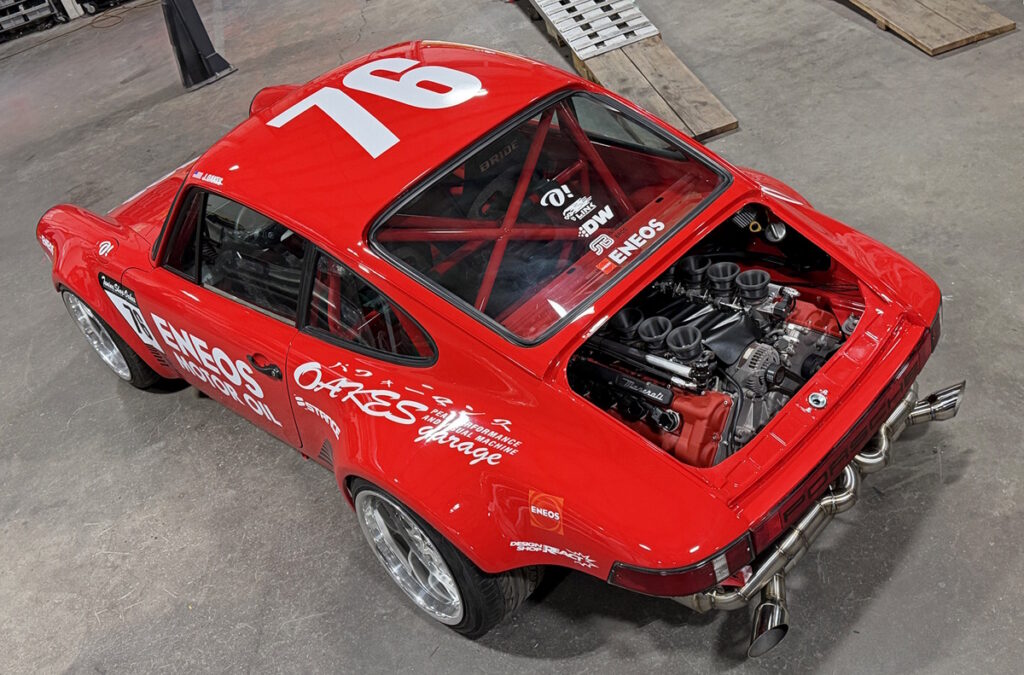
Rather than leave the F136 alone, the team upgraded it with individual throttle bodies using parts adapted from the E90/E92 BMW M3’s S65 V8. Ding Dong Drift designed and 3D-printed the custom adapters and trumpets, helping sharpen throttle response and adding to the induction sound as the engine climbs toward its 8,000-rpm redline.
So yes, it is a Porsche with a Ferrari-built Maserati engine, BMW throttle body hardware, a Porsche 996 transmission, and a Japanese oil sponsor. Somewhere, a concours judge just felt a disturbance in the force.
Cooling An Air-Cooled Porsche That Is No Longer Air-Cooled
One of the biggest engineering hurdles came from the simple fact that the original 911 SC did not need a front radiator. The V8 does. To make the setup work, the team cut the front tub to package a radiator and fan.
That created a new problem with the factory gas tank, so the team replaced it with a 10-gallon Radium fuel cell mounted behind the new radiator. With water, fuel, and electrical lines now needing to run through the car, the crew built a removable tunnel down the center of the chassis. It is a smart solution that allows direct routing and easier access for future service.
That kind of detail matters. The flashiest part of the Porrari is the engine hanging out back, but the reason the car works is because of the hidden problem-solving underneath. Custom builds live or die by those decisions.
Suspension, Brakes, And Widebody Work
With more than twice the original power, the car needed a serious chassis update. The rear suspension was removed during the engine installation, then rebuilt with additional bracing. The factory torsion bars were eliminated in favor of custom Stance Suspension coilovers, giving the car a more modern and adjustable setup.
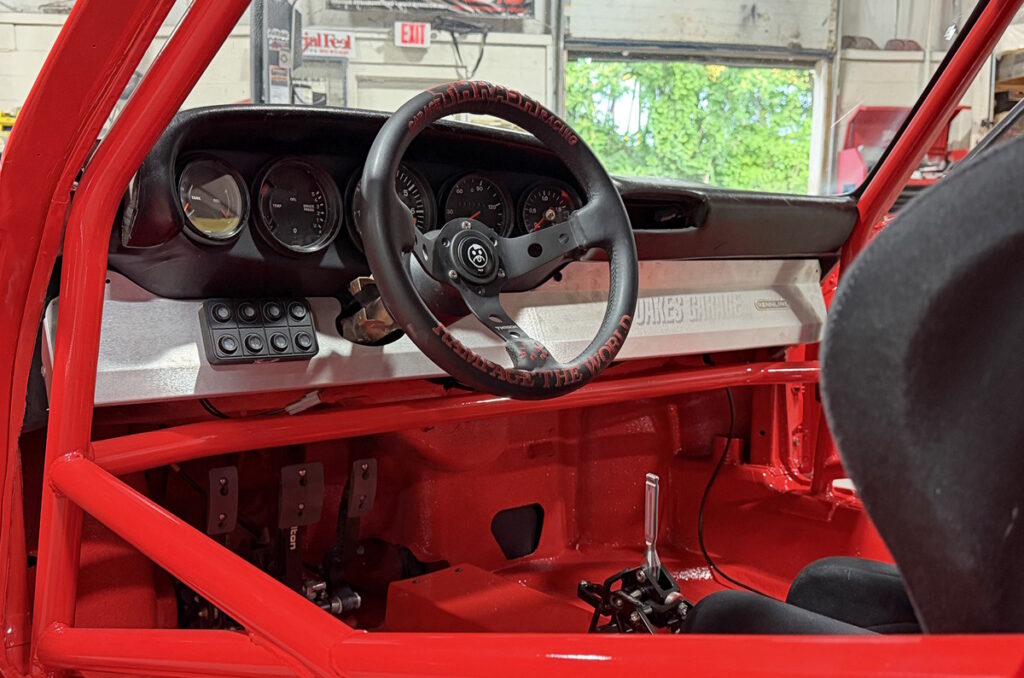
For safety and rigidity, Accurate Fabrication in Bristol, Connecticut built a full roll cage. That is not just an aesthetic choice. With this much fabrication, added power, and track-focused intent, structure matters.
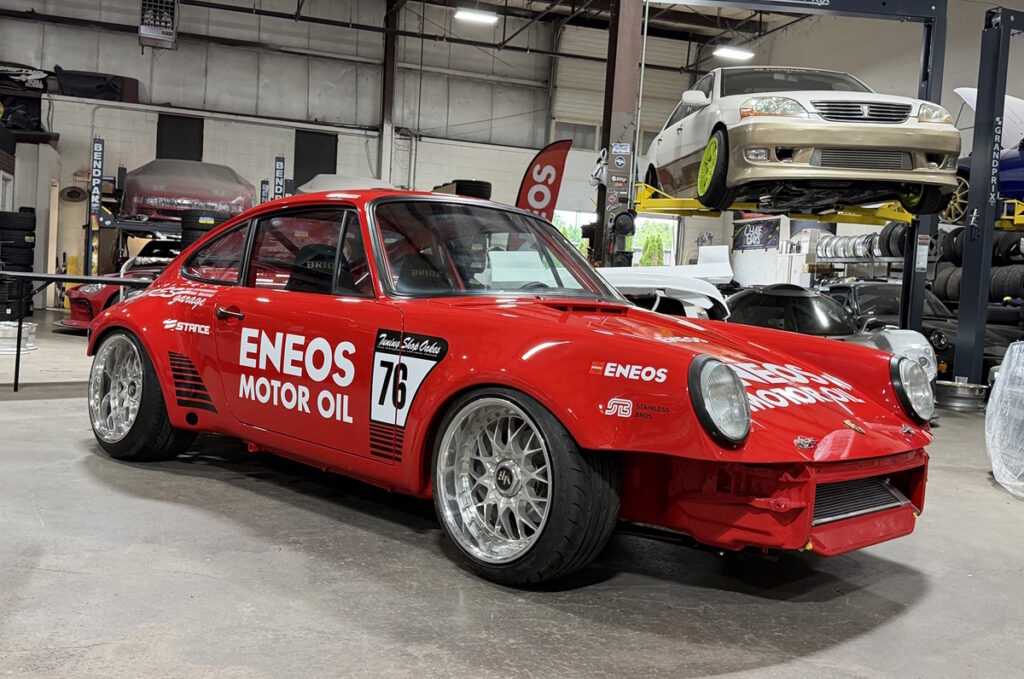
The car also went widebody. Jimmy Oakes converted the formerly narrow-bodied 911 using metal fenders welded to all four corners by close friend Brian Hall. Finished in Porsche Guards Red, the widebody conversion gives the build the attitude it deserves without losing the visual language of an air-cooled 911.
The wheel and tire package includes 17×9.5-inch front and 17×10.5-inch rear RAYS VRX-10 wheels wrapped in Accelera 651 Sport tires, sized 235/40 R17 up front and 255/40 R17 in the rear. Braking comes from Porsche Boxster four-piston Brembo calipers at all four corners, paired with EBC rotors and Chase Bays lines.
The end result is a car that still reads as a classic 911, but one that has clearly spent some time in the wrong crowd and come back more interesting.
Why ENEOS Brought It To Formula DRIFT
As an ENEOS brand ambassador, Jimmy Oakes used the company’s engine and transmission lubricants throughout the build. ENEOS showcased the Porrari in its booth at Formula DRIFT Connecticut, where fans could also meet sponsored drivers Fredric Aasbo and Collete Davis.
The venue made sense. Formula DRIFT has always been more than a race series. It is a rolling car culture festival where fabrication, individuality, and mechanical creativity are part of the show. A Ferrari-powered Porsche 911 is not merely a build for the paddock. It is paddock bait of the highest order.
Stafford Motor Speedway was also a fitting place for the reveal. Formula DRIFT’s June 18-20 event brought the series to Stafford for the first time, adding the Connecticut short track to a national schedule that already includes venues such as Long Beach, Road Atlanta, Orlando Speed World, Indianapolis Raceway Park, Evergreen Speedway, and Las Vegas Motor Speedway.
For a new stop on the Formula DRIFT calendar, debuting a build like the Porrari gave the weekend an extra dose of enthusiast spectacle.
The Bigger Point
It would be easy to dismiss the Porrari as internet bait, but that would miss the point. Cars like this are important because they keep the mechanical imagination alive.
Modern performance cars are faster, more refined, and more capable than ever. They are also increasingly difficult to modify in meaningful ways. The Porrari feels like a reminder of an older, messier kind of car culture, one built around welding, measuring, cutting, failing, rethinking, and trying again. It is not about preserving a car exactly as the factory intended. It is about asking what else it could become.
That kind of thinking has always driven the best parts of hot rodding, import tuning, drifting, and grassroots motorsport. The Porrari may be an unusual combination of Italian, German, Japanese, and American influences, but the idea behind it is universal: build something that makes people look twice.
Jimmy Oakes and ENEOS did exactly that. The Porrari is not subtle, sensible, or easily categorized. Good. Car culture has enough sensible things already.
Quick Facts
- Vehicle: 1978 Porsche 911 SC
- Nickname: Porrari
- Builder: Jimmy Oakes
- Debut: Formula DRIFT Connecticut, June 18-20, 2026
- Venue: Stafford Motor Speedway, Stafford Springs, Connecticut
- Engine: Ferrari-built Maserati F136 flat-plane crank V8
- Donor Engine Source: 2007 Maserati Quattroporte
- Approximate Power: 400 horsepower
- Original Engine Replaced: 3.0-liter air-cooled Porsche flat-six
- Transmission: Porsche 996 transmission
- Bellhousing, Clutch, Flywheel: Kennedy Engineered Products
- Engine Management: Link ECU G5 Voodoo Neo 6
- Wiring: Wired by Trap custom harness
- Induction: Individual throttle bodies adapted from BMW E90/E92 M3 S65 V8 components
- Cooling: Front-mounted radiator and fan
- Fuel System: 10-gallon Radium fuel cell
- Suspension: Custom Stance Suspension coilovers
- Roll Cage: Accurate Fabrication
- Bodywork: Widebody metal fenders, carbon fiber roof skin from EP9 Autosport
- Paint: Porsche Guards Red
- Wheels: RAYS VRX-10, 17×9.5 front and 17×10.5 rear
- Tires: Accelera 651 Sport, 235/40 R17 front and 255/40 R17 rear
- Brakes: Porsche Boxster four-piston Brembo calipers with EBC rotors and Chase Bays lines
- Sponsor: ENEOS Motor Oil
FAQ
What is Jimmy Oakes’ Porrari?
The Porrari is a custom 1978 Porsche 911 SC built by Jimmy Oakes and powered by a Ferrari-built Maserati F136 V8 from a 2007 Maserati Quattroporte.
Why is it called the Porrari?
The nickname combines Porsche and Ferrari, referencing the Porsche 911 chassis and the Ferrari-built V8 engine.
What engine is in Jimmy Oakes’ Porsche 911?
The car uses a naturally aspirated Ferrari/Maserati F136 flat-plane crank V8 sourced from a 2007 Maserati Quattroporte.
How much power does the Porrari make?
The F136 V8 is rated at approximately 400 horsepower in this application, more than double the output of the original 1978 Porsche 911 SC.
Where did the Porrari debut?
The car debuted in the ENEOS booth at Formula DRIFT Connecticut at Stafford Motor Speedway from June 18-20, 2026.
Is the Porrari a drift car?
The Porrari debuted at a Formula DRIFT event and was built by a creator known for drifting and performance builds, but the release presents it as a custom project car rather than a competition drift car.
What transmission does the Porrari use?
The car uses a Porsche 996 transmission mated to the F136 V8 with components from Kennedy Engineered Products.
What makes the build so difficult?
The build required replacing an air-cooled flat-six with a water-cooled V8, fabricating engine and transmission mounts, creating a custom wiring harness, adding a front-mounted radiator, routing new fuel and coolant lines, and heavily modifying the suspension and chassis.
What color is the Porrari?
The car is finished in Porsche Guards Red.
Who sponsored the build?
ENEOS Motor Oil supported the build, and Jimmy Oakes is part of Team ENEOS as a brand ambassador.





This is wild, but I am sure Maserati, Ferrari, and Porsche all hate it.
Love a car that can piss off both the Porsche and Ferrari communities.