

 Michael Satterfield
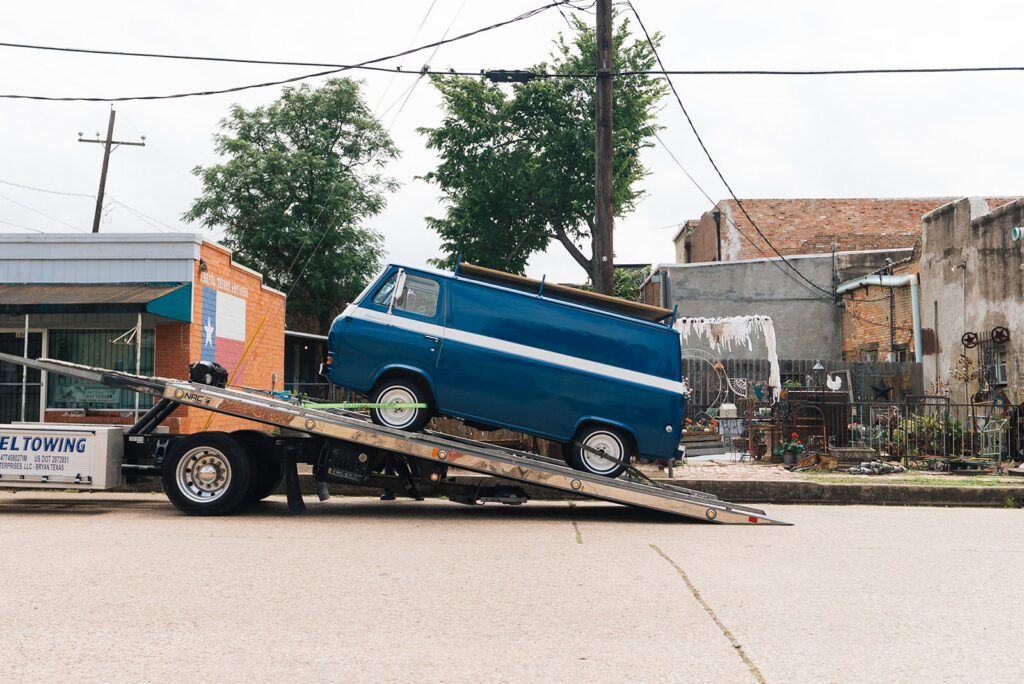
With paint complete and the Econoline running and driving again, the Bulova Racing Support Van heads to Starr Studios in Calvert, Texas, where traditional sign painter Sean Starr adds its graphics entirely by hand.
There is a moment in every restoration when a project stops looking like a collection of parts and starts looking like the thing you imagined when you first started dreaming of it. For our 1962 Ford Econoline Bulova Racing Support Van, that moment came with a paintbrush.
When we first found the Econoline in Idaho, it was still wearing the scars of decades spent as a working van. We hauled it nearly 1,800 miles back to Texas with a simple idea: build the kind of race-team support vehicle that could have existed in the paddock during the golden age of American sports car racing.
Not a modern show van wearing a vintage costume. Not a vinyl-wrapped promotional vehicle. We wanted it to feel right.

After the van arrived in Texas, the first stage of the restoration took place at Apex Auto Works. The Econoline was stripped down, decades of use were uncovered, and a few pieces of hidden damage were discovered along the way. Thankfully, the old Ford proved to be remarkably solid underneath it all.
Bodywork followed, panels were straightened, and the tired old red paint disappeared beneath fresh blue paint. At the same time, the mechanical side of the project came together. The van now starts, runs, drives, and has reached the point where it feels less like a restoration sitting around a shop and more like a vehicle again.
But fresh paint alone does not make a race van. For that, we headed to Calvert, Texas.
The Old-Fashioned Way
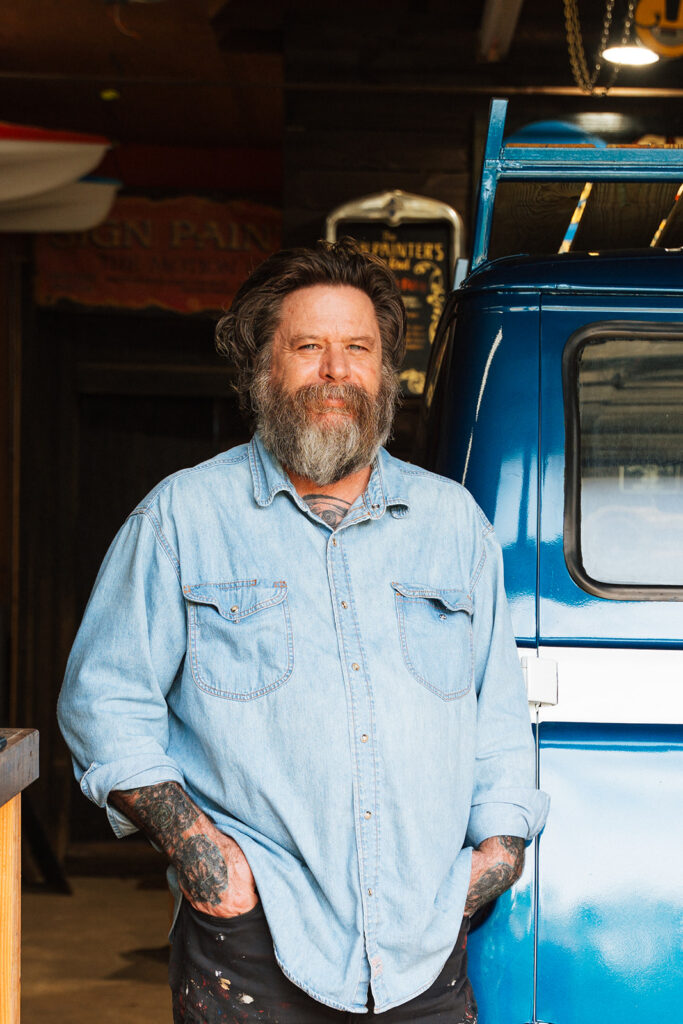
On Main Street in Calvert, behind the doors of Starr Studios, Sean Starr still practices a craft that once defined everything from race cars and service trucks to storefronts and delivery vans.
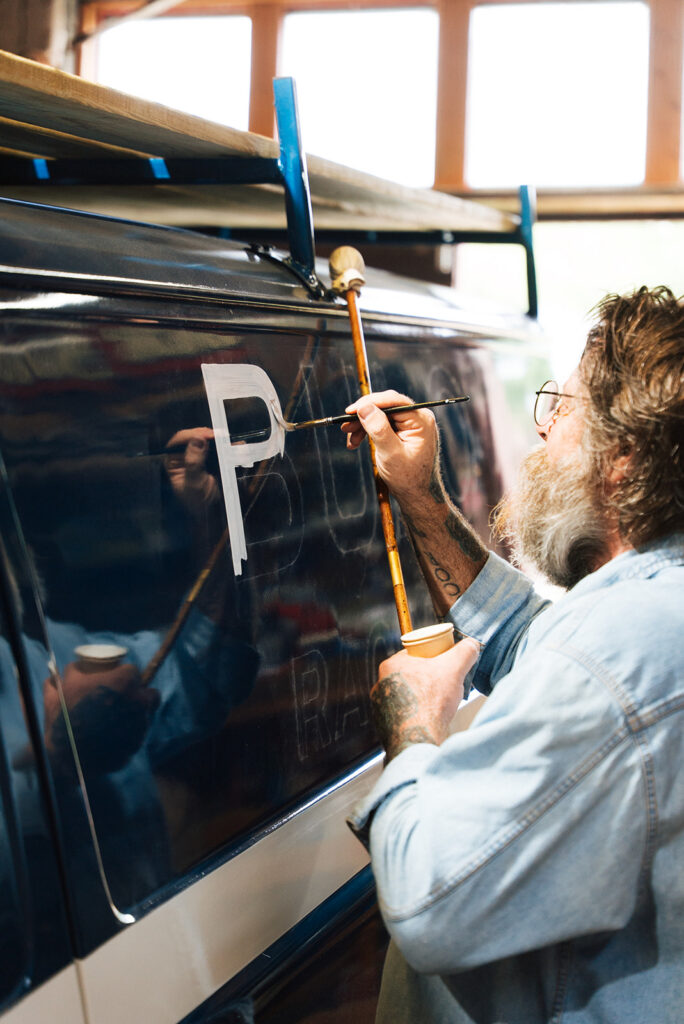
Sean is a traditional sign painter. There are no giant sheets of printed vinyl waiting to be applied. No computer-controlled machine cutting out the finished product, and no laminated graphics being stretched across the side of the van. There are brushes, paint, measurements, layout lines, steady hands, and years of experience.
Sean has spent more than 35 years working as a sign painter, artist, and master gilder. His work has appeared around the country and has been featured in the documentary and book Sign Painters. Today, he operates Starr Studios from the historic Casimir Building on Main Street in Calvert. I profiled Sean and his work on The Gentleman Racer back in 2020 after discovering his Calvert studio, and over the years, we have had the opportunity to work with him on several automotive projects. Every time, the appeal is the same.
The finished work has a human quality that modern production methods simply cannot duplicate. And for the Bulova van, that mattered.
Building The Econoline That Could Have Existed
The entire philosophy behind this Econoline has been to ask a simple question: if Bulova had sent a Ford van to support a racing team in the 1960s, what might it have looked like?
That means resisting the temptation to make everything too perfect. Vintage race transporters and support vehicles were working equipment. They hauled tools, tires, timing equipment, fuel cans, spare parts, and whatever else a team thought it might need for a weekend at the track. Graphics were there to identify the team and promote sponsors, but the vehicle still had a job to do.
Look through photographs of racing paddocks from the period, and the transporters are often as interesting as the cars themselves. Volkswagen buses, Ford Econolines, Chevrolet vans, pickups, station wagons, box trucks, and purpose-built transporters all became part of the visual landscape of motorsport. Many carried graphics that were painted directly onto their bodies by local sign painters.
That is the world we wanted this van to belong to. A modern vinyl wrap might have been faster. It certainly would have been easier. It also would have been a lot cheaper. But easy was never really the point.

Sean Starr Puts Brush to Paint
Watching traditional sign painting happen is surprisingly different from watching almost any other stage of a restoration. Bodywork involves noise, grinders, sanding blocks, and clouds of dust. Mechanical work comes with ratchets, grease, and the occasional vocabulary lesson when a 64-year-old fastener refuses to cooperate.
Sign painting is quieter. The artwork is laid out, proportions are checked, and guide lines establish where everything needs to live. Then Sean begins painting directly onto the freshly finished body. There is something slightly nerve-racking about watching someone put a loaded paintbrush against paint that has just gone through an entire restoration process.
There is also something incredibly satisfying about it. Letter by letter and line by line, the van begins to change. The graphics are not being applied on top of the project as a final accessory. They become part of the van itself.
That distinction is subtle until you see the work in person. Slight variations in the brush strokes remind you that a person made it. Edges and lines have character. The graphics respond to the shapes of the body rather than simply sitting on them. It is exactly the kind of detail that gives an old commercial vehicle personality.

Why Hand-Painted Graphics Matter
Traditional sign painting once existed almost everywhere. The local hardware store had a painted window. The delivery truck had hand-lettered doors. Gas stations, restaurants, race teams, garages, dealerships, and small businesses all depended on commercial artists who could turn a blank wall, window, or vehicle into advertising.
Today, much of that work can be created on a laptop and produced by a machine in a fraction of the time. Technology has made commercial graphics faster, cheaper, and more consistent. There is nothing inherently wrong with that.
But consistency was not what this project needed. A classic Ford Econoline dressed as a period racing support van should carry evidence of the people who built it.
That is already true beneath the paint, where the work completed at Apex Auto Works brought the body back to life. It is true mechanically every time the old Ford fires up and heads down the road. Now it is visible on the outside through Sean’s brushwork.
In an age when almost anything can be reproduced digitally, traditional craftsmanship feels increasingly valuable. You can print something that looks old. It is much harder to make something feel authentic.
Becoming the Bulova Racing Support Van
Standing back from the Econoline now, it is becoming much easier to see the finished project.
When we hauled the van home from Idaho, most of what we saw existed in our heads. The old red paint, dents, worn interior, and decades of accumulated work-truck history required a little imagination.
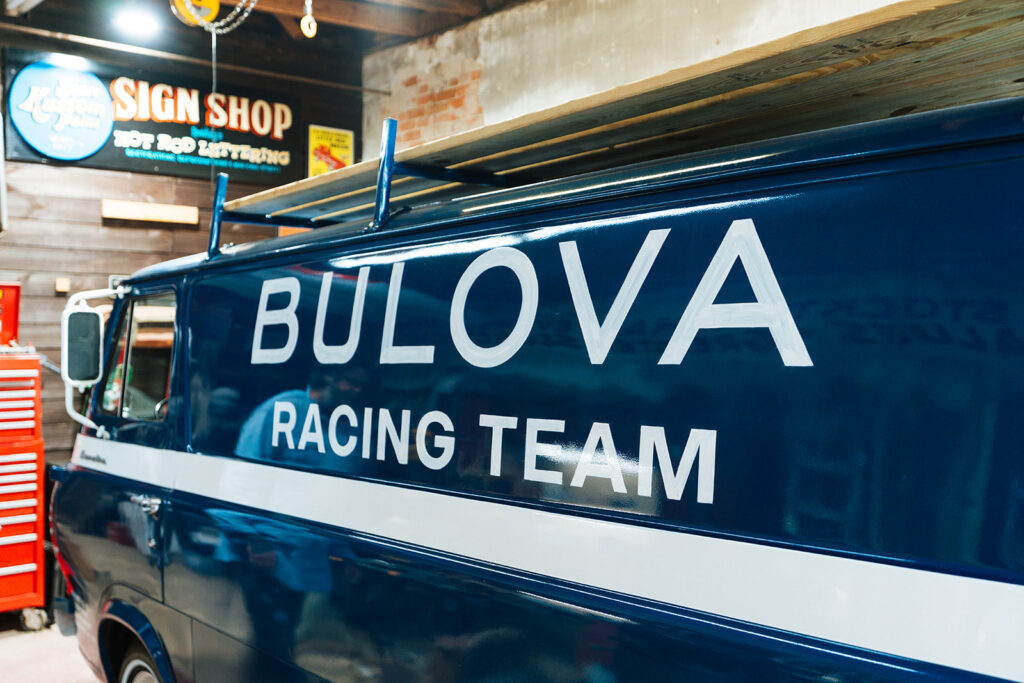
Now the shape is there. The body has been restored. The paint is finished. The van is running and driving well. And at Starr Studios, the graphics are transforming an old Ford Econoline into the Bulova Racing Support Van we envisioned from the beginning.
There is still work ahead. Once Sean finishes the hand-painted graphics, the van will move on to upholstery. The interior needs to receive the same attention as the exterior, with materials and details that complement the period racing theme without turning the van into something too precious to use.
After that will come the final details. Tools. Displays. Period-correct dash plaques. Accessories. The little pieces that make a support vehicle look like it has a reason for being parked next to a race car.
Because ultimately, this van is meant to be used. The plan has always been for it to travel to races, shows, watch events, and attend automotive gatherings. It will serve as a rolling display for Bulova’s connection to motorsport and as a reminder of an era when racing teams crossed the country with everything they needed packed into a van.
Most importantly, it should look like it belongs there. Thanks to Sean Starr and a few carefully loaded paintbrushes, it finally does.
Watch The Video Of Sean Transforming The Van Below:
Quick Facts: Bulova Racing Support Van
- Vehicle: 1962 Ford Econoline
- Project: Bulova Racing Support Van
- Graphics: Traditional hand-painted lettering and artwork
- Artist: Sean Starr
- Studio: Starr Studios
- Location: Calvert, Texas
- Restoration Work: Apex Auto Works
- Current Status: Painted, running, driving, and receiving exterior graphics
- Design Inspiration: 1960s American motorsports support and paddock vehicles
- Why Hand-Painted Graphics: To recreate the look and character of period race-team transporters rather than using modern vinyl graphics
- Next Steps: Upholstery, interior finishing, period-inspired equipment, displays, and final details
Frequently Asked Questions
What is the Bulova Racing Support Van?
The Bulova Racing Support Van is a restored 1962 Ford Econoline being transformed into a period-inspired racing support vehicle. The goal is to create the type of van that could have accompanied an American racing team to tracks during the 1960s.
Who painted the graphics on the Bulova van?
The graphics were hand-painted by traditional sign painter Sean Starr of Starr Studios in Calvert, Texas. Starr has decades of experience in traditional sign painting, lettering, and gilding.
Why were the graphics hand-painted instead of using vinyl?
Hand-painted graphics were common on commercial vehicles, race transporters, and support vehicles during the period that inspired the build. Painting the graphics by hand gives the van a more authentic appearance and allows the individual character of the artist’s brushwork to become part of the vehicle.
What year is the Bulova Racing Support Van?
The project is based on a 1962 Ford Econoline.
Where was the Bulova van restored?
Much of the restoration and bodywork was completed by Apex Auto Works in Texas. After bodywork and paint were completed, the van traveled to Starr Studios in Calvert for its hand-painted graphics.
Is the Bulova van running and driving?
Yes. The Econoline is now running and driving well, and the major exterior restoration and paintwork have been completed.
What happens next in the restoration?
After the hand-painted graphics are finished, the van will move on to upholstery and interior finishing. Period-inspired equipment, displays, accessories, and other final details will then be installed.
Will the Bulova Racing Support Van be driven?
Yes. The van is being built to be used rather than simply displayed. The plan is for it to appear at races, automotive events, watch events, shows, and other gatherings as a rolling representation of Bulova’s connection to motorsports.





It is always great to see a project car done right and not just doing everything in decals.
The best way to make something look like it is original is to do it the original way
I really like reading posts like this that show art is still happening outside of AI.