

 Michael Satterfield
There is something special about a roadside attraction that makes you leave the highway and head into the unknown. For generations of Americans traveling Route 66, those detours have often become the most memorable parts of the journey. Giant statues, mysterious geological formations, unusual museums, and quirky trading posts have all earned their places in the mythology of the Mother Road. But few can compete with the sheer spectacle of Arizona’s Meteor Crater.
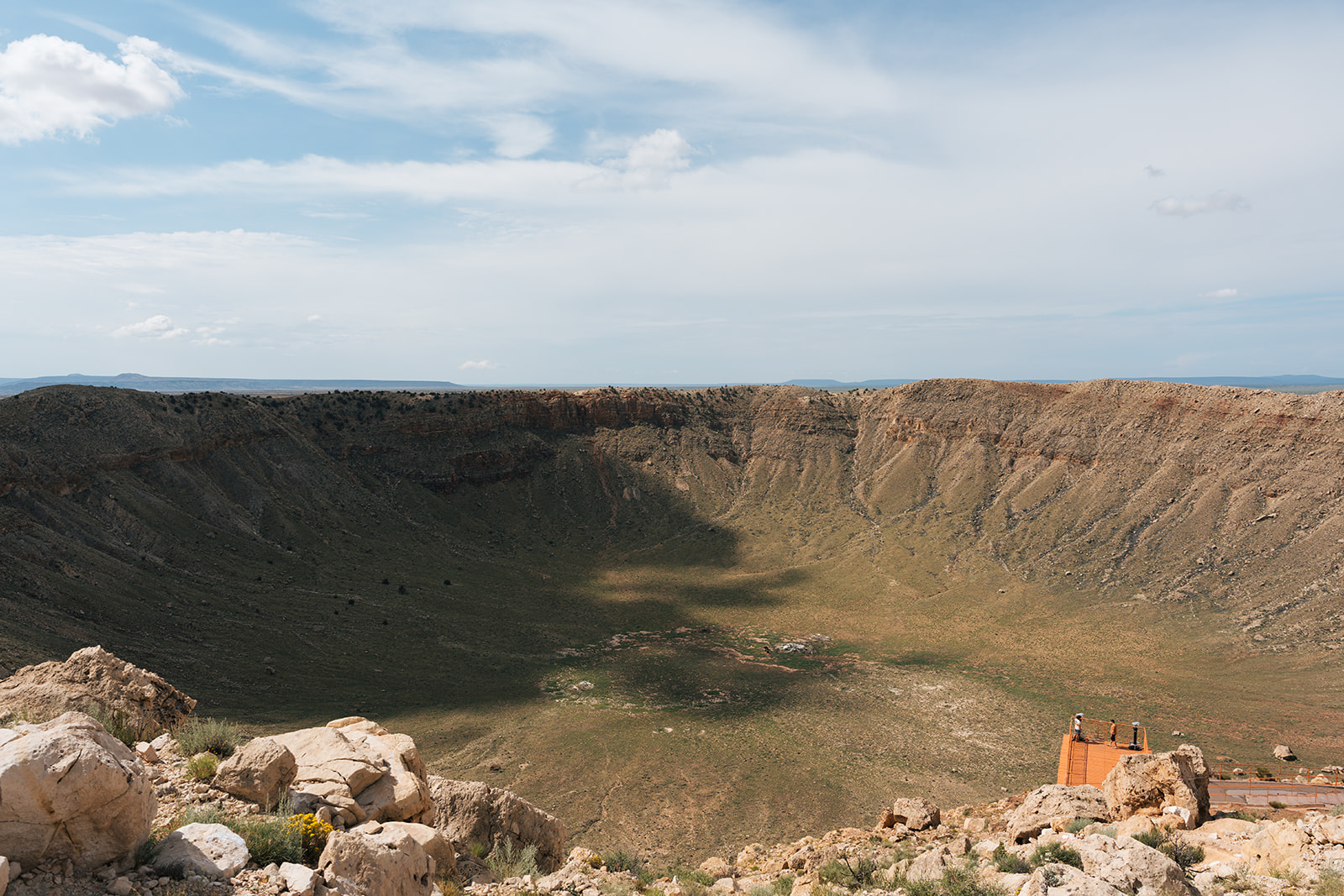
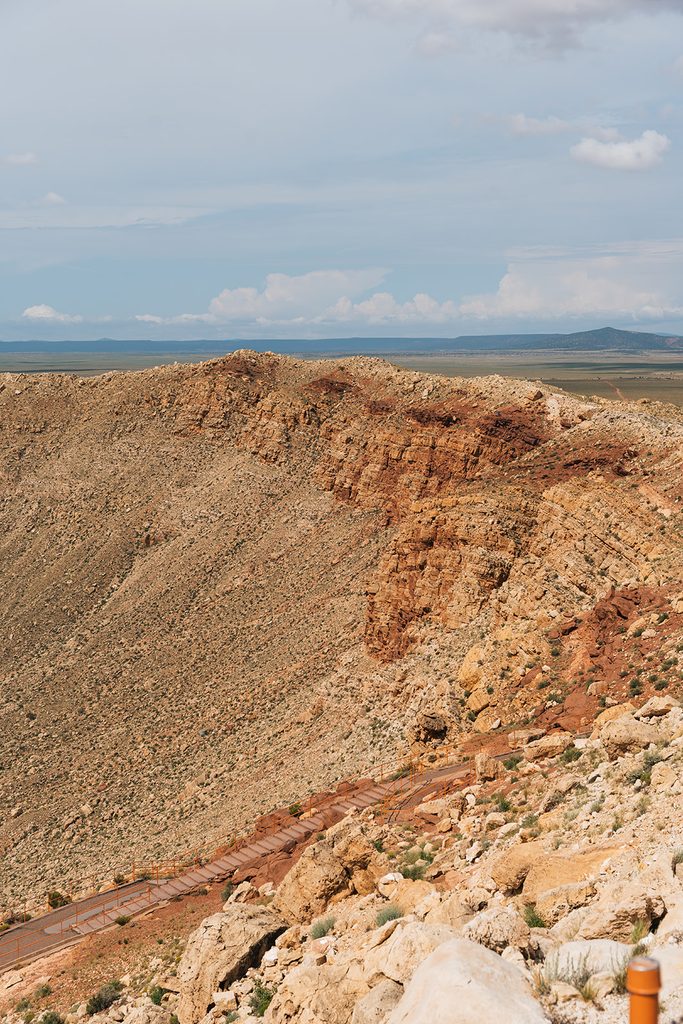
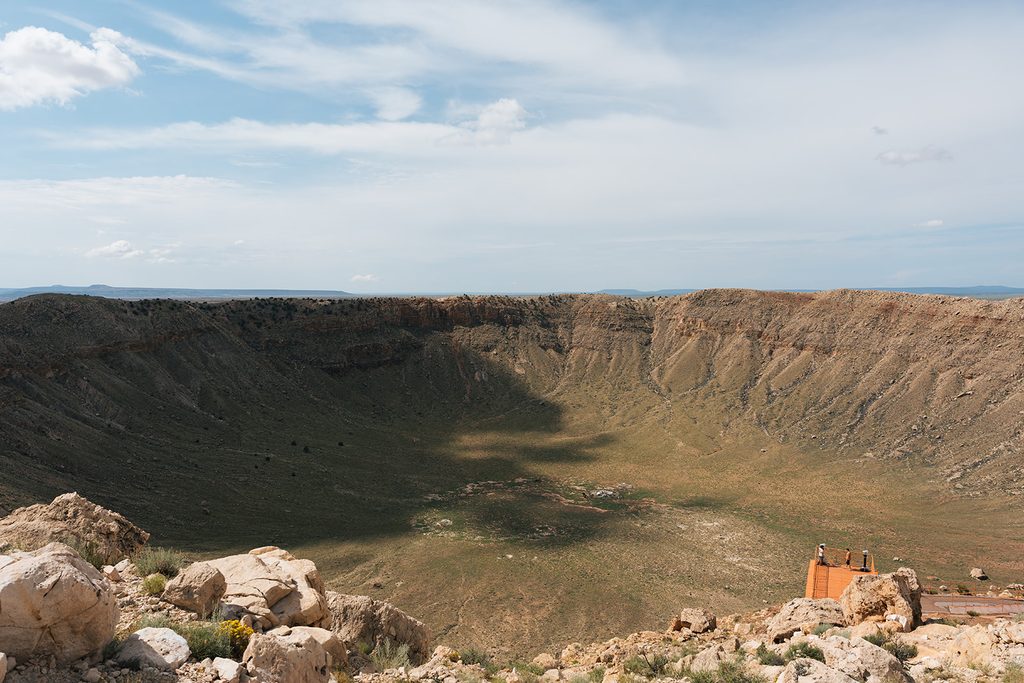
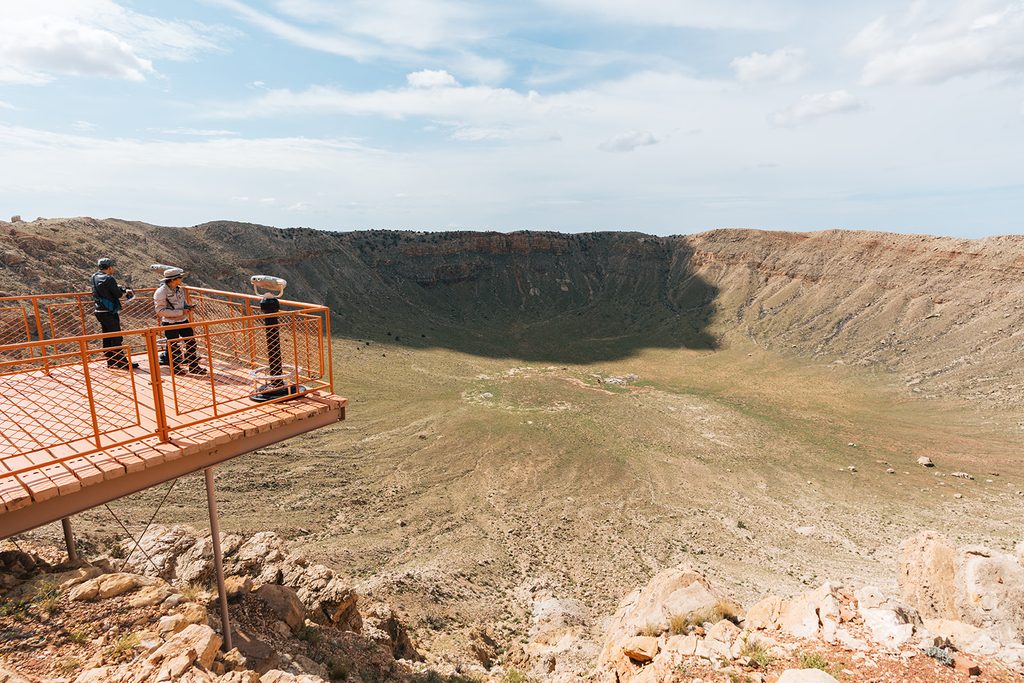
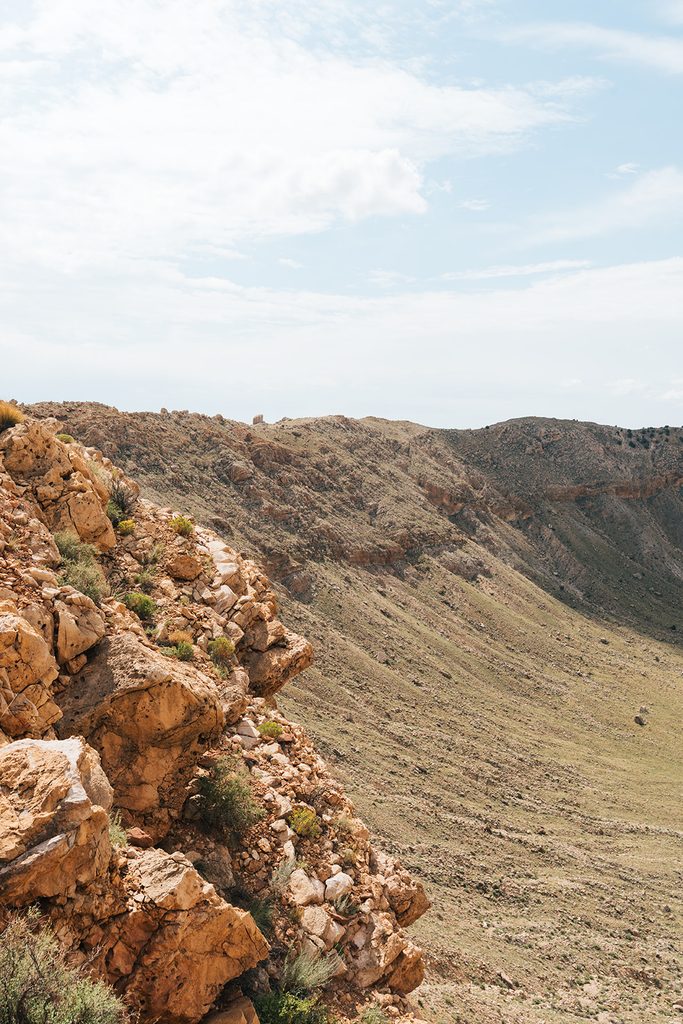
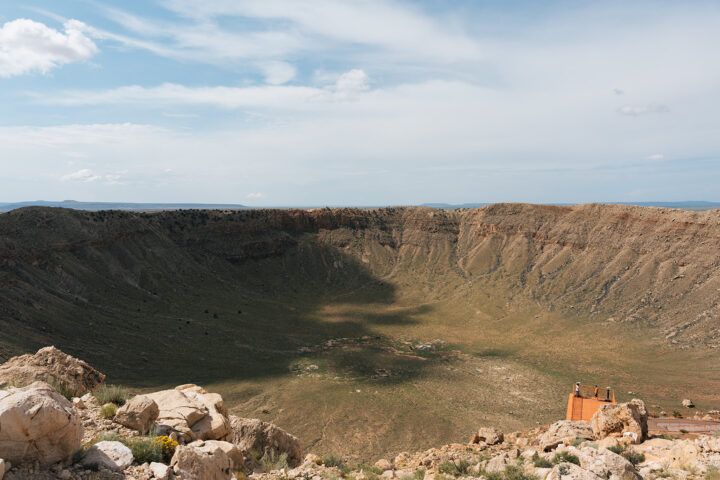
Located about 18 miles west of Winslow, Arizona, and just a short drive south of Interstate 40 and historic Route 66, Meteor Crater is one of those attractions that seem almost too extraordinary to be real. From the surrounding desert, little indicates what awaits travelers. The landscape is a rolling expanse of reddish earth, low vegetation, and endless Arizona sky. Then, as you approach the rim, the ground suddenly opens into a massive bowl nearly a mile across and about 550 feet deep.
It looks like something from another planet, which, in a sense, it is. In 2026, as Route 66 celebrates its 100th anniversary, Meteor Crater remains a fascinating stop for travelers rediscovering the history, adventure, and unexpected discoveries that made America’s most famous highway a cultural institution.
A 50,000-Year-Old Collision in the Arizona Desert
Long before highways crossed northern Arizona, before the first automobile rolled through Winslow, and even before the landscape resembled the dry desert we recognize today, a massive iron-nickel meteorite hurtled toward Earth.
About 50,000 years ago, the meteorite, estimated at around 300,000 tons, struck the region at roughly 26,000 miles per hour. The impact released energy equivalent to millions of tons of TNT, excavating an enormous depression and scattering rock and meteoritic material across the surrounding landscape.
The collision happened during the last Ice Age, when this part of Arizona was cooler and wetter. Mammoths and other prehistoric animals roamed the region, and the impact would have been catastrophic for anything unfortunate enough to be nearby.
Over thousands of years, sediment accumulated on the crater floor, and Arizona’s increasingly dry climate helped preserve the remarkable geological formation. Today, Meteor Crater is recognized as one of Earth’s best-preserved meteorite impact craters.
The Man Who Believed a Meteorite Made the Crater
The crater’s modern history is nearly as interesting as its prehistoric origins. During the late 19th century, scientists debated what had created the enormous depression. Some believed it was the result of volcanic activity or an underground steam explosion. The idea that an object from space could produce such an enormous crater was not widely accepted.
Enter Daniel Moreau Barringer, a Philadelphia mining engineer who investigated the site in the early 1900s. Barringer became convinced that the crater had been formed by a giant meteorite. He spent years gathering evidence, drilling into the crater floor, and searching for what he believed would be an enormous deposit of valuable meteoritic iron buried beneath the surface.
His theory about the crater’s origins was correct, but his hopes of striking it rich were misplaced. Much of the original meteorite had vaporized, melted, or fragmented during the collision. Barringer never discovered the great mass of iron he had imagined, despite investing considerable time and money in the search.
Although the venture failed financially, his work helped lay the foundation for modern impact-crater science. The landmark is consequently known as both Meteor Crater and Barringer Crater, honoring the man who championed its extraterrestrial origins.

Meteor Crater and the Golden Age of Route 66
When Route 66 was officially established in 1926, it connected Chicago with Southern California, creating an increasingly important corridor for commerce, migration, and tourism.
The highway also gave countless small communities and roadside businesses access to a growing population of Americans traveling by automobile. Filling stations, motor courts, cafes, trading posts, and unusual attractions began competing for the attention of motorists eager to explore the West. Meteor Crater was perfectly positioned to become part of that tradition.
An article published in the September 1938 issue of Arizona Highways described the crater, then commonly called Meteor Mountain, as a destination that had already attracted tourists and scientists for years. The article explained how motorists would leave Highway 66 west of Winslow and follow a winding road across the colorful Arizona mesa to reach the attraction.
That account provides an important glimpse into the crater’s early role in American road-trip culture. Long before Interstate 40 offered a faster route through the region, travelers were already making the detour to see one of the most unusual sights in the Southwest.
By the postwar era, Route 66 had become synonymous with recreational automobile travel. Families loaded into station wagons, vacationers sought out attractions highlighted on maps and postcards, and enterprising roadside operators catered to travelers looking for something memorable.
Meteor Crater had an advantage over the usual assortment of oversized statues and souvenir stands: The attraction was genuinely extraordinary. The immense geological feature required no artificial spectacle. Its scale, mystery, and scientific significance were enough to inspire generations of travelers.
Nearby businesses also embraced the crater’s identity. Meteor City, a Route 66 trading post and roadside stop west of Winslow, became another example of how the crater shaped the Mother Road’s culture and commercial landscape. The destination ultimately became part of a larger roadside tradition, where scientific curiosity, tourism, and the freedom of the open highway met in the Arizona desert.
From Route 66 Roadside Stop to Apollo Training Ground
Meteor Crater’s importance extends far beyond tourism. During the 1960s, the site played a significant role in America’s race to the Moon. Geologist Eugene Shoemaker, a pioneer of planetary science, studied Meteor Crater extensively and helped establish that an extraterrestrial impact, not volcanic activity, created the enormous depression.
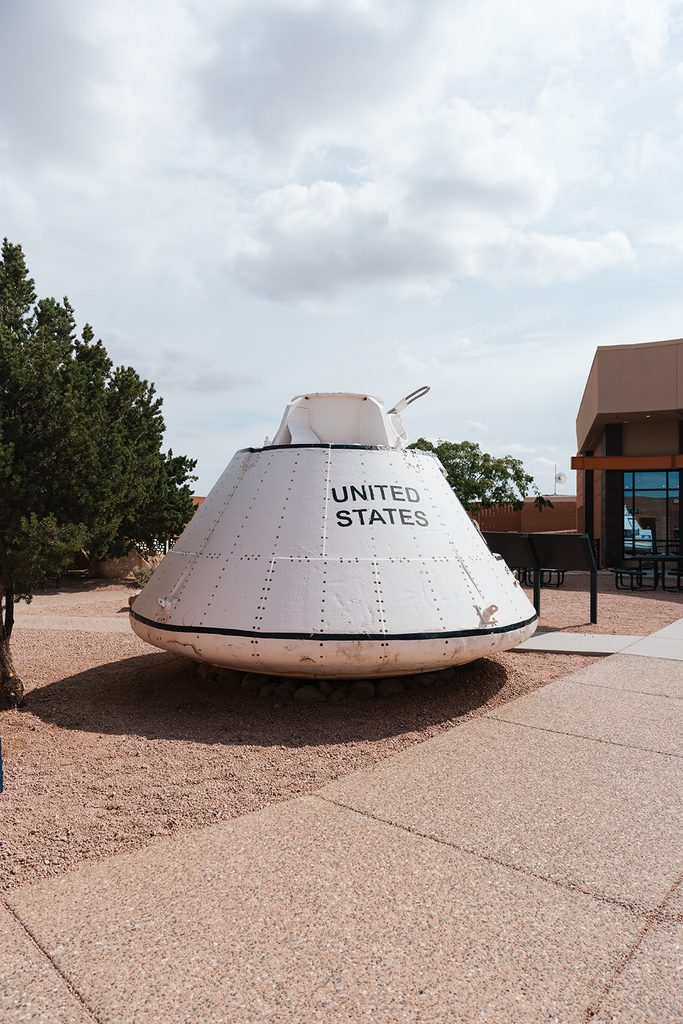
His research would ultimately help scientists understand the formation of craters on the Moon and other planetary bodies. As NASA prepared astronauts for the Apollo missions, Meteor Crater became an important geological training site. Astronauts visited the crater to examine impact formations, study rock layers, and learn techniques that would later be useful on the lunar surface.
NASA records document training visits during the 1960s, including a 1965 exercise led by Shoemaker in which astronauts studied the crater’s geological structures and surrounding debris. For a roadside attraction along Route 66, it was quite an impressive distinction. The same place where families stopped for photographs and souvenirs was also helping prepare Americans to walk on the Moon.
Enjoying this story?
Join The Gentleman Racer email list to continue reading.
Occasional updates. Unsubscribe anytime.
Meteor Crater Today: A Classic Roadside Attraction with a Modern Visitor Experience
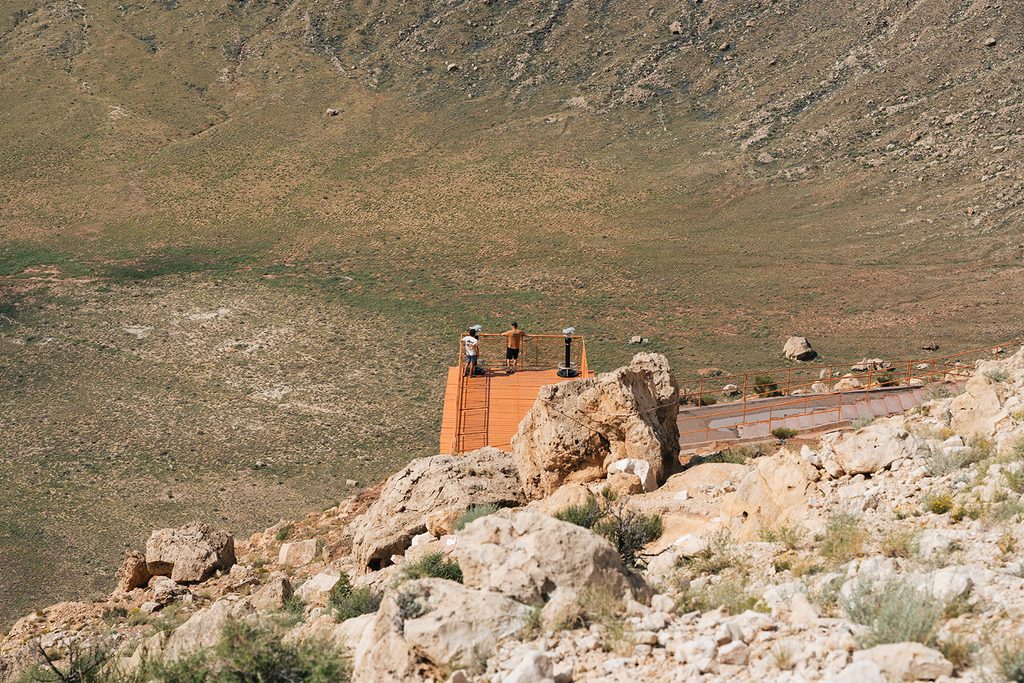
Today, Meteor Crater has evolved into a full-fledged visitor destination while maintaining the character of a classic American roadside attraction.
The property remains privately owned by the Barringer Crater Company, and visitors can experience the enormous impact site through observation areas, educational exhibits, and guided presentations.
The Meteor Crater & Barringer Space Museum includes exhibits about meteorites, impact geology, and space exploration. Visitors can learn about the scientific work that established the crater’s origins, see meteorite specimens, and explore the property’s connection to the Apollo program.
Multiple outdoor observation points also offer impressive views of the crater. Seeing its scale in person is considerably different from studying photographs. Despite its immense dimensions, the crater can look deceptively small until visitors spot details along its walls and floor that give a sense of perspective.
The attraction also offers a 4D theater experience, a gift shop, and guided rim tours, subject to weather and availability. For Route 66 travelers, the visit offers something increasingly rare: an attraction that is just as remarkable as the roadside advertisements promise.
Planning a Route 66 Road Trip to Meteor Crater
Meteor Crater sits along one of the most interesting stretches of historic Route 66 in Arizona.
Travelers following the Mother Road between Flagstaff and Winslow can reach the attraction from Interstate 40 at Exit 233, following Meteor Crater Road south toward the visitor center. The surrounding region offers plenty of opportunities to turn a single stop into a full day of exploring.
Just east of the crater, Winslow remains one of Route 66’s best-known towns. Its downtown features the famous Standin’ on the Corner Park, celebrating the Eagles’ song Take It Easy, along with historic buildings and local shops. The beautifully restored La Posada Hotel is another worthwhile stop. Designed by architect Mary Colter and opened in 1930, the former Fred Harvey railroad hotel remains an extraordinary example of Southwestern architecture and hospitality.
Farther west, Flagstaff offers historic Route 66 attractions, restaurants, and a walkable downtown, making it a natural overnight destination. Together, these attractions illustrate why northern Arizona remains one of the most rewarding portions of Route 66 to explore.
Meteor Crater Quick Facts
| Detail | Information |
|---|---|
| Official name | Meteor Crater, also called Barringer Crater |
| Location | Near Winslow, northern Arizona |
| Distance from Route 66 | Approximately 5 miles south of I-40 at Exit 233 |
| Age | Approximately 50,000 years |
| Diameter | Approximately 0.75 mile |
| Depth | Approximately 550 feet |
| Impact speed | Estimated 26,000 mph |
| Meteorite type | Iron-nickel, known as Canyon Diablo |
| Historic significance | Meteorite impact research, Route 66 tourism, Apollo astronaut training |
| Ownership | Privately owned by the Barringer Crater Company |
| Visitor attractions | Observation points, museum, theaters, guided rim tours |
| Official website | meteorcrater.com |
Frequently Asked Questions About Meteor Crater
Where is Meteor Crater in Arizona?
Meteor Crater is located approximately 18 miles west of Winslow, Arizona, near Interstate 40 and historic Route 66. Visitors can reach the attraction from Exit 233.
Is Meteor Crater directly on Route 66?
No. Meteor Crater is a short detour south of the historic Route 66 corridor. It has been a popular roadside destination for Route 66 travelers since at least the 1930s.
How old is Meteor Crater?
Scientists estimate Meteor Crater formed approximately 50,000 years ago when a large iron-nickel meteorite struck the Arizona landscape.
How big is Meteor Crater?
Meteor Crater measures approximately three-quarters of a mile across and around 550 feet deep. Its rim rises above the surrounding desert, making the enormous formation visible only as visitors approach.
Can visitors walk to the bottom of Meteor Crater?
General admission does not include hiking to the crater floor. Visitors can explore designated observation areas and participate in guided rim tours when available.
Did NASA astronauts train at Meteor Crater?
Yes. Apollo astronauts conducted geological field training at Meteor Crater during the 1960s and early 1970s, learning about impact formations and collecting geological observations that helped prepare them for lunar exploration.
Is Meteor Crater worth visiting on a Route 66 road trip?
Yes. Meteor Crater combines natural history, scientific discovery, and classic American roadside culture. It is a particularly worthwhile stop for travelers interested in geology, space exploration, photography, and the history of Route 66.
How much time should visitors allow at Meteor Crater?
Plan approximately 1.5 to 2 hours to enjoy the observation areas, exhibits, and museum. Visitors planning to attend theater presentations or guided tours may want to allow additional time.
What are Meteor Crater’s opening hours and admission prices?
The attraction’s published hours are generally 8 a.m. to 5 p.m., although schedules can change. Admission prices vary by ticket category. Check the official admission and visitor information page for current details.


















For the reason that the admin of this site is working, no uncertainty very quickly it will be renowned, due to its quality contents.