
 Michael Satterfield
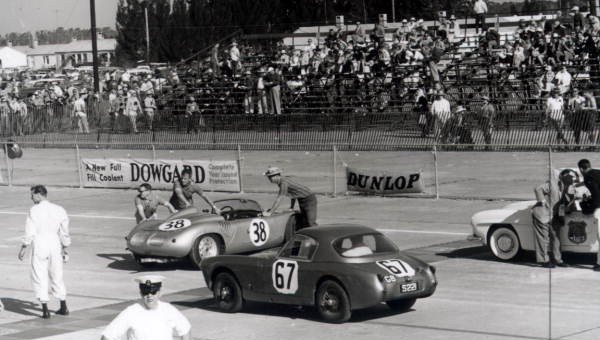
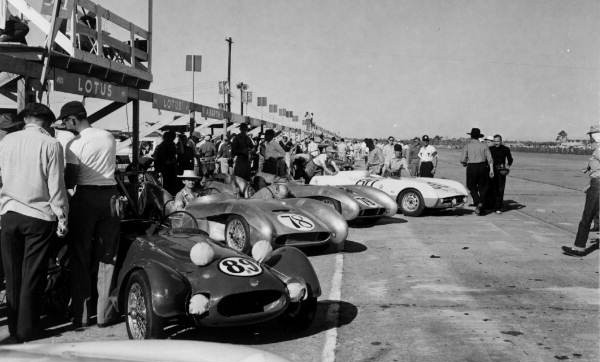
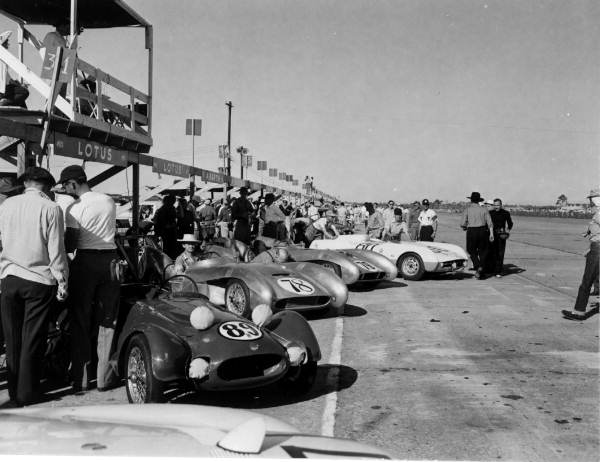
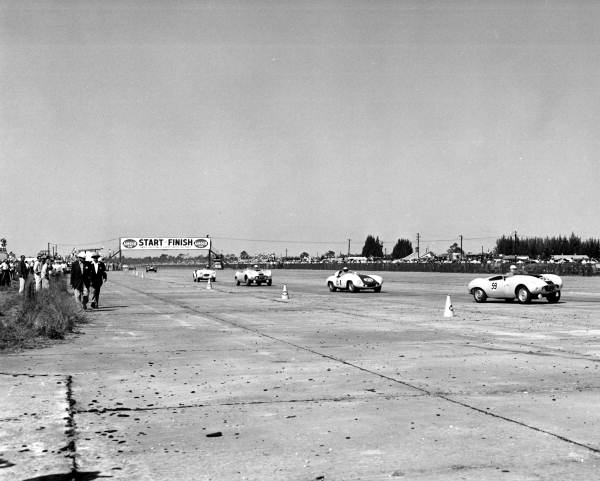
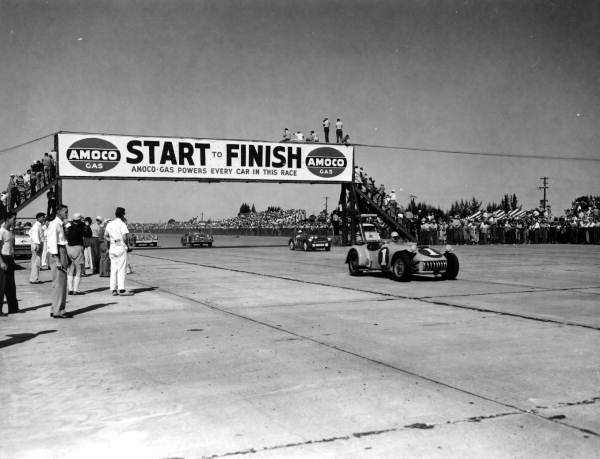
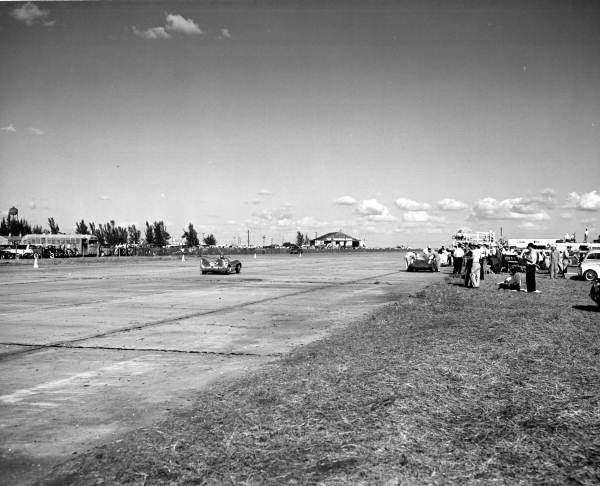
On the morning of March 13, 1955, 80 sports cars lined the concrete runways of Sebring, Florida, their drivers standing across the track waiting for the signal to run. It was a scene borrowed from Le Mans, but unmistakably American. Sebring International Raceway had been carved from the remains of Hendricks Field, a World War II Army Air Forces training base where B-17 crews once prepared for combat. By 1955, promoter Alec Ulmann had transformed the abandoned airfield into America’s most important international sports car race.
The circuit was long, flat, brutally rough, and hard on machinery. Contemporary coverage described a 5.2-mile lap where cars could approach 140 mph on the runways before slowing to roughly 15 mph for the hairpin. Briggs Cunningham summed up Sebring rather neatly when he told Sports Illustrated that the course was not especially likely to kill the driver, but it could certainly kill the car. That Sunday morning, Sebring was about to prove him right. And before the first proper racing lap was even completed, things had already gone off script.
Enjoying this story?
Join The Gentleman Racer email list to continue reading.
Occasional updates. Unsubscribe anytime.
A Starting Grid With Six Extra Cars
The 1955 field was enormous. More than 100 cars had appeared during the event, competing for just 80 starting positions. When the flag fell at 10 a.m., six reserve entrants who had failed to make the race decided they were going racing anyway.
They slipped onto the circuit and completed protest laps while Sebring’s timing staff tried to make sense of six unexpected race numbers appearing in front of them. The rogue competitors eventually pulled off, but their unauthorized appearance would prove almost prophetic. Twelve hours later, the entire race would come down to the accuracy of those same hand-kept scoring charts.
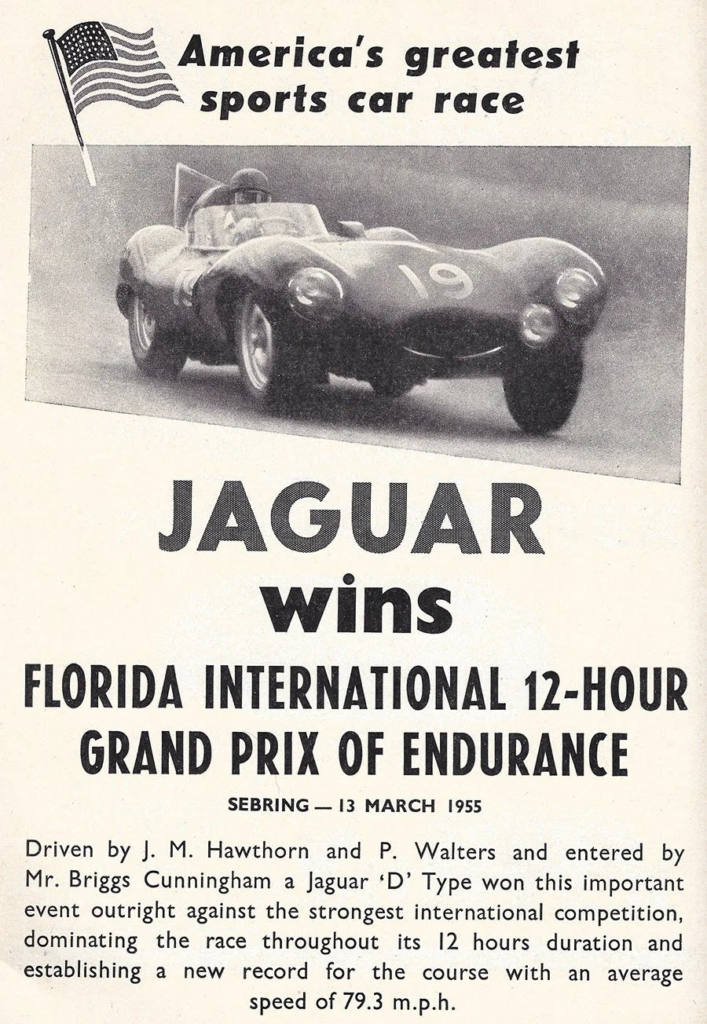
At the front, however, there was little confusion. Mike Hawthorn immediately put the No. 19 Jaguar D-Type into the lead.
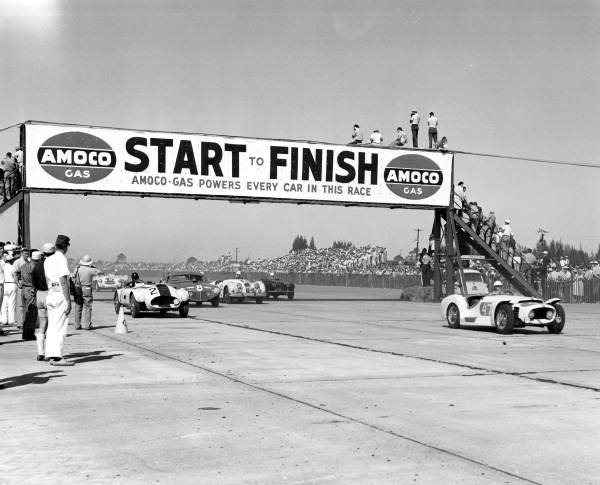
Cunningham’s Jaguar
The Jaguar had come to America through Briggs Cunningham, whose operation had become one of the most serious American efforts in international sports car racing. The car itself, chassis XKD406, belonged to Jaguar and had been loaned to Cunningham for Sebring. It carried a 3.4-liter version of Jaguar’s XK straight-six and represented one of the most sophisticated sports racing designs in the world.
Unlike the traditional tubular chassis used by many competitors, the D-Type incorporated a central monocoque structure with a tubular front subframe carrying the engine, steering, and front suspension. Jaguar rated the contemporary D-Type’s XK engine at roughly 270 horsepower. Its low-drag bodywork came from aerodynamicist Malcolm Sayer, and Jaguar’s Dunlop-developed disc brakes offered another substantial advantage in endurance racing.
Cunningham paired Hawthorn with American Phil Walters, one of the country’s finest sports car drivers. Walters already knew how to win at Sebring. He and John Fitch had taken Cunningham’s Chrysler-powered C-4R to victory there in 1953. Across the paddock was a very different threat. It was white, blue, Italian, and driven by two Americans who would soon become legends.
Hill, Shelby, and a Texas Ferrari
Dallas businessman Allen Guiberson had purchased Ferrari 750 Monza chassis 0510 M early in 1955. Its color scheme was distinctly American, finished predominantly in white with dark blue detailing rather than traditional Italian racing red.
Under the hood was Ferrari’s big 3.0-liter four-cylinder engine, an unusual configuration compared with the V12s for which Maranello was already famous. The 750 Monza was light, powerful, and quick. Guiberson hired Phil Hill and Carroll Shelby to drive it. Hill was already one of America’s leading road racers.
Shelby was still climbing the international ladder, and he arrived at Sebring under less than ideal circumstances. He had badly injured his arm in a crash during the Carrera Panamericana the previous November. According to later accounts, Shelby raced at Sebring with the injured arm supported by a fiberglass cast. Shelby later remembered having the cast changed before races so his doctors would not discover what he was doing. The future creator of the Cobra was apparently not especially interested in medical advice.
Twelve Hours Begins
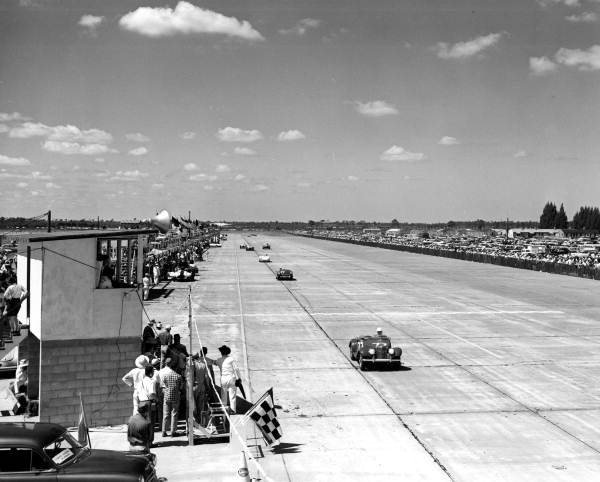
Hawthorn led the opening lap, but behind him Sebring immediately began consuming cars. Bob Said charged his Ferrari 750 Monza toward the front before crashing into a stationary ambulance on the third lap. Racing continued, as this was an era before modern full-course caution procedures. Other major entries soon disappeared with clutch, differential, transmission, and accident damage.
Hawthorn’s Jaguar continued at the front. Piero Taruffi, sharing another Ferrari 750 Monza with Harry Schell, emerged as the early challenger. Near the end of the second hour, Taruffi was reportedly within only a few seconds of Hawthorn. Official lap records credit the Taruffi-Schell Ferrari with the only lap not led by the winning Jaguar during the race.
After the driver changes began, the complexion of the race slowly shifted. Phil Walters took over the Jaguar. Shelby climbed into Guiberson’s Ferrari. By late afternoon, the Hill-Shelby Monza had worked its way into second place. Then darkness came.
Ferrari Starts Closing
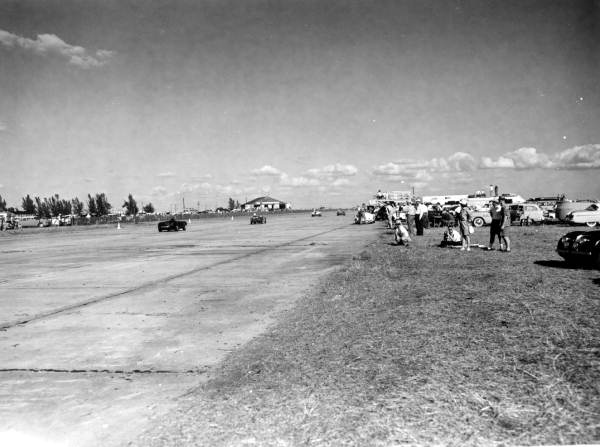
Sebring in 1955 was nine hours of daylight followed by three hours of racing through the darkness of an old military airfield. There were no acres of floodlights illuminating the circuit. Drivers relied heavily on their headlights, pit boards, memory, and whatever reference points remained visible.
By 8 p.m., the Ferrari was gaining. Both cars were suffering from deteriorating brakes, but the 750 Monza was reportedly circulating several seconds per lap faster than the Jaguar. What had looked like a controlled Cunningham victory was turning into a sprint. Then the Jaguar began to come apart.
With roughly two hours remaining, Sports Illustrated reported falling oil pressure, a water leak, weakening brakes, and eventually a fouled spark plug. The Jaguar made three pit stops in approximately 20 minutes. The Ferrari kept coming. Shelby and Hill were back on the same lap. After nearly 12 hours, Sebring had become a straight fight between two cars. And nobody seemed quite certain which one was winning.
The Scoring Unravels
Modern endurance racing is monitored through electronic transponders, GPS, computers, video, and redundant timing systems. Sebring in 1955 relied on human beings recording cars circulating a dark airfield. During the final hour, the official scoring began showing the Hill-Shelby Ferrari ahead.
At 9 p.m., according to contemporary reporting, the standings were reversed and Ferrari was declared the leader. By 9:25, Ferrari’s camp was being told it had an advantage of more than three minutes. When the race ended at 10 p.m., Shelby was shown the checkered flag and pulled into a celebration. For a few minutes, Phil Hill and Carroll Shelby had won the 12 Hours of Sebring.
Then officials checked the scoring again. Jaguar had won. The celebration moved from one pit to another. Cunningham’s D-Type was summoned toward victory ceremonies, only to reportedly run out of fuel during its post-race lap. Ferrari protested. Cunningham countered. Sebring’s biggest race had ended, yet nobody was going home with an uncontested result.
Ten Days of Arguments
Historical sources reflect some of the confusion surrounding the finish. Sports Illustrated, reporting immediately after the event, said officials provisionally awarded the Jaguar victory by only 10 seconds. Later historical accounts based on the reviewed scoring charts commonly give the final margin as 25.4 seconds. What was not in dispute was the order.
Mike Hawthorn and Phil Walters were officially first in the Cunningham-entered Jaguar D-Type. Phil Hill and Carroll Shelby were second in Guiberson’s Ferrari 750 Monza, on the same lap. William Spear and Sherwood Johnston brought their Maserati 300S home third, two laps behind the leaders. Piero Taruffi and Harry Schell finished fifth in their Ferrari, while Stirling Moss and Lance Macklin took sixth in a works Austin-Healey 100S.
Hill and Shelby did receive the Index of Performance award, providing the Ferrari team with something more substantial than memories of the victory celebration it had briefly enjoyed. The Jaguar victory gave Cunningham an extraordinary third consecutive Sebring win as an entrant. His own Cunningham C-4R had won in 1953, an OSCA entered by his team won in 1954, and the Jaguar completed the run in 1955.
Before They Were Legends
Looking back, the field at the 1955 race was made up of soon to be legends. Mike Hawthorn would win Le Mans for Jaguar just three months later and eventually become Britain’s first Formula One World Champion. Phil Hill would become America’s first Formula One World Champion.
Carroll Shelby would win Le Mans as a driver before becoming the force behind the Cobra, Daytona Coupe, GT40 program, and Shelby Mustang. Briggs Cunningham would become one of the central figures in establishing American credibility in international road racing.
The Ferrari that Hill and Shelby drove, chassis 0510 M, survived. It later passed into the hands of another young Texas racer named Jim Hall, who kept it for decades before it eventually returned to the collector-car world. The winning Jaguar survived as well. XKD406 returned to Britain after Sebring and continued racing, eventually becoming an important surviving piece of Jaguar’s D-Type history.
But on March 13, 1955, none of that history had been written yet. There was simply an old Florida airfield, 80 racing cars, thousands of spectators, and two sports cars pounding through the darkness. For nearly 12 hours, Jaguar and Ferrari had been separated by minutes, then seconds. For a few confusing moments, both teams believed they had won. And more than 70 years later, the 1955 12 Hours of Sebring remains a reminder of just how wonderfully unruly the golden age of sports car racing could be.
Quick Facts: 1955 12 Hours of Sebring
- Date: March 13, 1955
- Location: Sebring International Raceway, Sebring, Florida
- Race Length: 12 hours
- Circuit Length: Approximately 5.2 miles
- Winning Car: Jaguar D-Type, chassis XKD406
- Winning Drivers: Mike Hawthorn and Phil Walters
- Entrant: Briggs Cunningham
- Second Place: Phil Hill and Carroll Shelby, Ferrari 750 Monza
- Third Place: William Spear and Sherwood Johnston, Maserati 300S
- Reported Final Margin: 25.4 seconds after scoring review
- Notable Feature: The finishing order was disputed because of manual lap scoring
- Championship: 1955 World Sportscar Championship
- Historic Setting: Sebring’s circuit was built across the runways and access roads of the former Hendricks Field military air base
FAQ: 1955 12 Hours of Sebring
Who won the 1955 12 Hours of Sebring?
Mike Hawthorn and Phil Walters won the race in a Jaguar D-Type entered by Briggs Cunningham.
What car won Sebring in 1955?
The winning car was a Jaguar D-Type, chassis XKD406, powered by Jaguar’s 3.4-liter XK straight-six engine.
Who finished second at Sebring in 1955?
Phil Hill and Carroll Shelby finished second in a Ferrari 750 Monza entered by Texas businessman Allen Guiberson.
How close was the finish?
After the official scoring was reviewed, the winning margin was listed as 25.4 seconds. Contemporary reports initially gave different figures, including a margin of roughly 10 seconds, reflecting the confusion surrounding the manual scoring system.
Why was the finish controversial?
Sebring relied on manual lap charts rather than modern electronic timing. During the final portion of the race, Ferrari was briefly shown as the leader, and Carroll Shelby received the checkered flag believing he and Phil Hill had won. Officials later reviewed the scoring and awarded the victory to Hawthorn and Walters.
Did Carroll Shelby race at Sebring in 1955?
Yes. Shelby shared the Ferrari 750 Monza with Phil Hill and finished second. Shelby was still recovering from an arm injury suffered during the 1954 Carrera Panamericana and reportedly raced while wearing a cast.
What Ferrari did Phil Hill and Carroll Shelby drive?
They drove a Ferrari 750 Monza, chassis 0510 M, powered by Ferrari’s 3.0-liter four-cylinder racing engine.
Who entered the winning Jaguar?
The Jaguar D-Type was entered by American racer and team owner Briggs Cunningham. Cunningham’s operation was one of the leading American sports car teams of the 1950s.
How many cars started the 1955 Sebring race?
Eighty cars were officially accepted for the start, making the event one of the largest international sports car fields of the period.
Where was Sebring International Raceway located in 1955?
The circuit was laid out across the former Hendricks Field near Sebring, Florida, a World War II military airfield originally used to train bomber crews.
Was the 1955 race part of a championship?
Yes. The race was part of the 1955 World Sportscar Championship, placing Sebring alongside major international endurance events such as the Mille Miglia, Tourist Trophy, and 24 Hours of Le Mans.
Did Briggs Cunningham have other Sebring victories?
Yes. Cunningham’s team won Sebring in 1953 with a Cunningham C-4R, in 1954 with an OSCA, and again in 1955 with the Jaguar D-Type.
What happened to the winning Jaguar after Sebring?
The winning D-Type, XKD406, returned to Europe and continued racing. It survives today as an important piece of Jaguar competition history.
What happened to the Ferrari driven by Hill and Shelby?
Ferrari 750 Monza chassis 0510 M survived and later became associated with another prominent Texas racer, Jim Hall, who owned the car for many years.