
 Michael Satterfield
On March 25, 1961, an estimated 40,000 spectators gathered around the old Hendricks Army Airfield outside Sebring, Florida, to watch what had become one of the most important endurance races in the world.
The 12 Hours of Sebring was the opening round of the 1961 FIA World Sportscar Championship, bringing together factory teams, wealthy privateers, young professionals, established Grand Prix stars, and an extraordinary assortment of machinery. Sixty-five cars started the race, ranging from Chevrolet Corvettes and Aston Martins to tiny OSCAs, Sprites, Porsches, Ferraris, and Maseratis.
Enjoying this story?
Join The Gentleman Racer email list to continue reading.
Occasional updates. Unsubscribe anytime.
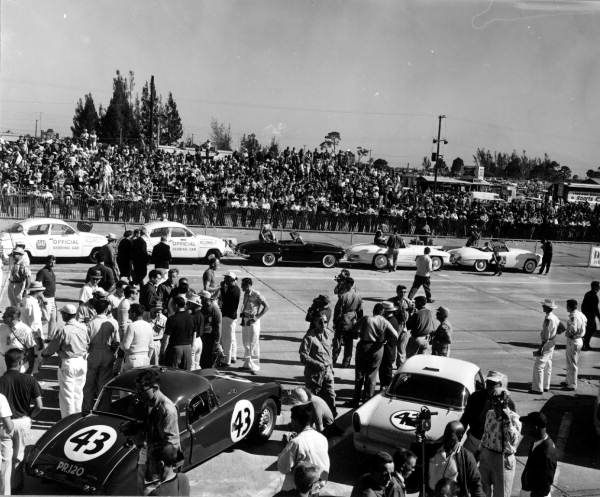
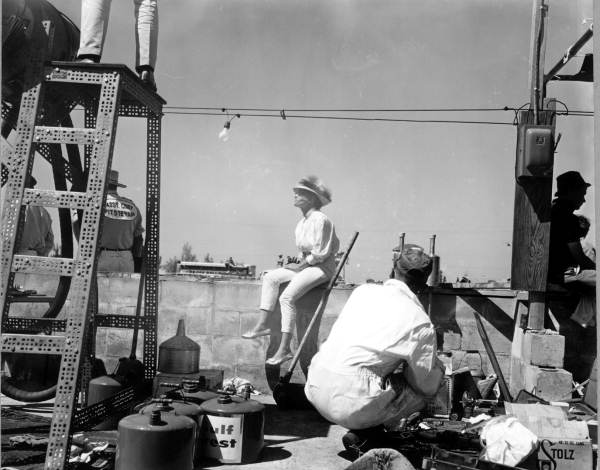
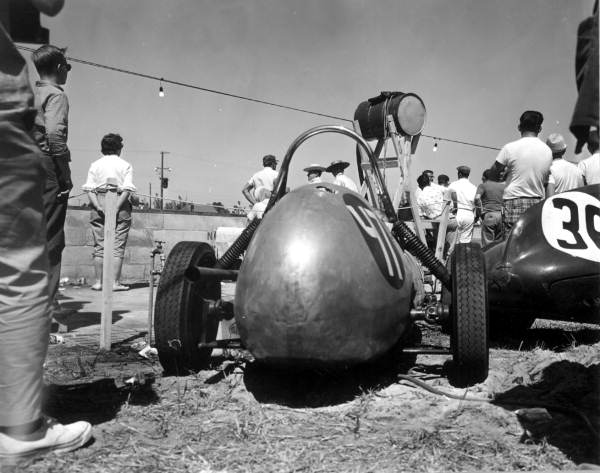
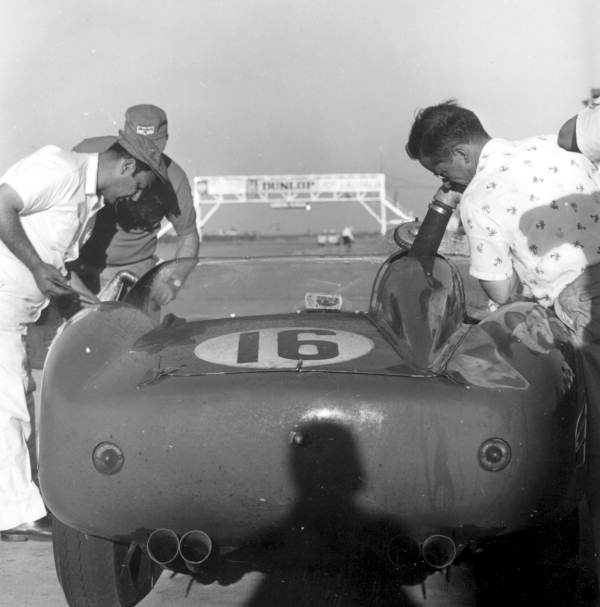
It was a period when international sports car racing still felt remarkably accessible. Many teams worked out of local garages, race cars were transported on open trailers or driven on public roads, and pit equipment looked more like something borrowed from a neighborhood service station than the equipment found in a modern endurance racing garage.
But there was nothing amateur about the talent behind the wheel.
Phil Hill, Olivier Gendebien, Stirling Moss, Graham Hill, Dan Gurney, Bruce McLaren, Wolfgang von Trips, Richie Ginther, Roger Penske, Pedro and Ricardo Rodríguez, Jim Hall, Hap Sharp, Denise McCluggage, Briggs Cunningham, and Don Yenko were among the names scattered throughout the entry list. It was the sort of field that, viewed more than six decades later, reads like a motorsports hall of fame.
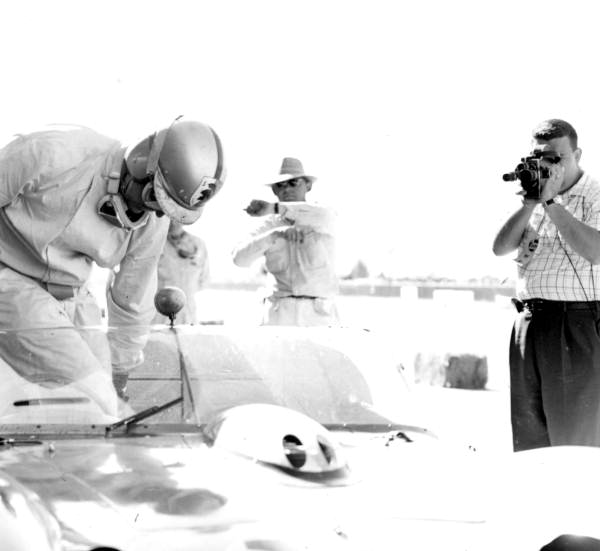
Wolfgang von Trips climbs into the #15 works Ferrari during the 1961 12 Hours of Sebring. Originally assigned to Giancarlo Baghetti and Willy Mairesse, the car was later taken over by von Trips and Richie Ginther and finished second, two laps behind the winning Hill/Gendebien Ferrari.
Ferrari Versus Maserati
The main event was expected to be another battle between Ferrari and Maserati. Ferrari arrived with its latest 250 TRI/61, the dramatic front-engined Testa Rossa that featured the distinctive high rear bodywork and pointed “shark nose” that echoed Ferrari’s new Formula One cars. Phil Hill and Olivier Gendebien were assigned the #14 works entry, chassis 0792TR.
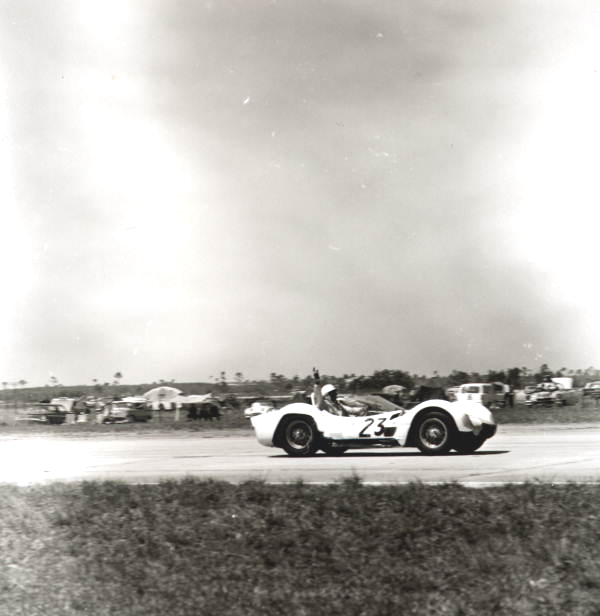
Across the paddock, Maserati had its revolutionary Birdcage machines, including the front-engined Tipo 61 and newer rear-engined Tipo 63. Stirling Moss was originally set to race one of the rear-engined cars, but unhappy with its handling, he switched to the #23 Tipo 61 shared with Graham Hill. That decision produced one of the great Sebring performances almost immediately.
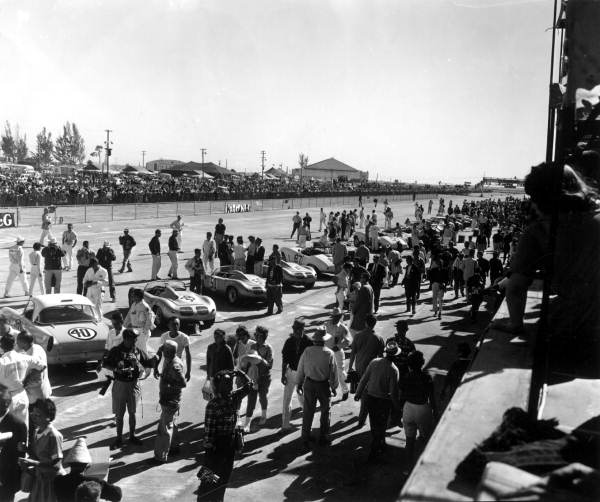
When the field charged away in the traditional Le Mans-style start, Moss’s Maserati refused to cooperate. Its battery was dead. The rest of the field disappeared while mechanics struggled to bring the Tipo 61 to life. It took roughly six minutes. Moss then did what Stirling Moss tended to do when presented with an impossible situation. He went extraordinarily fast.
Within 15 minutes, he had climbed from the back of the field to 14th. Over the next two hours, Moss charged through traffic and reportedly brought the Maserati as high as second place before handing it to Graham Hill. Moss also set the race’s fastest lap, a 3:13.2 around the 5.2-mile Sebring circuit. The pace came at a price.
Shortly after Graham Hill took over, the Maserati suffered an exhaust failure. Heat from the broken exhaust poured into the cockpit, reportedly burning Hill’s feet as he brought the car back to the pits. The #23 was finished before the race had reached its third hour. Moss was later transferred into another Camoradi Maserati, the #24 Tipo 63, only for that car to retire with suspension trouble as well.The anticipated Ferrari-Maserati duel had effectively ended before the Florida afternoon was over.
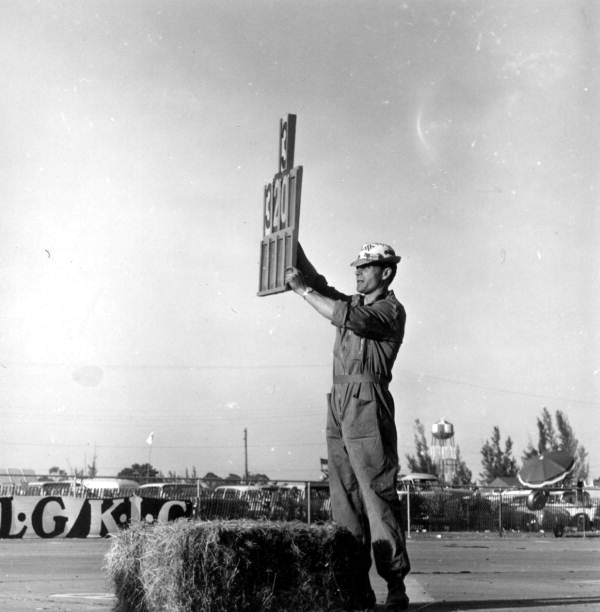
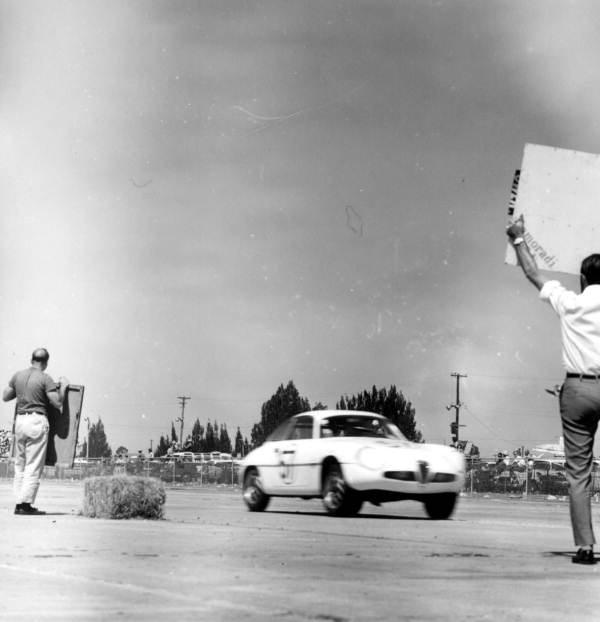
Pit Crew Member Holding Up Sign for Driver
The Rodríguez Brothers Take the Fight to Ferrari
Ferrari’s biggest threat ultimately came from another Ferrari. Pedro and Ricardo Rodríguez, just 21 and 19 years old, were racing a North American Racing Team 250 TR 59/60. Their older machine may not have represented Maranello’s latest technology, but the Mexican brothers immediately put the factory team on notice.
Only 15 minutes into the race, the Rodríguez Ferrari was leading. After an hour it was still ahead, with the factory Ferraris behind it and Moss rapidly moving through the field. The brothers continued to lead for much of the afternoon. Five hours into the race, they remained at the front, at one point holding approximately a lap over the Hill and Gendebien Ferrari.
Then endurance racing did what endurance racing does. As darkness approached, Pedro was called into the pits with lighting problems. Mechanics discovered trouble with the generator and blown fuses. The repairs took nearly 20 minutes, dropping the NART Ferrari down the order and handing the advantage back to the works team.
The Rodríguez brothers fought back, but the lost time was too much to overcome. They would finish third, completing 207 laps.
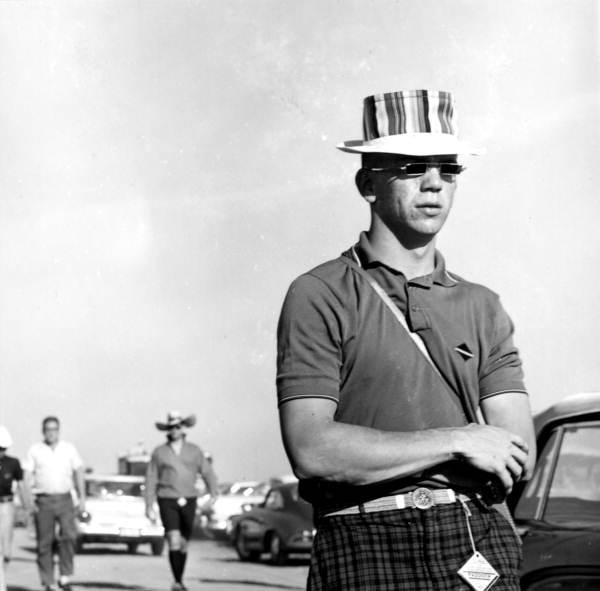
A spectator looking extra hip for his day at the races.
Hill and Gendebien Bring It Home
Up front, Hill and Gendebien settled into the kind of relentless rhythm that made them one of endurance racing’s great driver pairings. The #14 Ferrari completed 210 laps and approximately 1,081 miles in 12 hours, finishing two laps ahead of the second-place works Ferrari.
That second car, #15, had begun the race with Giancarlo Baghetti and Willy Mairesse before Ferrari transferred Richie Ginther and Wolfgang von Trips into it after their original rear-engined Ferrari retired. The four drivers combined to bring the Testa Rossa home second.
The Rodríguez brothers completed the podium for NART. Ferrari’s domination extended even further. Hap Sharp and Ronnie Hissom finished fourth in another Ferrari 250 TR, meaning Ferraris occupied the first four positions at one of the world’s toughest endurance races. Ferrari itself describes Sebring as the beginning of its dominant 1961 World Sportscar Championship season.
Bob Holbert and Roger Penske finally interrupted the line of red cars, finishing fifth overall and winning the 1.6-liter sports car class in their Brumos-entered Porsche 718 RS 61. Hill and Gendebien’s season was only getting started. Less than three months later, the pair would reunite at Le Mans and win the 24 Hours in another Ferrari 250 TRI/61, leading another Ferrari sweep of the podium.
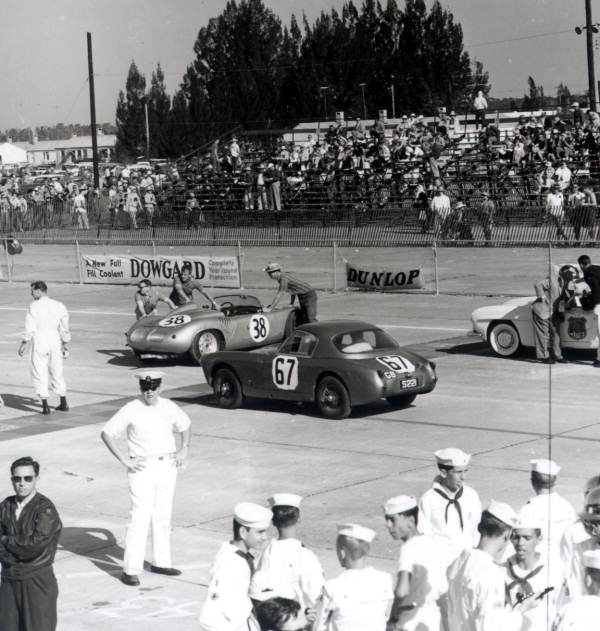
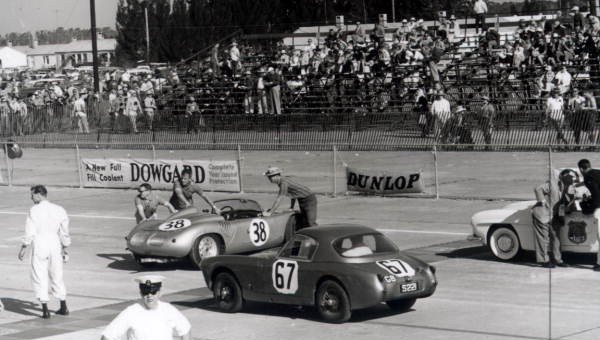
Bill Wuesthoff and Augie Pabst shared the #38 Porsche 718 RS 60 at Sebring in 1961. Entered by Porsche Car Import, the silver 1.6-liter sports racer retired after a main seal failure caused a serious oil leak. The tiny #67 Austin-Healey Sebring Sprite of Cyril Simson and Paul Hawkins completed 144 laps of Sebring, finishing 37th overall and fourth in the Sports 1150 class. The special Sprinzel-prepared car featured lightweight Williams & Pritchard coupé bodywork.
The Porsche and The Little Sprite That Finished Sebring
Not every Porsche enjoyed Holbert and Penske’s success. Visible in this remarkable photograph is the silver #38 Porsche 718 RS 60 shared by Bill Wuesthoff and Augie Pabst. Entered by Porsche Car Import, the 1.6-liter RS 60 represented the kind of lightweight, mid-engined sports racer that was beginning to reshape international competition. While Ferrari was still winning races with its powerful front-engined V12s, Porsche’s layout offered a glimpse of where sports car design was headed.
The #38’s race would be short-lived. Less than two hours into the event, the Porsche returned to the pits suffering from a serious oil leak at the rear of the car. A failed main seal ultimately forced Wuesthoff and Pabst to retire. Pabst would get another opportunity at Le Mans later that year, where he and Dick Thompson finished fourth overall in a Maserati Tipo 63.
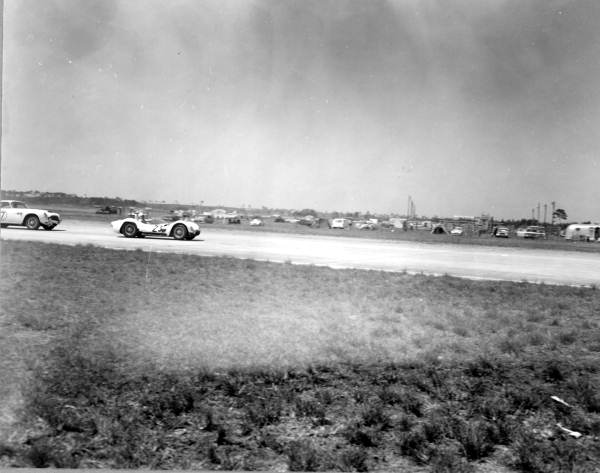
The same photograph also captures one of the smallest cars in the field, the #67 Austin-Healey Sebring Sprite driven by Cyril Simson and Paul Hawkins.
Far more than an ordinary Sprite wearing racing numbers, the car was known by its registration, S221. Before the 1961 season, Simson had sent it to John Sprinzel’s London workshop, where it received lightweight aerodynamic bodywork constructed by Williams & Pritchard. Beneath the tiny aluminum coupé body was an engine displacing just 994cc.
Remarkably, the Sprite had already raced at Sebring the previous day. During the four-hour event for smaller GT cars, S221 had been driven by Pat Moss and Paul Hawkins to a seventh-place finish. Stirling Moss had even practiced in the car before switching to Sprinzel’s sister Sprite following clutch trouble.
The next day, S221 was serviced and returned to Simson and Hawkins for the 12 Hours. Against machinery with two and three times its displacement, the little Austin-Healey simply kept circulating.
By the end of 12 hours, it had completed 144 laps, enough to be classified 37th overall and fourth in the Sports 1150 class. On Sebring’s notoriously punishing concrete surface, while sharing the circuit with Ferraris, Maseratis, Corvettes, and Porsches capable of vastly greater speeds, simply reaching the finish was an achievement.
That contrast is part of what makes this single photograph so compelling. In one frame, it captures two very different approaches to early-1960s sports car racing: Porsche’s sophisticated mid-engined RS 60 and a diminutive 994cc Austin-Healey Sprite. One failed early. The other kept going for 12 hours.
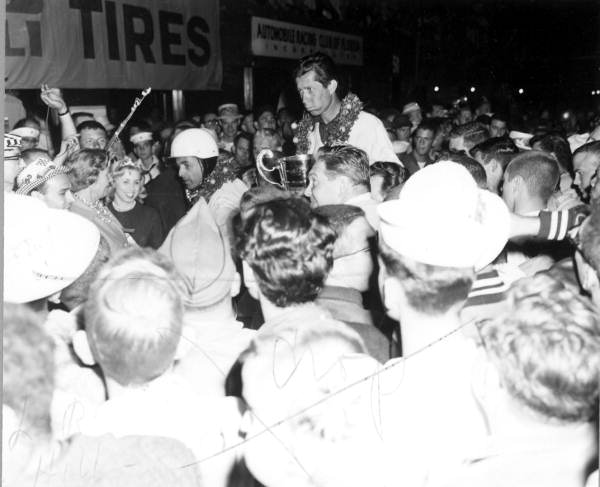
Phil Hill and Olivier Gendebien after winning the 1961 12 Hours of Sebring in the factory #14 Ferrari 250 TRI/61. They completed 210 laps and led a Ferrari sweep of the first four finishing positions.
Sebring in a Different Age
Perhaps that is what makes photographs from the 1961 12 Hours of Sebring so captivating. The cars matter, of course. A Ferrari 250 Testa Rossa, Porsche RS 60, Maserati Birdcage, or Sebring Sprite would be treated as priceless automotive art today.
But in these photographs, they are still tools. They are dirty. Mechanics lean over them. Drivers climb in wearing open-face helmets. People stand a few feet from the course. Cars worth millions today sit beside toolboxes, fuel drums, pickup trucks, and folding chairs.
Nobody in the photograph is thinking about provenance, concours trophies, auction estimates, or investment value. They are trying to win Sebring. Phil Hill and Olivier Gendebien did exactly that.
The victory launched Ferrari toward the 1961 World Sportscar Championship and foreshadowed the marque’s dominance at Le Mans later that summer. For Hill, an American racing at the absolute peak of European motorsport, the year would become even more significant. By September he would also be Formula One World Champion.
But on this March evening in Florida, after 12 hours of pounding across an old bomber base, Hill and Gendebien had another trophy to collect. And somewhere among the estimated 40,000 spectators, someone had the good sense to bring a camera.
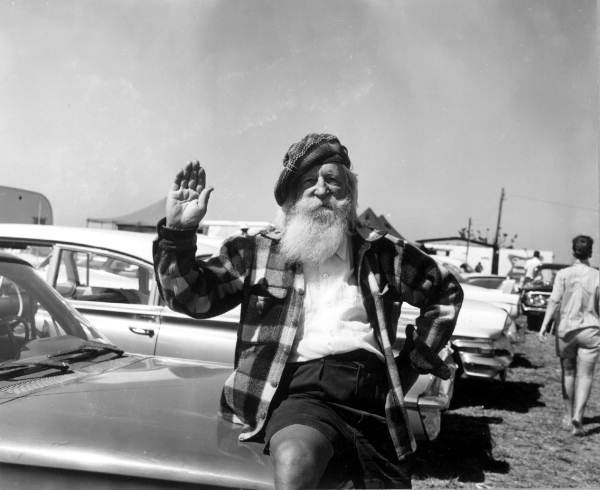
A spectator sitting on a car in a parking lot at Sebring.
Quick Facts: 1961 12 Hours of Sebring
- Date: March 25, 1961
- Championship: Opening round, FIA World Sportscar Championship
- Starters: 65
- Spectators: Approximately 40,000
- Winning Car: #14 Ferrari 250 TRI/61
- Winning Drivers: Phil Hill and Olivier Gendebien
- Distance: 210 laps, approximately 1,081.6 miles
- Second: Baghetti/Mairesse/Ginther/von Trips, Ferrari
- Third: Pedro and Ricardo Rodríguez, Ferrari
- Fourth: Hap Sharp and Ronnie Hissom, Ferrari
- Fastest Lap: Stirling Moss, Maserati Tipo 61, 3:13.2
- #38 Porsche: Bill Wuesthoff/Augie Pabst, DNF, main seal
- #67 Austin-Healey: Cyril Simson/Paul Hawkins, 37th overall, 4th in class
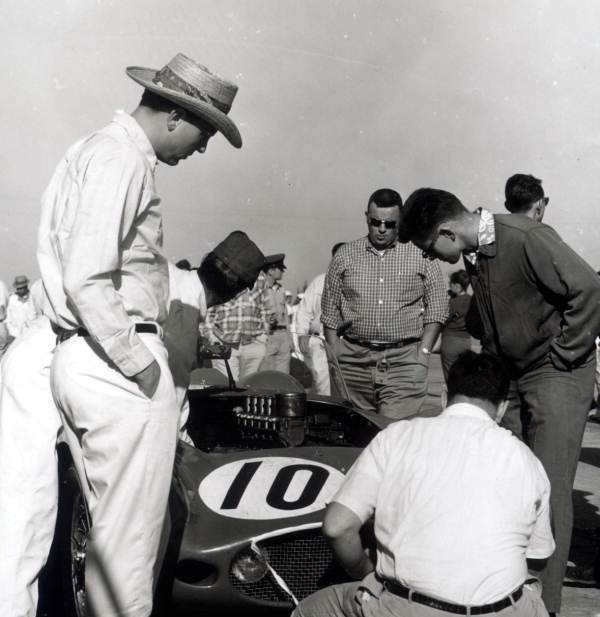
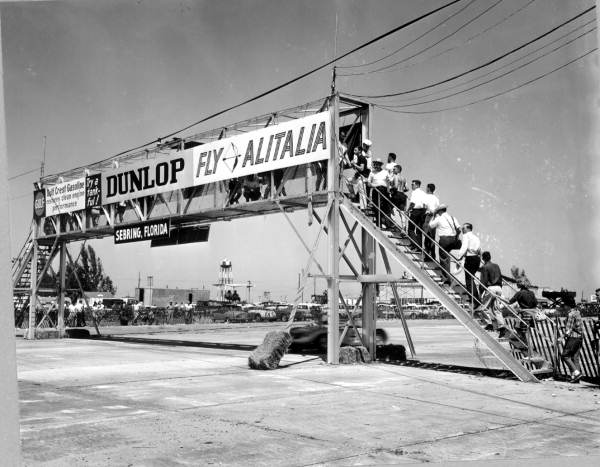
Photos courtesy of the State of Florida

You can just make photos like this with AI now, so if you don’t have pictures you can still tell stories.
That’s 1955, we used to own the Bandini
Can’t be 1955 the first Sebring Sprite fastbacks didn’t come out until 1960.
Ask Ai about it
Back in the day when racing was more about the driver.
Mike,
I think Cliff Reuter is right. That opening photo with his Bandini, also has two Lotus 9s, circa 1954-55 that probably would not have run in 1961.
We did some more digging and the State of Florida had it mislabeled in their main database, the lead image was from 1955, we found the photographer’s notes in another database and it dated it as 1955.