
 Michael Satterfield
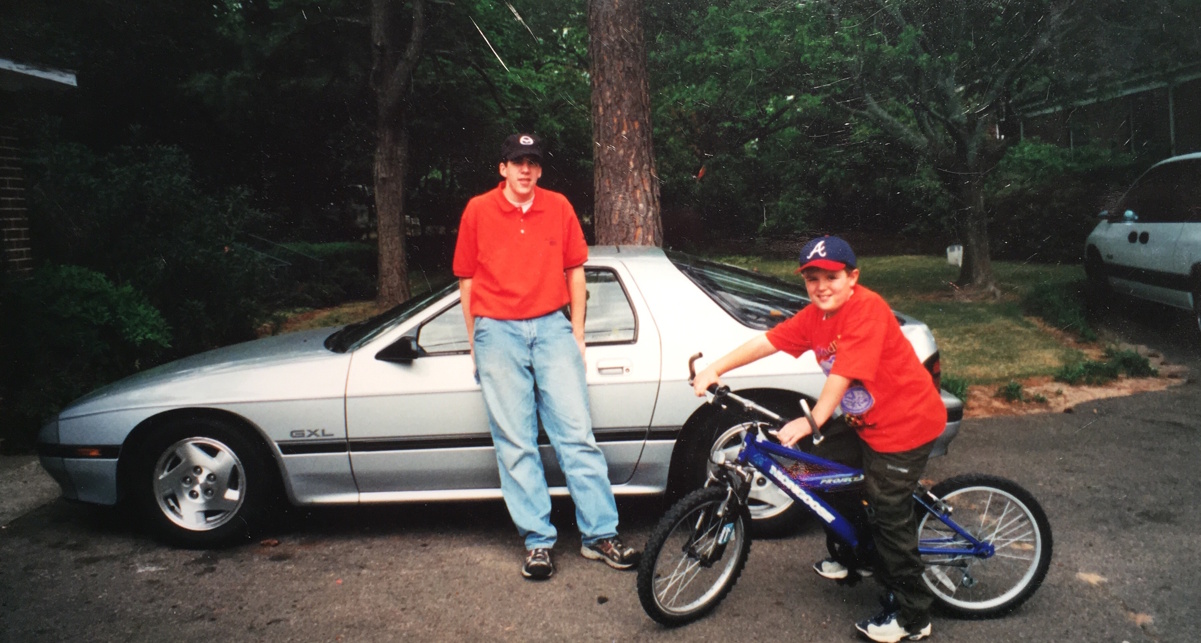
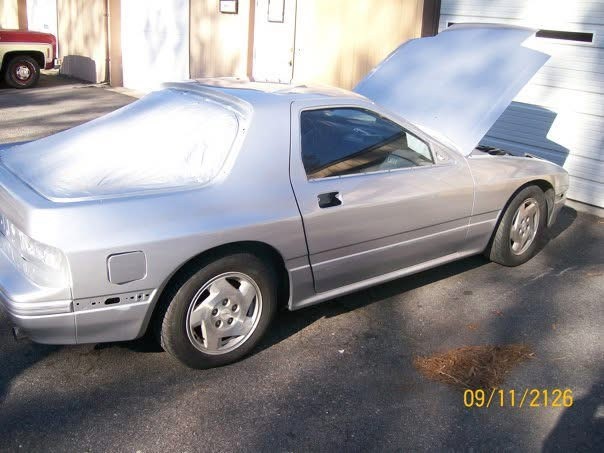
There is a certain kind of car person who can tell you the exact year, trim, and factory color of the first machine that rewired their brain. For Jon Leverett, it was a 1988 Mazda RX-7 GXL. Not just his first car, but his brother’s first car before him, and the first RX-7 his family ever owned. By the time it became Jon’s, it had been sitting for a few years, wearing the familiar scars of time: peeling paint, cracked leather, and the quiet dignity of a car waiting for someone to care enough to bring it back. Jon cared.
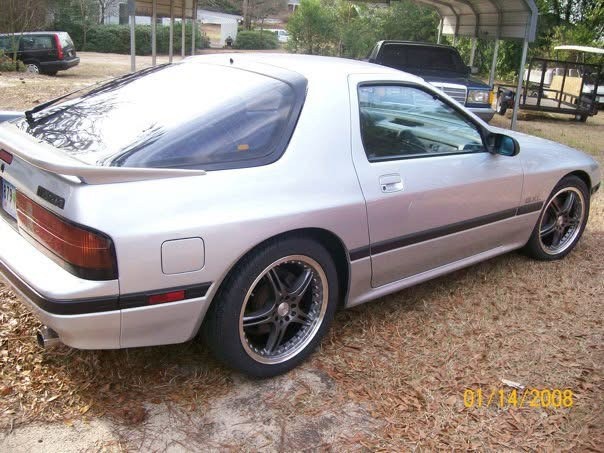
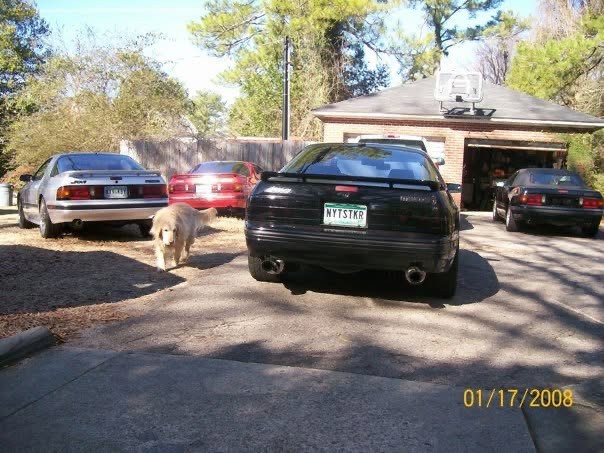
Before he even had a driver’s license, he had the RX-7 repainted in BMW Titanium Silver Metallic, close enough to the original color to feel proper but different enough to make it his own. He sourced seats from a Turbo II RX-7 and had them recovered in navy blue leather to match the blue interior. He admits now that his first wheel choice, gray with a chrome lip, was “terrible,” later replaced by a more tasteful set of Mille Miglia wheels that echoed the 5-spoke twist design found on mid-1990s Porsche 911 Turbos. That kind of self-editing is important. A young car enthusiast must make a few questionable wheel decisions (I know I did). It is part of the curriculum.
But Jon’s relationship with cars started long before the RX-7. He was the kid who could name nearly everything on the road almost as soon as he could talk. Even the ordinary machines had something to offer. His mother’s Plymouth Grand Voyager was not simply a minivan. It was another shape, another idea, another small entry in the great rolling catalog of automotive life. For Jon, cars were never just transportation. They were personalities, languages, companions. The RX-7 became the one that taught him how to listen.
Before he was driving on public roads, Jon sat in the driveway learning the clutch. No gas pedal. Just a left foot, a rotary engine, and patience. He would slowly let the clutch out to the point of engagement, learning where the driveline began to speak, where the engine started to lug, and where the car wanted him to respond. Long before launch control and drive modes turned performance into a menu, Jon was learning the oldest and most useful driver aid of all: feel. “The RX-7 taught me how to be in tune with a machine,” he says.
That line explains a great deal about Jon Leverett, and not just as a car enthusiast. Today, he works at Mazda North American Operations as a Launch Strategy Project Manager, a title that sounds deeply corporate until you hear him describe the work. He helps shape the future of Mazda products, looking two to three years ahead, aligning departments around who a vehicle is for, what it must do better than the competition, and how it remains unmistakably Mazda.
In other words, he still listens to the machine. Only now, the machine is much larger.
Jon Leverett: The Long Road To Mazda
Jon did not go directly from teenage RX-7 owner to Mazda employee. The beloved RX-7 was eventually lost after a Mustang rear-ended it, making it the first car struck in a four-car crash. By the time Jon began his automotive career, he was driving a Volvo C30 R-Design with a 6-speed manual. A fine machine, and certainly better than most post-college transportation, but emotionally speaking, the RX-7 had already left its fingerprints.
After college, Jon realized he was not happy with the direction his work life had taken. He moved to Nashville, where a friend needed a roommate, and set his sights on getting into the automotive world. About a month later, he landed a job at a Mazda dealership. Five months after that, he earned an interview with Mazda North America as an analyst.
It is the kind of career turn that seems obvious in hindsight, but it takes nerve in the moment. Leaving what you know for the chance to chase what you love is rarely neat. It is usually a little impractical, a little underfunded, and a little foolish. Which is to say, exactly how most good car stories begin.
Mazda made sense to Jon because no other brand had made him feel quite like that RX-7. Only two cars ever came close: an MX-5 and an early 2000s Porsche Carrera S. The RX-7 had shown him that a car could be more than the sum of its parts. Mazda, as a company, seemed to understand that.
He was drawn to the brand’s focus on driving experience, design, quality, and that difficult-to-measure thing enthusiasts are always trying to explain to normal people at dinner parties: connection.
The Car That Made Him A Conductor
Ask Jon what made the RX-7 special and he does not talk first about horsepower or numbers. He talks about communication.
The steering, suspension, transmission, engine, and chassis all seemed to be in conversation. The car told him what it was doing. It told him where the limit was. It rewarded attention and punished laziness, but not cruelly. The RX-7 made him feel, as he puts it, “like the most talented conductor in the world.” That image is perfect. A great driver’s car does not merely obey. It plays along. It gives you something back.
That is why Jon sees the modern MX-5 as the spiritual successor to the non-turbo RX-7. Not because the two cars share an engine layout or spec sheet, but because they share an idea. The MX-5 still invites the driver in. It still makes ordinary roads feel meaningful. It still has the rare ability to make a competent driver feel brilliant and a brilliant driver feel humbled. That feeling is not accidental. It is engineering.
Jon is clear-eyed about this. The emotional connection Mazda talks about is not mysticism, despite how enthusiasts sometimes describe it. It is the result of painstaking work. A transmission that downshifts when the driver expects it to. Suspension that absorbs a bump in one clean motion instead of tossing heads around the cabin. Steering that translates wheel movement into a direct, natural response at the tires. These details reduce stress, sharpen focus, and create the impression that the car is not merely carrying you but working with you. A good car gets you there. A memorable car makes you notice how you arrived.
Road Trips, Broken Gaskets, And Noise Ordinances
Every enthusiast has at least one mechanical misadventure they remember with suspicious fondness. Jon’s RX-7 provided plenty, but one stands out.
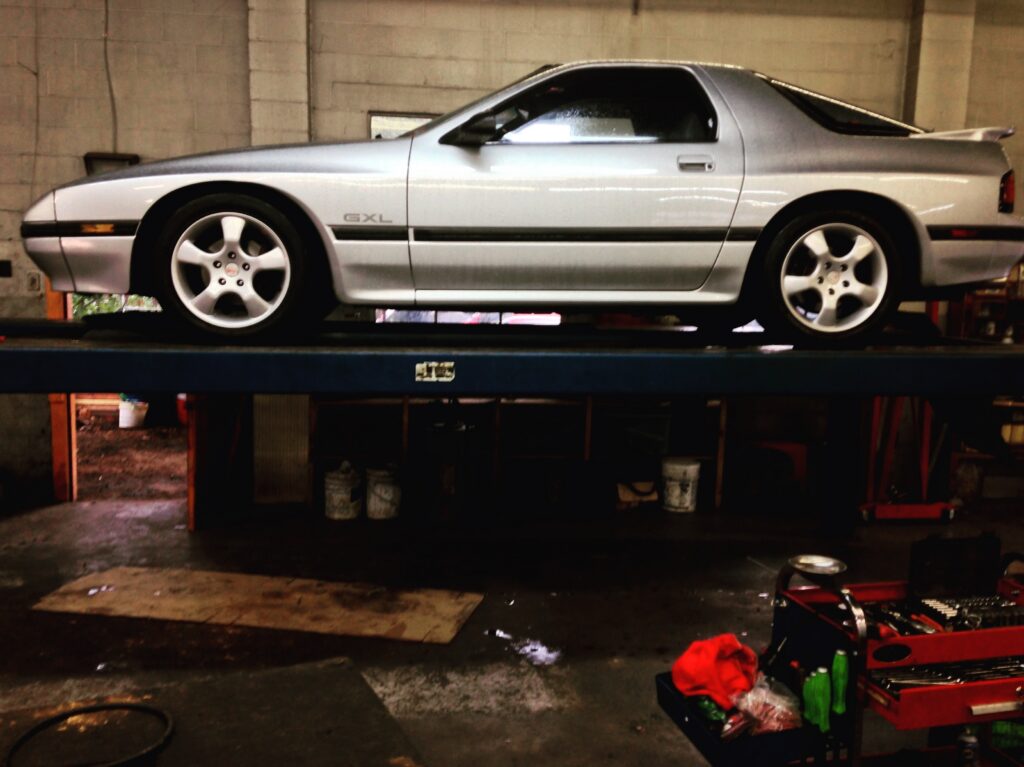
On a trip toward Chattanooga, Tennessee, just before the Ocoee River in the Appalachian Mountains, the car suddenly became much louder. Not mildly louder. Rotary-powered public nuisance louder. Jon pulled over and discovered that the exhaust bolts and gasket just after the header had abandoned ship. He was more than an hour from any proper town, but found a small shop that happened to be open.
The man behind the counter looked at the RX-7 as if Jon had arrived in a spacecraft. This was an all-American sort of shop, and the Mazda was not exactly local dialect. Still, the man found a gasket that would fit, likely from a Silverado. Jon installed it with new bolts and carried on. It lasted about 15 minutes.
The higher exhaust temperatures from the rotary promptly burned through the Chevrolet gasket, and Jon continued to Chattanooga in what was essentially a straight-piped RX-7. He spent the weekend, in his words, terrorizing the town and breaking every noise ordinance within earshot. The car was fixed once he got home, but the memory remains. “The things that don’t bother you when you’re young,” he says.
That is also part of the appeal. The cars we remember for life are not always the most reliable, rational, or quiet. Often, they are the ones that ask something of us. They are a little ridiculous. A little unnecessary. Jon believes that is what separates a merely good car from one people carry with them forever.
His RX-7 had a smooth rotary engine that demanded revs, requiring 4,000 rpm before shifting if you wanted to make real progress. It had an intensely blue interior, complete with pleated navy leather, light blue carpet, and a stitched navy blue dash. It was not tasteful by modern minimalism standards. It was better than that. It had a point of view.
Inside The Launch Room
Jon’s current role sits at the intersection of product planning, brand identity, and organizational alignment. On any given day, he may be working with other departments to solve issues in the current lineup or preparing for vehicles that will not launch for another two or three years.
The job requires both data and instinct, a balance that sounds simple until you remember that the modern automotive market is trying to satisfy everyone at once. Regulators, dealers, loyalists, first-time buyers, tech-focused consumers, enthusiasts, families, commuters, and spreadsheet people all want different things. Sometimes very different things.
Jon says the hardest part of bringing a new vehicle to market today is balancing what most consumers want with what enthusiasts want. Those two camps, he notes, seem increasingly at odds.
That tension is especially real for a company like Mazda. Enthusiasts want sports cars, manuals, lightness, revs, and a proper RX-7 successor. The broader market wants crossovers, alternative powertrains, technology, comfort, and practicality. Mazda still has to sell vehicles. As Jon puts it, with refreshing honesty, the company has to make money and pay his salary.
Still, he believes Mazda’s identity can survive in a changing industry by keeping the driver at the center. That does not mean every Mazda must be a sports car. It means every Mazda should respond thoughtfully to the person behind the wheel.
That may be the most Mazda idea of all.
35th Anniversary MX-5 Photo Courtesy of Mazda
The 35th Anniversary MX-5 Surprise
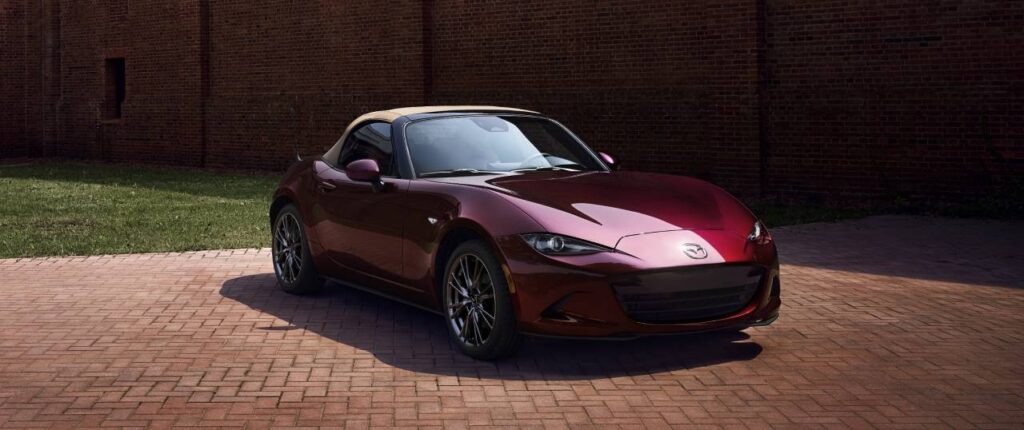
One of Jon’s most meaningful recent launch experiences was not an all-new vehicle, but the 35th Anniversary MX-5.
At first, expectations inside the team were modest. Early documents and rough mockups outlined the changes, but did not fully communicate the finished product. The reaction was essentially: “This is it?” Then they saw the car in person.
The production version proved to be far more than a list of changes. The details came together in a way that surprised Jon, and the public reaction confirmed it. He also helped include a small but meaningful touch: an interior-matched leather key fob cover with the 35th Anniversary logo debossed on it. A tiny detail, perhaps, but the kind that makes buyers feel considered.
And consideration matters. Enthusiasts can spot the difference between decoration and care. One is added. The other is built in.
Cars In The Digital Age
Jon is not anti-technology. He understands where the market is going, and he knows that buyers now expect a certain level of digital convenience. But he also believes the industry has lost something in its race to make cars feel more like devices.
His personal view is that many automakers have blurred their own identities while chasing screens, automation, and novelty. A car, he argues, is not a phone. The purpose of much technology is to remove involvement. The purpose of a good car is to invite it.
That is an important distinction.
Modern drivers may not even know what they are missing. Many have never experienced a truly connected sports car or an analog machine that requires participation. But Jon believes that if people are given the chance to experience a vehicle that puts the driver first, they will understand. They may not describe it in enthusiast jargon, but they will feel it.
Mazda’s challenge is to reach those people without becoming just another technology-forward appliance brand. Jon does not believe Mazda is built for buyers who simply want the latest and greatest screen. Those buyers will always move on to the next new thing. Mazda’s opportunity is deeper: to connect with people beyond the screen and offer something more personal and lasting.
Once the newness wears off, a car built merely to impress can feel disposable. A car that makes you feel connected has a much longer shelf life.
The Classic Mazda Jon Leverett Would Bring Back
Given the obvious choice, Jon could have said RX-7. Of course he could. Anyone with a pulse and a passing interest in rotary engines would understand.
But when asked which classic Mazda he would bring back unchanged for modern drivers, Jon chose the 1990 Eunos Cosmo.
It is a fascinating answer. The Cosmo was elegant, advanced, and strange in the best possible way. From the outside, it could pass as a handsome grand tourer, but inside it offered a high-quality leather cocoon. Under the hood, in its most memorable form, was a 3-rotor engine, the kind of mechanical decision that feels almost impossible in today’s market.
Jon admits he has never driven one, and that it could be a “never meet your heroes” situation. But the idea of it captures him: a car that appears composed and refined, then reveals something wild and unforgettable once underway.
That is the sort of machine that can open a person’s eyes to what a car can be.
The First-Car Feeling
Jon’s hope for someone buying their first Mazda today is simple. He wants them to notice the thought. The material quality. The exterior and interior design. The way the car responds. The way the experience holds up after the flash of features has faded.
“A good driving experience never gets outdated,” he says. It is the kind of line that sounds like marketing until you realize it came from a man who learned to drive by listening to a clutch in a driveway, who once drove a wounded RX-7 into Chattanooga like an amateur IMSA team that had misplaced its muffler, and who now helps shape future Mazdas from inside the company.
Jon Leverett’s story is not really about one RX-7, although that car is the spark. It is about the idea that machines can matter when they are built with intention, and when the person using them is willing to pay attention.
The best cars do not simply move us. They teach us how to listen.