
 Michael Satterfield
The finest mechanical watches have always been about more than simply telling time. They represent generations of craftsmanship, engineering, and an almost obsessive pursuit of precision. With its latest creation, Frederique Constant brings together two of traditional watchmaking’s most celebrated complications and introduces an entirely new approach to displaying them.
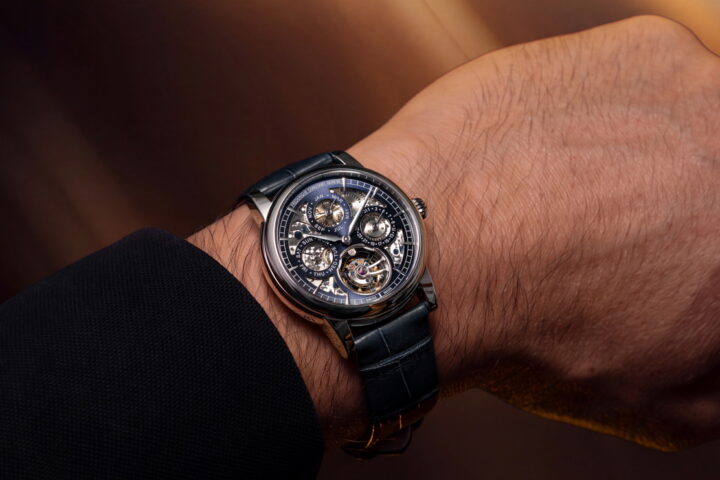
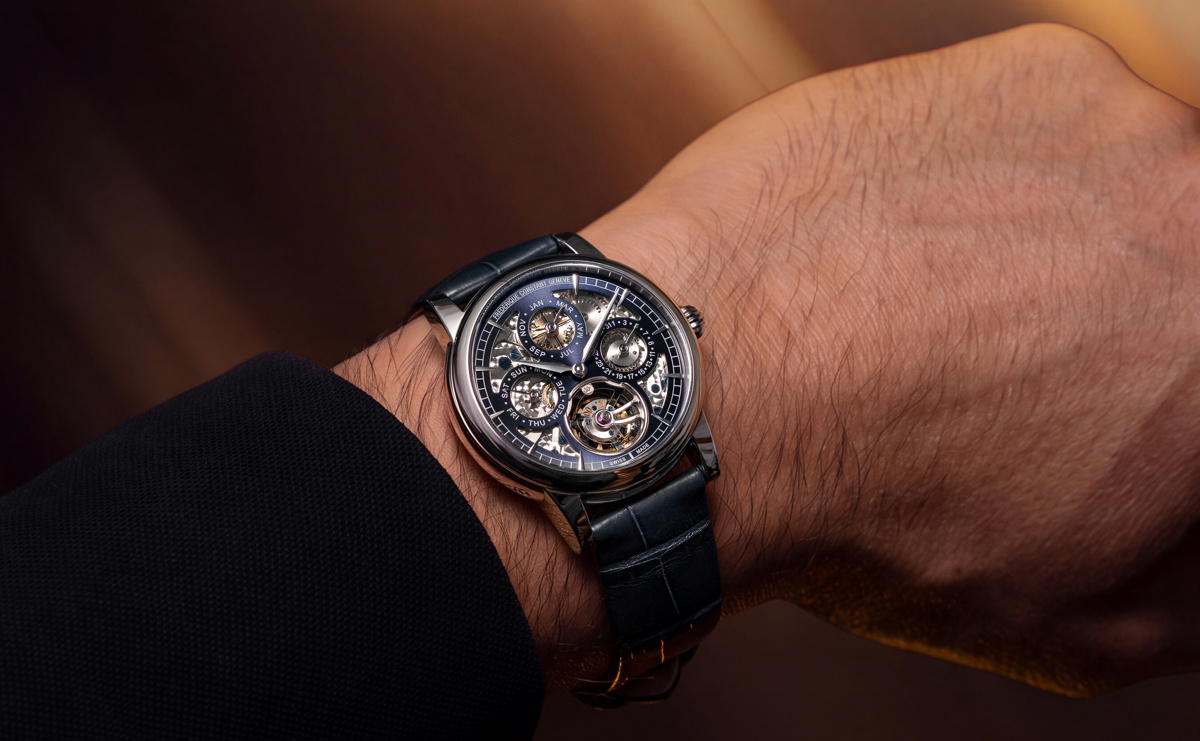
The new Frederique Constant Classic Tourbillon Perpetual Calendar Manufacture combines an in-house tourbillon, perpetual calendar, and an innovative seven-piece sapphire marquetry dial that offers an intricate view of the movement beneath. Priced at $33,995 and limited to just 88 individually numbered examples, the watch represents one of the most ambitious creations in the Swiss manufacturer’s history.
Founded in 1988, Frederique Constant has spent nearly four decades developing a reputation for bringing sophisticated Swiss watchmaking to a broader audience. While this particular timepiece sits firmly in the world of high complications, it continues the company’s tradition of combining classical design with modern technical innovation.
A New Approach to the Sapphire Dial
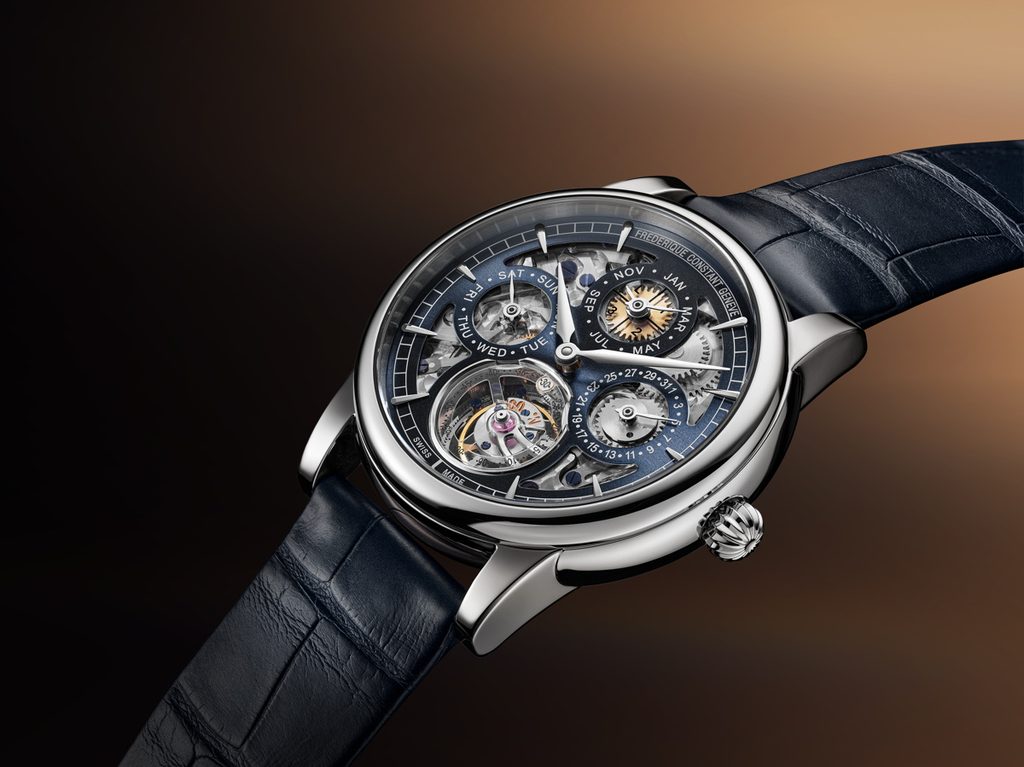
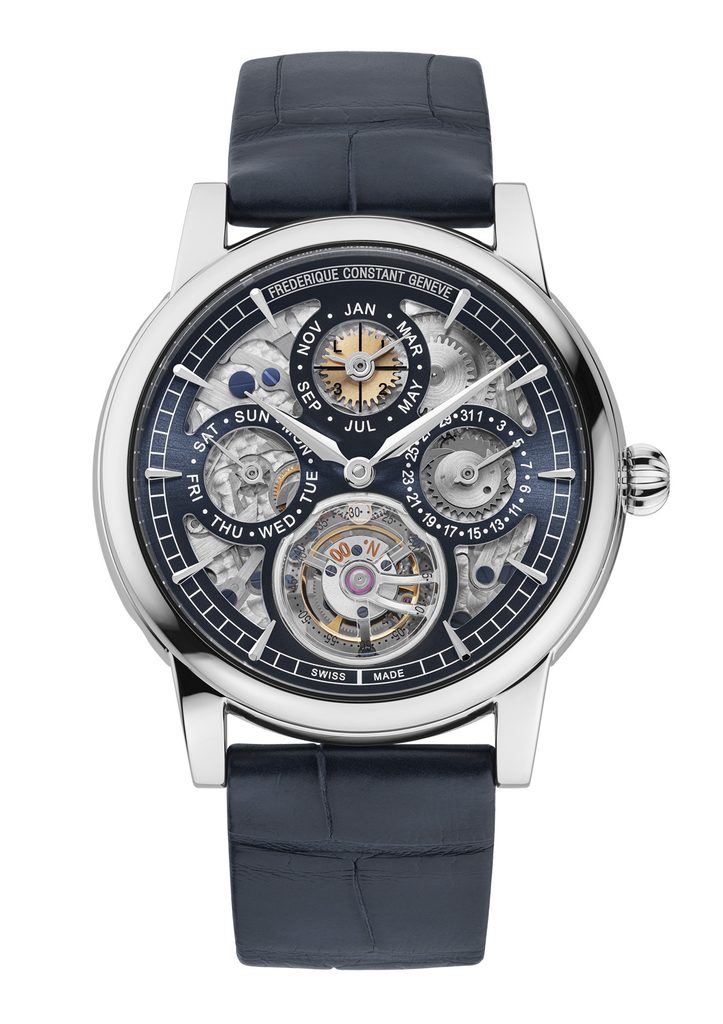
The most immediately striking feature of the Classic Tourbillon Perpetual Calendar Manufacture is its unusual dial construction. Rather than following the traditional approach to skeletonized watchmaking, which generally relies on a large sapphire disc combined with a decorative brass overlay, Frederique Constant has created a dial assembled from seven individually cut sapphire elements.
Three circular sapphire sections surround the perpetual calendar displays at 3, 9, and 12 o’clock, while four additional crescent-shaped pieces fill the remaining openings. Each element is precisely shaped to fit within the dial’s brass framework, keeping the underlying movement visible without sacrificing the clarity of the calendar indications.
The process is known as sapphire marquetry, borrowing its name from the traditional decorative art of assembling individually shaped materials into a unified design. In this application, the technique creates depth and transparency that change as light moves across the dial.
Beyond its appearance, the construction also has a practical advantage. By eliminating the conventional full sapphire disc beneath the decorative plate, Frederique Constant has reduced the dial assembly’s thickness by several tenths of a millimeter. It may sound like a small achievement, but in mechanical watchmaking, where tolerances are measured in fractions of a millimeter, such refinements matter.
The result is a dial that reveals remarkable mechanical detail while retaining the symmetry and elegance associated with traditional Swiss dress watches. The navy blue sunray finishing, diamond-cut rhodium-plated hour markers, and polished hands further reinforce that balance between technical complexity and classical styling.
Two Great Complications, One Manufacture Movement
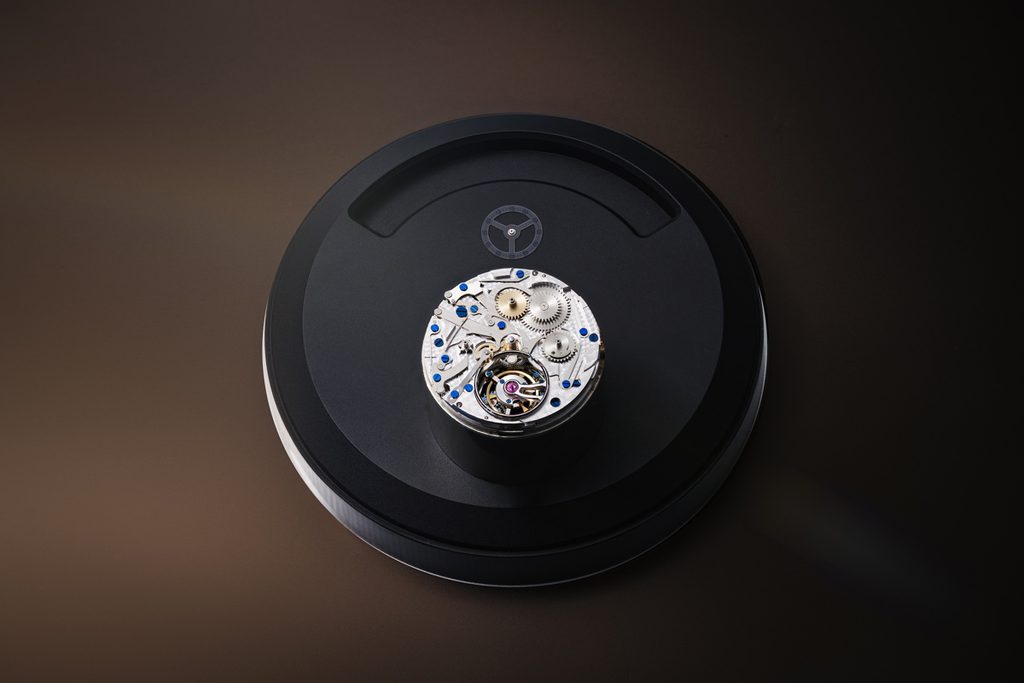
At the heart of the watch is the Frederique Constant FC-975 Manufacture caliber, an automatic movement developed and assembled at the company’s facilities in Plan-les-Ouates, Geneva. Combining a perpetual calendar and tourbillon in a single movement is an achievement in itself, but doing so while maintaining a relatively restrained 40mm case diameter makes the design particularly interesting.
The perpetual calendar displays the date at 3 o’clock, the day of the week at 9 o’clock, and the month at 12 o’clock. The month indicator also incorporates the leap-year cycle, displaying years one through three alongside an “L” marking for the fourth, leap year.
Unlike a conventional calendar watch that requires manual correction at the end of shorter months, a perpetual calendar is mechanically programmed to account for varying month lengths and the four-year leap-year cycle. It is one of watchmaking’s most traditional demonstrations of mechanical ingenuity, using carefully coordinated gears and levers to keep the calendar synchronized.
At 6 o’clock, the tourbillon takes center stage. Originally developed to compensate for positional errors in mechanical timekeeping, the tourbillon places the escapement and balance assembly inside a rotating cage. In the FC-975, that cage completes one revolution every 60 seconds, creating both a technical showcase and an endlessly fascinating display of mechanical motion.
Frederique Constant has also introduced a new feature it calls “discreet seconds.” Instead of placing a conventional seconds hand above the tourbillon, the company has fitted an exceptionally thin transparent quartz disc directly to the rotating cage. The disc, thinner than a human hair according to the manufacturer, rotates once every minute, with the seconds read against a fixed gold-rimmed aperture positioned above the tourbillon.
This clever inversion of the traditional seconds display keeps the tourbillon visually prominent while still providing a precise indication of the passing seconds.
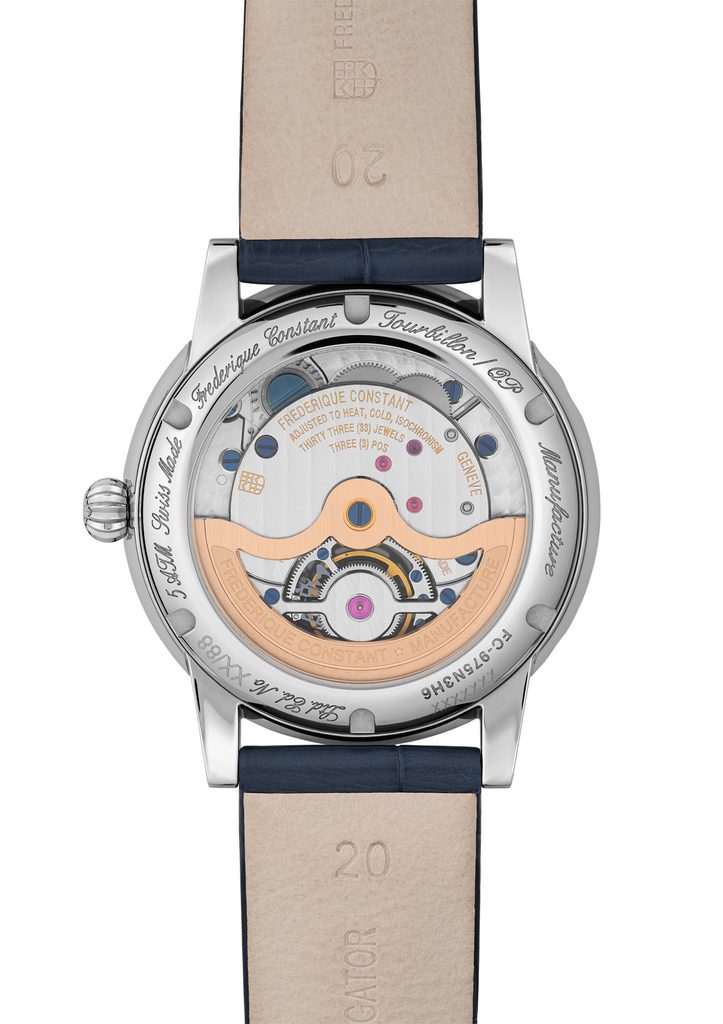
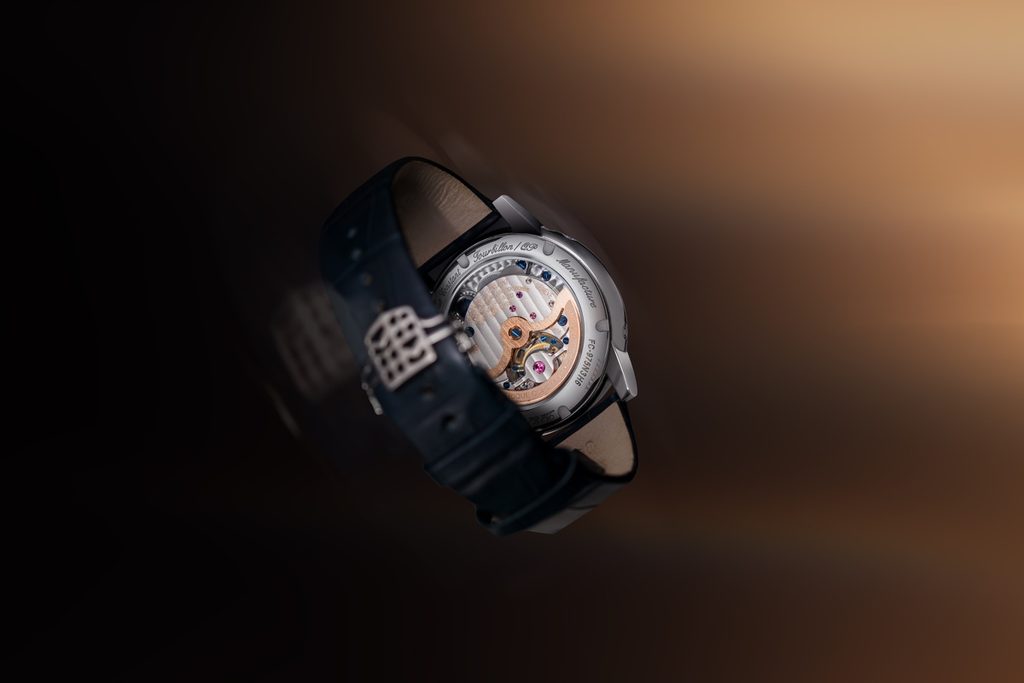
The FC-975 operates at 28,800 vibrations per hour, contains 33 jewels, and offers a 38-hour power reserve. Decorative finishing includes perlage on the mainplate and bridges, vertical Geneva stripes on the automatic winding system, and a rotor finished with a rose-gold galvanic treatment. Thanks to the transparent dial and exhibition caseback, you can appreciate these details from both sides of the watch.
Traditional Proportions and Exceptional Details
For all the mechanical complexity within, Frederique Constant has kept the exterior relatively traditional. The polished, three-part stainless steel case measures 40mm in diameter and 12.69mm thick, dimensions that help maintain the watch’s dress-oriented character without disguising the sophistication of the movement inside.
A convex sapphire crystal with anti-reflective treatment protects the dial, while the threaded exhibition caseback provides an additional view of the FC-975 caliber. Water resistance is rated at 50 meters, or 5 ATM, appropriate for a sophisticated dress watch rather than something intended for serious aquatic adventures.
The design is completed by a navy blue alligator leather strap with a square-scale pattern and folding buckle. The strap complements the blue dial, giving the watch a cohesive look that leans toward understated elegance despite the extraordinary mechanical activity beneath the crystal.
Each example receives its own limited-edition number, engraved on both the tourbillon cage and the caseback. The production run of 88 watches is no coincidence, referencing Frederique Constant’s founding year of 1988.
A Statement of Modern Swiss Watchmaking
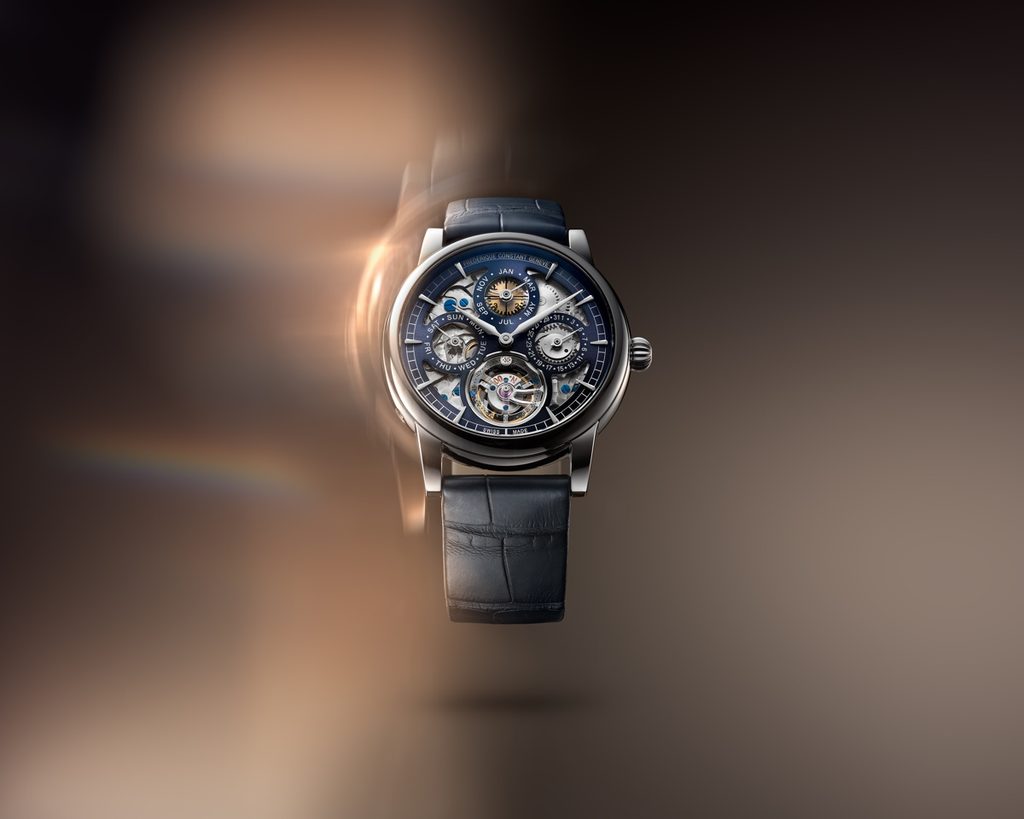
There is an interesting contrast at work in this latest Frederique Constant. The tourbillon and perpetual calendar are deeply rooted in traditional mechanical watchmaking, yet the seven-piece sapphire dial and unconventional seconds display demonstrate that even centuries-old techniques can leave room for fresh ideas.
At $33,995, the Classic Tourbillon Perpetual Calendar Manufacture is certainly not inexpensive, and its 38-hour power reserve is modest compared with some modern mechanical movements. But judging a watch of this caliber by its power reserve alone would miss the point. Its appeal lies in the execution of two demanding complications, the finishing of its in-house movement, and the unusually sophisticated architecture of its dial.
For collectors who appreciate the mechanical side of fine watchmaking but prefer the clean proportions of a classical dress watch, the latest Frederique Constant offers a compelling combination. With only 88 examples being produced, it is also a creation that relatively few enthusiasts will have the opportunity to experience firsthand.
Frederique Constant Classic Tourbillon Perpetual Calendar: Quick Facts
| Specification | Details |
|---|---|
| Model | Classic Tourbillon Perpetual Calendar Manufacture |
| Reference | FC-975N3H6 |
| Price | $33,995 MSRP |
| Limited Edition | 88 individually numbered pieces |
| Movement | FC-975 in-house automatic |
| Complications | Tourbillon, perpetual calendar, leap-year indication |
| Power Reserve | 38 hours |
| Frequency | 28,800 vibrations per hour (4 Hz) |
| Jewels | 33 |
| Case Material | Polished stainless steel |
| Case Diameter | 40mm |
| Case Thickness | 12.69mm |
| Crystal | Anti-reflective convex sapphire |
| Caseback | Engraved, threaded exhibition caseback |
| Dial | Navy blue sunray finish with seven sapphire marquetry elements |
| Calendar Displays | Month and leap year at 12, date at 3, day at 9 |
| Tourbillon | 60-second rotation at 6 o’clock |
| Seconds Display | Transparent rotating quartz disc |
| Water Resistance | 50 meters / 5 ATM |
| Strap | Navy blue alligator leather |
| Clasp | Folding buckle |
Frequently Asked Questions
How much does the Frederique Constant Classic Tourbillon Perpetual Calendar Manufacture cost?
The watch has a manufacturer’s suggested retail price of $33,995 USD.
How many examples will Frederique Constant produce?
Production is limited to 88 individually numbered watches, a reference to the company’s founding in 1988. Each carries its limited-edition number on the tourbillon cage and caseback.
What makes the sapphire marquetry dial different?
Unlike a conventional skeletonized dial that uses a large sapphire disc, Frederique Constant employs seven individually shaped sapphire sections. Three circular pieces frame the calendar subdials, while four crescent-shaped sections expose additional areas of the movement.
Is the Frederique Constant FC-975 a quartz movement?
No. The FC-975 is a fully mechanical, automatic movement. Although its seconds indication uses a transparent quartz disc, the watch itself is powered by a mechanical mainspring rather than a battery.
What is a perpetual calendar watch?
A perpetual calendar is a mechanical complication that automatically accounts for the different lengths of months and leap years. When correctly set and kept running, it maintains the proper calendar indications without the usual end-of-month adjustments.
What is the case size and water resistance?
The watch features a 40mm stainless steel case that measures 12.69mm thick, with water resistance rated at 50 meters, or 5 ATM.
What is the power reserve of the FC-975 movement?
The in-house FC-975 automatic movement delivers a 38-hour power reserve and operates at 28,800 vibrations per hour, or 4 Hz.
For additional information, visit Frederique Constant’s official website.