
 Michael Satterfield
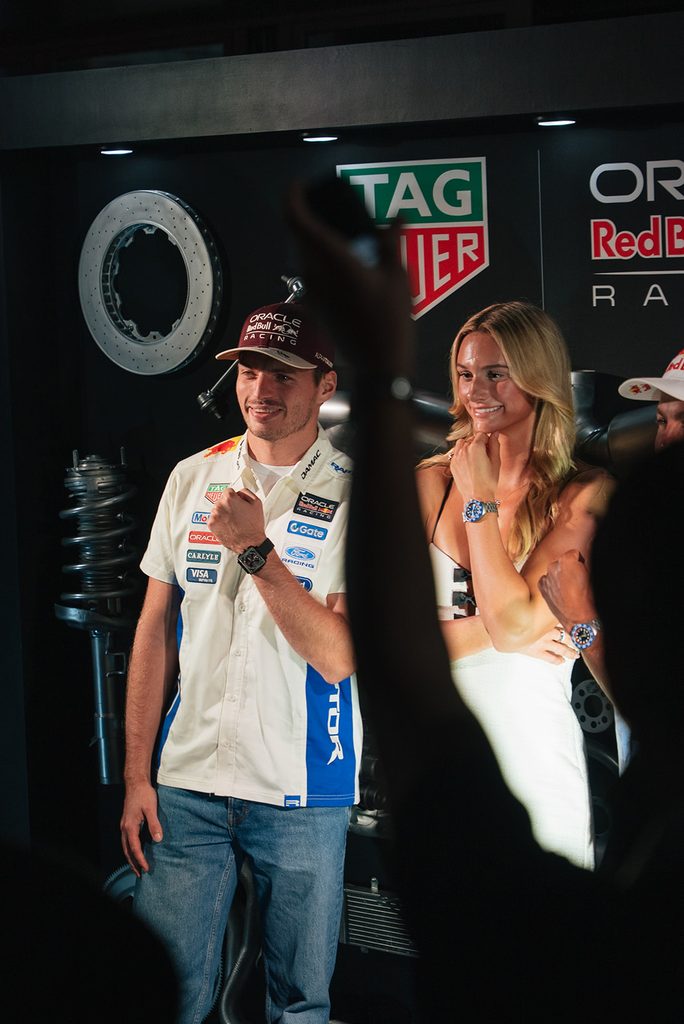
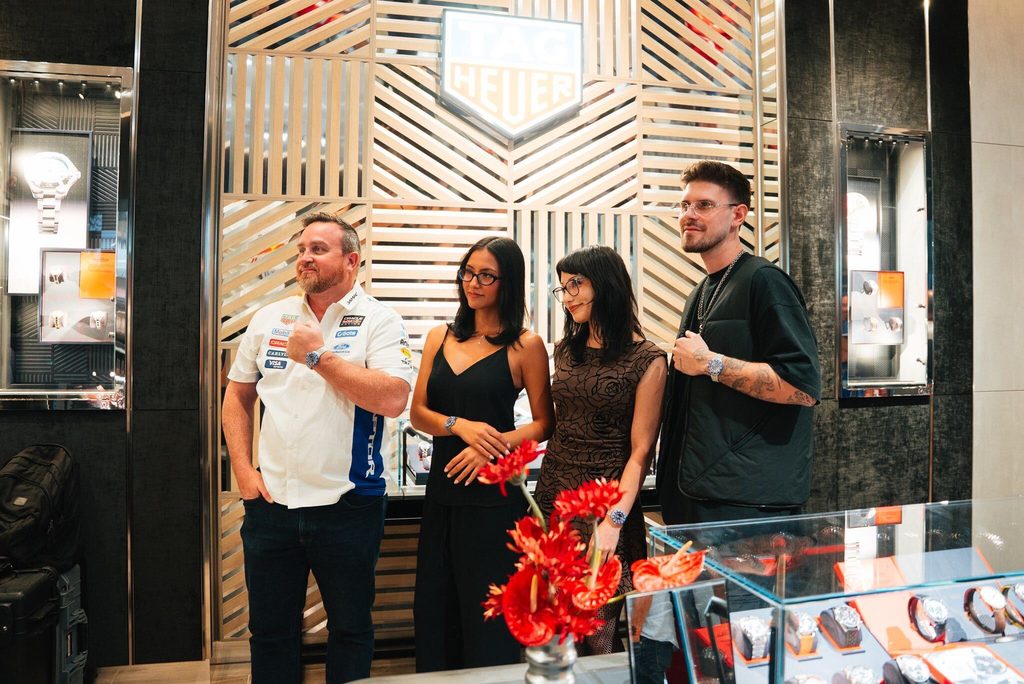
Disclosure: TAG Heuer invited me out to Austin for an celebration event and provided the Formula 1 Solargraph x Oracle Red Bull Racing watch for this review. The opinions expressed here are entirely my own, and the fact that the watch was provided by TAG Heuer has not influenced my editorial assessment. None of the links to the watch are affiliate links.
There is something about the relationship between watches and motorsports that goes far beyond a logo on the side of a race car. Both are built around precision, engineering, and the endless focus on time. It is a connection that has existed almost as long as the automobile itself, but few watchmakers can claim a relationship with racing quite as extensive as TAG Heuer.
From the golden age of Grand Prix racing to the turbocharged excess of the 1980s and the extraordinary technological advancements of modern Formula 1, the Swiss watchmaker has been a constant presence in the paddock. Its watches have accompanied world champions, its timing equipment has helped racing teams measure performance, and, in one particularly unusual chapter, its name even appeared on the engines powering Red Bull Racing Formula 1 cars.
That history makes the new TAG Heuer Formula 1 Solargraph x Oracle Red Bull Racing Special Edition more than another team-branded wristwatch. Celebrating the tenth anniversary of a partnership that began in 2016, the watch represents a relationship that has witnessed one of the most successful periods in modern Formula 1 history.
It also represents something of a return to form for the Formula 1 collection itself. With a compact 38mm case, a vibrant color scheme, and a solar-powered quartz movement, the latest model captures much of the charm that made the original Formula 1 watches so popular nearly four decades ago. And perhaps most importantly, it remembers that watches are supposed to be fun.
When Watchmaking Met Formula 1
The roots of TAG Heuer’s motorsport involvement stretch back more than a century, long before there was a TAG in the company name. Founded by Edouard Heuer in 1860, the Swiss manufacturer established its reputation through precision chronographs and timing instruments, developing technology that would eventually become indispensable to competitive motorsport.
By the 1960s, Jack Heuer recognized that professional racing offered a natural platform for the brand. The company had already developed some of the most recognizable chronographs in the world, including the Carrera, introduced in 1963 and named after the legendary Carrera Panamericana road race.
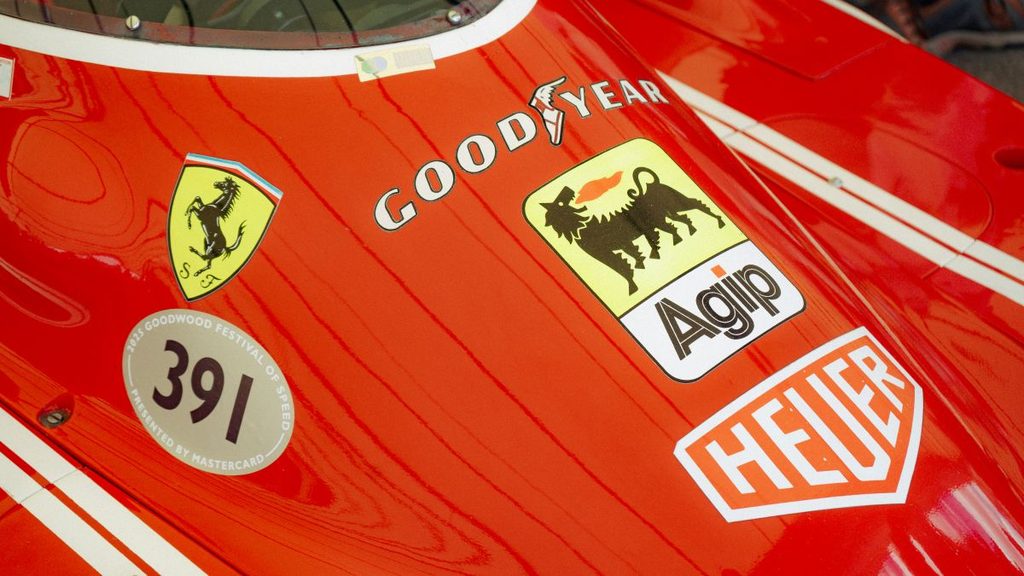
In 1969, Heuer entered into a personal sponsorship agreement with Swiss Formula 1 driver Jo Siffert, helping establish the company as a pioneering watch sponsor within the sport. The relationship put Heuer chronographs directly into the racing world at a time when few watchmakers understood the commercial potential of driver partnerships. Two years later, Heuer began a significant relationship with Scuderia Ferrari, providing timing equipment to the Italian team and establishing a partnership that placed the brand alongside some of the sport’s most celebrated drivers.
During the 1970s, the Heuer name became closely associated with Ferrari and its drivers, including Niki Lauda, whose remarkable 1975 and 1977 World Championships helped define one of the most memorable eras in Formula 1. The relationship was rooted in more than marketing. Heuer supplied sophisticated electronic timing equipment to Ferrari, allowing the team to record and analyze performance with greater accuracy. In a sport where thousandths of a second can separate winning from losing, accurate timing was an essential competitive tool.
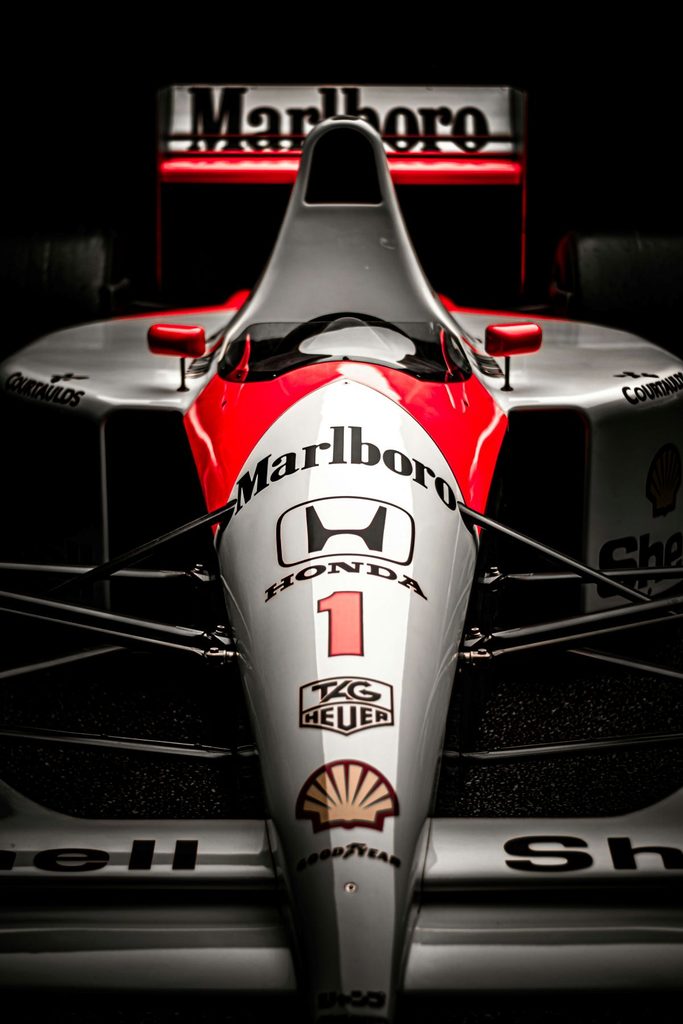
The story took another turn during the 1980s, when Techniques d’Avant-Garde, better known as TAG, became involved with McLaren. The TAG name appeared on Porsche-built turbocharged engines financed for the team, contributing to championship-winning seasons with Niki Lauda and Alain Prost.
In 1986, TAG acquired Heuer, creating the modern TAG Heuer brand. The company’s association with McLaren would continue for decades, becoming one of the longest-running and most recognizable partnerships in Formula 1.
Through the McLaren years, TAG Heuer became associated with some of racing’s greatest names, including Ayrton Senna, Alain Prost, Mika Häkkinen, and Lewis Hamilton. These relationships helped transform TAG Heuer from a respected Swiss watchmaker into a globally recognized sports luxury brand.
From 1992 through 2003, TAG Heuer also served as Formula 1’s Official Timekeeper, reinforcing its technical relationship with the championship. After more than two decades away from that role, the company returned as Official Timekeeper in 2025, once again placing the TAG Heuer name at the center of the sport’s timing operations.
For a brand that has spent generations building its identity around racing, the return felt particularly appropriate.
A New Era With Red Bull Racing
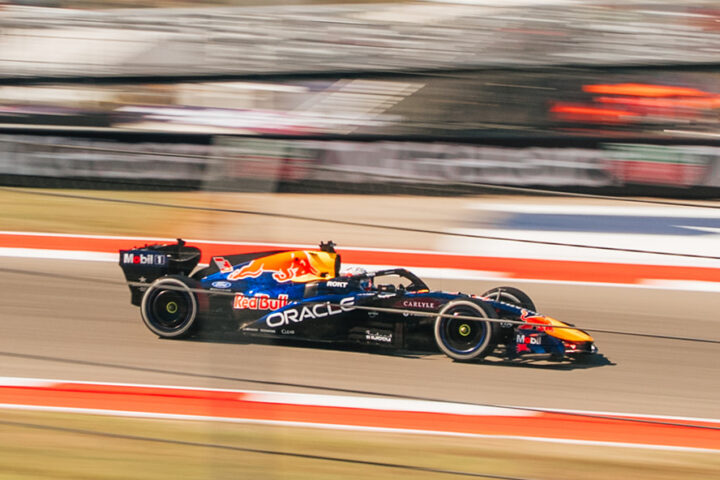
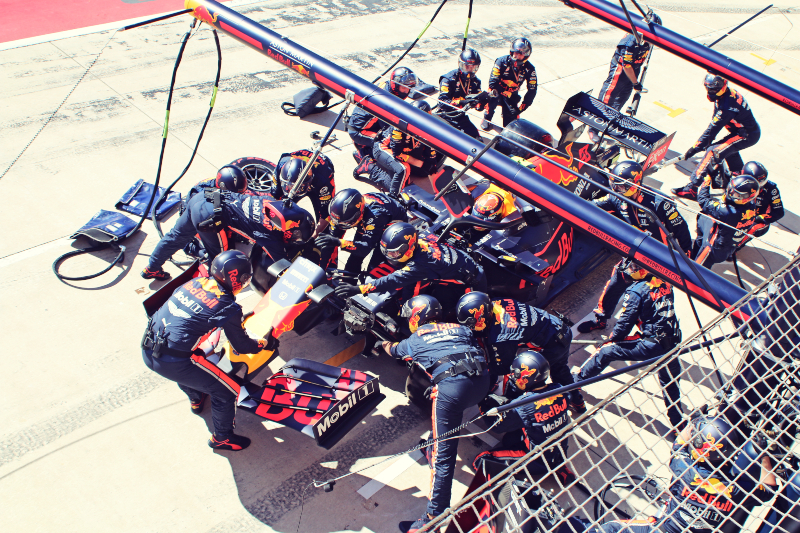
When TAG Heuer ended its partnership with McLaren after the 2015 season, it marked the conclusion of one of motorsport’s great sponsorship relationships. But rather than stepping away from Formula 1, TAG Heuer moved across the paddock to Red Bull Racing.
The new partnership began in 2016, at a time when Red Bull was working to reclaim the championship-winning form that had delivered four consecutive Drivers’ and Constructors’ Championships with Sebastian Vettel between 2010 and 2013.
What made the TAG Heuer agreement particularly interesting was that it went beyond traditional watch sponsorship. For the 2016 season, Red Bull Racing’s Renault-built power units were officially rebadged as TAG Heuer engines. The arrangement meant that the same company responsible for some of the world’s best-known racing chronographs now had its name attached to the engines powering a modern Formula 1 team.
TAG Heuer wasn’t engineering or manufacturing those engines. The power units were still developed by Renault, but the branding arrangement created an unusual connection between the watchmaker and the mechanical heart of a Formula 1 car. The partnership continued through the 2018 season before Red Bull transitioned to Honda power. During those years, Daniel Ricciardo and Max Verstappen delivered memorable victories in TAG Heuer-powered machinery, including Verstappen’s breakthrough win at the 2016 Spanish Grand Prix.
As Red Bull entered another period of dominance, TAG Heuer remained part of the team’s identity. Verstappen claimed four consecutive World Drivers’ Championships between 2021 and 2024, while Red Bull secured Constructors’ Championships in 2022 and 2023. By the time the partnership reached its tenth anniversary in 2026, it had become a defining relationship for both brands.
The anniversary Solargraph celebrates that shared history, but rather than creating an elaborate mechanical chronograph or an oversized commemorative piece, TAG Heuer chose something closer in spirit to the watch that helped make the brand accessible to an entire generation of enthusiasts.
The Return of the Original Formula 1 Spirit
Introduced in 1986, the original TAG Heuer Formula 1 collection arrived at a fascinating moment in Swiss watchmaking. Quartz technology had fundamentally changed the industry, and traditional Swiss manufacturers were searching for ways to attract a new generation of customers.
TAG Heuer took a different approach from many of its competitors. Instead of treating quartz movements as an undesirable alternative to mechanical watches, the company embraced their accuracy, reliability, and affordability.
The early Formula 1 models featured colorful cases, distinctive bezels, and bright dials that looked unlike almost anything else in the Swiss watch market. They were sporty, youthful, and relatively inexpensive compared with traditional luxury watches. More importantly, they were approachable.
For young enthusiasts in the 1980s and 1990s, the Formula 1 was often their first introduction to Swiss watchmaking. It was a watch associated with the drivers and teams they watched on television, but one that could realistically become part of their own lives. That was an important distinction. You might never own a Formula 1 car, but you could own a TAG Heuer Formula 1 watch.
Over the following decades, the collection evolved considerably. Cases grew larger, materials became more sophisticated, and automatic movements and mechanical chronographs joined the lineup. Some models moved noticeably upmarket, but the collection never completely abandoned its origins.
The latest Solargraph feels like a deliberate return to those early principles. It embraces quartz technology, uses color confidently, and prioritizes practicality over mechanical complexity. In an industry where manufacturers often seem determined to make every watch larger, more complicated, and more expensive, the simplicity of this approach is refreshing.
A Racing-Inspired Design That Doesn’t Try Too Hard
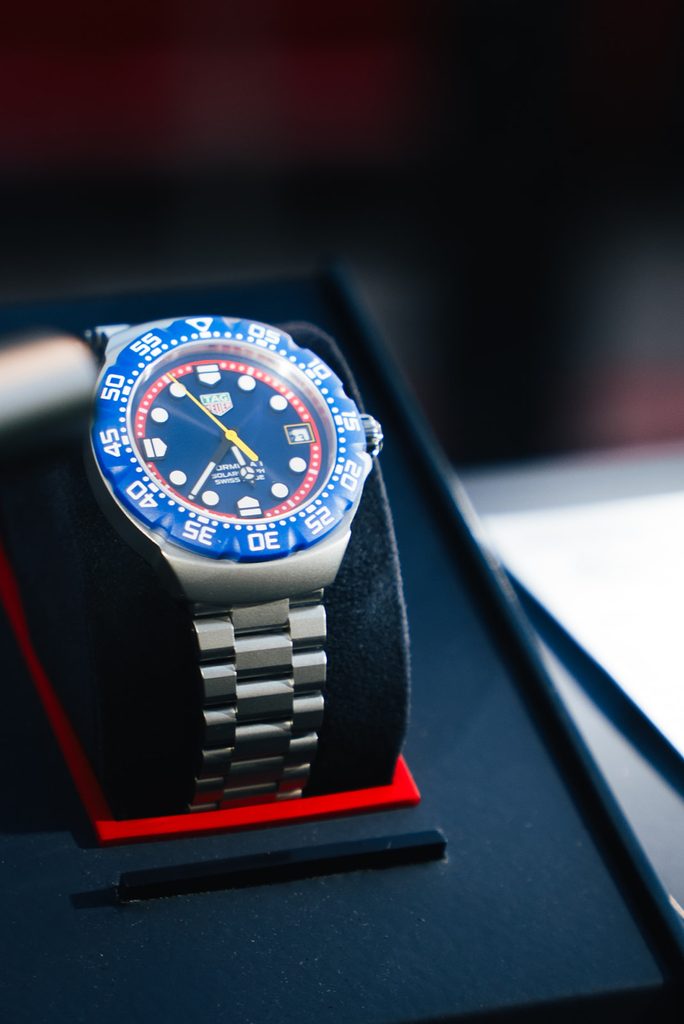
At first glance, there is no mistaking the inspiration behind the Formula 1 Solargraph x Oracle Red Bull Racing Special Edition.
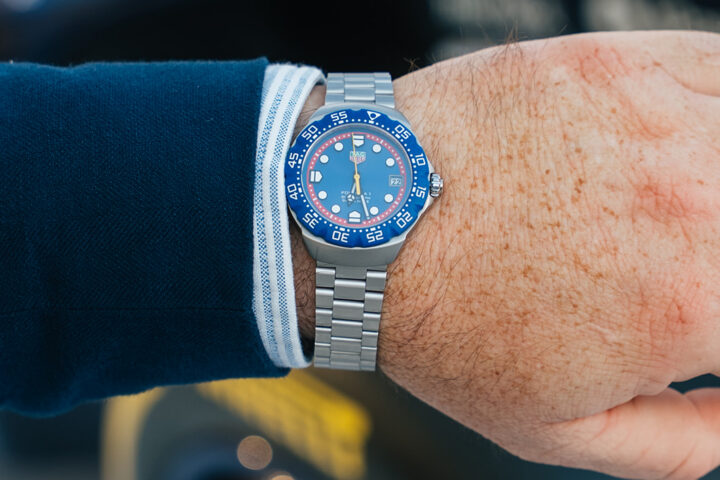
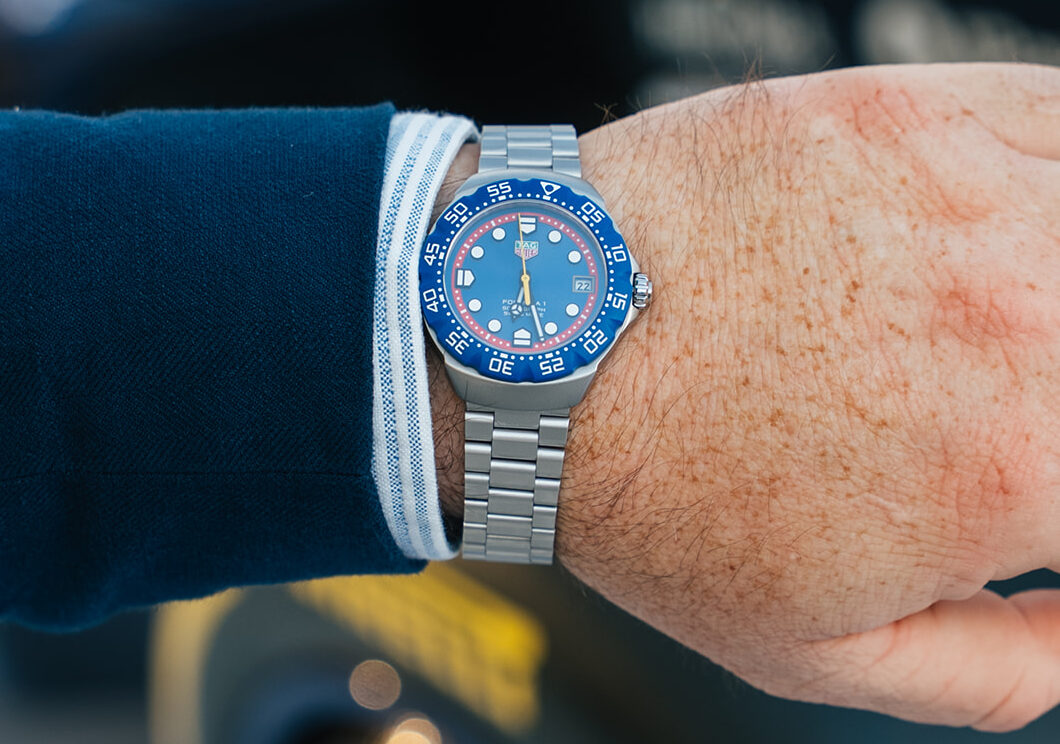
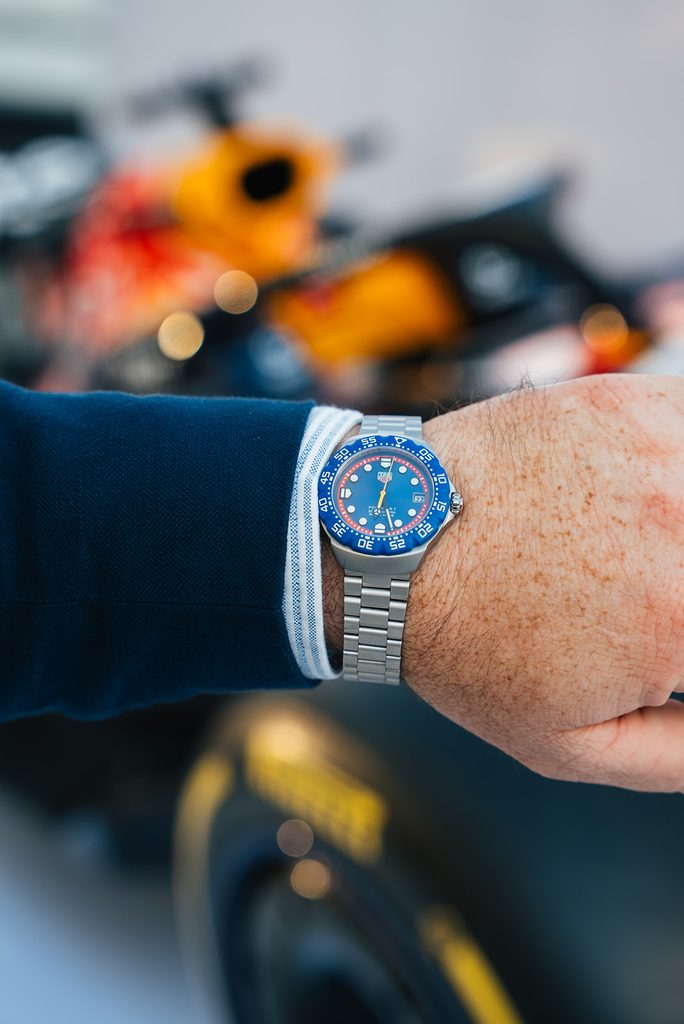
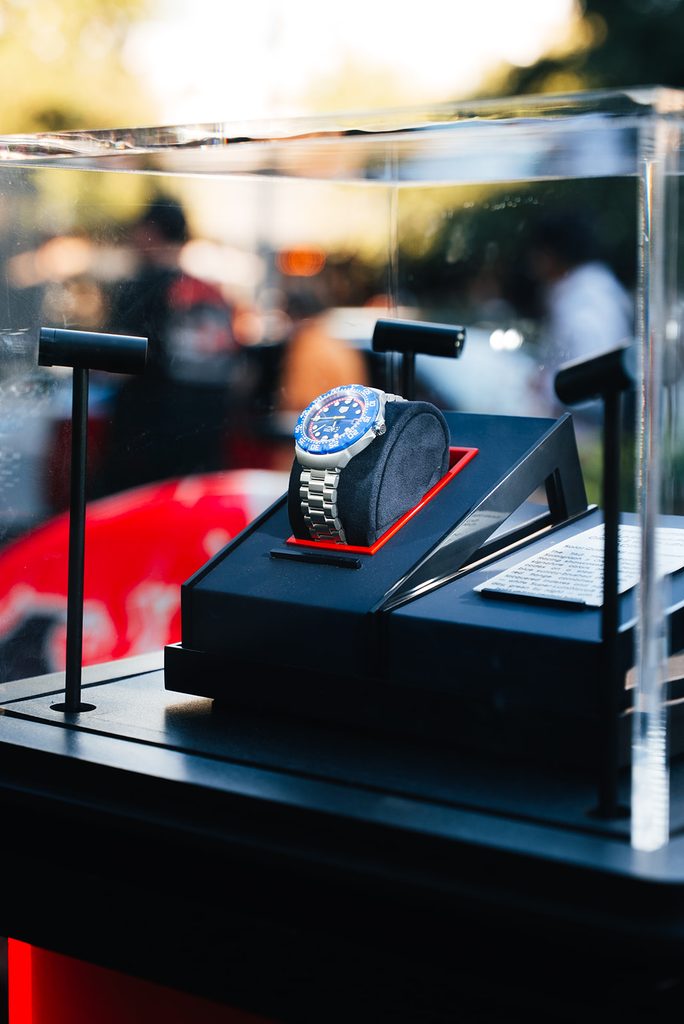
The watch borrows its visual identity directly from the racing team, combining a deep blue dial with red and yellow accents. It is a familiar color palette for Formula 1 fans, but TAG Heuer has managed to incorporate it without making the watch look like a souvenir from the team merchandise shop. This is a really good thing. Too often, watches produced in collaboration with racing teams are overwhelmed by logos, oversized graphics, and decorative elements that may look interesting in promotional photographs but aren’t something you are going to want to wear everyday. Here, TAG Heuer has exercised welcome restraint.
The sunray-brushed blue dial provides a rich background that changes character depending on the lighting. In bright conditions, the finish catches the light and adds depth, while in more subdued environments the darker tones give the watch a more understated appearance.
A red minute track brings additional energy to the dial, while a yellow central seconds hand provides a sharp visual contrast. The yellow accent surrounding the date display at three o’clock is another clever touch, bringing the team’s colors into the design without sacrificing functionality. The hour markers and hands feature white Super-LumiNova that glows green in low-light conditions, maintaining the legibility expected from a sports watch.
Surrounding the dial is a blue bidirectional rotating bezel made from TAG Heuer’s TH-Polylight material. The material connects the watch visually to the colorful synthetic bezels found on the earliest Formula 1 models, while the modern construction gives it a more contemporary appearance.
The bezel also provides a convenient way to track elapsed time. It may not be a dedicated diving instrument or a substitute for a proper chronograph, but it adds a useful functional element to an otherwise straightforward three-hand watch.
Even the commemorative elements have been handled with some discretion. The caseback features engraved TAG Heuer and Oracle Red Bull Racing branding, along with a checkered flag motif. It establishes the watch’s connection to the anniversary without turning the dial into an advertisement. Overall, the design succeeds because the racing inspiration is immediately recognizable, yet the watch remains versatile enough to wear well beyond a Grand Prix weekend.
The Case for a Smaller Sports Watch
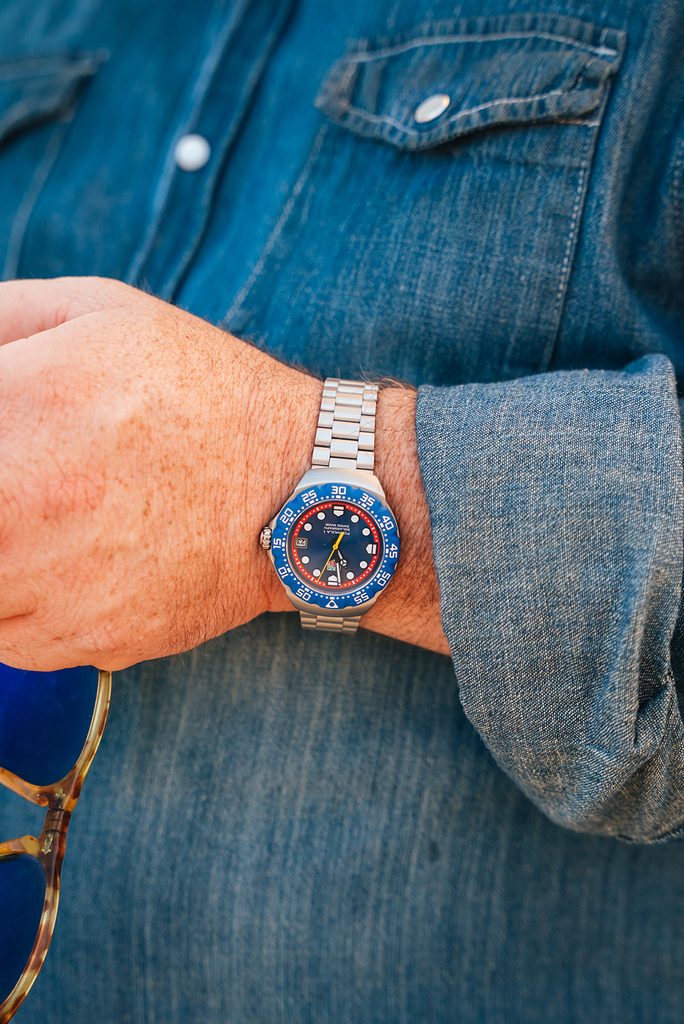
One of the most welcome decisions TAG Heuer made with this model was keeping the case diameter at 38mm. For much of the past two decades, sports watches grew steadily larger. Forty-two and 44mm cases became commonplace, and some manufacturers seemed determined to push their designs even further.
There is certainly a place for large watches, particularly when complicated movements or specialized functions require additional space. But a well-proportioned sports watch does not need to dominate the wrist to make a statement. At 38mm, the Solargraph manages to feel substantial without becoming cumbersome. Its approximately 10.2mm thickness adds to its practicality, allowing it to sit comfortably beneath a jacket cuff while retaining the visual presence expected from a Formula 1 watch.
The sandblasted stainless steel case is another thoughtful decision. Rather than covering the watch in highly polished surfaces, TAG Heuer has given it a functional, technical appearance that suits its racing inspiration. The finish also provides an appealing contrast to the glossy blue dial and colorful accents. It feels purposeful, almost like a component that belongs inside the cockpit of a modern race car.
A matching three-row stainless steel bracelet completes the package, secured by a folding clasp with a double-security system. The bracelet gives the watch a slightly more mature appearance than the brightly colored straps traditionally associated with the earliest Formula 1 models.
With a sapphire crystal and 100 meters of water resistance, the Solargraph also offers the kind of durability expected from a modern sports watch. This is not something that needs to be reserved for special occasions or protected from every unpredictable part of daily life. As someone who spends a considerable amount of time traveling, driving, and attending motorsport events, I appreciate watches designed to be worn rather than simply admired. The appeal of a practical sports watch is that it should fit naturally into whatever the day brings. The Solargraph appears to understand that assignment.
Solar Power Makes a Compelling Argument
Perhaps the most interesting aspect of the new Formula 1 Solargraph is what TAG Heuer decided not to put inside it. There is no elaborate automatic movement, no exhibition caseback revealing a decorated rotor, and no mechanical chronograph complication. Instead, the watch uses the Calibre TH50-00, a solar-powered quartz movement designed to offer accuracy and dependable everyday operation with minimal attention from its owner.
The movement converts natural and artificial light into electrical energy, storing that energy in a rechargeable power cell. According to TAG Heuer, just one minute of sunlight can provide enough power for approximately 24 hours of operation.
Once fully charged, the watch can continue running for up to ten months without additional exposure to light. TAG Heuer also states that the rechargeable power cell is designed for a service life of up to 15 years. For someone accustomed to mechanical watches, that degree of convenience is difficult to ignore.
Collectors often accept the rituals associated with automatic watches as part of their charm. Winding a movement, setting the time after a watch has been sitting idle, and occasionally adjusting for small variations in accuracy are all familiar parts of ownership. Those rituals can be enjoyable, but they are not always convenient.
A solar-powered quartz watch offers a different experience. Wear it, give it some light, and it quietly goes about its business. For collectors with several watches in rotation, or travelers who simply want something dependable, the advantages are obvious. There is also an interesting parallel between the technology in the Solargraph and modern Formula 1.
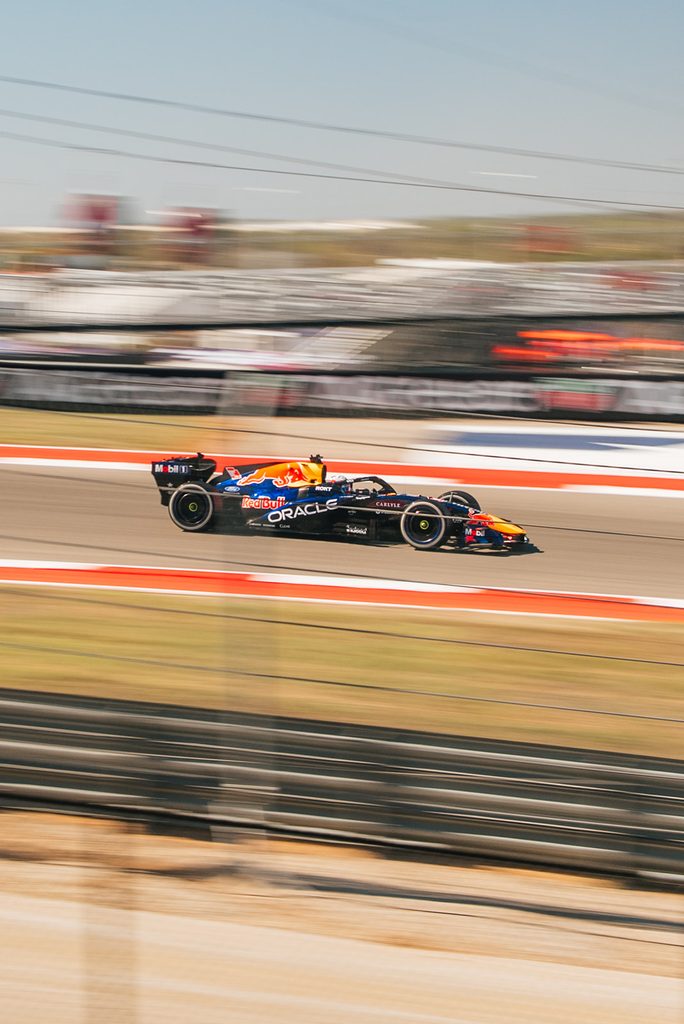
Today’s racing cars are extraordinary examples of energy management and efficiency. The sport’s hybrid power units have demonstrated that outright performance and the intelligent use of energy are not opposing ideas. The Solargraph operates on a much simpler principle, of course, but its emphasis on efficiency feels entirely appropriate for a watch celebrating a contemporary Formula 1 team.
Some enthusiasts will undoubtedly question the price of a quartz-powered watch, particularly when mechanical alternatives are available in the same range. That is a reasonable consideration, but it also overlooks the fact that quartz technology has been central to the Formula 1 collection since its introduction.
The original Formula 1 was not intended to be a mechanical masterpiece. It was intended to be a reliable, accurate, colorful sports watch with a credible connection to racing. The Solargraph continues that tradition, only with considerably more advanced technology.
Does the Price Make Sense?
With a retail price of $2,250, the Formula 1 Solargraph Red Bull Racing Special Edition occupies an interesting position in the TAG Heuer lineup.
It is certainly not an inexpensive watch, and anyone evaluating it solely on the cost or complexity of the movement will find less expensive alternatives. Solar-powered quartz technology is available from other manufacturers at a fraction of the price, while entry-level Swiss mechanical watches can also be found in this range. But reducing a watch to the movement inside its case misses much of what makes watch collecting interesting.
Design, materials, finishing, history, and the emotional connection a piece creates are important elements of the ownership experience. A watch can be technically impressive and utterly forgettable, just as a relatively simple watch can become something you enjoy wearing for decades.
The Solargraph offers an appealing combination of a recognized Swiss luxury watchmaker, distinctive design, quality materials, practical technology, and a legitimate relationship with one of the most successful teams in modern motorsport. Plus it is actually comfortable on the wrist to wear all day.
There is no shortage of racing-inspired watches on the market, but many have little connection to the sport beyond a licensing agreement or a marketing campaign. TAG Heuer’s history in Formula 1 is far more substantial, stretching from the early days of driver sponsorships and electronic timing to championship-winning teams and official timekeeping.
The Red Bull Racing anniversary edition draws on that history, and for enthusiasts who appreciate both watches and motorsport, that connection carries real value. It is also worth remembering that this is a special edition rather than a watch advertised with an individually numbered production limit. Its appeal should be based on the design and the history it celebrates, not assumptions about future collectability or investment value. A watch should earn its place in a collection by being something its owner genuinely wants to wear. Anything beyond that is a bonus.
A Few Things Worth Considering
Although there is plenty to like about the Solargraph, it is not necessarily going to appeal to every type of collector. Those who associate TAG Heuer primarily with mechanical chronographs may find the simplicity of a three-hand quartz watch underwhelming. The absence of a dedicated chronograph function is particularly noticeable given the Formula 1 branding, although the rotating bezel does offer basic elapsed-time functionality.
The movement is also a matter of personal preference. Some buyers simply prefer mechanical watchmaking, and no amount of convenience or accuracy will persuade them otherwise. Then there is the price. At $2,250, buyers have a substantial selection of watches to consider, including models offering more complicated movements or more traditional finishing. But these are matters of preference rather than fundamental shortcomings.
The Solargraph does not pretend to be a professional racing chronograph or a showcase for high-end mechanical watchmaking. It is a well-equipped modern sports watch with a distinctive personality and a genuine historical connection to Formula 1. Judged on those terms, it makes a convincing case for itself.
TAG Heuer Formula 1 Solargraph x Oracle Red Bull Racing: Quick Facts
| Specification | Details |
|---|---|
| Reference | WBY111F.BA0042 |
| Case diameter | 38mm |
| Case thickness | Approximately 10.2mm |
| Case material | Sandblasted stainless steel |
| Movement | TAG Heuer Calibre TH50-00 Solargraph |
| Movement type | Solar-powered quartz |
| Dial | Blue sunray finish with red and yellow accents |
| Crystal | Sapphire |
| Bezel | Bidirectional TH-Polylight |
| Water resistance | 100 meters |
| Bracelet | Stainless steel, folding clasp |
| Power reserve | Up to 10 months fully charged |
| Retail price | $2,250 |
Frequently Asked Questions
What is special about the TAG Heuer Formula 1 Solargraph Red Bull Racing Anniversary Edition?
The watch celebrates ten years of TAG Heuer’s partnership with Oracle Red Bull Racing, which began in 2016. It features Red Bull Racing’s signature colors, special caseback engravings, and TAG Heuer’s solar-powered TH50-00 quartz movement.
Is the TAG Heuer Formula 1 Solargraph Red Bull Racing a limited-edition watch?
TAG Heuer describes the model as a special edition rather than a numbered limited edition. A fixed production quantity has not been announced.
How long does the TAG Heuer Solargraph run without sunlight?
According to TAG Heuer, the TH50-00 movement can operate for up to ten months when fully charged. Both sunlight and artificial light can provide energy for the movement.
Is the TAG Heuer Formula 1 Solargraph an automatic watch?
No. The watch uses a solar-powered quartz movement rather than a mechanical automatic movement. This technology offers accurate timekeeping and reduces the need for regular battery replacement.
When did TAG Heuer begin its partnership with Red Bull Racing?
TAG Heuer partnered with Red Bull Racing beginning with the 2016 Formula 1 season. Between 2016 and 2018, the team used Renault-built power units carrying TAG Heuer branding, one of the more unusual sponsorship arrangements in the history of Formula 1.
How much does the TAG Heuer Formula 1 Solargraph Red Bull Racing cost?
The anniversary special edition has a listed U.S. retail price of $2,250.