
 Michael Satterfield
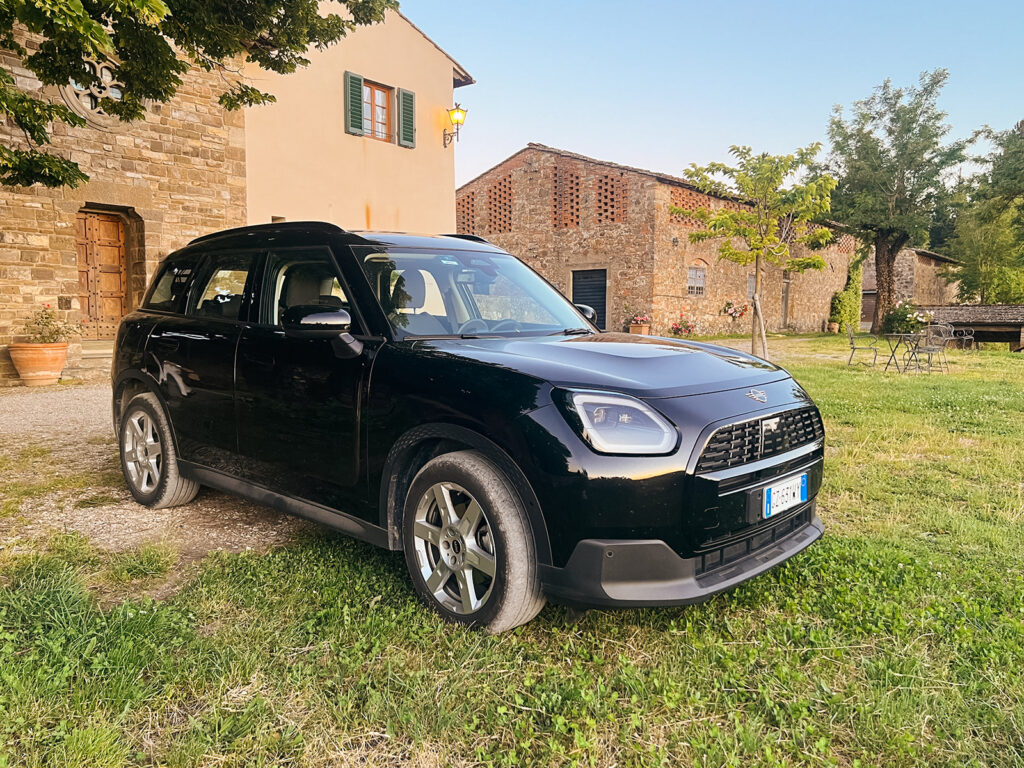
There are places where renting the wrong car can ruin a trip before the first espresso. Tuscany is one of them. While I had reached out to several automotive brands to try to arrange a car for this trip, it was not meant to be because I was flying in from Spain to a regional airport where the fleets were not supported. So booking a car for our Tuscan road trip required whipping out my Avis Preferred membership and playing rental car roulette. While the booking promised a Mercedes C-class or equivalent, at the packed rental counter, I was presented with two options: a Chinese BYD or a MINI Countryman. Having been Ubered about Spain in several BYDs, the choice was simple: the MINI Countryman.
If you have never been on a Tuscan road trip, the roads are narrow, the villages are old, the parking spaces appear to have been designed around the dimensions of a Roman sandal, and the best views are usually found after a string of corners that look more like pencil marks on a map than actual transportation infrastructure. While it would have been nice, an American-sized SUV would have been hard to park. A sports car would have been fun until the first gravel driveway, suitcase shuffle, or Florence parking garage. A scooter would be romantic right up until the first thunderstorm or autostrada merge. The MINI Cooper Countryman, as it turns out, is just about ideal.
We picked ours up in Florence, where the city immediately reminds you that driving in Italy is not quite like driving in Texas. In Florence, traffic is a moving conversation, scooters fill every gap, and signs arrive in clusters just when you need them most. The Countryman made a good first impression not by being flashy, but by being easy. It had enough height to see what was happening, enough power to keep up, and just enough size to feel useful without becoming a liability.
Tuscan Road Trip: Heading For The Hills
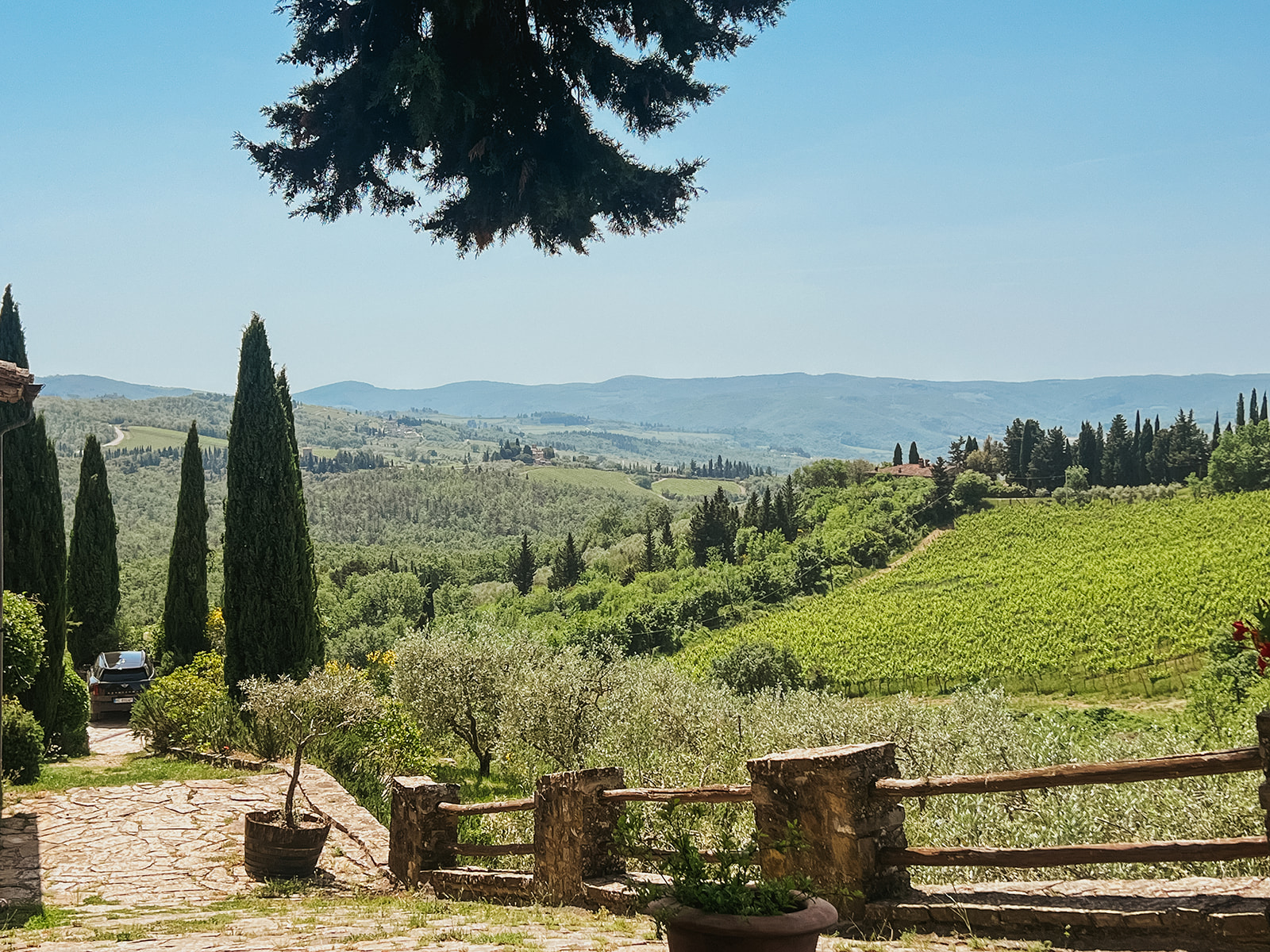
From Florence, we pointed the MINI toward Impruneta and Castello di Cafaggio, the villa we had booked as our home base. The drive out of the city was the first reminder that Tuscany is not really a destination as much as a mood. One minute you are navigating traffic and ancient stone walls, the next you are passing olive groves, cypress trees, vineyards, and hills that look like they were arranged for a Renaissance painter with a generous expense account.
The Countryman fit the scene better than expected. It is still a MINI, at least in spirit, with cheerful styling and enough personality to keep it from feeling like a rental appliance. But the modern Countryman has grown into a proper small crossover, and that growth pays off on a trip like this. Luggage, camera gear, jackets, groceries, and the inevitable collection of wine bottles all disappeared into the cargo area without turning the cabin into a rolling storage unit. It was practical without becoming dull, which is a harder balance than most automakers care to admit.
At Castello di Cafaggio, the trip’s rhythm changed. The villa was the kind of retreat that makes you want to slow down. It helped that we were the only guests booked on the entire property for the entirety of our stay. Morning coffee felt less like caffeine delivery and more like a ceremony. Evenings stretched out over wine and cheese as the sun dropped behind the hills. The Countryman sat outside looking appropriately continental, a little British-German crossover quietly earning its keep in the Italian countryside.

Tuscan Road Trip: Back to Florence
The next day, we drove back into Florence for a pasta-making class and a guided tour of the Accademia Gallery to see Michelangelo’s David. The class was hosted by a chef who has worked in Michelin Star restaurants, and it promised we would learn how to make fresh pasta and tiramisu, plus there would be “lots of good wine,” so it didn’t take much convincing to get us to sign up. The class was small, around ten people total, and lasted about two hours and cost around $50 each. I booked it through the Viator app, which I had never used before, but it made finding and booking experiences easy. If you are road-tripping like we were, be sure to book parking nearby in advance. Florence in the summer is tourist central, and parking is always at a premium.
After eating what we made, we had some time to kill and walked the streets of Florence, taking in the chaos of high season in a tourist town. Just like the pasta class and parking, I booked us a guided tour of the Accademia Gallery with a great tour guide, which included pre-scheduled tickets that let us skip the line and walk right in at our appointed time.

If you have never stood in front of David, it is one of those famous things that still manages to exceed expectations. The sculpture has been photographed, copied, parodied, merchandised, and turned into every possible souvenir, yet in person, it still stops the room, and it has to be on your list if you are planning a trip to Florence.
After the museum and the class, we did something far more practical and arguably just as important: we stopped at an Italian supermarket. Wine, cheese, cured meats, bread, and a few items chosen mostly because the packaging looked promising all went into the back of the Countryman. There is something deeply satisfying about shopping in a local market while traveling. Restaurants tell you how a place presents itself. Grocery stores tell you how it actually lives, and my wife was proud that we were able to figure it all out with our limited Italian.
Back at the villa, we turned the evening into a simple Tuscan picnic. No reservation, no tasting menu, no formal service. Just wine, cheese, cured meats, the last of the daylight, and the kind of view that makes you reconsider every productivity app on your phone.

Tuscan Road Trip: Montefili
The following morning, the MINI carried us deeper into Chianti country to Montefili for a winery tour and tasting. Montefili sits in the hills with the quiet confidence of a place that does not need to shout. The surprise came when we learned the winery is owned in part by a major car collector from the United States. That little connection made the visit feel even more fitting, as though the road trip gods had quietly arranged a crossover episode.
The wines were excellent across the board. Not “vacation good,” which is a dangerous category inflated by scenery and low expectations, but genuinely good. We bought bottles to bring home, which is always the true review. Compliments are cheap. Checked luggage is a commitment, and we ended up being those people who buy luggage at the airport.
From Montefili, we made our way down to explore a local monastery before lunch at Ristoro L’Antica Scuderia in a small village not far from the winery. The restaurant was excellent, even if the service carried a certain Old World sharpness. Not rude enough to ruin lunch, just rude enough to remind you that charm and hospitality are not always served from the same plate. The food, thankfully, did the diplomatic work.
After lunch, we took the long way back. This is where the Countryman made the strongest case that it was the right choice at the rental counter. On Tuscan roads, small matters. The lanes tighten without warning, stone walls crowd the shoulder, and local drivers move with the confidence of people who have been practicing since birth. The MINI felt planted, nimble, and easy to place. It was not a sports car, but it had enough of that MINI character to make the drive engaging.
The steering was light but accurate, the ride comfortable enough for rougher pavement, and the cabin quiet enough that conversation never had to compete with the road. It was the sort of vehicle that encouraged wandering, which is exactly what you want in Tuscany. The best moments are rarely on the itinerary. They are the roadside shops, the wrong turns, the little pull-offs, and the villages that appear just as you start wondering whether you have gone too far.
Naturally, we stopped again for more cheese and cured meats before heading back to the villa. By this point, the Countryman had become part pantry, part tour bus, part photographer’s chase vehicle, and part wine transport. A noble career arc.
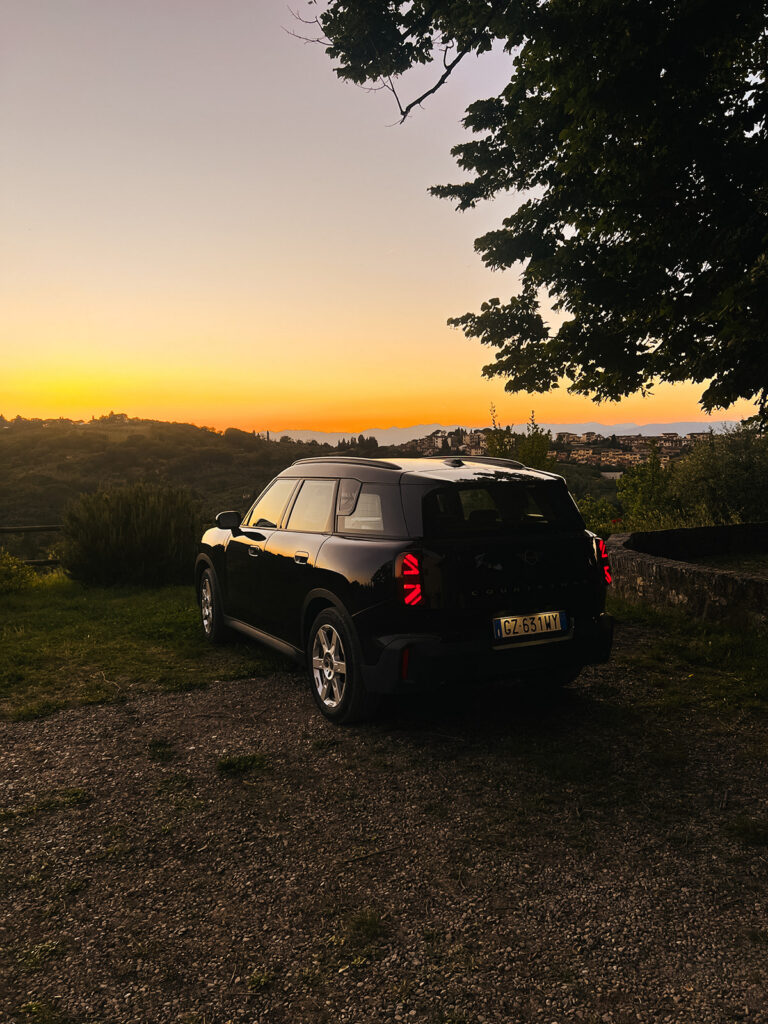
Tuscan Road Trip: One Last Visit to Florence
The next morning brought another drive into Florence. This time, planning mattered more. Florence’s ZTL restrictions are not something to treat casually. The limited traffic zones protect the historic center from unnecessary traffic, but they can also produce expensive fines for visitors who wander into the wrong street at the wrong time. Since we were driving in during the week, we pre-booked parking again to avoid trouble and keep the day from turning into an Italian paperwork exercise. You have to register your license plate with the parking garage so they can enter it into the ZTL system, and it is only good for the trip to and from the garage.

The plan was simple: see the Ponte Vecchio, walk over to Louis Vuitton to have our passport books hot stamped, and enjoy the city without rushing. Breakfast was at Paszkowski on the plaza, one of those grand European cafés where the setting does half the work before the coffee arrives. Florence does that well. It can make a simple breakfast feel like an event.
As luck would have it, friends from our hometown were also in Florence for a wedding. They met us at the Louis Vuitton store, which turned a shopping errand into a small Texas reunion in the middle of one of Europe’s great cities. Travel has a funny way of shrinking the world. One minute you are dodging scooters in Florence, the next you are catching up with people from home under the glow of luxury retail lighting. By the way, Louis Vuitton has a collection of tin toys that include several cars and motorcycles. Sadly, they would not sell me one of the H-Vans, and the retail associate said they would only be sold once the window display was ready to change. I don’t know how to get on the list, but these were seriously cool.
After seeing friends and a little shopping at Louis Vuitton, we walked back to the car and escaped the city again, taking another long drive through the countryside on the way back to the villa. That became the pattern of the trip: Florence for art, food, shopping, and history; the countryside for breathing room. The MINI worked well in both places. It was compact enough for urban stress and comfortable enough for rural wandering. That dual personality made it more than transportation. It shaped the trip and took a layer of worry away. We could shop at one location, lock items up under cover, and not have to worry about carrying bags as we headed to the next part of our adventure.

Our last day behind the wheel took us from Castello di Cafaggio to Bologna Airport, where we returned the Countryman before being picked up by our hosts for Motor Valley Fest. It was a fitting transition, leaving behind the soft hills of Tuscany and heading toward the heartland of Italian performance: Ferrari, Lamborghini, Maserati, Ducati, and the mechanical mythology of Emilia-Romagna.
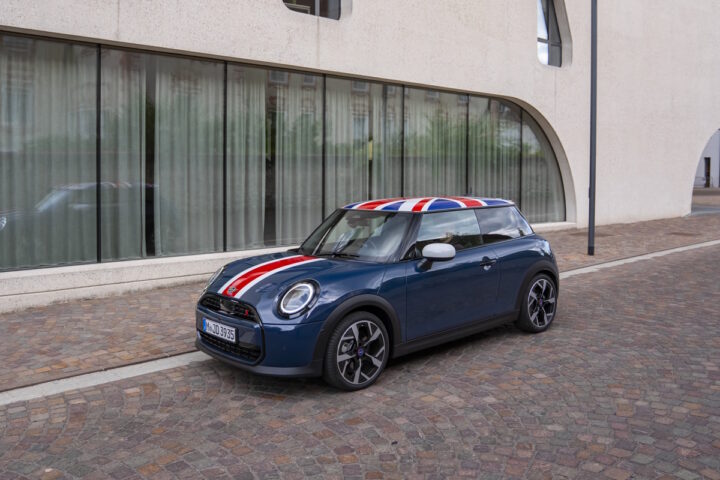
The MINI, to its credit, did not feel outclassed by the occasion. It was not exotic, and it did not pretend to be. It was something better for this particular journey: useful, stylish, efficient, and easy to live with. It handled Florence without drama, swallowed luggage and wine without complaint, and made every country road feel like an invitation.
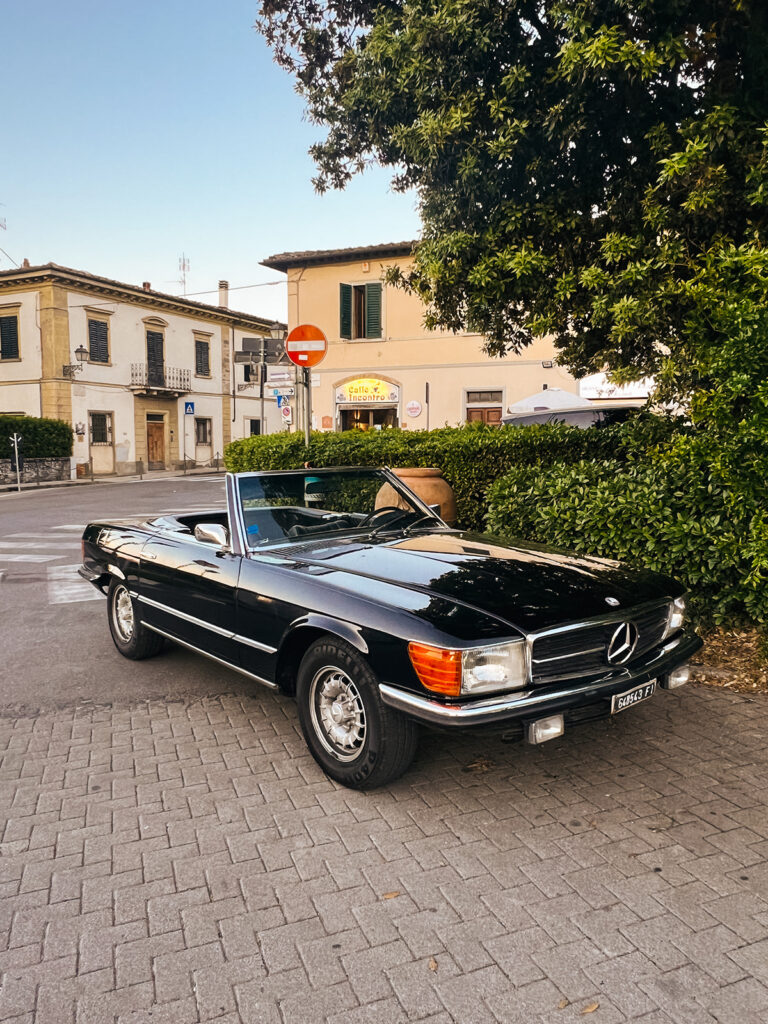
This classic Mercedes-Benz would have been fun to drive on a Tuscan road trip, but renting classic cars in Europe is not easy, and one-way drop-off is not an option.
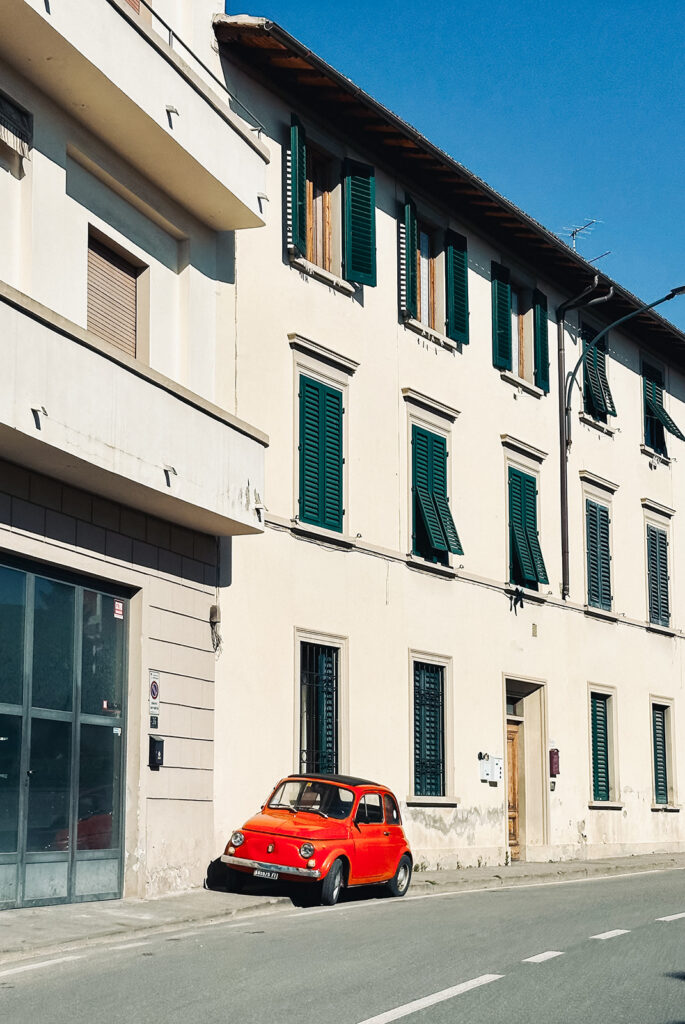
That is the real measure of a good road trip car. Not lap times, not spec-sheet bragging rights, not how many drive modes it has buried in a screen. A good road trip car makes you want to keep going. The MINI Countryman did exactly that. It was small enough for Italy, big enough for the trip, and charming enough to make every stop feel a little more special. In a country famous for tiny Fiats, heroic Ferraris, and scooters ridden with complete disregard for self-preservation, the Countryman found its own lane. On our Tuscan road trip, that was all it needed.
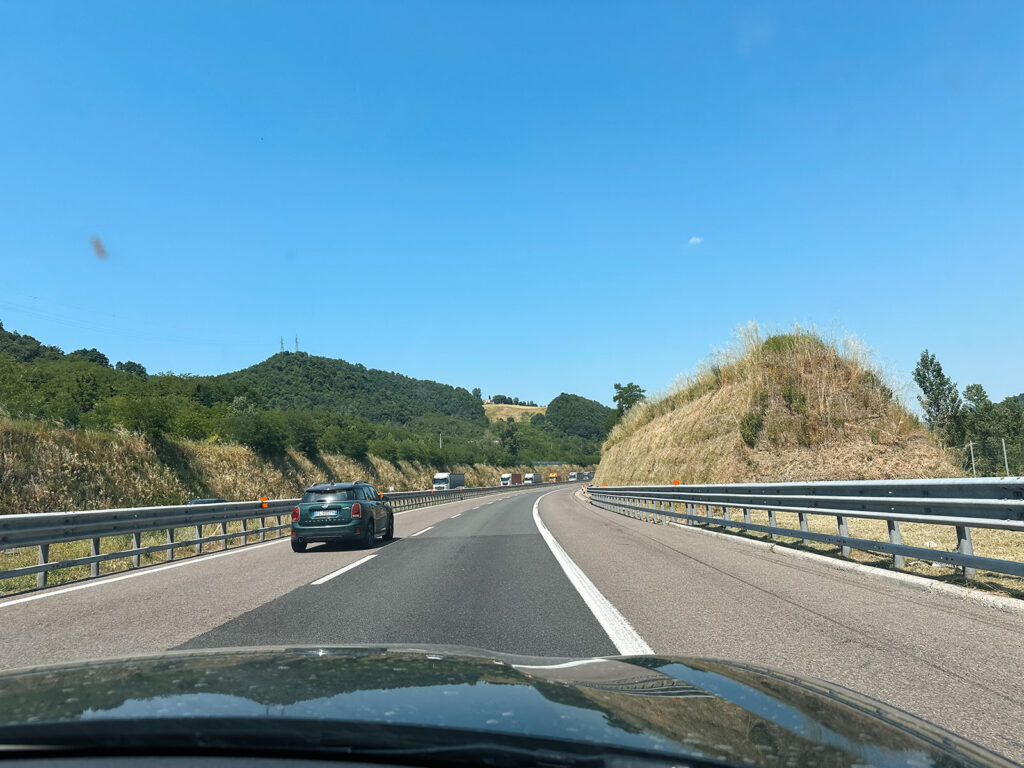
Quick Facts You Need To Know Before Planning Your Tuscan Road Trip
Planning a Tuscan Road Trip is one of the best ways to experience Italy, but renting a car and heading into the countryside requires a little homework before you arrive. Tuscany is made for driving, with vineyard roads, hilltop towns, villas, wineries, and small villages that are often much easier to reach by car than by train. But Italy also has strict driving rules, historic city restrictions, and rental car details that can surprise first-time visitors.
Book Your Rental Car Early
For a Tuscan Road Trip, book your rental car as early as possible, especially if you are traveling in spring, summer, or early fall. Automatic transmissions are available, but they are usually more expensive and can sell out faster than manuals. A compact crossover, hatchback, or small wagon is often ideal because Tuscan roads can be narrow, parking spaces are tight, and many village streets were not designed with modern SUVs in mind.
When booking, confirm the pickup and return locations, operating hours, fuel or charging policy, mileage limits, and whether cross-border travel is allowed if your itinerary extends beyond Italy.
Do You Need An International Driving Permit In Italy?
Yes, U.S. travelers planning to drive in Italy should obtain an International Driving Permit before leaving the United States. The U.S. Embassy in Italy says Americans visiting as tourists and intending to drive should obtain an IDP before traveling. The IDP is used together with your valid U.S. driver’s license, not as a replacement for it.
You can get an IDP in the United States through authorized providers before your trip. Do not wait until you arrive in Italy, because the process is meant to be handled before departure.
What Is A ZTL Area In Italy?
ZTL stands for Zona a Traffico Limitato, or limited traffic zone. These zones restrict access to historic city centers and are common in places like Florence, Siena, Pisa, Lucca, and many other Italian towns. The European Consumer Centre notes that around 300 towns and cities in Italy have ZTL areas, and unauthorized entry can result in fines.
For a Tuscan Road Trip, this matters because you may be tempted to drive directly into a historic center for lunch, shopping, or sightseeing. Do not assume the GPS knows the rules. ZTL cameras can photograph your license plate, and tickets may arrive months later through the rental car company, often with an added administrative fee. When visiting Florence or another historic town, pre-book parking outside the restricted zone or use a garage that is authorized to register your plate.
Florence ZTL Rules Are Especially Important
Florence is one of the easiest places to make an expensive mistake. Much of the historic center is restricted, and rental cars are not automatically allowed inside. If your hotel or parking garage is within the ZTL, confirm in advance that they can register your license plate with the city system. Otherwise, park outside the zone and walk in. The safest rule is simple: do not drive toward the Duomo, Ponte Vecchio, or the central historic streets unless you know exactly where you are allowed to go.
Rental Car Insurance In Italy
Rental car insurance in Italy can be confusing, so read the booking terms carefully. Basic liability coverage is typically included with rentals, while Collision Damage Waiver and Theft Protection are commonly included or required in Italian rental agreements depending on the booking source. Auto Europe notes that rental car rates in Italy commonly include CDW, theft protection, fire, and third-party liability coverage to limit financial risk.
The key detail is the deductible. Even with CDW, you may still be responsible for a significant excess amount if the car is damaged or stolen. Consider whether you want zero-deductible coverage, supplemental coverage from the rental company, or third-party travel coverage. Also check whether your credit card covers rental cars in Italy, because some cards exclude Italy or place limits on coverage.
Photograph The Car Before You Leave
Before leaving the rental lot, take photos and video of the entire car, including wheels, tires, bumpers, mirrors, windshield, roof, interior, fuel level, and mileage. Make sure every visible scratch or dent is noted on the rental agreement. Do the same when you return the car. It takes five minutes and can save a small opera’s worth of drama later.
Choose The Right Size Car
For a Tuscan Road Trip, smaller is often better. A compact car or small crossover is usually easier to manage on village streets, gravel drives, rural lanes, and tight parking garages. Large SUVs may feel comfortable on the autostrada, but they can become a burden in towns like San Gimignano, Montepulciano, Pienza, or the hills outside Florence.
If you are traveling with luggage, wine purchases, camera gear, or shopping bags, balance compact exterior size with enough cargo room. A MINI Countryman, Fiat 500X, Volkswagen T-Roc, Jeep Renegade, or similar-size vehicle can make a lot of sense.
Know The Basic Road Rules
Italy drives on the right side of the road. Seat belts are required, and children under 1.50 meters must use approved child seats. The official Italian tourism site also notes that drivers must carry a warning triangle and a reflective jacket or high-visibility braces for use during an accident or breakdown outside built-up areas.
Speed limits vary by road type, and posted signs should always be followed. As a general rule, expect lower speeds in towns, higher limits on rural roads, and up to 130 km/h on many autostrade, conditions permitting.
Watch For Speed Cameras
Italy uses speed cameras, average-speed systems, and traffic enforcement cameras. Some are obvious, some are not. On the autostrada, the Tutor system can measure average speed over distance. In towns and villages, speed limits can change quickly, especially near schools, pedestrian crossings, and historic centers.
For a Tuscan Road Trip, the best approach is not to drive like a local unless you are actually a local. Let the impatient Fiat Panda behind you live its truth. You are on vacation.
Parking Takes Planning
Parking in Tuscany can be easy in the countryside and difficult in historic towns. Look for public lots outside city walls or historic centers, then walk in. Blue lines usually indicate paid parking, white lines may be free parking, and yellow spaces are typically reserved. Always check local signs and pay at the meter or app when required.
For Florence, Siena, and other popular destinations, pre-booking a garage can be worth it. It removes uncertainty, helps avoid ZTL violations, and gives you a clear destination instead of circling medieval streets while your passenger reads signs at panic speed.
Plan Fuel Stops
Gas stations are common, but smaller rural stations may have limited hours or automated pumps that require a card. On Sundays, holidays, and late evenings, full-service stations may be closed. Diesel is common in Italy, so confirm whether your rental uses benzina, which is gasoline, or gasolio, which is diesel.
Before heading into rural areas, fill up when convenient rather than waiting until the tank is low. Tuscany is beautiful, but “romantic hillside stranding” is not a category most travel sites recommend.
Navigation Is Helpful, But Not Perfect
Use Google Maps, Apple Maps, or Waze, but do not blindly follow navigation into historic centers or restricted zones. GPS may suggest roads that are technically possible but unpleasantly narrow, unpaved, private, or restricted. When in doubt, follow official road signs over the app.
For wineries, villas, and countryside restaurants, download offline maps. Cell service can be spotty in rural areas, especially in valleys and older stone villages.
Be Ready For Narrow Roads
Tuscan roads can be narrow, winding, and lined with stone walls, ditches, or cypress trees. On rural roads, you may share space with cyclists, tractors, scooters, delivery vans, and drivers who seem personally offended by the concept of braking. Drive patiently, use pull-offs when needed, and avoid rushing between stops.
The best parts of a Tuscan Road Trip are often found between destinations, so build extra time into the schedule.
Avoid Overpacking The Itinerary
Tuscany looks small on a map, but the roads can be slow, and every stop deserves more time than you think. Instead of trying to visit five hill towns in one day, plan one major destination, one meal, and one optional stop. Leave room for a roadside market, an unexpected viewpoint, or a winery you did not know existed that morning.
A proper Tuscan Road Trip should feel like a journey, not a delivery route.
Toll Roads And Payment
Italy’s autostrade are often toll roads. Take a ticket when entering and pay when exiting, unless your rental car has an electronic toll device. Keep a credit card and some cash handy. Do not enter Telepass-only lanes unless your vehicle is equipped for them.
For routes between Florence, Bologna, Rome, Pisa, or other major cities, toll roads can save a lot of time, but the smaller regional roads are usually more scenic.
Manual Vs. Automatic
Manual cars are still common in Italy. If you need an automatic, reserve one specifically and confirm it in writing. Do not assume “or similar” means automatic. It may mean “similar, but with a clutch and a personality test.”
Returning The Car
Give yourself extra time when returning a rental car, especially at airports or train stations. Refuel nearby if required, keep the receipt, photograph the fuel gauge and mileage, and get a return confirmation when possible. If returning after hours, take extra photos of the vehicle in the return area.
Final Advice For A Tuscan Road Trip
The best Tuscan Road Trip combines planning with flexibility. Book the right car, get your International Driving Permit, understand ZTL areas, review your insurance, and plan parking before entering historic cities. After that, relax into the rhythm of the road. Tuscany rewards the traveler who leaves time for long lunches, wrong turns, small markets, vineyard views, and one more stop for cheese before heading back to the villa.
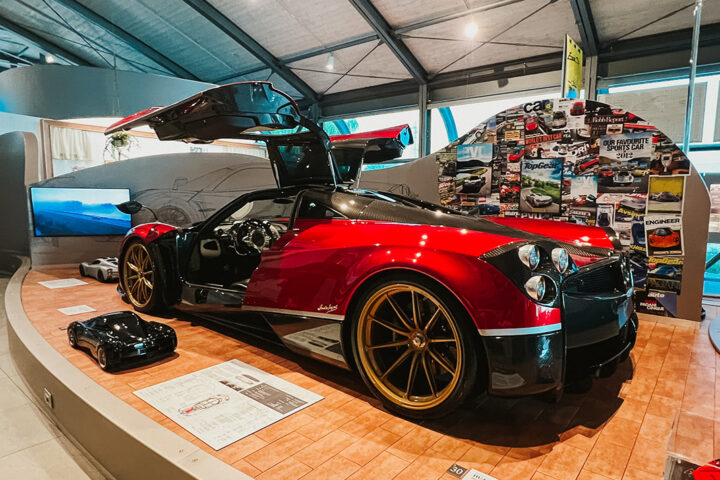





Need more photos of the MINI on the road trip
Would have been more fun in a real Mini, but a MINI is a still more fun than a BYD.
Looks like you had a good time! You should do a vlog next time.
I mean it should have been a Alfa or Fiat at least
I appreciate you sharing this blog post. Thanks Again. Cool.
I have always wondered how hard it is to drive in Europe, any tips?
I would say that it isn’t hard, just do some research on where you are going. Lots of cities have restrictions on driving that are all run via camera, and you can get a surprise fine in the mail months later. If it is in a rental car they will just charge your card for the fine. But I find most Europeans are more focused on driving and not on their phones as much as Americans and they tend to drive a little more aggressively and focused so keep your head up because you are just expected to go with the flow.
Should have gone with a MINI Cabrio.
You need to do a driving tour of Italy, I would sign up!