

 TGR Staff
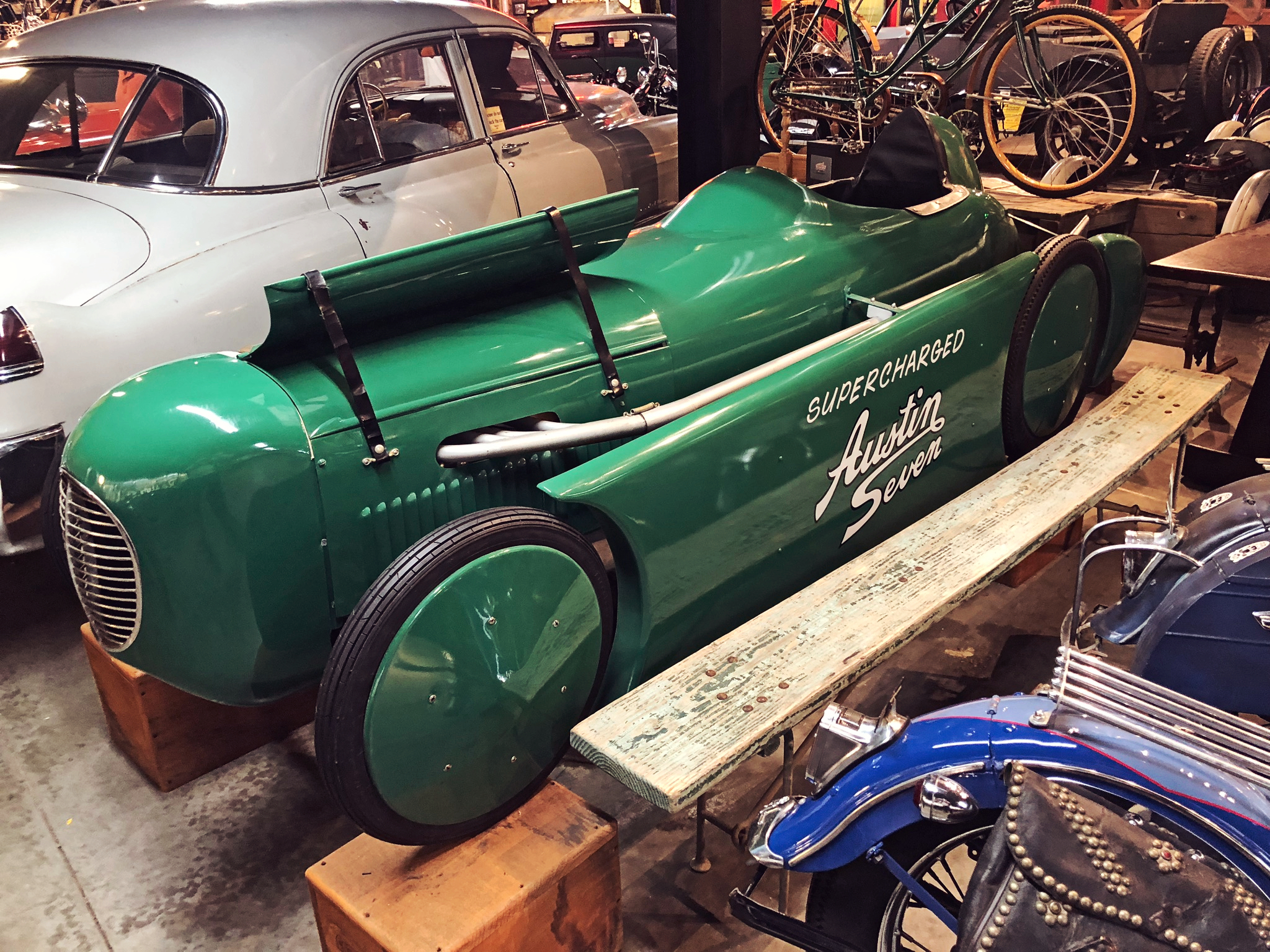
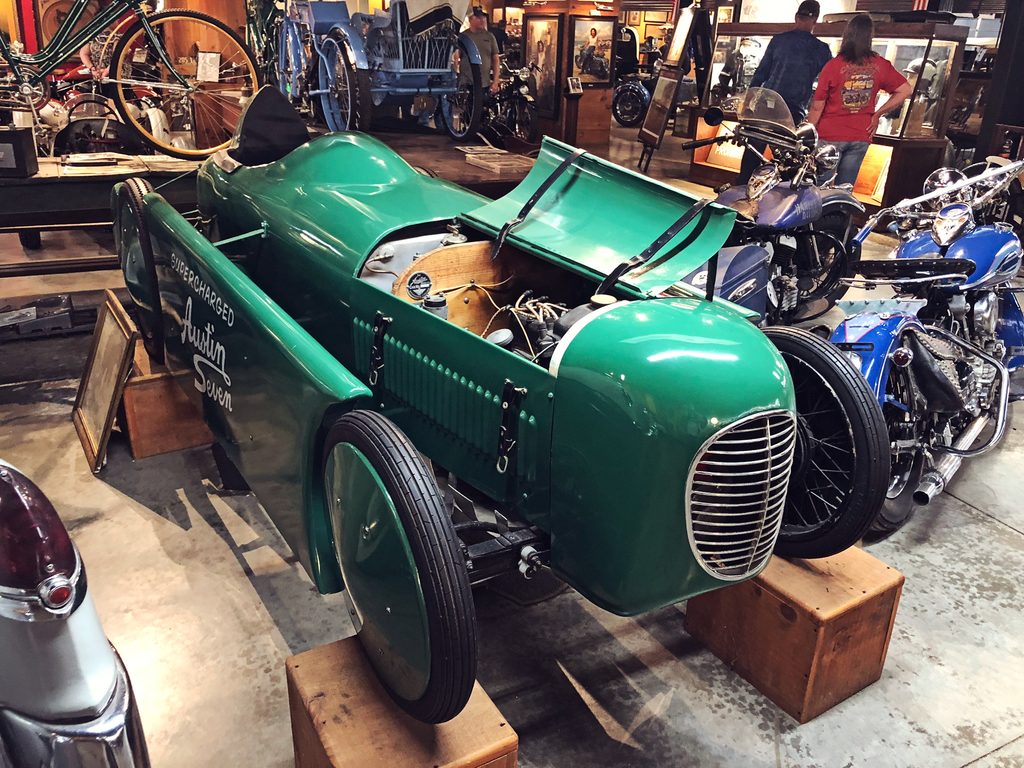
During our visit to Dale’s Wheels Through Time Museum in Maggie Valley, North Carolina, one of the most memorable vehicles wasn’t a rare Harley-Davidson or an American V-twin motorcycle. It was a tiny, bright green British racing car with an almost entirely unknown history. Tucked among the museum’s extraordinary collection of historic machinery sat a 1935 Austin Seven Special, a miniature racing machine that looked as though it had escaped from the paddock at Brooklands sometime before World War II.
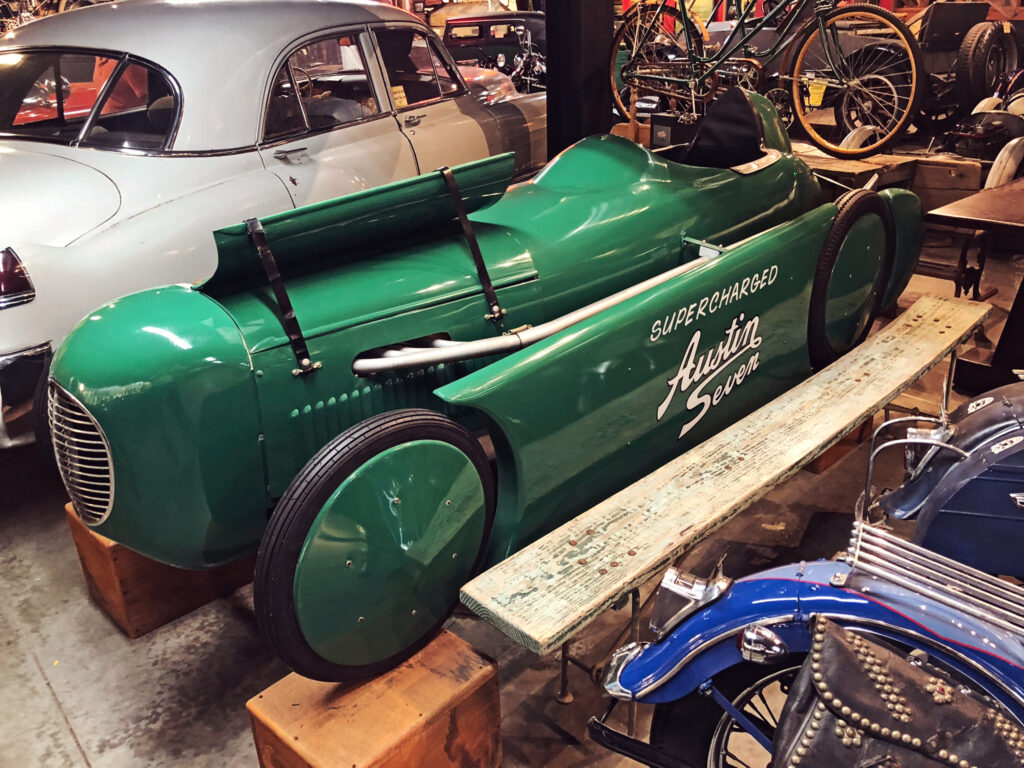
With its rounded, streamlined nose, narrow cockpit, covered wheels, and beautifully proportioned bodywork, the little Austin looked every bit the part of a prewar record breaker. Its green paint and hand-lettered Supercharged Austin Seven script suggested a machine built for speed rather than practicality. Something wonderfully purposeful about it, a car from an era when racing machines were often built with little more than ingenuity, mechanical knowledge, and the determination to go faster.
Enjoying this story?
Join The Gentleman Racer email list to continue reading.
Occasional updates. Unsubscribe anytime.
Unfortunately, its story remains somewhat mysterious.
The Mystery of Dick Greene’s Austin Seven
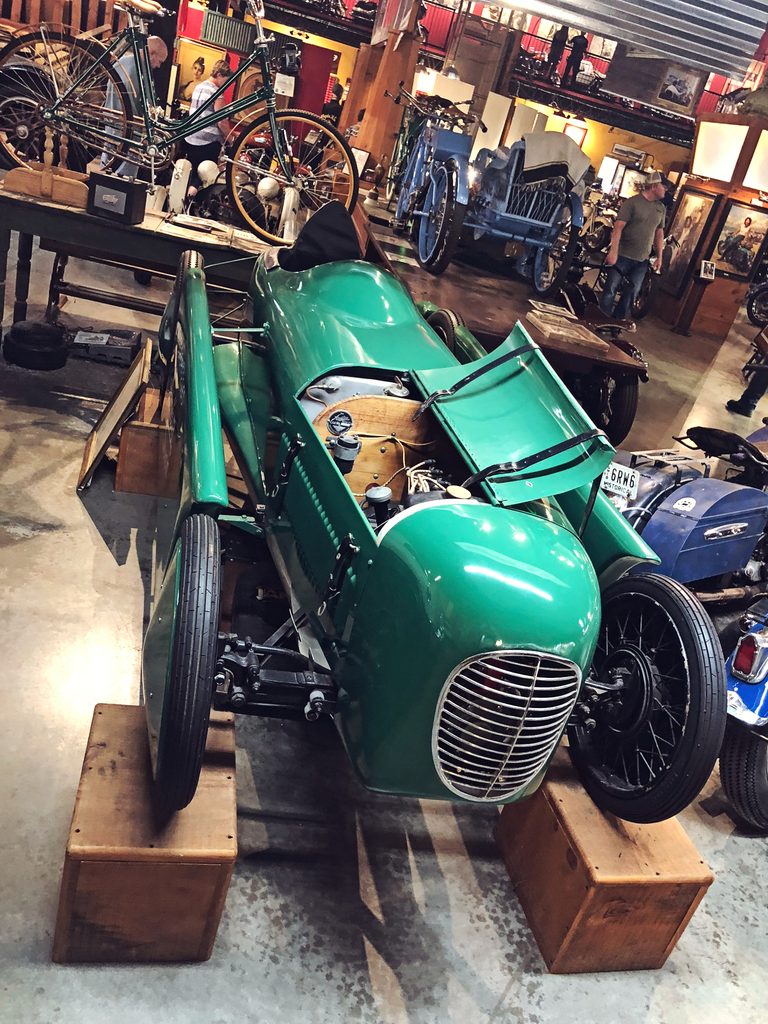
The car is identified as a 1935 Austin Seven Special, restored by vintage racing car collector Dick Greene. Beyond that, much of its history has been lost.
An August 2013 issue of Hemmings Motor News provides an intriguing additional reference, describing Greene’s little 1935 supercharged Austin Seven racing car and acknowledging that its history was unknown even then. Who originally constructed the racing body? Was it built during the 1930s, or was the body created later in the style of Austin’s celebrated competition cars? Did it ever compete at Brooklands, on a British hill climb, or on an American track? How much of the mechanical specification is original, and how much reflects Greene’s restoration?
Without period photographs, chassis records, or additional documentation, those questions remain unanswered.What is obvious, however, is that someone invested considerable effort into creating a machine that captures the spirit of one of British motorsport’s most inventive periods.
The Austin Seven: From Family Car to Racing Legend
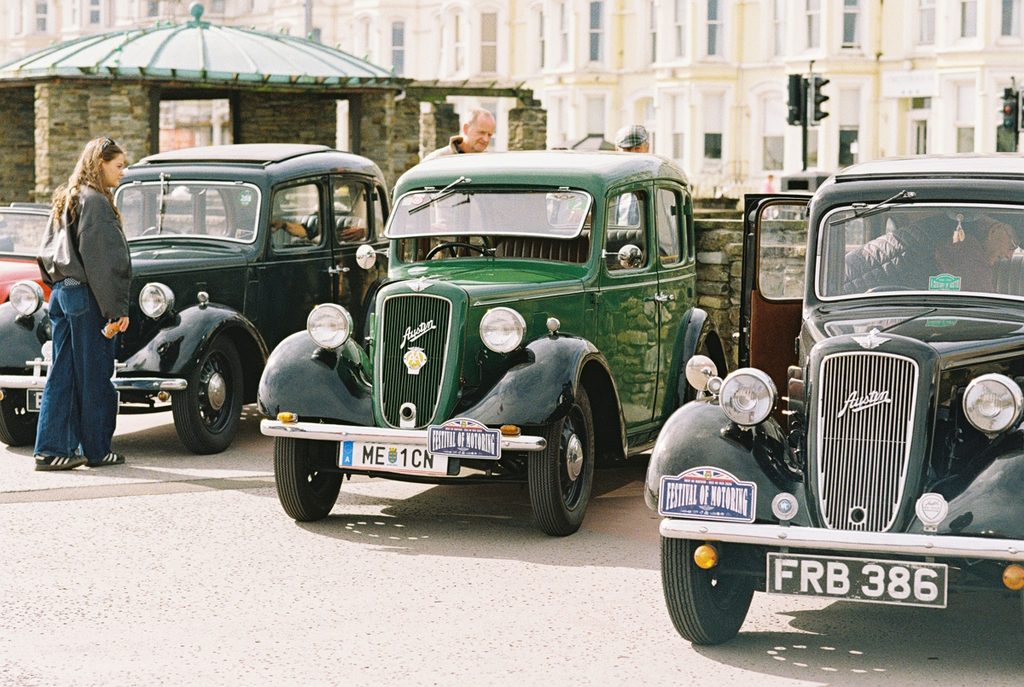
To understand this little racer’s appeal, it helps to understand the Austin Seven’s unlikely competitive history. Introduced in 1922 by the Austin Motor Company at Longbridge, England, the Seven was intended to bring affordable motoring to ordinary British families. Small, economical, and mechanically straightforward, it became one of Britain’s most important early automobiles.
By the mid-1930s, the familiar Seven ran on a 747cc side-valve four-cylinder engine producing about 12 horsepower in standard form. It was hardly an obvious starting point for a serious racing machine. Yet the Seven’s lightweight construction, affordable mechanical components, and simple chassis made it an ideal platform for ambitious amateur engineers.
Across Britain, enthusiasts began stripping away unnecessary weight, lowering chassis, modifying engines, and fabricating their own lightweight bodies. These one-off creations became known as specials, a wonderfully broad term that could describe anything from a modest homebuilt sports car to a surprisingly sophisticated competition machine.
Austin itself recognized the potential of its smallest automobile. The factory developed sporting and competition versions, including the famous Ulster, and began pursuing international speed records with increasingly advanced racing cars.
Supercharging drove some of the most remarkable developments, allowing the little four-cylinder engine to produce several times its standard horsepower.
The result was an extraordinary period in British racing history, when small-displacement machines regularly challenged expectations of what a fast automobile could be.
The Gwenda Stewart Connection
The streamlined green body of the Austin Seven at Wheels Through Time immediately brings to mind one of the most remarkable cars to emerge from Austin’s factory racing program. In 1931, Austin developed a purpose-built, supercharged, single-seat record car under racing engineer Captain Arthur Waite. Its carefully shaped bodywork underwent wind-tunnel testing, and the car used an offset driveline that let the driver sit lower in the chassis.
The familiar 747cc side-valve engine was transformed with an Austin-built Roots-type supercharger. Running approximately 15 pounds of boost, the racing engine developed an impressive 56 horsepower at 6,000 rpm. That was serious performance from an engine originally designed to power an inexpensive family car.
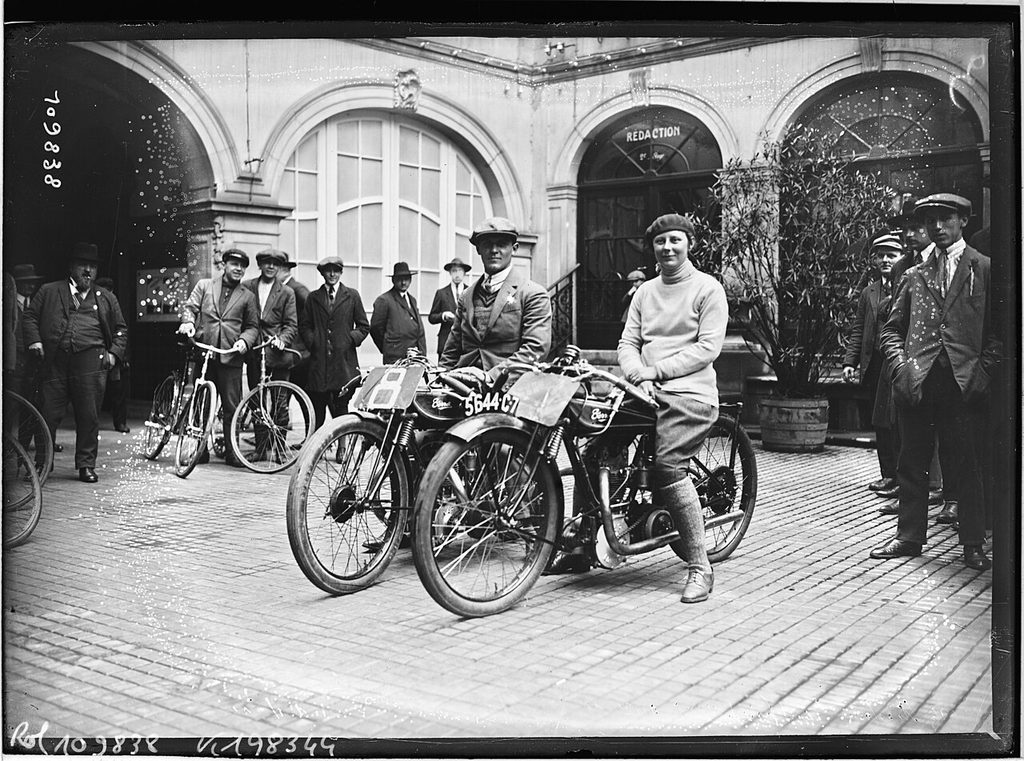
The record-breaking machine would become closely associated with Gwenda Stewart, one of the most accomplished and adventurous women in early motorsport.
On September 8, 1931, Stewart took the streamlined Austin to the banked circuit at Montlhéry, France, where she established several international Class H speed records. Her achievements included an average of 109.13 mph over five kilometers, along with records of 109.06 mph over five miles, 109.05 mph over ten kilometers, and 108.95 mph over ten miles.
Those were extraordinary numbers for a car with an engine smaller than that of many modern motorcycles. Stewart’s achievement was part of a fiercely competitive battle between Austin, MG, and other manufacturers determined to establish dominance in the 750cc racing category. These record attempts pushed the boundaries of supercharging, aerodynamics, and lightweight construction long before those technologies became commonplace in motorsport.
The Wheels Through Time Austin shares the visual language of these prewar racing machines, particularly its enclosed front bodywork, compact proportions, and aerodynamic ambitions.
There is no established evidence that Greene’s car was built by Austin’s factory racing department or that it ever participated in the famous record attempts. Its similarity to the works cars is best understood as a connection in design and philosophy rather than confirmed provenance.
Nevertheless, it is impossible to look at the green machine without imagining the sounds, smells, and excitement of those early racing experiments.
The Legacy of the Austin Seven Special
The Austin Seven’s influence extended well beyond the interwar years. After World War II, inexpensive Austin chassis continued to provide the foundation for Britain’s growing amateur motorsport movement.
Perhaps the most famous example came in 1948 when a young engineering enthusiast named Colin Chapman began modifying a 1928 Austin Seven into a lightweight trials car. Built in a small garage with help from his future wife, Hazel, the resulting machine became the Lotus Mark I.
It was the beginning of a company that would eventually win Formula One World Championships, revolutionize racing car design, and help define Britain’s reputation for innovative automotive engineering. Chapman’s first Lotus shared the same essential philosophy as the generations of Austin specials that preceded it: reduce weight, improve efficiency, and find clever ways to make a humble machine perform far beyond its original purpose.
Not every Austin Special was destined to inspire an automotive empire, of course. Many were built by enthusiastic individuals whose names have disappeared from the historical record. But those anonymous builders were all part of the development of grassroots motorsport.
A Little Green Racer Worth Remembering
Of all the remarkable machines I encountered at Wheels Through Time, the Austin Seven remains one of my favorites precisely because it doesn’t have a complete biography.
There is no famous driver definitively attached to its cockpit, no confirmed victory at Brooklands, and no surviving period photograph that tells us exactly where its racing career began.
What remains is a striking piece of automotive craftsmanship, preserved through the efforts of collector Dick Greene and displayed in a museum dedicated to keeping mechanical history alive.
It also represents something increasingly rare in the world of historic automobiles: a car whose appeal doesn’t depend upon a spectacular auction price, a celebrated racing victory, or an unbroken chain of famous owners.
Its appeal is simpler. Someone wanted to build something faster, lighter, and more exciting than the ordinary Austin Seven. Whether that work happened in the 1930s or during a later chapter of the car’s life, the finished machine embodies the inventiveness that made the Seven such an important part of British racing culture.
Perhaps one day an old photograph, a faded racing program, or a forgotten workshop record will finally reveal the little Austin’s complete history.
Until then, the green 1935 Austin Seven Special is a reminder that some of the most interesting cars in the world are the ones whose stories have yet to be fully told.
And sometimes, those are the cars worth looking at twice.











Never seen an Austin 7 like this.
Okay but a random bright green 1935 Austin Seven Special hiding in a motorcycle museum with zero history? That’s the kind of mystery I’d spend hours googling Something about prewar homebuilt racers just hits different pure ingenuity, no fancy tech.