
 Michael Satterfield
California classic car owners scored a significant change to the state’s emissions laws this week, but the reality of “Leno’s Law” is considerably more complicated than the headline that old cars are now exempt from smog checks.
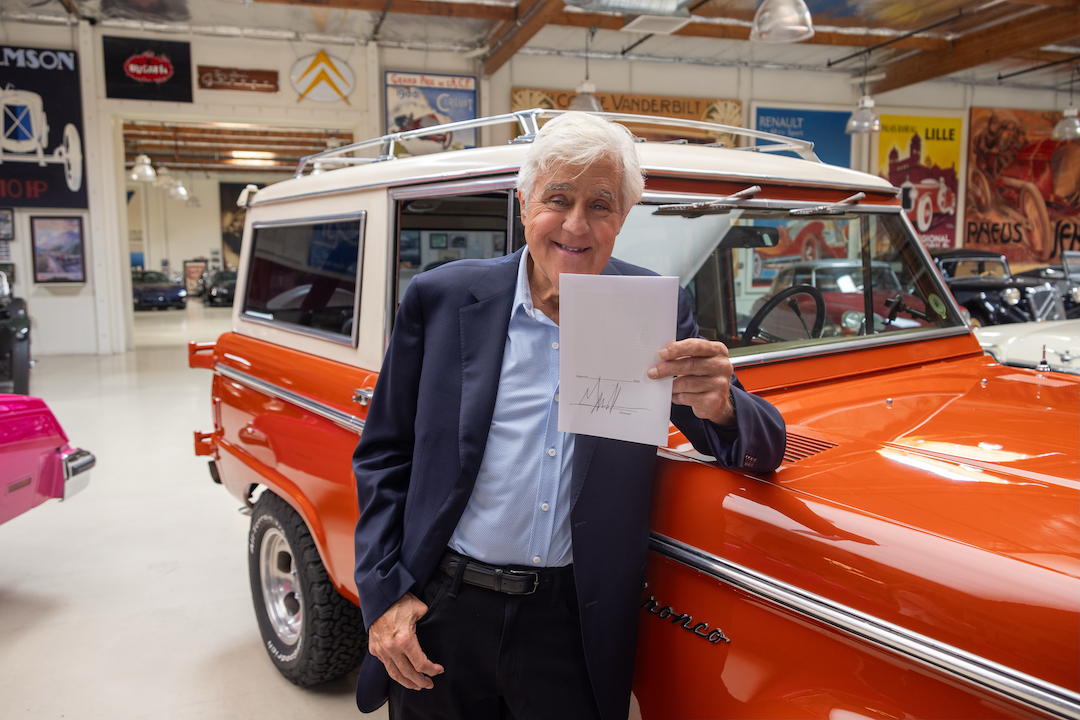
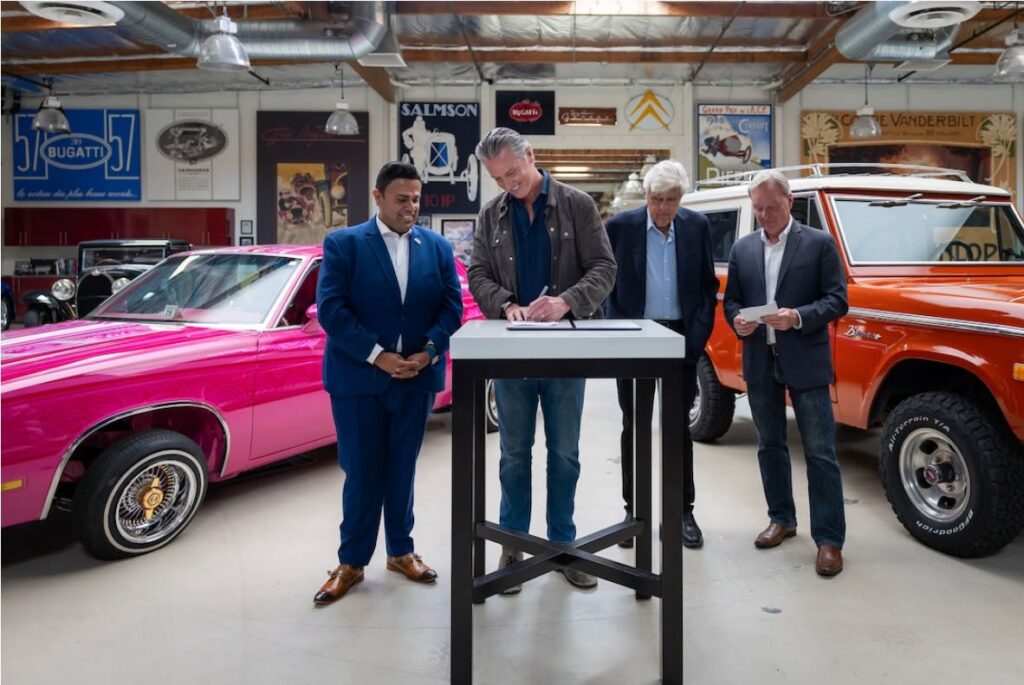
Governor Gavin Newsom signed Senate Bill 1392, officially known as Jay Leno’s Law, on September 16, 2026. The legislation creates a new Smog Check exemption for certain collector vehicles from the 1976 through 1985 model years, a group of cars that has spent decades on the wrong side of California’s famous 1975 cutoff.
Enjoying this story?
Join The Gentleman Racer email list to continue reading.
Occasional updates. Unsubscribe anytime.
For owners of everything from late C3 Corvettes and Porsche 911s to Fox-body Mustangs, square-body pickups, Toyota Land Cruisers, and malaise-era muscle cars, that is potentially very good news. But all car owners should hold off on celebrating; there are some important catches. Leno’s Law is not a blanket exemption for every old car. It is not a rolling 35-year exemption, like the old Pre-1975 exemption. It does not allow owners to suddenly remove catalytic converters or emissions equipment. And if you actually want to drive your classic, you may not qualify at all.
Here is what California classic car owners actually need to know.
California’s 1975 Problem
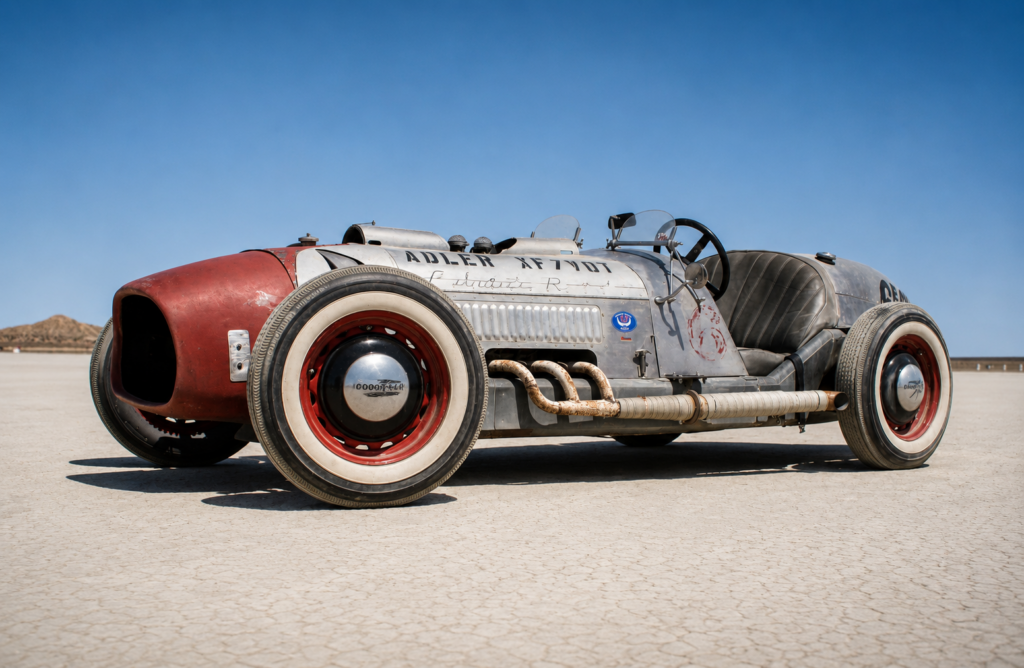
For decades, California’s rules have created an unusual dividing line in the collector-car world. Gasoline-powered vehicles from the 1975 model year and earlier are generally exempt from the state’s Smog Check program. A 1975 Corvette is treated very differently from an otherwise similar 1976 Corvette for registration and inspections.
Under California’s current system, gasoline vehicles from 1976 onward generally require emissions inspections. Smog Checks can be required every other year for registration renewal, during certain ownership transfers, and when vehicles are initially registered in California. That has made 1976 a significant year in California’s collector market.
A pre-1976 car has traditionally offered an owner far more flexibility, while later cars have remained tied to emissions requirements developed when Gerald Ford was president and a new Cadillac Eldorado could still stretch more than 18 feet from bumper to bumper. Leno’s Law moves that line, but only for specific vehicles.
The Leno’s Law Exemption Starts With 1976-1980 Cars
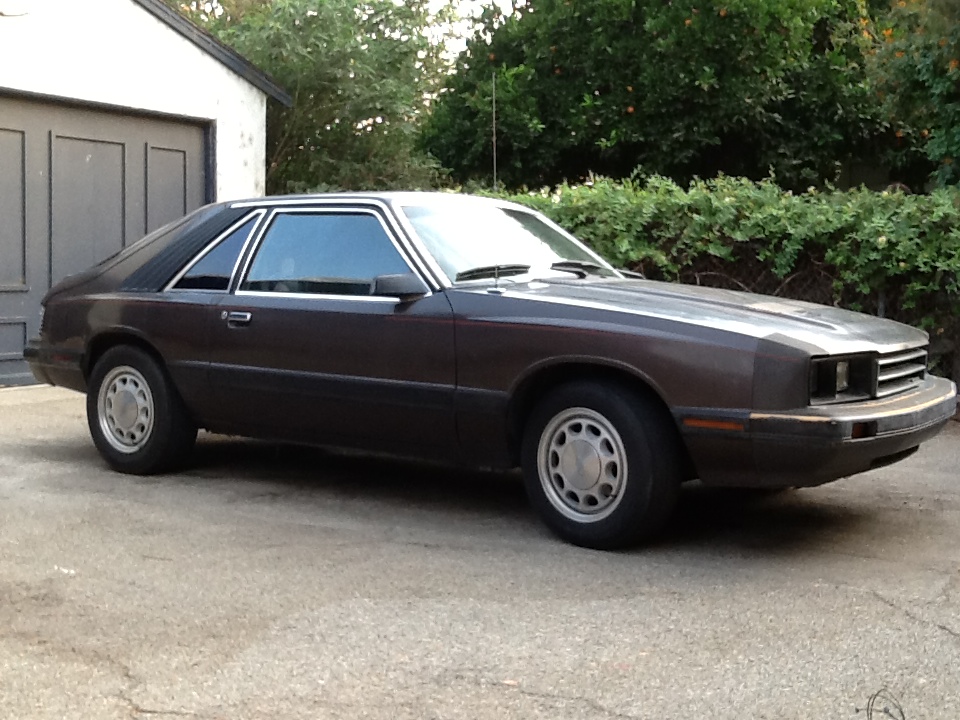
The change does not happen immediately. Beginning January 1, 2028, qualifying collector vehicles manufactured before the 1981 model year will become exempt from the Smog Check certification requirements covered by the law. That effectively brings qualifying 1976 through 1980 vehicles into the new exemption.
Then the cutoff advances one model year at a time. A qualifying 1981 model becomes eligible in 2029. A 1982 becomes eligible in 2030. A 1983 follows in 2031, a 1984 in 2032, and finally a 1985 model becomes eligible on January 1, 2033.
And then it stops. That last point matters because Leno’s Law is sometimes described as creating a rolling 35-year exemption. It does not. Under the law Newsom signed, a 1986 vehicle does not automatically become exempt when it reaches a certain age. The statutory expansion ends with vehicles manufactured before the 1986 model year. Unless California changes the law again, 1985 is the end of the road.

Your Car Has to Actually Be a Collector Car
This is probably the most important part of the legislation for an average owner. California is not simply declaring every 1978 Camaro or 1983 Toyota pickup smog exempt. To qualify under the new provision, a vehicle must meet California’s definition of a “collector motor vehicle.” It is similar to other states that allow specialty registration for vehicles with limited use.
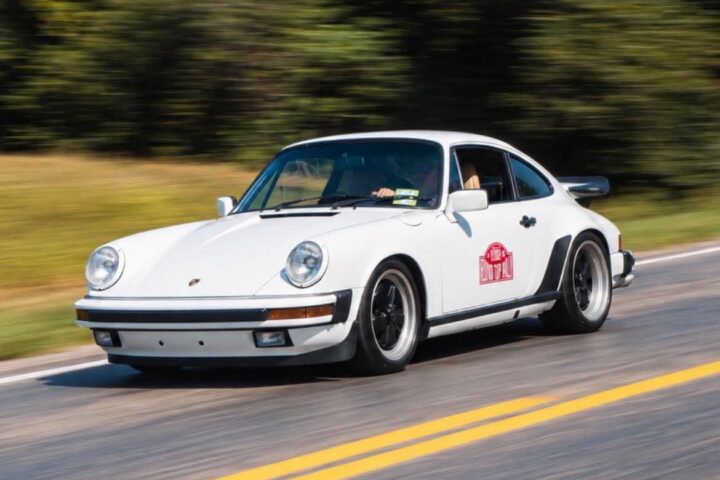
The new law defines that vehicle as being at least 35 model years old and, importantly, being used primarily for shows, parades, charitable functions, and historical exhibitions for display, maintenance, and preservation. It also specifically says the vehicle cannot be the owner’s primary mode of transportation. So if your 1979 Trans Am lives in the garage, comes out on weekends, goes to Cars and Coffee, takes an occasional road trip, and attends club events, the law clearly targets vehicles like yours.
If that same Trans Am is how you commute to work every morning, the situation is different. The exemption isn’t designed to turn an aging daily driver into a “collector vehicle” simply because its birthday qualifies.

Do You Have to Stay Under 1,000 Miles?
This has already become one of the most misunderstood portions of Leno’s Law. There is a 1,000-mile provision, but it is not necessarily a 1,000-mile cap placed on every vehicle using the exemption. The law provides two ways that owners can use their vehicles.
One is to insure the vehicle as a collector car and submit proof of that insurance to the California Bureau of Automotive Repair. The other is for BAR to determine through a process it develops that the vehicle is driven fewer than 1,000 miles per calendar year. In other words, collector insurance and the 1,000-mile provision are alternatives.
If you qualify through collector insurance, SB 1392 itself does not impose the 1,000-mile limit. Your insurance company, however, may have its own restrictions. Some collector-car policies limit annual mileage, require another vehicle to be available for daily transportation, restrict commuting, or impose storage requirements. Those would be conditions of your insurance policy rather than a blanket mileage restriction contained in Leno’s Law.
There is another issue with how the law is written. The collector-insurance option begins when the program starts on January 1, 2028. The mileage-based alternative does not begin until January 1, 2030. So Hagerty should be pretty excited about this law, as owners looking to take advantage of the exemption during its first two years will need collector insurance to register their car under the new law.
Can You Still Just Drive Your Classic?
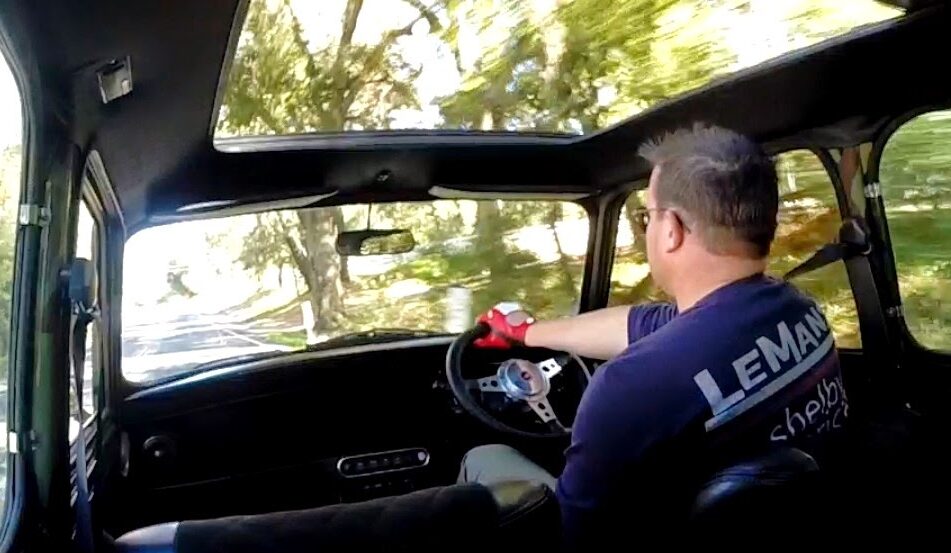
This is where California’s regulations still need clarification. The law says the vehicle must be used “primarily” for collector-related purposes and cannot be the owner’s primary transportation. It does not say the car can leave the garage only to travel directly to a judged concours with a velvet rope waiting at the other end. An occasional Sunday drive, club outing, maintenance run, or recreational trip is not expressly prohibited in the statute.
But the language also does not create unlimited-use registration for a vehicle claiming collector status. The practical line between collector use and ordinary transportation will depend partly on regulations developed by BAR and DMV, along with whatever requirements are attached to the owner’s collector insurance. It may also depend on how the officer who pulls you over decides to push the issue if you are pulled over while driving your classic.
For most hobbyists who already own another daily driver and use their classic recreationally, that distinction may not be particularly disruptive. For someone who drives an older car regularly because it’s the car they like using every day, it could mean that they just have to still deal with annual smog checks.
You Don’t Have to Put Historical Plates on It
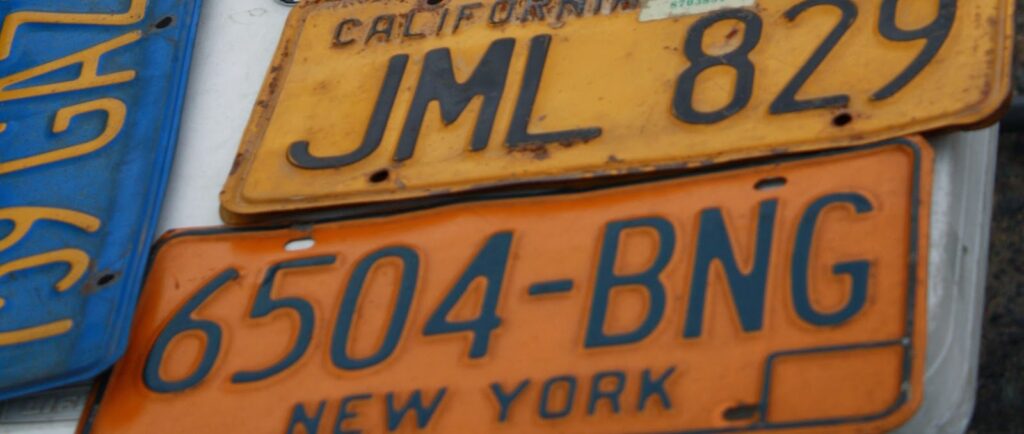
Another useful detail is what the legislation does not require. The new full exemption for 35-year-old collector vehicles does not require the owner to convert the car to California Historical Vehicle license plates. The qualifying provision instead focuses on the vehicle’s age, collector use, and either qualifying insurance or the low-mileage pathway.
That is important because California Historical Vehicle plates operate under their own rules, and older versions of classic-car legislation had created confusion about whether special plates would be mandatory. Under SB 1392 as signed, they are not part of the primary exemption pathway.
Smog Exempt Does Not Mean California-Legal With Any Engine You Want
This may be the biggest caveat for hot rodders. Leno’s Law exempts you from Smog Check certification, but it does not repeal California’s separate laws regulating emissions-system tampering. Meaning if you get pulled over and asked to pop the hood of your 1976 Mustang II, you still need the correct engine with a smog pump and all emissions equipment in place to be compliant.
California law still prohibits certain changes to a vehicle’s original emissions-control configuration, and the Bureau of Automotive Repair specifically notes that state and federal anti-tampering laws apply to engine changes and emissions equipment. The inspection requirement and the legality of emissions modifications are two different issues.
The same applies to engine swaps. BAR currently states that vehicles undergoing regulated engine changes must comply with California’s engine-change rules, with state and federal anti-tampering laws prohibiting modifications that degrade the effectiveness of the original emissions-control system. In practical terms, Leno’s Law should be viewed as a Smog Check exemption, not a modification exemption.
What Changes If You Don’t Qualify?
Nothing forces an owner into the collector program. If you own a 1980 vehicle, drive it every day, and don’t want collector insurance or usage restrictions, you can simply continue registering and operating it under the normal rules. You would not receive the new exemption, and the vehicle would continue to be subject to the applicable Smog Check requirements. That distinction is worth emphasizing because the law does not impose new restrictions on every old car in California. The restrictions are conditions attached to receiving the new exemption.
What About Buying and Selling Cars?
The exemption could also make certain collector vehicles easier to buy and sell within California. Currently, California generally requires a Smog Check when a 1976-or-newer vehicle changes hands, with several existing exceptions. Leno’s Law extends the new collector exemption to Smog Check certification for initial registration, registration renewal, and transfer of ownership for vehicles that qualify under its provisions.
That could become particularly significant for cars that have spent years sitting because getting them through California emissions testing has become expensive or difficult. It could also influence the market for 1976-1985 vehicles in California. Cars sitting immediately on the wrong side of the 1975 cutoff have historically carried an extra regulatory complication that comparable earlier cars do not. Removing that requirement for qualifying collector vehicles eliminates at least one obstacle to putting those cars back on the road.
Don’t Cancel Your Smog Appointment Yet
Leno’s Law does not begin exempting cars today. The first full exemptions start January 1, 2028. Until then, California’s existing requirements remain in effect. BAR currently states that 1976-and-newer gasoline collector cars remain subject to Smog Check, although qualifying collector vehicles may be eligible for an abbreviated inspection performed by a state Referee.
BAR and DMV also still have work to do. The legislation directs the agencies to develop regulations, forms, and procedures for proving eligibility and allows BAR to collect fees to cover reasonable administrative costs. Those implementation rules will determine exactly what an owner needs to submit, how mileage will be verified under the 1,000-mile option, how often eligibility must be demonstrated and what happens when an owner’s circumstances change.
So What Does Leno’s Law Really Do?
For the typical Californian with a 1976-1985 collector car sitting in the garage, the law can eventually eliminate one of the most persistent headaches associated with owning that generation of vehicle. But calling it a simple expansion of California’s old-car exemption misses much of the story. This exemption applies only to limited-use collector vehicles. Some have pointed out online that this is great for older collectors with a lot of vehicles, but it doesn’t do much for hobbyists who drive their cars.
It phases in gradually. It ends with the 1985 model year. The car cannot be your primary transportation. Owners must qualify through collector insurance or, beginning in 2030, a low-mileage program. And California’s emissions-tampering and modification laws do not disappear simply because the vehicle no longer needs its regular Smog Check.
For the person preserving a 1978 Porsche, an early Fox-body Mustang or an old square-body Chevrolet for weekends and car shows, Leno’s Law could make ownership substantially simpler. For the person hoping California just declared every 40-year-old car emissions-law-free, there is considerably more fine print. And, as is usually the case with California car regulations, it is probably wise to read the fine print before reaching for the toolbox.
Quick Facts
- Official legislation: California Senate Bill 1392, commonly called “Leno’s Law”
- Signed: September 16, 2026
- First exemptions begin: January 1, 2028
- Vehicles initially covered: Qualifying 1976-1980 collector vehicles
- Final model year added: 1985, beginning January 1, 2033
- Rolling exemption: No. The law currently stops with the 1985 model year.
- Minimum vehicle age: 35 model years
- Primary transportation allowed: No. The vehicle cannot be the owner’s primary mode of transportation.
- Collector insurance required: One qualifying route uses collector vehicle insurance.
- 1,000-mile option: Beginning in 2030, owners may qualify through a process showing the vehicle is driven fewer than 1,000 miles per year.
- 1,000-mile limit for everyone: No. The mileage provision is an alternative qualification pathway, not a universal mileage cap.
- Historical plates required: No.
- Smog Check exemption: Yes, for qualifying vehicles.
- Emissions equipment removal automatically legal: No.
- Engine swaps automatically legal: No.
- California anti-tampering laws still apply: Yes.
- Current 1976-and-newer requirements remain in place until the new exemption takes effect.
FAQ
What is Leno’s Law?
Leno’s Law is the informal name for California Senate Bill 1392, legislation that creates a new Smog Check exemption for certain collector vehicles from the 1976 through 1985 model years.
When does Leno’s Law take effect?
The first exemptions begin January 1, 2028. Qualifying vehicles from the 1976 through 1980 model years become eligible first, followed by one additional model year each year until 1985 vehicles become eligible in 2033.
Does Leno’s Law exempt every car more than 35 years old?
No. The law does not create a permanent rolling 35-year exemption. Under the legislation as signed, the expansion stops with the 1985 model year.
Does a 1986 car eventually become exempt?
Not under the current law. A 1986 vehicle does not automatically become eligible simply because it reaches 35 or 40 years old. California lawmakers would have to expand the exemption again.
What vehicles qualify for the new exemption?
The vehicle must meet California’s definition of a collector motor vehicle, be at least 35 model years old, be used primarily for collector-related purposes, and cannot be the owner’s primary mode of transportation.
Can I daily drive my car and still use the exemption?
The law specifically states that a qualifying collector vehicle cannot be the owner’s primary mode of transportation. A vehicle regularly used as a daily commuter could therefore fail to qualify.
Does Leno’s Law limit classic cars to 1,000 miles per year?
Not necessarily. The law provides a low-mileage qualification pathway beginning in 2030 for vehicles driven fewer than 1,000 miles annually. Owners may also qualify through collector vehicle insurance, and the law itself does not impose the 1,000-mile limit on cars using that route.
Can my collector insurance company impose mileage restrictions?
Yes. Collector insurance policies may have their own rules regarding mileage, commuting, storage, or vehicle usage. Those restrictions come from the insurance policy rather than directly from Leno’s Law.
Do I need California Historical Vehicle license plates?
No. Historical Vehicle plates are not required under the primary collector vehicle exemption created by SB 1392.
Will I still need a Smog Check when I sell the car?
A qualifying vehicle using the new exemption can be exempt from Smog Check certification requirements associated with registration renewal, initial California registration, and certain transfers of ownership.
Does Leno’s Law let me remove emissions equipment?
No. The legislation creates a Smog Check exemption, but it does not repeal California’s separate emissions anti-tampering laws.
Can I remove the catalytic converter once my car becomes exempt?
Not simply because the car is Smog Check exempt. California’s laws governing emissions equipment and tampering remain separate from the requirement to obtain a Smog Check certificate.
Does the law make engine swaps legal?
No. Engine swaps and other significant modifications remain subject to California emissions and engine-change regulations where applicable.
Can I still take my car on recreational drives?
The law requires the vehicle to be used primarily as a collector vehicle rather than primary transportation. It does not specifically prohibit occasional recreational drives, club events, Cars and Coffee outings, maintenance drives, or similar use. Additional implementation rules from California regulators could provide more detail.
What happens if I don’t want to follow the collector vehicle requirements?
You do not have to use the exemption. Owners can continue operating their vehicles under California’s normal registration and Smog Check rules instead.
Does Leno’s Law apply right now?
No. The first new exemptions begin January 1, 2028. Until then, existing California Smog Check requirements remain in effect for affected vehicles.