
 TGR Staff
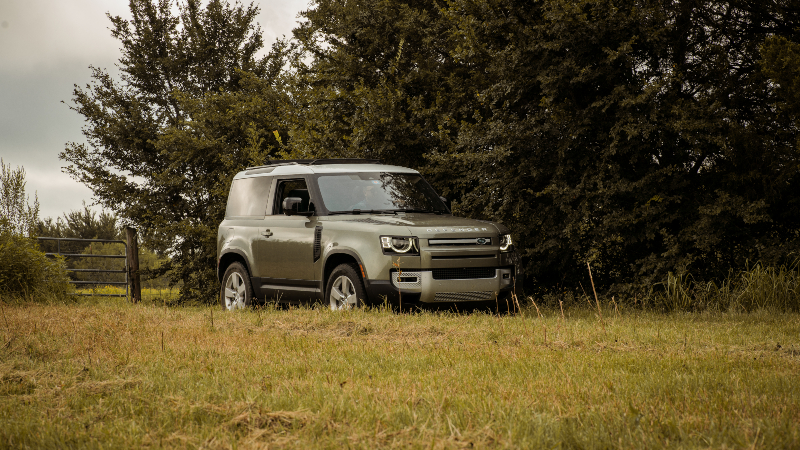
Jaguar Land Rover (JLR) is preparing for one of the most interesting strategic pivots in recent Land Rover history: a new U.S.-focused Defender program developed through a potential collaboration with Stellantis. The idea sounds strange at first. Land Rover and Jeep have spent decades occupying opposite sides of the same muddy trail. One wears a British accent and a country-house jacket. The other shows up with removable doors and a wave from the driver. But in the modern auto business, heritage alone does not build factories, dodge tariffs, or satisfy investors. For JLR, America has become too important to treat as just another export market.
In May, Stellantis and Jaguar Land Rover announced a non-binding memorandum of understanding to explore product and technology development in the United States. At the time, the statement was intentionally broad. It spoke of collaboration, product development, technology, and long-term growth in the U.S. market. But during JLR’s recent strategy update, the company sharpened the picture: Defender will be the brand at the center of that U.S. growth push.
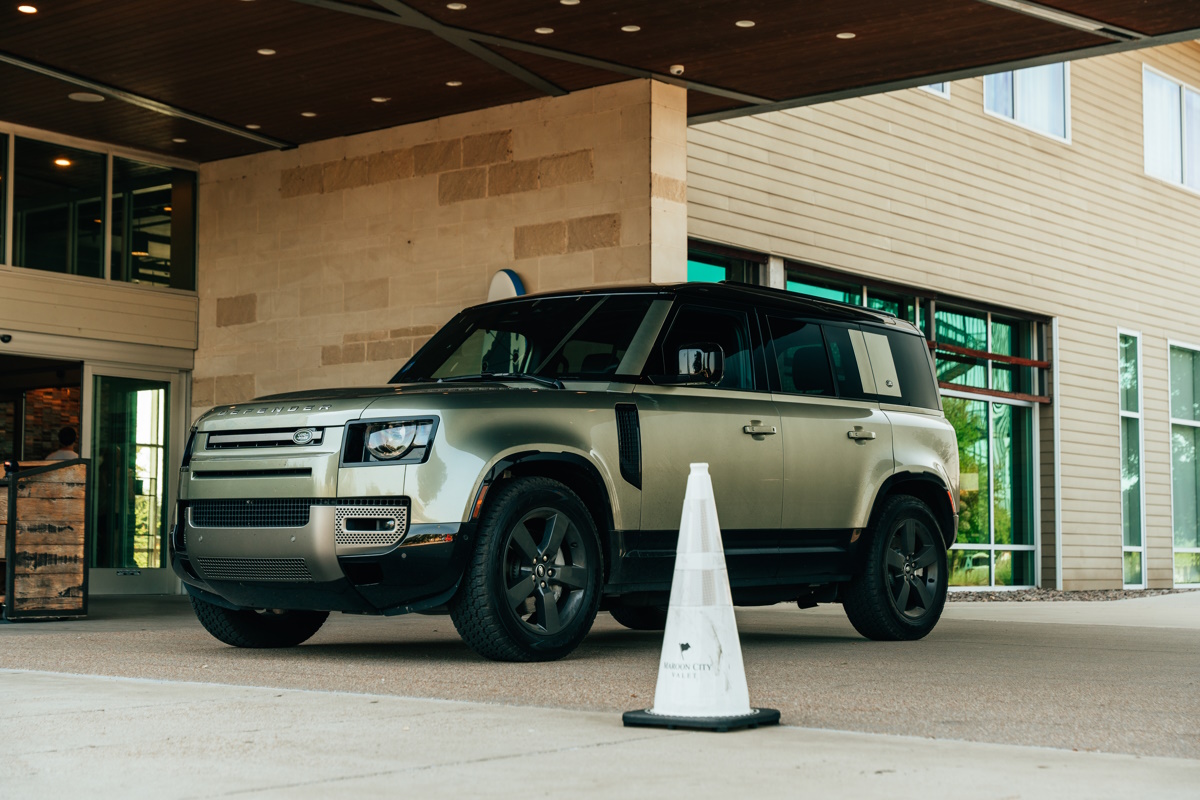
That does not mean the next Defender 110 parked outside your local dealer will suddenly be wearing a Jeep badge under the skin. The current Defender family, including the 90, 110, and 130, continues to be built at JLR’s plant in Nitra, Slovakia. JLR also confirmed that a new Defender family model will be the second vehicle launched on its EMA platform, with future flexibility for both battery-electric and full hybrid powertrains.
What the Stellantis connection suggests is something more targeted: a Defender product, or products, designed specifically for North American clients, potentially using Stellantis technology, manufacturing scale, or platform knowledge to make the business case work.
In plain English, JLR appears to be asking a very American question: what would Defender look like if it were engineered not for the world, but for the United States?
Why America Matters Now
JLR’s sudden “hyper-focus” on North America is not happening in a vacuum. The company is coming off a difficult period marked by lower volumes, U.S. tariffs, China market weakness, and disruption from a cyber incident. Reuters reported that JLR’s profit margin fell to 0.7 percent last fiscal year, down from near double digits in earlier years, while the company is now targeting a 4 percent margin and significant cost reductions. That makes the United States more than just a growth opportunity. It is a pressure-release valve.
The American market already plays an outsized role for JLR, and premium SUVs remain one of the strongest corners of the U.S. auto business. Buyers here continue to reward size, power, brand identity, and capability, especially when wrapped in luxury. That sounds suspiciously like a Defender brief.
JLR CEO PB Balaji has said the company’s aspiration is to grow its U.S. business to the size of JLR’s entire current global business in the coming years. That is not a casual remark. That is a strategy with a cowboy hat on.
The challenge is that JLR does not currently have manufacturing in North America. Its Defender is built in Slovakia, which exposes the vehicle to import costs and supply-chain vulnerability. If JLR wants to grow aggressively in the United States, it needs a way to localize more intelligently. Stellantis offers exactly what JLR lacks: North American manufacturing capacity, truck and SUV know-how, supplier networks, and deep experience building vehicles for American tastes.
Why Stellantis?
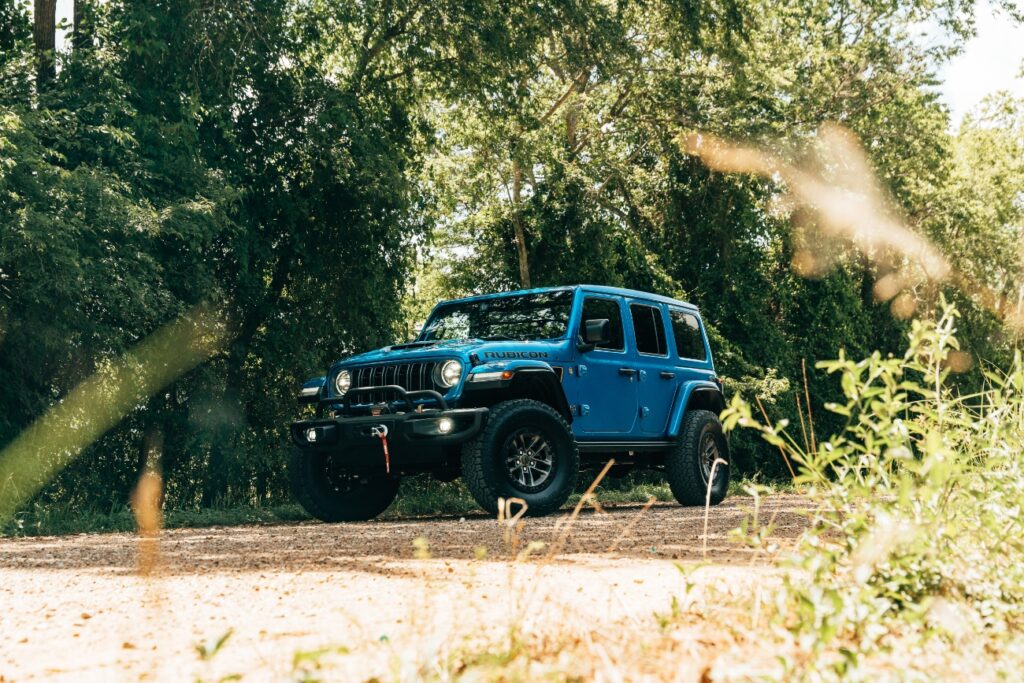
Stellantis is a sprawling company, but for this conversation, the keyword is Jeep. The same corporate house that owns Jeep, Ram, Dodge, Chrysler, Alfa Romeo, Maserati, Fiat, Peugeot, Citroen, Opel, and others also controls some of the most relevant truck and SUV engineering assets in North America. Jeep Wrangler and Gladiator are built at the Toledo Assembly Complex in Ohio, one of the most iconic off-road manufacturing sites in the country.
If JLR wants to develop a Defender variant for America, Stellantis can offer practical pathways JLR would struggle to create alone. That could include shared engineering, component sourcing, manufacturing support, hybrid systems, body-on-frame expertise, or even access to a North American production footprint.
The big unanswered question is what “Stellantis-based” really means. It could mean a Defender riding on a Stellantis platform, though JLR has not confirmed that publicly. It could mean a Defender using selected Stellantis technology while preserving JLR architecture and brand-specific engineering. It could mean joint manufacturing without shared bones. Or it could mean the talks never result in a production vehicle at all, because the MOU remains non-binding. For now, the safest read is this: JLR wants Defender to grow in the U.S., and Stellantis may provide the industrial muscle to make that happen.

The Defender Problem
The current Defender has been a success because it managed to do the nearly impossible. It replaced an icon without becoming a parody of the original. Instead of chasing a pure retro formula, the modern Defender became a luxury adventure vehicle with real off-road ability, unibody sophistication, and just enough utilitarian attitude to keep the faithful from storming Solihull with pitchforks. It also allowed Land Rover to stretch the name across the 90, 110, 130, V8 models, commercial-inspired trims, lifestyle editions, and the high-performance Defender OCTA.
But the United States is different. American buyers like the Defender, but they also live in a market where the Jeep Wrangler, Ford Bronco, Toyota 4Runner, Mercedes-Benz G-Class, Lexus GX, and full-size luxury SUVs all compete for similar emotional territory. The Defender has cachet, but it is expensive, imported, and positioned as a global luxury off-roader rather than an American-market bruiser.
A U.S.-specific Defender could allow JLR to go after a wider slice of that market. It could be larger, more powerful, more luxurious, more rugged, more hybrid-focused, or all of the above. It might also give JLR room to create something between today’s Defender and the ultra-premium Range Rover world, a product with Defender attitude but more American scale. That would be risky, but also potentially very smart.
Hybrid Reality Replaces EV Purity
The Stellantis-Defender news also arrives as JLR is softening its EV-only ambitions. The company says Range Rover, Defender, and Discovery will offer a mix of mild hybrid, full hybrid, plug-in hybrid, and battery-electric options, while Jaguar remains the group’s uniquely electric brand.
That matters because American luxury SUV buyers are not moving toward EVs in a straight line. They are curious, but cautious. They like power, range, convenience, and capability. They do not want a weekend in Big Bend planned around a charger that may or may not work.
For Defender, hybrid flexibility makes sense. A full hybrid or plug-in hybrid could offer instant torque, better efficiency, and useful off-road control without asking buyers to give up the long-distance confidence they expect from a premium adventure SUV. It also gives JLR a way to lower emissions while still selling vehicles that fit the realities of American roads, ranches, ski towns, suburbs, and overland fantasies.
The traditionalist in me likes a proper engine in a proper off-roader. The realist in me knows hybrid torque can be magic on a trail. The marketer in me sees the word “electrified” doing a lot of work on a Monroney sticker.
JLR & Stellantis Defender: What Could It Be?
There are a few possible paths for a U.S.-focused Defender. The first is a smaller Defender family model using JLR’s EMA architecture, offered with hybrid and electric powertrains. JLR has already confirmed a new Defender family vehicle will use EMA, though that is separate from any final Stellantis manufacturing decision. This could give Defender a more attainable entry point below the current 110, while keeping the brand in-house.
The second is a larger U.S.-market Defender developed with Stellantis support. This is where things get interesting. America loves big premium SUVs, and Stellantis has extensive experience with trucks, large SUVs, hybrid systems, and North American production. A larger Defender could aim at buyers who want G-Class presence, Jeep-adjacent capability, and Range Rover-level polish, but with more adventure branding.
The third is a manufacturing collaboration rather than a shared-platform product. JLR could use Stellantis facilities, supply chains, or manufacturing expertise to localize production while maintaining more of its own engineering. This would be less controversial among Land Rover loyalists and potentially easier to defend from a brand perspective.
The fourth possibility is that nothing reaches production. Non-binding agreements are the concept cars of corporate strategy. They look promising under the lights, but not all of them make it to the showroom.
The Heritage Question
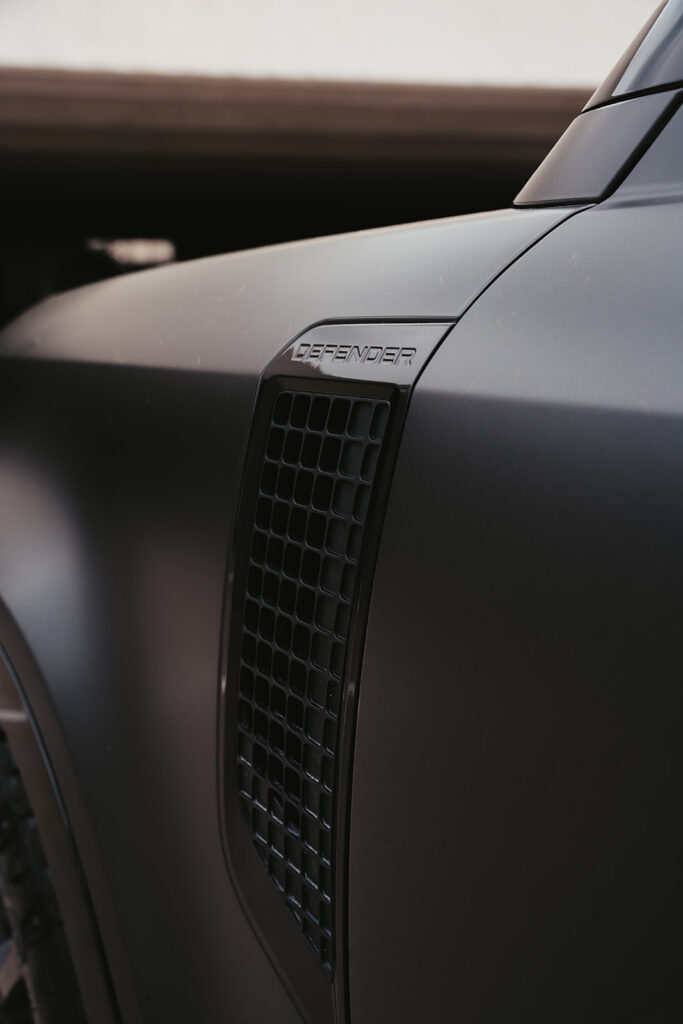
For Land Rover enthusiasts, the emotional risk is obvious. Defender is not just another model name. It carries decades of expedition, military, agricultural, and global adventure history. Build it too close to Jeep and the faithful will notice. Build it too soft and they will complain. Build it too expensive and they will still complain, but possibly from inside the vehicle they just bought.
That is the strange beauty of Defender. Nobody agrees exactly what it should be, but everyone cares.
JLR must protect the core idea: capability with credibility. A U.S.-specific Defender cannot feel like a badge-engineered shortcut. It has to be engineered, designed, and positioned as a real Land Rover. The customer may not care what supplier made the hybrid module or which plant stamped the structure, but they will care if the final product feels inauthentic.
That is where JLR has to tread carefully. Stellantis can help with scale, engineering, and production. It cannot supply Defender soul. That part still has to come from Land Rover.
There is a strong business argument for the move. The U.S. is hungry for premium SUVs with strong identities. Defender has global credibility. Stellantis has North American industrial reach. JLR needs growth, cost discipline, and supply-chain resilience. The pieces fit together better than the initial headline might suggest.
The partnership could also let each side benefit without direct brand conflict. Stellantis does not have a true luxury off-road brand above Jeep in the American market. JLR does. JLR does not have a U.S. manufacturing base. Stellantis does. In theory, both companies can use the relationship without stepping directly on each other’s boots.
A locally developed Defender could also help JLR reduce exposure to tariffs and currency swings, improve delivery times, and tailor products more closely to American preferences. That is not romantic, but it is how modern car companies survive.
The danger is dilution.
If a Stellantis-linked Defender feels too much like a rebodied Jeep, the backlash will be immediate. Land Rover buyers pay for brand identity, design, refinement, and a sense of British adventure. They do not want a luxury SUV that feels like a parts-bin compromise.
There is also the issue of internal overlap. Defender, Discovery, and Range Rover already have to work harder to define their separate roles inside JLR’s House of Brands strategy. A U.S.-specific Defender could either sharpen that positioning or blur it further.
Then there is timing. Product development takes years, and the market may shift again before any Stellantis-linked Defender arrives. EV demand, hybrid policy, tariffs, fuel prices, and luxury buyer sentiment are all moving targets. Building the right vehicle for America means aiming at a market that refuses to sit still.
The Bottom Line
JLR’s potential Stellantis-backed Defender is not just a product story. It is a signal that Land Rover sees the United States as the central battleground for its next phase of growth. The Defender name gives JLR a rare advantage. It is authentic, globally recognized, and flexible enough to stretch from safari fantasy to valet stand. But if JLR wants Defender to become a much larger American success story, it needs more than heritage. It needs local strategy, propulsion flexibility, manufacturing options, and products designed around the way Americans actually buy premium SUVs.
That is where Stellantis comes in. A Defender with Stellantis involvement might sound like heresy to the tweed-and-green-lane crowd, but it could also be one of the most practical moves JLR has made in years. The key will be execution. If JLR uses Stellantis as a tool while keeping Defender’s character intact, the result could be a serious new chapter for the brand in America.

Quick Facts
What happened: JLR confirmed it will focus on the Defender brand as part of its U.S. growth plans under a potential collaboration with Stellantis.
Is the deal final? No. The JLR and Stellantis agreement is a non-binding memorandum of understanding.
Will the current Defender be replaced? JLR has not said that. The current Defender 90, 110, and 130 continue to be produced in Nitra, Slovakia.
Could the U.S. Defender use Stellantis technology? Yes, that is the direction being explored, though specific platform, production, and powertrain details have not been confirmed.
Why the U.S.? JLR sees North America as its biggest growth opportunity and wants to develop products more closely tailored to American luxury SUV buyers.
What powertrains are likely? JLR says Range Rover, Defender, and Discovery will offer broader propulsion flexibility, including mild hybrid, full hybrid, plug-in hybrid, and battery-electric options.
FAQ
Is Land Rover building a Jeep-based Defender?
Not officially. JLR has confirmed a potential collaboration with Stellantis focused on U.S. product development and Defender growth, but it has not confirmed a specific Jeep-based platform.
Will a new Defender be built in America?
That remains unconfirmed. Local production is one possible benefit of working with Stellantis, but JLR has not announced a plant or production location.
Why would JLR work with Stellantis?
Stellantis gives JLR access to North American engineering, technology, manufacturing scale, supplier networks, and experience building trucks and SUVs for U.S. buyers.
Does this mean Defender is moving away from Britain?
Not exactly. The current Defender is already built in Slovakia, and JLR remains a British company with major UK engineering and manufacturing operations. A U.S.-focused product would be about market growth, not necessarily replacing existing production.
Will the new Defender be electric?
JLR is moving toward propulsion flexibility. Future Defender models may include hybrid and battery-electric versions, depending on platform and market needs.
Why is this important?
This could mark one of the biggest shifts in Land Rover’s U.S. strategy in years, moving from exporting global products to developing vehicles specifically for American luxury SUV buyers.