
 Michael Satterfield
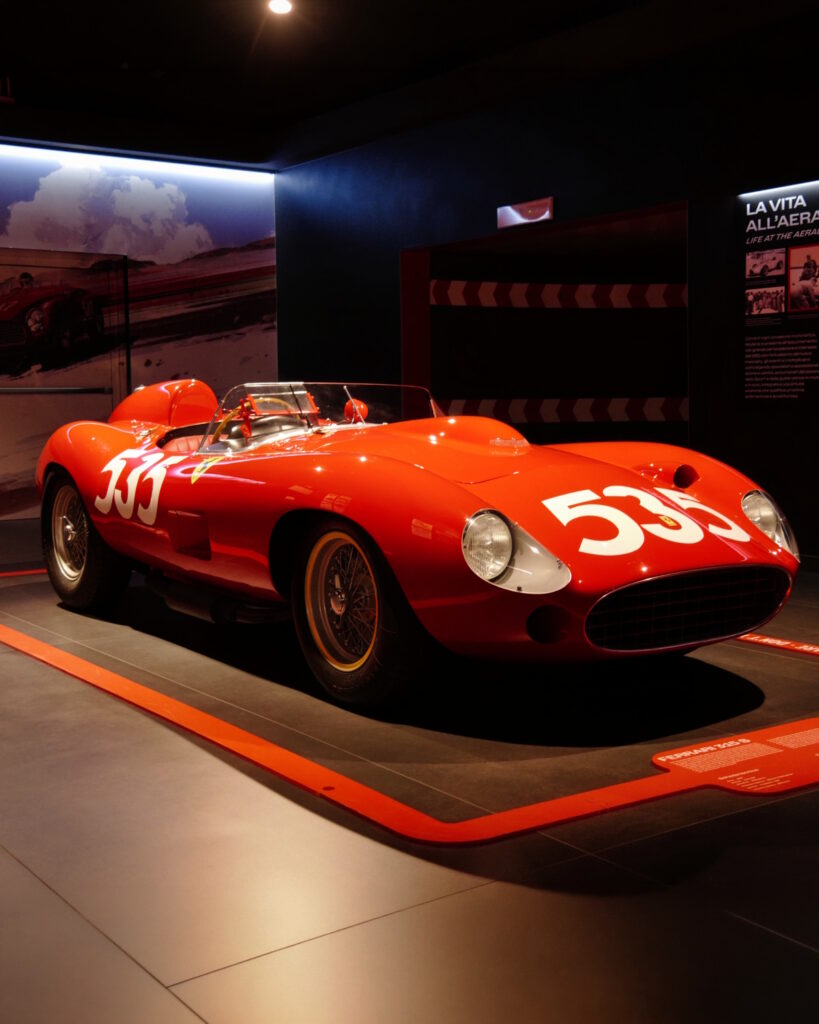
In Ferrari’s history, some numbers have become more than identification. They become shorthand for an era. For the 1957 Ferrari 315 S, that number was 535, painted on the flanks of a red Scaglietti-bodied sports racer that would carry Piero Taruffi into legend at the final Mille Miglia.
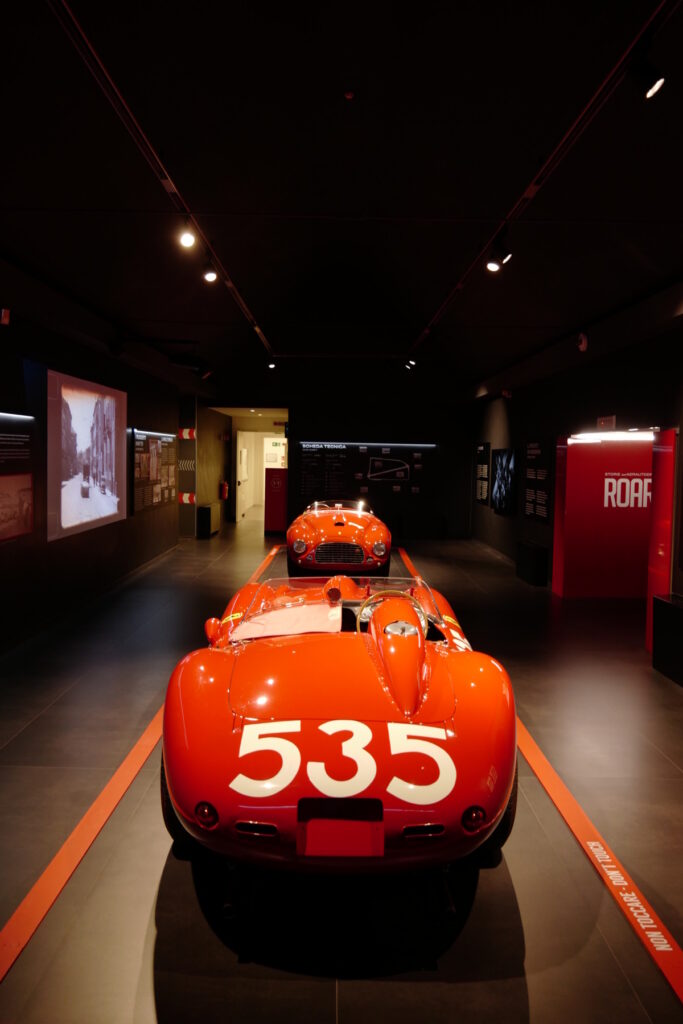
The number itself was practical. In the Mille Miglia, race numbers often reflected start times. Taruffi’s 535 meant he left Brescia at 5:35 a.m., chasing the clock, the weather, the roads, and nearly three decades of Italian road-racing mythology. By the time he returned, he had won the race that had eluded him for years, and the Mille Miglia as the world knew it was finished. Ferrari notes that the 315 S gave Taruffi victory in what became the last edition of the race as a true open-road contest.
The machine beneath him was not merely another Ferrari sports racer. The 315 S was part of Maranello’s escalating arms race against Maserati, whose 450S had forced Ferrari to respond with bigger, faster, more sophisticated V12 machinery. Kidston’s history of chassis 0684 describes the 315 S as one of Ferrari’s potent four-cam sports cars, with six carburetors, twin-spark ignition, and power that belonged to an age before restraint became regulation.
The Ferrari 315 S That Made History
Chassis 0684 was the car. Built as a 315 S, it carried a 3.8-liter V12 and Scaglietti bodywork, and in the 1957 Mille Miglia it wore number 535 along with a temporary Bologna registration plate, BO 81071. Taruffi drove it to victory after practicing in another 315 S, chassis 0656.
Taruffi was no young charger trying to make his name. He was 50 years old, experienced, calculating, and known as the “Silver Fox.” That mattered. The Mille Miglia was not won by horsepower alone. It demanded memory, patience, nerve, and the ability to drive flat-out across public roads while reading Italy like a racing line. Kidston records that Taruffi drove single-handed for 10 hours and 27 minutes, often at speeds beyond 170 mph.
He finished three minutes ahead of Wolfgang von Trips, also in a Ferrari 315 S, with Olivier Gendebien third in a Ferrari 250 GT, giving Ferrari a sweeping result on paper. But the triumph was shadowed by tragedy. Near Guidizzolo, Alfonso de Portago and Edmund Nelson crashed their Ferrari 335 S, killing themselves and nine spectators, including children. The accident brought the Mille Miglia’s great open-road chapter to an end.
That is what makes 535 so compelling. It is not just a winning number. It is a period mark at the end of a sentence written in fuel, dust, courage, and terrible consequence. The Ferrari 315 S represents the height of the romantic sports-racing age, but also the moment when that age could no longer justify itself.
For Taruffi, the victory was personal. He had tried to win the Mille Miglia many times before, and according to Ferrari’s historical account, he had promised his wife Isabella that if he finally won, he would retire. He did exactly that.
After the Mille Miglia, chassis 0684 continued its competition life. It went to Le Mans in 1957, where it finished fifth overall with Stuart Lewis-Evans and Martino Severi. Later that year, Luigi Chinetti Motors sold the car to American owner Gene Greenspun, who entered Phil Hill in it at Road America. Hill won, beating Carroll Shelby in a Maserati 300S.
Why this car matters
Today, the car’s importance rests not only on what it won, but on how much of it survived. Kidston’s history notes that chassis 0684 retained its original engine and Scaglietti bodywork, calling it one of the most original and significant Ferraris in existence.
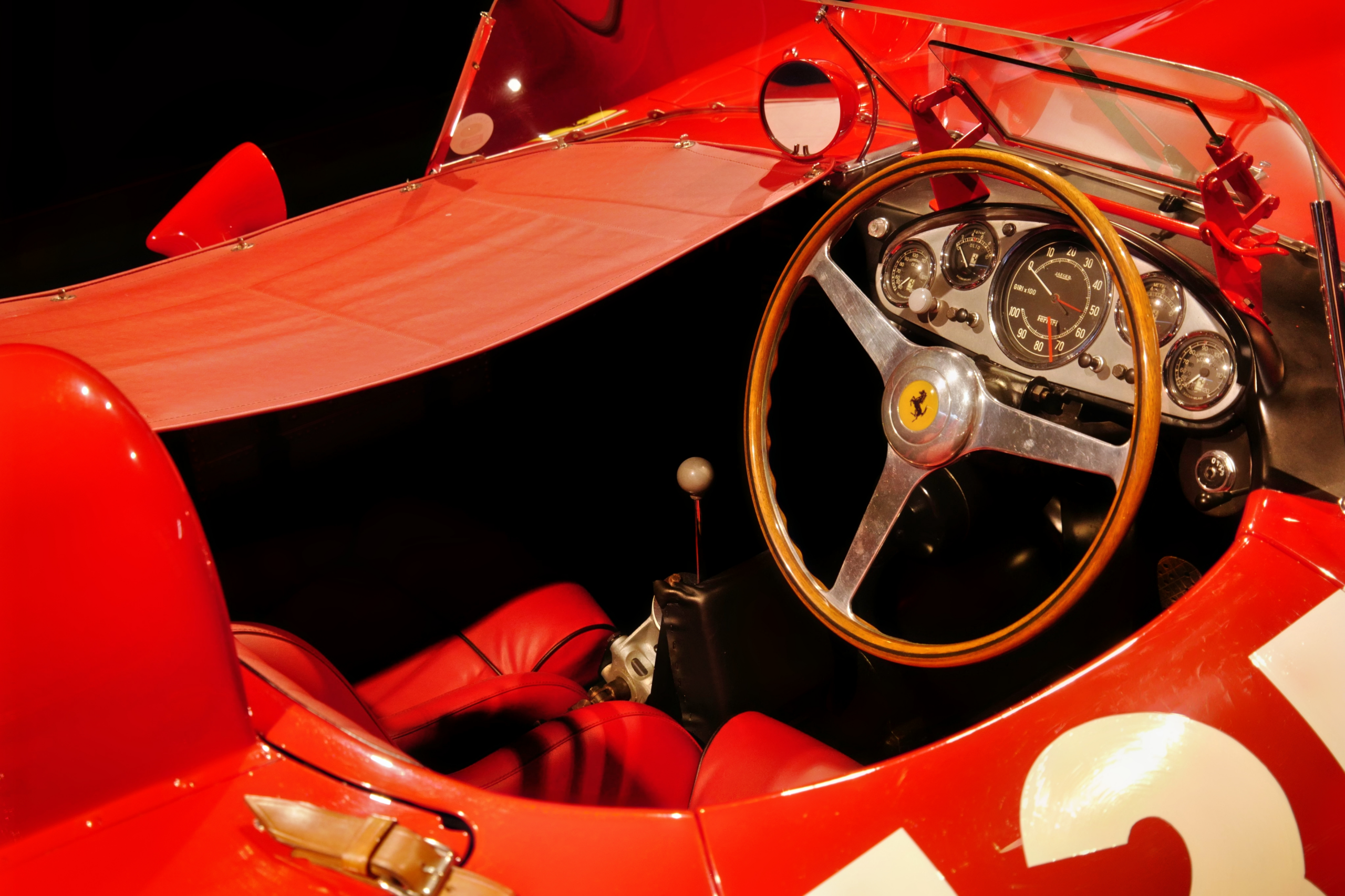
The 1957 Ferrari 315 S #535 is beautiful in the way only old racing cars can be beautiful. Not polished for display, but shaped by purpose. Long hood. Open cockpit. A V12 ahead of the driver and danger everywhere else. It belongs to the age when Ferrari was still young enough to be ruthless and old enough to know exactly what it was doing.
Number 535 was a start time. Then it became a race number. Then it became history.
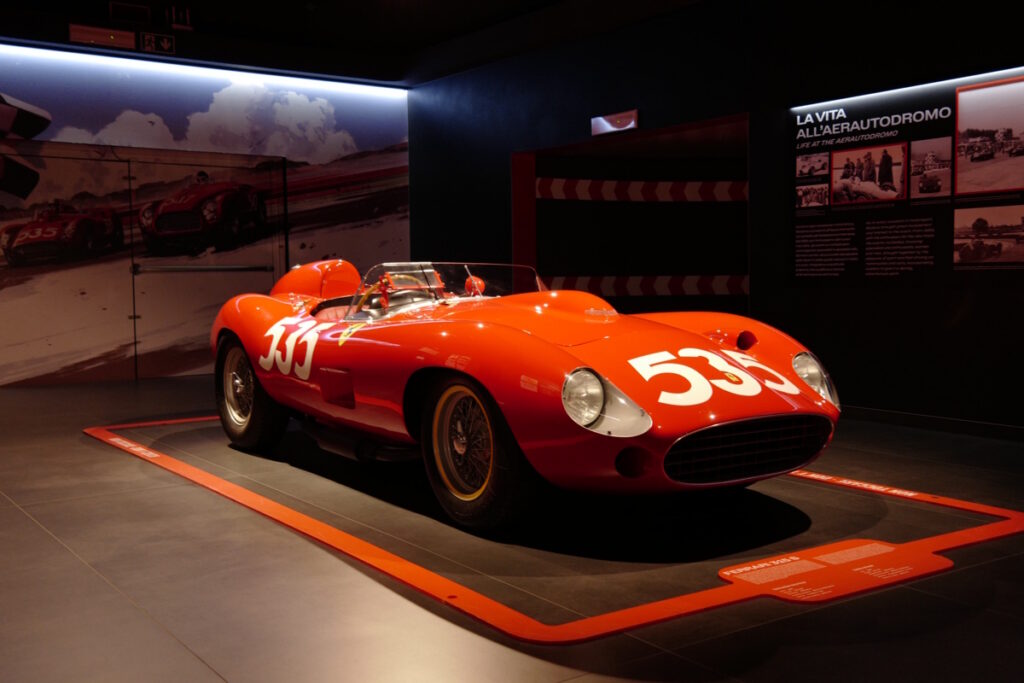
Quick Facts: 1957 Ferrari 315 S #535
- Model: Ferrari 315 S
- Chassis Number: 0684
- Race Number: 535
- Driver: Piero Taruffi
- Race: Mille Miglia
- Result: 1st Overall
- Date of Victory: May 12, 1957
- Engine: 3.8-liter naturally aspirated V12
- Horsepower: Approximately 360 hp
- Coachbuilder: Carrozzeria Scaglietti
- Top Speed: Around 180 mph
- Race Distance: Roughly 1,000 miles across Italy
- Significance: Winner of the final Mille Miglia run as a full-speed public road race
- Le Mans Result: 5th Overall at the 1957 24 Hours of Le Mans
FAQ: The 1957 Ferrari 315 S #535
What does the number 535 mean on the Ferrari 315 S?
In the Mille Miglia, race numbers typically represented the car’s starting time. The Ferrari 315 S driven by Piero Taruffi departed Brescia at 5:35 a.m., which is how it received the number 535.
Why is the Ferrari 315 S important?
The Ferrari 315 S represents one of Ferrari’s most legendary front-engine sports racing cars. It combined massive V12 power with lightweight Scaglietti coachwork and became famous for winning the final Mille Miglia in 1957.
Who drove Ferrari 315 S #535 to victory?
Italian racing legend Piero Taruffi drove the car to victory in the 1957 Mille Miglia. At 50 years old, Taruffi retired from racing after the win.
What engine was in the Ferrari 315 S?
The Ferrari 315 S used a 3.8-liter V12 engine developed from Ferrari’s Formula One program. It featured four overhead camshafts and produced around 360 horsepower.
Why was the 1957 Mille Miglia the last one?
Following a fatal crash involving a Ferrari 335 S during the race, Italian authorities ended the Mille Miglia as a flat-out open-road endurance race. Safety concerns made the event too dangerous to continue in its original form.
How fast was the Ferrari 315 S?
The Ferrari 315 S could reach speeds approaching 180 mph, making it one of the fastest sports racing cars of its era.
Does Ferrari 315 S chassis 0684 still exist?
Yes. Chassis 0684 survives today and is considered one of the most historically significant and original Ferrari sports racing cars in existence.
What happened to the Ferrari 315 S after the Mille Miglia?
After its Mille Miglia victory, chassis 0684 competed at Le Mans and later raced in the United States, including a win at Road America driven by Phil Hill.







Ferrari needs to make something like his again, like Jaguar with the XKSS
it must be magical to get to drive something like this at speed through the Italian countryside
Is that the same race that was in the Ferrari movie that killed the spectators?
Such a beautiful car
please tell us a bit on the engine. Maybe H.P.
Thanks