

 Michael Satterfield
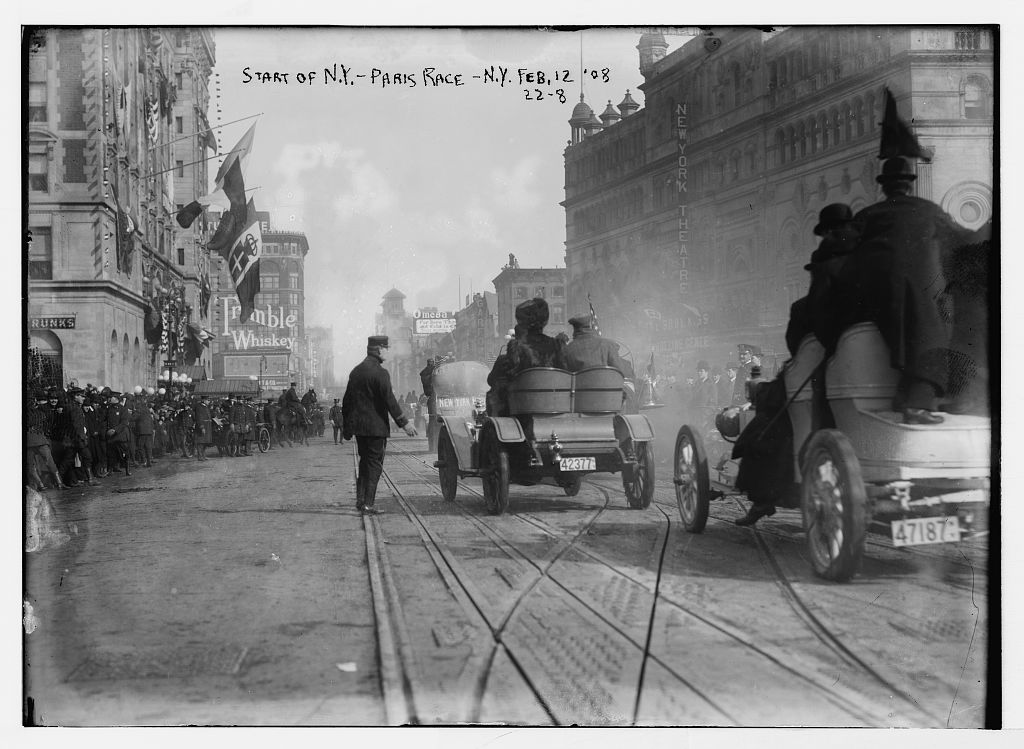
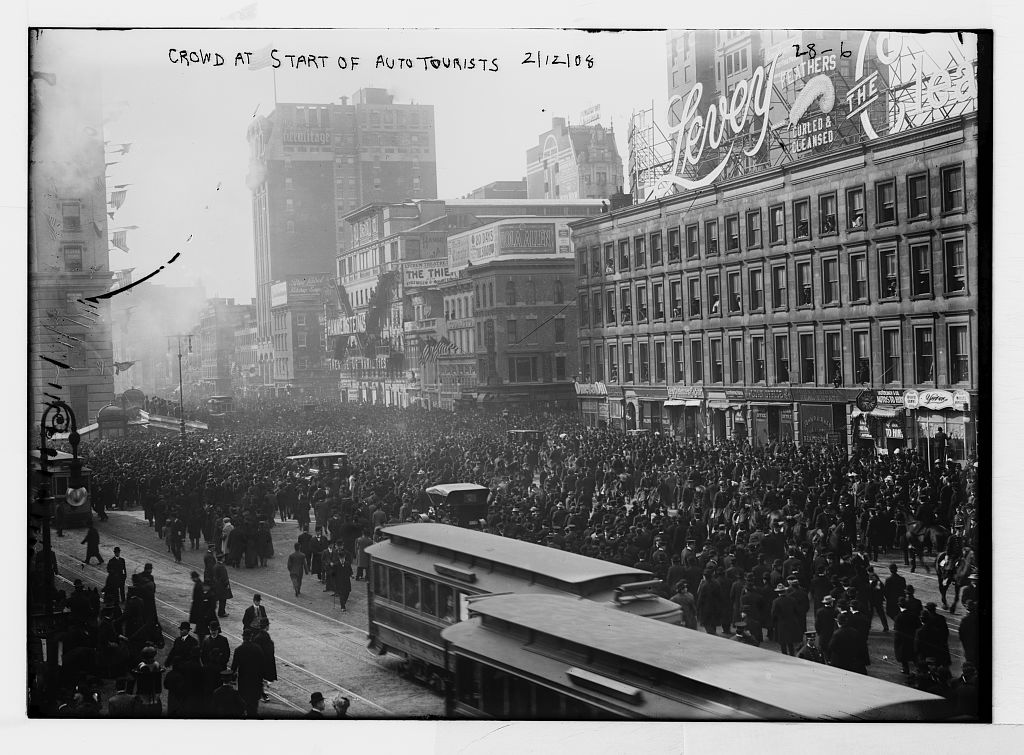
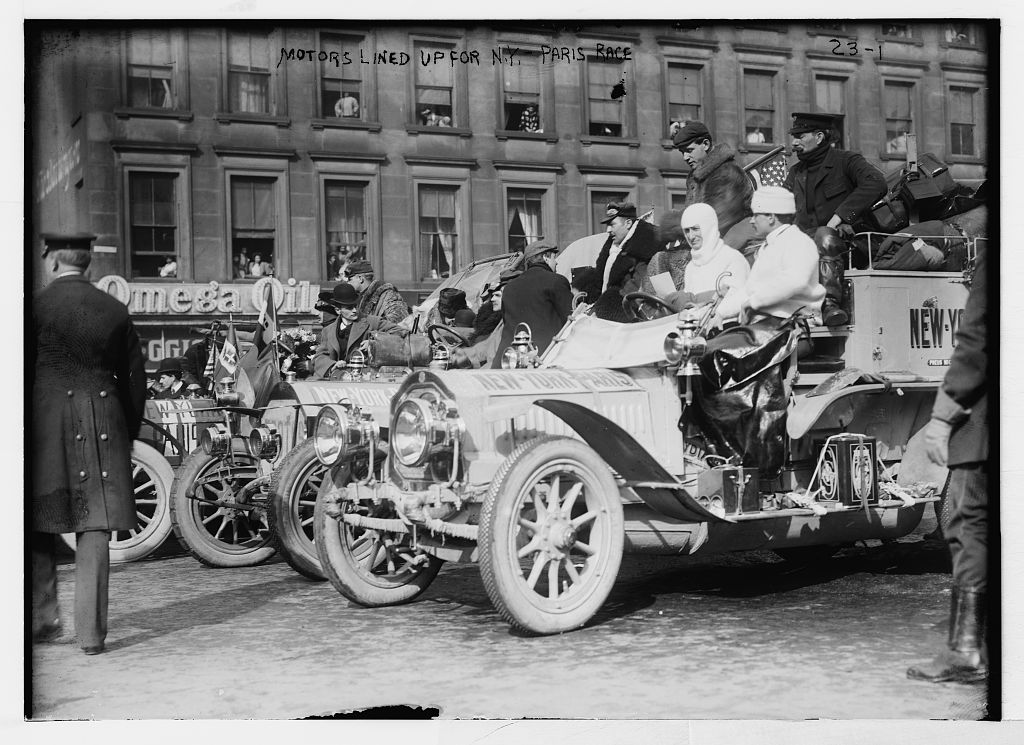
On the morning of February 12, 1908, Times Square looked less like the center of Manhattan and more like the edge of the known world. A crowd estimated in over a hundred thousand pressed into the streets to see six automobiles attempt something that sounded only slightly more reasonable than driving to the moon, driving from New York to Paris. Their mission was simple on paper and absurd in practice: leave New York City, cross North America in winter, somehow make it through Alaska across the Bering Strait, continue across Siberia, drive through all of Russia and Europe, and arrive in Paris.
There were no interstates. There were few paved roads. In many places, there were no roads at all. The automobile itself was still widely viewed as a fragile toy for the wealthy, useful for city boulevards, club drives, and making horses nervous. Yet here were teams from the United States, Germany, France, and Italy preparing to prove that the motorcar could do something far greater than entertain the fashionable classes. It could conquer distance. It could shrink the world. It could make the horse look over its shoulder.
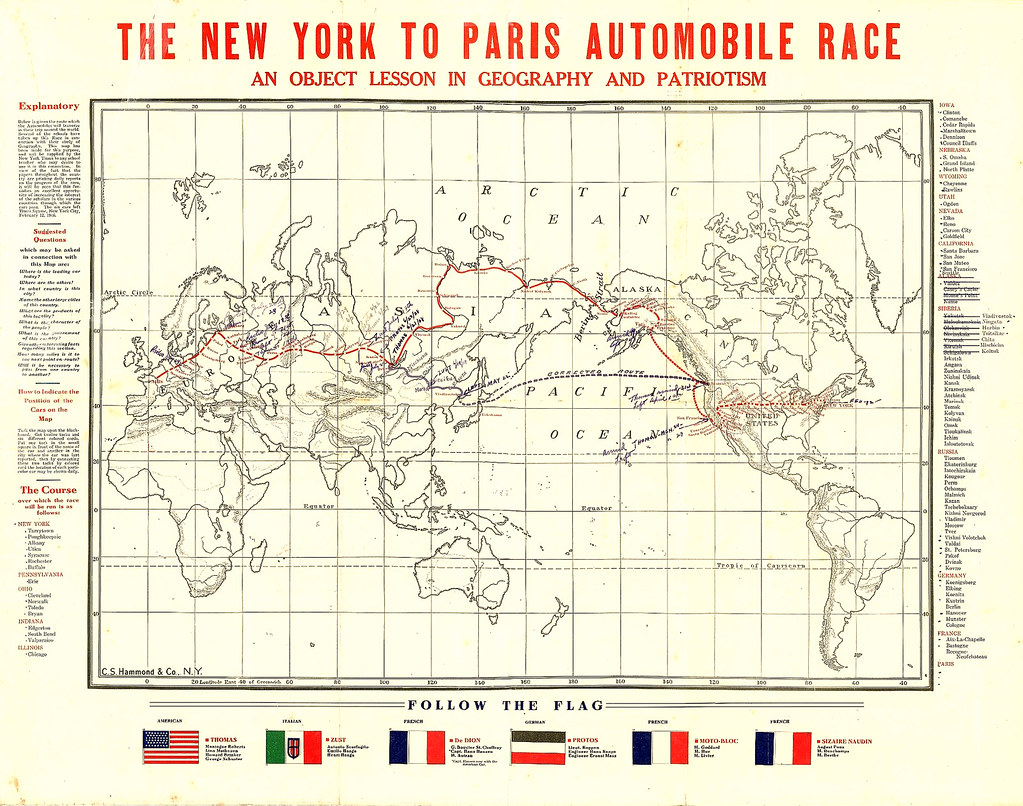
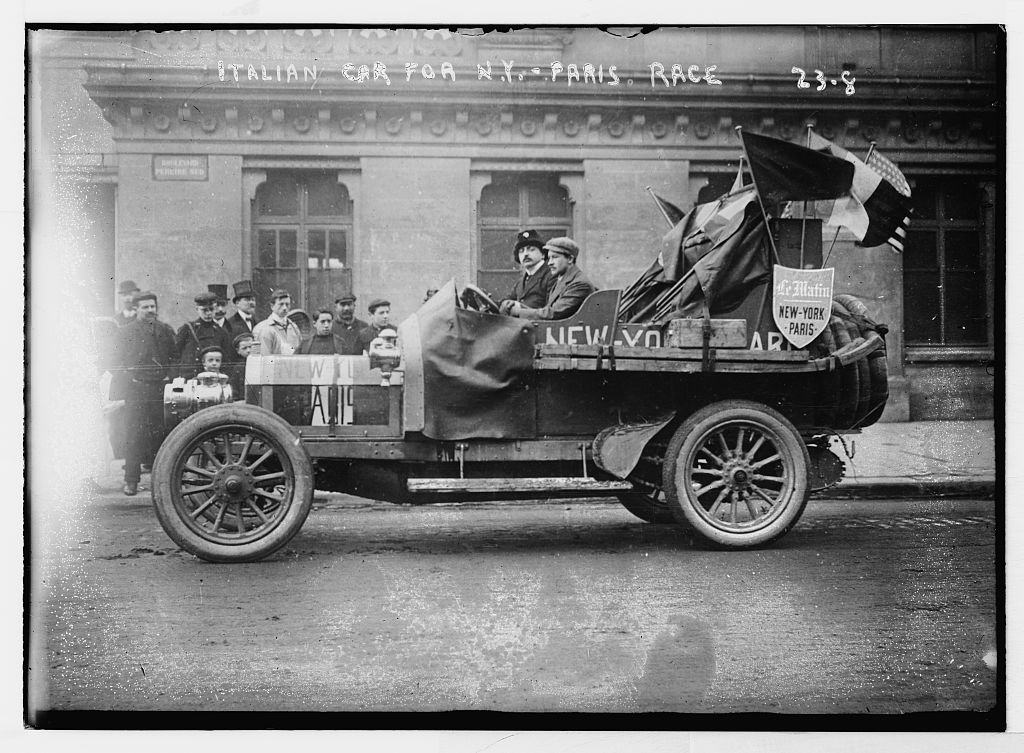
The race was sponsored by The New York Times and the Paris newspaper Le Matin, giving it the full force of international spectacle. The planned route was almost comically ambitious: New York to Chicago, then across the American West to San Francisco, north toward Alaska, across the Bering Strait into Siberia, and onward through Russia and Europe to Paris. Six cars started: the American Thomas Flyer, the German Protos, the Italian Züst, and three French entries, a De Dion-Bouton, a Motobloc, and a Sizaire-Naudin.
The crowd at Times Square cheered as if they were watching explorers sail off the edge of the map. In a way, they were.
New York to Paris: The American Underdog
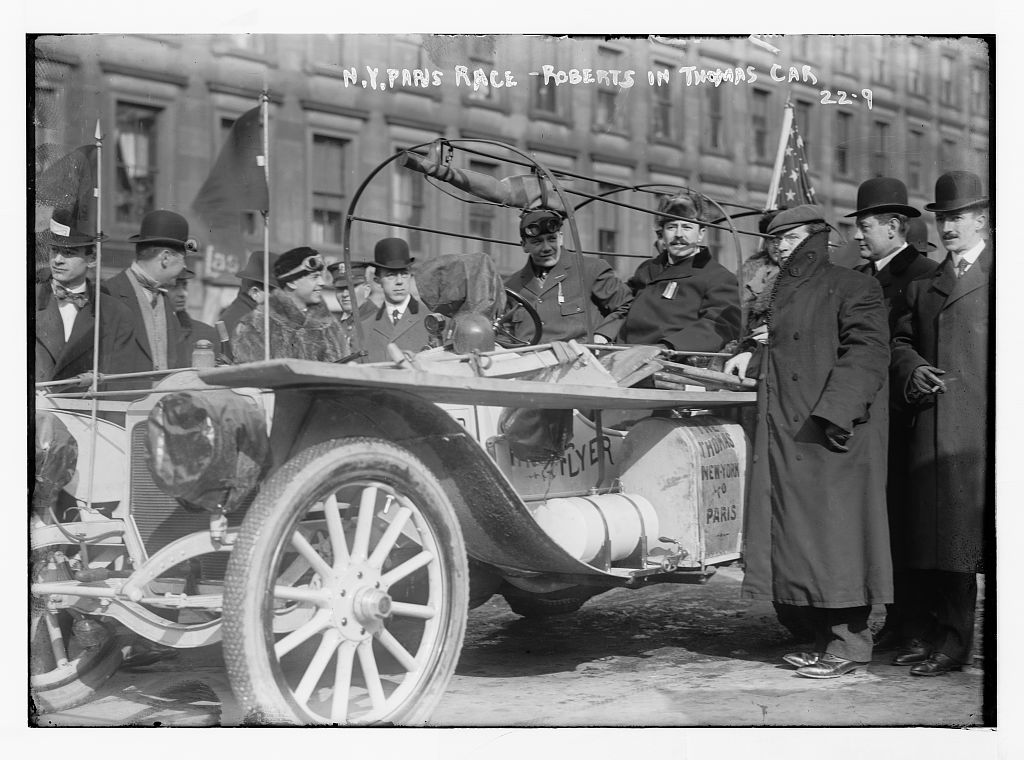
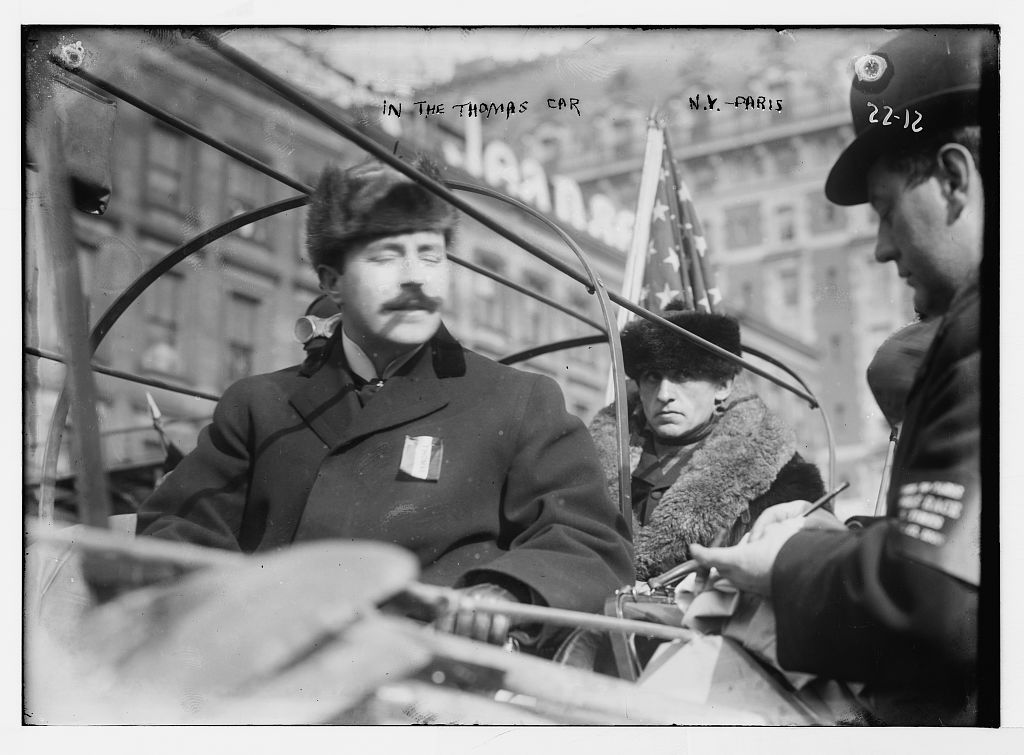
The American entry was a 1907 Thomas Flyer, built by the E.R. Thomas Motor Company of Buffalo, New York. Against the prestige of Europe’s established motoring powers, the Thomas looked like a patriotic wager with wooden wheels. It was not a delicate machine, and that mattered. The race would not be won by elegance. It would be won by durability, stubbornness, and the ability to keep going when every reasonable person would have waited for a train.
The Thomas Flyer would eventually become the hero of the race, but it did not begin as the obvious favorite. Europe had the reputation. Germany had the imposing Protos, reportedly prepared with the kind of national seriousness one might expect from Kaiser Wilhelm’s Germany. France had multiple entries. Italy had the Züst. America had one car, one flag, and a good deal of nerve.
George Schuster, the Buffalo mechanic who became central to the Thomas team’s success, would become the only American to travel the full distance from New York to Paris. That detail alone separates him from the usual racing heroes. He was not merely a driver. He was the man who had to fix the car, nurse it through impossible conditions, improvise solutions, and keep the thing alive over continents.
In modern racing, teams talk about “reliability.” In 1908, reliability meant crossing a frozen landscape with hand tools, rope, courage, and occasionally a team of horses.
America in Winter
The American leg of New York to Paris was brutal from the beginning. Starting in February was either a stroke of promotional genius or a decision made by men who had not recently shoveled snow. The cars left New York and pushed west through mud, ice, rutted tracks, and winter storms.
This was the first winter crossing of the United States by automobile, a fact that deserves more attention than it usually gets. The Thomas Flyer reached San Francisco in 41 days, 8 hours, and 15 minutes, having crossed a continent at a time when much of that continent had no meaningful road system for cars.
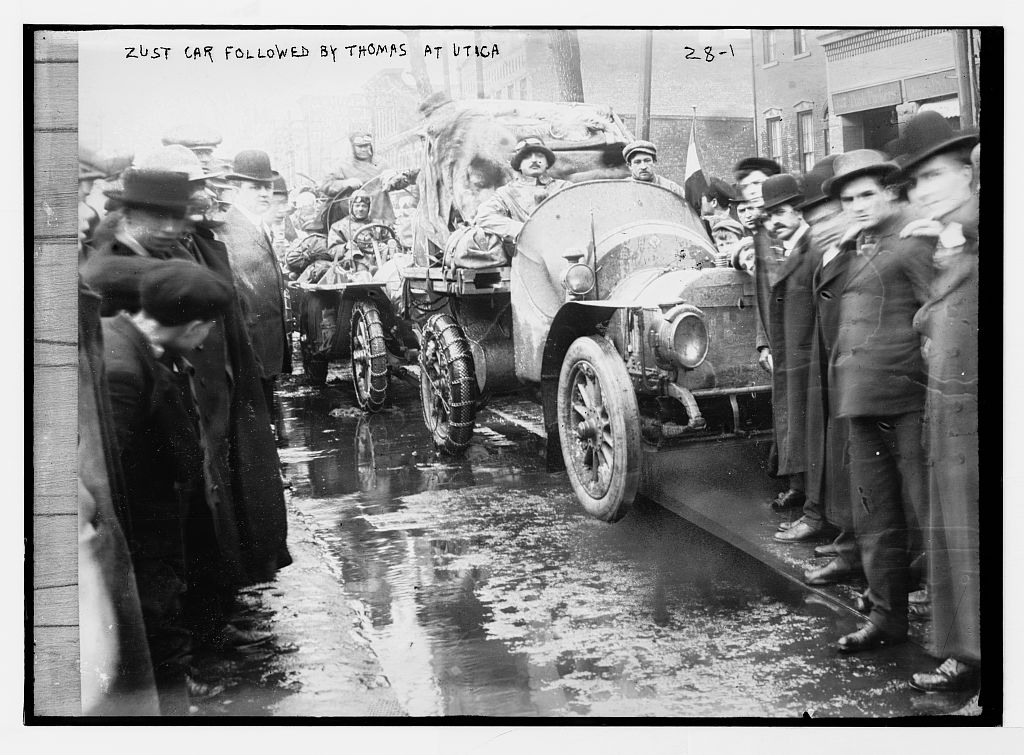
When roads disappeared, the teams followed railroad lines. Sometimes they drove with the wheels straddling the rails, bouncing from tie to tie. Sometimes they dragged the cars through snow or mud. Sometimes progress was measured not in miles per hour, but by feet.
Imagine driving across America before gas stations became common, before service networks, before GPS, before weather apps, before “roadside assistance” meant anything beyond hoping a farmer had a mule and a good heart. Now imagine doing it in an open car, in winter, while the world’s newspapers are watching. This was not a race in the modern sense. It was an expedition with a timing sheet.
The Alaska Problem
The original plan called for the competitors to continue north and cross from Alaska toward Siberia. It sounded dramatic, and on a map it looked almost tidy. In reality, Alaska quickly reminded the organizers that maps are drawn indoors.
The racers were supposed to make their way toward Nome and then cross the Bering Strait toward Siberia. The plan depended on ice, weather, trails, and optimism. The Thomas crew shipped to Valdez, Alaska, but found conditions so impossible that the route had to be changed. The race was rerouted across the Pacific by steamer to Japan, and from there to Vladivostok, where the overland push across Asia would begin.
This was the kind of logistical chaos that gave the race its legend. It was not merely difficult because the cars were primitive. It was difficult because the world itself had not been arranged to accommodate cars yet. There were no support trucks leapfrogging ahead. No satellite communications. No weather radar. No neatly marked alternates. The teams dealt with reality as they found it, and reality was often waist-deep in snow, mud, or bureaucracy.
New York to Paris: Into Siberia
If America was hard and Alaska was impossible, Siberia was where the race became myth. After the Pacific crossing and the passage through Japan, the surviving competitors reached Vladivostok. By then the field had thinned. Only three cars would complete the journey: the Thomas Flyer, the German Protos, and the Italian Züst. The French challenge had fallen away, which must have made the offices of Le Matin a little quieter than expected.
Siberia in spring didn’t mean there were roads. The thaw turned wagon tracks into mud, rivers into obstacles, and villages into lifelines. The teams often had to rely on local help, horses, manpower, and mechanical ingenuity. One account notes that at one point the Thomas team needed four days to cover just 60 miles. That single figure says more than any romantic description can. Four days. Sixty miles. Today, that is a casual Sunday drive with time left for lunch. In 1908, it was a campaign.
The cars were battered, repaired, dragged, and coaxed forward. They ran through places where the automobile had never been seen before. To many people along the route, these machines must have looked like mechanical animals from some industrial future, arriving covered in mud and carrying men who smelled of oil, smoke, and a lack of a hot bath.
The German Challenge
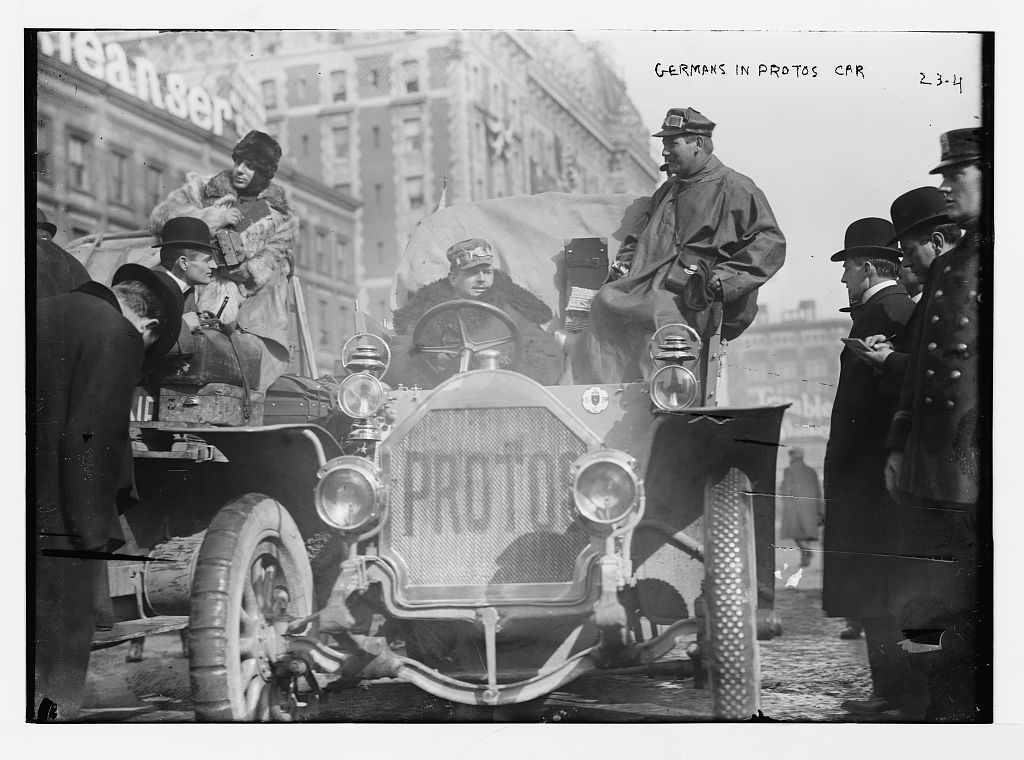
The German Protos reached Paris before the Thomas Flyer, but the story did not end there. New York to Paris Race officials penalized the German team 30 days, including penalties for bypassing Japan and for shipping the car part of the way by rail. That gave the victory to the American Thomas Flyer, which arrived in Paris on July 30, 1908, after 169 days on the road, sea, mud, snow, railbeds, and whatever else counted as forward motion.
There is a wonderfully human detail at the end. When the Thomas Flyer reached Paris, officials reportedly objected to its broken headlight. A passing cyclist offered a lamp, but when it could not be removed, the team strapped the entire bicycle to the car and carried on to the finish. It is hard to imagine a more perfect ending to the first great global automobile race: the future of transportation arriving in Paris with a bicycle tied to its nose.
The Thomas Flyer won by 26 days after penalties were applied. The Italian Züst arrived later and finished third. Only three of the original six starters completed the course.
Why New York to Paris Mattered
The 1908 New York to Paris Race was more than a publicity stunt, though it was certainly that too. It was a rolling argument for the automobile at a time when the automobile still needed defending.
The race proved that cars could endure. Not merely run from town to town, not simply impress on smooth city streets, but cross continents. It showed the world that the motorcar was not just a novelty for the rich. It was a serious machine with the potential to transform travel, commerce, infrastructure, and the very idea of distance. Historians often connect the race, along with the 1907 Peking to Paris event, to a broader shift in public perception of the automobile from fragile amusement to practical long-distance transportation.
It also exposed the obvious problem: the world needed better roads. Every mile of mud, every railbed detour, every broken bridge, every improvised crossing made the same argument. If the 20th century belonged to the automobile, the road system would have to catch up.
In that sense, the New York to Paris Race was not just motorsport. It was a preview of modernity.
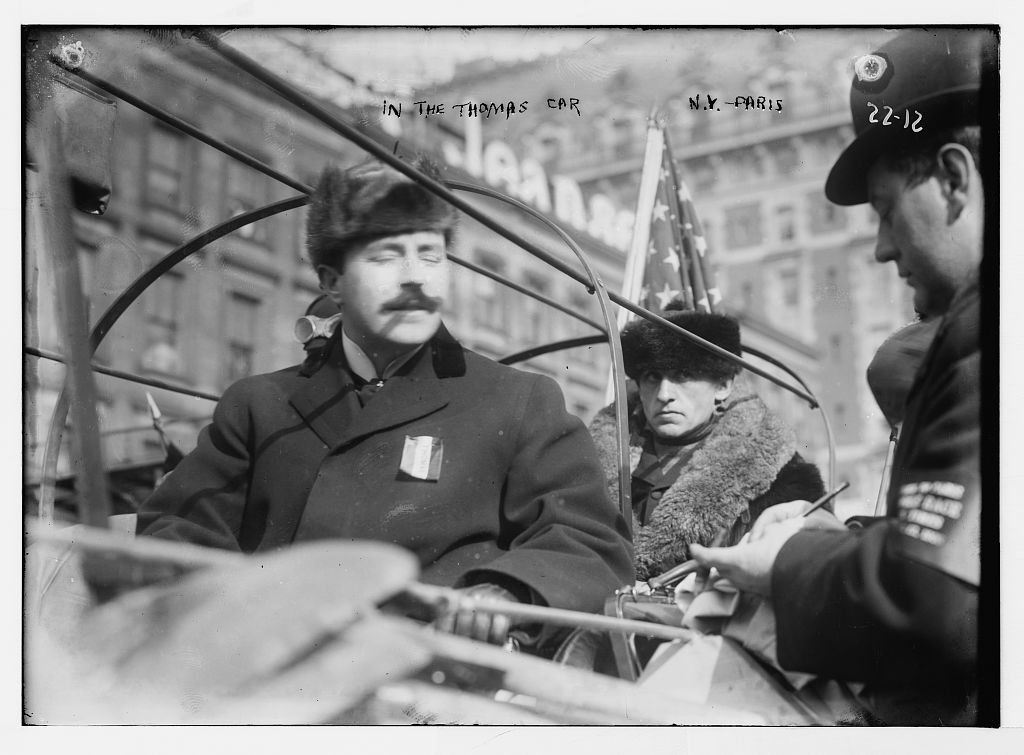
The Lasting Hero: The Thomas Flyer
Today, the New York to Paris winning 1907 Thomas Flyer survives and is displayed at the National Automobile Museum in Reno, Nevada. The museum describes the race as one of the most grueling journeys of all time and features the Thomas as the only American entry and the winning car.
That survival matters. So much early racing history has been lost to fire, scrap drives, neglect, or simple indifference. But the Thomas Flyer remains, not as a polished symbol of speed in the modern sense, but as a survivor of something stranger and grander. It is a machine from the moment when the automobile stopped being a curiosity and started making demands on the world. It did not win because it was the fastest over a measured mile. It won because it could keep going. That may be the purest form of racing there is.
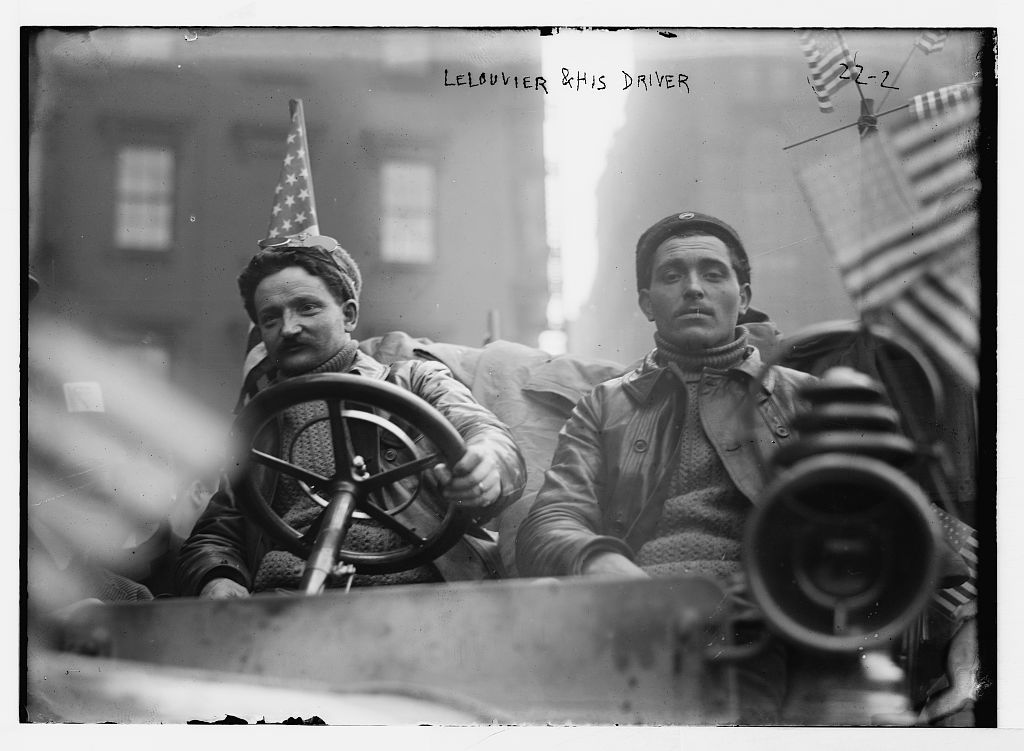
The Greatest Road Trip Ever Attempted
The 1908 New York to Paris Race belongs to a different moral universe than today’s motorsport. There were no hospitality suites, no tire blankets, no simulations, no carbon tubs, no live onboard telemetry. The cars were open to the weather. The men were exposed to everything. The route was as much rumor as road. And yet, in its own mad way, it remains one of the greatest automotive adventures ever staged.
It had nationalism, newspaper drama, mechanical improvisation, impossible geography, questionable planning, and a finish in Paris. It had the American underdog defeating Europe. It had a German rival penalized after arriving first. It had a bicycle strapped to the front of the winning car. Hollywood would reject half of it for being too convenient. But it happened.
On February 12, 1908, six cars left Times Square to prove that the automobile could conquer the world. By July 30, the Thomas Flyer had done exactly that. Not quickly. Not cleanly. Not comfortably. But gloriously.
And that may be the lesson worth remembering. The earliest motorists were not just drivers. They were scouts for the century ahead, throwing goggles over their eyes, tying spare tires to the back, and pointing fragile machines toward the horizon before anyone had bothered to build the roads.
The 1908 New York to Paris Race was not simply a race from one city to another. It was the moment the automobile announced that the world was about to get smaller.
New York to Paris Quick Facts
Event: 1908 New York to Paris Race
Start Date: February 12, 1908
Start Location: Times Square, New York City
Finish Location: Paris, France
Winning Car: 1907 Thomas Flyer Model 35
Winning Team: United States
Key Driver/Mechanic: George Schuster
Sponsor/Organizers: The New York Times and Le Matin
Original Planned Route: New York to San Francisco, Alaska, across the Bering Strait, Siberia, Russia, Europe, and Paris
Actual Route Change: The Alaska and Bering Strait portion proved impossible, so teams crossed the Pacific by ship to Japan, then continued to Vladivostok and across Siberia
Number of Starters: Six cars
Number of Finishers: Three cars
Winning Arrival Date: July 30, 1908
Total Duration: 169 days
Final Result: The American Thomas Flyer won after the German Protos received penalties
Why It Matters: The race helped prove the automobile could survive extreme long-distance travel at a time when roads, fuel networks, and support infrastructure barely existed.
FAQ
What was the 1908 New York to Paris Race?
The 1908 New York to Paris Race was an international automobile race that began in New York City and ended in Paris, France. It was one of the earliest and most ambitious long-distance motoring events ever attempted.
When did the 1908 New York to Paris Race start?
The race started on February 12, 1908, in Times Square, New York City.
Who won the 1908 New York to Paris Race?
The American Thomas Flyer won the New York to Paris race. The car was driven and maintained by a team that included George Schuster, who became the only team member to travel the entire route from New York to Paris.
What kind of car won the race?
The New York to Paris winning car was a 1907 Thomas Flyer Model 35, built by the E.R. Thomas Motor Company of Buffalo, New York.
How long did the race take?
The winning Thomas Flyer reached Paris on July 30, 1908, completing the journey in 169 days.
How many cars started the race?
Six cars started the New York to Paris race: the American Thomas Flyer, the German Protos, the Italian Züst, and three French entries from De Dion-Bouton, Motobloc, and Sizaire-Naudin.
How many cars finished the race?
Only three cars completed the New York to Paris race: the American Thomas Flyer, the German Protos, and the Italian Züst.
Did the racers actually drive through Alaska?
The original route called for the racers to travel through Alaska and cross the Bering Strait, but conditions made that plan impossible. The route was changed, and the competitors crossed the Pacific by ship before continuing through Asia and Europe.
Why was the German Protos penalized?
The German Protos reached Paris before the Thomas Flyer, but race officials applied penalties for route violations, including bypassing part of the official course. After penalties were applied, the Thomas Flyer was declared the winner.
Why is the 1908 New York to Paris Race important?
The race demonstrated that automobiles could handle extreme long-distance travel across continents. It helped change public perception of the car from a fragile novelty into a serious tool for transportation and exploration.
Where is the winning Thomas Flyer today?
The winning New York to Paris Thomas Flyer survives today and is displayed at the National Automobile Museum in Reno, Nevada.








I learned something new, but how were they getting gas? It’s not like there were a lot of gas stations.
I like that they thought they were going to drive from Alaska to Russia…
This is a really cool story.