

 Michael Satterfield
There are places in the world where machinery and food become part of the culture. Modena is one of them. Massimo Bottura wrote a book, Slow Food Fast Cars, which is the perfect distillation of a fusion that could only happen in a place like the Modena Valley.
In most cities, a sports car is something you drive. In Modena, it is something closer to a birthright, a family argument, a Sunday memory, a local dialect spoken in aluminum, carbon fiber, and the sound of a titanium exhaust echoing off of thousand-year-old buildings.
The air seems to carry the faint sound of engines, even when the streets are quiet. Ferrari is just down the road in Maranello. Lamborghini lives nearby in Sant’Agata Bolognese. Ducati’s red machines belong to Bologna, but spiritually, they are part of the same fever. Pagani, Dallara, Maserati, the whole constellation of Emilia-Romagna’s Motor Valley feels less like an industry cluster and more like a national treasure that is measured in motorsports championships.
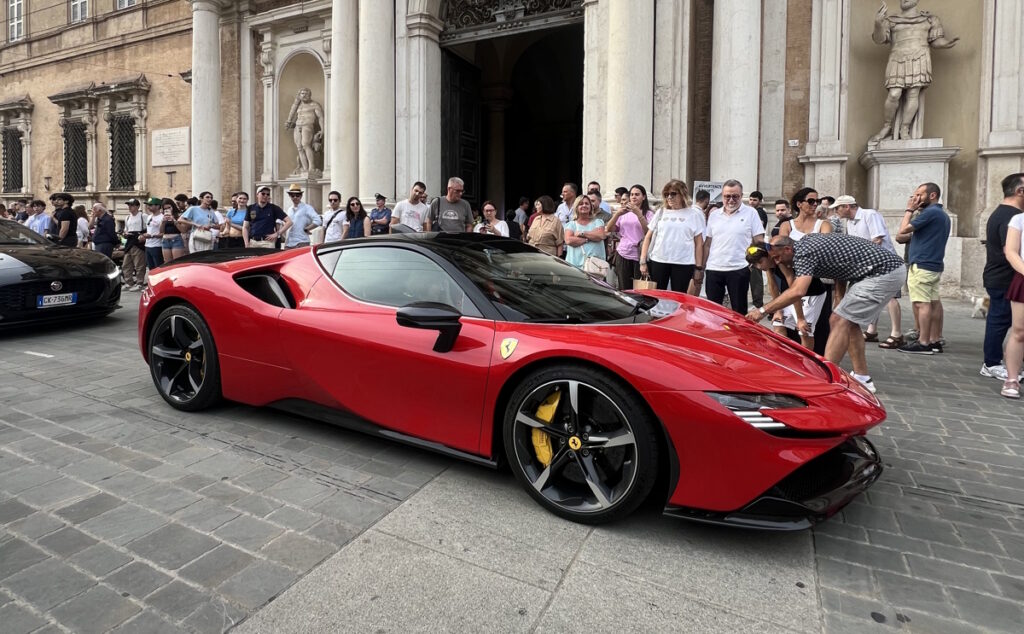
Motor Valley Fest and Massimo Bottura
My wife and I had come to Modena for Motor Valley Fest, the annual celebration of the region’s automotive culture, technology, design, and future. The 2026 edition ran from May 28 to 31, bringing conferences, exhibitions, parades, and industry programming into the heart of the city. The official description calls it “the land where speed was born,” which sounds like tourism copy until you spend ten minutes in Modena and realize it might simply be municipal zoning.
The festival opened at Teatro Storchi with a conference titled “Global Trends, New Frontiers and Human Responsibility,” a program that moved well beyond horsepower and nostalgia. Artificial intelligence, autonomous driving, energy demand, manufacturing, ethics, and the changing nature of mobility were all on the table. The roundtable lineup read like the guest list for the most consequential garage conversation in Italy: Andrea Pontremoli of Dallara, Claudio Domenicali of Ducati, Benedetto Vigna of Ferrari, Stephan Winkelmann of Lamborghini, Santo Ficili of Alfa Romeo and Maserati, and Horacio Pagani himself. After the opening conference, the automotive leaders, special guests, and regional ambassadors made their way to the official ribbon-cutting, where we bumped into Massimo Bottura.
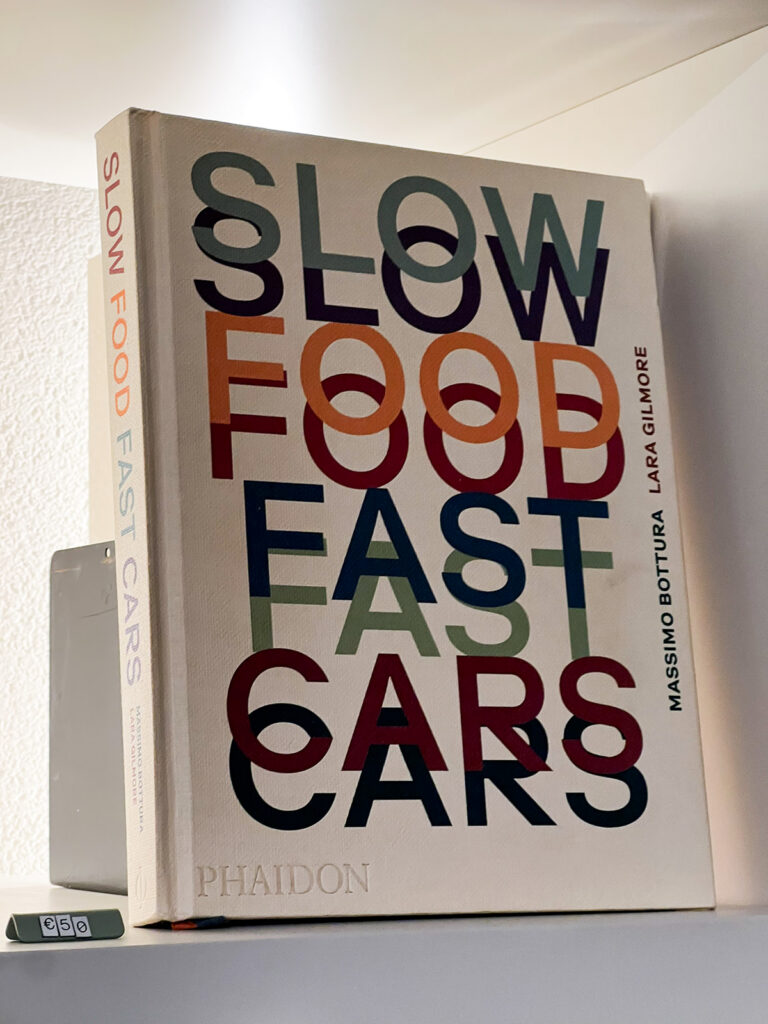
A book every car and food lover should have, Slow Food Fast Cars, by Massimo Bottura and Lara Gilmore
Yes, that Massimo Bottura. The chef behind Osteria Francescana, the three-Michelin-starred Modena restaurant that has helped turn this quiet, deeply traditional city into a global destination for people who plan entire trips around dinner. Michelin currently lists Osteria Francescana as a three-star restaurant, its highest distinction, and Bottura’s own description of the restaurant frames it as a “laboratory of ideas” built around “tradition in evolution.”
Massimo Bouttura is one of those rare people who seems to move through a room on a different frequency. Some famous chefs carry themselves like generals. Bottura carries himself like a man late to tell you the best story you have ever heard. He is all motion, eyes bright, hands sketching ideas in the air before the words can catch up. Within minutes, what had been a simple greeting became something else entirely.
He invited us to dinner at Casa Maria Luigia that night. Naturally, we accepted. There are invitations you consider, and there are invitations where your only job is not to embarrass yourself by hesitating.
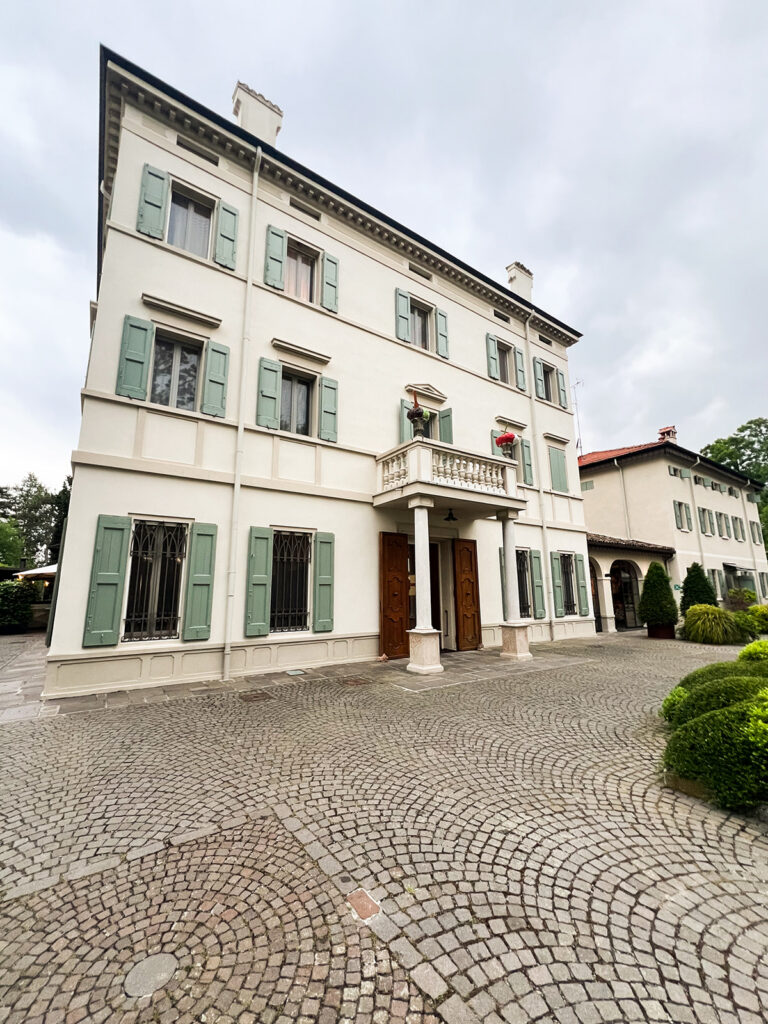
Casa Maria Luigia
Casa Maria Luigia sits in San Damaso, outside Modena, in the Emilian countryside. Massimo Bouttura and Lara Gilmore describe it as an intimate 18th-century country house filled with their private collection of contemporary art, books, vinyl records, historic Italian cars and motorcycles, and the ingredients of Emilia. It was created as an extension of the hospitality philosophy behind Osteria Francescana, but calling it a hotel or restaurant feels insufficient. It is more like walking into someone’s idea of civilization after they have edited out everything dull.
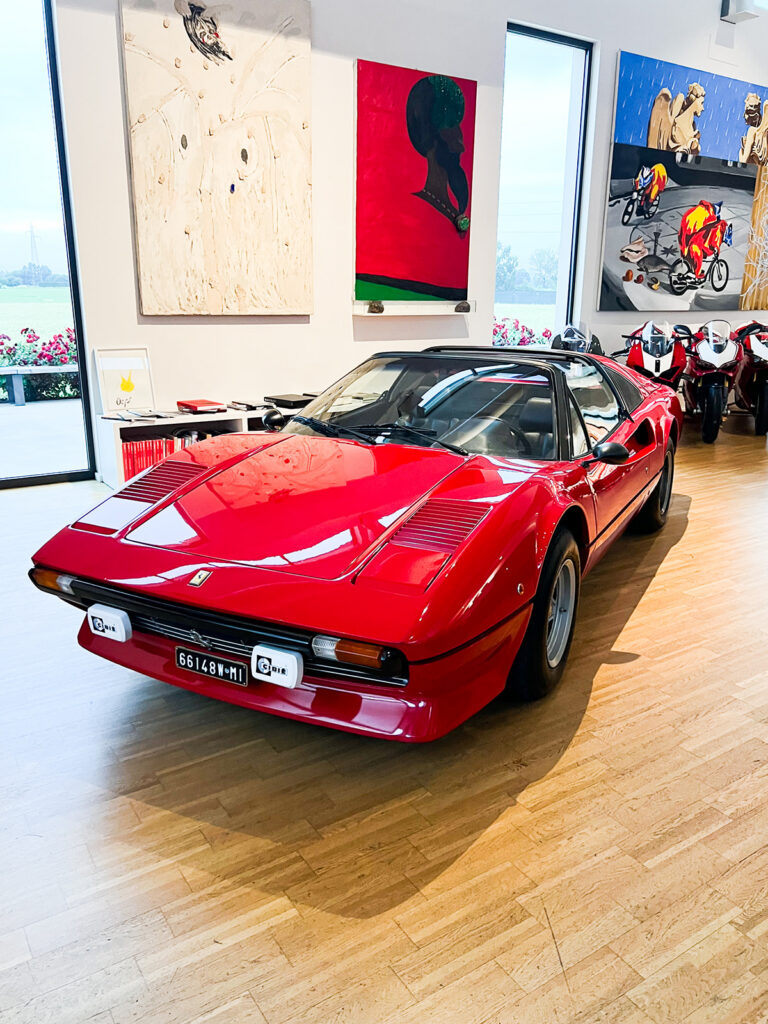
When we arrived, we quickly realized this was not just dinner. This was a gathering of the top automotive leadership of Motor Valley. Ferrari, Lamborghini, Ducati, and others were represented in the room, the sort of crowd where “what do you do?” could reasonably be answered with “I help decide the future of the automobile.” It was surreal in the best possible way. One minute, we were visitors from Texas, in town to cover and enjoy the festival. Next, we were standing inside one of the most culturally charged private settings in Modena, surrounded by the people who shape the machines that fill posters, museums, garages, and my boyhood daydreams.
Then Bottura saw us.
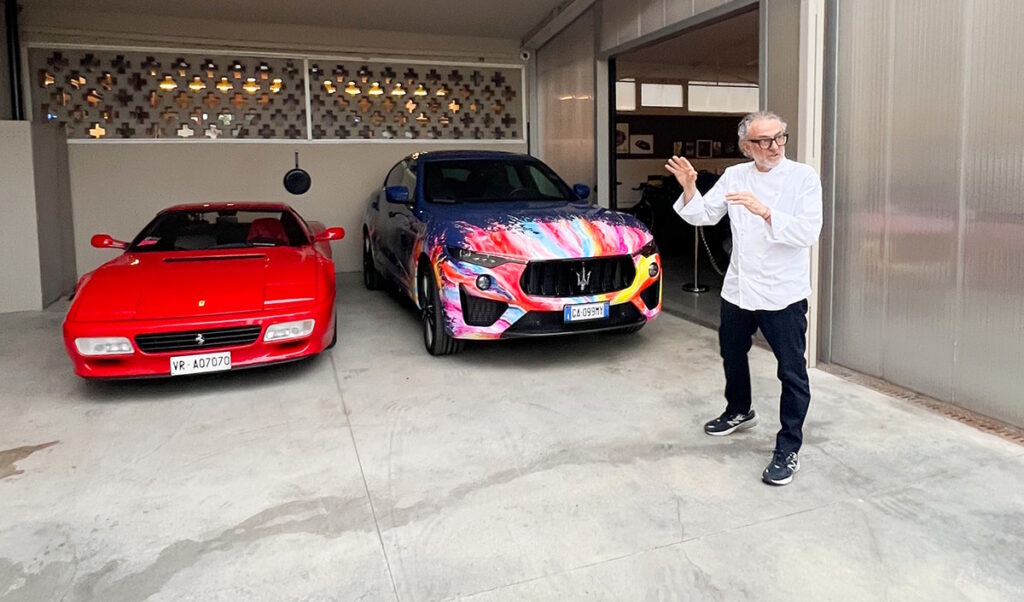
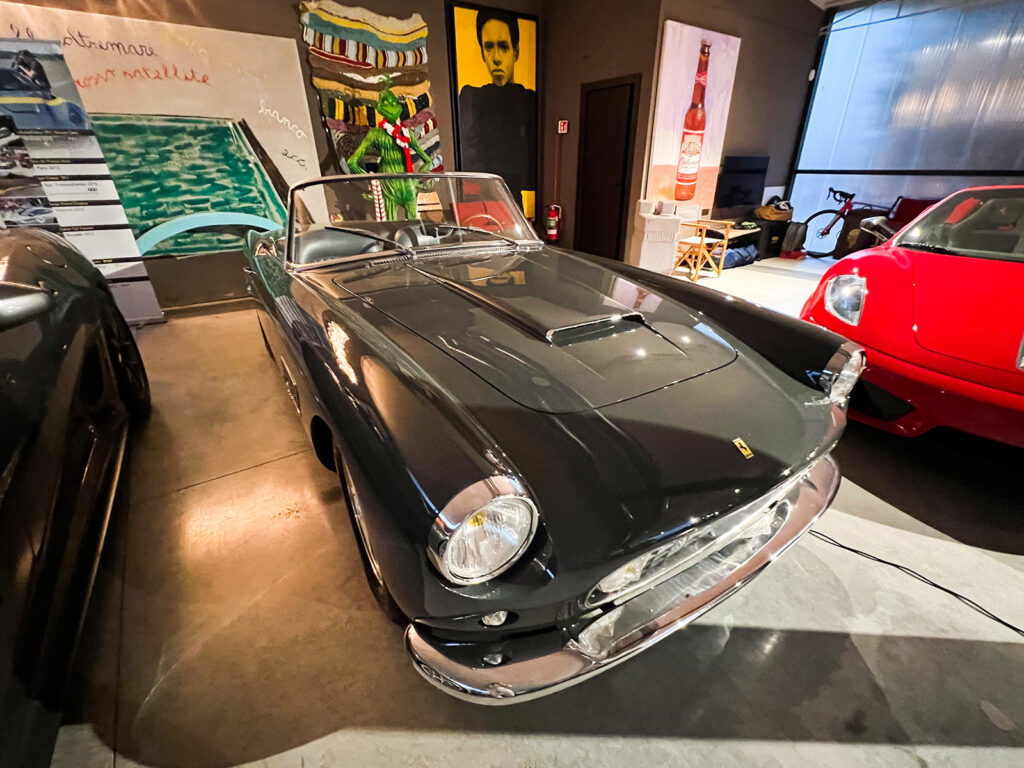
Before dinner, he pulled us aside and took a small group of us on a private tour of his car and art collection. That sentence still feels absurd to type. The collection includes historic Italian cars and motorcycles alongside contemporary art, music, and books, and that combination is the key to understanding the place. Cars are not in a garage with art in a gallery, dinner is not served in the dining room; it is all interwined. To Bottura, a car is not just a car. A recipe is not just dinner. A painting is not just an object on the wall. Everything is part of a larger conversation about place, inheritance, rebellion, and beauty.
That may sound overly romantic, but then again, this is Modena. This is a city where the same regional imagination produced tortellini, balsamic vinegar, Pavarotti, Ferrari, and some of the most precise mechanical objects ever built. The old American split between high culture and gearhead culture does not really work here. In Emilia-Romagna, the same person can discuss the geometry of a V12, the proper folding of pasta, and the emotional weight of a Damien Hirst painting without changing gears. Or perhaps with a perfect gated shifter.
A Menu by The Master Massimo Bottura
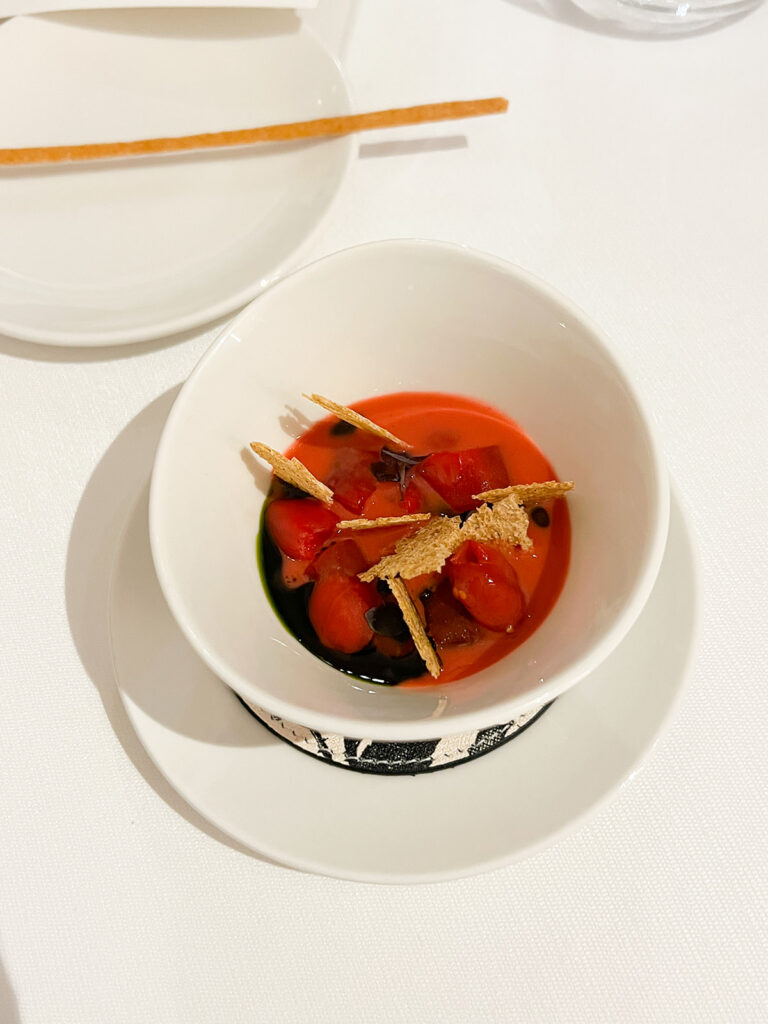
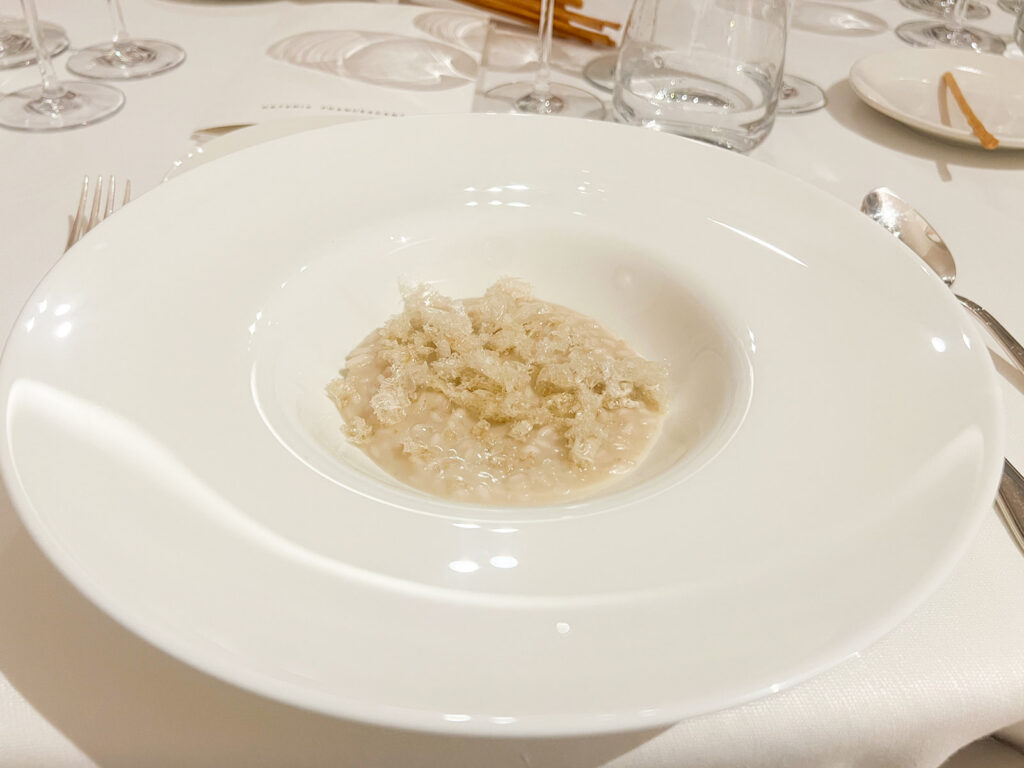
Dinner was a five-course menu rooted in dishes from the history of Osteria Francescana. The official description calls it a “theater of flavor,” which might sound theatrical until the impeccably trained staff place the first dish in front of you in unison. The menu that evening was in Italian, elegant and deceptively simple on the page. But like the best cars, the engineering was underneath the surface.
The first course, Pane e Pomodoro, was framed as a tribute to Italian tradition through sustainability and creativity. It reimagined bread and tomato, one of the most elemental Italian combinations, using saffron bread, tomatoes, crisp toasted bread, and fresh basil. The description spoke of recovery and transformation, of humble ingredients made surprising.
Next came Come un Risotto Diventa un Borlengo, or “How a Risotto Becomes a Borlengo.” Borlengo is a traditional, paper-thin crepe from the Emilian Apennines. Here, Carnaroli rice was slowly cooked in Parmigiano Reggiano broth, then creamed with lardo pesto, aromatic herbs, and Parmigiano Reggiano. It was finished with puffed ciccioli, echoing the crisp edges of borlengo. The dish did what Bottura does so well: it took something deeply regional and made it intellectually playful without stripping away its soul.
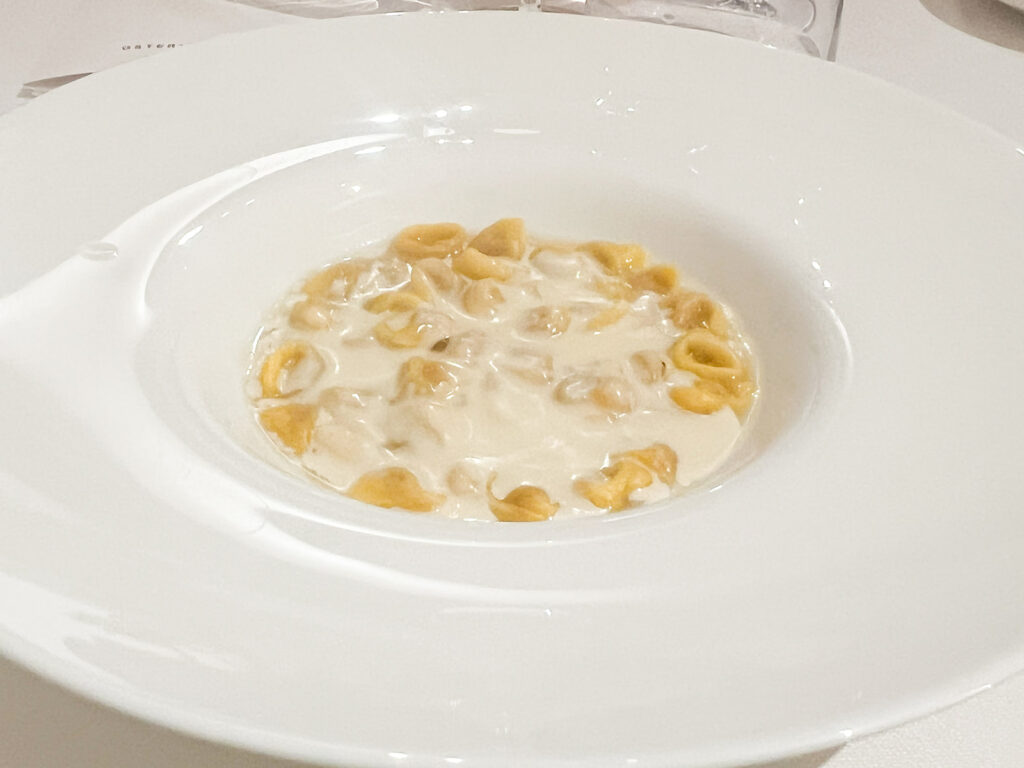
Then came Tortellini Modenesi. In Modena, the menu declared, tortellini are a religion. That is not hyperbole. The pasta was filled with meat and cheese and served with an emulsion of 36-month Parmigiano Reggiano. It was prepared by Tortellante, the Modena pasta workshop connected to Bottura and Lara Gilmore, which supports young people with autism through the making of fresh pasta. Tortellante’s own history describes the project as beginning in 2016 under the direction of Bottura and Gilmore, combining tradition, training, and community in one of the region’s most beloved foods.
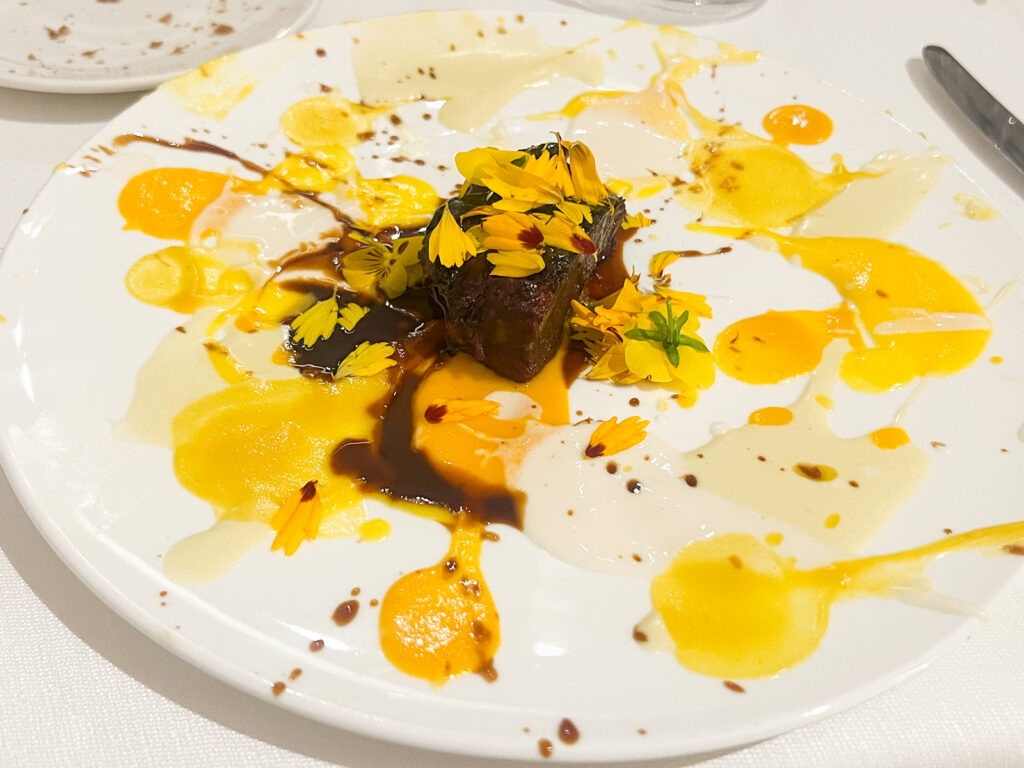
The main course, Spinning Giallo Modena, was an homage to Damien Hirst’s spin paintings. Beef cheek was served with toasted potato cream, yellow beetroot reduction, yellow pepper purée, and Villa Manodori extra-old balsamic vinegar. It was art reference, regional ingredient, and comfort food at once. The name alone felt like it belonged on a concept car unveiled under theatrical lighting. The plate delivered the rare kind of fine dining that can make you think and still make you want another bite.
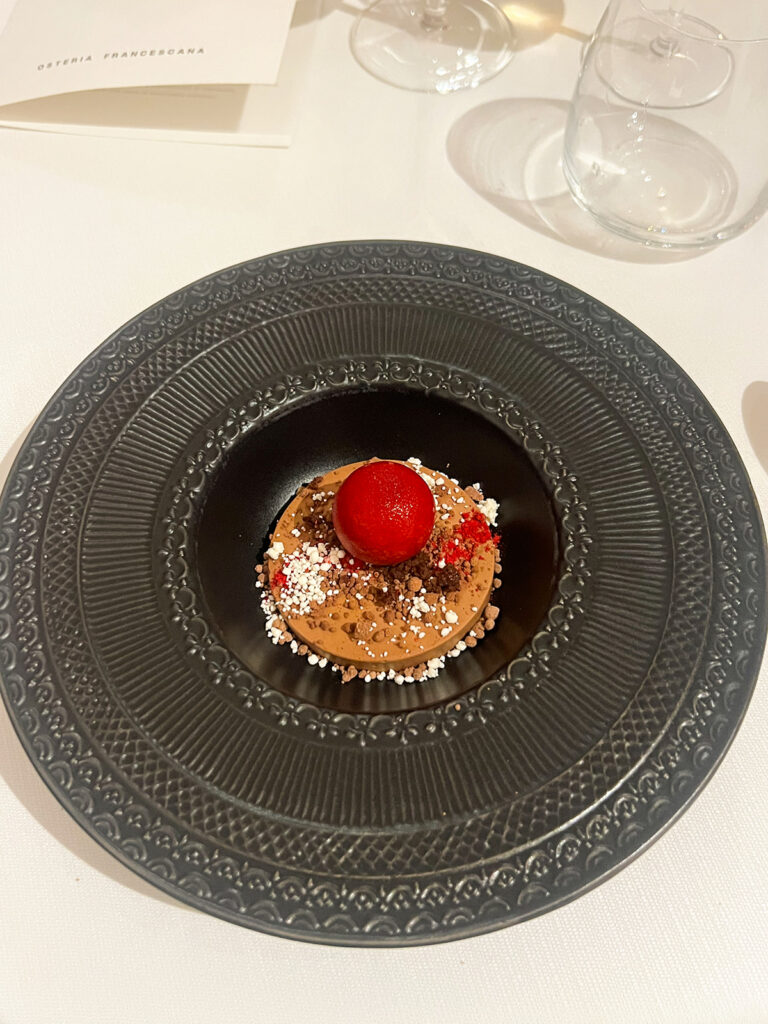
Dessert was Vignola, named for the town famous for cherries. It celebrated the cherry blossom season with a “camouflage” of Barozzi cake crumble, chocolate and coffee, dried red fruit, and concentrated sour cherries over a creamy chocolate base. It was sweet, bitter, dark, bright, and precise. In other words, very Modenese.
An Unforgettable Evening
What made the evening unforgettable was not just the food, although the food was extraordinary. It was the context. Around us sat the people responsible for some of the most emotionally powerful machines in the world. Before us was food made by a chef who has spent his career arguing that tradition survives not by freezing itself in amber, but by being challenged, questioned, and reimagined. Outside was the countryside that gave birth to both Parmigiano Reggiano and the Ferrari V12.
That is the magic of Motor Valley. It is not simply a place where cars are built. It is a place where excellence is expected, where craft still matters, where old names are not treated as museum labels but as obligations. The region’s official festival language speaks of innovation, culture, passion, and design, but those words mean more when you see them embodied in the same evening by a chef, a car collection, a room full of executives, and a plate of tortellini.
That evening at Casa Maria Luigia reminded me that the best experiences in travel rarely arrive through the front door. They happen because of a conversation, a coincidence, a moment of generosity. We came to Modena for cars and found ourselves at dinner with the people who build legends, guided by a chef who understands that memory, flavor, art, and speed are all part of the same human impulse: to make something ordinary feel alive.
At the end of the night, I kept thinking about the phrase Bottura uses to describe his culinary philosophy: tradition in evolution. It applies just as well to Motor Valley. Ferrari, Lamborghini, Ducati, Pagani, Dallara, and the rest are not valuable because they are old names. They are valuable because they continue to evolve without forgetting where they came from.


I would have been freaking out to not just meet him but to also get an invite to a private dinner, wow.
Such an honor, may this kind of accident find me.