


 TGR Staff
Gerry McGovern has shaped the look and feel of modern British motoring for more than two decades, which made the news of his sudden departure from Jaguar Land Rover (now just JLR) feel like a jolt through the industry. According to reporting from Autocar, McGovern was asked to leave earlier this week, escorted out in a move that signaled not just a personnel shift but a bigger, more decisive change within JLR. The company has not issued a comment, and neither has its parent company Tata Motors, but the timing says plenty. McGovern’s exit comes days after PB Balaji stepped into the CEO role, a leader known for sharpening operations and tightening alignment with Tata’s vision for its global automotive arm.

Gerry McGovern: Father of the Modern Range Rover
The unceremonious departure of Gerry McGovern from JLR all unfolded with a swiftness that contrasts sharply with McGovern’s long and storied career. Raised in Coventry, he studied industrial design locally before earning a place at the Royal College of Art, a proving ground for many of the world’s most influential automotive stylists. His early work at British Leyland set the tone for a designer who could blend practicality with boldness. He later crossed the Atlantic to lead design at Lincoln Mercury before returning to the UK in 2004 to rejoin Land Rover. By 2008, he was part of the brand’s leadership team, and when JLR was formally structured, he became its Chief Creative Officer.
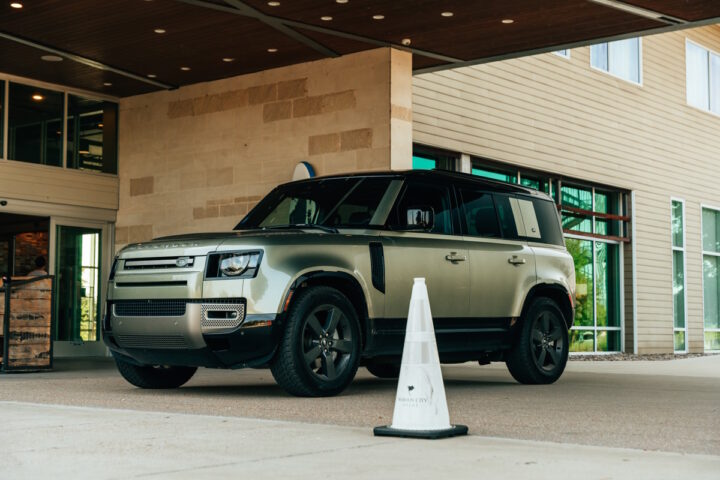
McGovern’s impact can be traced across nearly every modern Land Rover product. He championed the shift from angular utility to refined capability, guiding the creation of the Range Rover Evoque, one of the most influential vehicles of the last two decades. He also helped shepherd the reborn Land Rover Defender into a new era, proving that heritage can evolve without losing its backbone.
His influence touched Jaguar as well, including the divisive rebrand of Jaguar and the launch of the Type 00 concept that sparked as much debate as it did attention. For many, Gerry McGovern was the creative compass inside a company wrestling with the future of luxury, electrification, and brand identity. But one can’t help but wonder whether the fumbling of the Jaguar rebrand may have set the ball rolling toward Monday’s announcement.
Whether you loved his ideas or bristled at some of the more avant-garde flourishes, McGovern brought confidence and clarity to brands that often struggled with their place in a crowded, fast-changing luxury landscape. His appointment as an Officer of the Order of the British Empire in 2020 was a nod to a career that helped define the modern British premium aesthetic.

What’s next for JLR and Gerry McGovern
His departure leaves a wide-open question about what comes next. With new leadership settling in, JLR may be preparing for a creative reset, prioritizing global strategic alignment over the strong individual voice that McGovern represented. That shift could bring fresh thinking, but it also risks disrupting the visual language that helped Land Rover stand apart in a world where SUVs chase mass appeal more than personality. This move has even left some online commentators to speculate that Jaguar might be sold off and Land Rover would return to being a standalone brand under Tata’s leadership.
For now, the industry is left watching a vacuum at the top of one of the UK’s most influential design houses. Whatever direction JLR chooses, the shadow of Gerry McGovern’s tenure will shape its decisions for years. His vision helped define what a modern British luxury vehicle looks like, and his absence ensures that the next chapter will feel unmistakably different.
Photo of Gerry McGovern, courtesy of JLR









An astounding way to treat one of the world’s foremost and most accomplished automotive designers.
Go woke…
Go woke…
Interesting article about such a significant shift in JLR’s leadership. It makes me wonder about the broader pressures on the automotive industry, especially with the push towards electrification and new market strategies. On a somewhat related note, regarding industry changes and health, does anyone have experience with how major corporate shakeups like this affect executive health trends?