

 Michael Satterfield
In postwar Japan, speed had a way of bringing people together. On the outskirts of Tokyo, amid the roar of jet engines and the hum of sports cars, a new kind of car culture was born, not in Shinjuku or on the streets of Ginza, but behind the gates of Tachikawa Air Base. It was there, in the 1950s, that a handful of American servicemen founded what would become one of the most enduring and influential car clubs in Japan: the Tokyo Sports Car Club, better known simply as TSCC.
I first learned about the Tokyo Sports Car Club while shopping for vintage clothing at the Round Top Fall Show, where I stumbled across a bright red club jacket from the late 70s or early 80s and had to add it to my vintage racing jacket collection. However, I couldn’t find much information on the club until I tracked down a few members through a seldom-used Facebook group. After a few weeks of chatting, some scans of old newspaper clippings, and some of their stories, I have been able to piece together a brief history of the TSCC.


The Birth of Tokyo Sports Car Club
The Tokyo Sports Car Club began in the mid-1950s when U.S. Air Force personnel stationed in Japan discovered that the country’s winding roads and growing enthusiasm for motorsports were the perfect environment to indulge their own love of cars. Early members were mechanics, pilots, and officers who spent their off-duty hours tuning Triumphs, MGs, and Corvettes in the base’s hobby shop.
By 1956, TSCC was hosting informal drives through the Kanto countryside and setting up makeshift autocross courses on disused airstrips. Their clubhouse, if you could call it that, was a repurposed hangar at Tachikawa Air Base, known simply as Hangar 5. It was there that the club found its identity: a blend of American muscle hot rodders and mixed with European sports cars, run with military discipline and a sense of community that transcended rank.

A Club in Full Throttle
By the early 1960s, Japan’s car scene was evolving fast. Local manufacturers like Datsun, Toyota, and Honda were finding their stride, and Japanese enthusiasts were as hungry for competition as their American counterparts. TSCC’s members began to mingle with locals at circuits like Funabashi, where U.S. servicemen in Triumphs and Porsches raced alongside Japanese drivers in Skylines and Fairlady roadsters. It was a cultural exchange defined by revving engines rather than diplomacy.

Autocross, then known as “gymkhana,” became the club’s signature event. Using the vast concrete expanse of Tachikawa’s ramps, members laid out cone courses that tested skill more than horsepower. By the late ’60s, TSCC’s gymkhanas were attracting attention well beyond the base gates.
One of the most vivid records comes from a 1971 issue of the Fuji Flyer, the Tachikawa base newspaper. The headline read: “World’s Fastest Driver Visits Tachikawa.” The article described a visiting land-speed record holder who stopped by a Tokyo Sports Car Club event to watch members run their cars through a timed course. The accompanying photo shows a compact car mid-slide, a testament to the club’s growing reputation as a serious motorsports organization.

That same year, club officer Ron Wilson was listed in the paper as the contact for new members, proof that by 1971, Tokyo Sports Car Club had become a fixture of base life, complete with official sanction, leadership, and regular events.

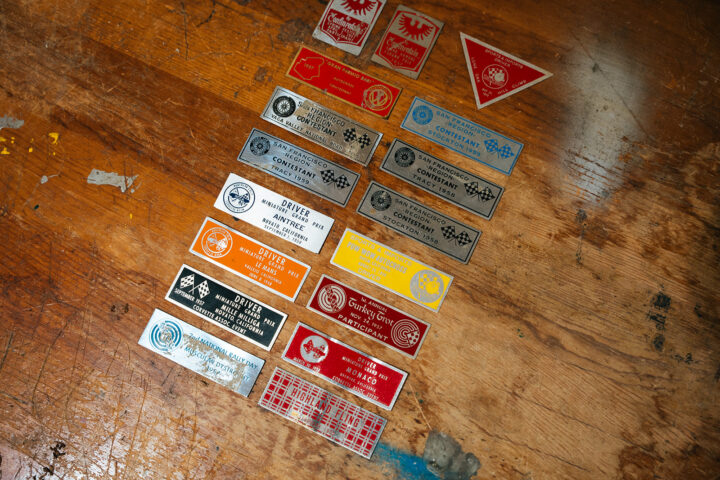
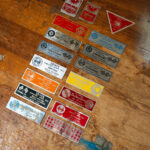
Club Grill Badges can sometime be found on eBay selling for between $600-$1,000 depending on condition.
Tokyo Sports Car Club: Rallys, Drags, and Brass Hats
The early 1970s were TSCC’s golden years. Events like the Brass Hat Rally, a navigational endurance drive through the Japanese countryside, drew a mix of officers, enlisted men, and local car enthusiasts. Autocrosses were held almost monthly, and occasional drag races on the base runway satisfied the need for speed.

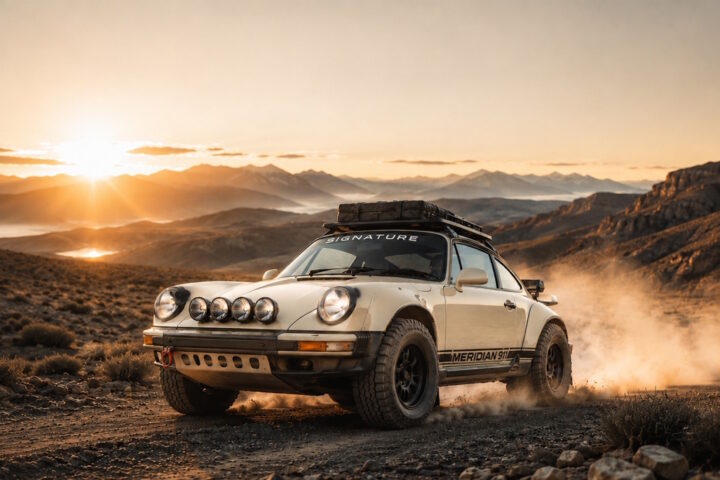
Historic photos from that era, taken outside Hangar 5, show a diverse lineup of cars: a yellow Datsun 510, a silver Alfa Romeo, and a Porsche 911 carving through cones. Members recall lining up at dawn, helmets on, waiting for the starter’s flag to drop. The club embodied a unique moment in postwar history: Americans and Japanese united not by policy or politics, but by the universal language of gasoline and speed.
Even as Tachikawa Air Base prepared for closure in the mid-1970s, Tokyo Sports Car Club continued. When the base officially shut down in 1977, the club moved operations to Yokota Air Base, where it continued to thrive for another two decades.

The Yokota Years
At Yokota, TSCC entered a new phase. The cars changed, Datsun 240Zs and RX-7s joined Mustangs and Camaros, but the spirit remained. Members competed in autocrosses, held car shows during the base’s annual Friendship Festivals, and even worked with Japanese clubs to host joint events.
By the 1980s, the Tokyo Sports Car Club was one of the longest-running motorsports organizations in Japan, American or otherwise. It bridged two worlds: the structured environment of a U.S. military base and the wild, creative energy of Japan’s growing car culture.
When base leadership began to tighten restrictions on racing in the late 1980s, the club adapted, moving events off-base or into controlled parking areas. Drift-style driving began to appear in the 1990s, with TSCC members competing against local “Union Race Team” drifters in friendly matches held right at Yokota High School’s parking lot. The club even fielded a drag car that competed in sanctioned drag racing events across Japan.

Legacy and Revival
By the early 2000s, TSCC’s formal activities had slowed, but its influence endured. Alumni still swapped stories online, and the club’s logo, often seen on jackets, grille badges, or helmet decals, became a sought-after relic of Cold War-era car culture.
At Yokota’s public Friendship Festival, a booth bearing the Tokyo Sports Car Club name appeared once more, staffed by veterans and local enthusiasts. It served hamburgers under a banner that read “Hamburgers from the U.S. Forces Tokyo,” a nostalgic nod to the camaraderie that once defined the club.

A Lasting Mark on Motorsport
The Tokyo Sports Car Club was more than a base hobby; it was a cultural phenomenon that left a permanent imprint on Japan’s car scene. Long before “import tuning” or “JDM” became global buzzwords, American servicemen were wrenching on Datsuns, racing against Japanese drivers, and proving that performance and friendship could cross any border.
For nearly five decades, TSCC stood as a testament to how a love of cars, whether British, American, or Japanese, can bring people together. From the echo of engines across the runways of Tachikawa to the smoke-filled parking lots of Yokota, the Tokyo Sports Car Club remains a forgotten but foundational chapter in the shared automotive history of two nations.
Photos courtesy of TSCC Members Tom Bridges and Fred Conner, we are currently reaching out to other former members to aquire more images and will update the story as we recieve them.


How nice it must have been to not have a cell phone and just be out with friends doing fun stuff.
Great information shared.. really enjoyed reading this post thank you author for sharing this post .. appreciated
The old grainy photos are so cool, hope you can dig up more cool stories like this.
Your stories always adds value to my day.
Nice post. I learn something totally new every time I come to this site.
You need to go back to Japan and do more content.
This is such a cool bit of history, my dad was stationed in Japan I am going to have to ask him if he ever went to any of their events.
Nice article Mike, still looking through my archives for the Tokyo and Okinawa Sports Car Clubs. I also ran some events with one of my Datsun 1200’s in the Alfa Romero Club in Denver Colorado in 1974. While stationed at Travis AFB helped a friend with his Formula C racer with Coventry Climax engine work on suspension and general pit crew, raced central California tracks . My racing days died down after 1975 due to costs got a bit high here in the good ole USA.
More of this!
I was a member for many years and I was there there when it came to an end. Basically the biggest problem was the Miltary no longer though car racing of any kind was to dangerous for its members. After several bad car crashes off base for which those people where not even member of the TSCC. RACING or anything that encourages car sliding around was just a no no. After several years of trying and no help from the base leadership our few member pcs’d out and we could not grow as a car club . WHY would anyone join a club who could not hold races anymore. Our fate was sealed. We tired for several years but the higher ups were against the idea of gymkhana on base.
Your history stories are a constant source of inspiration for me there are so many untold stories out there! Keep it up!
I found a patch from the TSCC at a swapmeet years ago, and never could find anything, then a friend randomly sends me this on Facebook and I was like “finally someone wrote it down!” Thank you!
We found another site that was using all of these photos just like this, for sure your edits. We need to at least get these people stealing images to start blogging! They probably just did a image search and grabbed them. I will DM you more info on the site stealing.