


 Michael Satterfield
In the golden age of American road racing, the pit pass was more than just a slip of paper or card dangling from a string. It was a backstage pass to a raw, dangerous, wildly romantic motorsport world. Long before digital wristbands and QR codes, pit passes were printed on cardstock, often in bold colors, stamped with serial numbers, and scribbled with the names of drivers, mechanics, or the occasional lucky guest. To wear one was to step into the paddock, where heroes strapped into machines that looked more like sculpture than science, and where the smell of fuel, oil, and ambition hung thick in the air.

As part of my ongoing exploration of racing history, I’ve found myself increasingly drawn to these fragile survivors of the SCCA races of 1950s and 1960s. In recent years, I’ve been buying collections from former racers and enthusiasts, including posters curling at the edges, dusty trophies engraved with long-forgotten names, and photo albums filled with Kodachrome snapshots of Chaparrals, Cobras, and Lotus machines. And among these treasures, pit passes keep turning up like hidden gems.
Each one tells a story.

Pit Pass: Passports to the Paddock
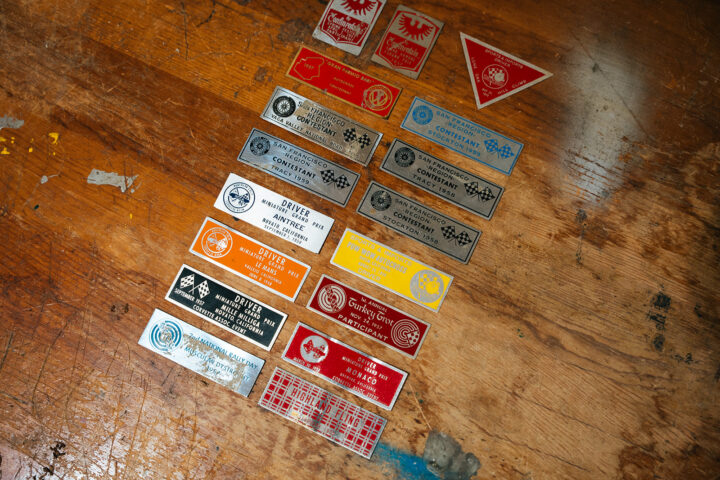
A bright orange tag from Pacific Raceways in Kent, Washington, is stamped “Not Transferable” in thick black ink, its typography equal parts bureaucratic and defiant. A yellow slip from Riverside International Raceway, dated June 22–23, 1963, comes with a wall of fine print, an early form of liability waiver reminding entrants that danger wasn’t hypothetical. Then there’s a pale blue stub from Pomona Road Races in July of that same year, its corners worn soft from being pinned to a shirt pocket or hung around the neck of a driver braving the Southern California sun.
These weren’t meant to last. They were meant to grant access for a weekend, to be handed over, punched, or discarded when the event was through. And yet here they are, six decades later, still carrying the energy of the tracks they belonged to.

Ghosts of West Coast Circuits
What makes these pit passes so compelling is how they preserve the memory of places now lost to history. Riverside International Raceway, once one of America’s great road courses, was bulldozed in the late 1980s to make way for a shopping mall. Pomona’s road course is a distant memory, its fairground space now better known for drag racing. Santa Barbara, Cotati, Candlestick Park, names printed on passes that read like an obituary for a vanished era of California road racing.
To hold one of these passes is to hold a fragment of that world. The handwriting of a club official, the typography chosen by a local printer, the tear marks at the bottom edge, all of it feels like time travel. They are physical artifacts of a sport that, in those days, was as much about grit and community as it was about speed.

Design as Identity
Beyond their function, pit passes also reveal the aesthetics of their time. The bold sans-serif fonts, the use of bright primaries like orange, red, and cobalt blue, the regional club logos, they echo the mid-century design language of racing posters, gas station signage, and corporate branding. They weren’t conceived as “art,” but in hindsight, they absolutely are. Each one is a piece of graphic design, a small example of how motorsport presented itself to the public.
For collectors like me, that’s part of the appeal. These pit passes, humble as they may seem, belong in the same conversation as race posters or program covers. They are visual cues that transport us back to when road racing was more grassroots than global, when a driver might have built his car in a garage and towed it to Riverside with a station wagon.

Preserving the Ephemeral
Today, my collection of pit passes sits alongside trophies, photographs, and programs, each object a clue to the culture of West Coast racing in the 1950s and 1960s. I like to imagine the racers who wore them: SCCA club drivers balancing day jobs with weekend heroics, mechanics who doubled as fabricators and dreamers. These spectators somehow entered the paddock through a borrowed or gifted tag.
Together, these fragile slips of cardstock tell the story of a sport in transition, from dusty airfields to permanent circuits, from amateur club races to professional spectacles. They are artifacts of a time when racing still felt intimate, dangerous, and personal.
In the end, the art of the pit pass lies not just in its design, but in its symbolism. Each one was a gateway to the heart of motorsport, a marker of belonging in a world that mixed courage, creativity, and camaraderie. To collect them today is to preserve not only the events they represent, but also the spirit of a racing culture that built the foundation for everything we know about American motorsport.

Check out the video below for a look at all the different styles and colors in our pit pass collection:









These are so cool, so glad you are not just collecting them, but sharing them.
This gave me a whole new perspective on something I never really thought about. Great explanation and flow!
I’ll be sharing this with a few friends.
Found your site thanks to your Double RL content, been here for hours going through all of your history posts, stuff like this is amazing. Thank you for documenting these lost bits of functional artwork.
I’ll be coming back to this article for reference on an art project. The information is so useful and well-presented.
Love this, with my parents had kept more of their passes and tickets from the 70s
I¦ve been exploring for a little bit for any high quality articles or blog posts on this sort of space . Exploring in Yahoo I finally stumbled upon this website. Reading this information So i¦m glad to convey that I’ve an incredibly excellent uncanny feeling I discovered just what I needed. I such a lot for sure will make certain to do not forget this site and provides it a glance on a continuing basis.
Where do you find this stuff!
Thank god for Skip Barber at Lime Rock Park, Connecticut.
Skip in his ownership and stewardship, of this famous race track, has made sure that general admission ticket buyer has just about unlimited access to the Pit/Paddock area of Lime Rock Park at no additional cost.
The only requirements are to act like an adult and respect the drivers and cars and no alcoholic beverages.
Oh and by the way, if you are active duty military or a veteran —general admission is free. Thank you Skip.
Steve Schefbauer
Editor-at-Large
The Morganeer
The Journal of the 3/4 Morgan Group Ltd.