

 Michael Satterfield
Bulova Brings the Tick of Time to Canadian Racing
In the early 1970s, the Bulova Watch Company, which had been involved in motorsports timekeeping since the late 1940s, made a bold foray into Canadian motorsport, becoming the title sponsor of a championship racing series based at Mosport Park (now Canadian Tire Motorsport Park) from 1972 through 1976. This sponsorship marked Bulova’s return to motorsports and gave its name to a Formula Ford championship, often referred to as the Bulova Mosport Park Championship. At a time when Mosport was Canada’s premier road racing circuit, hosting Formula One and Can-Am events, Bulova’s involvement brought extra prestige (and timepieces) to grassroots racing.

The Bulova series was split into two categories: a Formula Ford open-wheel championship and a companion sedan (touring car) championship. Both series became fan favorites during big race weekends at Mosport. Period sources recall how the Bulova-sponsored races were often part of major events like the Canadian Grand Prix or Can-Am, giving local racers a chance to shine in front of large crowds. Bulova’s marketing presence was everywhere, from program covers to decals on cars, underscoring the company’s deep involvement in the sport.

Formula Ford: Affordable Proving Ground
The centerpiece was the Bulova Formula Ford Championship, an entry-level single-seater series that proved to be a training ground for future talent. Formula Ford cars were light, open-cockpit machines powered by modest 1.6-liter Ford engines, just big enough to squeeze in a driver and engine. Despite their simplicity, these cars could reach over 130 mph on Mosport’s back straight, providing plenty of thrills. The racing was fiercely competitive but relatively affordable. There were a ton of entries because the series was so economical. You could go racing all spring, summer, and fall for less than $5,000 (about $30,000 today). This low cost of entry attracted a huge grid of drivers each season, from hobbyists with day jobs to ambitious young guns dreaming of Formula One.
Bulova and Mosport sweetened the pot for these aspiring racers. From 1972 onward, the Formula Ford champion stood to gain more than just a trophy. The series sponsor, Bulova, awarded $2,500 and a Bulova watch, while Mosport’s owners put up an additional $7,500 into a driver scholarship fund. In effect, the title winner received a $10,000 racing scholarship, a ticket to test their mettle overseas in the crucible of British and European racing. Bulova’s own historical notes explain, “The winner of the series won a Bulova watch and the chance to race in England the following year.” The chance to be a funded driver in the United Kingdom was a life-changing opportunity for a Canadian racer in the 1970s.

This format made the Bulova Formula Ford Championship intensely fought. Professional-minded drivers treated it as a springboard to stardom, while more casual weekend warriors relished the close racing for its own sake. The contrast sometimes showed, with those willing to risk it all versus those with families and careers back home. Still, on track, everyone was equal in their 1600cc machines. Races often featured two dozen Formula Fords scrapping wheel-to-wheel through Mosport’s fast, undulating turns. Bob English of the Globe and Mail quipped that the racing at Mosport was “not for the timid.” One hair-raising moment could send cars somersaulting, yet the formula quickly earned a reputation as a ferociously competitive class.

The Mosport Sedan Sideshow: Door-to-Door Under Bulova’s Banner
Complementing the open-wheel action was the Bulova Sedan Championship, a touring car series that shared the same weekends at Mosport. While the Formula Fords chased glory and European opportunities, the sedan drivers raced purely for local honors. Nonetheless, the sedan races were crowd-pleasers, showcasing relatable production-based cars in wheel-to-wheel duels. The fields were divided by engine size into classes, commonly B, C, and D Sedan. This meant a diverse mix of cars on track and a chance for both nimble compacts and slightly larger saloons to claim class wins.

On any given Bulova sedan grid, fans might see everything from plucky 1.0-liter Mini Coopers up against high-revving Datsun 1200s, feisty Fiat 124 coupes, and boxy but quick BMW 2002s, not to mention the ever-popular Datsun 510 sedans and the occasional Ford Capri. Despite the disparity in makes, the racing was close. The smaller-class cars like the Minis often engaged in their own battles while the larger 2.0 to 2.5 liter cars fought for the overall win. One veteran joked that door handles were practically touching through the corners, describing how drivers hustled their everyday-looking cars as if they were at Le Mans.

Some drivers became local legends in the sedan ranks. Gordon “Gord” Lowe of Bramalea, Ontario, dominated the Bulova sedan championship in its early years. Lowe, an immigrant from Scotland who tuned Minis in a barn-turned-workshop, piloted his tiny 970cc Mini Cooper S with remarkable skill. He captured the Bulova D-Sedan class championship two years in a row, 1972 and 1973, outrunning all comers in the smallest-engine category. Lowe’s exploits, “dicing with death” in a Mini as the papers teased, made him a fan favorite.

English wrote that Lowe won the Bulova D-Sedan Championship at the wheel of a 970cc Cooper S before hanging up his helmet to pursue other adventures. Meanwhile, in the bigger sedan class, drivers like Paul Lambke in a Datsun 510 and George Comacchio in a Fiat 124 were contenders by 1974, with Lambke clinching victories in the series finale that year. The sedan racers did not get European scholarships, but they earned Bulova trophies and regional glory, and gave Mosport spectators some door-to-door thrills to remember.

Champions and Characters of the Mosport Bulova Series
Over its five-season run, the Bulova Formula Ford Championship crowned a different champion almost every year, each with their own story. The list of champions reads like a who’s-who of Canada’s racing hopefuls in the 1970s.

- 1972 – Luke de Sadeleer: A 28-year-old rookie-turned-champion, de Sadeleer won the inaugural Bulova title. He famously received Bulova’s first prize, the watch, the clock, the $2,500 check, and an offer to race abroad. De Sadeleer did travel to England after his 1972 triumph to test the waters. However, after a couple of seasons, he grew hesitant to pour more money into chasing the European dream. “If I’d started younger, maybe things would have been different… At my age, I drove with my head,” Luke reflected later, explaining why he eventually stepped back from full-time racing. He returned home and would remarkably win the Bulova championship again in 1974.

- 1973 – Danny Burritt: Burritt captured the 1973 championship and the coveted Driver to Europe award. He represented Canada in Formula Ford races overseas the next year. While a major international breakthrough eluded him as a driver, Burritt remained deeply involved in motorsport. His mechanical acumen and leadership later earned him a spot in the Canadian Motorsport Hall of Fame. He went on to win multiple titles as a crew chief and helped Canadian teams triumph at events like the Daytona 24 Hours. His Bulova win at Mosport was a springboard to a lifelong career in racing.

- 1974 – Luke de Sadeleer (second title): The only repeat champion of the Bulova series. De Sadeleer’s 1974 campaign was a hard-fought victory over a very competitive field. In a surprise twist, Luke declined the Driver to Europe scholarship he had earned for a second time. At 31, with a family and business obligations, he made the pragmatic choice. “I couldn’t see myself spending the money to keep up in Europe,” he admitted. This decision opened the door for that year’s runner-up, Rod Bremner, to take the funded UK drive in his place. Bremner’s story became legend as a determined Ontario racer seizing an unexpected chance for glory overseas.

Photo courtesy of David White
- 1975 – David White: White clinched the 1975 championship amid increasingly tough competition. By this time, the Bulova Formula Ford grids were full of well-honed drivers and even custom-built Canadian cars designed for the series. The Ferret Formula Ford chassis, built by Canadian racers and engineers, was on track by the mid-70s, taking the fight to the more common British-made cars. White’s title earned him the Bulova watch and a European trip for 1976. He joined the ranks of those who would travel to England as a sponsored drive as the Bulova series continued to funnel talent to the international stage.

Photo Courtesy of Paul Nemy
- 1976 – Alec Purdy: The final Bulova champion was an engineer-driver whose ingenuity matched his driving skill. Alec Purdy won the 1976 championship in spectacular fashion, driving a Ferret Mk IV, a Formula Ford car he designed and built himself. It was the ultimate homegrown triumph: Purdy’s handcrafted car beat all comers, proving competitive against the best factory chassis. A tribute noted that Alec’s crowning achievement was to win the hotly contested Bulova Formula Ford Championship in a car that he designed and built. Purdy’s victory was a fitting capstone to the Bulova series era. Like many champions before him, he earned a shot in Britain, but by the end of 1976 Bulova’s sponsorship was winding down, marking the end of an era at Mosport.

While not all Bulova champions went on to fame, their exploits left a mark. Rod Bremner made the most of his inherited opportunity in Europe. He spent two seasons racing Formula Fords in England, where he found the competition more cutthroat than in Canada. Bremner even crossed the line first in the Formula Ford Festival at Brands Hatch, only to be denied victory by a jump-start penalty. By 1979, after a couple of years in IMSA sports cars back home, Bremner hung up his helmet and settled into family life. His story encapsulated the promise and peril of the Bulova series’ grand prize: a chance at the big leagues, with no guarantees.
Others like Danny Burritt found different paths, contributing off-track. Some, like Luke de Sadeleer, chose to remain local heroes rather than chase uncertain glory overseas. These personal journeys, the choices to go all in or step back, were an intrinsic part of the Bulova series narrative. The mix of youthful ambition and seasoned pragmatism made for rich storylines in the Mosport paddock.

Legacy of the Mosport Bulova Series
By the late 1970s, Bulova’s chapter in Canadian racing had closed. After the 1976 season, Bulova withdrew its sponsorship, and the Mosport Formula Ford series moved forward under different backers. Formula Ford racing certainly continued in Canada, but the scholarships and Bulova clocks were now history. Bulova itself shifted its marketing focus and would later make only sporadic returns to motorsport, including a brief appearance on a Formula 1 car in 1989 as a sponsor of the Benetton team. However, the 1972 to 1976 Bulova series left an enduring legacy.

For Canadian motorsport, the Bulova series demonstrated the value of investing in grassroots talent. It produced a generation of drivers and team members who would shape racing nationally. The series gave them top-notch track time at a world-class venue, in front of big-event crowds, under the pressure of vying for a life-changing prize. Mechanics honed their craft keeping the Formula Fords and sedans running. Even car constructors were inspired. Innovators like John Scratch, designer of the Ferrat Mk3, and Alec Purdy of Ferret fame proved Canadian-built racers could win on home soil.
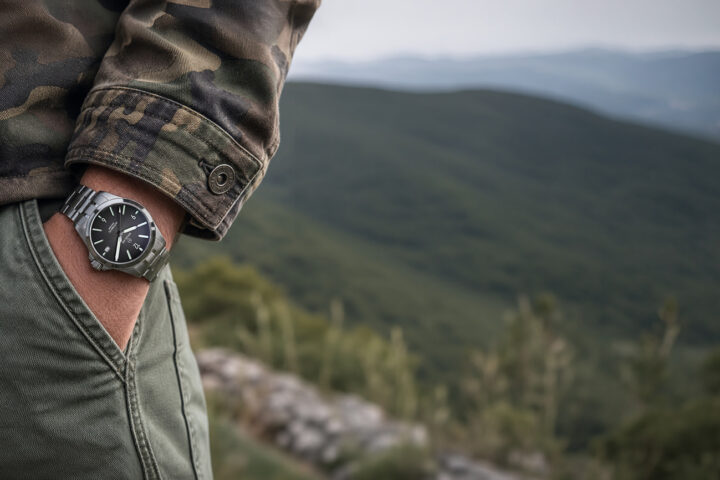
The Bulova name earned a certain cachet among racing fans. Watch enthusiasts today might be surprised to learn that Bulova’s Racer chronograph line of watches is a direct homage to this era. The company recounts how from 1972 to 1976, Bulova returned to motorsports by sponsoring a Formula Ford series, the Mosport Park Championship in Canada, and the modern Bulova Racer timepieces celebrate this racing legacy. Those five golden years at Mosport remain a proud part of Bulova’s heritage.

In the lore of Mosport, the Bulova series is remembered fondly as a wonderful entry-level class that was competitive, exciting, and full of camaraderie. It was a time when a talented kid or a determined hobbyist could scrape together a few thousand dollars, race against the best in Ontario, and if lightning struck, end up on a plane to Europe with a Bulova watch on their wrist. It brought the romance of Formula 1 dreams to a Canadian trackside reality.
More than anything, the Mosport Bulova championship of the 1970s showcased the heart of grassroots racing: passionate drivers, dedicated builders, local rivalries, and the tantalizing hope of making it big. Long after the final chequered flag in 1976, the stories of those days, the roar of Ford Kent engines, the sight of a Mini trading paint with a BMW, the triumphs and tough choices of champions, continue to tick in Canada’s racing history like the steady beat of a watch keeping Bulova Time.
Photos licensed from Brian Waddell Collection unless otherwise noted.



So many memories of Mosport back in the day, it still is an amazing race track.
Amazing photos spent a lot of time there in the 70s
Back when racing was really open to the enthusiast
Good post! We will be linking to this particularly great post on our site. Keep up the great writing
MORE OF THIS! No one else is writing about motorsport history
There is apparently a bunch of motorsports history lost to time like this. I assume you will keep finding more stories like this