
 TGR Staff
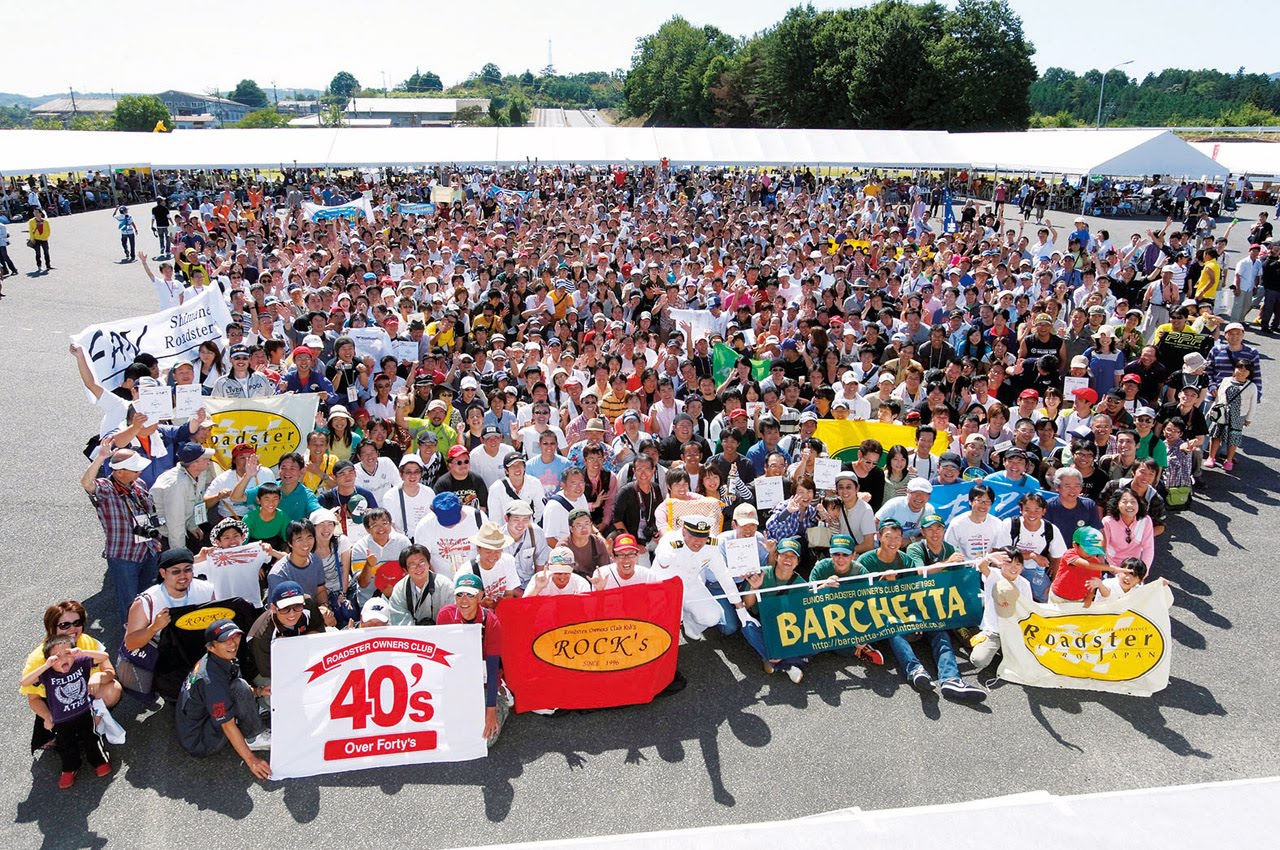
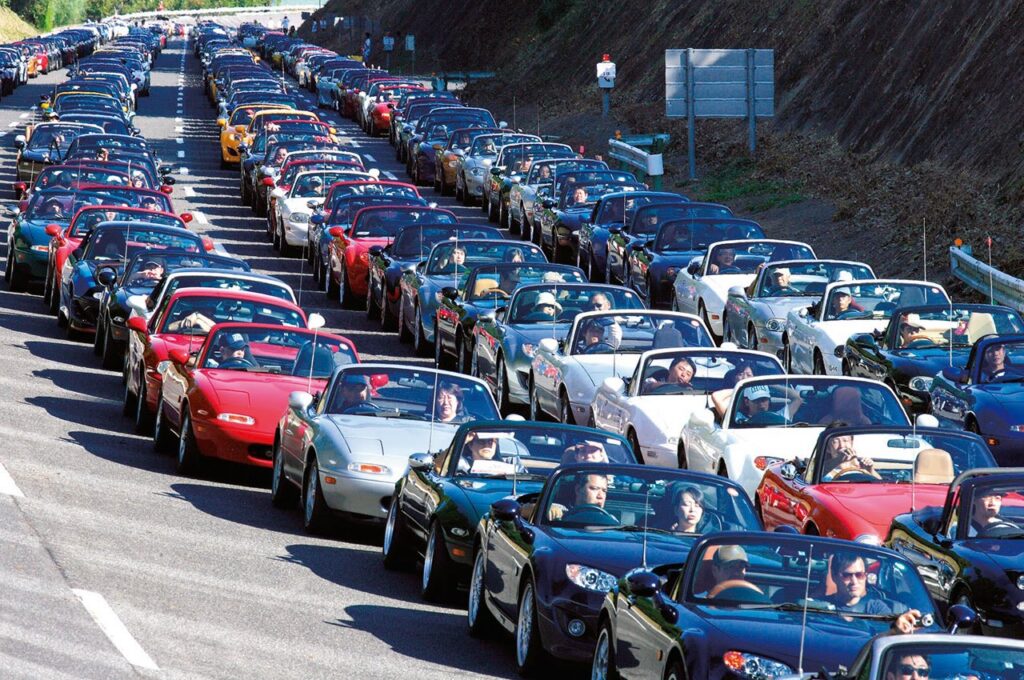
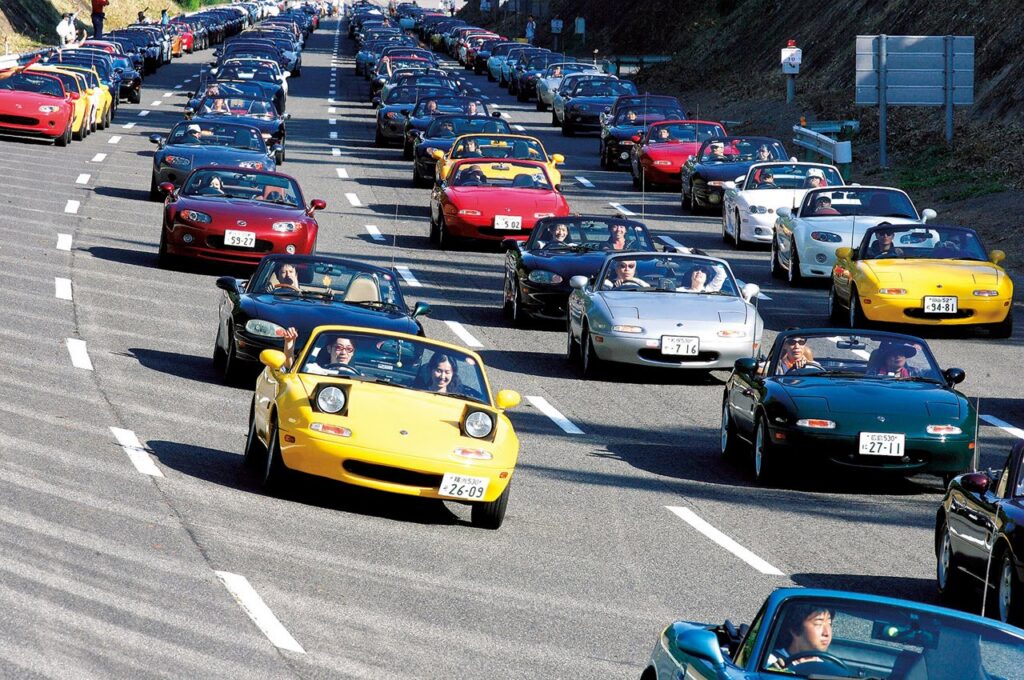
On September 20, 2009, Mazda opened the gates of its Miyoshi Proving Ground in Hiroshima Prefecture to celebrate 20 years of the Mazda Roadster, better known to American drivers as the MX-5 or Miata. By the time everyone had arrived, roughly 1,600 Roadsters and 2,600 owners and enthusiasts had gathered at the Japanese test facility. It was an impressive turnout for any automobile. For the Miata, it felt appropriate.
The MX-5 had spent its first two decades proving that sports cars did not need massive horsepower figures, exotic badges, or intimidating price tags to matter. Mazda had instead built its roadster around something increasingly rare in the automotive industry: simplicity.
Enjoying this story?
Join The Gentleman Racer email list to continue reading.
Occasional updates. Unsubscribe anytime.
Two seats. Rear-wheel drive. A manual transmission. A folding roof. Keep the weight down and let the driver do the rest. Twenty years later, thousands of people were willing to drive across Japan, and in some cases travel from overseas, simply to celebrate it.
Bringing the MX-5 Roadster Home
The gates at Miyoshi opened at 6:30 in the morning, with Mazda employees welcoming arriving Roadsters back to one of the places closely associated with the car’s development. Soon, seemingly every interpretation of Mazda’s small sports car filled the facility.
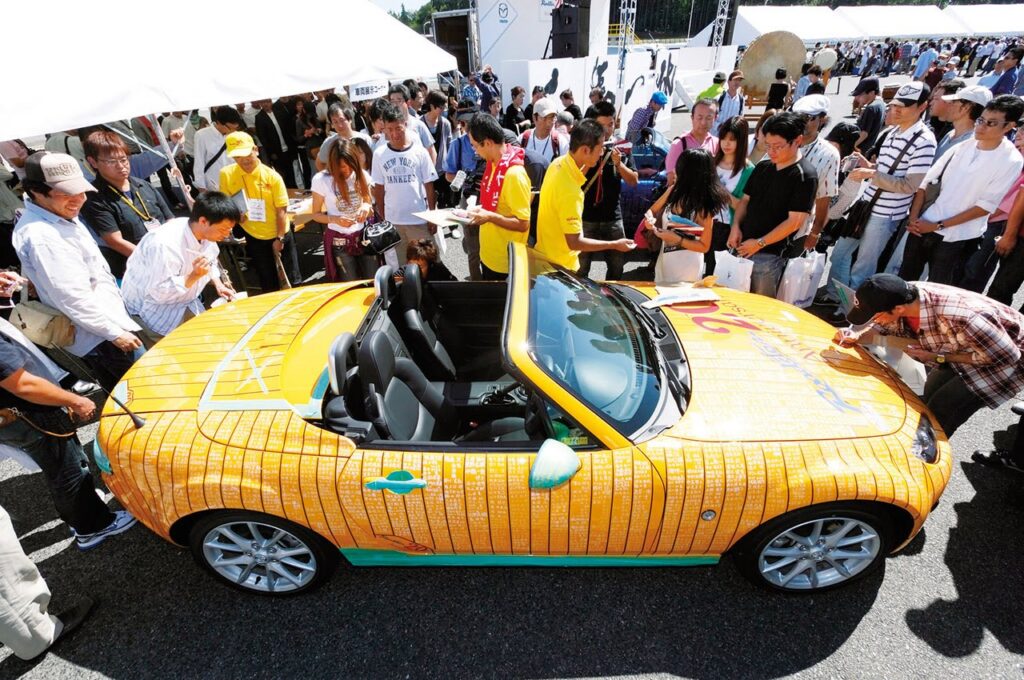
Original NA Roadsters shared pavement with second-generation NB cars and then-current NC models. There were stock examples, modified cars, limited editions, daily drivers, and machines whose owners had clearly spent years making them their own.
The gathering was organized by a committee primarily made up of Mazda Domestic Business Division staff and Roadster owners’ clubs, with support from enthusiasts and clubs from around the country. Rather fittingly, the official celebration began with a toast delivered by a 20-year-old Roadster owner who had been born in 1989, the same year Mazda launched the car.
Development team members spoke to owners, international MX-5 enthusiasts offered congratulations, regional Roadster clubs were introduced, and attendees participated in an MX-5 quiz. Yet the significance of the gathering went well beyond celebrating a birthday. It was a celebration of an idea that had almost disappeared.
The Sports Car Mazda Refused to Let Die
By the early 1980s, the traditional lightweight roadster had largely vanished. British and European manufacturers had once filled American roads with MGs, Triumphs, Austin-Healeys, Alfa Romeos, and similar inexpensive open sports cars. But emissions requirements, safety regulations, changing consumer tastes, and increasing vehicle weight slowly pushed many of those cars out of the marketplace. Mazda saw an opportunity.
Development of what would become the MX-5 centered on recreating the uncomplicated experience that made those earlier roadsters appealing without simply copying them. Mazda considered front-wheel-drive, rear-wheel-drive, and mid-engine layouts before deciding that rear-wheel drive best delivered the handling and connection engineers wanted. The philosophy became known as Jinba Ittai, roughly translating to “rider and horse as one.”
Engineers resisted the temptation to add unnecessary horsepower and equipment if doing so compromised weight or driver involvement. They chose a manually operated soft top and a strict two-seat layout rather than turning the car into a heavier 2+2. Even details such as the aluminum hood and stainless steel exhaust were selected partly in pursuit of lightness and balance The result debuted at the Chicago Auto Show on February 10, 1989.
Mazda began selling the MX-5 in the United States that spring, while Japanese sales of the Eunos Roadster followed in September. The car was an almost immediate success. More importantly, it helped demonstrate that there was still a market for lightweight, approachable sports cars. Mazda itself credits the MX-5 with helping trigger the roadster revival of the 1990s.
By 2009, the Experiment Had Become an Institution
The numbers tell part of the story. Mazda produced its 500,000th MX-5 in February 1999, less than ten years after production began. In May 2000, Guinness World Records recognized it as the world’s highest-production two-seat open-top sports car, based on 531,890 vehicles produced through October 1999. The record was updated again when production passed 800,000 cars in January 2007.
So by the time owners gathered at Miyoshi in 2009, the MX-5 was no longer simply Mazda’s modern interpretation of the classic roadster. It had become the standard by which that entire category was judged.
That makes the Miyoshi gathering particularly interesting in retrospect. At the time, the third-generation NC MX-5 was the current model. Compared with the tiny original NA, the NC was larger and more modern, and Mazda had even introduced a power retractable hardtop. Yet the basic formula remained recognizable.
- The engine was still in front.
- Power went to the rear wheels.
- There were still only two seats.
- And when the weather cooperated, the roof disappeared.
In an industry constantly chasing more equipment, more power, and more complexity, Mazda’s little sports car survived largely because the company understood what not to change.
“The Roadster Is Forever”
Near the end of the 2009 celebration, Mazda director and senior managing executive officer Seita Kanai addressed the assembled crowd.
His closing message was wonderfully uncomplicated, “The Roadster is forever!” The crowd responded with applause. Then came the part every automotive event should probably have. They went driving.
Approximately 1,600 Roadsters lined up for a parade around the Miyoshi test track before heading toward the gates. Mazda employees stood along the route to wave goodbye as owners began their journeys home.
Photos from the event show what may qualify as one of the happiest traffic jams in automotive history: rows of Miatas stretching into the distance, roofs down, drivers surrounded by hundreds of people who had somehow arrived at the same conclusion about what a sports car ought to be.
Quick Facts: Mazda Roadster 20th Anniversary Meeting
- Date: September 20, 2009
- Location: Mazda Miyoshi Proving Ground, Hiroshima Prefecture, Japan
- Roadsters attending: Approximately 1,600
- Owners and enthusiasts: Approximately 2,600
- MX-5 debut: February 1989, Chicago Auto Show
- Japanese launch: September 1989 as the Eunos Roadster
- Generations represented in 2009: NA, NB, and NC
- Grand finale: A 1,600-car parade around the Miyoshi test track
FAQ
Why is the Mazda MX-5 called the Roadster in Japan?
The car was originally sold in Japan as the Eunos Roadster and later as the Mazda Roadster. In North America it became famous as the Mazda MX-5 Miata.
When was the first Mazda Miata introduced?
The MX-5 made its public debut at the Chicago Auto Show on February 10, 1989. U.S. sales began that spring, followed by the Japanese launch in September.
How many cars attended Mazda’s 20th anniversary celebration?
Approximately 1,600 Mazda Roadsters attended the Miyoshi Proving Ground event, along with roughly 2,600 owners and enthusiasts.
What does Jinba Ittai mean?
Mazda translates the Japanese expression as “rider and horse as one.” It describes the company’s goal of creating a direct, intuitive connection between the MX-5 and its driver.
Is the Mazda MX-5 the best-selling roadster?
Guinness World Records recognized the MX-5 as the world’s highest-production two-seat open-top sports car in 2000, and Mazda’s record was subsequently updated as production continued to grow.