

 Michael Satterfield
This story on the North Shore Yacht Club at the Salton Sea has been updated. Since it was written, the Club has been restored and turned into a community center.
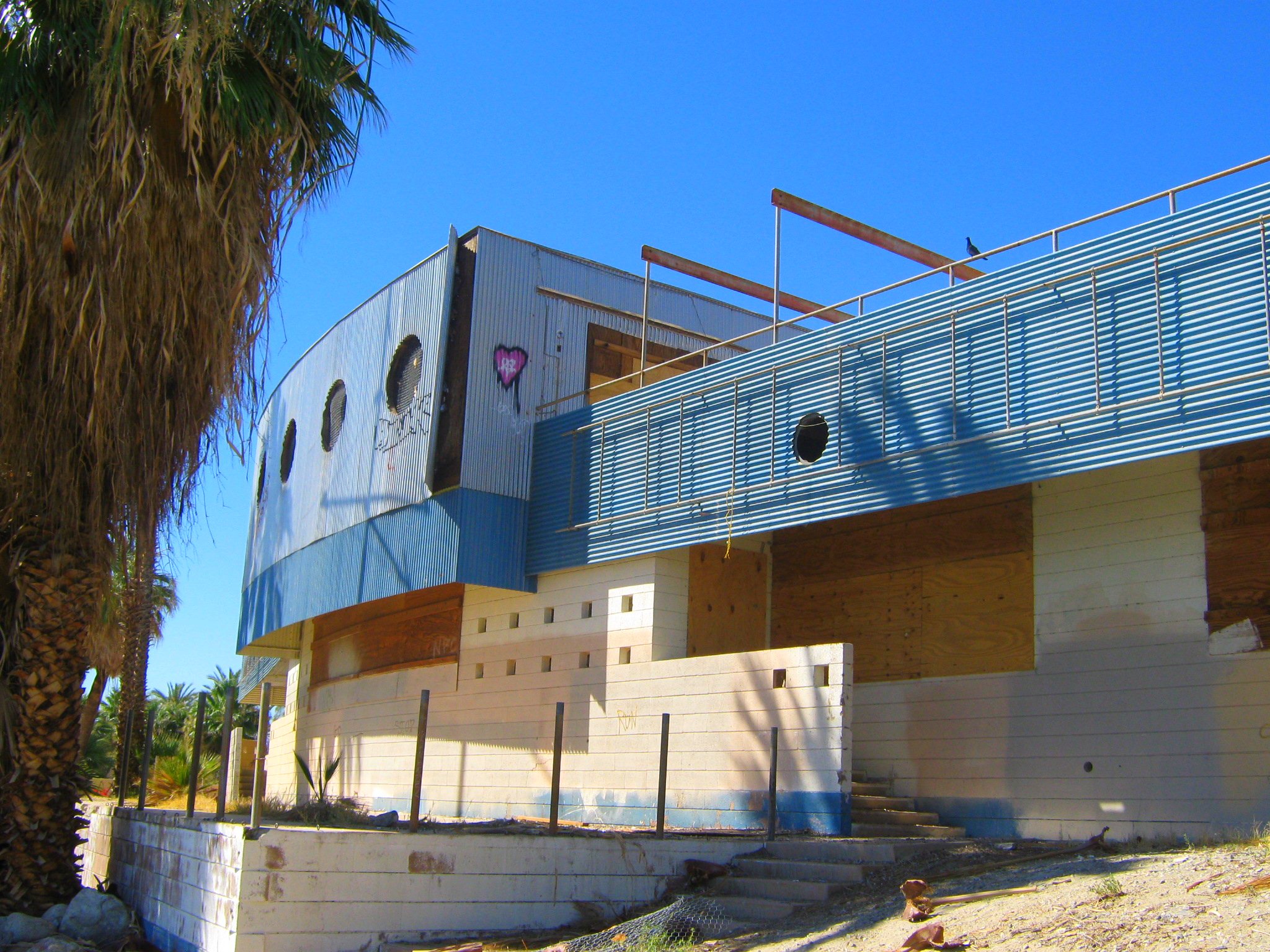
I am a major fan of mid-century modern architecture, and being in Southern California, we have more than our fair share of it to see. But one of my all-time favorite designers was Albert Frey, who lived in and designed many buildings here in the Southern California Inland Empire, including the Red Cross Building in Riverside, the Aerial Tramway Visitor Center in Palm Springs, and the North Shore Yacht Club at the Salton Sea, one of his most famous buildings. Sadly, this building today is much like many of the communities surrounding the Salton Sea: abandoned, forgotten, and falling apart.
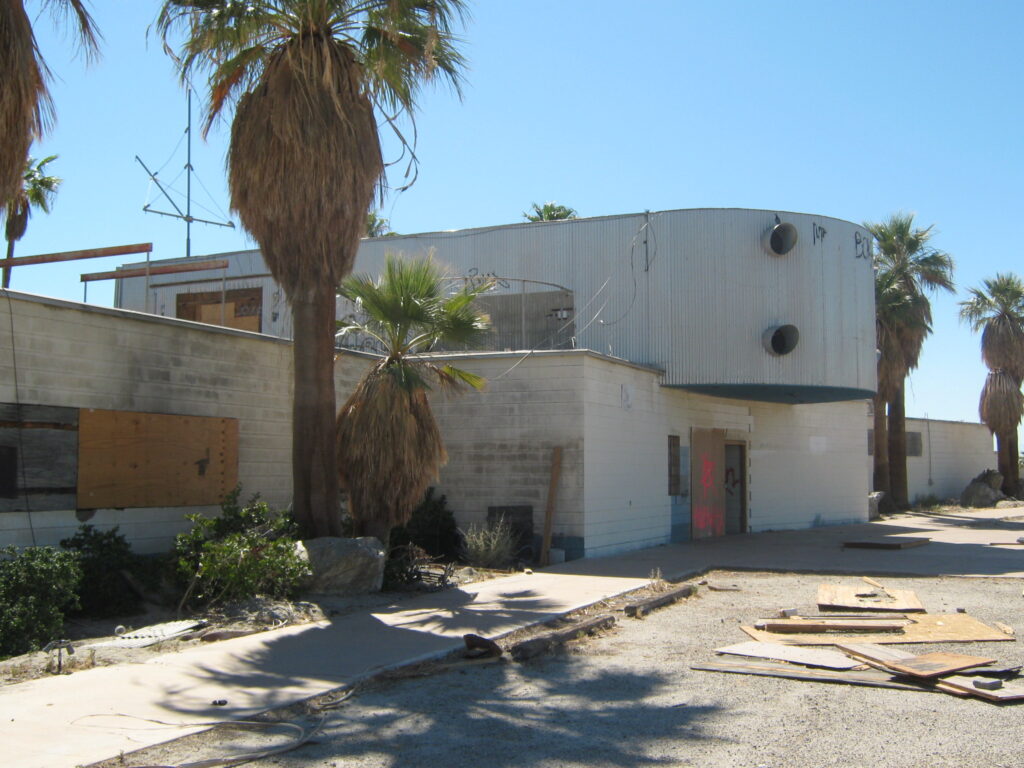
The North Shore Yacht Club was a Destination in the 1960s
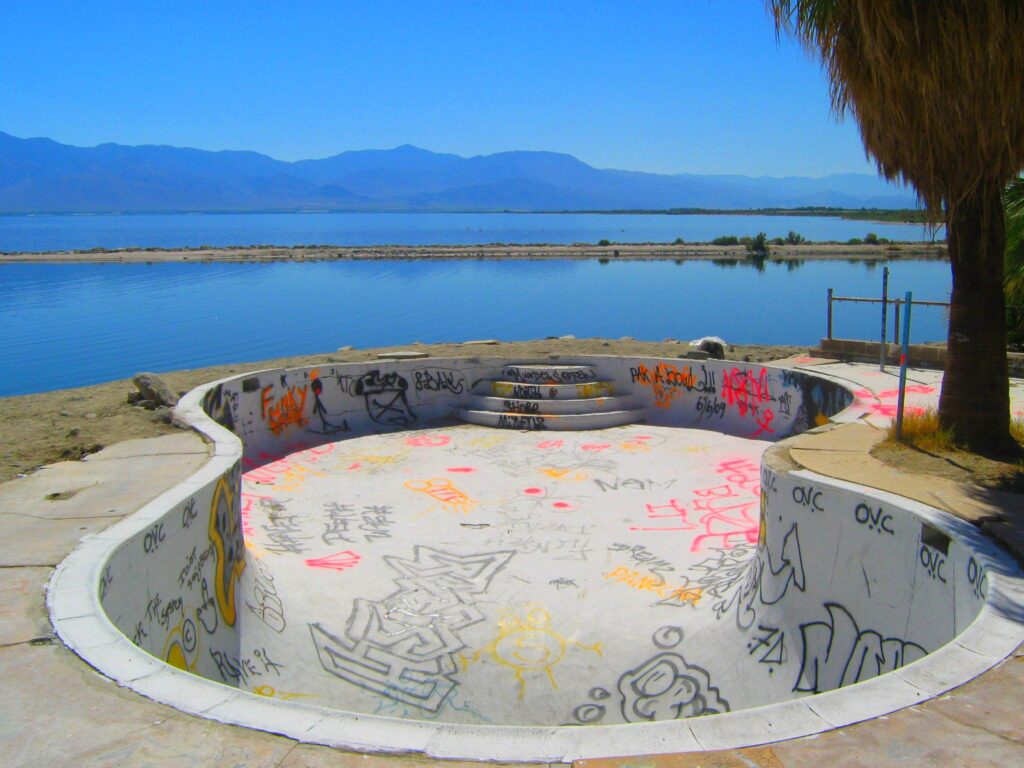
When it first opened in 1962, the North Shore Yacht Club was the most glamorous place on the sea, with its own airstrip, hotel (next door), marina, pool, dance hall, restaurant, and much more. It attracted all the who’s who of the Rat Pack era, but as increased pollution made the Sea less usable for recreation, the grand plans for a world-class recreation mecca began to fade; over 27 years ago, the grand club closed its doors for the last time. Now, its only visitors are skaters who still enjoy the pool and taggers, local homeless, and explorers like myself who wonder how it could have all gone so wrong. With millions of people visiting the Colorado River, why couldn’t the Salton Sea attract some of that boating traffic? But pollution and bad press have tainted (no pun intended) the sea in the minds of many.
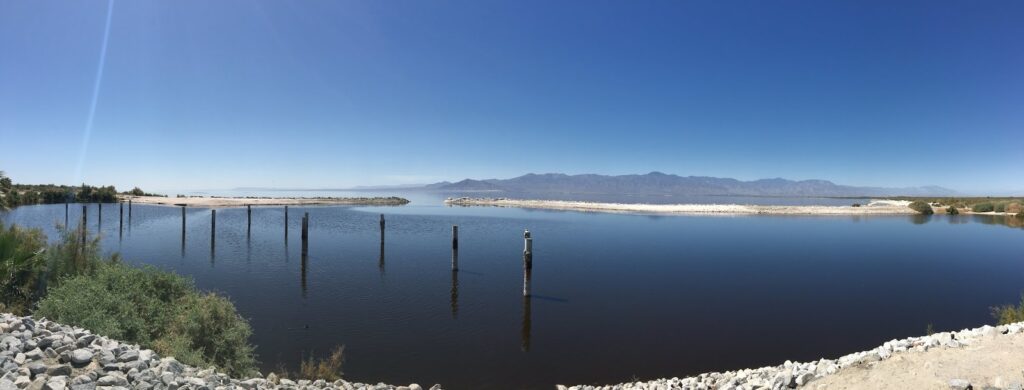
The once bustling marina and docs are silent. View looking from the back of the North Shore Yacht Club.
As always, I took a long way around, taking Highway 78 through Julian and across the vast desert; it is fantastic to see the diversity of California; from there, we ended up at a border checkpoint on the southwest shore of the sea, a sea so massive that for the next 35 miles heading north, you can border water. The sea is roughly 40 miles long and 13 miles wide, making it one of the largest inland seas in the West. After making our way north, we turned east and headed around the north shore of the sea. It is 109 degrees, and upon exiting the car, you find an odd smell, the musky smell of salt water mixed with heat.
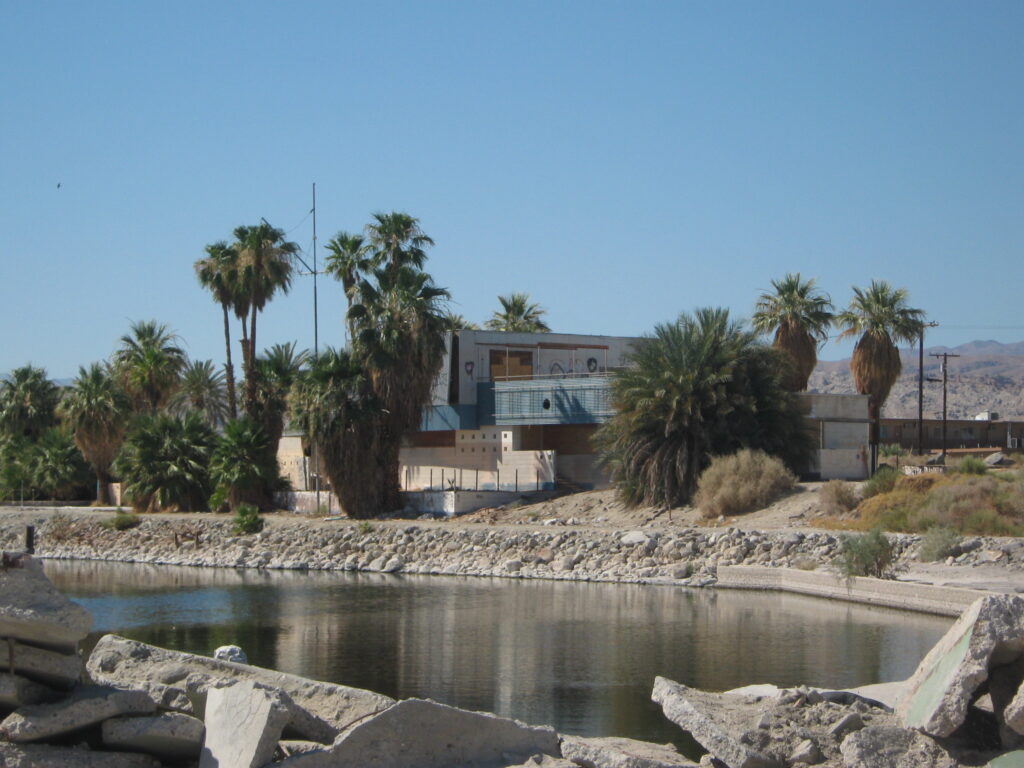
A few signs of life: a home a few blocks over has an air conditioner running, and a train moves slowly along Highway 111. But other than that, the area is returning to the desert, and the once amazing resort is left to rot in the desert sun. On a side note, you may recognize this building as the bar from the film “The Island.”
A Short History of The North Shore Yacht Club
In the early 1960s, the North Shore Yacht Club stood as the showpiece of a booming resort coast an hour from Palm Springs. Powerboat regattas, waterski meets, and weekend cruising drew visitors alongside the broader Salton Sea recreation scene, which at the time still supported sport fishing and a lively marina culture.
Through the 1970s the resort era began to fade. Agricultural runoff steadily raised salinity while the shoreline crept unpredictably with inflows and storms. Businesses around the sea struggled as water quality and reliability declined, and seasonal floods damaged docks and harbor works along the northeast shore.
The breaking point came in the early 1980s. High water and severe storms in 1981 wrecked the club’s jetty, leaving boats without a workable approach. With marine access crippled and the visitor economy shrinking, operations dwindled. The yacht club shuttered completely by 1984, part of a wider retreat from once-bustling marinas around the sea.
By 1985 the North Shore Yacht Club building remained, but the nautical life it served had vanished. What survived was the landmark itself, a notable Frey design that would sit quiet for decades before later restoration efforts reframed it as a community and museum space. The 1962 to 1985 chapter marks the arc from peak popularity to closure under the combined weight of rising salinity, volatile water levels, and storm damage.