
 TGR Staff
Aston Martin has spent the last few years proving that an SUV wearing the winged badge does not have to surrender the performance expected from the brand. Now, with the introduction of the new DBX GT, the British automaker is turning its attention toward another increasingly important measure of a luxury vehicle: how little effort it requires from its occupants.
The new DBX GT joins the more aggressively styled DBX S as a second interpretation of Aston Martin’s high-performance SUV. Rather than chasing an even harder edge, the GT emphasizes comfort, craftsmanship, quieter road manners, and what Aston Martin describes as “quiet luxury,” without giving up the tremendous performance available from the DBX platform.
That means the DBX GT still packs a 727-PS twin-turbocharged V8, still runs from 0-60 mph in 3.1 seconds, and still tops out at 193 mph. The difference is how it presents itself while doing it.
DBX GT: A More Understated Aston Martin
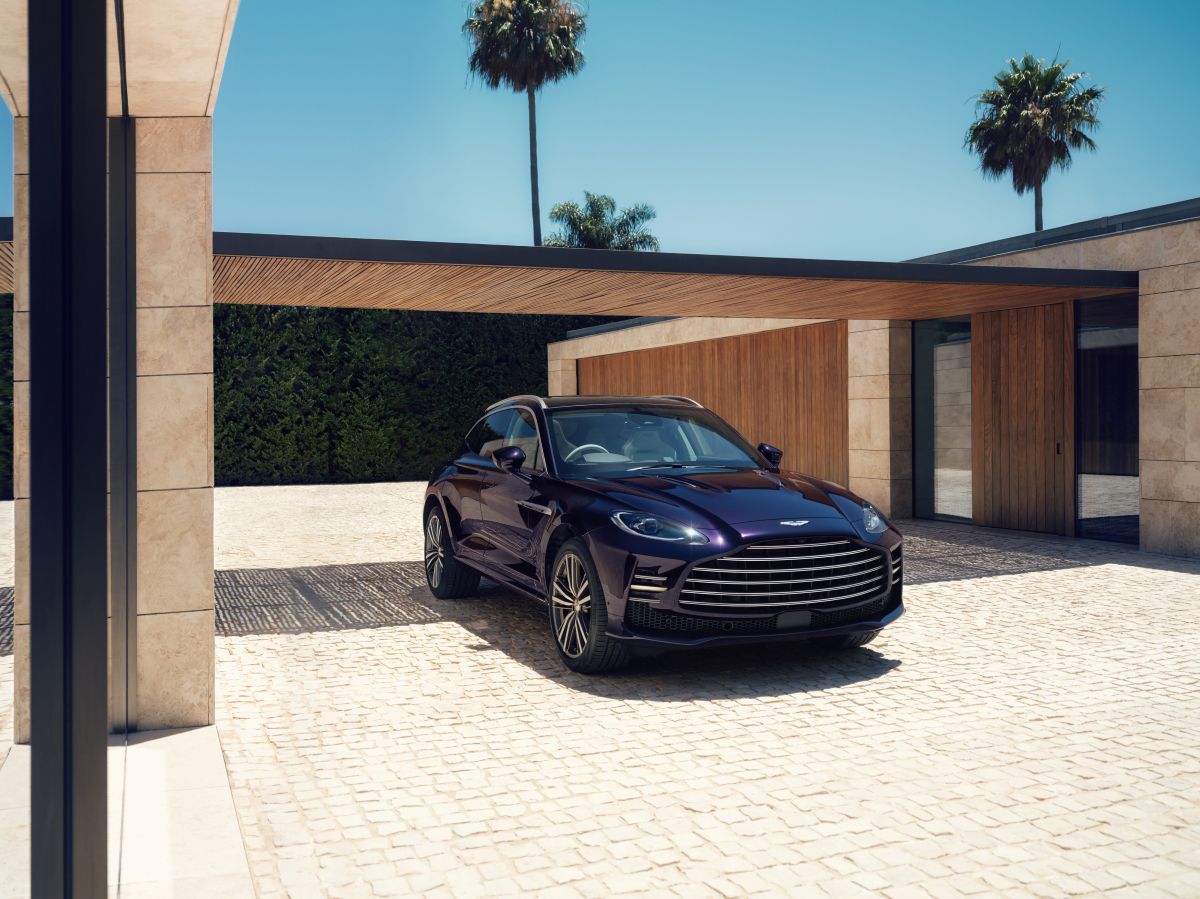
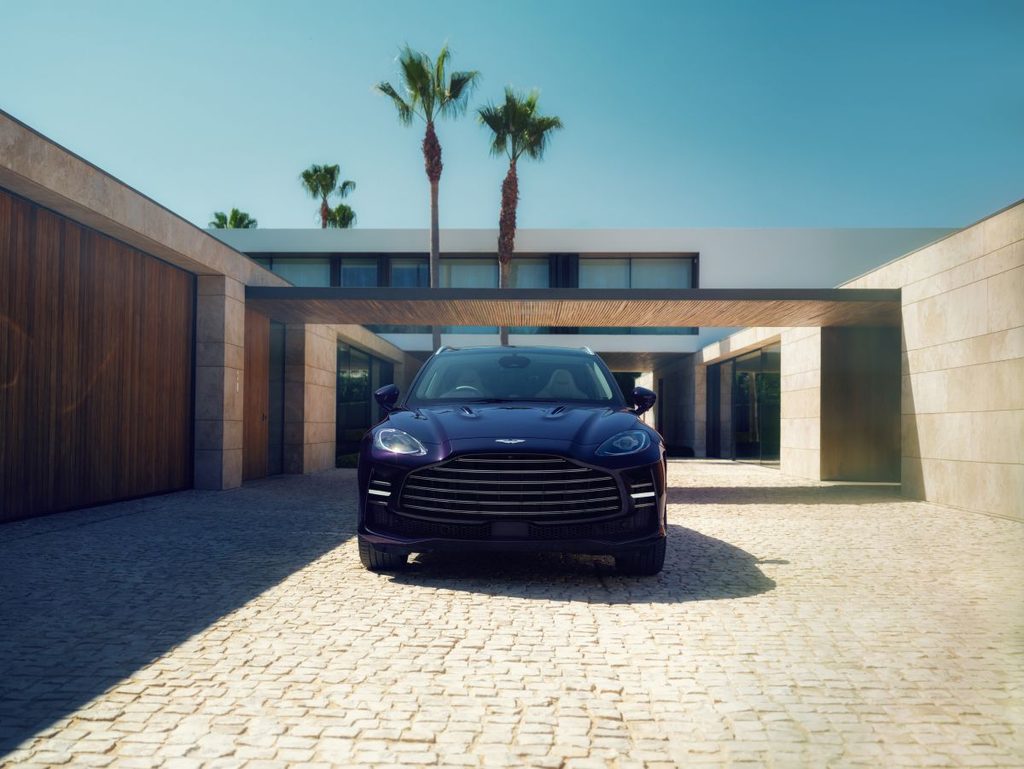
Where the DBX S leans into the visual language of performance, the DBX GT takes a more traditional grand touring approach. The front end receives a new double-vaned grille available in bright or dark finishes, with split metal vanes extending toward the outer vents and daytime running lights. The design visually widens the front of the SUV without resorting to additional wings, vents, or overtly aggressive trim.
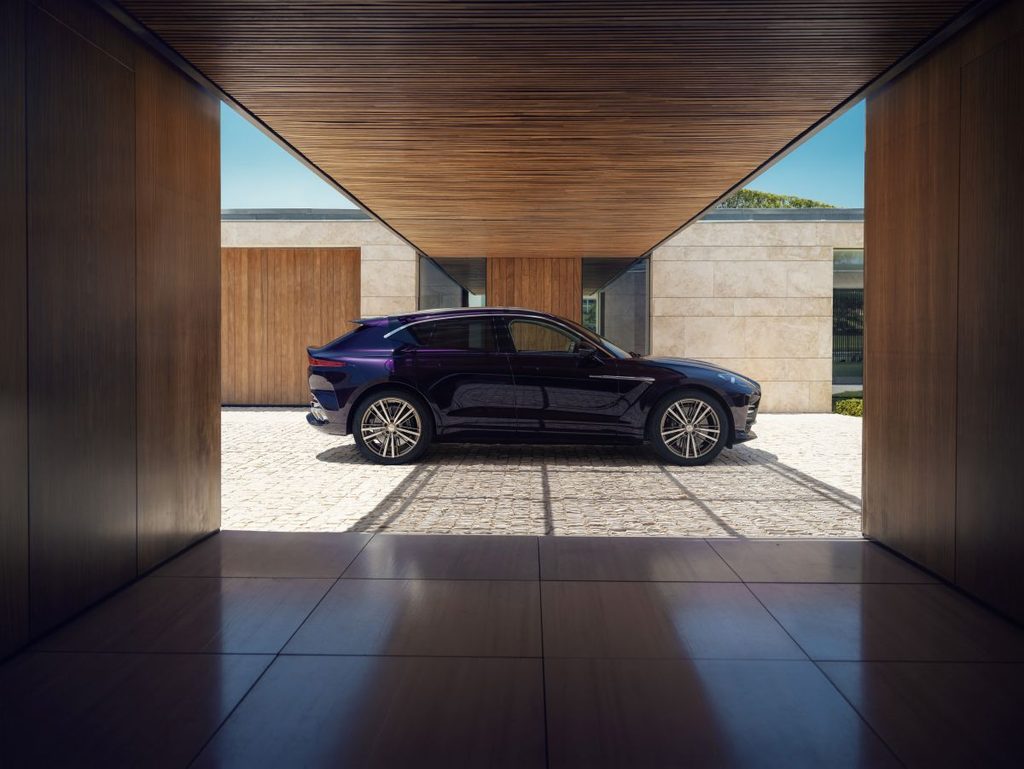
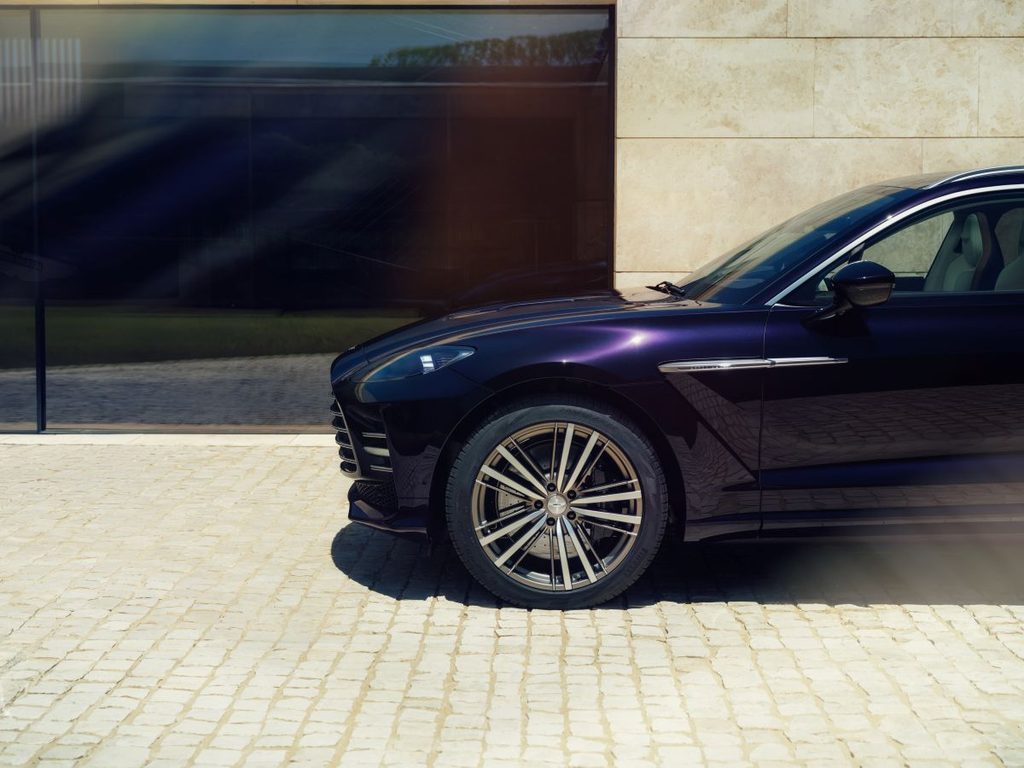
Along the sides, Aston Martin has fitted a new two-piece metal side strake with contrasting polished and satin finishes. The company says the treatment was inspired by traditional watchmaking techniques, a fitting detail for a vehicle aimed at buyers who may be more interested in craftsmanship than lap times.
Body-colored lower bumpers, side sills, and a matching rear diffuser further clean up the exterior appearance. New 22-inch forged wheels with a Satin Titanium diamond-turned finish are standard and come fitted with all-season tires selected specifically to improve ride quality and reduce road noise. Buyers wanting a more performance-oriented setup can specify optional 23-inch wheels.
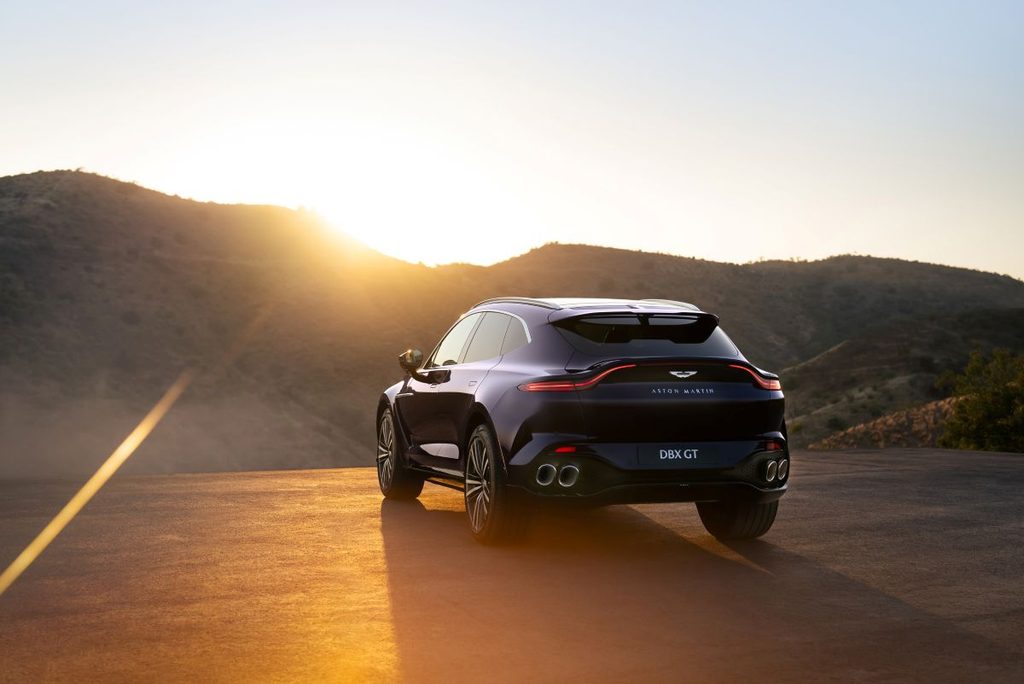
At the rear, new quad exhaust outlets are arranged horizontally in pairs, giving the DBX GT a wide stance while retaining a more restrained appearance. It is still a 193-mph SUV. It simply does not feel the need to tell everyone in the hotel valet line.
More Attention Paid to the Interior
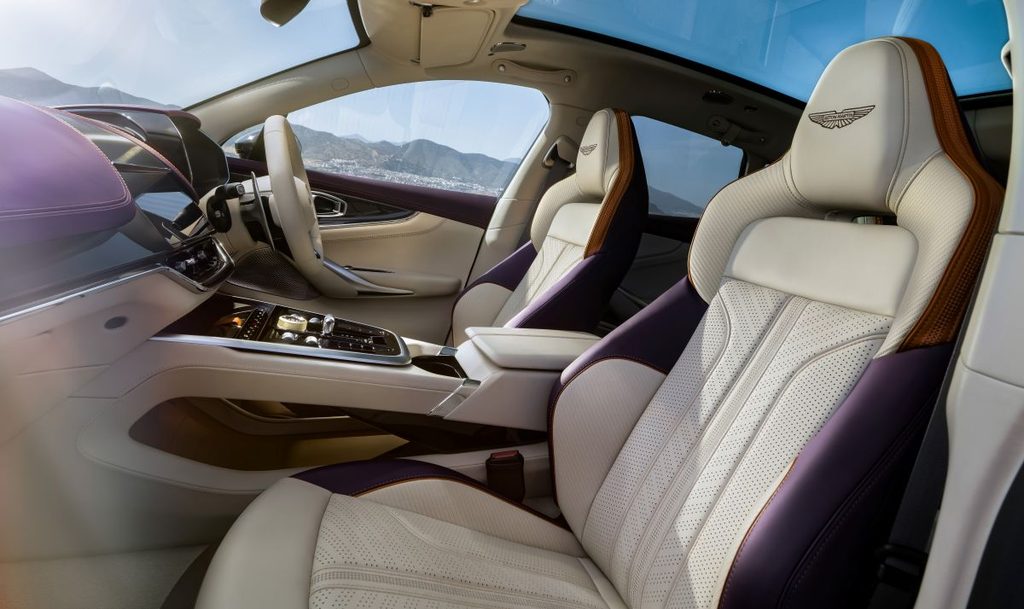
The most significant changes may be inside. Aston Martin redesigned both the front and rear seats with additional cushioning, revised bolsters, and new comfort profiles. A 10mm layer of memory foam has been incorporated into the seat cushions, while reshaped bolsters are intended to improve both lateral support and long-distance comfort.
The GT also introduces a new individual rear-seat design. The vehicle remains a five-seater, but the two primary rear seating positions receive more sculpted forms, extended headrests, and additional bolstering.
A panoramic glass roof is standard. Material choices move further upscale as well. The cabin features an anodized metal drive-mode controller and matching secondary switchgear, while GT-specific monotone, duotone, and tritone upholstery schemes incorporate unique quilting, perforation, and embroidery patterns.
Aston Martin says each front seat uses 691 meters of thread and 3,297 perforations and requires more than four and a half hours of craftsmanship to complete. Semi-aniline leather and deep-pile carpeting are also standard parts of the GT specification.
Making a 727-PS SUV Quieter
Luxury is increasingly measured in what occupants do not notice. Aston Martin has added sound-deadening material throughout the DBX GT, including the doors, wheel arches, and rear load area. Acoustic laminated rear side glass and improved cabin sealing further reduce outside noise.
According to Aston Martin, the changes produce a 13 percent improvement in the vehicle’s Articulation Index, an industry measurement of how easily occupants can hold a conversation while the vehicle is moving. That should make everything from highway conversations to telephone calls and listening to the available Bowers & Wilkins audio system a little easier.
Of course, Aston Martin has not silenced the V8 completely. The DBX GT receives its own exhaust calibration, designed to remove some of the harsher metallic frequencies from the exhaust note. GT mode keeps things appropriately restrained, while Sport and Sport+ bring back the soundtrack expected from an Aston Martin when the road becomes interesting.
DBX S Power Remains
Under the hood is the same bespoke 4.0-liter twin-turbocharged V8 introduced in the DBX S. Using turbocharger technology shared with the mid-engine Aston Martin Valhalla, the engine produces 727 PS and 900 Nm of torque. Aston Martin claims a 0-60 mph time of 3.1 seconds and a top speed of 193 mph.
Carbon-ceramic brakes remain standard, measuring 420mm at the front and 390mm at the rear, while the faster steering ratio from the DBX S carries over to the GT. The objective was not to remove the DBX’s sporting character, but to make that performance less intrusive during normal driving.
Suspension Tuned for the Real World
Aston Martin engineers revised the DBX GT’s suspension calibration with a new damper valve system designed to better absorb high-frequency, low-amplitude road imperfections such as coarse pavement and rumble strips.
The system works alongside changes in spring behavior that adjust according to the selected drive mode, allowing the GT to maintain body control during spirited driving while improving isolation over rougher roads.
Throttle calibration has also been revised to provide a more progressive response, while the nine-speed wet-clutch automatic transmission receives new software aimed at producing smoother and more consistent shifts.
Lessons from the Valhalla program have even reached the DBX GT’s transmission mounting system. A new transmission mount bushing and additional longitudinal dampers between the body and rear subframe are intended to improve structural composure over larger bumps, crests, and compressions.
It is an interesting evolution of the modern performance SUV. For years, manufacturers have been engaged in an arms race involving horsepower, lap times, exhaust volume, and increasingly theatrical styling. The DBX GT suggests Aston Martin believes at least some customers are ready for something different.
Speed is still available. It just no longer has to dominate the experience.
Quick Facts: Aston Martin DBX GT
- Engine: 4.0-liter twin-turbocharged V8
- Output: 727 PS
- Torque: 900 Nm
- Transmission: Nine-speed wet-clutch automatic
- 0-60 mph: 3.1 seconds
- Top Speed: 193 mph
- Front Brakes: 420mm carbon-ceramic
- Rear Brakes: 390mm carbon-ceramic
- Standard Wheels: 22-inch forged wheels
- Optional Wheels: 23-inch
- Standard Tires: Pirelli Scorpion Zero All-Season
- Seating: Five passengers
- Standard Roof: Panoramic glass
- Cabin Noise Improvement: 13 percent improvement in Articulation Index
- First Deliveries: Q4 2026
Aston Martin says first customer deliveries of the DBX GT are scheduled to begin during the fourth quarter of 2026.
Aston Martin DBX GT FAQ
What is the Aston Martin DBX GT?
The DBX GT is a new version of Aston Martin’s performance SUV focused on increased comfort, interior craftsmanship, reduced cabin noise, and more understated styling while retaining the performance capabilities of the DBX S.
How much power does the Aston Martin DBX GT have?
The Aston Martin DBX GT produces 727 PS and 900 Nm of torque from its 4.0-liter twin-turbocharged V8 engine.
How fast is the Aston Martin DBX GT?
Aston Martin claims the DBX GT can accelerate from 0-60 mph in 3.1 seconds and reach a top speed of 193 mph.
Is the Aston Martin DBX GT slower than the DBX S?
According to Aston Martin’s announced specifications, the DBX GT retains the same 3.1-second 0-60 mph time and 193-mph top speed quoted for the DBX S. The GT’s primary differences are in ride comfort, refinement, styling, interior appointments, and sound isolation.
What engine does the Aston Martin DBX GT use?
The DBX GT uses a bespoke 4.0-liter twin-turbo V8. Aston Martin says its turbocharger technology is shared with the Valhalla supercar.
Does the DBX GT have carbon-ceramic brakes?
Yes. The DBX GT uses carbon-ceramic brakes measuring 420mm at the front and 390mm at the rear.
What size wheels come on the Aston Martin DBX GT?
The DBX GT comes standard with new 22-inch forged wheels and Pirelli Scorpion Zero All-Season tires. Optional 23-inch wheels are available with either Pirelli P Zero summer tires or Scorpion Zero All-Season tires.
How is the DBX GT different from the DBX S?
The DBX S emphasizes a more aggressive performance character, while the DBX GT focuses on comfort and understated luxury. The GT receives unique exterior styling, redesigned seats, additional sound insulation, revised suspension tuning, a quieter GT exhaust setting, and transmission and throttle calibration changes.
Is the Aston Martin DBX GT a five-seater?
Yes. Although the DBX GT introduces more individually sculpted rear seating positions, Aston Martin says it retains five-passenger capability.
How much does the Aston Martin DBX GT cost?
Aston Martin did not announce pricing in the October 1, 2026 release introducing the DBX GT.
When will the Aston Martin DBX GT go on sale?
Aston Martin says the first DBX GT deliveries are scheduled to begin in the fourth quarter of 2026.