


 TGR Staff
The original Interceptor was never simply another British luxury car. Introduced in 1966, it combined Italian-influenced styling, British craftsmanship, and big American V8 power into something wonderfully unconventional. It was a grand tourer built for crossing countries rather than chasing lap records, and it developed the sort of personality that is increasingly difficult to engineer into a modern automobile. Now Jensen International believes it has figured out how to move that idea forward without simply rebuilding the past.
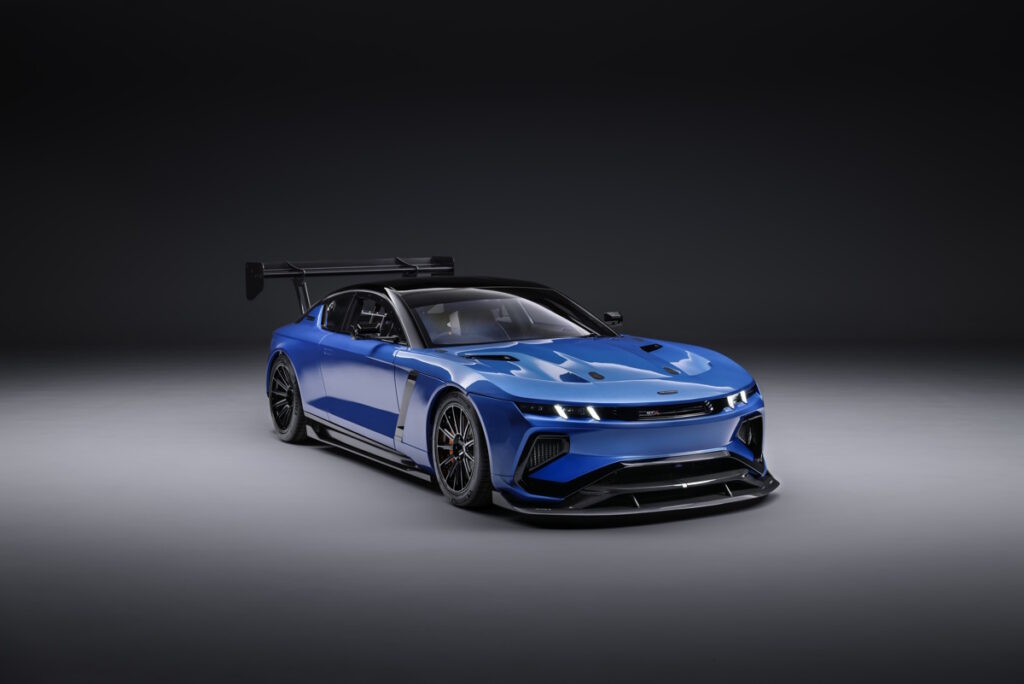
The company has revealed the Jensen Interceptor GTX, a 960-bhp, rear-wheel-drive, track-only machine designed as both an engineering prototype and a preview of an entirely new family of Jensen automobiles. The GTX will eventually be joined by a street-legal, high-performance Interceptor GTR and a more traditional luxury-focused Interceptor GT.
Importantly, Jensen International does not describe the GTX as a restomod, continuation car, or recreation. This is a new car.
A New Jensen Interceptor, Not Another Old Jensen
The automotive world currently has no shortage of companies willing to take a desirable classic, add carbon fiber, modern brakes, a touchscreen, and several hundred horsepower, then charge enough money to make the original car look like a bargain. Jensen International is attempting something more ambitious.
According to Managing Director David Duerden, the goal from the beginning was to create a modern interpretation of what the Interceptor might have become had Jensen continued evolving uninterrupted from the 1960s to today. Roughly 80 percent of the GTX’s exterior form, including major body panels and tooling, is intended to transfer to future road-going Interceptor models.
The connection to Jensen’s past, however, is more than branding.
Jensen International is part of the Jensen International Group, which has nearly two decades of experience restoring and re-engineering original Jensen Interceptors through Jensen International Automotive’s Interceptor R program. The new project also involves Jeff Qvale, whose family has deep ties to the original Jensen Motors operation. That history gives the project something many revived automotive brands struggle to manufacture: context.
Familiar Proportions, Entirely New Body
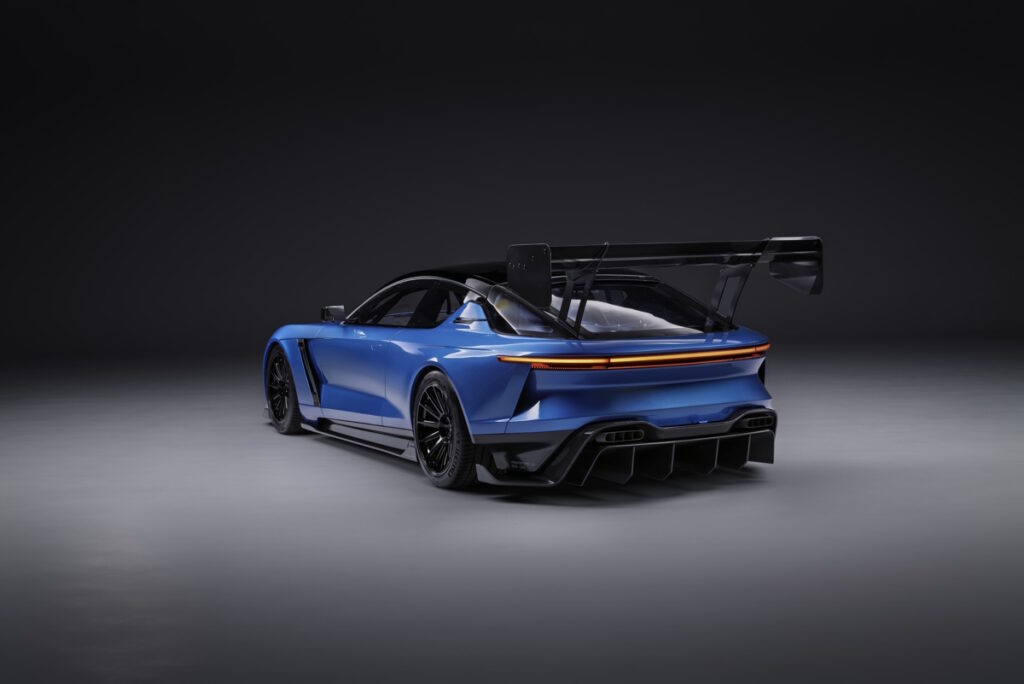
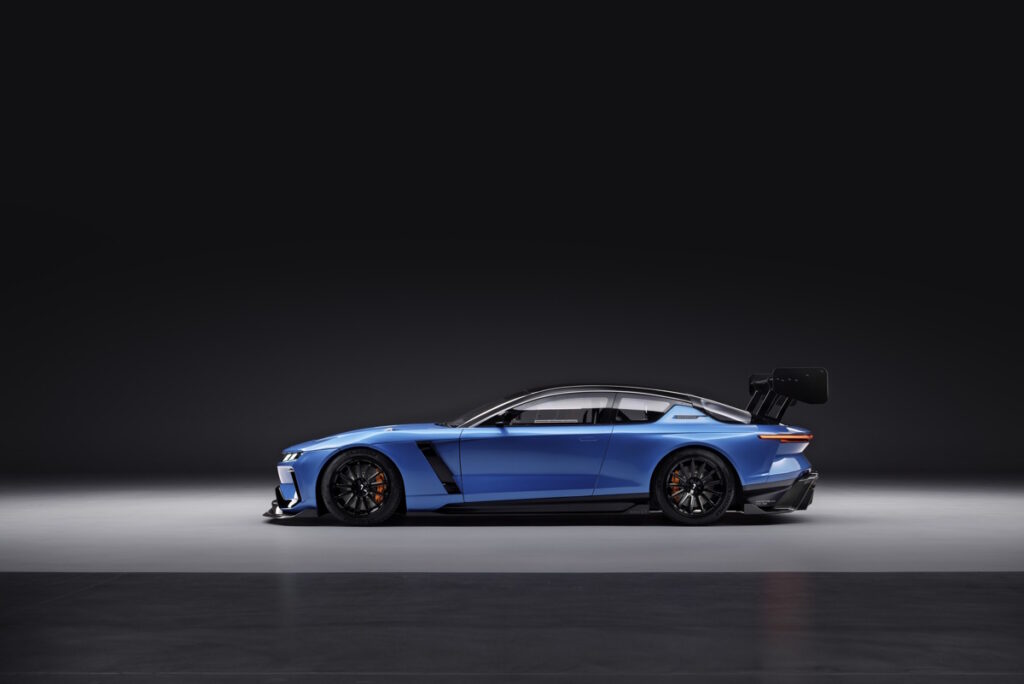
The GTX was designed in collaboration with independent studio Avant Design, drawing on the proportions of the 1966 Interceptor without attempting to copy it. There is still a long hood, compact passenger compartment, and substantial rear bodywork. The signature wraparound glass look of the original Interceptor is also referenced in a floating rear roof treatment. But nobody is going to mistake the GTX for something built in 1972.
Its front end is low and aggressive, with narrow LED lighting and substantial cooling openings, while the rear receives a large diffuser and full-width lighting. Computational Fluid Dynamics played a major role in shaping the car, particularly as the demands of high-speed cooling and stability began influencing the body.
The aero is functional, too.
A carbon-fiber front splitter, flat floor, rear diffuser, and adjustable two-plane rear wing make up the motorsport-derived aerodynamic package. Jensen says the rear wing alone can generate more than 350 kilograms, roughly 772 pounds, of downforce. Yet beneath all the modern aero is one of the most traditional elements imaginable: a hand-formed aluminum body. Coventry Metalcraft manufactures the GTX’s coachwork using a combination of digital design data and old-school metalworking techniques. Its team uses traditional equipment, including 10 English Wheels, to transform sheets of aluminum into the finished panels. That combination of computers and craftsmen might be the most Jensen-like thing about the entire project.
A British GT With a Texas Heart
The original Interceptor famously combined British construction with American V8 power, and the new GTX follows the same philosophy. This time the American part of the equation comes from Texas.
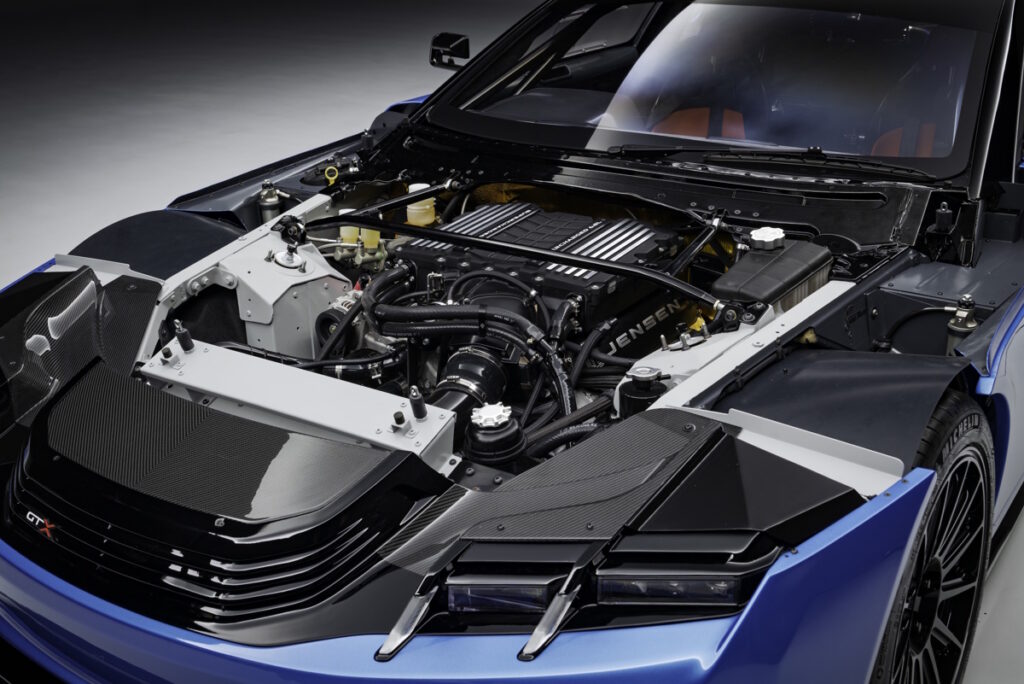
Jensen turned to Late Model Engines in Houston to develop the bespoke 6.8-liter V8 for the Jensen Interceptor GTX. The engine uses a 2.65-liter Roots-type supercharger with electronic boost control, along with CNC-machined cylinder heads, titanium valves, variable valve timing, direct injection, and MoTeC management.
Fewer than 20 percent of the engine’s components are standard General Motors pieces, according to Jensen. The remainder includes a forged rotating assembly and motorsport-grade components built specifically for the application. Although the GTX is currently rated at 960 bhp, Jensen says the engine specification is capable of producing up to 1,200 bhp and more than 1,100 lb-ft of torque, depending on the application and selected engine mapping. Redline is 7,000 rpm.
Power goes rearward through a carbon-fiber driveshaft housed inside a steel torque tube and into a rear-mounted Samsonas Motorsport six-speed sequential transaxle. Drivers can shift either through a traditional lever or steering-column-mounted paddles. Future road-going Interceptors could take a dramatically different approach, with Jensen considering both conventional H-pattern manual and automatic transmissions. For enthusiasts worried that a 21st-century Jensen might arrive buried beneath layers of electronic assistance, there is encouraging news. Jensen appears determined to keep the experience mechanical.
Analog by Design
The GTX has traction control, launch control, and motorsport ABS because 960 horsepower without any electronic assistance could quickly become a very expensive physics demonstration. Beyond that, however, the company has deliberately avoided excessive intervention.
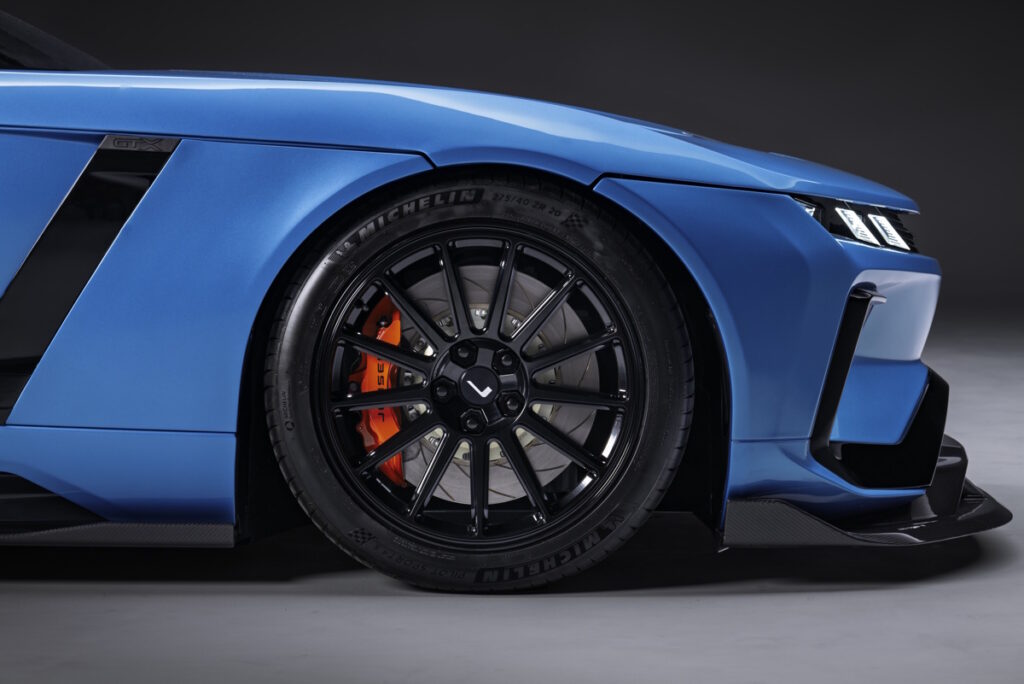
Hydraulic power steering is used instead of the increasingly common electrically assisted setup. Suspension consists of double aluminum wishbones at both ends with manually adjustable Nitron three-way dampers. AP Racing brakes use floating steel discs rather than carbon ceramics, a choice Jensen says was made for consistency and usability during repeated track sessions.
Even the tires tell you something about how Jensen views the project.
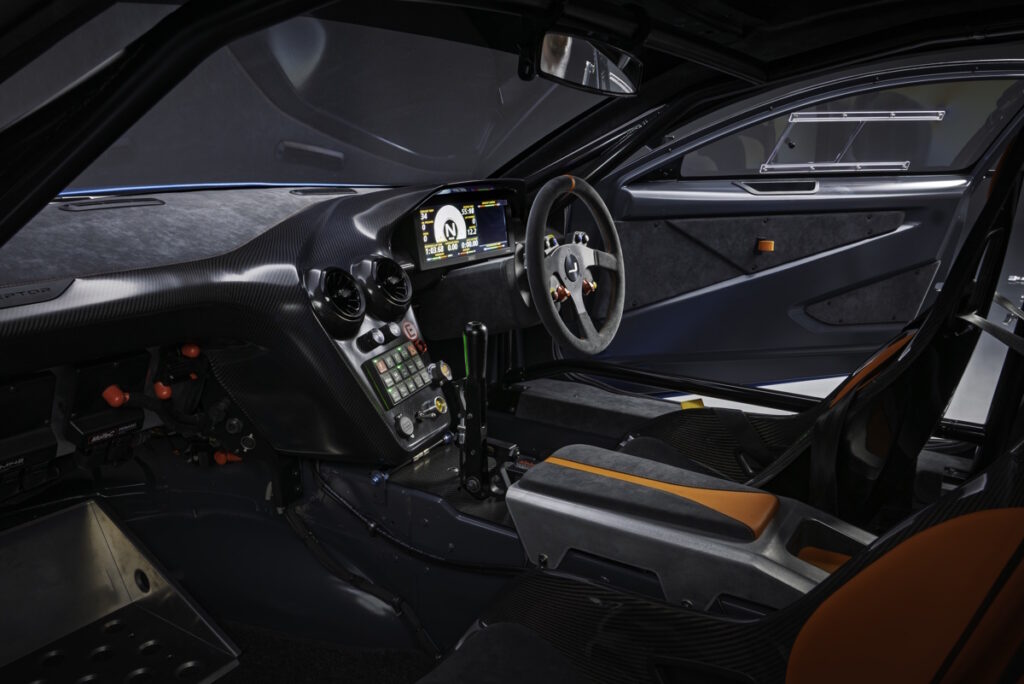
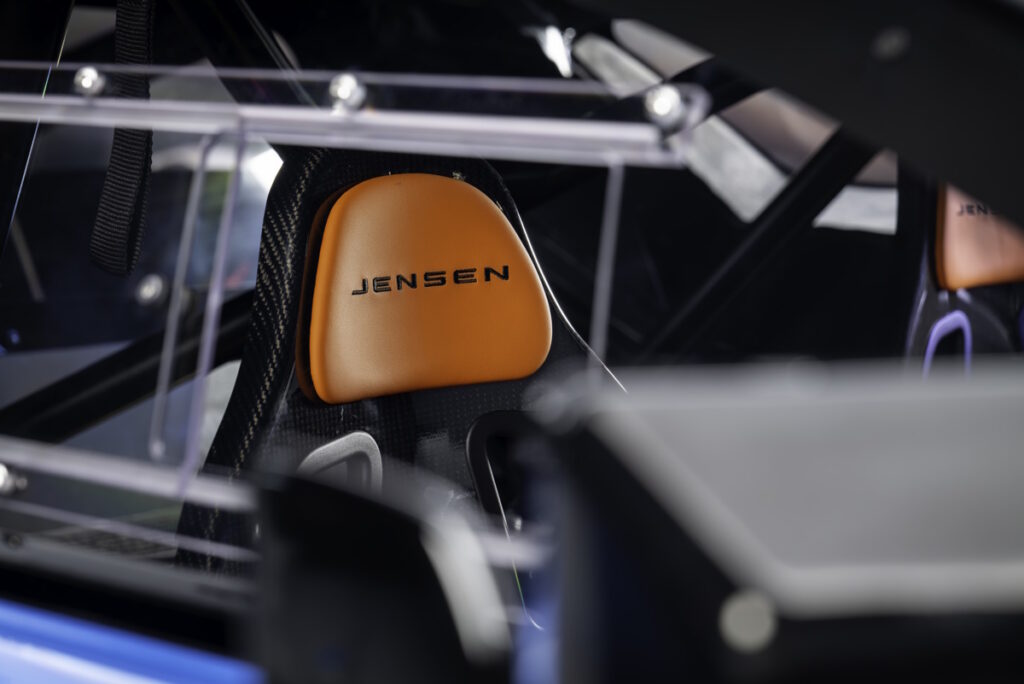
Instead of fitting slicks, the Jensen Interceptor GTX rides on Michelin Pilot Sport road tires mounted to 20-inch forged Vossen wheels. Jensen says the road-oriented tire provides useful feedback as the company develops the street-going versions. Inside, there is a MoTeC digital display, but few of the screens that have come to dominate modern performance-car interiors. The cabin instead gets an FIA-approved roll cage, Tillett carbon-fiber competition seats, six-point harnesses, a Lifeline fire-suppression system, Alcantara trim, and a motorsport steering wheel. It sounds refreshingly purposeful.
The GTX Is Only the Beginning
Perhaps the most important thing about the new Jensen Interceptor GTX is that Jensen does not intend for it to remain a one-off engineering exercise. The GTX will now enter an extensive testing and development program, with future customers expected to play a role in shaping individual vehicle specifications.
After that comes the road-going Interceptor GTR, intended to retain much of the GTX’s analogue personality and performance capability. Following the GTR, Jensen plans a more luxurious Interceptor GT, which should move closest to the traditional grand-touring character of the original car.
There is something encouraging about the order Jensen has chosen. Instead of launching a lifestyle brand, selling branded luggage, unveiling a rendering, and promising production sometime around the next appearance of Halley’s Comet, the company started by building the hardest version first.
The GTX is physical. It runs. It has a hand-built aluminum body, a 960-bhp supercharged V8, a sequential transaxle, and enough downforce to make the original Interceptor wonder what happened while it was away. More importantly, beneath all that performance is an idea that feels appropriately old-fashioned. A Jensen should be powerful, beautiful, unusual, hand-built, and slightly unreasonable. On that score, the Interceptor GTX appears to understand the assignment.
Quick Facts: Jensen Interceptor GTX
- Engine: 6.8-liter supercharged V8 built by Late Model Engines
- GTX Output: 960 bhp
- Engine Capability: Up to 1,200 bhp and more than 1,100 lb-ft depending on specification
- Drivetrain: Rear-wheel drive
- Transmission: Samsonas Motorsport six-speed sequential transaxle
- Body: Handcrafted aluminum
- Chassis: Bonded-extrusion aluminum
- Suspension: Double aluminum wishbones with Nitron three-way adjustable dampers
- Brakes: AP Racing motorsport system with steel discs
- Wheels: 20-inch forged Vossen
- Tires: Michelin Pilot Sport
- Rear Wing Downforce: More than 350 kg
- Production Status: Track-focused development prototype
- Future Models: Road-going Interceptor GTR and luxury Interceptor GT
Jensen Interceptor GTX FAQ
Is the new Jensen Interceptor GTX a restomod?
No. Jensen International describes the GTX as an entirely new car rather than a restoration, continuation car, or recreation of the original Interceptor.
How much horsepower does the Jensen Interceptor GTX make?
The track-focused GTX is rated at 960 bhp. Jensen says the underlying 6.8-liter supercharged V8 specification is capable of producing up to 1,200 bhp depending on application and engine mapping.
Who builds the Jensen Interceptor GTX engine?
Late Model Engines, based in Houston, Texas, developed and built the GTX’s bespoke 6.8-liter supercharged V8.
Will there be a street-legal Jensen Interceptor?
Yes. Jensen International plans a road-going Interceptor GTR based on the GTX development program, followed by a more luxury-oriented Interceptor GT.
Is the Jensen Interceptor GTX all-wheel drive?
No. Like the classic Jensen Interceptor, the GTX uses a front-mounted V8 driving the rear wheels.
Where is the new Jensen Interceptor built?
The GTX is designed, engineered, and handcrafted in the United Kingdom, with specialist suppliers including Coventry Metalcraft providing the hand-formed aluminum body.