
 Michael Satterfield
The last time I found myself behind the wheel of a Ferrari 296, I was at Fiorano, Ferrari’s private test circuit across the road from the factory in Maranello. It was the kind of invitation that makes an automotive writer reconsider every mildly unkind thing he has ever said about airline food.
That day, I drove the Ferrari 296 GTB as part of a condensed version of Ferrari’s Corso Pilota program. With an instructor beside me, telemetry waiting in the pits, and several sessions to learn the circuit, I began to understand just how capable Ferrari’s hybrid supercar could be. By the end of the day, I had taken several seconds off my lap time and gained a much greater appreciation for Ferrari’s approach to balance, braking, and driver development.
Returning to Italy, I thought I knew what to expect from the 296 platform. Then I climbed into a Ferrari 296 Challenge.
A Ferrari Built for One Purpose
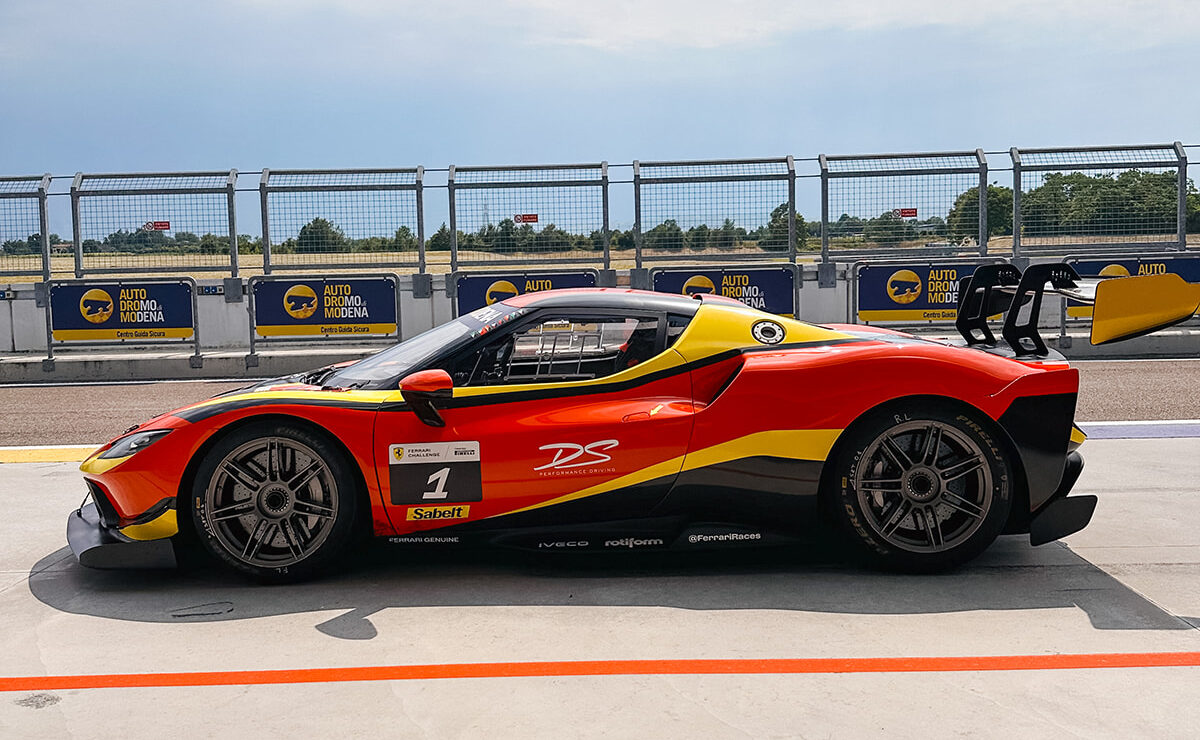
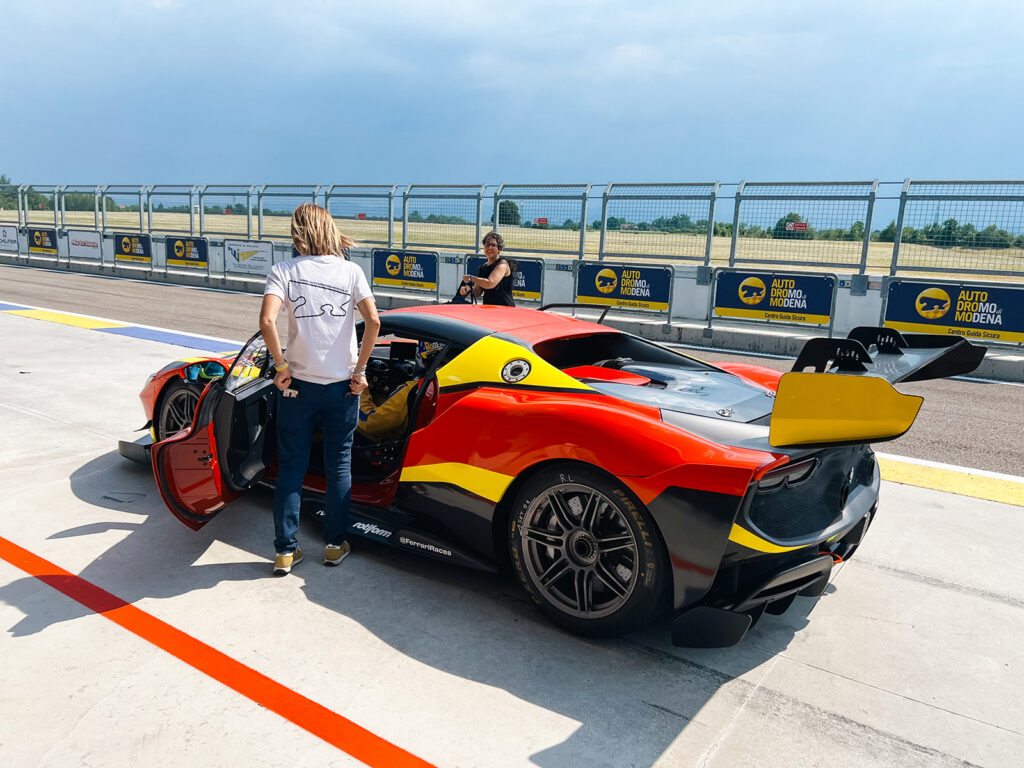
From a distance, the relationship between the 296 GTB and the 296 Challenge is unmistakable. The proportions, cabin shape, and basic architecture are familiar, but the Challenge looks as though the street car has spent several months at racing school and returned with a much less forgiving personality.
There is an enormous rear wing, an aggressive front splitter, additional vents, wider bodywork, center-lock wheels, and aerodynamic surfaces that would be wildly impractical during a run to the grocery store. The cabin has been stripped of nearly every concession to comfort. In place of leather, carpeting, and road-car amenities, there is a roll cage, racing seat, harness, exposed competition hardware, and controls designed around the needs of a driver wearing gloves and a helmet.
This is not a track package or a street car wearing racing decals. It is a purpose-built competition machine developed for Ferrari’s single-marque Challenge series. The differences go much deeper than the bodywork.
The street-going 296 GTB uses a 2.9-liter, 120-degree twin-turbocharged V6 paired with an electric motor. Together, the hybrid system produces 830 metric horsepower, or about 819 horsepower. It is an astonishingly quick car, but it must also function in traffic, meet road regulations, carry luggage, and remain civilized enough for a dinner date in Modena.
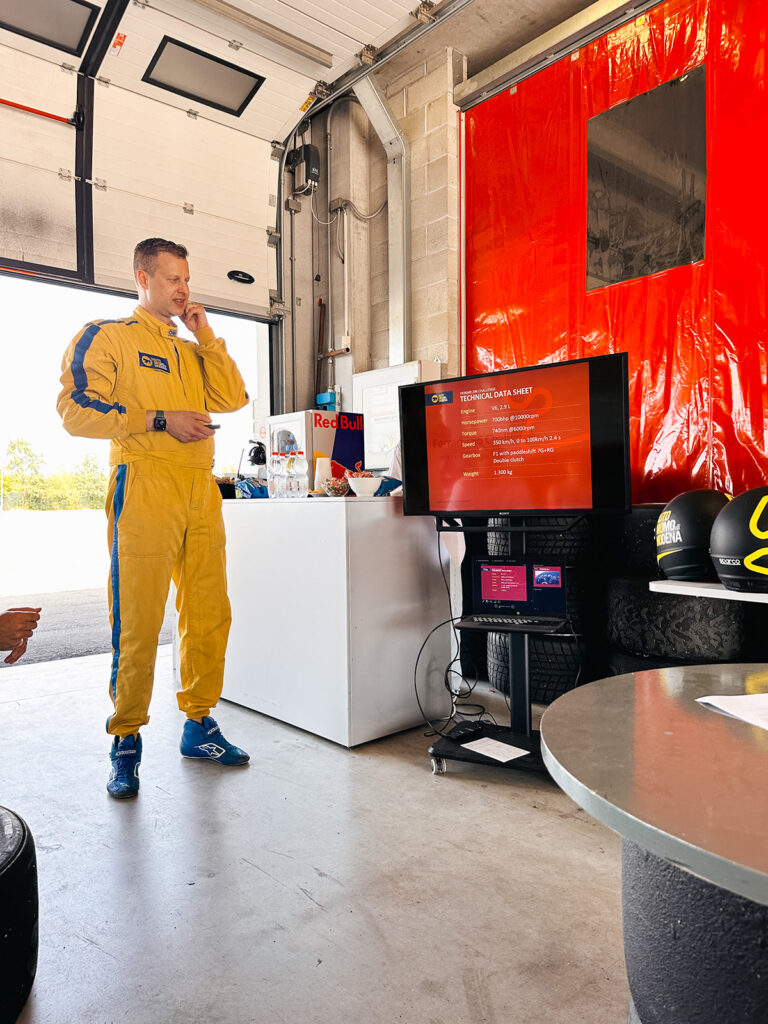
The Ferrari 296 Challenge removes the hybrid component entirely. Its twin-turbocharged V6 produces 700 horsepower and 740 Nm of torque on its own. On paper, that makes the racing car less powerful than the road car. On the circuit, that number tells only a small part of the story.
According to Ferrari, the Challenge car can generate more than 870 kilograms, or approximately 1,918 pounds, of aerodynamic load at 250 km/h with the rear wing set at its maximum angle. It also uses competition-specific Pirelli tires, advanced Evo Track ABS, CCM-R Plus racing brakes, and suspension and electronic systems developed specifically for circuit driving. The result is a car that feels dramatically more immediate, more physical, and more serious than the GTB.
Enjoying this story?
Join The Gentleman Racer email list to continue reading.
Occasional updates. Unsubscribe anytime.
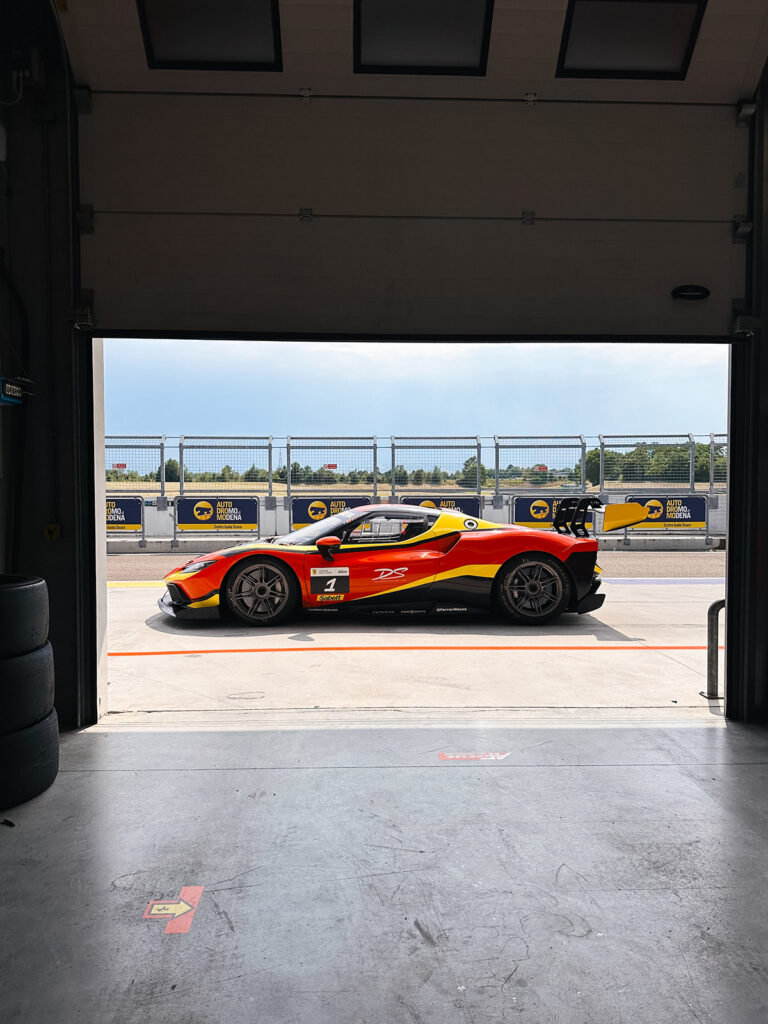
Arriving at Autodromo di Modena
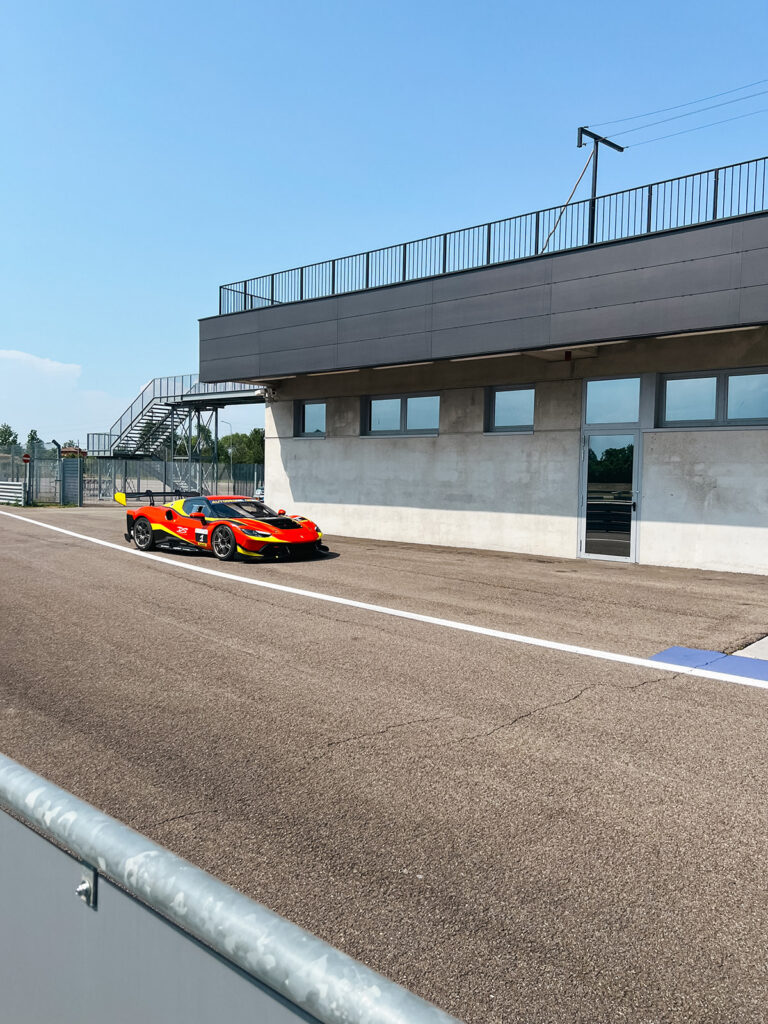
Autodromo di Modena sits in Marzaglia, west of central Modena and within easy reach of Maranello. The circuit is a little over two kilometers long (just over 1.2 miles), with 11 corners, a 12-meter (roughly 40 feet) wide racing surface, asphalt and gravel runoff areas, and a pit lane containing 21 garages.
It is compact enough to learn relatively quickly; there aren’t any long straights for top-speed runs, but the track is technical enough to keep a driver busy. There are braking zones, linked corners, changes of direction, and opportunities to feel the car’s balance without requiring the speeds of a circuit like Monza. That makes it an excellent place to experience a machine as serious as the 296 Challenge.
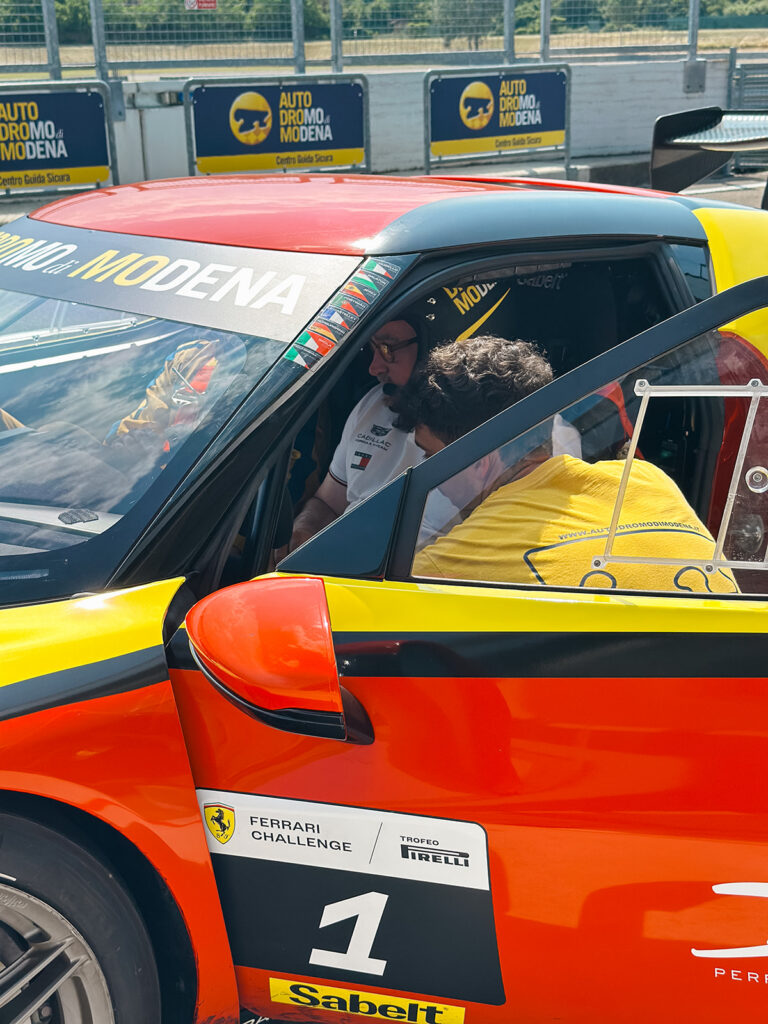
Before driving, there is a briefing covering the track layout, braking points, shifting, pit procedures, and the car’s controls. A professional instructor occupies the passenger seat, communicating through an intercom and offering guidance throughout the session. Having an instructor beside me was not simply reassuring. It was essential.
Even after driving the 296 GTB at Fiorano, the Ferrari 296 Challenge car required recalibration. The instructor helped me build speed progressively, identify the proper braking points, and understand how much performance remained available. In a car like this, the difference between driving quickly and driving well can be measured in inches, fractions of a second, and how confidently you trust the brakes.
The First Lap
Getting into a modern racing car is rarely graceful. The roll cage turns entry into a combination of yoga and light industrial work, particularly once a helmet is involved. After settling into the seat, the crew tightened the harness until I was firmly connected to the car.
The cockpit immediately changes your state of mind. There is no soft leather, no infotainment screen waiting for a destination, and no pretense that this machine might someday be used for a relaxing Sunday drive. Every component reminds you that the car was built to race.
The Ferrari 296 Challenge V6 comes to life with none of the acoustic insulation found in the GTB. Mechanical sounds reverberate through the cabin. You hear the engine, the transmission, stones striking the underside, and the brakes working beneath you. Heat, vibration, and sound are no longer filtered out for the sake of comfort. They become information.
We rolled out of the pits and began bringing the car up to temperature. During the opening lap, I worked on remembering the circuit and listening to the instructor. Look ahead. Use the entire track. Be patient on corner entry. Let the car settle. Now accelerate. It sounds simple in the pits. It becomes a little more complicated when 700 horsepower is waiting behind your right foot in a car you are unfamiliar with.
Learning to Trust the Brakes
The acceleration is enormous, but the defining sensation of the 296 Challenge is its braking performance. In the road-going 296 GTB, the brakes are already exceptional. At Fiorano, learning to brake later and with more confidence was one of the keys to improving my lap times. The Challenge moves that reference point into another county.
The first few times I applied the brakes, I did so far too early. That is the natural response when the corner ahead appears to be approaching at an unreasonable rate. The instructor kept encouraging me to carry more speed, wait longer, and apply the brake with greater commitment.
A racing car rewards decisiveness. A tentative input can unsettle the car more than a firm one made at the proper moment. Once I began trusting the brakes, the Ferrari revealed another layer of its personality. The car would shed speed with astonishing force, remain composed, and rotate toward the apex with an immediacy the street car cannot match.
The Difference Between Fast and Racing Fast
The 296 GTB is breathtakingly fast, even by modern supercar standards. On track, it combines immense acceleration with a remarkably approachable personality. Its hybrid system fills gaps in the power delivery, its electronics work quietly in the background, and the cabin remains composed even as the speed rises.
The Ferrari 296 Challenge does not feel like a faster version of the GTB. It feels like a different species. The GTB communicates through a polished interface. The Challenge communicates directly through the seat, steering wheel, and pedals. Gear changes arrive with greater urgency. Tire noise is louder. The brakes demand more pressure. The steering transmits more detail. Aerodynamics and racing tires allow the car to carry cornering speeds that initially feel incompatible with common sense.
The GTB flatters its driver. The Challenge instructs its driver, occasionally with the subtlety of an Italian schoolmaster holding a ruler. At Fiorano, I was working to extract performance from a road car engineered to make extraordinary speed usable. At Autodromo di Modena, I was learning how to approach the abilities of a real racing car. The distinction became clearer with every lap.
The Ferrari 296 Challenge also lacks the electric assistance that gives the road car its immediate hybrid punch. Yet the racing version feels angrier because it has less mass, less insulation, more mechanical connection, and a chassis designed solely for competition. Its performance is not defined by one acceleration figure. It comes from the entire car working as a unified system.
A Ferrari 296 Challenge Racing Experience You Can Actually Book
Perhaps the most surprising part of the experience is that it is not reserved exclusively for Ferrari owners, professional drivers, or competitors in the Ferrari Challenge series.
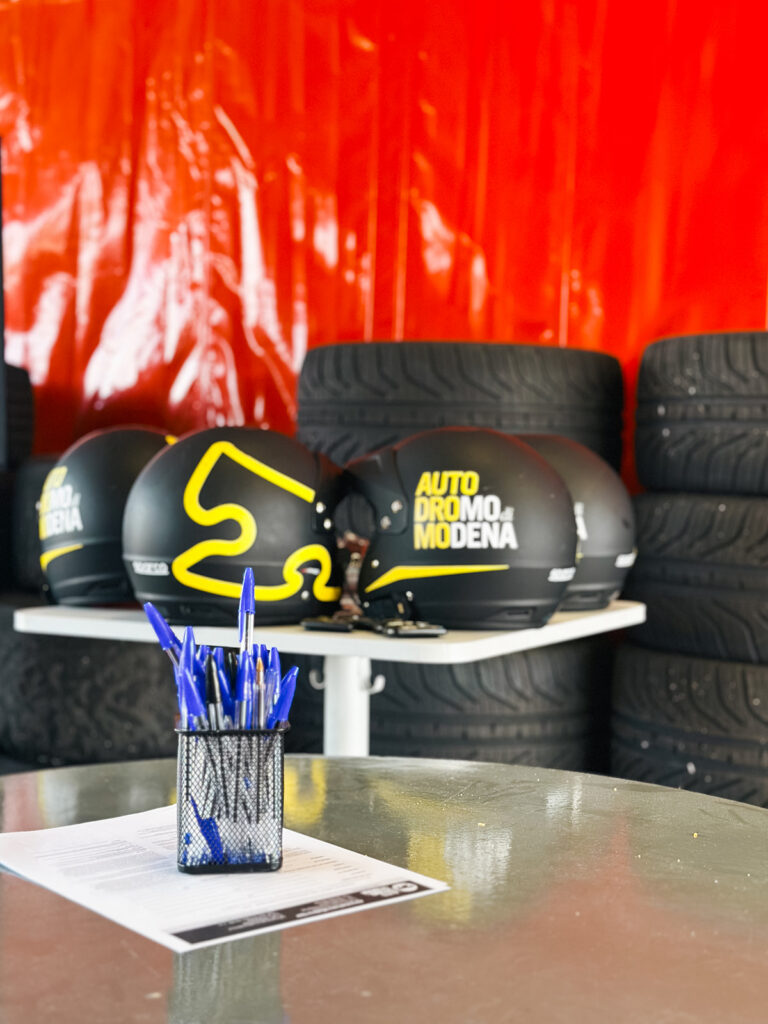
Anyone who meets the operator’s licensing and participation requirements can book the experience. Motorsport Maranello currently offers a program that includes a technical briefing, a reconnaissance lap, use of the Ferrari 296 Challenge, a homologated helmet with intercom, mechanical support, insurance, and guidance from a professional instructor.
The current program guarantees at least five driving laps in addition to the reconnaissance ride, although packages, prices, availability, and track schedules can change. Optional photography, in-car video, and road-car transfers from Maranello may also be available.
Bookings can be made through the Motorsport Maranello Ferrari 296 Challenge experience or by contacting Autodromo di Modena directly to ask about current driving programs.
You will need a valid driver’s license (bring an international driver’s license if you are from outside the EU) and should confirm age, size, clothing, insurance, and cancellation requirements before booking. Comfortable clothing and thin-soled driving shoes are a better choice than arriving dressed as if you are headed straight to lunch at Cavallino. The race car has little interest in your loafers.
More Than a Supercar Drive
There are many places where visitors to Italy can rent a Ferrari for a short drive. Those experiences can be enjoyable, especially on the roads around Maranello, but driving a Challenge car at a proper circuit is fundamentally different.
You are not watching traffic, navigating roundabouts, or wondering whether the local police officer appreciates the sound of a twin-turbocharged V6 as much as you do. You are in a controlled environment with a professional instructor, proper safety equipment, and a car that can finally do what it was designed to do.
The experience also offers an unusual bridge between Ferrari’s road cars and its motorsport program. Most enthusiasts will never race in the Ferrari Challenge series, but at Autodromo di Modena, they can experience the machinery, procedures, and physical sensations that define it.
For me, the drive completed a comparison that began at Fiorano. The 296 GTB demonstrated how Ferrari can translate racing knowledge into a road car that is comfortable, sophisticated, and astonishingly capable. The Ferrari 296 Challenge revealed what happens when the engineers are allowed to discard comfort and concentrate entirely on lap times.
They share an engine architecture, a silhouette, and a badge, but their characters could hardly be more different. The road car makes you feel extraordinarily fast. The Challenge car makes you realize how much you still have to learn. That may be the most authentic Ferrari experience of all.
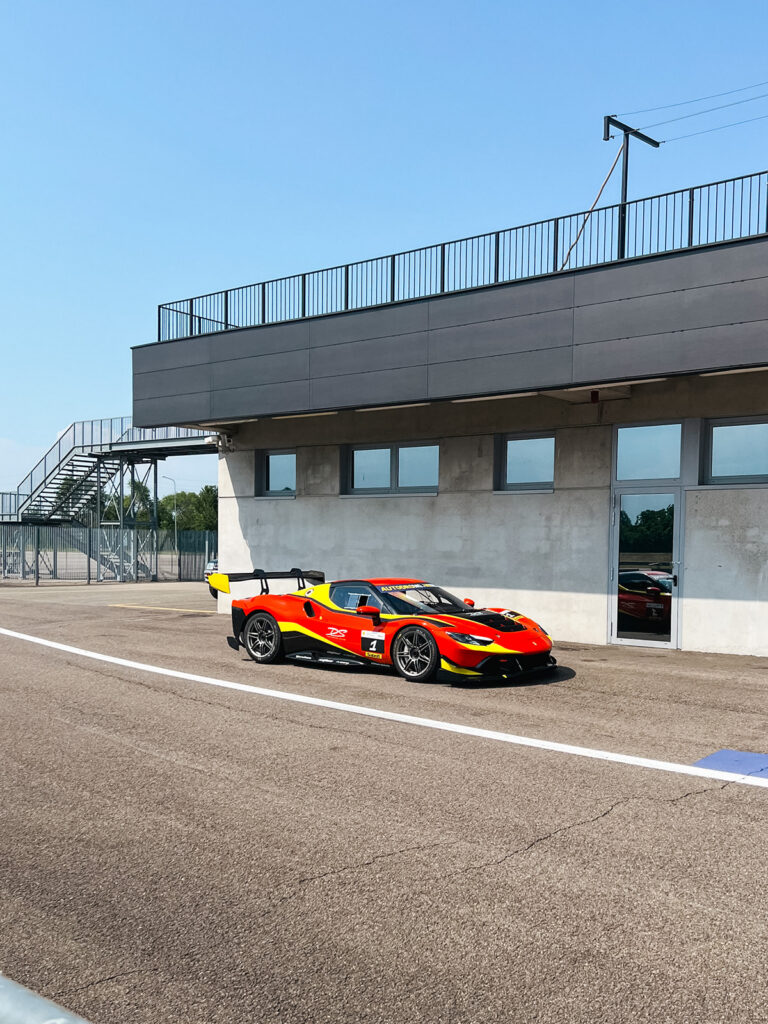
Quick Facts: Ferrari 296 Challenge Driving Experience
- Location: Autodromo di Modena, Marzaglia, Modena, Italy
- Car: Ferrari 296 Challenge
- Engine: 2,992cc, 120-degree twin-turbocharged V6
- Hybrid System: None
- Power: 700 horsepower at 7,500 rpm
- Torque: 740 Nm
- Transmission: Seven-speed dual-clutch transmission
- Drive: Rear-wheel drive
- Aerodynamics: More than 870 kilograms of downforce at 250 km/h in maximum-downforce configuration
- Circuit Length: 2,007 meters, or approximately 1.25 miles
- Corners: 11
- Track Width: 12 meters
- Instruction: Professional instructor rides in the passenger seat
- Booking: Available to members of the public who meet the operator’s requirements
- Experience Format: Briefing, reconnaissance lap, instructed driving laps, helmet, intercom, and track support
- Nearby Attractions: Ferrari Museum Maranello, Museo Enzo Ferrari in Modena, Museo Horacio Pagani, and the Ferrari factory district
Frequently Asked Questions
Can anyone drive a Ferrari 296 Challenge at Autodromo di Modena?
Yes. Public driving experiences are available through independent operators, subject to track availability and the operator’s age, licensing, health, and participation requirements. You do not need to own a Ferrari or compete in the Ferrari Challenge series.
Is an instructor in the car?
Yes. A professional instructor occupies the passenger seat and communicates with the driver through an intercom. The instructor explains braking points, racing lines, shifting, and track procedures.
How is the Ferrari 296 Challenge different from the 296 GTB?
The 296 GTB is a street-legal hybrid supercar producing approximately 819 horsepower. The 296 Challenge is a non-hybrid competition car producing 700 horsepower. It features racing aerodynamics, competition brakes, specialized tires, a stripped interior, a roll cage, racing suspension, and track-focused electronics.
Is the Ferrari 296 Challenge faster than the 296 GTB?
The GTB has greater total power because of its hybrid system, but the Challenge is designed to produce faster and more consistent circuit performance. Its lower weight, aerodynamic downforce, racing tires, brakes, suspension, and competition electronics allow it to brake later and carry much greater speed through corners.
How many laps are included?
The Motorsport Maranello program currently advertises at least five driving laps plus a reconnaissance ride. Packages can change, so drivers should confirm the lap count when booking.
How long is Autodromo di Modena?
The circuit is 2,007 meters long, approximately 1.25 miles, and features 11 corners.
What should I wear?
Wear comfortable clothing and flat, thin-soled shoes suitable for driving. The operator provides a homologated helmet and intercom. Confirm whether additional racing apparel is required before arriving.
Should I reserve the experience in advance?
Yes. Track availability varies because the circuit also hosts testing, training, private events, and other driving programs. Advance booking is strongly recommended.






Might need to book this for my husband to balance out all of the wine tastings and shopping.
How much time do you really need to do this? Half day? A few hours?
Sounds like you don’t really get enough time to learn the track or car, but I bet it is still a blast.