
 Michael Satterfield
The incredible story of Veritas, a one-off coachbuilt BMW-powered roadster that combined prewar racing engineering with America’s wildest Jet Age styling.
At first glance, the car looks like something a German coachbuilder created after spending an afternoon studying American concept cars, drinking a few too many cocktails, and deciding everything needed more chrome and bigger tailfins. There is a little bit of truth to that assessment.
Beneath its extraordinary bodywork is the heart of a legitimate German sports car, one descended from the legendary BMW 328. Its story spans the rebirth of European motorsport after World War II, the American fascination with jet aircraft, an eccentric Illinois collector, and an unlikely home at Dale’s Wheels Through Time Museum in Maggie Valley, North Carolina.
The result is one of the most unusual automobiles to emerge from the postwar era, a machine that is simultaneously fascinating, confusing, and entirely unforgettable.
The Birth of Veritas
In the years immediately following World War II, Germany’s once-dominant automotive industry faced a difficult road to recovery. Factories were damaged or destroyed, resources were scarce, and the country struggled to rebuild its economy. For enthusiasts who wanted to return to racing, the situation was particularly challenging.
Before the war, manufacturers such as Mercedes-Benz, Auto Union, and BMW had established Germany as a powerhouse in international motorsport. BMW’s 328, introduced in 1936, had become one of the most successful small-displacement sports cars of its generation, culminating in an overall victory at the 1940 Mille Miglia.
After the war, these machines became valuable starting points for a new generation of racing cars. In 1947, former BMW racing engineer Ernst Loof joined forces with Georg Meier and Lorenz Dietrich to establish Veritas, a small company dedicated to producing competitive sports and racing cars.
Rather than designing entirely new mechanical components, the company initially relied on existing BMW 328 engines and running gear, often supplied by customers who wanted to transform their aging BMWs into modern competition machines.The results were remarkably successful.
Racing driver Karl Kling became one of Veritas’ earliest customers, winning the German two-liter sports car championship in 1947. The company’s streamlined racing machines soon became familiar sights at German circuits, establishing Veritas as one of the country’s most promising postwar manufacturers.
That success drove demand for road-going sports cars, and by 1949, Veritas offered a selection of models that brought its racing heritage to the street. Among them was the SP90, a sophisticated sports car that combined BMW mechanical components with bespoke European coachwork.
Hermann Spohn: From Maybach Elegance to American Excess
To understand what happened to the SP90, it helps to know the company responsible for its remarkable appearance. Carosseriebau Hermann Spohn was established in Ravensburg, Germany, in 1920 and became particularly well known for its relationship with Maybach, producing luxurious bodies for some of the country’s most prestigious automobiles.
Before World War II, Spohn’s creations were generally elegant, carefully proportioned, and restrained. The company worked in an era when wealthy buyers could select an automobile chassis and commission a specialist coachbuilder to create a body tailored to their preferences.
But the automotive world changed dramatically after the war. Germany’s luxury market had largely collapsed, forcing independent coachbuilders to seek new customers. Spohn found an unexpected audience among American servicemen stationed in Germany, many of whom wanted their American automobiles customized with distinctive European coachwork.
The results could be spectacular, although not always in the traditional sense. In the early 1950s, American automotive designers embraced the Jet Age. General Motors styling chief Harley Earl was creating futuristic dream cars influenced by aircraft, rockets, and the promise of a technologically advanced future. Spohn enthusiastically embraced these trends, sometimes taking them far beyond Detroit’s own designers. That adventurous approach would transform one particular Veritas into an automotive curiosity.
The One-of-a-Kind Veritas SP90
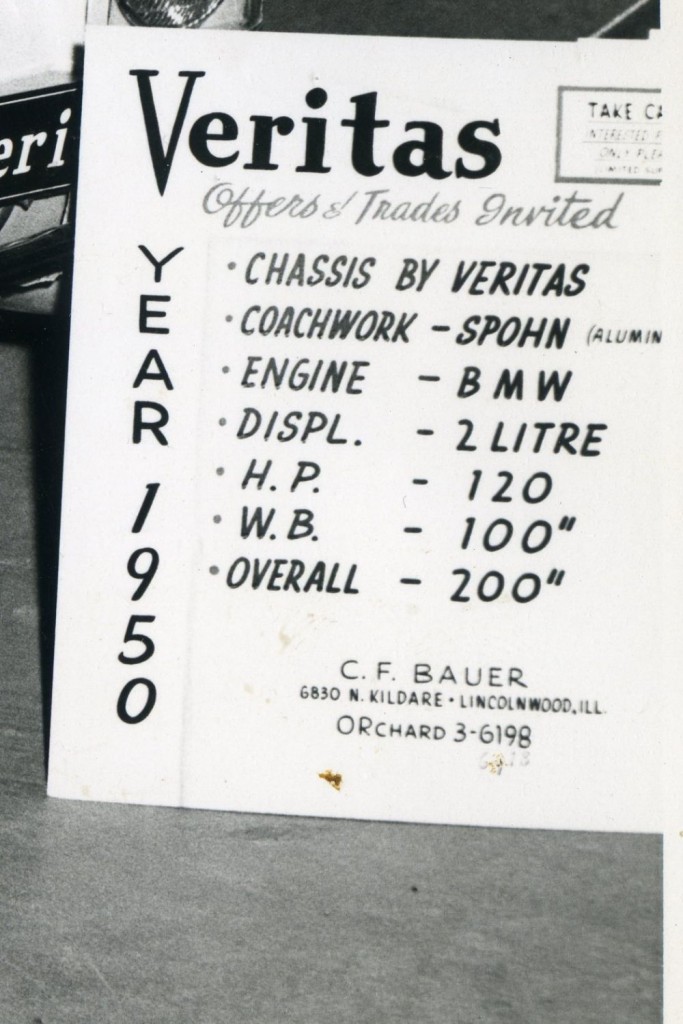
The car featured here is chassis number 5089, originally constructed around 1949 as a comparatively conventional Veritas SP90 cabriolet. Its original owner remains unidentified, but early in the car’s life, it was returned to Spohn for an extensive redesign.
According to historical accounts, the transformation took place around 1952, when the influence of General Motors’ remarkable 1951 Le Sabre concept car was making its way across the Atlantic. The Le Sabre was an outrageous vision of America’s automotive future, incorporating aircraft-inspired styling, dramatic tailfins, and an assortment of futuristic design elements. Whoever commissioned the Veritas redesign apparently wanted something similar, but on a much smaller German sports car. Spohn obliged.
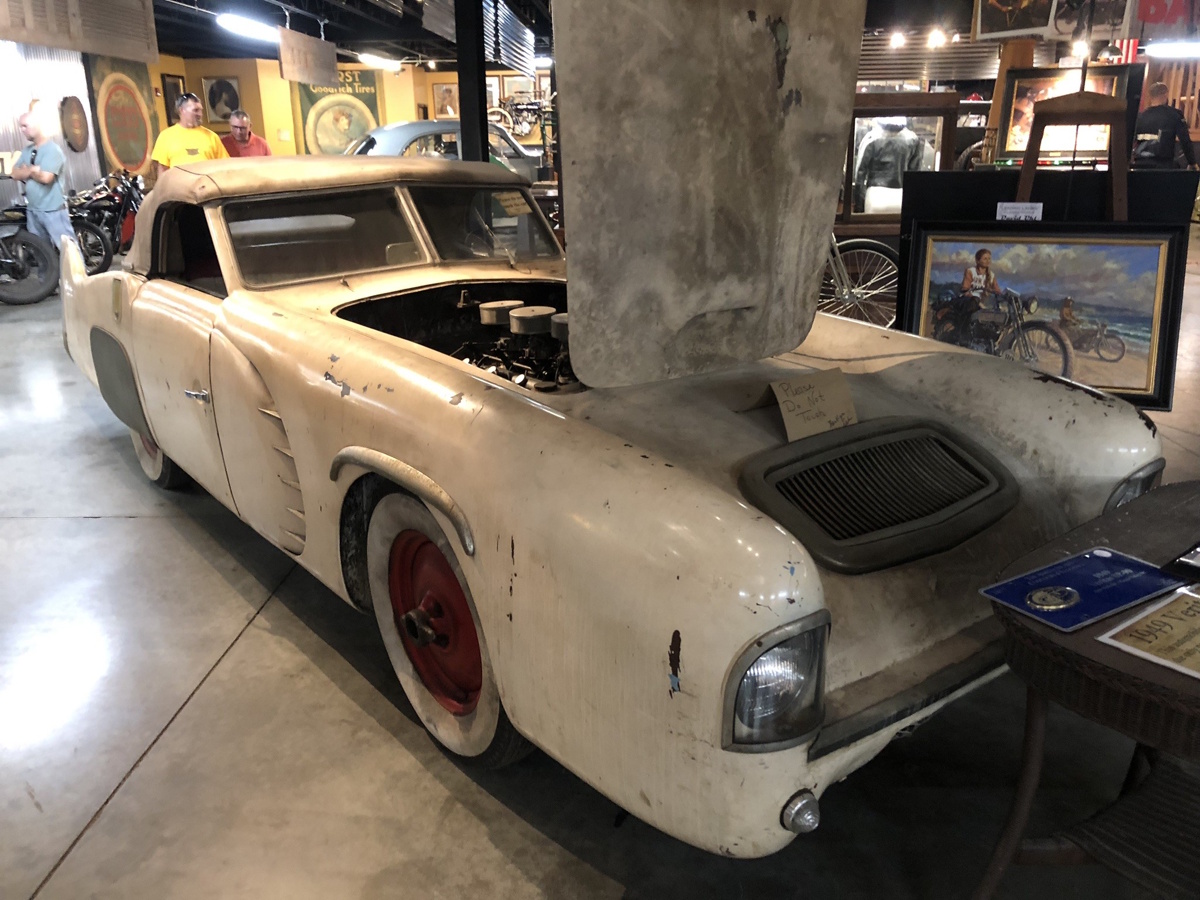
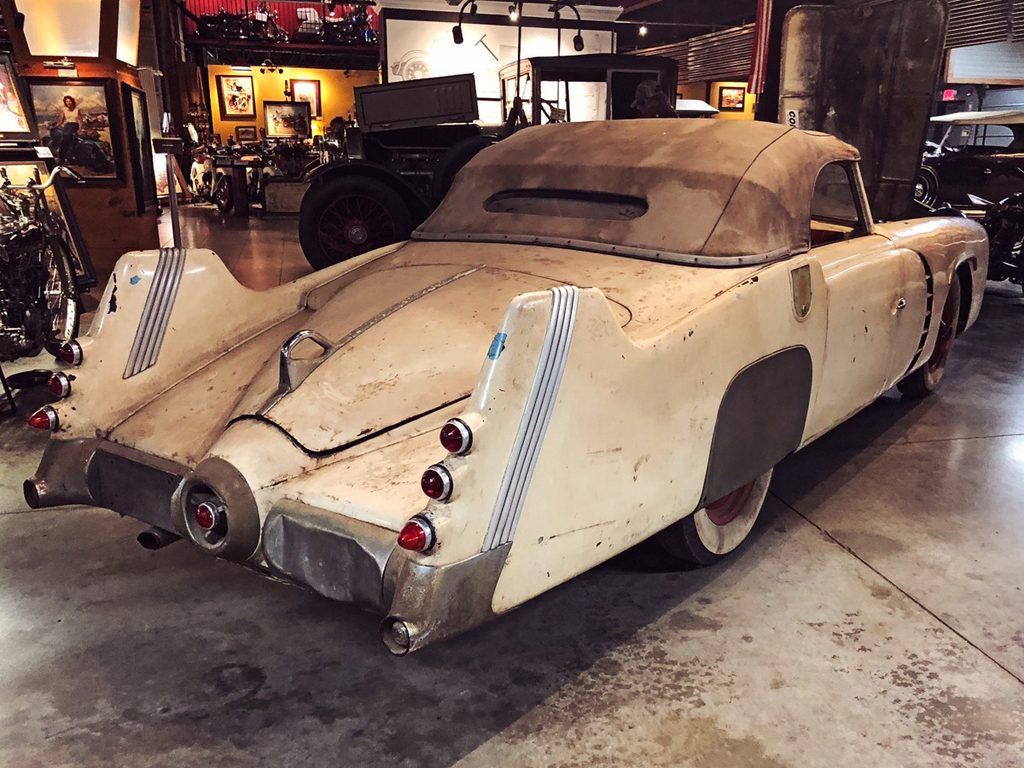
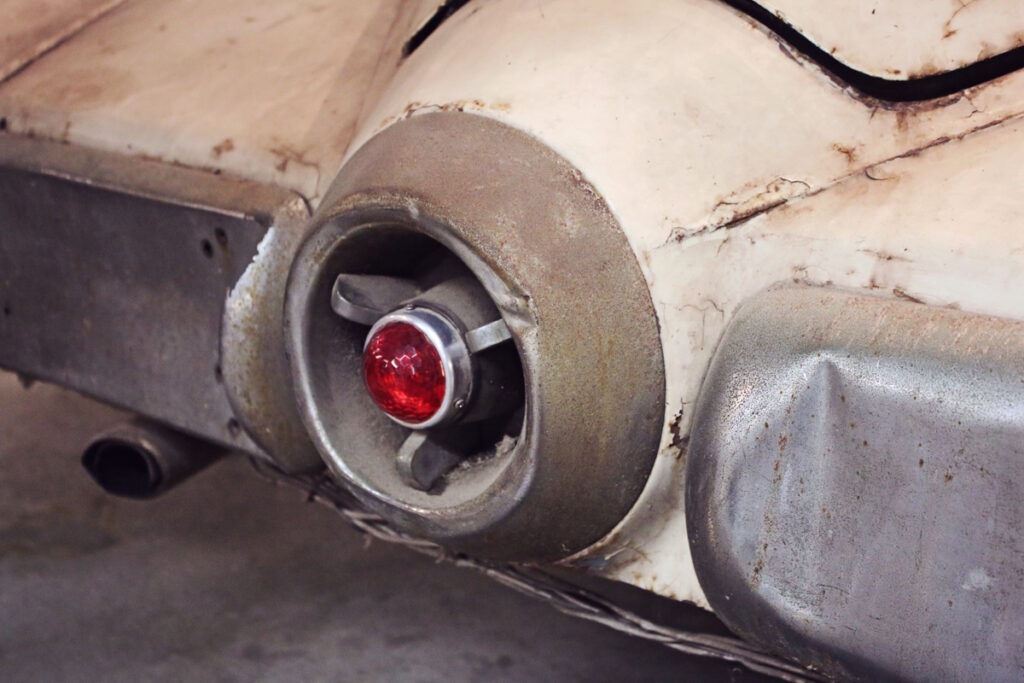
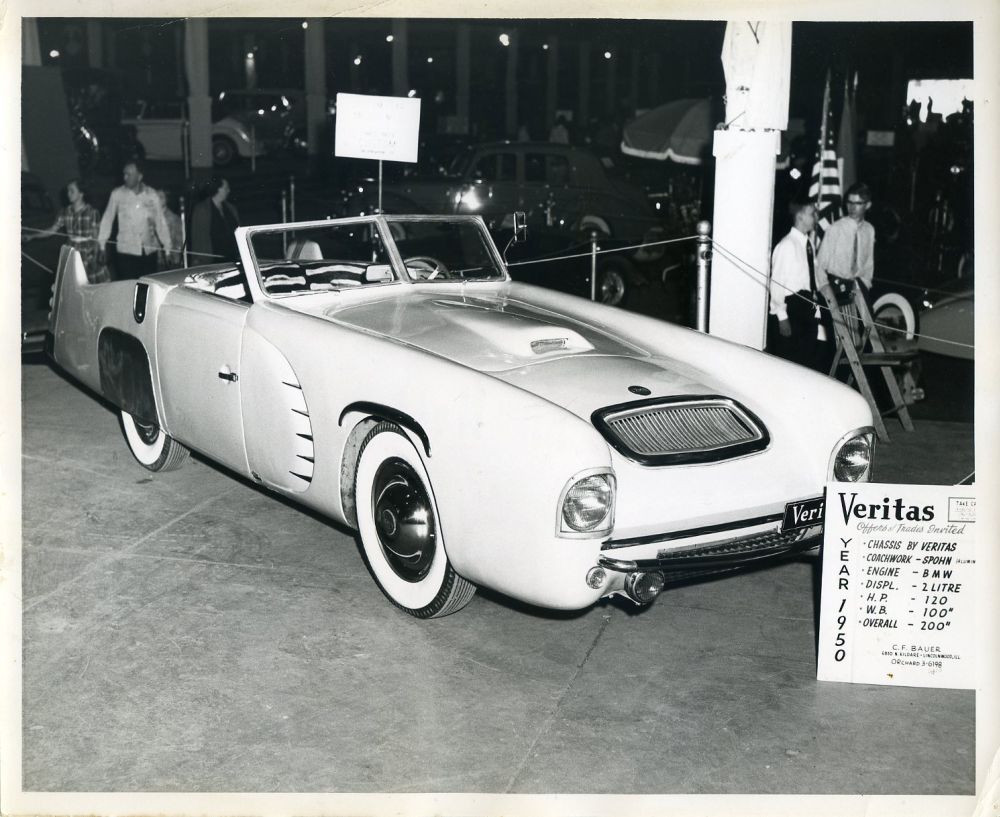
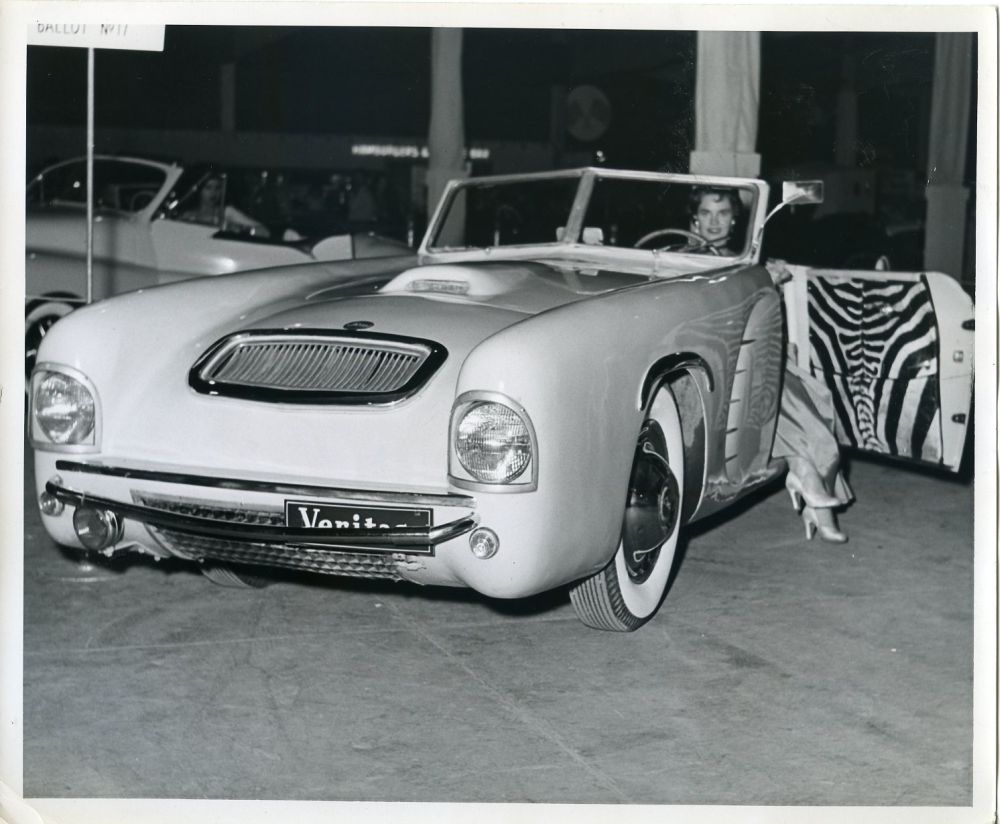
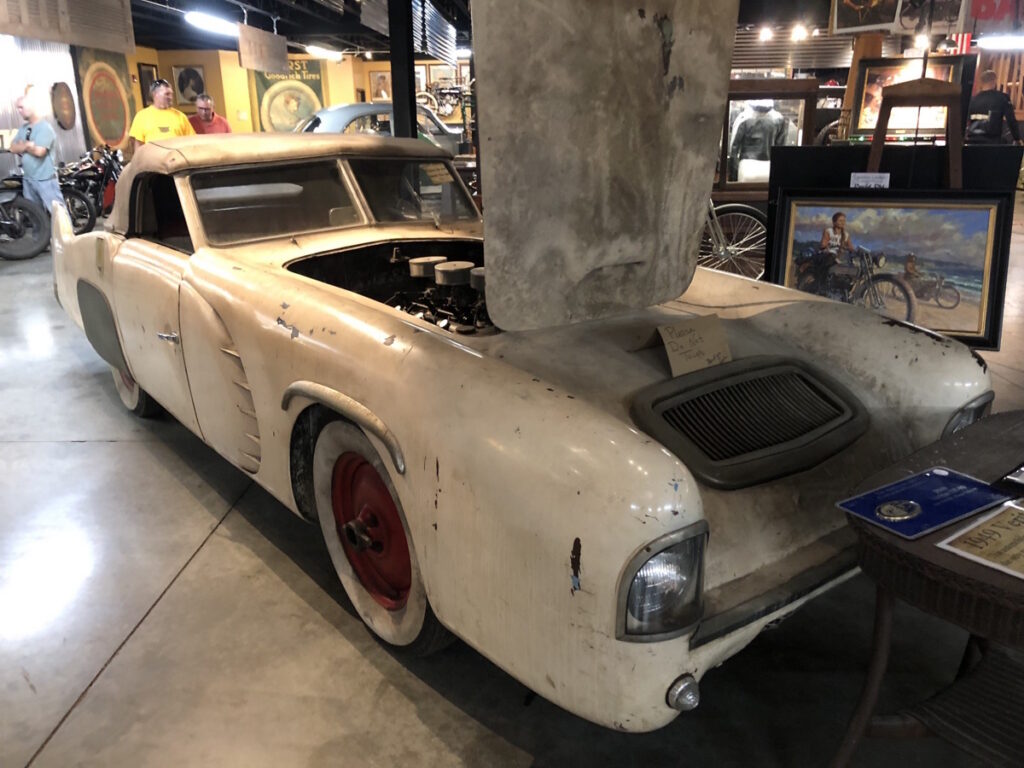
The resulting machine featured enormous rear tailfins that rose dramatically above the body, a redesigned front end with unusually positioned headlights, an almost horizontal decorative grille, and extravagant chrome detailing. The narrow European chassis and oversized American styling elements created proportions unlike virtually anything else on the road.
Period photographs suggest the car originally wore turquoise paint, whitewall tires, Cadillac-style hubcaps, and chrome trim around the rear wheels. Some historical research even indicates that, at one point in its life, the car featured zebra-pattern interior upholstery.
Accounts of its development suggest the coachbuilder modified the car several times, gradually adding and revising the futuristic styling elements until it reached its final configuration. Whether the resulting design was attractive is still debated.
What cannot be disputed is its originality. This was coachbuilding in its most literal form, when a customer could arrive with an automobile and leave with something entirely different.
A BMW 328 Beneath the Fins
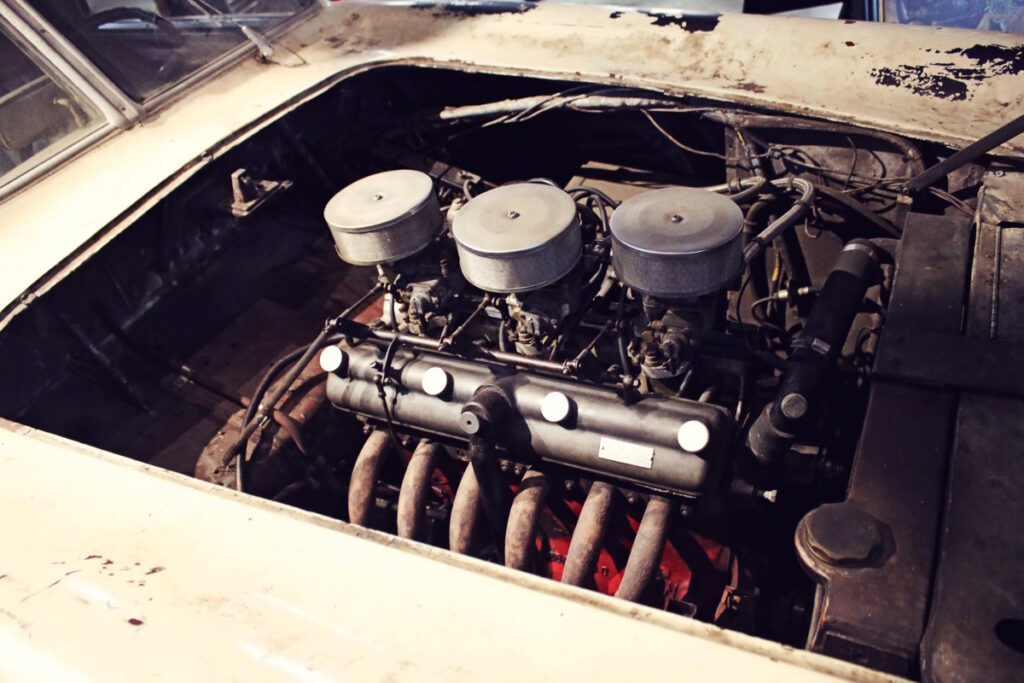
Despite its extravagant appearance, the Veritas retained mechanical components rooted in the highly respected BMW 328. The engine was a 1,971cc inline-six with a sophisticated cylinder-head design, derived from the same engine family that powered BMW’s celebrated prewar racing cars.
In the original BMW 328, the engine produced approximately 80 horsepower. Veritas modified these engines for its own applications, extracting additional performance through tuning and induction-system improvements. A more recent specification for chassis 5089 lists approximately 100 horsepower.
That might seem modest by modern standards, but the Veritas was conceived during an era when lightweight construction and mechanical efficiency mattered considerably more than impressive horsepower figures. Its BMW underpinnings reminded everyone that, despite the theatrical exterior, this strange roadster came from genuine racing stock.
The Veritas company itself would not survive the decade. Financial problems, limited production, and the difficulties of running a small manufacturer in postwar Germany eventually ended the original enterprise in the early 1950s. Its automobiles, however, would endure as fascinating examples of Germany’s determination to return to the international sports car scene.
From Germany to an Illinois Barn
The next chapter in the Veritas’ story unfolded thousands of miles from the workshop where it was built. According to the car’s documented ownership history, an American serviceman brought the unusual roadster to the United States during the early 1950s.
In 1965, R.J. Mrofka purchased the car and reportedly struggled to get its unfamiliar BMW six-cylinder engine running. Mrofka eventually sold the car to his friend Lee Roy Hartung of Glenview, Illinois. Hartung was an extraordinary character in his own right.
A businessman involved in the scrap and recycling industry, he spent decades assembling an enormous collection of automobiles, motorcycles, bicycles, automotive memorabilia, and assorted mechanical curiosities. He kept his collection in an expansive barn, where remarkable machines sat alongside everyday artifacts most people would have discarded.
The Veritas joined that collection and remained largely untouched for decades. Over the years, the car accumulated dust, and its once-vibrant paint faded to a weathered cream color. Traces of its original turquoise paint remained visible beneath the aging exterior.
While other examples of rare postwar sports cars were restored, repainted, and polished for concours lawns, the Veritas quietly retained much of its unusual appearance and history. Then, in 2011, Hartung’s remarkable collection came to auction.
Dale Walksler and Wheels Through Time
Following Hartung’s death, Auctions America organized a massive sale of his collection in Glenview. Among the bidders was Dale Walksler, the legendary motorcycle collector and founder of Dale’s Wheels Through Time Museum in Maggie Valley, North Carolina.
Walksler had known Hartung and was helping with the motorcycles in the collection. Although his interests were primarily focused on historic American motorcycles, the extraordinary Veritas captured his attention. According to a contemporary Autoweek report, Walksler’s fascination began when auction personnel asked him to climb into the car and help steer it.
What followed was an unexpected purchase. The strange German roadster became the highest-selling automobile at the Hartung auction, bringing approximately $195,500 in November 2011.
For a man best known for collecting some of the rarest American motorcycles, the BMW-powered German custom might have seemed an unusual acquisition. Then again, anyone familiar with Wheels Through Time knows that Walksler appreciated mechanical individuality, particularly when it came with an extraordinary story.
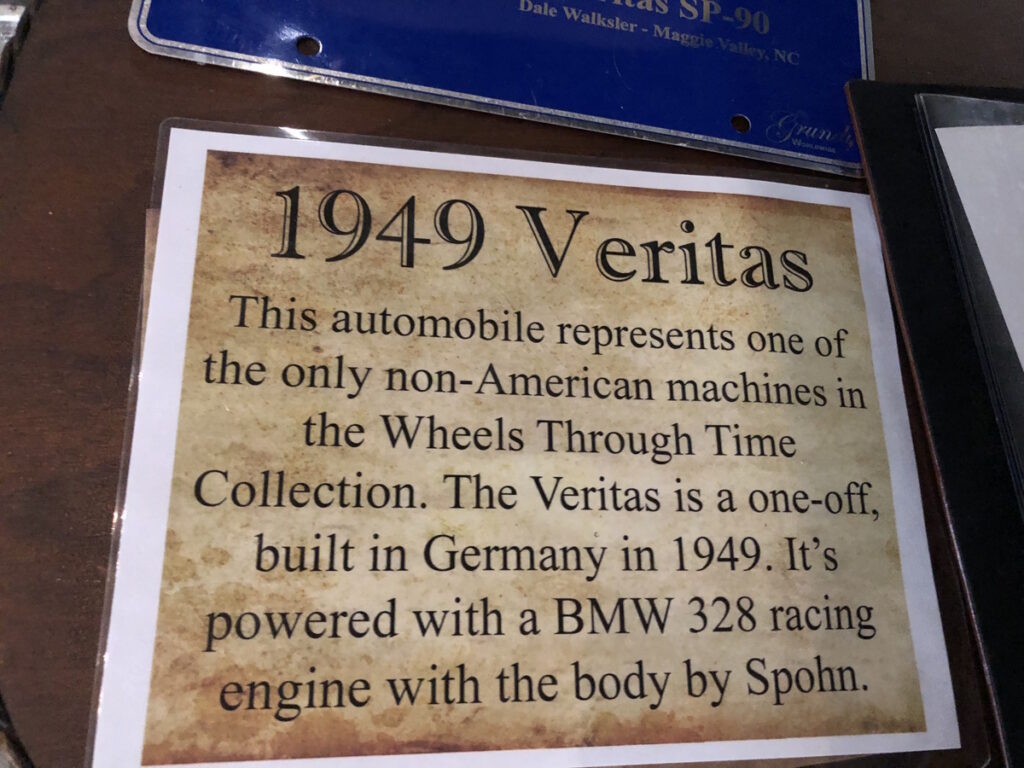
Walksler and fellow enthusiast Eugene Smyers transported the Veritas to North Carolina, where they worked to bring the long-dormant machine back to life. In March 2012, Wheels Through Time announced it would display the unusual German car during a special museum opening.
It was a fitting home for a machine that defied ordinary classification. The car also appeared on the television series Chasing Classic Cars, when collector Wayne Carini visited Wheels Through Time. Carini had pursued the Veritas at the Hartung auction but lost the bidding to Walksler. Seeing the car again, this time running, made for an entertaining reunion.
From Barn Find to Concours Car
In 2013, the Veritas appeared at the Amelia Island Concours d’Elegance, appropriately joining a special class celebrating unusual designs and eccentric automotive experiments. The class was called “What Were They Thinking?” For the Spohn-bodied Veritas, it was difficult to imagine a more suitable designation.
Rather than fully restoring its cosmetics, the car was mechanically recommissioned while retaining the patina it had acquired during decades of storage. That decision preserved the car’s extraordinary authenticity. Its weathered finish, aging interior, and slightly surreal appearance were part of its appeal.
The BMW-Veritas later appeared through specialist dealer Hyman Ltd., which offered it as an exceptionally rare example of German postwar coachbuilding. More recently, the car has resurfaced in Germany. As of October 2026, specialist dealer Gassmann GmbH in Bovenden advertises the Veritas SP90 by Spohn for $785,000. The listing identifies chassis 5089, engine number 97812, a 1,971cc six-cylinder engine, and a first registration date of July 1950.
The dealer also indicates that the automobile is undergoing restoration, potentially beginning another chapter in its remarkable existence. For a car that spent much of its life gathering dust in an Illinois barn, that is quite a journey.
Quick facts
| Detail | Information |
|---|---|
| Vehicle | BMW-Veritas SP90 by Spohn |
| Model year | 1949, first registered July 1950 |
| Chassis number | 5089 |
| Engine | BMW-derived 1,971cc inline-six |
| Listed output | Approximately 100 hp |
| Coachbuilder | Hermann Spohn, Ravensburg, Germany |
| Coachwork redesign | Around 1952 |
| Historic owner | Lee Roy Hartung |
| Later owner | Dale Walksler, Wheels Through Time |
| 2011 auction result | Approximately $195,500 |
| 2026 advertised price | €699,000 |
Frequently asked questions
Was the Veritas SP90 actually manufactured by BMW?
No. Veritas was an independent German manufacturer founded by former BMW racing personnel. Its early vehicles used BMW components, particularly the engine and running gear from the BMW 328.
Is the Spohn-bodied Veritas a one-of-one automobile?
The dramatic, Jet Age redesign of chassis 5089 is considered unique. Spohn produced several other bodies for Veritas, but this example stands apart because of its extreme American-inspired styling.
Why is the car sometimes listed as a 1949 and sometimes a 1950?
Historical accounts identify it as a 1949 car, while its current German dealer lists July 1950 as its first registration. The dramatic custom bodywork is believed to have been created around 1952.
Was the BMW-Veritas displayed at Wheels Through Time?
Yes. Dale Walksler purchased the car in November 2011, and the museum announced its display for a special opening in March 2012. The car was also featured on Chasing Classic Cars.