
 Michael Satterfield
It was summer, my nephew was staying with us, and I had more free time than good sense. There was only one reasonable way to deal with the situation: load up the car and head across the Southwest.
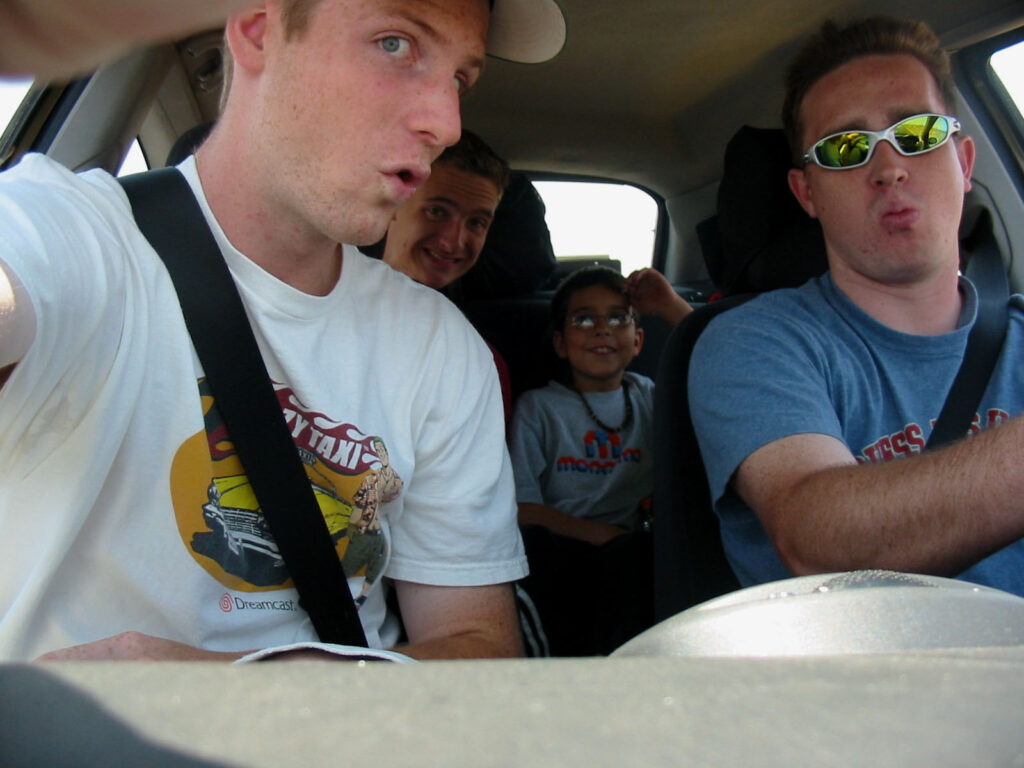
My best friend Roman, my nephew Nico, and I left Ontario, California, in my Ford Focus ZX3 Kona Edition. Our plan was to pick up my cousin Nathan outside Casa Grande, Arizona, and then spend the next few weeks wandering through the desert, mountains, historic towns, national parks, and roadside attractions of Arizona.
The Focus was not exactly designed to carry four people, weeks’ worth of luggage, and the accumulated debris of an American road trip. Still, optimism has always been cheaper than renting a larger car.
Our first major stop was Casa Grande Ruins National Monument in Coolidge, Arizona. The centerpiece of the monument is the Casa Grande, or Great House, a four-story earthen structure built by the Ancestral Sonoran Desert People around 1350. Its original purpose remains something of a mystery. It may have served as a gathering place, an astronomical observation point, or a landmark within a much larger agricultural community. The building was constructed from caliche, a hard mixture of desert soil, clay, sand, and calcium carbonate. Despite centuries of exposure to the Arizona climate, much of the Great House remains standing beneath a large protective canopy.
Casa Grande also holds an important place in American preservation history. In 1892, the federal government set aside the site as the nation’s first archeological reserve, helping establish the idea that ancient cultural places deserved protection alongside scenic landscapes.
After touring the ruins, Nathan called and told us to meet him at a nearby Burger King. When we arrived, we found him standing outside in roughly 110-degree heat, apparently testing whether a person could be flame-broiled before entering the restaurant. Nathan squeezed into the back seat, and our four-man Arizona expedition was officially underway.
Taking the Back Road to Prescott
We headed north toward Phoenix, where we stopped for lunch before continuing toward Prescott. Phoenix has always struck me as one of those cities, like Las Vegas, that inspires a basic question: Who looked across this sunbaked landscape and said, “This seems like a fine place for several million people”?
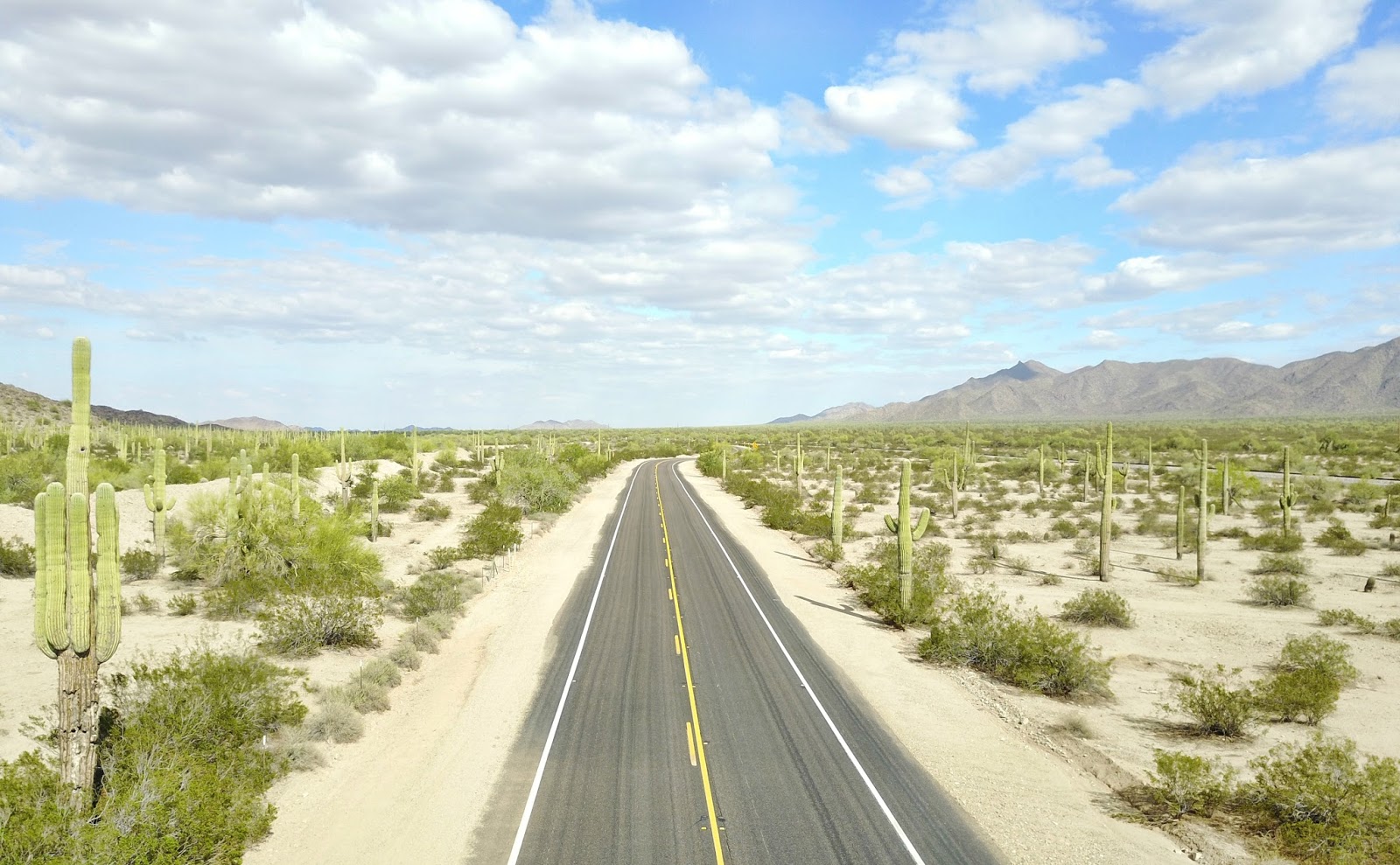
Rather than taking the fastest route, we chose the more interesting one. We followed US Highway 60 through Wickenburg before joining Arizona Highway 89 through Congress and Yarnell. The road climbs out of the Sonoran Desert, twisting through rocky hills and higher elevations until the saguaros give way to juniper, pine trees, cooler air, and mountain lakes.
It is one of Arizona’s great transitions. Within a few hours, the landscape changes so dramatically that it feels as though you have crossed several states.
My great-grandparents, Granny and Papa, had lived in Prescott for more than 30 years and were still living independently. Visiting them was one of the most important stops on the trip. Roadside attractions are wonderful, but family is what gives a road trip its real geography.
We spent the night at their house, and Granny made certain we ate enough food to survive not only the remainder of the trip, but possibly the coming winter.
Williams and the Grand Canyon
The next morning, we left Prescott and headed north toward Interstate 40 and Williams, Arizona.
Williams is one of the classic gateway towns of the American West. Historic Route 66 runs directly through downtown, lined with neon signs, restaurants, motels, and storefronts that recall the years when the Mother Road carried travelers across northern Arizona.
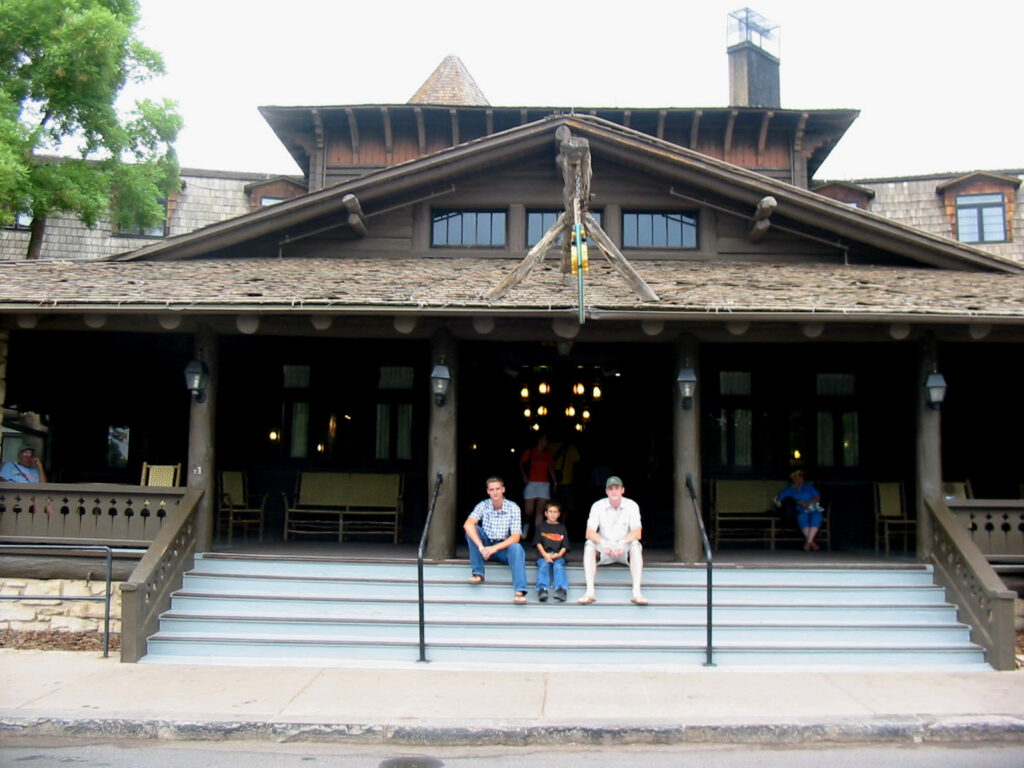
We checked into a hotel, unloaded the Focus, and drove north on Highway 64 toward the South Rim of the Grand Canyon.
I had visited the canyon several times, but Nico had never seen it. Watching someone experience the Grand Canyon for the first time is almost as memorable as seeing it yourself.
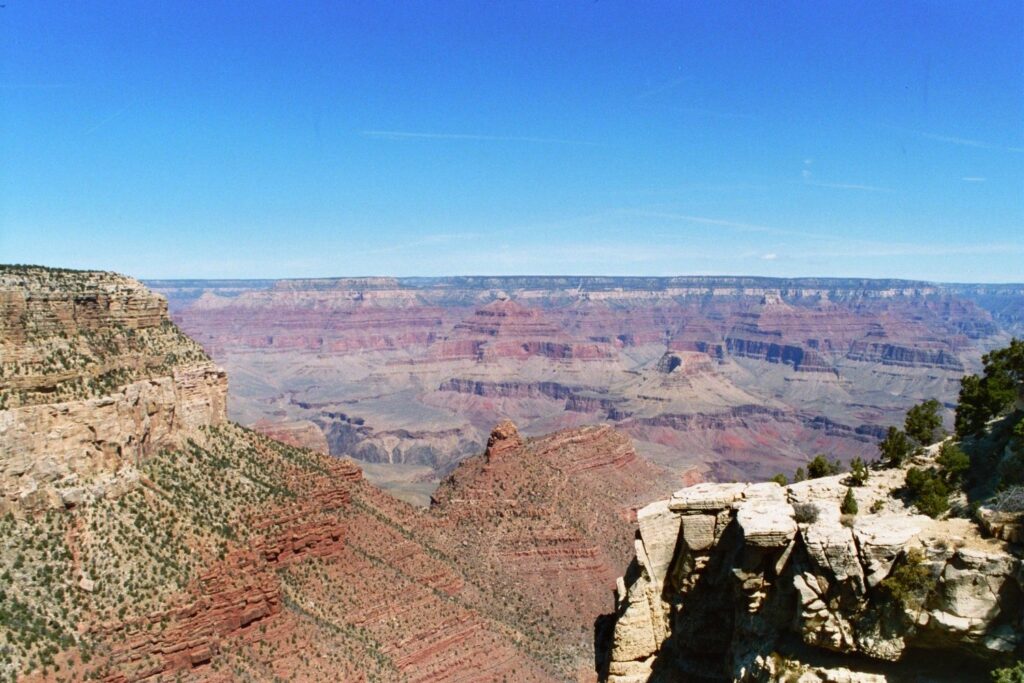
Photographs do a poor job of preparing you for its size. You can understand the measurements and study the maps, but the numbers remain abstract until you are standing at the edge. The canyon seems less like a place and more like a continent that has been split open.
Nico walked toward the rim, took in the view, and fell quiet. That reaction alone made the drive worthwhile.
We spent the day exploring overlooks along the South Rim before returning to Williams in search of a proper dinner.
Dinner on Route 66 at Rod’s Steak House
For dinner, we went to Rod’s Steak House on historic Route 66.
Rod’s opened in 1946 and had the sort of genuine American roadside character that modern restaurants spend fortunes trying to reproduce. It had neon, Western decor, a cow-shaped menu, and enough local history to fill a museum.
Most importantly, it served steak. After a full day at the Grand Canyon, there are moments when a salad simply will not do. We ordered large slabs of beef and settled into the kind of meal that makes you appreciate old restaurants, familiar recipes, and establishments that have been feeding travelers for generations.
Williams understands its role as a road-trip town. It does not apologize for the neon, the souvenirs, or the nostalgia. That is precisely why it works.
Enjoying this story?
Join The Gentleman Racer email list to continue reading.
Occasional updates. Unsubscribe anytime.
Arizona Road Trip: Red Rocks and Modern Hippies in Sedona
After the Grand Canyon, we decided we needed a few slower days. Sedona seemed like the right place to recover.
I had not visited in years and quickly discovered that Sedona had attracted a polished strain of modern bohemian. These were not the old-fashioned hippies who arrived in battered Volkswagen buses. These were boutique hippies who shopped for crystals, discussed energy fields, and arrived in late-model Land Rovers.
Whatever its spiritual frequency might be, Sedona remains one of the most beautiful places in Arizona. Red sandstone formations rise in nearly every direction, changing color throughout the day as the sun moves across the landscape. We found a hotel, ate Mexican food, explored the shops, and began looking for places to escape the summer heat.
That search led us to Slide Rock State Park.
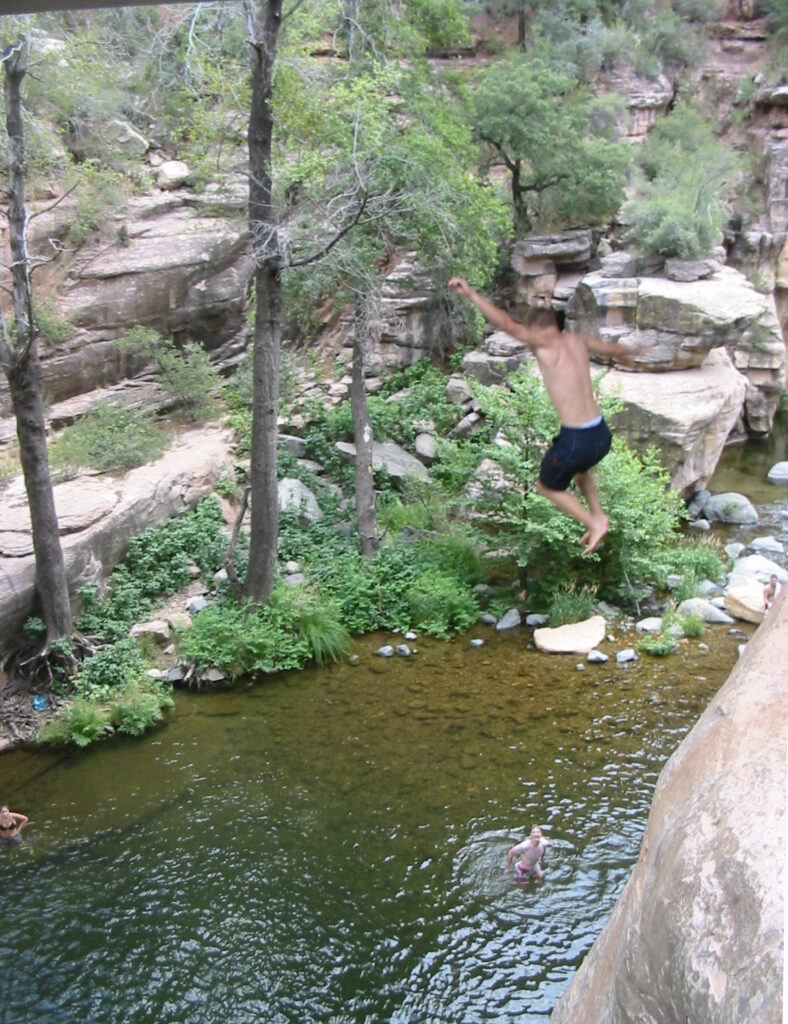
Swimming at Slide Rock State Park
Slide Rock State Park occupies a historic apple farm in Oak Creek Canyon north of Sedona. The park’s main attraction is an 80-foot stretch of sandstone where Oak Creek has created a natural water slide.
The cold creek water runs across smooth rock before dropping into a series of pools and swimming holes. During an Arizona summer, it feels less like a recreation area and more like a divine intervention.
We spent the day swimming, sliding, climbing over rocks, and trying not to fall in any manner that would require an explanation at an emergency room.
We enjoyed it so much that our planned stop in Sedona stretched into several days. Slide Rock can become crowded, particularly during summer, but it remains one of the best places in the area to cool off.
Spend at least a full day there. Wear shoes with decent traction, bring plenty of water, and accept that the creek will be colder than expected.
Montezuma Castle National Monument
Being the resident history nerd, I eventually forced everyone back into the car for more archeological sightseeing.
Our next stop was Montezuma Castle National Monument near Camp Verde. Despite its name, Montezuma Castle has no connection to the Aztec emperor Montezuma. European American settlers incorrectly assumed the structure had been built by the Aztecs and gave it a suitably dramatic name.
The five-story, 20-room cliff dwelling was constructed by the Southern Sinagua people beginning around the early 1100s. Built high into a limestone cliff above Beaver Creek, the structure used natural protection from flooding, summer heat, and potential threats.
Visitors can no longer enter the dwelling, but the view from the trail below is remarkable. The walls appear to grow directly from the cliff, illustrating how carefully the builders understood the landscape and available materials.
Tuzigoot National Monument
We also visited Tuzigoot National Monument near Clarkdale.
Tuzigoot is a ridge-top pueblo built by the Southern Sinagua beginning around 1100. Additional rooms were constructed over several generations, eventually creating a large community overlooking the Verde Valley.
Unlike Montezuma Castle, which is built into a cliff, Tuzigoot sits prominently on a hilltop. Walking through the remains provides a clearer sense of how the rooms connected and how the community was organized.
Together, Montezuma Castle and Tuzigoot offer two very different views of life in central Arizona centuries before modern highways and cities arrived.
The group tolerated my history lesson with admirable patience. I like to believe they were fascinated. They may simply have been waiting for lunch.
The Long Way Home Through Oatman
As usual, we decided to take the long way home.
Roman wanted to buy fireworks, which seemed like a perfectly sensible goal after several days of driving through extreme heat in a tightly packed hatchback. We turned west toward the old Route 66 town of Oatman, Arizona.
Roman and I had visited Oatman during Boy Scout trips to the Colorado River, so returning brought back memories of those annual adventures.
Oatman is a former mining town in Arizona’s Black Mountains. Today, its narrow main street is lined with wooden storefronts, souvenir shops, saloons, and staged Old West gunfights.
Its most famous residents are the burros.
The animals are descendants of the donkeys once used by local miners, and they now wander freely through town, stopping traffic and inspecting visitors for anything edible. One has occasionally been presented as Oatman’s unofficial mayor, which is probably no worse than some choices made by actual voters.
We spent time exploring the town, watching the burros, and revisiting a place connected to our younger years.
From Oatman, we continued toward Laughlin, Nevada, before finally turning west for California and home.
Why Arizona Is Made for Road Trips
Our Arizona road trip included ancient ruins, family visits, mountain roads, Route 66 neon, the Grand Canyon, Sedona’s red rocks, cold swimming holes, large steaks, and a town largely controlled by donkeys.
In other words, it was nearly perfect.
Arizona rewards travelers who avoid rushing. The major attractions are unforgettable, but the smaller moments are what hold the trip together: taking a back road instead of the interstate, eating dinner beneath an old neon sign, visiting relatives, finding a swimming hole, or stopping in a town simply because it looks interesting.
A good road trip does not need to be complicated. You need a reliable car, people you enjoy, enough time to get lost, and a willingness to take the long way home.
The Ford Focus may have been crowded, the desert was brutally hot, and our itinerary was barely an itinerary at all. But years later, I remember the trip more clearly than many journeys that were planned down to the minute.
That is the beauty of the American road trip. You start with a destination, but the road usually gives you the better story.
Arizona Road Trip Quick Facts
- Starting point: Ontario, California
- Primary destination: Arizona
- Trip style: Multiday Southwestern road trip
- Vehicle: Ford Focus ZX3 Kona Edition
- Major stops: Casa Grande Ruins, Phoenix, Prescott, Williams, Grand Canyon South Rim, Sedona, Slide Rock State Park, Montezuma Castle, Tuzigoot, Oatman and Laughlin
- Historic highways: Route 66, US Highway 60 and Arizona Highway 89
- Best trip length: Seven to 10 days, although a slower trip allows more time in Sedona and northern Arizona
- Best seasons: Spring and fall generally offer more comfortable temperatures, while summer requires additional preparation for extreme heat
- Ideal for: Families, history enthusiasts, road-trip fans, Route 66 travelers and anyone willing to share a compact hatchback with three other people
Frequently Asked Questions
How many days should I allow for an Arizona road trip?
Allow at least seven days for a route covering Casa Grande, Prescott, the Grand Canyon, Sedona and Oatman. Ten days or more will provide time to explore without spending every day rushing between destinations.
Can you visit the Grand Canyon from Williams, Arizona?
Yes. Williams is approximately 60 miles south of the Grand Canyon’s South Rim and is connected to the park by Arizona Highway 64. It is a popular base for visiting the canyon.
Is Slide Rock State Park worth visiting?
Slide Rock is one of the best summer stops near Sedona. Its natural sandstone slide and swimming areas provide relief from the heat, although the park can become crowded during weekends and holidays.
What ancient sites can be visited on this route?
The route includes Casa Grande Ruins National Monument, Montezuma Castle National Monument and Tuzigoot National Monument. Together, they provide insight into several Indigenous communities that lived in Arizona before European settlement.
Is Oatman worth the detour from Interstate 40?
Yes, particularly for travelers interested in Route 66 history. The twisting road through the Black Mountains, historic storefronts, staged gunfights and free-roaming burros make Oatman one of the most unusual stops in western Arizona.
What should travelers know about driving through Arizona in summer?
Summer temperatures can exceed 110 degrees in lower desert areas. Carry extra drinking water, inspect the vehicle before departure, keep the fuel tank from becoming too low, and avoid leaving people or animals inside a parked car.