
 Michael Satterfield
I remember the first time I saw a Pagani in the wild, it was 2004, and I was on a road trip across Europe with my cousin. We had just crossed into Monaco when the reverberating exhaust note of a Pagani Zonda Roadster ripped past my Peugeot 206sw. Before that moment, I had only seen a Pagani in Gran Turismo 3: A-Spec, and from then on, that quad exhaust and the sound it made were burned into my memory.
While owning a Pagani is not likely for most automotive enthusiasts, with the price of a new Pagani averaging over four million dollars, we can at least visit the factory and see some of them up close. The term factory is a little misleading; while they do produce vehicles at Pagani’s headquarters in San Cesario sul Panaro, just outside of Modena, it feels more like the automotive equivalent of a fine suitmaker’s shop.
Most automotive plants announce themselves with loading docks, security gates, employee parking lots, and the distant rhythm of industrial machinery. Pagani Automobili feels more like someone built a Renaissance workshop, added a small Italian town square, and then decided it would be a fine place to assemble some of the world’s most advanced automobiles.
Jennifer and I had the opportunity to tour the Pagani museum and factory during our tour of Italy’s Motor Valley. Our guide was Luca Venturi, who served as Pagani’s communications manager and helped shape the brand’s international identity during an important period of its growth.
Luca took us through the Horacio Pagani Museum, into the production atelier, and even into the office of Horacio Pagani himself. Near the end of the visit, we watched the team preparing to deliver a one-of-a-kind car to a client.
The car was covered, the details remained private, and the atmosphere carried the quiet concentration of a gallery preparing to reveal a newly commissioned painting. At Pagani, delivering a car does not feel like handing over a product. It feels like presenting a finished work.
A Factory That Refuses to Look Like One
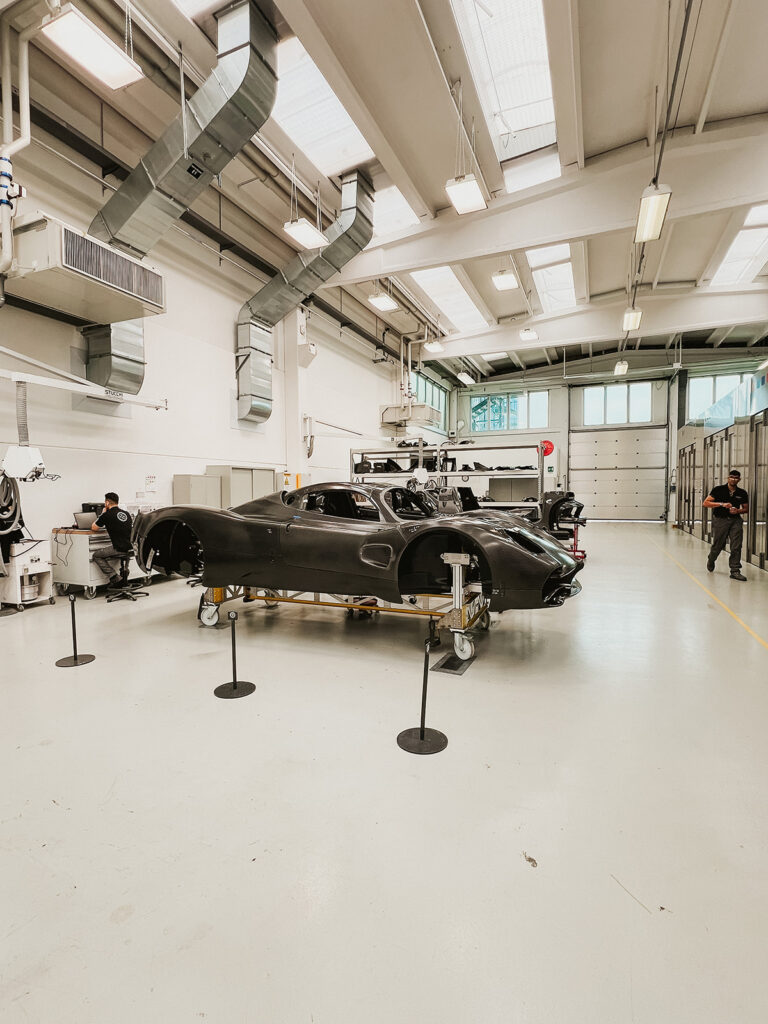
The Pagani factory is officially called an atelier, and the distinction matters. There is no conventional production line filled with hundreds of identical vehicles. Cars occupy individual workstations, surrounded by tools, carbon-fiber components, polished metal, leather, and technicians working with the patience of watchmakers. Pagani describes the process as one continuous story, beginning with sketches and models in the museum before continuing into a production space where carbon fiber is cut and components are formed and finished by hand.
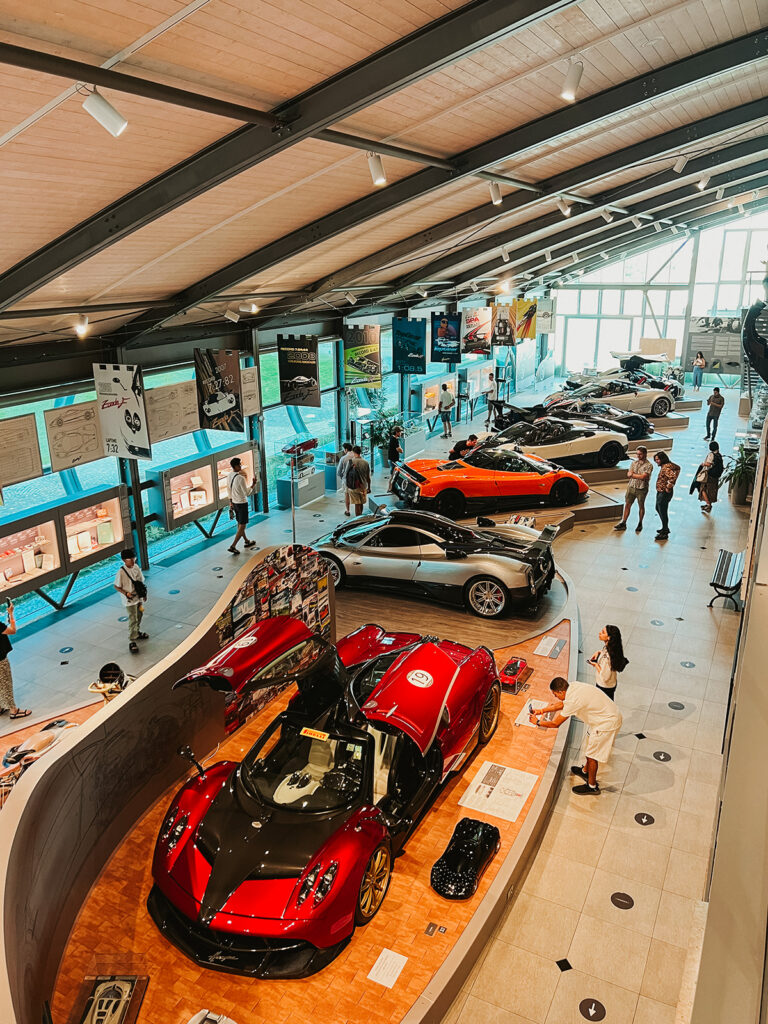
The current museum and atelier opened in 2017. Designed under the direction of Horacio Pagani and his team, the building combines glass, steel, brick, marble, street lamps, and architectural references to the region. The central production area resembles a carefully imagined Italian piazza, complete with traditional details that seem almost comically romantic until you notice a partially assembled hypercar sitting beneath them.
It is theatrical, but it is not a stage set. Every decorative choice reinforces Pagani’s belief that the environment in which something is created influences the finished object. Walk through a joyless warehouse, and you might build an appliance. Work beneath graceful arches, surrounded by art, history, and beautiful machinery, and you might be encouraged to make something worth remembering.
From Argentina to Italy
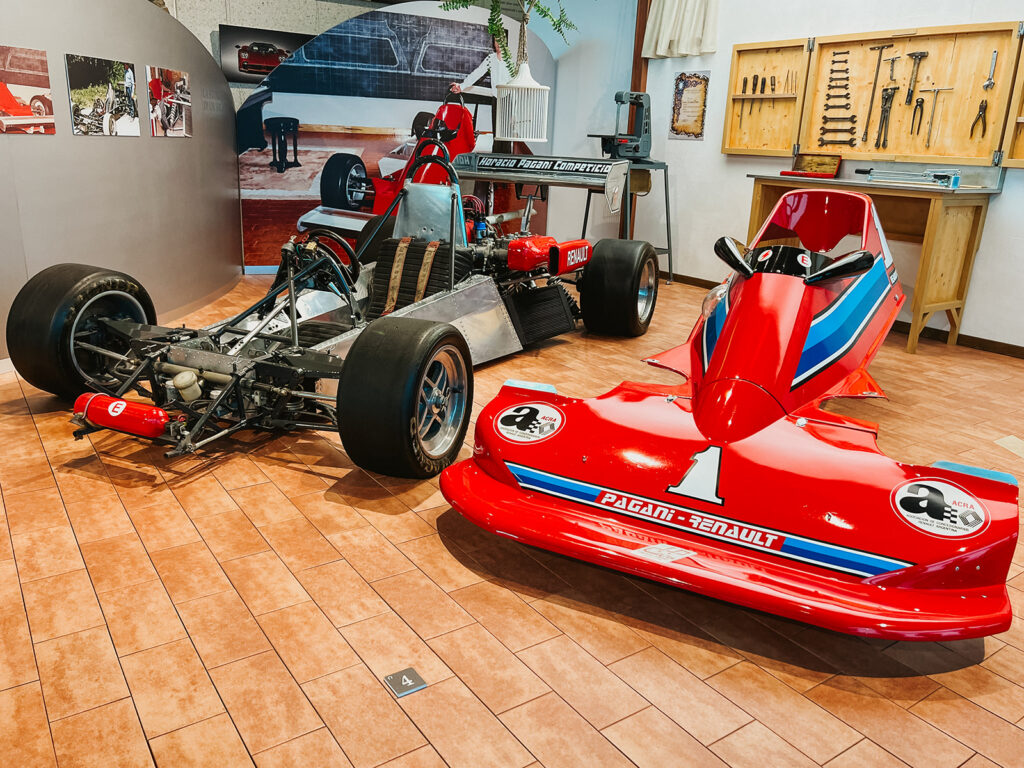
The story begins thousands of miles from Modena, in Casilda, Argentina. As a boy, Horacio Pagani carved model cars from balsa wood and became fascinated with Leonardo da Vinci’s belief that art and science should advance together. That idea became the foundation of his career. For Pagani, engineering could not merely support beauty, and beauty could not be pasted over engineering. The two had to be developed as parts of the same idea.
He studied industrial design and began building vehicles and mechanical projects in Argentina, including a Formula racing car. But Horacio understood that the center of the sports-car world was in northern Italy. He eventually arrived in Italy and found work at Lamborghini. His first responsibilities were modest, but his knowledge of design and composite materials soon moved him into more consequential projects.
The Lamborghini Connection
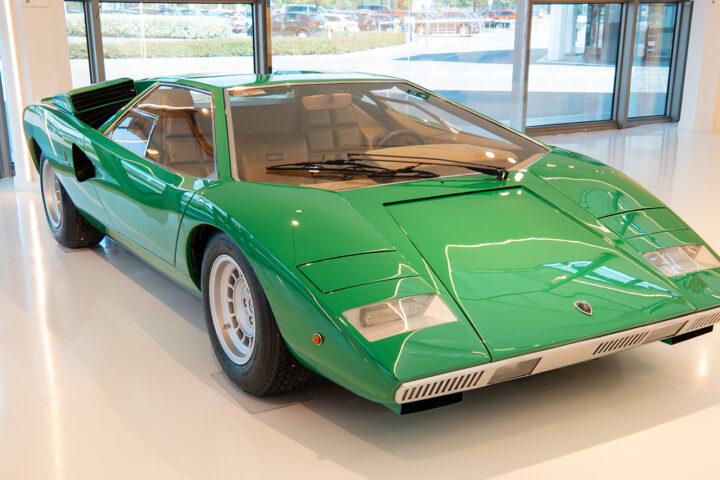
Pagani’s time at Lamborghini is one of the most important chapters in the company’s story. During the 1980s, carbon fiber was still an exotic material within the road-car industry. Horacio believed composites would become essential to creating cars that were lighter, stronger, and more expressive. At Lamborghini, he worked on composite development and projects that included the Countach Evoluzione and the Countach 25th Anniversary.
When Lamborghini declined to invest in an autoclave, equipment used to manufacture advanced carbon-fiber components, Horacio purchased one himself. It was an audacious decision for an employee, particularly one who had arrived in Italy with little more than a dream and a formidable work ethic. Pagani’s official history describes the purchase as a defining moment in his commitment to composite technology. His ideas eventually outgrew what he could accomplish within Lamborghini.
In 1991, he established Modena Design, a company focused on design, engineering, prototypes, and advanced composite materials. The work helped finance the development of his own automobile, originally conceived as the Fangio F1 in honor of Argentine Formula One champion Juan Manuel Fangio. After Fangio’s death, the project was renamed Zonda, after the powerful wind that sweeps down from the Andes across Argentina. Pagani Automobili was officially established in 1998. One year later, the Zonda C12 made its public debut at the Geneva International Motor Show.
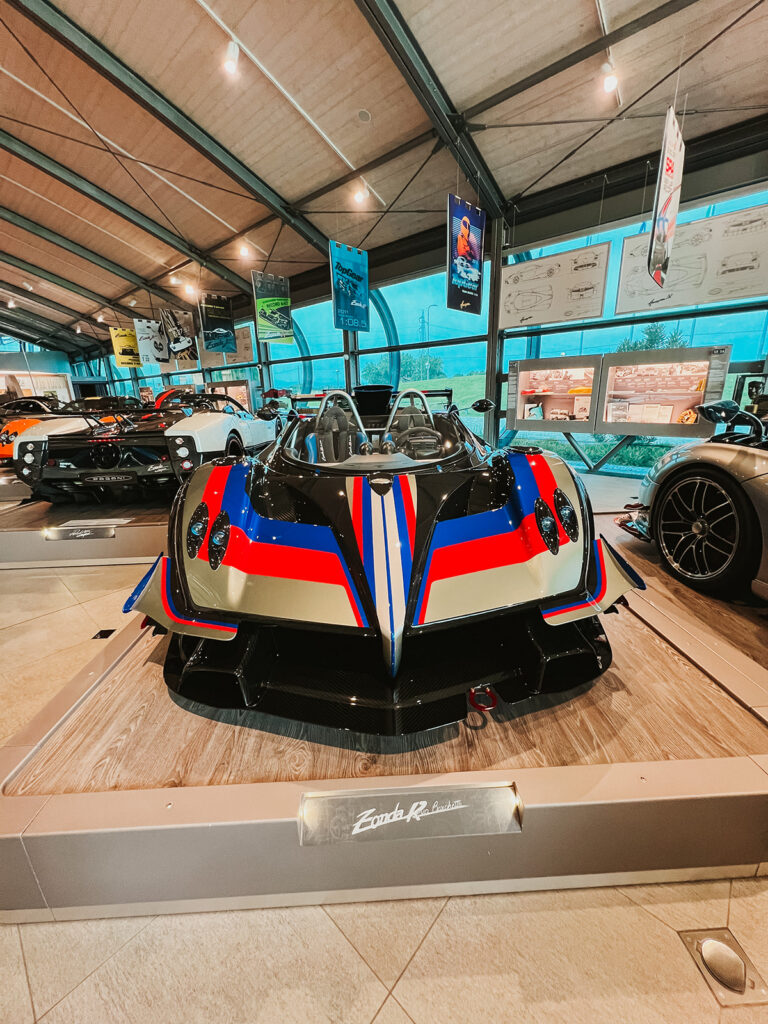
The Zonda Changes the Conversation
The original Zonda looked unlike anything produced by Ferrari, Lamborghini, Porsche, or McLaren.
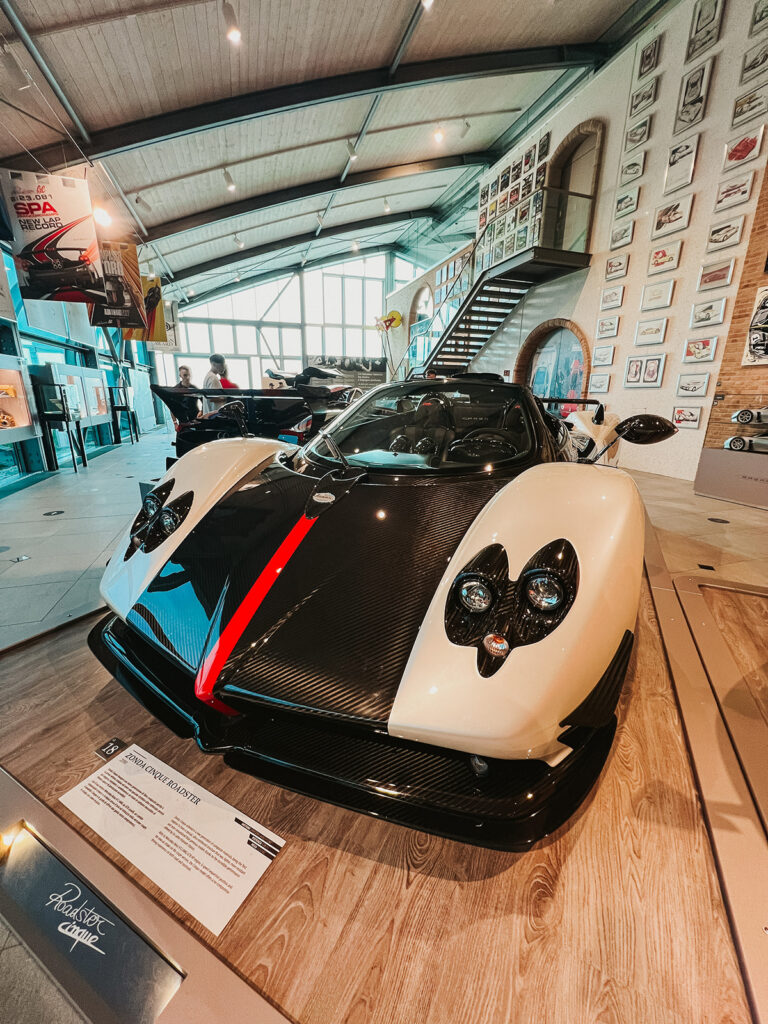
Its cabin pushed forward beneath a curved windshield, giving the driver the sensation of sitting inside the nose of an aircraft. Four exhaust outlets formed a circle at the rear, a design signature that would become immediately recognizable. Its carbon-fiber structure was paired with a Mercedes-Benz AMG V12, beginning an engine partnership that continues today.
More important than the specifications was the way the car was conceived. Every visible component was treated as an opportunity for design. Hinges, pedals, switches, fasteners, air vents, luggage, and engine components were not hidden simply because the customer might rarely see them.
The Zonda established Pagani’s formula: advanced materials, dramatic engineering, traditional craftsmanship, and an obsessive refusal to accept an ordinary solution when a beautiful one was possible.
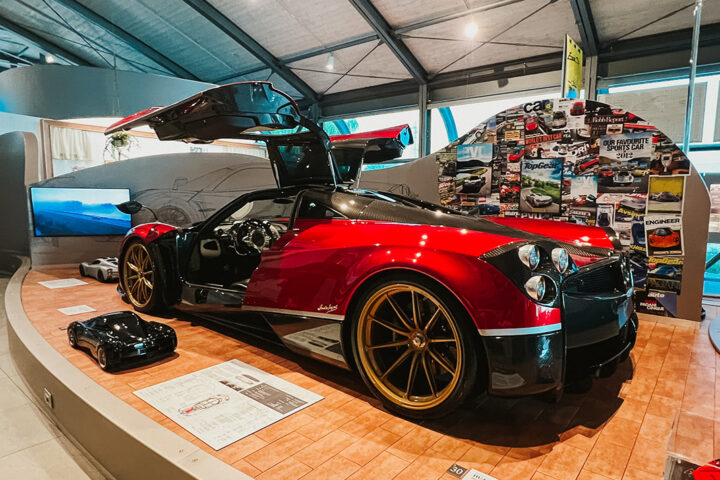
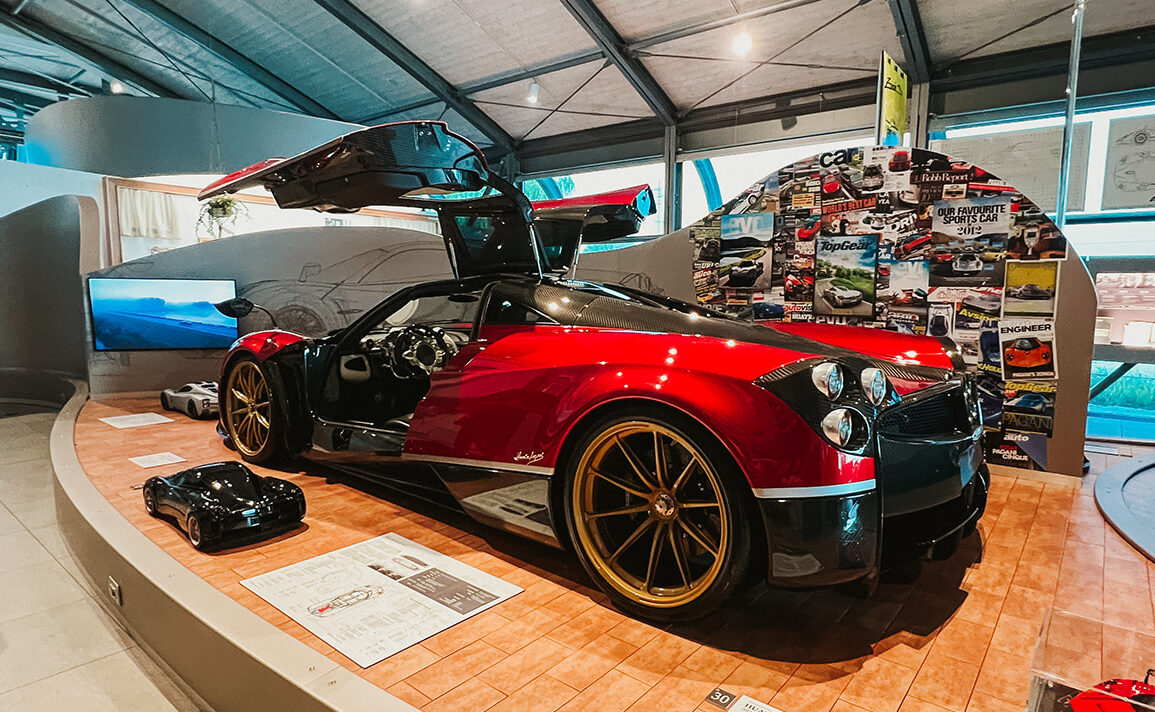
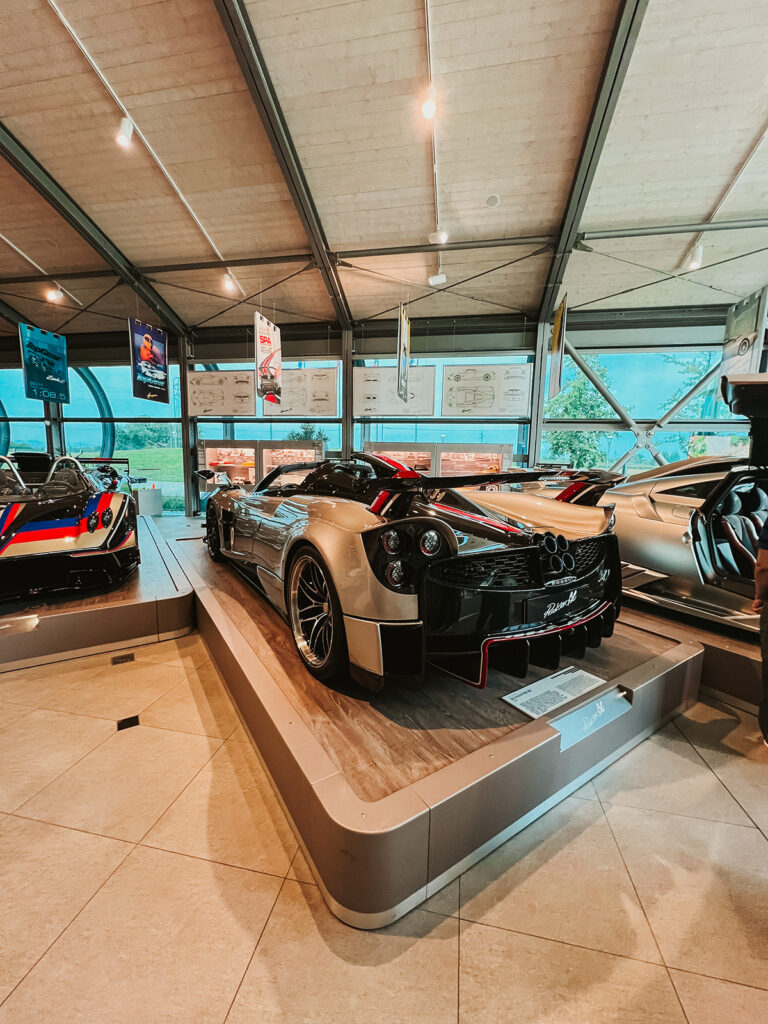
Inside the museum, the evolution of that idea can be followed through sketches, models, tools, early prototypes, road cars, and competition-inspired machines. The collection has included significant examples such as the original Zonda, Zonda Cinque, Zonda R, Huayra, and other limited creations.
Seeing the cars together makes their family resemblance clear. It also reveals how quickly Pagani’s technical abilities advanced. The early cars are remarkably ambitious. The later ones look as though the early ambitions were given better materials, sharper tools, and fewer reasons to compromise.
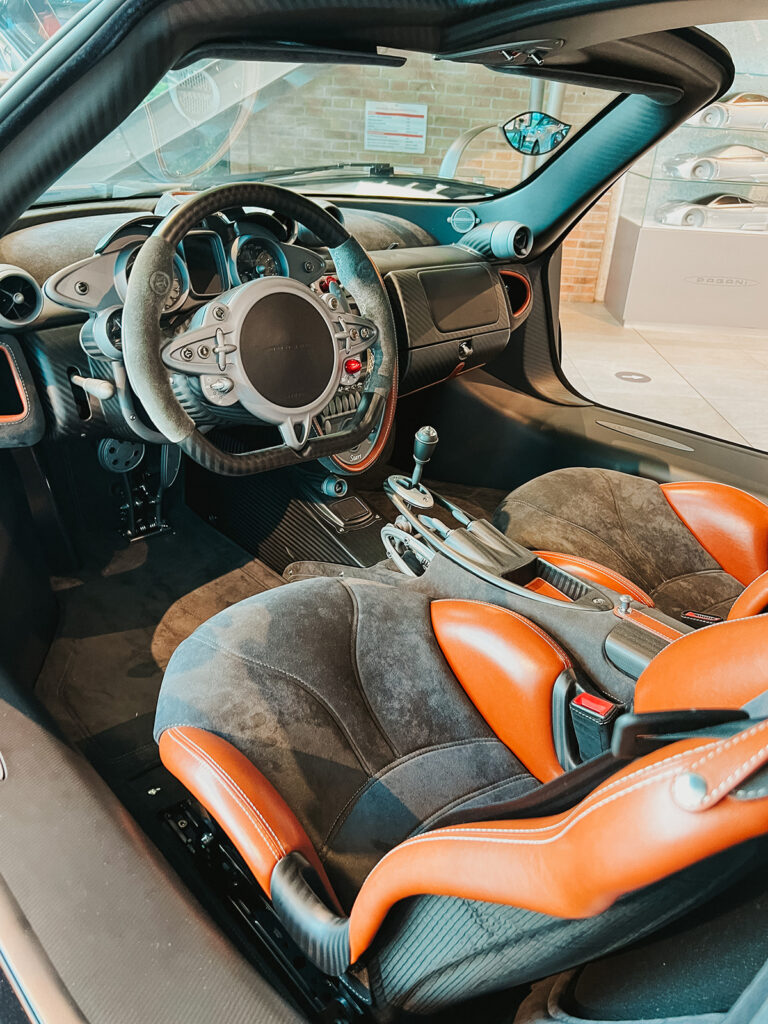
Huayra and the Age of Active Aerodynamics
Pagani’s second major model, the Huayra, arrived in 2011 after approximately eight years of development.
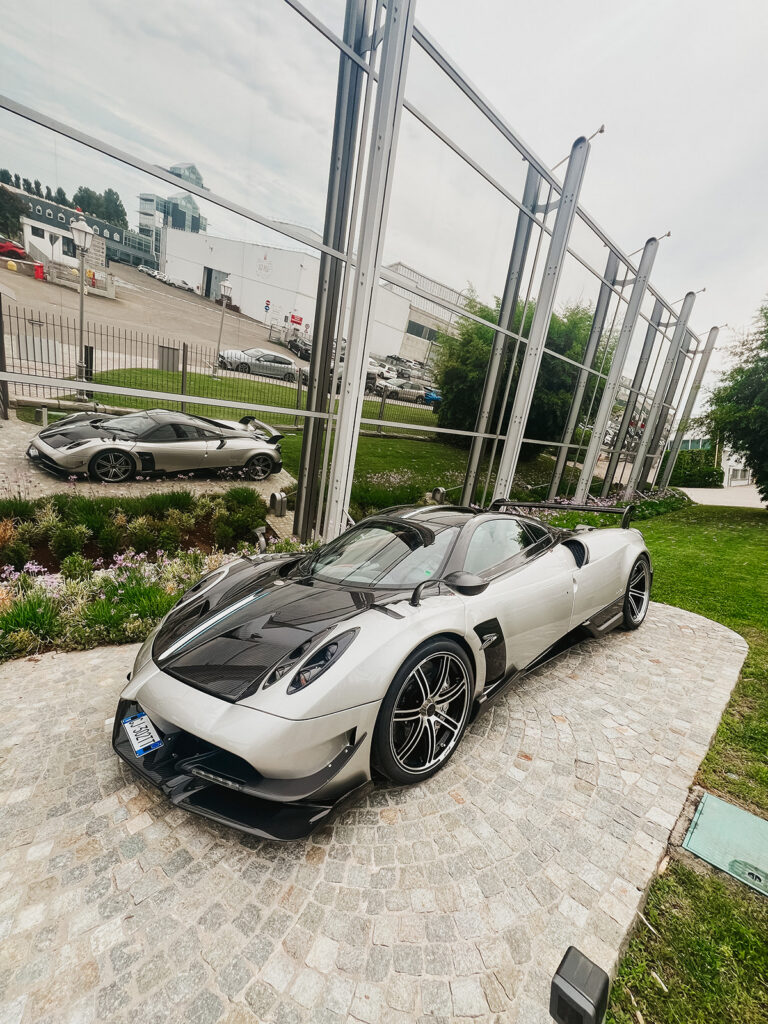
Named for Huayra Tata, a god of wind in Andean culture, the Huayra introduced active aerodynamic flaps that could move independently to help manage downforce and stability. Its Mercedes-AMG twin-turbo V12 produced 730 horsepower in its original form, while its structure advanced Pagani’s work with Carbo-Titanium, a composite incorporating carbon fiber and titanium.
The Huayra was technologically complex, but it never allowed electronics to become the entire experience. Its interior combined exposed linkages, polished metal, leather, analog instruments, and mechanisms that would look equally appropriate inside a grand touring car or an elaborate mechanical clock. It is an interior for people who still enjoy seeing how something works.
The Utopia and a Return to Simplicity
The Utopia, unveiled in 2022, opened the third chapter of the Pagani story. When Horacio asked customers what they wanted from the next car, the answers repeatedly returned to simplicity, lightness, and driving pleasure. Pagani responded with a lightweight, non-hybrid hypercar powered by a Mercedes-AMG-developed twin-turbo V12 and offered with a seven-speed manual transmission.
That decision may be the most revealing thing about the company. Pagani uses cutting-edge materials, aerodynamics, and manufacturing technology, but it does not automatically accept that progress requires abandoning every older pleasure. The Utopia looks forward while preserving the mechanical engagement, analog instrumentation, and physical controls that have traditionally connected drivers to cars. Technology serves the experience. It does not replace it.
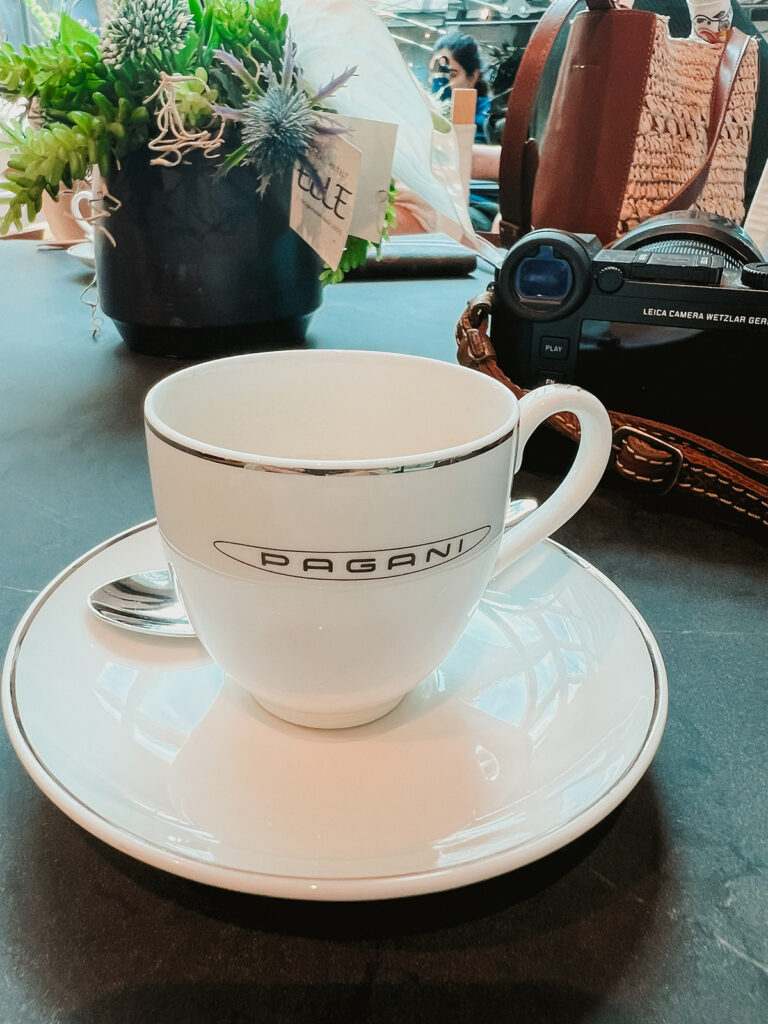
Pagani’s Unexpected Disney Connection
Among the carbon fiber, titanium, and Renaissance references, visitors may notice a more playful influence: Mickey Mouse. Mickey Mouse figures and imagery have appeared around the Pagani workshop, reflecting Horacio’s belief that creativity requires retaining a child’s curiosity and capacity for wonder. The connection to Disney is philosophical rather than a formal automotive partnership.
At first, Mickey may seem out of place in a factory producing multimillion-dollar hypercars. After spending time there, he makes perfect sense. Walt Disney built an empire by turning imagination into engineered reality. Pagani applies a similar principle to cars. A childhood drawing is not dismissed as fantasy. It becomes a problem to be solved with mathematics, materials, craftsmanship, and stubborn determination. The lesson is that growing older should provide better tools, not smaller dreams.
Being able to see Horacio Pagani’s office brought the entire story into focus. This is not a remote executive suite disconnected from production. His office remains part of the creative environment, close to the people, cars, drawings, and materials that define the company.
Pagani may now be one of the world’s most admired hypercar manufacturers, but the place still carries the character of a founder-led workshop. It feels personal because it is personal. Horacio’s tastes are visible in the architecture, the materials, the museum, the cars, and even the small objects placed around the building. That personality also extends to the customer experience.
The car being prepared for delivery during our visit had been created for one particular owner. The specification was not the result of choosing three option packages and clicking “submit.” Pagani’s limited-production and one-off programs allow clients to work closely with the company, creating cars with unique materials, finishes, colors, and design details.
Watching the team prepare for the handover was like arriving backstage before opening night. Everyone knew what needed to happen, everyone moved with purpose, and no one seemed interested in rushing the final moments.
Why Pagani is so Special
Pagani produces automobiles in numbers too small to change ordinary transportation. Most drivers will never own one, and many will never see one on the road.
Yet the company matters because it demonstrates what is possible when design is not governed entirely by focus groups, quarterly volume targets, and shared corporate platforms.
Modern cars are becoming increasingly standardized. Screens replace switches. Software replaces mechanical feedback. Platforms, engines, and electronic systems are shared across brands. Efficiency improves, but personality can become another line item waiting to be optimized. Pagani offers another path.
It embraces modern materials and forward-looking engineering while preserving the culture of the artisan, the coachbuilder, and the small Italian workshop. It values the hand of the person making the component and the eye of the person inspecting it.
Our tour with Luca showed us more than rare cars. It showed us a company built around the idea that the smallest detail matters, even when few people will ever notice it. Perhaps especially when few people will notice it.
Leaving the factory, it was difficult not to think about that covered one-of-one car awaiting its owner. Soon, the cloth would be pulled back. The client would see the finished automobile for the first time, surrounded by the people who had designed, shaped, assembled, polished, and inspected it. For most manufacturers, that would be the end of the production process. At Pagani, it feels more like the moment the creation finally begins its life.
Quick Facts
- Location: San Cesario sul Panaro, near Modena, Italy
- Founder: Horacio Pagani
- Company roots: Modena Design, established in 1991
- Pagani Automobili established: 1998
- First production car: Pagani Zonda C12
- Zonda debut: March 9, 1999, Geneva International Motor Show
- Second major model: Pagani Huayra, introduced in 2011
- Third major model: Pagani Utopia, introduced in 2022
- Engine partner: Mercedes-AMG
- Specialty: Limited-production and one-off carbon-fiber hypercars
- Museum: Museo Horacio Pagani
- Factory experience: Guided museum and production atelier tours require advance reservations
- Disney connection: Mickey Mouse imagery represents Horacio Pagani’s belief in maintaining childlike curiosity and imagination
Frequently Asked Questions
Can the public tour the Pagani factory?
Yes. Pagani offers guided tours of the Horacio Pagani Museum and production atelier. Factory access requires an advance reservation, while museum-only admission is generally available without a reservation. Tour policies, prices, and production schedules should be confirmed before visiting.
Where is the Pagani factory located?
The factory and museum are located at Via dell’Industria 26 in San Cesario sul Panaro, in Italy’s Modena province. The area is part of Motor Valley, home to several of Italy’s most famous automotive manufacturers.
What is Pagani’s connection to Lamborghini?
Horacio Pagani worked at Lamborghini during the 1980s and became an important advocate for carbon fiber and composite construction. His work included the Countach Evoluzione and Countach 25th Anniversary. He later left Lamborghini and established Modena Design to pursue his own car.
What is Pagani’s connection to Disney?
Mickey Mouse figures and artwork have appeared inside the Pagani workshop. They reflect Horacio Pagani’s belief that designers must preserve a child’s curiosity and imagination to achieve their creative potential. The connection is primarily philosophical rather than a formal partnership with Disney.
Are Pagani cars handmade?
Pagani cars are assembled in individual work areas by specialized technicians and artisans. Carbon-fiber components, interiors, metal parts, and mechanical systems receive extensive hand assembly and finishing rather than moving through a conventional mass-production line.
What cars does Pagani produce?
Pagani’s three primary model families are the Zonda, Huayra, and Utopia. The company also produces track cars, roadsters, continuation projects, and highly personalized one-off or limited-production vehicles through its specialist programs.