
 Michael Satterfield
In Italy’s Motor Valley, the famous names tend to get all the attention. Ferrari has the mythology. Lamborghini has the drama. Ducati has the soundtrack. Maserati has the old-world glamour. But tucked into Varano de’ Melegari, outside Parma, Dallara operates with a different kind of authority. It is quieter, more technical, and in many ways more influential than almost anyone outside the paddock realizes.
Dallara is one of those companies that casual fans may not recognize immediately, yet its fingerprints are all over modern racing. If you have watched IndyCar, Formula 2, Formula 3, Super Formula, endurance racing, or a modern prototype tackle Le Mans or Daytona, there is a very good chance you have seen Dallara engineering at work. The company has helped define entire generations of competition cars, not by chasing celebrity, but by doing the hard work that wins races: chassis design, aerodynamics, composites, vehicle dynamics, and safety. In my 20s, I owned a Fiat X1/9, and I wanted a Dallara body kit more than anything, but most of my friends had no idea why I thought Dallara was so cool.
Dallara Academy
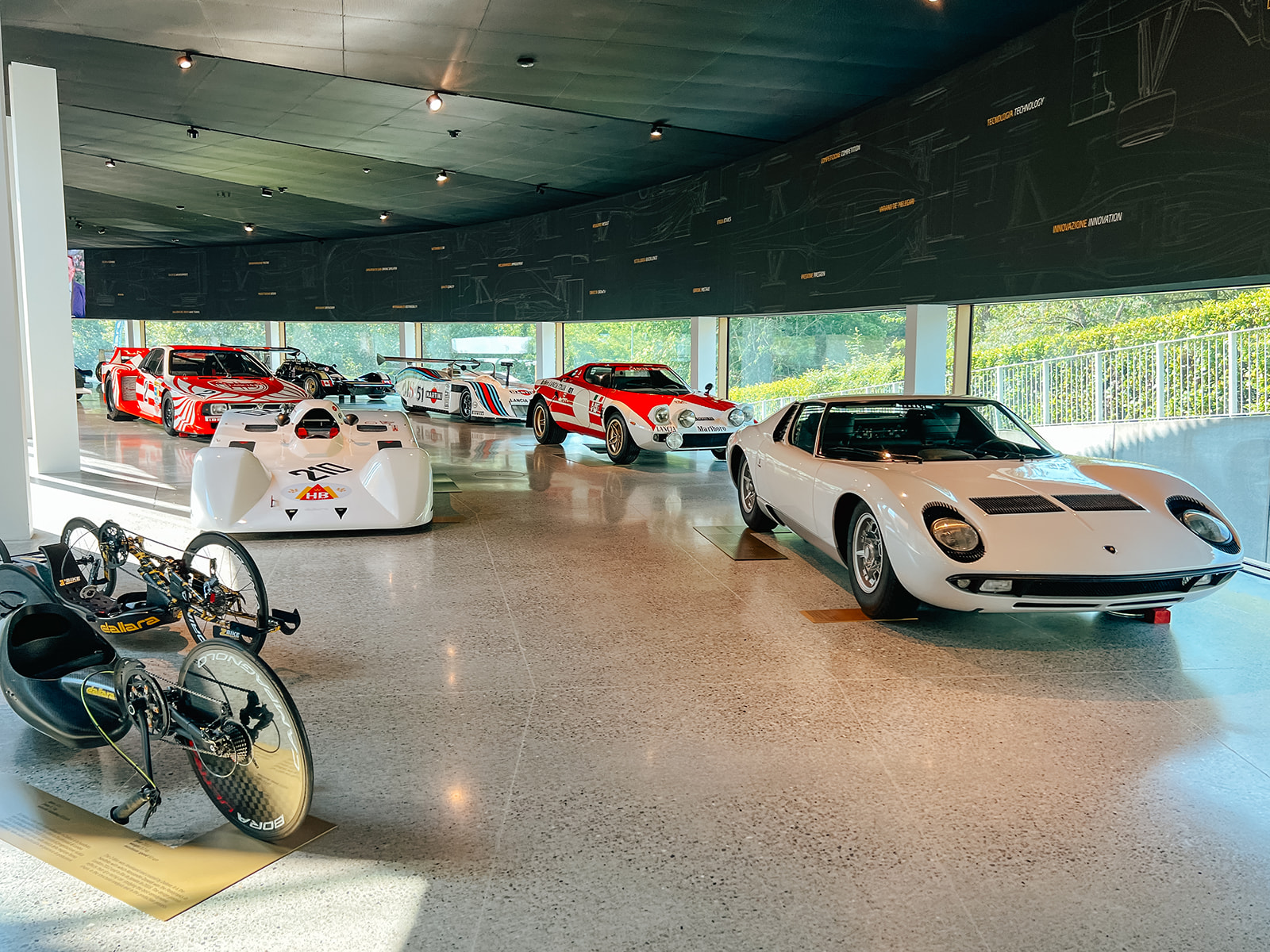
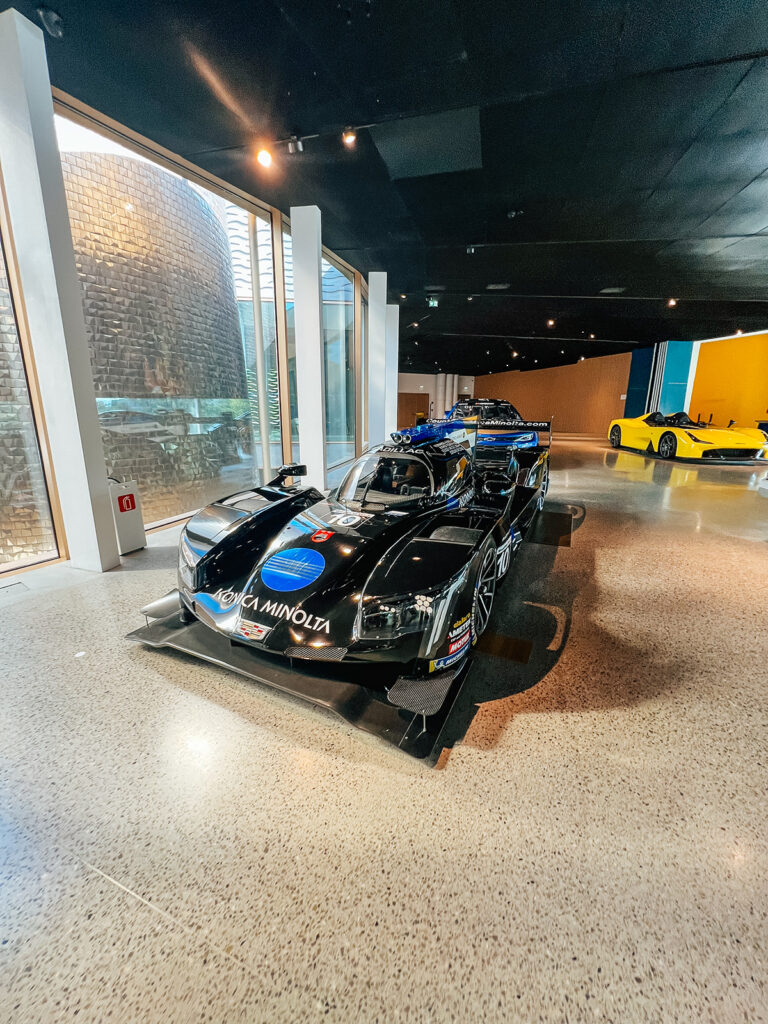
The Dallara Academy is the public gateway into that world. The building itself looks like it belongs in a design museum, which is fitting because inside it is one part museum, one part engineering school, one part factory preview, and one part love letter to the science of speed. The exterior is modern and clean, with a sweeping circular form and glass that allows the cars to appear almost suspended inside the structure. It feels less like entering a museum and more like stepping into the mind of an engineer who never stopped asking, “Can this be lighter, faster, safer, better?”
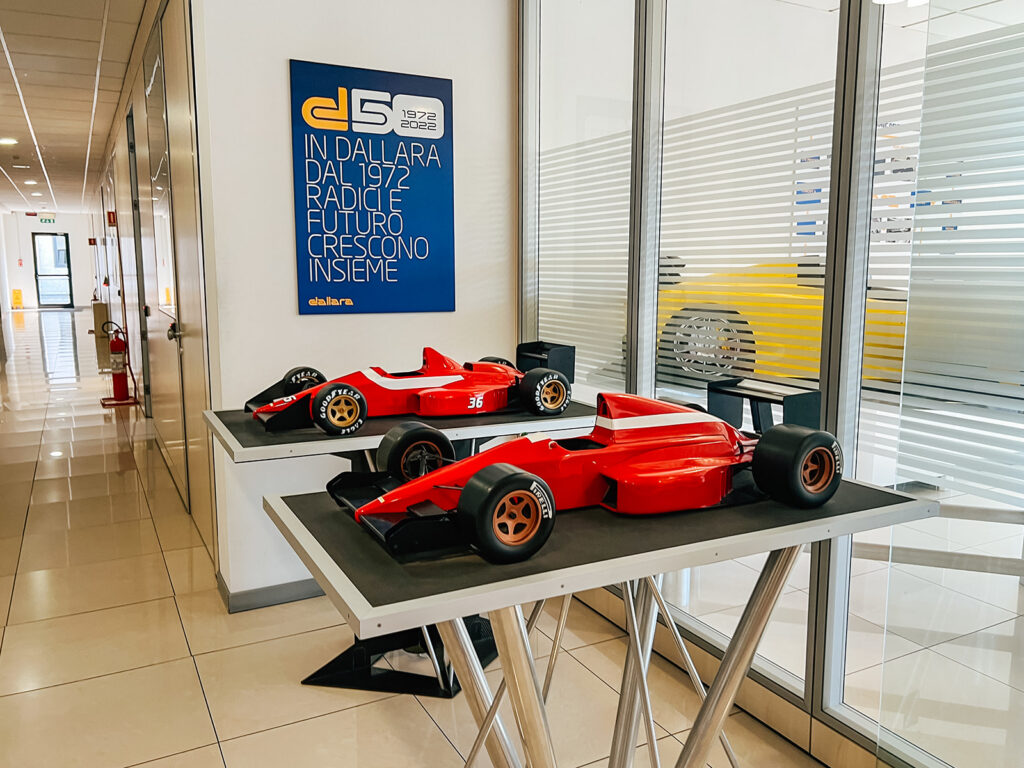
That engineer is Giampaolo Dallara. Before founding his own company in 1972, Dallara worked with some of the great names in Italian motoring, including Ferrari, Maserati, and Lamborghini. His work helped shape cars that became legends, but his own company would become something different: a specialist firm built around the idea that racing cars are not sculptures, they are solutions.
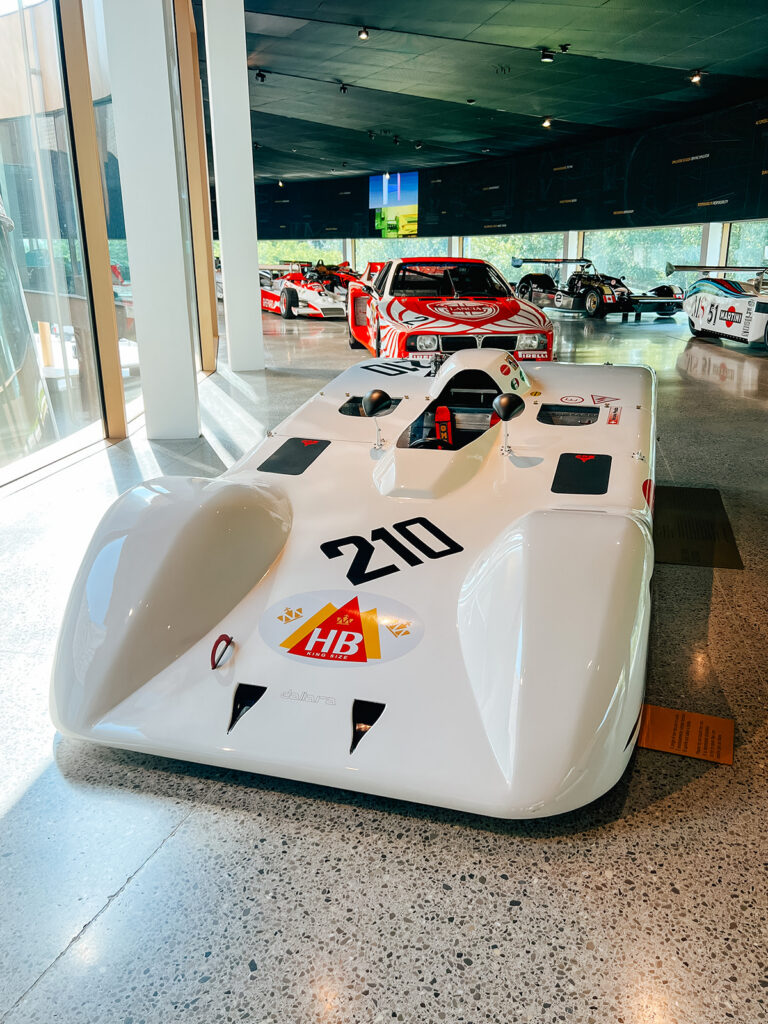
The story begins in a garage, as the best Italian automotive stories often do. From that modest start, Dallara grew into a company whose influence now stretches from Formula 3 to the Indianapolis 500, from customer race cars to high-level manufacturer projects, and even into aerospace. The Academy presents that history along an exhibition ramp where the cars tell the story better than any wall text could. There are early projects, formula cars, prototypes, IndyCars, and modern machines that show the steady evolution of Dallara’s thinking.
What stands out is not just the variety, but the consistency. Every era reveals the same core ideas: reduce weight, improve airflow, increase safety, give the driver confidence, and make the car repeatable at the limit. That may not sound romantic until you are standing next to one of the cars and realize how much beauty exists in a solution that simply works.
You Wouldn’t Recognize Racing Without Dallara
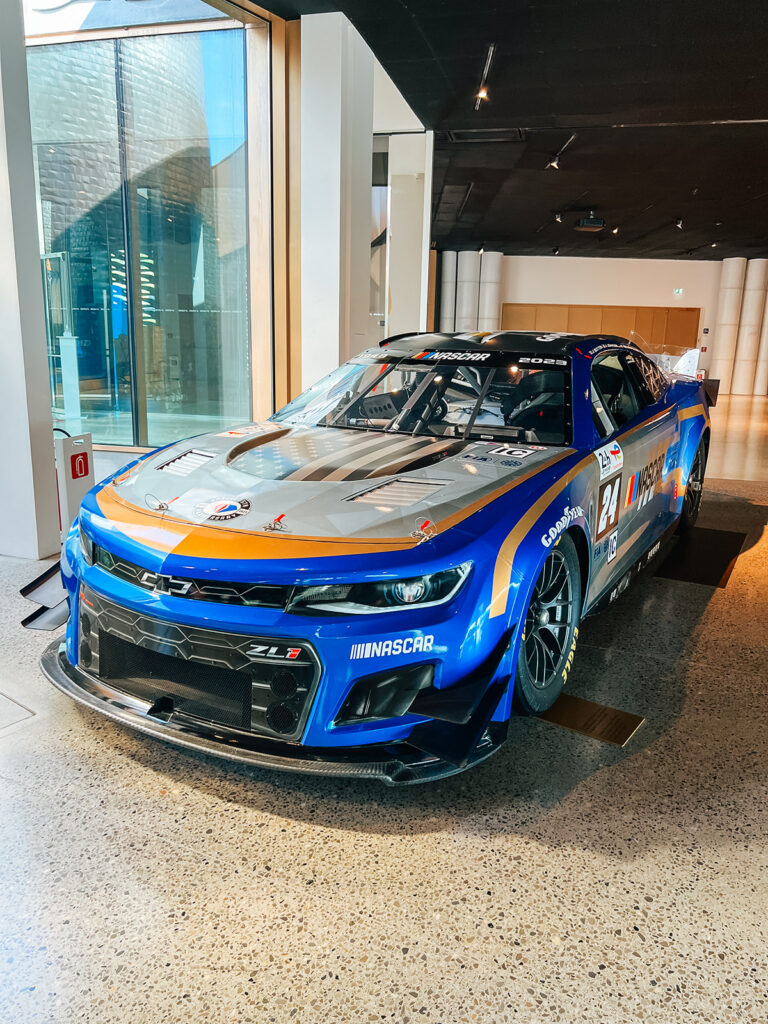
Dallara’s motorsport record is staggering. The company’s chassis have been central to IndyCar for decades, and since 2012 Dallara has supplied the cars used in the NTT IndyCar Series. The company has also become deeply connected to the development ladder for future Formula 1 drivers through Formula 2 and Formula 3. In endurance racing, Dallara has contributed to major prototype programs, including modern Cadillac and BMW efforts. Even the Haas Formula 1 Team has relied on Dallara’s manufacturing and engineering expertise.
For American fans, the IndyCar connection is especially meaningful. Dallara’s U.S. presence in Speedway, Indiana, is a direct bridge between this small Italian town and the Indianapolis Motor Speedway. That relationship says a great deal about the company. Dallara is proudly Italian, but its work is global. It belongs to the hills of Emilia-Romagna and to the bricks of Indianapolis at the same time.
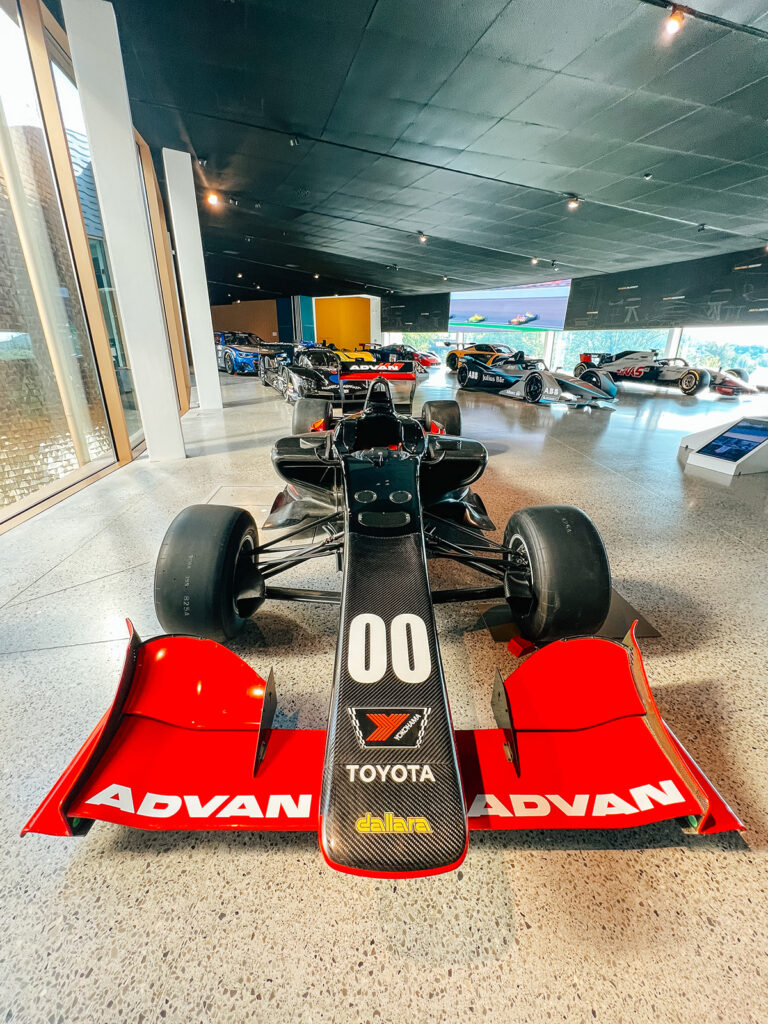
The factory tour deepens that appreciation. The Academy is not simply a static collection of old race cars. Visitors can book experiences that go behind the scenes, where Dallara’s work moves from theory to production. The factory tour begins with the professional driving simulator, the kind of tool that allows engineers and drivers to evaluate a car before it exists in finished form. In modern motorsport, the simulator is not a video game. It is a development weapon.
Dallara’s simulator work is central to its engineering process (and top secret, so no cameras). The company uses mathematical models, driver-in-the-loop simulation, and real-time response to study vehicle behavior with remarkable precision. It allows teams to test setups, validate ideas, and understand how a car will behave long before the first physical prototype turns a wheel. For a racing company, this is the difference between guessing and knowing.
From there, the tour moves through the disciplines that make Dallara what it is. Aerodynamics is one of the company’s great strengths, and Dallara has invested in wind tunnel testing and computational fluid dynamics for decades. Composites are another pillar. Carbon fiber is not treated as jewelry here. It is structure, safety, and performance, all woven together. The tour also includes views into assembly, where the romance returns. Cars are still brought to life one at a time, with the kind of precision that makes the line between craftsmanship and engineering wonderfully blurry.
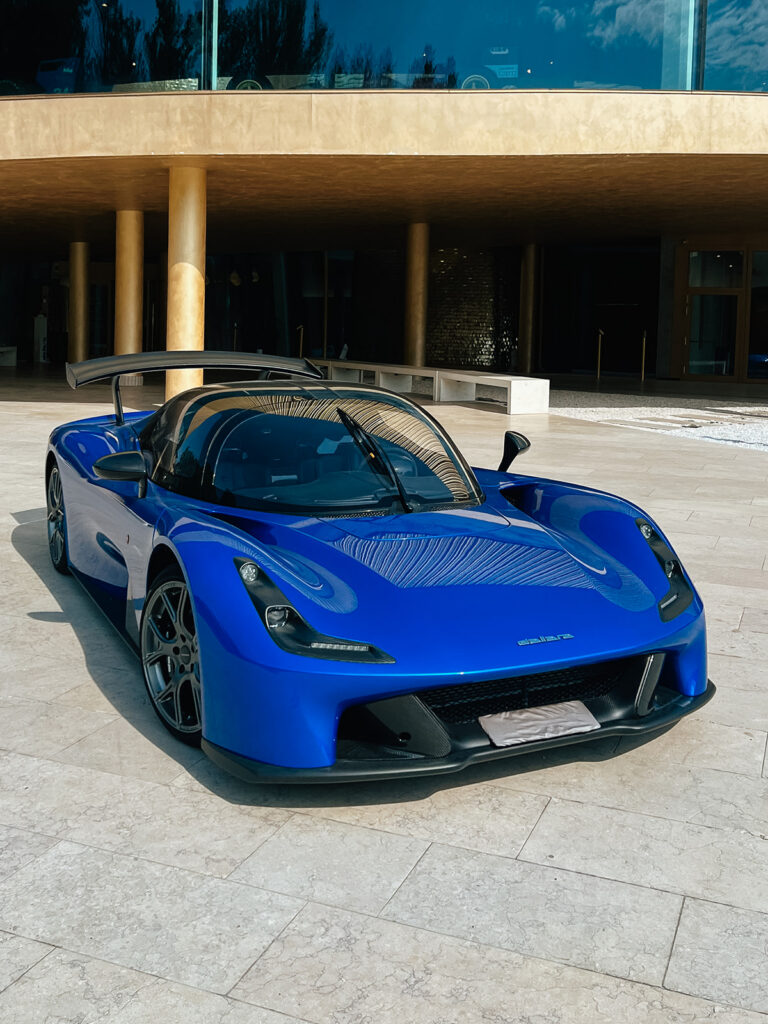
Then There is the Stradale.
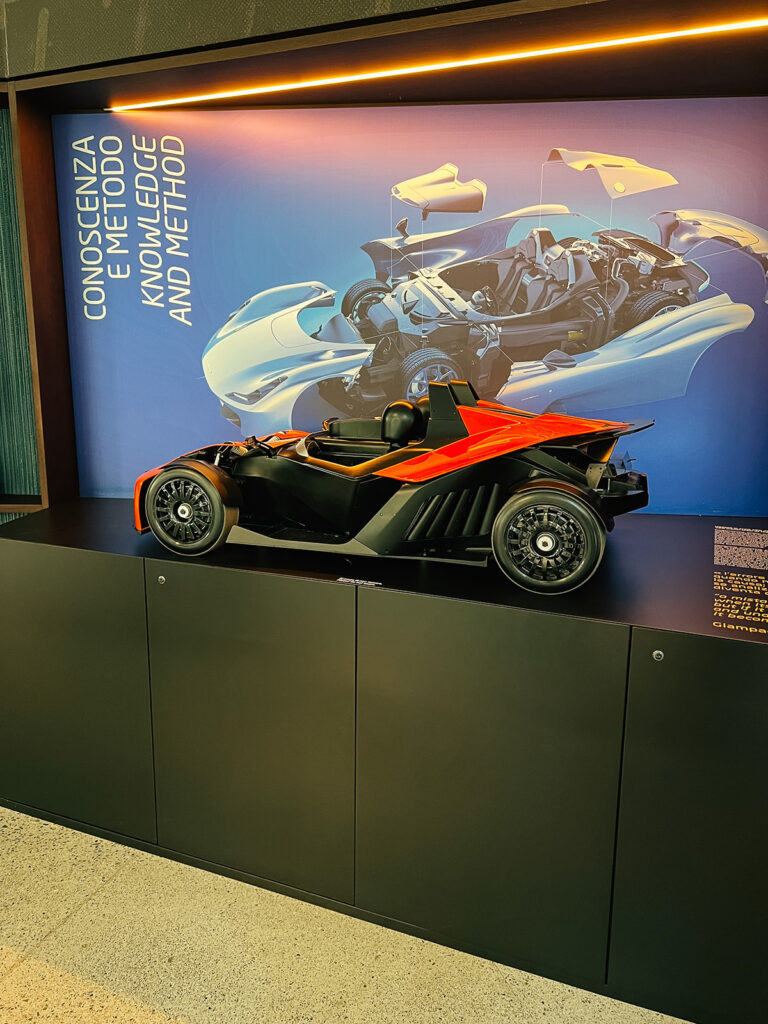
The Dallara Stradale is the company’s road car, though calling it a road car feels like describing a fighter jet as “transportation.” It was born from Giampaolo Dallara’s long-held dream to build a car with his own name on it, a pure machine that distilled decades of racing knowledge into something that could wear a license plate. The result is tiny, light, carbon-intensive, and wonderfully uncompromised.
The Stradale uses a carbon-fiber monocoque and full carbon bodywork. It weighs just 855 kilograms dry, is powered by a 2.3-liter turbocharged Ford-sourced four-cylinder engine producing 400 horsepower and 500 Nm of torque, and can reach 280 km/h. The standard car can be configured as a barchetta, spider, or coupe, and the most extreme versions look like something that escaped from a private test session and accidentally found a mountain road.
For Americans, there is one catch: the Stradale is not officially sold in the United States. It was never type-approved for U.S. use, which makes seeing one at the Academy feel even more special. US Dallara fans can purchase the track-only version if they happen to need a few trackday weapons. In a world where most supercars are designed to be seen before they are driven, the Dallara feels like the opposite. It was designed to be driven first.
What makes Dallara different from many automotive museums is the way it connects heritage with education. This is not just a shrine to past victories. The Academy is designed to bring young people into the world of engineering. Its learning labs introduce junior high and high school students to composites, aerodynamics, vehicle dynamics, and electronics through hands-on activities. Students can experiment with material rigidity, study how wind tunnels work, and examine the forces acting on cars and drivers in competition.
That matters. Motorsports can sometimes feel like a closed world, guarded by money, geography, and opportunity. Dallara seems determined to keep the door open for the next generation of engineers, mechanics, designers, and dreamers. The Academy also hosts advanced university-level education through the Motorvehicle University of Emilia-Romagna, including work connected to the Racing Car Design master’s program. In a region already crowded with famous badges, Dallara is helping train the people who will shape what comes next.
That educational mission gives the place a different emotional weight. You are not just looking at old race cars and polished carbon fiber. You are seeing a company make a case for the future. The message is simple: engineering is not magic. It can be taught, practiced, tested, improved, and shared. Which is probably the most Dallara idea imaginable.
Visitors can book their own Dallara Academy experience, including guided tours of the exhibition ramp, factory visits by prior booking, and simulator sessions. Tours are available in multiple languages, and the facility is generally open daily from 10:00 a.m. to 6:00 p.m., though schedules and availability should always be confirmed in advance. The Academy is located at Via Provinciale 33/A in Varano de’ Melegari, making it a natural stop for anyone exploring Italy’s Motor Valley.
Dallara may not have the theatrical fame of its neighbors, but that is part of its charm. This is a company that has shaped some of the fastest and most successful racing cars in the world while remaining focused on the work itself. No velvet rope attitude. No unnecessary drama. Just carbon fiber, wind, math, and the old Italian belief that a machine can still have a soul.
By the time you leave, you understand why Dallara matters. It is not merely a constructor. It is a translator between imagination and asphalt. It turns equations into lap times, students into engineers, and racing dreams into machines that can win at Indianapolis, Le Mans, Daytona, and beyond.
In Motor Valley, there are louder places to visit. There may not be a smarter one.
Quick Facts
- Location: Varano de’ Melegari, Parma, Italy
- Founded: 1972 by Giampaolo Dallara
- Known For: IndyCar, Formula 2, Formula 3, Le Mans prototypes, Formula E, Super Formula, and advanced racing engineering
- Public Experience: Dallara Academy, Exhibition Ramp, Factory Tour, Sim Racing Xperience
- Signature Road Car: Dallara Stradale
- U.S. Availability: The Stradale is not officially sold in the United States
- Best For: Motorsport fans, engineers, design enthusiasts, students, and anyone who wants to see how racing technology is born
FAQ: Visiting Dallara Academy In Italy
Where is the Dallara Academy located?
The Dallara Academy is located in Varano de’ Melegari, near Parma, Italy, in the heart of Italy’s Motor Valley.
Can the public tour Dallara?
Yes. Visitors can book guided tours of the Dallara Academy, including the exhibition ramp and, depending on availability and booking type, factory-related experiences and simulator sessions.
What can you see at the Dallara Academy?
The Dallara Academy features historic race cars, modern motorsport displays, engineering exhibits, educational labs, and a look at the technology behind Dallara’s work in aerodynamics, composites, vehicle dynamics, and simulation.
Why is Dallara important in racing?
Dallara has been behind some of the most successful racing cars in modern motorsport, with major involvement in IndyCar, Formula 2, Formula 3, endurance racing, Super Formula, Formula E, and other global racing programs.
Does Dallara build IndyCars?
Yes. Dallara has been closely tied to IndyCar for decades and is the current chassis supplier for the NTT IndyCar Series.
What is the Dallara Stradale?
The Dallara Stradale is Dallara’s lightweight road-going sports car, built with a carbon-fiber structure and inspired by the company’s racing expertise. It can be configured in different body styles, including barchetta, spider, and coupe.
Is the Dallara Stradale sold in the United States?
No. The Dallara Stradale is not officially sold in the United States, making it a rare sight for American enthusiasts.
Does Dallara offer programs for students?
Yes. The Dallara Academy includes educational programs for young students, including hands-on learning focused on aerodynamics, composites, vehicle dynamics, and motorsport engineering.
Can visitors use the Dallara simulator?
Dallara offers simulator experiences through the Academy, though availability and booking requirements can vary. Visitors should confirm current options directly with Dallara Academy before planning a visit.
Is Dallara Academy worth visiting?
Yes. For motorsport fans, engineers, automotive students, and anyone interested in how modern racing cars are designed and built, Dallara Academy is one of the most fascinating stops in Italy’s Motor Valley.









I didn’t know you could tour Dallara, need to add it to ternary for my next trip to Italy.
If Dallara was the “manufacturer” on all the cars they built they would have all the championships
I didn’t know they were involved with the NASCAR Garage car.
It would be my dream to work at a company like this and live in Italy, but only if I could keep my US tax rate.