

 Michael Satterfield
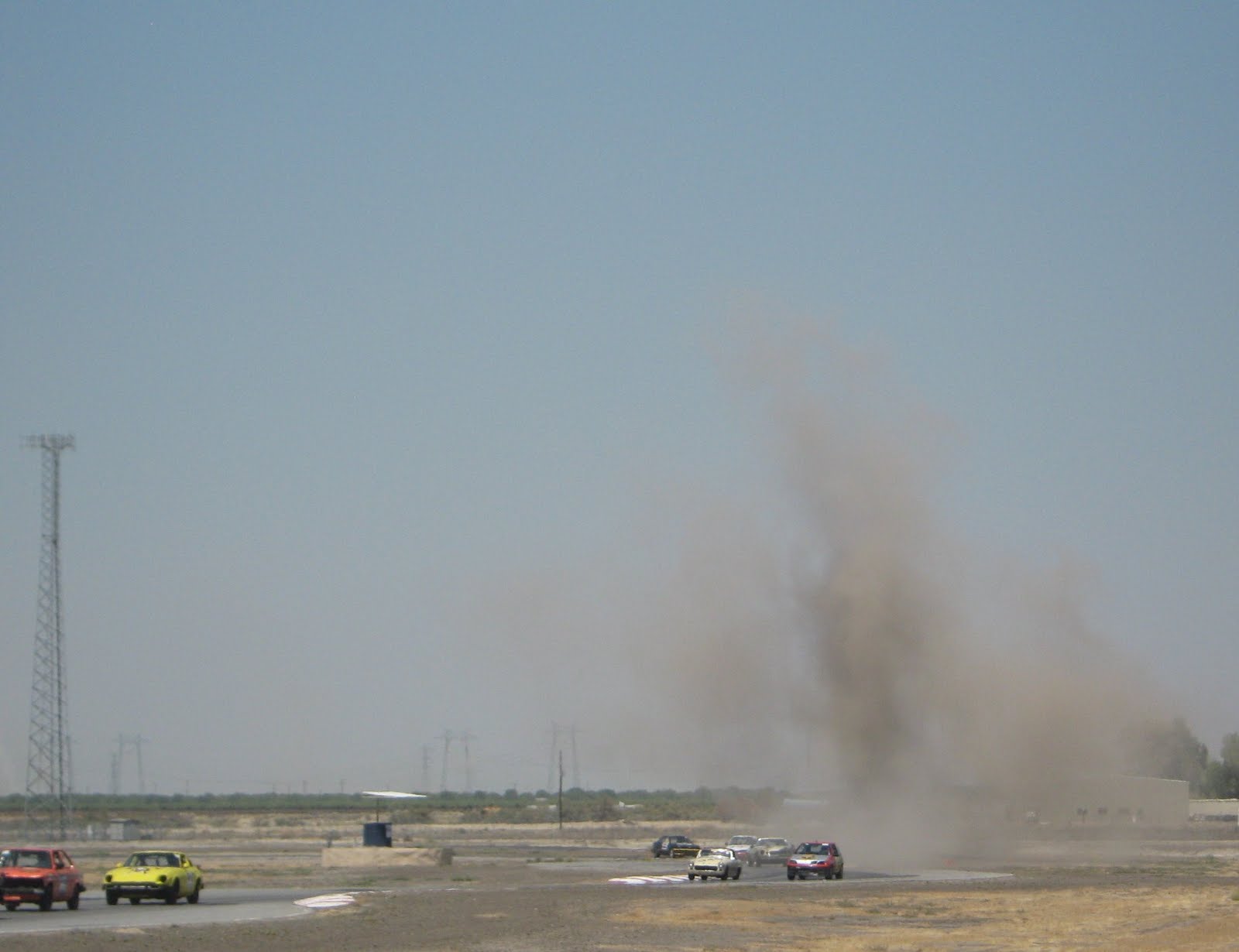
The spectacle known as the 24 Hours of LeMons roared into California’s Buttonwillow Raceway Park on August 15 and 16, 2009, bringing 95 questionably prepared race cars, hundreds of amateur drivers, and enough mechanical uncertainty to make a British-car convention look dependable.
Officially called the Buttonwillow Histrionics, the event combined endurance racing with costumes, low-budget engineering, absurd penalties, and the constant threat of complete mechanical failure. It was serious wheel-to-wheel motorsport wrapped in something resembling a county fair organized by people with access to welders.
Each competing car was supposed to be purchased and prepared for no more than $500, excluding essential safety equipment. That limitation produced a field filled with faded sedans, abandoned sports cars, battered hatchbacks, and vehicles that sensible people had stopped trying to repair years earlier.
The cars were cheap. The racing was real.
What Is the 24 Hours of LeMons?
The 24 Hours of LeMons is an endurance-racing series built around cars valued at no more than $500. The name combines the 24 Hours of Le Mans with the American term for a deeply disappointing used car.
Unlike a demolition derby, LeMons is genuine road racing. Cars must pass technical and safety inspections, drivers wear proper racing equipment, and teams compete to complete the most laps. The low price limit generally applies to the car and performance modifications, while safety equipment, brakes, wheels, and tires are treated separately.
Despite the name, most LeMons events are not continuous 24-hour races. The Buttonwillow event was divided into sessions across Saturday and Sunday, creating a long endurance contest without requiring drivers to navigate Buttonwillow’s corners at three in the morning while surrounded by overheated Dodge Neons.
At LeMons, surviving matters more than setting one heroic lap. A quick car sitting in the paddock with its transmission scattered across a tarp is still a stationary car.
The Buttonwillow Histrionics
Buttonwillow Raceway Park provided the right setting for the 2009 event. The circuit’s combination of fast corners, technical sections, elevation changes, and long straights gave the cheap machinery plenty of opportunities to overheat, spin, collide, or eject important internal engine components.
The event attracted 95 entries, including BMWs, Hondas, Mazdas, Volvos, Porsches, Fiats, Saabs, a Triumph TR7, an Austin-Healey Sprite, a Chevrolet Corvair, a Geo Metro, and a 1962 Austin Mini. There were also vehicles that had been altered so extensively that identifying the original manufacturer required either research or a court order.
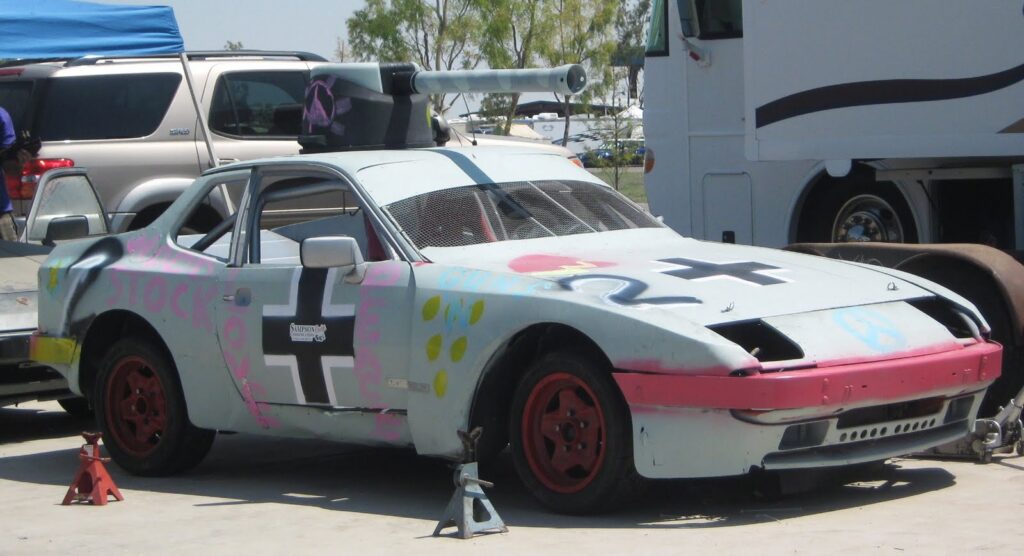
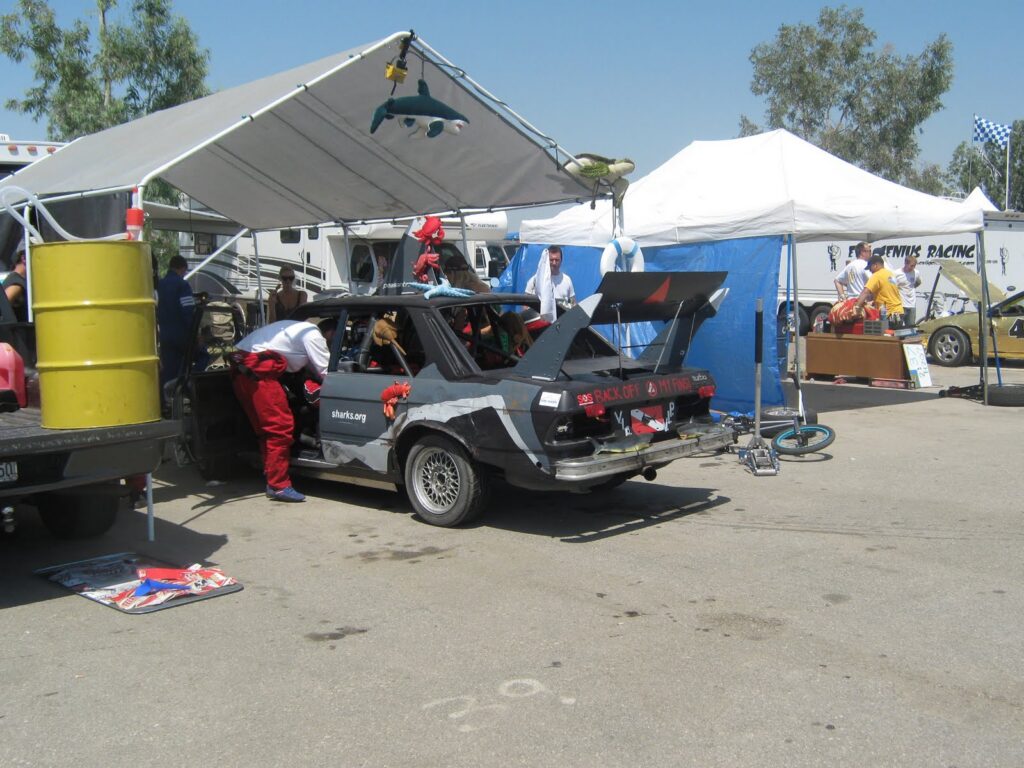
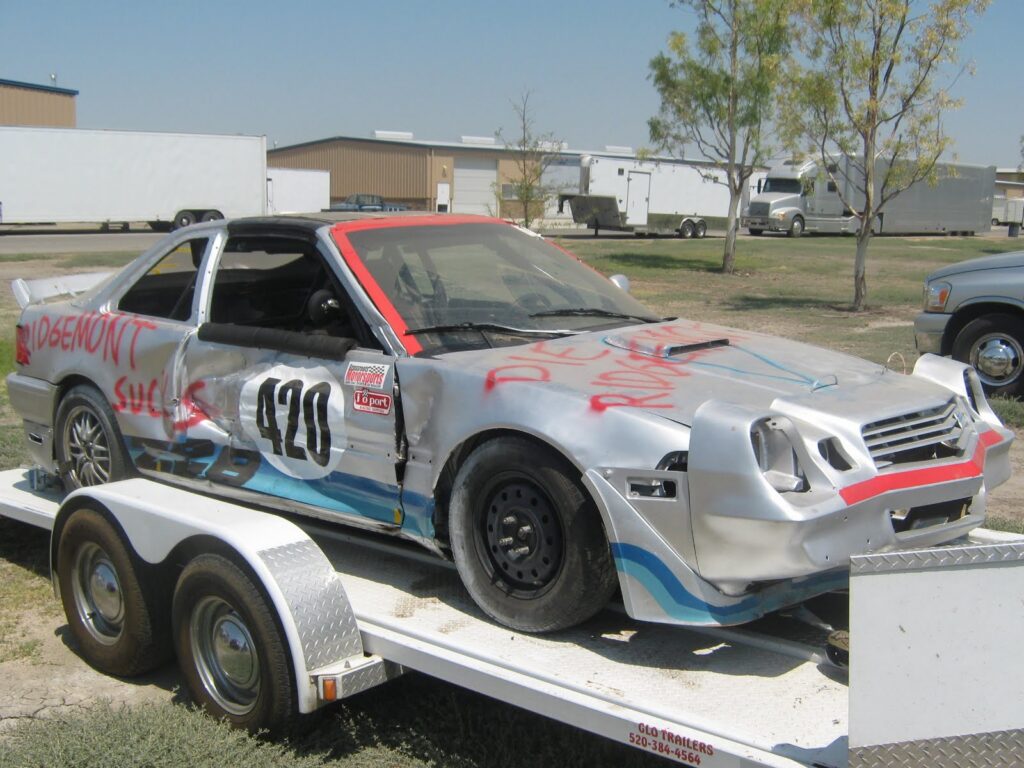
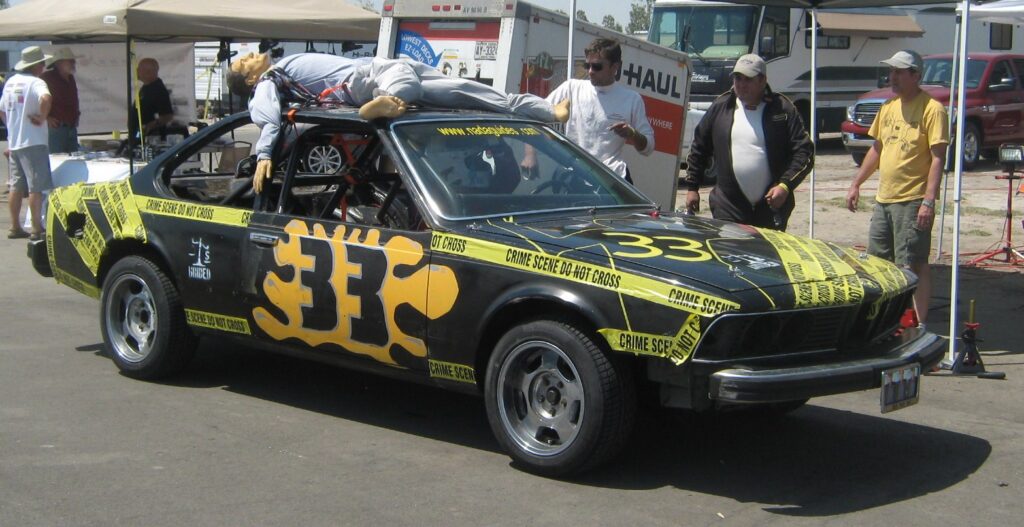
Teams did more than paint numbers on the doors. LeMons rewarded elaborate themes, questionable costumes, and cars decorated to resemble everything from movie props to food products.
One Mazda Miata arrived as a homebuilt turbocharged creation known as the Ghettocharged Miata. A Honda CRX had been transformed into the CRXtarossa, a budget interpretation of a Ferrari Testarossa. Another BMW appeared wearing enough exterior spikes to earn the name Porcubimmer.
This was motorsport for people who believed a racing budget should include spray paint, thrift-store costumes, and at least one trip to a junkyard.
The $500 Rule and the BS Inspection
Before racing, each team had to convince the LeMons judges that its car complied with the $500 limit.
That was not always easy.
Some teams arrived with genuinely worthless machinery rescued from fields, backyards, and classified ads. Others appeared with suspiciously fast BMWs, Porsches, or heavily modified imports accompanied by accounting explanations that might have interested the Internal Revenue Service.
Cars judged to exceed the budget could receive penalty laps before the race even began. This was known as the BS Factor, an intentionally informal system designed to discourage teams from disguising expensive race cars as $500 beaters.
The inspection process was part technical review, part theater, and part interrogation. Creative explanations were expected. Receipts helped. Bribing the judges with food, costumes, or elaborate presentations could not hurt, although it probably did little to explain the freshly rebuilt engine hiding beneath the hood.
Penalties With a Sense of Humor
Traditional racing series punish bad driving with fines, stop-and-go penalties, or disqualification.
LeMons found those options insufficiently embarrassing.
Drivers who spun, made contact, ignored flags, or otherwise displeased the judges could be sent to the penalty area. At Buttonwillow, punishments reportedly included sitting in a dunk tank, dancing in the bed of a pickup while terrible music played, blowing an entire bottle of soap bubbles, drawing a team portrait, and placing a tongue into a mousetrap.
The penalties consumed time, which mattered in an endurance race, but they also reinforced the culture of the event. Taking yourself too seriously was nearly as great an offense as hitting another car.
A conventional racing official might ask a driver to explain an avoidable collision.
A LeMons judge might ask the same driver to explain it through interpretive dance.
The People’s Curse
During the early years of the series, spectators were invited to select one particularly disliked entry for the People’s Curse.
At some events, the condemned car was destroyed with heavy construction equipment. At Buttonwillow, the unfortunate winner was Black Iron Racing’s Beyond Thunderchrome, a stripped and partially de-bodied BMW 540.
Instead of placing the BMW beneath an excavator, organizers armed approximately 120 people with one wrench each. The crowd was then given three minutes to dismantle as much of the car as possible.
Doors, panels, components, and anything else within reach were removed by a temporary workforce operating with the discipline of shoppers entering a department store on Black Friday.
The remarkable part came afterward.
Black Iron Racing gathered the pieces, repaired the BMW, and returned it to running condition within a few hours. The effort earned the team the Heroic Fix award, proving that even public disassembly was not necessarily enough to end a LeMons race.
Winning the Buttonwillow Histrionics
The overall victory went to the wonderfully named Mustard Yellow Volvo Doing 45 in the Fast Lane.
The team’s 1984 Volvo 244 V8 completed more laps than the rest of the 95-car field, demonstrating once again that a boxy old Volvo is difficult to kill, even when subjected to endurance racing in the California heat. Its recorded best lap was 2:17.604.
Big Sausage Racing finished second in an Acura Integra and won the top class. Blanco Basura Racing placed third in a Honda Prelude and received the Organizer’s Choice award. The LeMons Vice Honda CRXtarossa won its class, while the Italian Stallions’ 1980 Fiat X1/9 took the class reserved for the field’s most questionable machinery.
Yet the car completing the most laps was not necessarily considered the event’s most impressive winner.
That distinction belonged to a tiny British car.
The Real Winner: A 1962 Austin Mini
San Diego Minis, also known as Team Bean, entered a 1962 Austin Mini with a 998cc engine.
The Mini was slow, small, old, and surrounded by cars with considerably more power. It also kept circulating.
Team Bean finished 55th out of 95 entries and recorded a best lap of 2:45.836. That performance earned the team the Index of Effluency, the LeMons award for achieving an unexpectedly strong result with a car that had little logical business surviving an endurance race.
Within LeMons culture, the Index of Effluency has traditionally represented the spirit of the event better than an outright victory. A relatively quick BMW finishing near the front is respectable. A 47-year-old Mini completing enough laps to finish in the middle of the field is something closer to a miracle.
What Did the Winners Receive?
At the time, the team winning the race received $1,500, traditionally presented in nickels.
That amounted to 30,000 coins, a prize intentionally designed to be inconvenient. It was valuable enough to recognize the achievement, but ridiculous enough to ensure nobody confused LeMons with professional motorsport.
The nickel payout was less a financial reward than one final joke at the winners’ expense. After spending months building a race car, surviving inspections, replacing broken parts, and completing hundreds of racing laps, the team still had to determine how to transport a very large quantity of pocket change.
No one entered LeMons to become wealthy.
They entered because it offered something increasingly difficult to find in motorsport: accessible racing that took safety seriously without taking itself seriously.
Why the 24 Hours of LeMons?
The Buttonwillow Histrionics demonstrated that racing did not need to be polished, exclusive, or prohibitively expensive to be meaningful.
The cars might have cost $500, but preparing one for endurance racing still required ingenuity, persistence, teamwork, and a willingness to repair machinery under terrible conditions. Drivers had to manage traffic, protect the car, avoid penalties, and resist the temptation to behave like Ayrton Senna while piloting a 20-year-old economy car with a theme-store shark attached to its roof.
The event made room for people who loved motorsport but did not have professional budgets. It also reminded competitors that racing could be competitive without becoming joyless.
At Buttonwillow, success might mean winning overall in a V8-powered Volvo. It might mean keeping an ancient Mini running all weekend. It might even mean rebuilding a BMW after 120 people had been invited to take it apart.
The 24 Hours of LeMons was loud, chaotic, occasionally destructive, and deeply unserious.
It was also real racing.
24 Hours of LeMons Buttonwillow Quick Facts
- Event: Buttonwillow Histrionics
- Dates: August 15-16, 2009
- Location: Buttonwillow Raceway Park in Buttonwillow, California
- Number of entries: 95 cars
- Vehicle budget: $500, excluding approved safety equipment and certain consumable components
- Overall winner: Mustard Yellow Volvo Doing 45 in the Fast Lane
- Winning car: 1984 Volvo 244 V8
- Index of Effluency winner: San Diego Minis, also known as Team Bean
- Index of Effluency car: 1962 Austin Mini with a 998cc engine
- Organizer’s Choice: Blanco Basura Racing’s 1991 Honda Prelude
- People’s Curse: Black Iron Racing’s de-bodied BMW 540
- Heroic Fix winner: Black Iron Racing, after repairing the dismantled BMW
- Period first-place prize: $1,500 paid in nickels
Frequently Asked Questions
What was the Buttonwillow Histrionics?
The Buttonwillow Histrionics was a 24 Hours of LeMons endurance race held at Buttonwillow Raceway Park in California on August 15 and 16, 2009. It featured 95 low-budget race cars.
Did the 24 Hours of LeMons race for a full 24 hours?
Not at every event. Many LeMons races, including Buttonwillow, were divided into daytime racing sessions held across two days rather than running continuously for 24 hours.
Did every LeMons race car really cost less than $500?
The car and performance preparation were generally limited to $500. Approved safety equipment, brakes, wheels, and tires were treated separately. Judges could assign penalty laps when they believed a car exceeded the budget.
Who won the 2009 Buttonwillow LeMons race?
Mustard Yellow Volvo Doing 45 in the Fast Lane won the race overall with a 1984 Volvo 244 powered by a V8 engine.
What was the Index of Effluency winner?
San Diego Minis, also known as Team Bean, won the Index of Effluency with a 1962 Austin Mini. The award recognized the team’s unexpectedly strong performance in an old and underpowered car.
What happened to the People’s Curse car?
Black Iron Racing’s stripped BMW 540 was selected for the People’s Curse. Approximately 120 people were given wrenches and three minutes to dismantle it. The team later repaired the car and returned it to running condition.
How much money did the winner receive?
The period first-place prize was $1,500, traditionally paid in nickels. That amounted to 30,000 coins.
Was the 24 Hours of LeMons a demolition derby?
No. LeMons was wheel-to-wheel endurance racing conducted under formal safety rules. The inexpensive cars, unusual penalties, and theatrical themes gave it a demolition-derby appearance, but the goal was to complete the most racing laps.







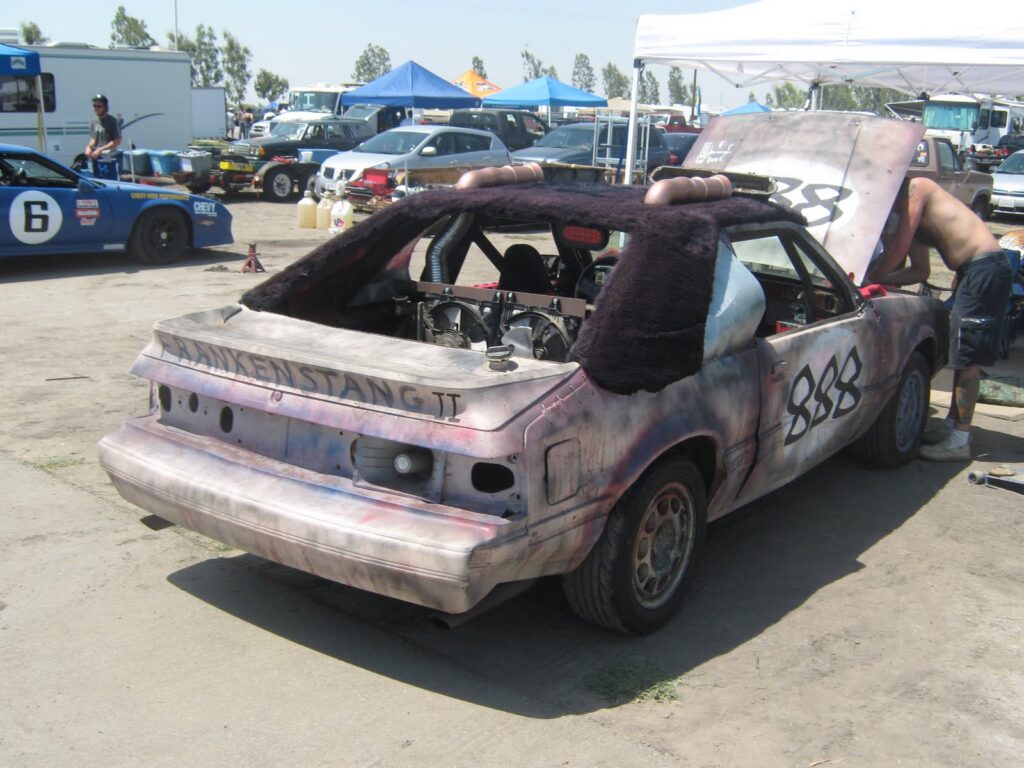
I was at this race, my friends and I ran the Fox Body in the picture about halfway through