

 Michael Satterfield
Before the interstate bypassed the small towns and roadside attractions turning the American road trip into a predictable sequence of exit signs, chain hotels, and coffee served in cups large enough to water a horse, the American highway was a stage. A traveler did not simply arrive at a motel, diner, gas station, or gift shop. The building had to wave from the roadside, wink through the windshield, and make a child in the back seat yell loud enough for Dad to hit the brakes. What better to get a traveler to pull over than a Wigwam Motel?
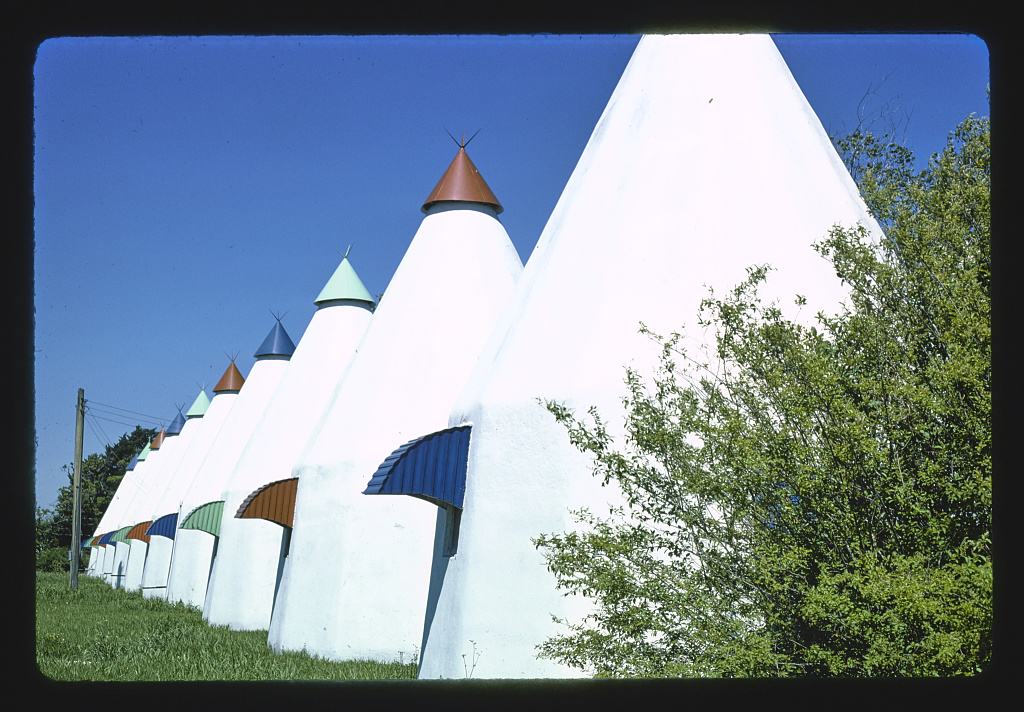
That world gave us giant oranges, coffee-pot cafes, duck-shaped stores, windmill restaurants, airplane diners, and some of the most recognizable roadside lodging in America: teepee-shaped motel cabins called Wigwam Villages.
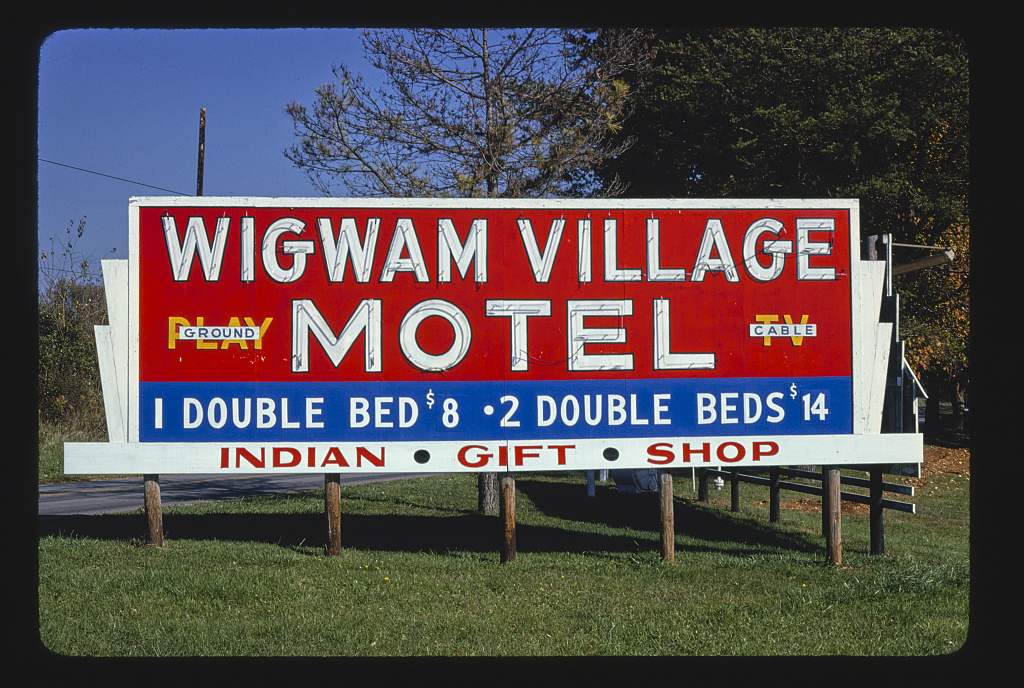
Technically, they were not wigwams. They were shaped more like tipis, the conical dwellings historically associated with Plains tribes. A wigwam is traditionally a domed or arched structure associated with other Indigenous cultures. But Frank Redford, the Kentucky entrepreneur behind the Wigwam Village concept, preferred the word “wigwam,” and the name stuck. Accuracy lost, marketing won, and the roadside gained one of its most unforgettable landmarks.
As Route 66 turns 100 in 2026, these buildings deserve another look. Not simply as kitsch, but as artifacts of a time when architecture, commerce, fantasy, and the open road all shared the same two-lane strip of asphalt.
What Is Mimetic Architecture?
The proper term is mimetic architecture, often also called novelty or programmatic architecture. It describes buildings designed to imitate an object, animal, product, or idea. In other words, the building is not just where the business happens. The building is the advertisement.
A hot dog stand might look like a hot dog. A coffee shop might look like a coffee pot. A gift shop in the West might look like a teepee. The logic was simple and brilliant: if you had only a few seconds to catch the eye of a family traveling at 45 miles per hour, a normal building was not enough. A sign helped. Neon helped more. But a building shaped like a giant object was impossible to ignore.
This kind of architecture flourished in the early automobile age, especially from the 1920s through the 1950s. As middle-class Americans bought cars and vacation travel expanded, roadside businesses had to compete for attention. The car created freedom, but it also created speed. Buildings had to become louder.
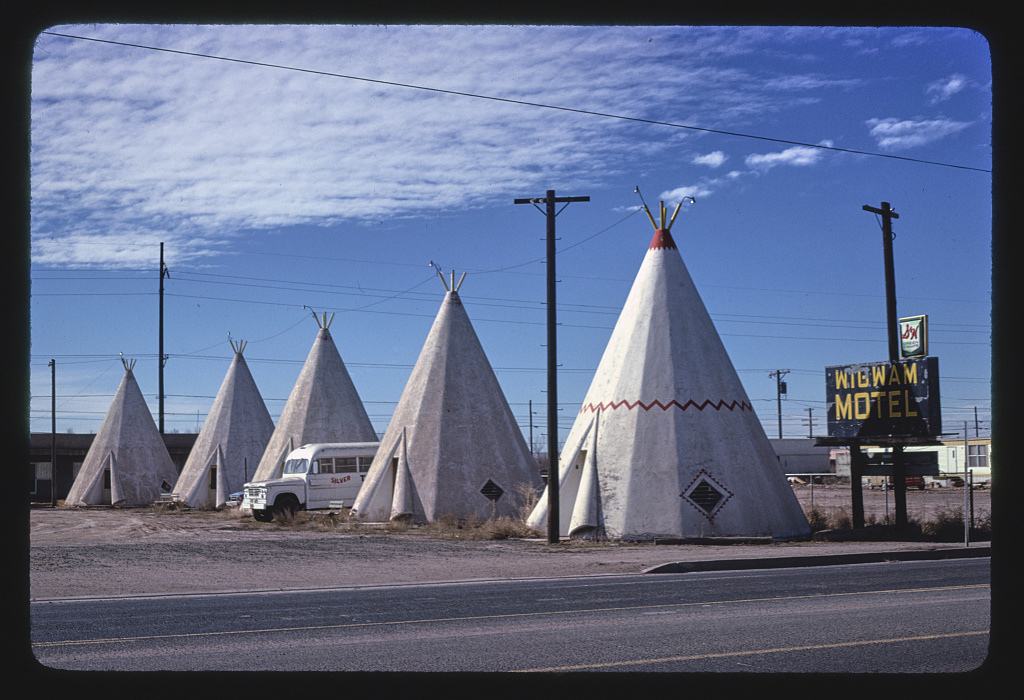
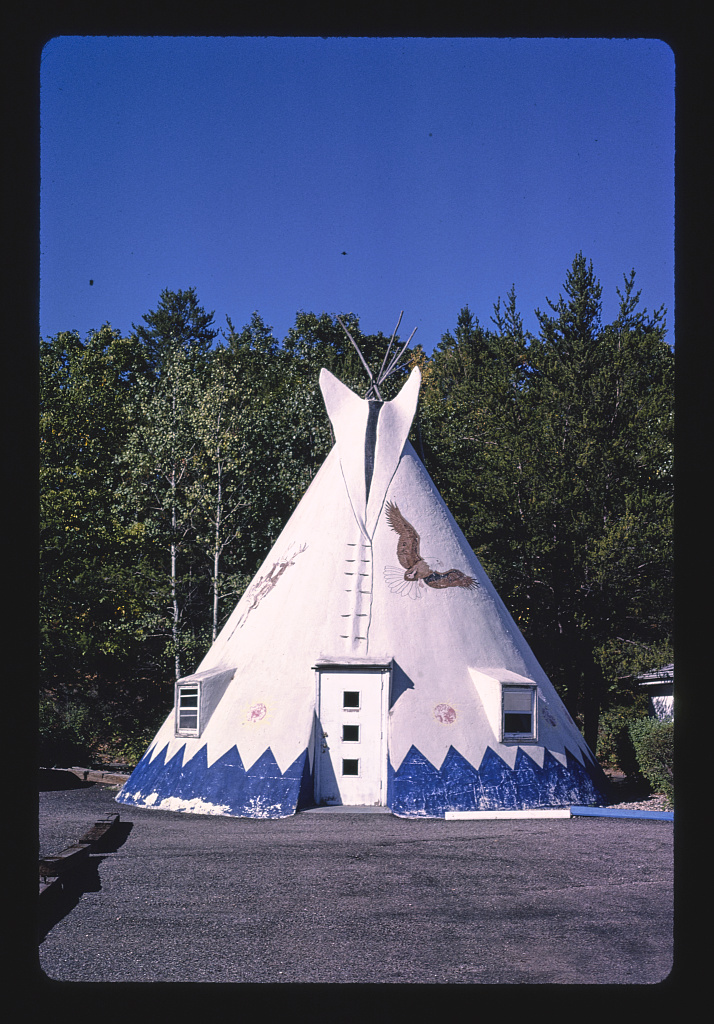
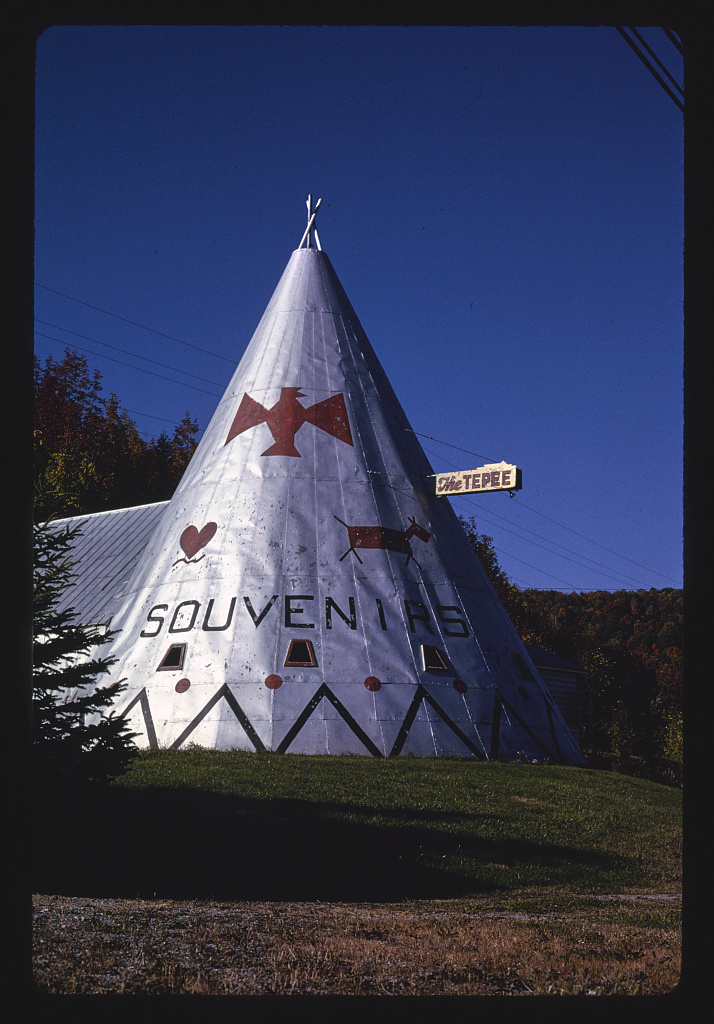
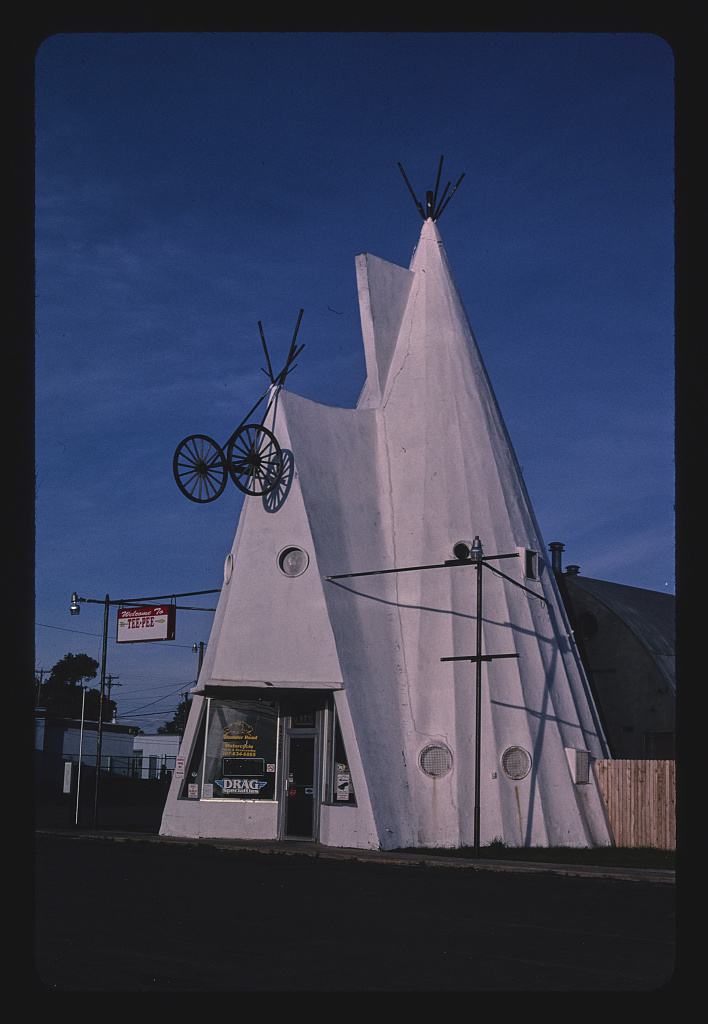
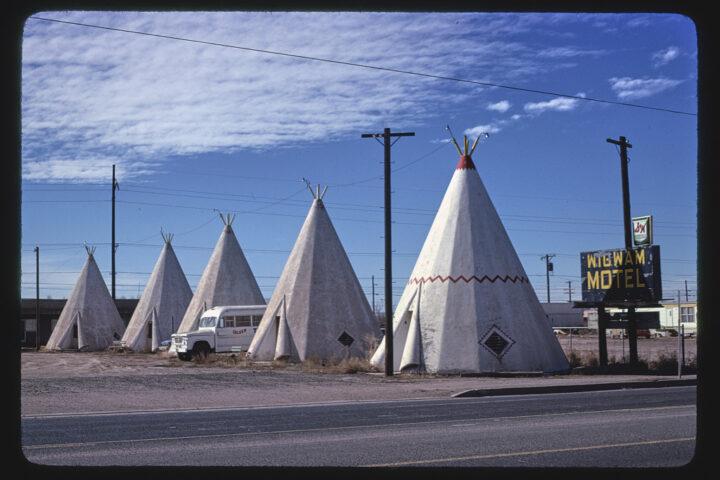
That is why John Margolies’ photographs matter so much. Between the 1970s and 2000s, Margolies traveled the country documenting the disappearing visual language of American highways. His photographs of small-town signs, motels, hotels, diners, drive-ins, gas stations, and novelty buildings preserve a world that was already fading when he found it.
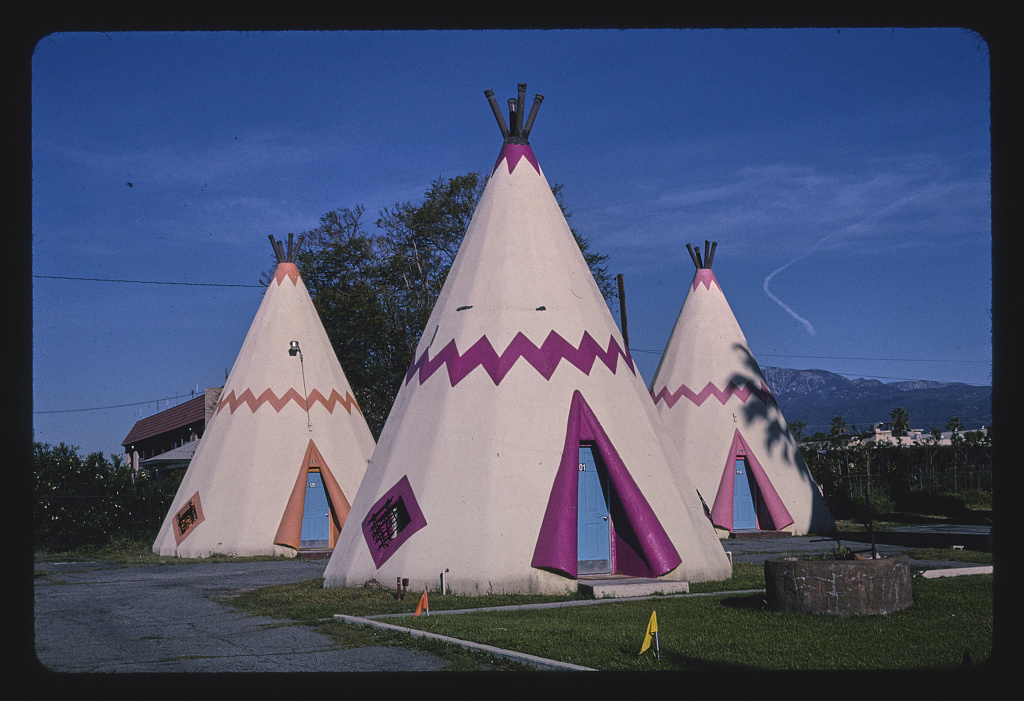
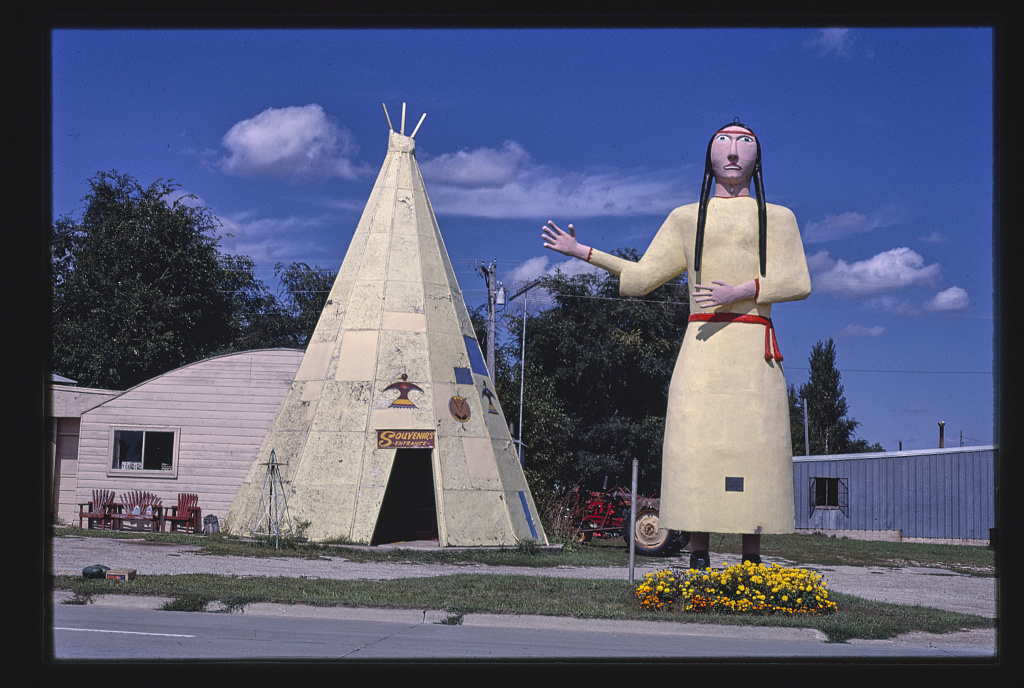
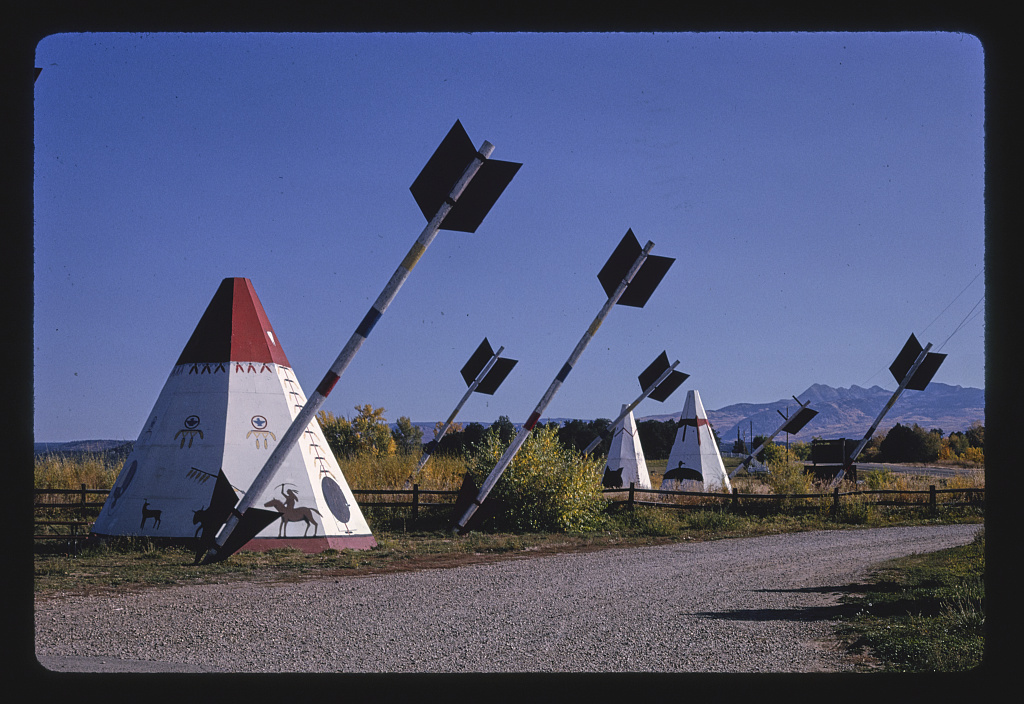
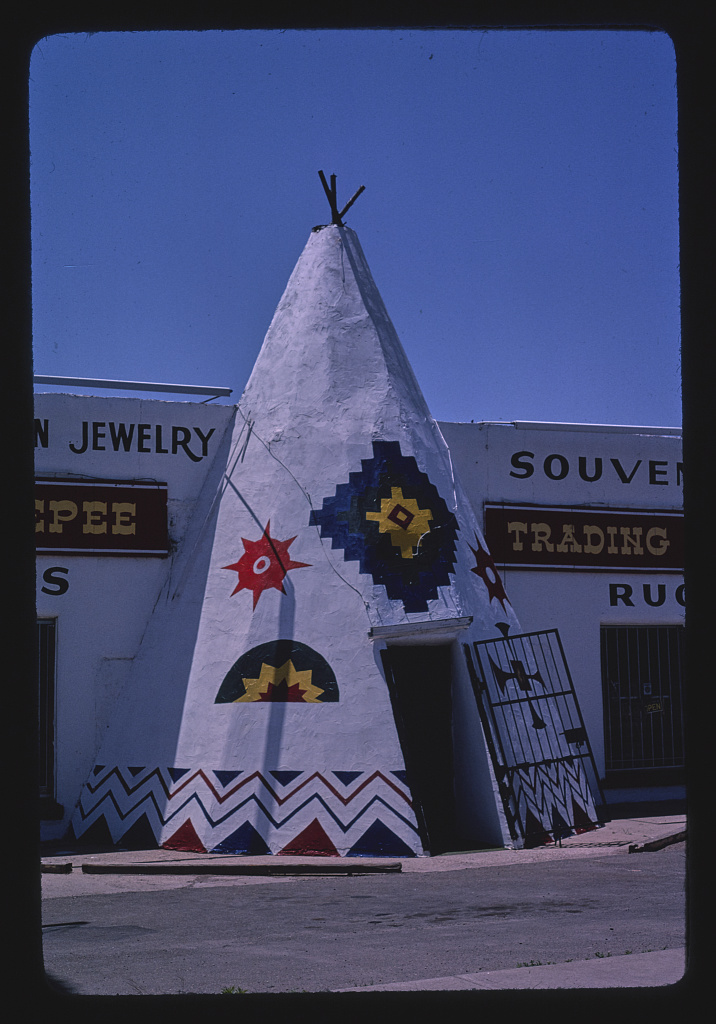
Among the images we are referencing are teepee-shaped and teepee-inspired places from across the country: Wigwam Village #6 in Holbrook, Arizona; Wigwam Village #7 in Rialto, California; a Wigwam Lodge in Tempe; the Teepee Motel in Wharton, Texas; a teepee rest stop in Sierra Blanca; teepee gift shops in New York, South Dakota, Arkansas, Colorado, and New Mexico; a teepee fireworks stand in Wyoming; a teepee BBQ stand in Montana; and even teepee-shaped commercial structures in Florida, Wisconsin, Oklahoma, and South Carolina.
Some were motels. Some were signs. Some were food stands or souvenir shops. Some are gone. Some are altered. A few survive as ghostly reminders that American roads used to have better comic timing.
Frank Redford and the Birth of the Wigwam Village
The Wigwam Village story begins with Frank A. Redford, a Kentucky entrepreneur who reportedly drew inspiration from a teepee-shaped stand he saw while traveling in California. Back home in Horse Cave, Kentucky, he opened a teepee-shaped lunch counter and gas station in 1933. Customers asked if they could sleep in one. Redford, wisely, heard opportunity knocking in moccasins.
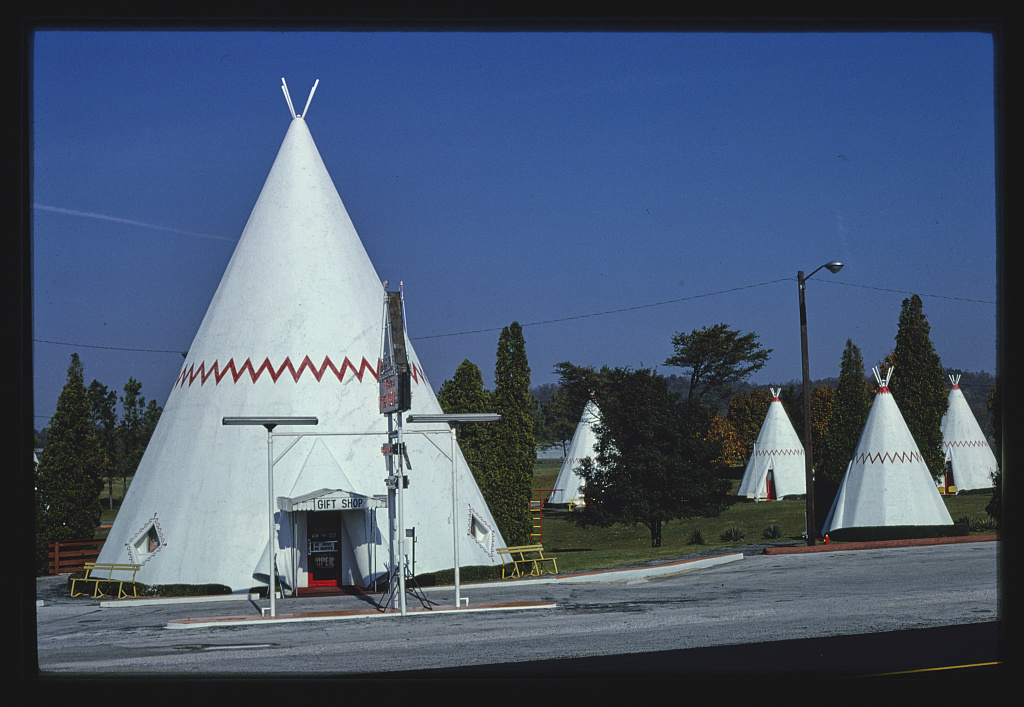
He expanded the idea into tourist cabins, patented the design, and in 1937 opened Wigwam Village No. 2 in Cave City, Kentucky, near Mammoth Cave. It had 15 individual teepee-shaped sleeping units arranged around a central lawn, along with a large teepee-shaped building used for dining, gifts, and services. It was not just a motel. It was a roadside village, one built around the idea that travel should feel a little theatrical.
Redford’s idea spread. In total, seven Wigwam Villages were built before 1950. They appeared in Kentucky, Louisiana, Florida, Alabama, Arizona, and California. Today, only three of the original seven survive:
Wigwam Village No. 2, Cave City, Kentucky
Built in 1937 near Mammoth Cave, this is the oldest surviving Wigwam Village and a crucial stop for anyone interested in pre-interstate road travel.
Wigwam Village No. 6, Holbrook, Arizona
Built in 1950 on Route 66 by Chester E. Lewis, this is perhaps the most famous surviving location, complete with vintage cars parked outside the concrete-and-steel units.
Wigwam Village No. 7, Rialto/San Bernardino, California
Also opened around 1950, this Route 66 location was Redford’s western outpost and remains one of the most photogenic motels on the Mother Road.
Two of the three are on Route 66. The Kentucky site is not, but it is the origin story, the older cousin who had a full-time job before Route 66 became famous.
Route 66 and the Theater of the Road
Route 66 was officially created in 1926, connecting Chicago to Los Angeles through Illinois, Missouri, Kansas, Oklahoma, Texas, New Mexico, Arizona, and California. By 1938, it was fully paved. By the postwar years, it had become the great American vacation route, a road of motor courts, gas stations, diners, souvenir shops, trading posts, neon signs, and local oddities.
This is where the Wigwam Villages made perfect sense. Route 66 was not merely a way to get somewhere. It was a collection of places begging you to stop. The road sold freedom, but the businesses along it sold memory.
The Wigwam Motels did what every good roadside attraction had to do. They turned lodging into a photograph. Long before Instagram, they understood the power of the family snapshot. Stand in front of a teepee cabin. Park your station wagon beside it. Mail the postcard. Tell the neighbors.
That was the old algorithm, and honestly, it had more charm than whatever our phones are doing to us now.
The Complicated Romance of the Teepee
Any serious look at teepee-shaped roadside architecture has to acknowledge the cultural problem. These buildings were born from a 20th-century commercial fantasy of Native American life, filtered through Hollywood, tourism, and roadside merchandising. They often blurred or ignored the distinctions between Indigenous cultures. In Kentucky, for example, the Wigwam Village form did not reflect the historic dwellings of the region’s Indigenous peoples. That does not mean the buildings should be erased from road trip history. It means they should be understood honestly.
The Wigwam Villages are artifacts of American imagination, commerce, and misrepresentation all at once. They belong to the history of the motel, the family vacation, the two-lane highway, and the country’s long habit of turning Native imagery into marketing. Their survival gives travelers a chance to talk about all of that, not just pose for a picture and move on.
The best preservation does not pretend the past was perfect. It keeps the object standing and adds context.
How Many Still Exist Today?
Of the original seven Wigwam Village motels, three survive today:
- Wigwam Village No. 2 in Cave City, Kentucky
- Wigwam Village No. 6 in Holbrook, Arizona
- Wigwam Village No. 7 in Rialto/San Bernardino, California
Of those three, two are on Route 66: Holbrook and Rialto/San Bernardino.
Beyond the original Wigwam Village chain, John Margolies’ photographs show that teepee-inspired commercial architecture was once much more widespread. Motels, gift shops, signs, rest stops, fireworks stands, food stands, and tourist traps across the country borrowed the teepee shape. There is no single complete national inventory of all surviving teepee-inspired roadside buildings, and many of the places Margolies photographed have disappeared, changed hands, or been heavily altered. But the three surviving Wigwam Villages remain the most important intact examples of the form.
Three Road Trips to See the Surviving Wigwam Villages
Road Trip 1: Kentucky Cave Country and the Original Wigwam Village
Start: Louisville, Kentucky
End: Nashville, Tennessee
Best For: Americana, caves, bourbon country, early motel history
Teepee Building: Wigwam Village No. 2, Cave City, Kentucky
Suggested Length: 3 days
Day 1: Louisville to Cave City
Start in Louisville with coffee, old brick, and a little bourbon-country atmosphere before heading south. Detour through Bardstown if you want classic Kentucky scenery, historic streets, and a slower pace. Continue toward Cave City and check in at Wigwam Village No. 2. Spend the evening walking the property, photographing the neon sign, and appreciating how radical this place must have looked in 1937.
Day 2: Mammoth Cave and Cave City Roadside Stops
Spend the day at Mammoth Cave National Park. Book a cave tour in advance, then leave time for the visitor center and surface trails. Afterward, lean fully into roadside America with Dinosaur World, local souvenir shops, and the Cave City strip. This is the kind of place where a giant dinosaur and a teepee motel can coexist peacefully, because subtlety was never the point.
Day 3: Bowling Green to Nashville
Drive south to Bowling Green for the National Corvette Museum. It is a perfect pairing with the Wigwam Village because both tell the story of American mobility, one through architecture and one through fiberglass. From there, continue to Nashville and end the trip with live music, hot chicken, and the understanding that the American road trip has always been equal parts transportation and performance.
Road Trip 2: Arizona Route 66, Painted Desert to High Desert
Start: Albuquerque, New Mexico
End: Las Vegas, Nevada
Best For: Route 66 centennial travel, desert landscapes, vintage motels
Teepee Building: Wigwam Village No. 6, Holbrook, Arizona
Suggested Length: 3 days
Day 1: Albuquerque to Holbrook
Leave Albuquerque and follow the old westward pull of Route 66 through Grants, Gallup, and the New Mexico-Arizona line. Stop for classic signs, trading posts, and whatever roadside oddity catches your eye. Arrive in Holbrook and check in at Wigwam Village No. 6. The vintage cars parked around the property make the place feel like a movie set, except better, because you can actually sleep there.
Day 2: Petrified Forest, Winslow, and Meteor Crater
Begin with Petrified Forest National Park and the Painted Desert. It is one of the essential Route 66 landscapes, a place where geology makes the motel seem almost modern. From there, head west to Winslow for Standin’ on the Corner Park. Yes, it is touristy. Yes, you should take the picture anyway. Continue to Meteor Crater, then overnight in Flagstaff or Williams.
Day 3: Seligman, Kingman, Oatman, and Las Vegas
Drive the old Route 66 towns of Seligman and Kingman, where the road’s revival culture is strong. If time allows, continue through the mountain road toward Oatman, one of the great oddball western stops, complete with burros and old mining-town atmosphere. End in Las Vegas, which is essentially mimetic architecture after drinking three espressos and finding a construction loan.
Road Trip 3: California Route 66, Desert Neon to the Pacific
Start: Needles, California
End: Santa Monica Pier, California
Best For: Route 66 finale, desert towns, neon, Los Angeles road culture
Teepee Building: Wigwam Village No. 7, Rialto/San Bernardino, California
Suggested Length: 3 days
Day 1: Needles to Barstow
Begin at the California edge of Route 66 in Needles and drive west through the Mojave. Stop at Amboy for Roy’s Motel and Cafe, one of the most photographed Route 66 scenes in the desert. Continue through Newberry Springs, where the Bagdad Cafe remains a cult-road-trip landmark, then end in Barstow. Visit the Route 66 Mother Road Museum if your timing works.
Day 2: Barstow to Rialto/San Bernardino
Continue west through Victorville and Oro Grande. Elmer’s Bottle Tree Ranch is worth the stop, a folk-art forest that proves roadside creativity did not die with the first generation of motor courts. Arrive at Wigwam Village No. 7 in Rialto/San Bernardino and check in for the night. This is one of the great Route 66 motel stays, a place where architecture does not merely shelter the traveler. It performs for them.
Day 3: Foothill Boulevard to Santa Monica
Follow the old Route 66 corridor west through the San Gabriel Valley, Pasadena, and Los Angeles. Look for vintage signs, old motels, diners, and the fragments of the pre-freeway city hiding in plain sight. End at Santa Monica Pier, the symbolic western finish line of Route 66. The Pacific makes a fitting conclusion: after all those miles of signs, motels, deserts, diners, and improbable buildings, the road finally runs out of continent.
Why These Buildings Still Matter
The surviving Wigwam Villages are not just quirky motels. They are rare survivors from a time when travel was slower, roads were local, and businesses had to earn attention with imagination rather than algorithms.
They also remind us that roadside history is messy. It includes ingenuity, exaggeration, cultural borrowing, nostalgia, family vacations, local entrepreneurship, and the rise and fall of the two-lane economy. That is what makes these places worth saving. They are not perfect monuments. They are honest artifacts of an imperfect, fascinating, deeply American road culture.
John Margolies understood that. His photographs treated gas stations, motels, diners, gift shops, and strange little roadside buildings with the seriousness usually reserved for cathedrals and civic halls. He knew they were part of the American landscape, and he knew they were disappearing.
In the 100th year of Route 66, the Wigwam Motels still ask the same question they asked generations ago:
Have you slept in a wigwam lately?
The better question may be this: have you slowed down enough to notice what the road used to look like?
Quick Facts
- Route 66 Centennial: 2026 marks 100 years since Route 66 was created in 1926.
- Original Wigwam Villages Built: Seven.
- Surviving Wigwam Villages: Three.
- Surviving Locations: Cave City, Kentucky; Holbrook, Arizona; Rialto/San Bernardino, California.
- Route 66 Locations: Holbrook, Arizona, and Rialto/San Bernardino, California.
- Oldest Surviving Wigwam Village: Wigwam Village No. 2 in Cave City, Kentucky, built in 1937.
- Most Famous Route 66 Example: Wigwam Village No. 6 in Holbrook, Arizona.
- Architecture Type: Mimetic, novelty, or programmatic roadside architecture.
- Important Correction: The motel units are shaped like tipis or teepees, though historically marketed as wigwams.
- Featured Archive: John Margolies Roadside America photograph archive, Library of Congress, Prints and Photographs Division.
FAQ
What is mimetic architecture?
Mimetic architecture is a style of building design where the structure imitates an object, animal, product, or theme. In roadside America, this often meant buildings shaped like coffee pots, hot dogs, oranges, ducks, airplanes, or teepees.
Are the Wigwam Motels actually shaped like wigwams?
No. They are more accurately shaped like tipis or teepees. The name “wigwam” was used as branding, even though wigwams and tipis are different types of Indigenous structures.
How many Wigwam Motels still exist?
Three of the original seven Wigwam Village motels still exist: Cave City, Kentucky; Holbrook, Arizona; and Rialto/San Bernardino, California.
Which Wigwam Motels are on Route 66?
Two surviving Wigwam Villages are on Route 66: Wigwam Village No. 6 in Holbrook, Arizona, and Wigwam Village No. 7 in Rialto/San Bernardino, California.
Can you still sleep in a Wigwam Motel?
Yes. The three surviving Wigwam Village properties continue to operate as lodging, though travelers should always check current availability and book ahead, especially during the Route 66 centennial year.
Why are teepee-shaped motels controversial?
They reflect a period when American businesses often used romanticized and inaccurate Native imagery to sell travel experiences. Today, these sites are best understood with historical context, recognizing both their roadside importance and their cultural problems.
Why is Route 66 important to American road trip history?
Route 66 became one of America’s defining automobile corridors, linking small towns, major cities, and roadside businesses across eight states. It helped shape the mythology of the open road and became a symbol of freedom, migration, tourism, and American mobility.
What is the best Wigwam Motel road trip for Route 66’s 100th anniversary?
For a true Route 66 centennial trip, the Arizona itinerary from Albuquerque to Las Vegas with a stay at Wigwam Village No. 6 in Holbrook is the strongest choice. For a grand finale, the California route from Needles to Santa Monica with a stay at Wigwam Village No. 7 is hard to beat.
Photo Credit: John Margolies Roadside America photograph archive (1972-2008), Library of Congress, Prints and Photographs Division.











Ok sleeping in a “Wigwam” is on my 2026 to do list.
Super cool, but honestly the part about it being cultural appropriation isn’t needed, it was cultural appreciation and made more people interested in learning about native culture. My grand parents would travel to the Southwest for vacation, and visit Native American artists, buy pottery and rugs, and they bought books home. Which I as a kid spent my summers at their place reading front to back. Better to have a visible reminder, even if it is a gift shop or a hotel then to just forget.
Are the ones that are open now safe for female solo travelers?
You have to stop at the EL Rancho Hotel as well.
I stayed at the one in Holbrook on my trip a few years ago, love that they have classic cars parked all around.
These roadside attractions are what make American road trips so iconic.
Never knew there were others I live just down the road from the one in Rialto, California.
I very delighted to find this internet site on bing, in the US for the World Cup, but I have booked a Harley Davidson ride on Route 66!
We are here for the World Cup and are also going to drive Route 66 before we go back to Spain. We have spent about three days reading all of your Route 66 stories.
So glad these are still standing.
I remember going to the Tee Pee shaped gift shop by the Meteor creator
I hope more people get out and experience Route 66 and how amazing America is