
 Michael Satterfield
Chances are you have never heard of the Clan Crusader, a featherweight British sports car born from the same engineering culture that produced Lotus. The project was conceived by former Lotus men Paul Haussauer and Brian Luff, who believed there was room in the market for a modern, affordable, fiberglass monocoque sports car. By 1971 their vision had become reality. Clan Motor Company operated a 24,000 square foot factory, employed 29 workers, and was turning out roughly five cars per week.
The Crusader used a naturally aspirated four-cylinder engine sourced from the Sunbeam Imp Sport. With a curb weight of just 1,323 pounds, performance was respectable for the era. Zero to sixty arrived in 12.9 seconds, matching contemporary economy cars while delivering far sharper handling. The fiberglass monocoque chassis was unusually stiff for a low-volume car, and early road tests praised its balance, steering feel, and modern construction.

The Clan Crusader More Than Just a Kit Car
Pricing made the Clan Crusader especially appealing. In 1972 it sold for $1,850 complete, undercutting an MG MGB, Ford Pinto, or AMC Gremlin. Buyers could also order a mostly assembled kit for $1,529 to reduce purchase taxes, a clever move that broadened demand among home builders and club racers.
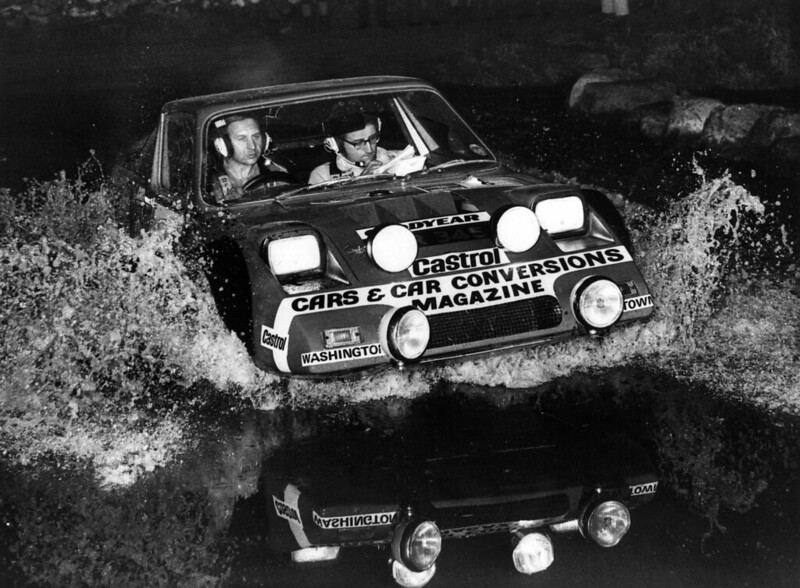
Motorsport success followed quickly. In 1972 Andy Dawson drove a Crusader to second place at the Manx Rally. That same year Alan Conley captured first overall in the Tour of Mull. The car continued to podium at regional rallies and claimed an outright championship win in the 1974 British Caledonian Modsports and Sports and Special GT series. For a tiny manufacturer, the Crusader was punching far above its weight.

Ironically, the 1973 oil crisis increased interest in small efficient sports cars, yet external pressures sealed Clan’s fate. New taxation rules, rising costs, and limited capital forced production to end in November 1973 after roughly 315 cars had been built. Receivers completed and sold remaining inventory before the company was purchased out of bankruptcy by Cypriot truck manufacturer Andreas Kaisis. Plans were drawn to restart Crusader production in Cyprus, but the Turkish invasion of the island placed the factory inside the United Nations buffer zone. It remains abandoned today, a frozen relic of what might have been.

Back in the United Kingdom, Brian Luff continued quietly supporting the growing owner community. He produced replacement body shells and components, supplying racers and restoration projects. Complete new bodies were offered to scratch builders through 1981, ensuring the Crusader never fully disappeared.
Clan Cars Limited
In 1982 entrepreneur Peter McCandless acquired unofficial molds from Luff and launched Clan Cars Ltd in Northern Ireland. His updated Crusader featured flip-up headlights, revised bumpers, and a Ford Fiesta sourced dashboard. Around 130 cars were produced. McCandless also developed a mid-engine variant called the Clan Clover, with only 26 completed. Unfortunately, inconsistent build quality and limited dealer support hurt reputation and sales. Clan Cars entered bankruptcy by the late 1980s.

At nearly the same time, Ian Hopper and Paul Haussauer formed Clan Marketing. They retrieved two of the original Cyprus cars and explored a modernized Crusader using Ford, Peugeot, and Fiat powertrains. Several new body designs were created, but full production never materialized.
Another offshoot arrived in 1984 when former Clan employee Arthur Birchall introduced the McCoy. Based on Mini running gear, the front-wheel-drive reinterpretation featured a taller hood and revised panels to accommodate donor parts. It was an inventive solution for budget builders, though produced in very small numbers.

Today the Clan story lives on through the Clan Owners Club. The group has secured most surviving molds and tooling, manufactures replacement parts, maintains a comprehensive registry, and actively searches for missing cars, including historic race entries and long-lost family vehicles. Enthusiasts can still buy a well-sorted Clan Crusader for under $10,000, though examples rarely appear outside the United Kingdom.

The Clan Crusader never achieved mainstream recognition, yet its story remains one of bold engineering, motorsport ambition, and repeated resurrection attempts. For those who know, it is one of the most fascinating forgotten sports cars of the British seventies.