
 Michael Satterfield
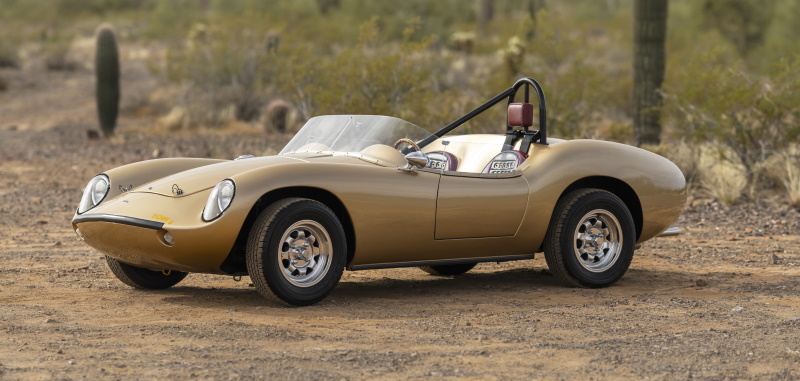
Devin Sports Cars were never a single idea frozen in time. They were closer to a philosophy. Lightweight fiberglass bodies, simple mechanical honesty, and the belief that an American garage could build something that embarrassed Europe’s best on Sunday afternoon.
The Devin C represents one of the most intriguing chapters in that story.
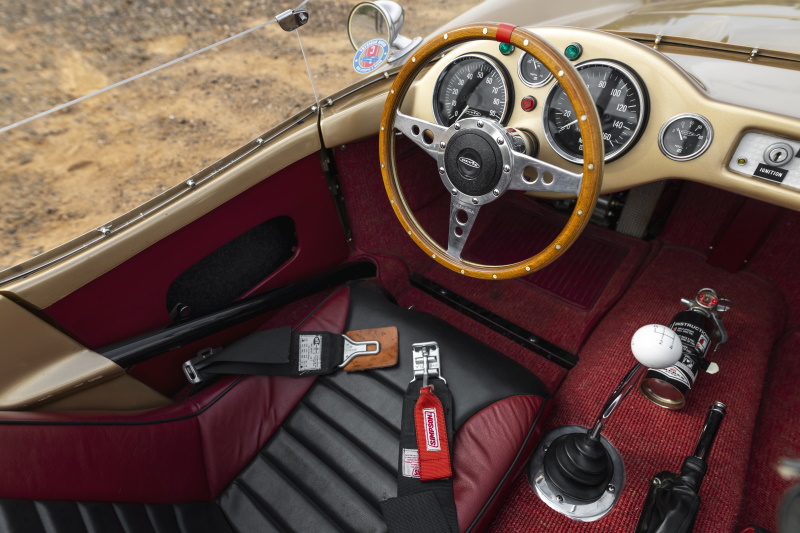
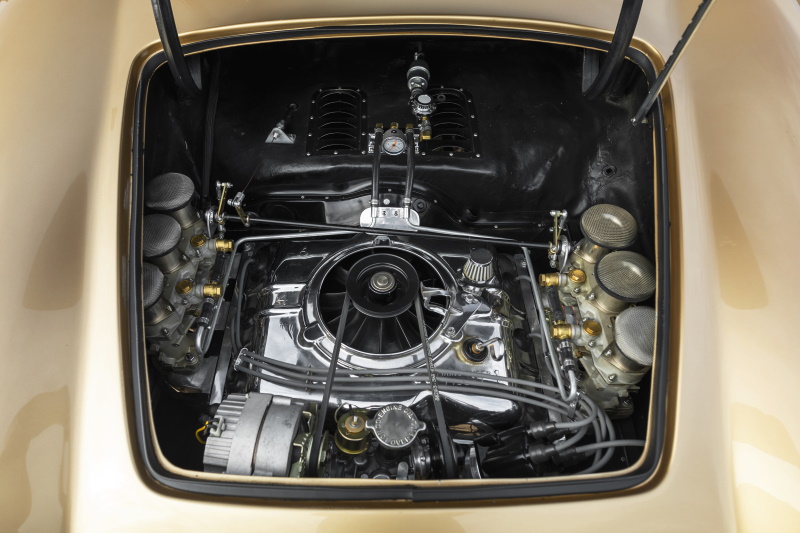
Devins appeared in a wide range of configurations, fitted to multiple chassis and subtly different body shapes depending on the customer, the year, and the mechanical package underneath. The Type C, with the C signifying Corvair, pushed the concept further than most. Powered by a rear engine Chevrolet flat six, the Devin C delivered a power to weight ratio that bordered on outrageous for the early 1960s. With well under 1,600 pounds to move and a properly prepared Corvair engine behind the driver, period testing and owner accounts consistently placed 0 to 60 mph times just under four seconds. In an era when most sports cars were still learning how to brake properly, that kind of acceleration was startling.
Based on its serial number DC1-001-2, this particular car is believed to be the second Type C ever built. Only sixty Devin Cs were produced in total, and today just fourteen are known to survive. That makes the Type C not only fast, but genuinely rare, even by low volume American sports car standards.
Part of the Devin mystique was accessibility. Buyers could purchase a car as a kit for $2,750 or order a fully assembled turnkey example for $4,590. Adjusted for inflation, that puts a completed Devin Type C at roughly $46,000 in today’s money. To put that into perspective, a Devin cost more than a Porsche 356 Speedster or an Austin Healey 3000 when new. This was not a budget toy. It was a serious performance machine aimed at people who cared more about lap times than leather upholstery.
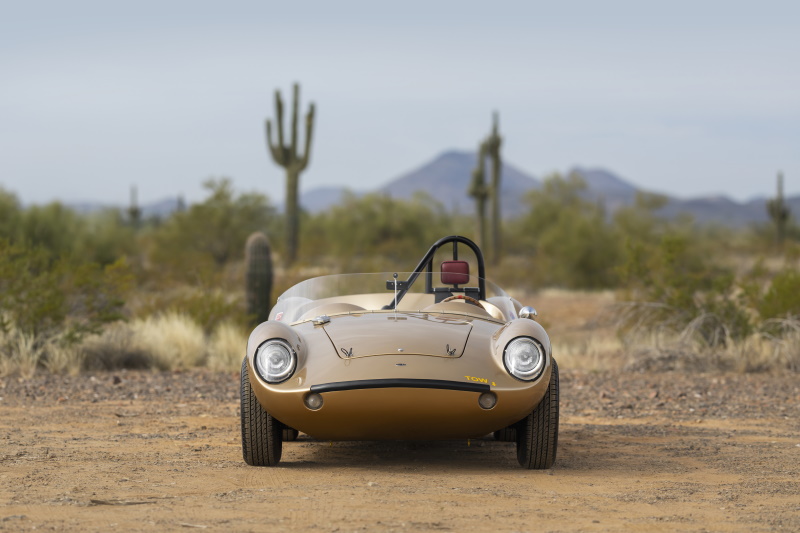
The man behind it all was Bill Devin, a California hot rodder and racer who understood racing culture as well as engineering. Devin was not chasing mass production. He was chasing solutions. His fiberglass bodies were strong, light, and adaptable, allowing customers to mount them on a wide range of donor chassis. Over time, no fewer than twenty seven Devin variations were produced, designed to fit platforms from Triumph, MG, Maserati, and eventually Devin’s own purpose built frames.
That evolution culminated in the Devin SS, a custom chassis car powered by V8 muscle and famously nicknamed by some as the Cobra Killer. While history ultimately favored Shelby in the marketing wars, on track the Devin SS proved brutally competitive.
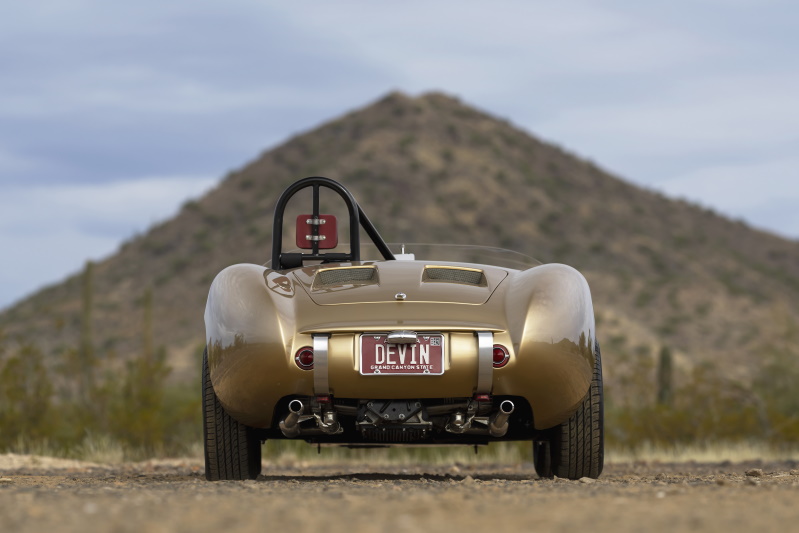
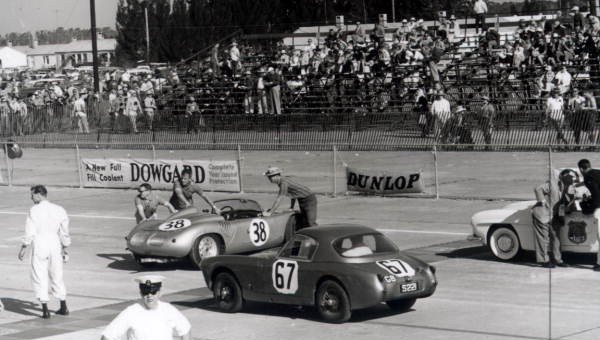
Competition success was never theoretical. Devin cars captured SCCA championships in 1956 and again in 1959, beating far more established European marques. Even in straight line competition, Devins punched above their weight. A Devin went on to win NHRA class titles from 1964 through 1966, proving the platform’s versatility across disciplines.
The Devin C sits squarely in the middle of this golden era. It reflects a time when American ingenuity was not trying to imitate Europe, but quietly outperform it with lighter bodies, smarter packaging, and a willingness to experiment. Today, surviving Devin Cs are artifacts of a moment when racing innovation lived in backyard shops and fiberglass molds, not boardrooms.
They remain thrilling not just because they are fast, but because they represent a brief window when a small California operation could build something extraordinary, sell it for more than a Porsche, and back it all up with trophies.
This 1959 Devin C is coming up for bid at RM Sotheby’s Scottsdale Auction, January 27th, 2022. You can see more about and register to bid on RMSothebys.com.
Photos courtesy of RM Sotheby’s