
 Michael Satterfield
Old vehicles are very good at keeping secrets. Paint can hide repairs. Trim can cover rust. Decades of dirt can make ordinary wear look catastrophic, while a suspiciously clean panel can conceal an entire chapter of questionable bodywork. You rarely know exactly what you bought until the tools come out and the vehicle starts coming apart. That moment has arrived for our 1962 Ford Econoline Bulova Racing Support Van.
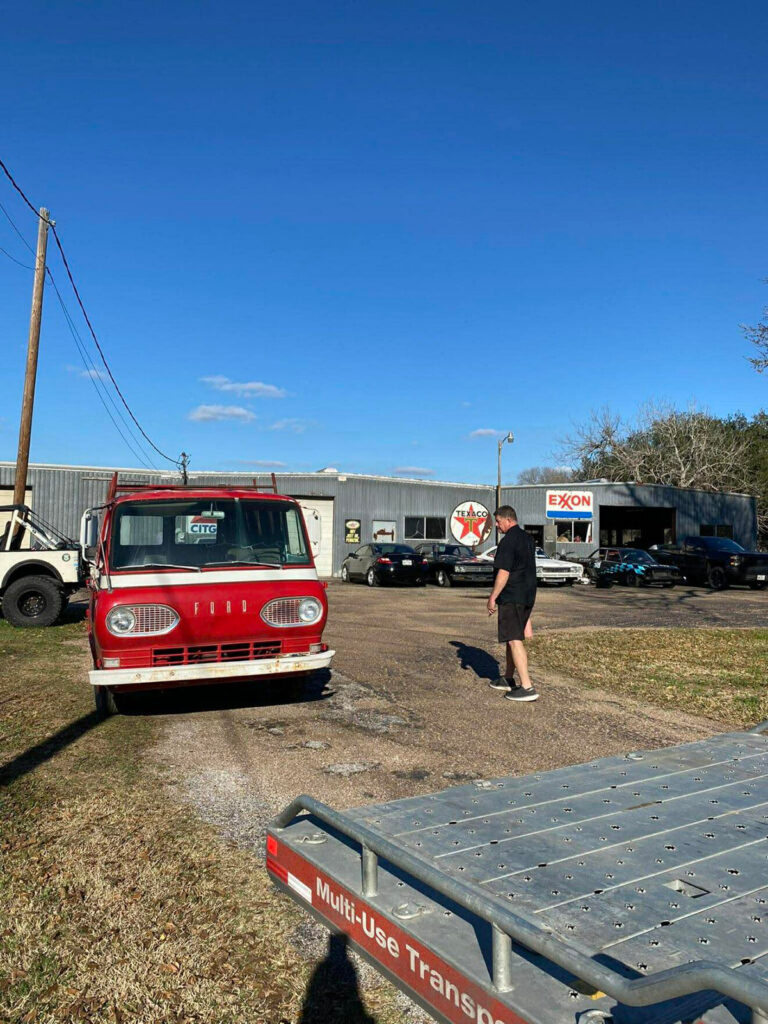
In Part One, we traveled north to Idaho, loaded the little red van onto a trailer, and hauled it roughly 1,800 miles home behind a Ram 2500 Warlock. The Ford had survived more than six decades as a remarkably complete and largely unmodified commercial vehicle. It wore its work history honestly, with dents, scratches, tool marks, and the sort of general wear earned by a van that had spent much of its life doing an actual job.
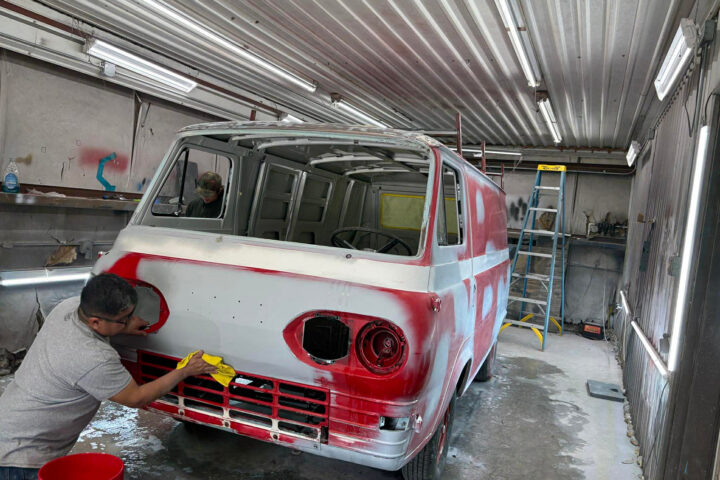
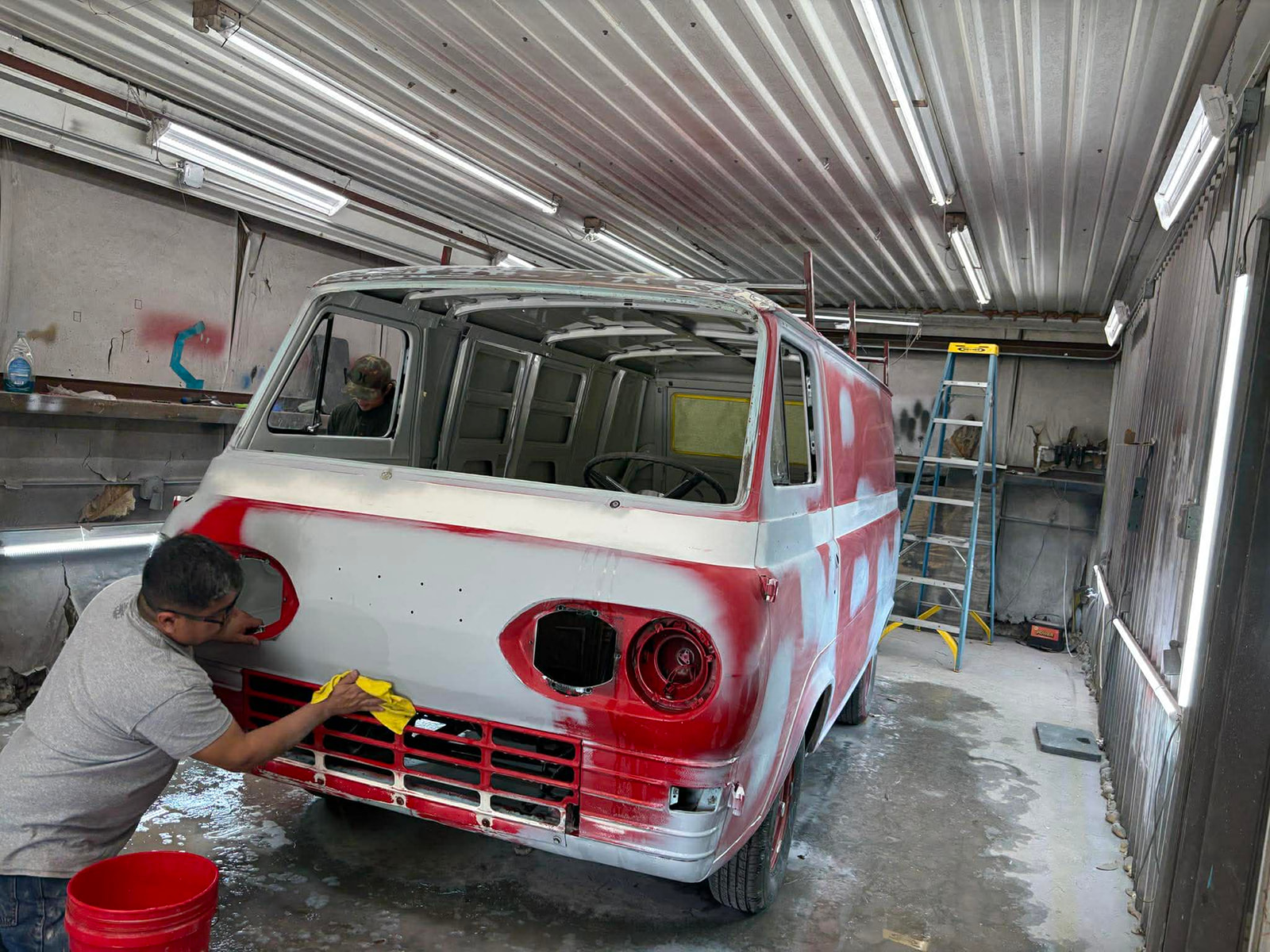
Now, at Apex Auto Works, the red paint and old hardware are beginning to disappear. The transformation into the Bulova Racing Division support van has officially started.
The Unromantic Beginning of Every Restoration
The exciting part of a restoration is usually the finished product. Fresh paint. Hand-painted lettering. Period wheels. A clean interior. That first photograph taken outside the shop when everything finally looks exactly as it did in the original sketches.
Before any of that can happen, someone has to take the vehicle apart. At Apex Auto Works, the first phase involved carefully removing the exterior trim, lights, handles, bumpers, glass, weatherstripping, interior panels, and the assortment of small hardware collected over 64 years. Each piece must be inspected, labeled, stored, restored, replaced, or added to the increasingly long list of parts that seemed easier to find before we actually needed them.
Disassembly is where a project stops being an old vehicle and becomes a restoration. It is also where the real condition of the body is revealed. The Econoline looked solid when we purchased it, but a complete inspection is difficult when a vehicle is assembled. Seams, mounting points, covered edges, and areas behind trim can hold damage that is invisible from the outside. Once those pieces were removed, Apex could finally see what we were working with. We found a few surprises, but thankfully, none of them were deal-breakers.
What Was Hiding Underneath
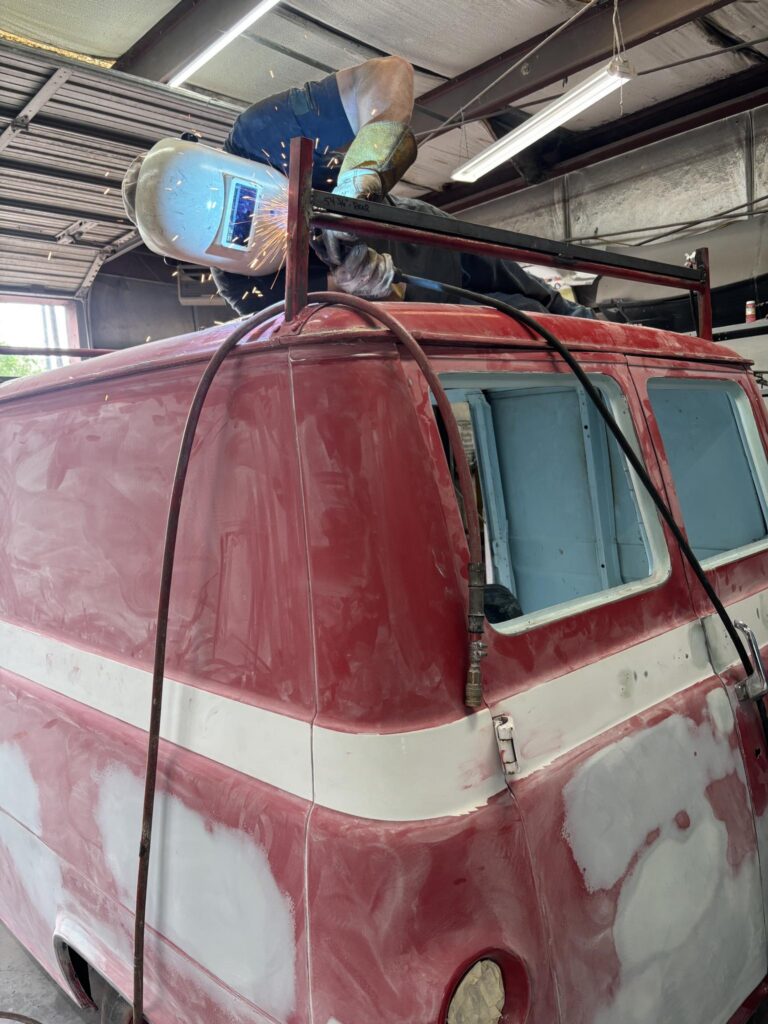
There was some minor hidden damage beneath the van’s old paint and trim. That is hardly shocking on a commercial vehicle built during the Kennedy administration. Somewhere along the way, the Econoline had picked up a few dents, small repairs, and imperfections that were not immediately visible when the van was complete.
The important news is what we did not find. There was no devastating structural damage waiting underneath. There was no evidence that the body had been assembled from several different vans. There were no giant sections held together by filler, roofing material, newspaper, or any of the other inventive substances occasionally discovered inside old project vehicles.
For a truck that spent decades earning its keep, the Econoline is remarkably solid. The hidden damage will require additional metalwork and preparation, but it remains minor and manageable. Apex Auto Works can repair the affected areas properly before paint rather than simply covering them again.That matters because this project is intended to be used.
The Bulova Racing van is not being built as a static display that travels from trailer to carpet and back again. It will attend vintage races, automotive events, rallies, concours gatherings, dealer activations, and enthusiast events across the country. It needs to look correct, but it also needs to function like a real race support vehicle.
A shortcut hidden beneath the paint today would become a problem on the road tomorrow.
We do not want to build a modern show van wearing vintage graphics. The goal is to create something believable. It should look like a vehicle that could have appeared in a paddock photograph during the golden era of American sports car racing, carrying timing equipment, tools, spare parts, wheels, and the people responsible for keeping a race team moving.
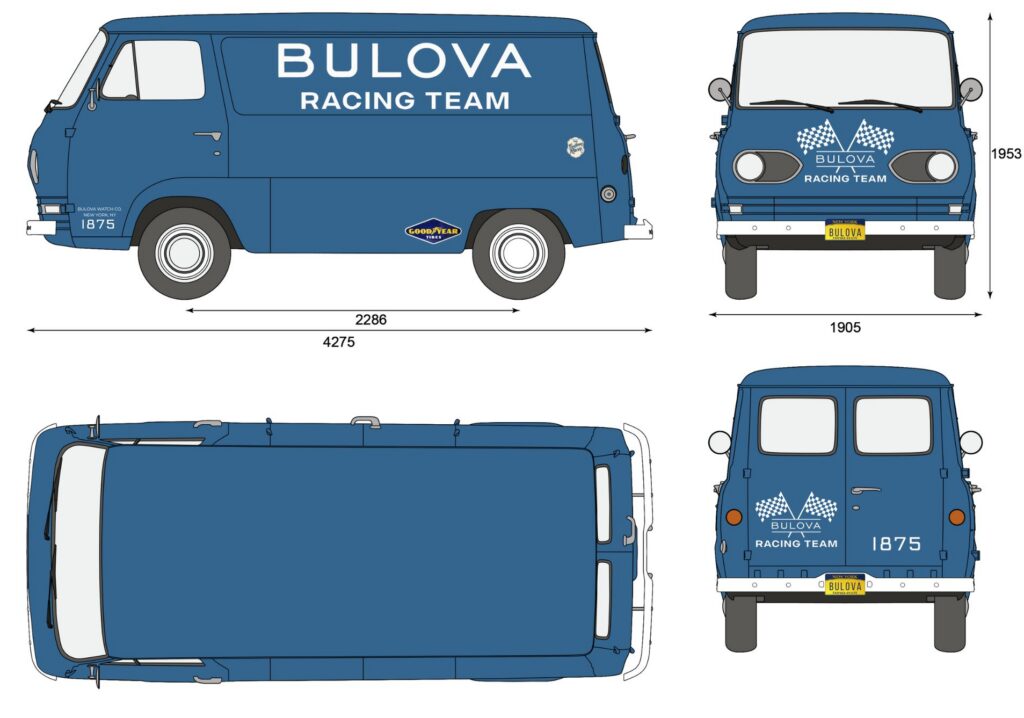
The finished van will not be a replica of a specific historical Bulova vehicle. Instead, it will be a period-correct interpretation of what a Bulova Racing Division support van could have been.
That distinction gives us room to create something new while respecting the design language of the era.
Preparing the Body for Paint
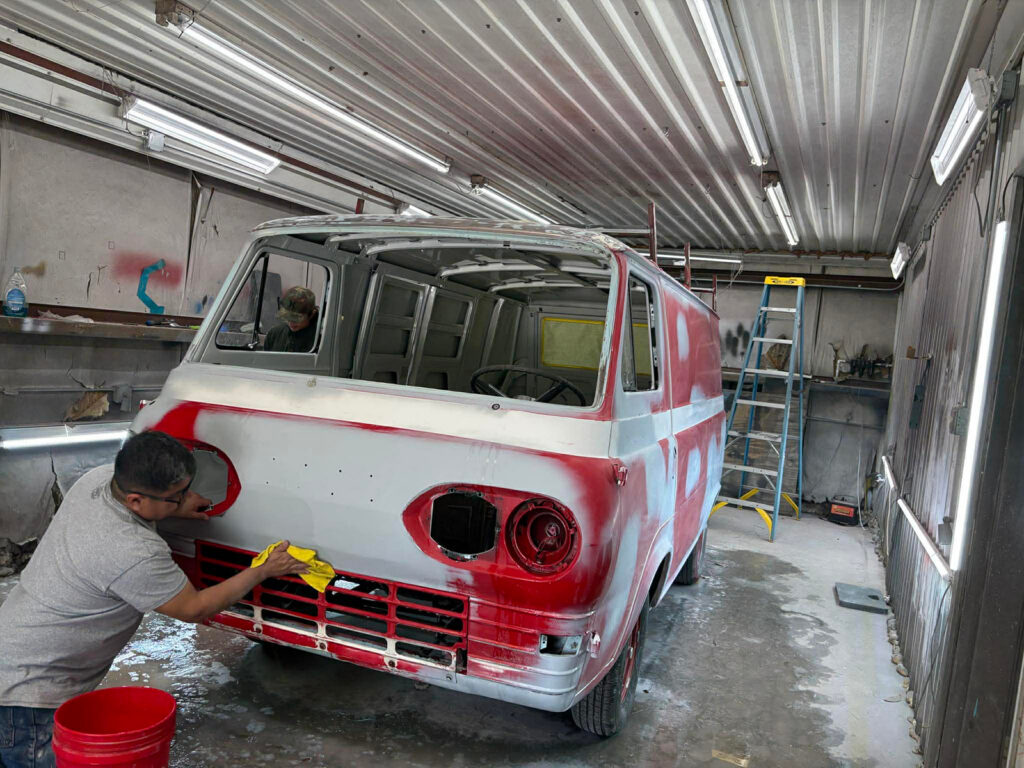
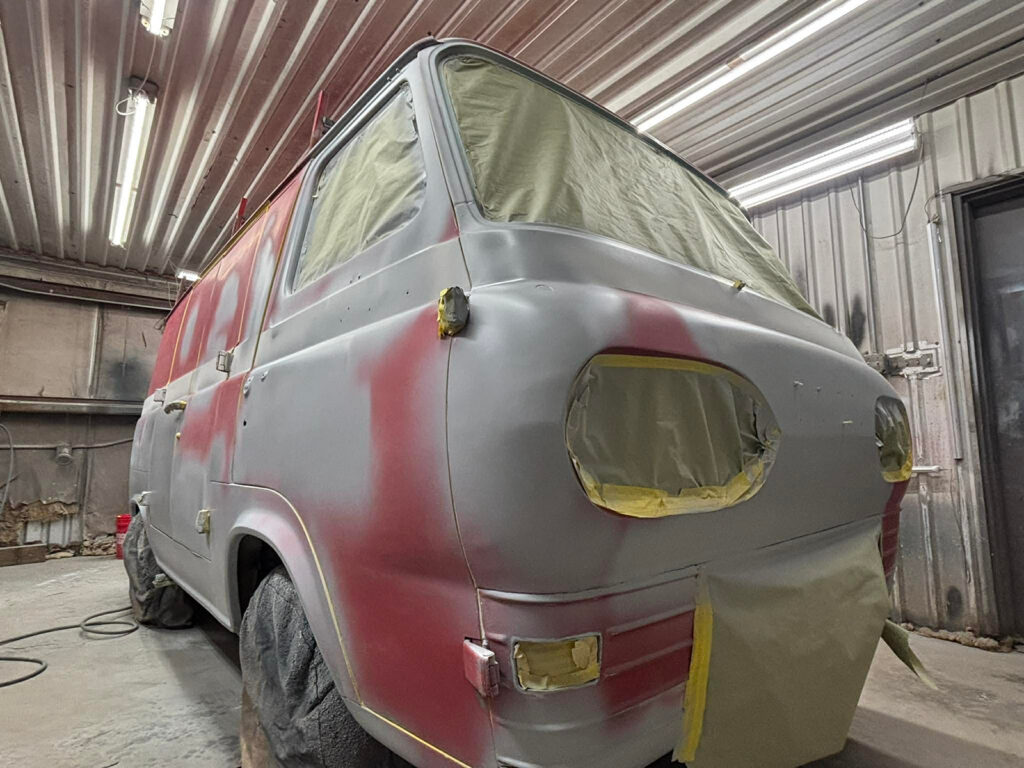
With the van stripped, the next stage is body preparation. Every old repair must be addressed. Dents need to be worked out. Damaged areas must be corrected. Panel gaps, door fit, seams, and mounting points must be checked before the first coat of paint is applied.
This is the portion of the build that takes time but rarely earns much attention. Body preparation does not create the dramatic before-and-after moment people expect from restoration projects. Instead, it produces weeks of photographs showing sanding, bare metal, primer, guide coats, and panels that appear almost identical from one update to the next.
But this is where the quality of the finished vehicle is determined. Paint cannot fix poor preparation. It only makes poor preparation shinier. Richard and the team at Apex Auto Works worked through the Econoline methodically, correcting the minor hidden damage and preparing the body for its new color. Once the metalwork and surface preparation are complete, the van will be finished in Guardsman Blue, a color closely associated with some of the most recognizable American racing machines of the 1960s.
The blue will form the foundation for the van’s period Bulova Racing Division graphics, which will be applied in a style that feels painted by a race shop rather than printed by a modern marketing department. It should look finished, but not over-restored.
A real race support van would have been built to work. The graphics would have identified the team, promoted the sponsor, and made the vehicle easy to recognize in a crowded paddock. Nobody would have spent months debating whether the lettering should move three millimeters toward the rear wheel.
Building a Working Bulova Racing Support Van
Once the exterior is painted, attention will turn to the inside.
The plan includes period-inspired tool storage, vintage jacks, spare wheels, timing displays, and the equipment needed to support the Bulova Racing program at events. The interior must balance historical appearance with modern practicality, allowing the van to carry displays, tools, equipment, and supplies safely.
Every detail needs to feel connected to the larger story. Bulova’s relationship with motorsports is rooted in timing. Racing is measured in fractions of a second, and the van gives us an opportunity to tell that story through a physical object people can walk around, look inside, and experience.
It is not a themed trade-show booth disguised as a vintage vehicle. It is a vintage vehicle being returned to service.The distinction is important.
The Next Chapter
The teardown confirmed what we hoped when we first saw the Econoline sitting in Idaho. It is an honest, solid truck.
There is work ahead, including metal repair, body preparation, primer, paint, graphics, mechanical sorting, interior fabrication, and the hundreds of small decisions that separate a finished project from an abandoned one. But the foundation is there. The minor hidden damage did not change the direction of the build. It simply gave Apex Auto Works a few more items to address before paint. That is a much better outcome than discovering that our charming little race van was mostly filler wearing a Ford badge.
For now, the Econoline is stripped, exposed, and not particularly photogenic. That means the restoration is moving exactly as it should. The red service van we brought home from Idaho is disappearing. In its place, slowly and carefully, the Bulova Racing Division support van is beginning to take shape.