
 Michael Satterfield
On a recent road trip across Ohio, we stopped in Tipp City to visit the Gale Halderman Museum.
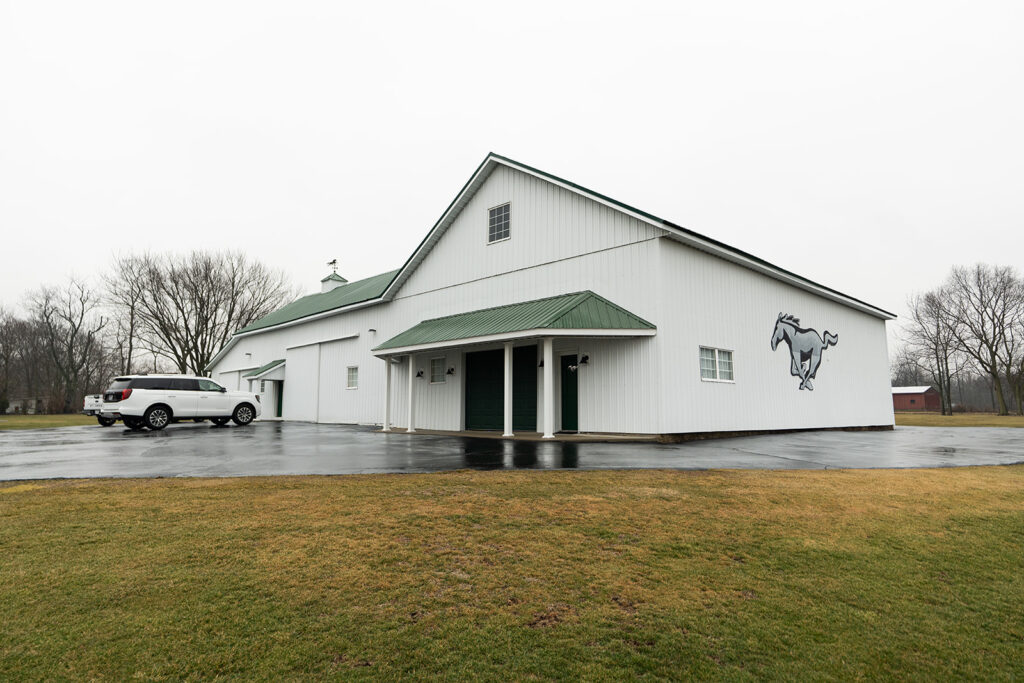
Somewhere along U.S. 40, just outside Tipp City, there’s a white barn that doesn’t announce itself with much fanfare. No polished glass facade, no gift shop theatrics, no velvet ropes. Just a quiet structure sitting on farmland that once grew strawberries and raised a designer who changed the trajectory of American car culture.
Inside that barn lives the story of the Ford Mustang. Not the marketing version. Not the polished museum narrative. The real one. Drawn in grease pencil at a kitchen table by a man who, for most of his life, seemed perfectly content letting others take the credit.
Gale Halderman Museum: A Farm Kid with a Pencil and an Eye for Speed
Before he became one of the key designers behind the Mustang, Gale Halderman was just a kid sketching cars on scraps of paper in rural Ohio. That instinct followed him to the Ford Motor Company in 1957, where he quickly built a reputation as a designer who understood proportion, motion, and just enough restraint to make something timeless.
When Ford needed a car to capture the youth market in the early 1960s, the brief was simple and nearly impossible: affordable, sporty, and built fast. Designers were given days, not months. Halderman went home, sat at his kitchen table, and sketched what would become the foundation of the Mustang.
The formula was deceptively simple. Long hood. Short rear deck. A stance that looked fast even when parked. It wasn’t just a car. It was a promise. When the Mustang debuted at the 1964 World’s Fair, it sold more than 22,000 units on its first day and over 400,000 in its first year. Not bad for something sketched after dinner.
The Museum That Was Never Supposed to Be One
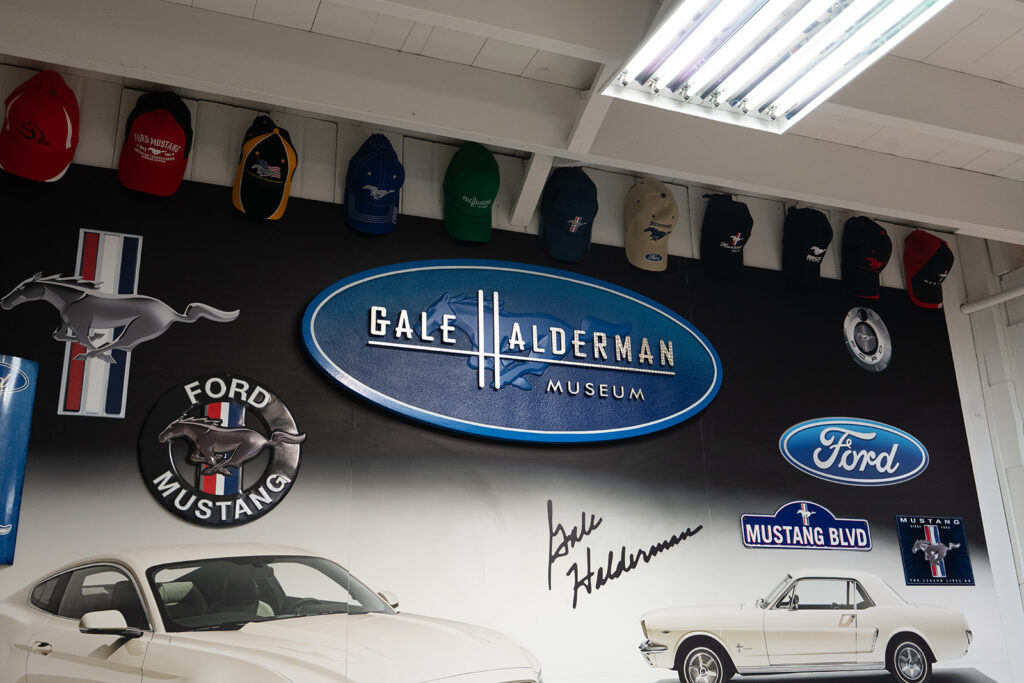
The Gale Halderman Museum isn’t really a traditional museum. It’s more like stepping into someone’s memory. Because that’s exactly what it is.
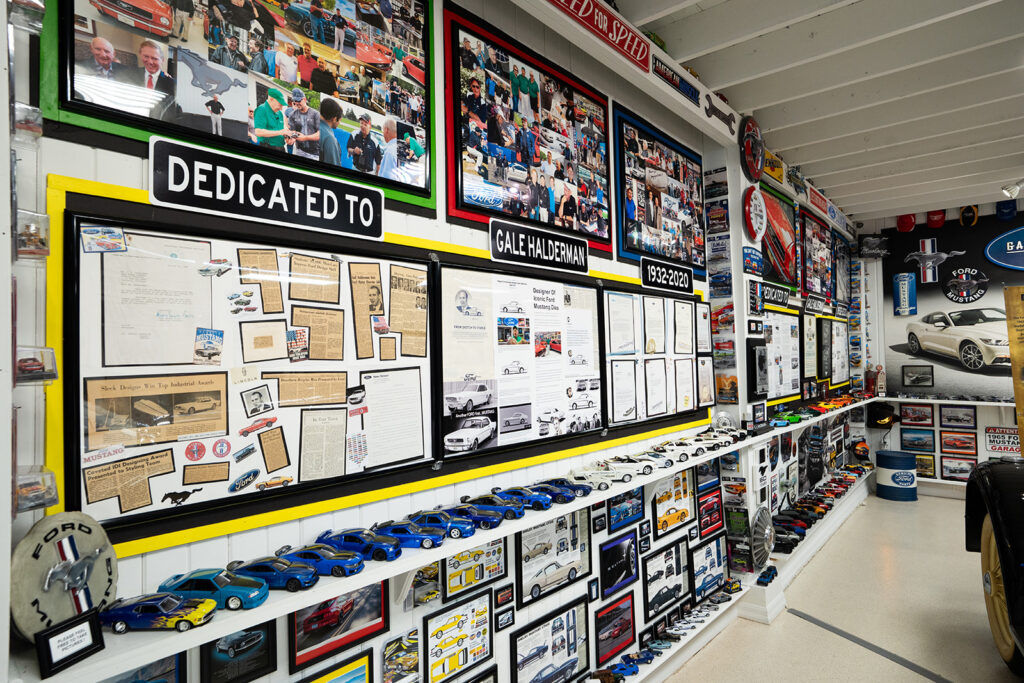
After retiring from Ford in 1994, Halderman began collecting pieces of his career. Sketches, ads, models, and artifacts that most people would have boxed up and forgotten. They started in one corner of the barn. Then they spread. Then they took over. By 2014, what had been a personal “man cave” became something more formal. A museum, yes, but one still rooted in the same place where his story began.
Gale Halderman Museum: Walk through it today, and you’ll find:
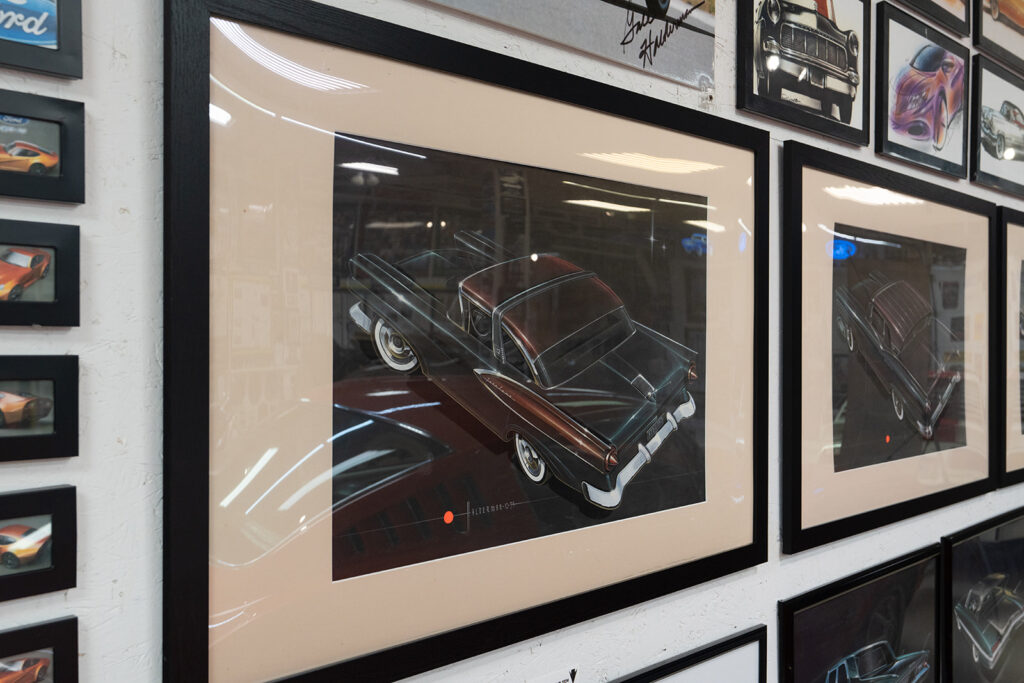
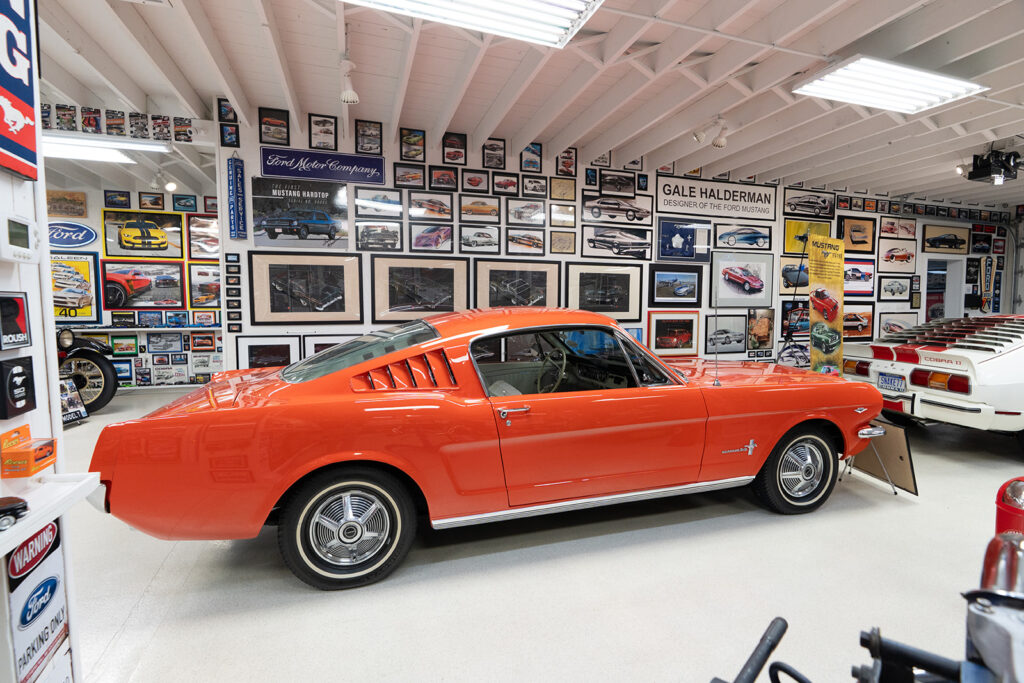
- Original Mustang design sketches pinned like working documents, not relics
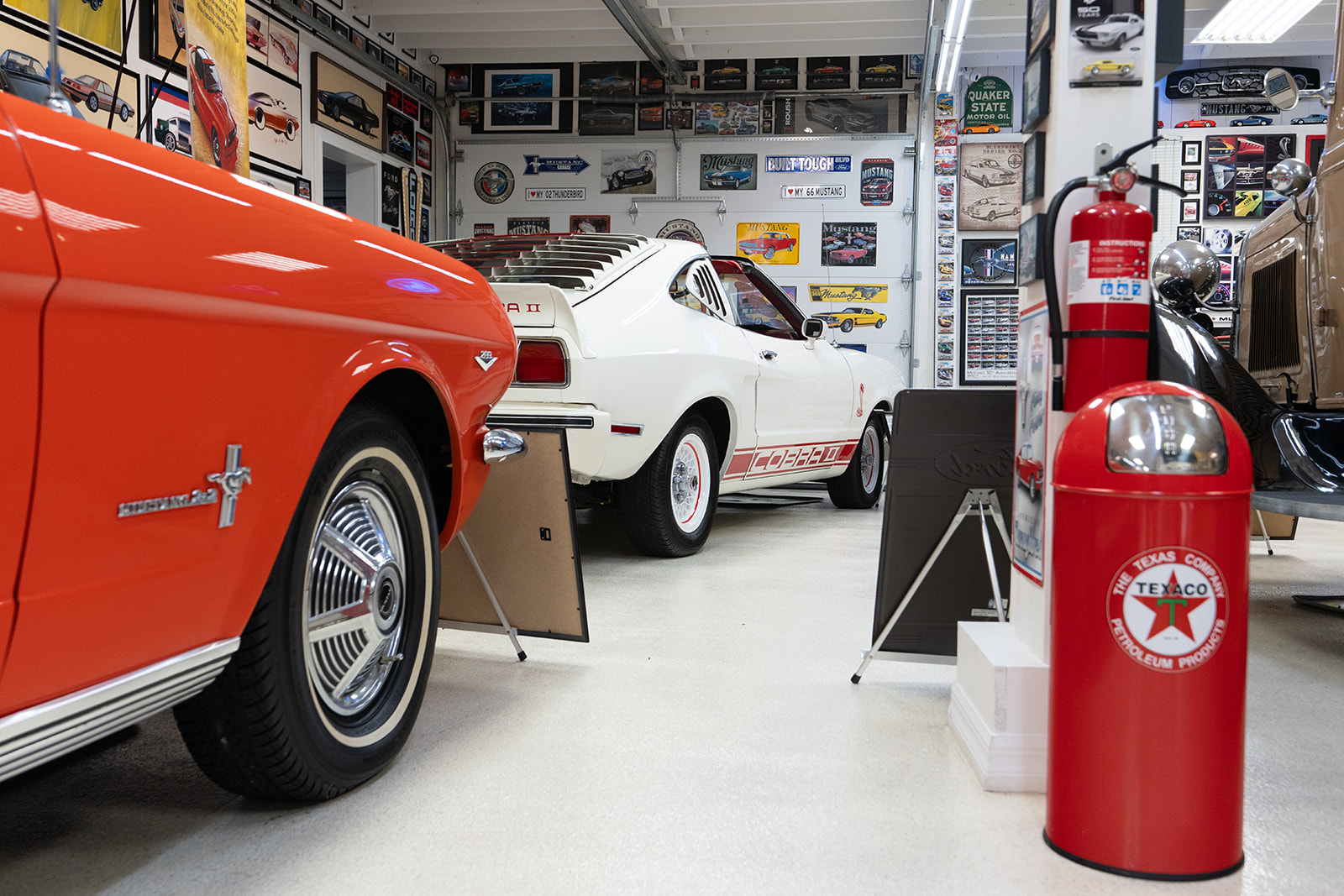
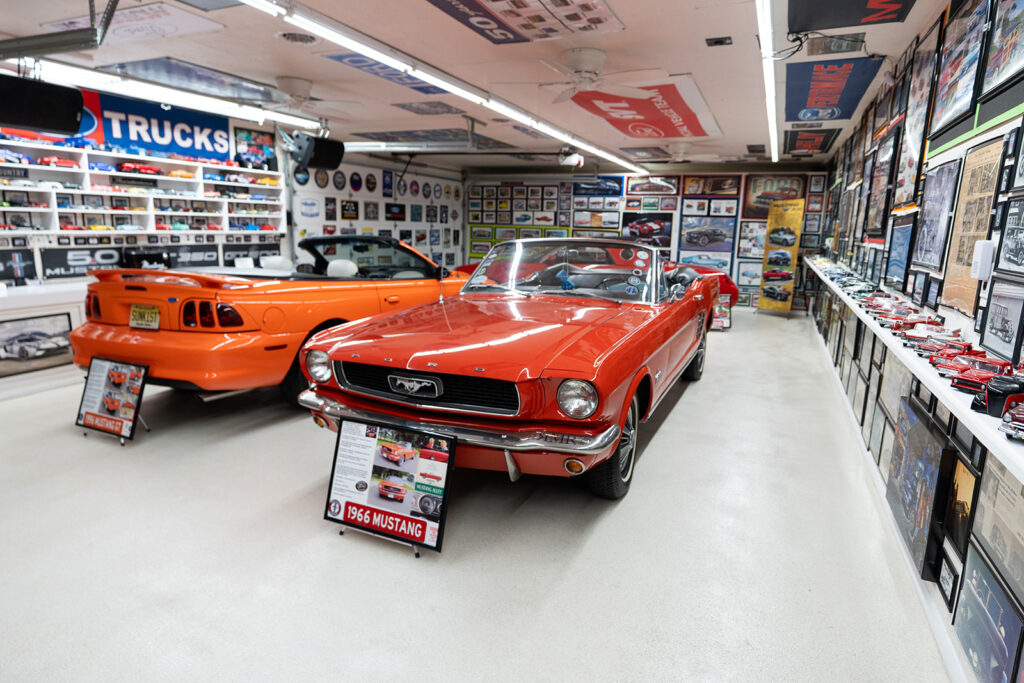
- Multiple generations of Mustangs, including Halderman’s own 1965 Fastback
- Ford design artifacts spanning decades, from Galaxie concepts to Lincoln studies
- Over 1,500 diecast models and a surprising camera collection tucked into its own room
There’s no corporate narrative here. No attempt to sanitize the process. It feels closer to a studio than a shrine.
Appointment Only, Just Like the Good Stuff
The Gale Halderman Museum is open by appointment, which feels exactly right. This isn’t a place you stumble into between errands. It’s a place you seek out.
There’s no admission fee, just donations. No crowds unless a Mustang club rolls in for one of the few annual gatherings. And when that happens, the lawn fills with cars that trace their lineage directly back to a sketch made in this very place. After Halderman passed away in 2020, his family made the decision to keep the doors open. Not as a commercial venture, but as a way to preserve something that feels increasingly rare in the automotive world: authenticity.
Why This Place Matters
In an era where automotive design is filtered through committees, software, and global market studies, the Gale Halderman Museum is a reminder of when instinct still had a seat at the table.
The Mustang wasn’t born in a boardroom. It wasn’t optimized by data. It was drawn by someone who understood that cars are emotional objects first, transportation second. And that’s what makes this barn in Ohio worth the trip.
Because somewhere between the sketches, the stories, and the quiet hum of history, you realize something simple: The Mustang didn’t start as a product. It started as an idea someone believed in enough to put down on paper. And sometimes, that’s all it takes.
Gale Halderman Museum Quick Facts
- Location: Gale Halderman Museum
- Founder: Gale Halderman
- Opened to the Public: 2014
- Original Career: Designer at Ford Motor Company (1957–1994)
- Claim to Fame: Early design sketch of the Ford Mustang
- Collection Includes: Original sketches, Mustangs, Ford design artifacts, diecast models
- Notable Vehicle: Halderman’s personal 1965 Mustang Fastback
- Admission: Donation-based
- Access: By appointment only
- Atmosphere: Private collection housed in a restored barn on family property
FAQ
Where is the Gale Halderman Museum located?
The museum is located in Tipp City, Ohio, just off historic Route 40, on the Halderman family property.
Who was Gale Halderman?
Gale Halderman was a designer at Ford credited with creating one of the original design proposals that led to the Ford Mustang.
Do you need tickets to visit the museum?
There are no formal tickets. Visits are by appointment, and donations are encouraged.
What can you see inside the museum?
Visitors can explore original Mustang sketches, multiple Mustang models, Ford-era design materials, and Halderman’s personal collection of automotive artifacts.
Is this an official Ford museum?
No. The Gale Halderman Museum is an independent, family-run museum preserving Halderman’s personal legacy and work.
Can you see the original Mustang design sketch?
Yes. One of the highlights is the early sketch Halderman created that helped define the Mustang’s iconic proportions.
Is the museum suitable for car clubs or groups?
Yes. Mustang clubs and enthusiast groups frequently schedule visits, though all tours must be arranged in advance.
When is the best time to visit?
Spring through fall is ideal, especially when events or club gatherings are scheduled.












I went to a Mustang car show there several years ago, cool place, great people.
Never knew this was just outside of Daytona and I’ve lived here my whole life.
Love that his daughters are keeping this legacy alive.
Joe Oros, Dave Ash, and John Foster did the clay model and final designs.
Way too far off the beaten path for me, but it looks like a great regional museum. Wonder if Ford has a problem with it.
I very delighted to find this is like 20 miles from where my parents live. Can’t wait to visit.