

 TGR Staff
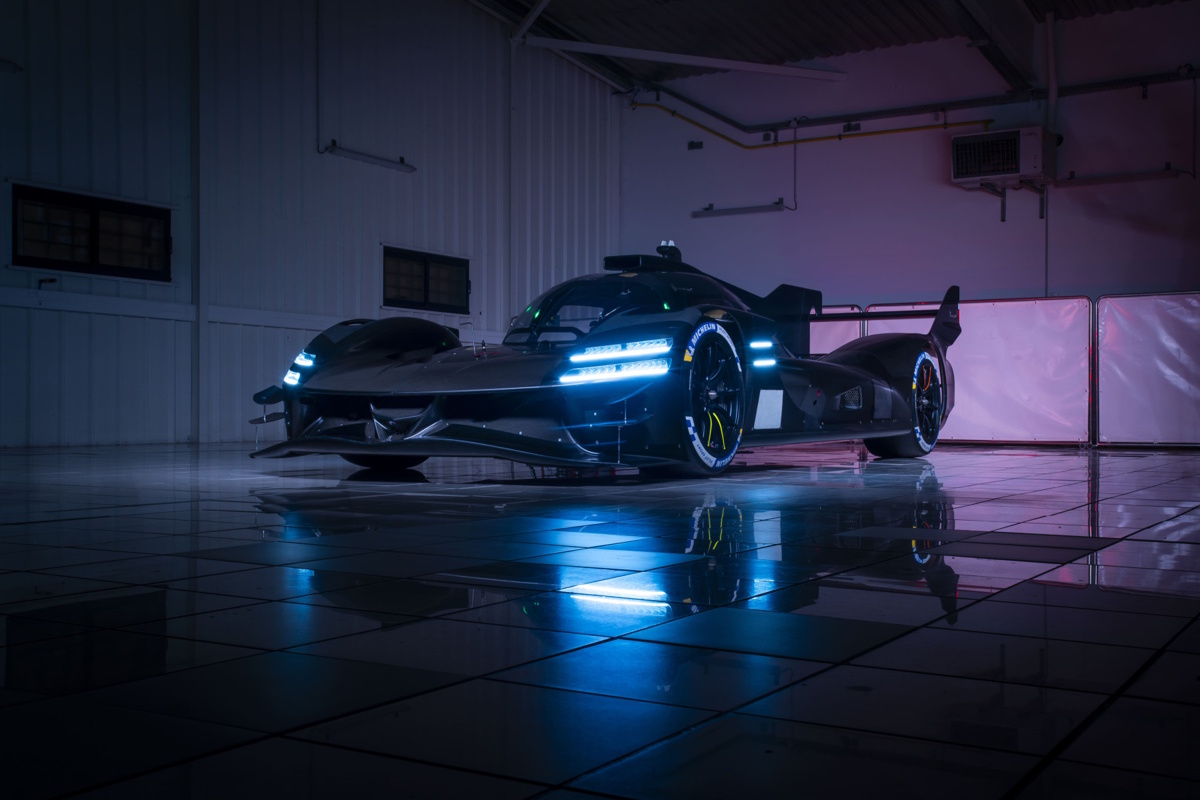
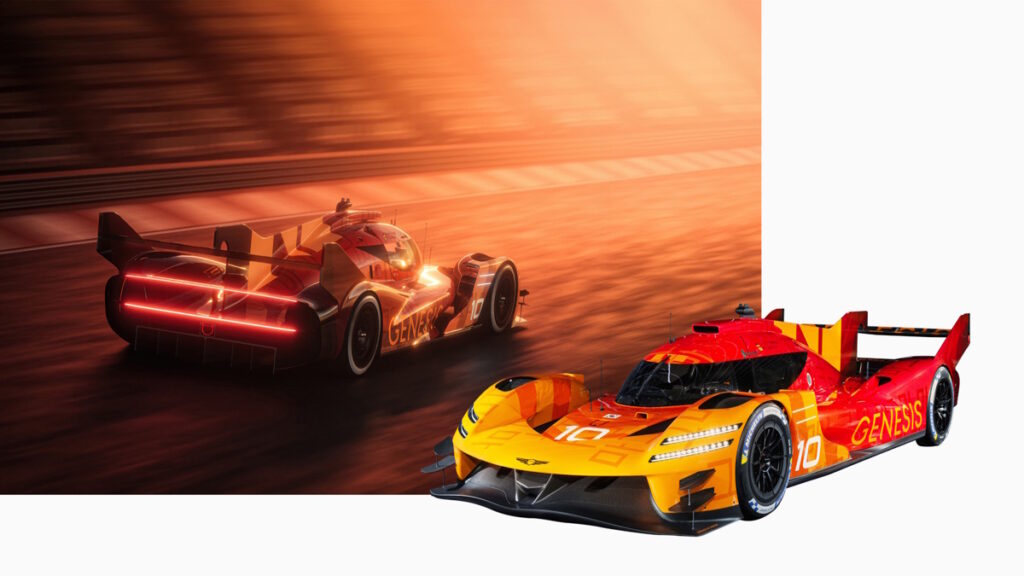
The world of endurance racing has long been dominated by names etched into motorsport folklore: Porsche, Ferrari, Toyota, Aston Martin. Now, a new contender is preparing to carve its name into the same storied history. Genesis, the Korean luxury brand best known for its award-winning road cars, has launched a bold new project called Genesis Magma Racing, with its eyes firmly set on the FIA World Endurance Championship (WEC) and the 24 Hours of Le Mans. The centerpiece of this push is the GMR-001 Hypercar, a purpose-built racing machine designed to go wheel-to-wheel with the most seasoned competitors on the planet.
This is not a tentative step. Genesis has already unveiled the GMR-001 in full Le Mans Daytona h (LMDh) specification, partnered with endurance veteran IDEC Sport, and placed proven drivers like André Lotterer and Pipo Derani in the cockpit. With early wins in the European Le Mans Series (ELMS) and valuable mileage under its belt, Genesis is moving at full throttle toward its planned 2026 debut in WEC.
GMR-001 From Drawing Board to Track
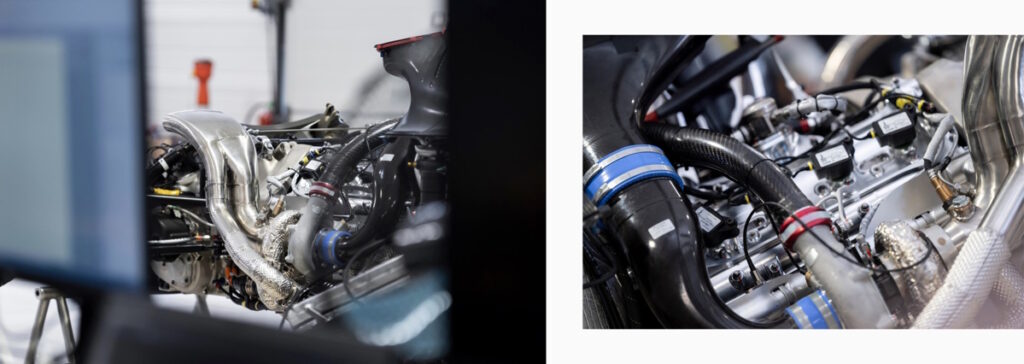
The development story of the GMR-001 is one of speed and pragmatism. In June 2023, Genesis engineers began work on a new twin-turbo V-8, leveraging the proven DNA of Hyundai Motorsport’s 1.6-liter turbocharged inline-four from the World Rally Championship. By February 2024, the new V-8 had roared to life in Alzenau, Germany. Less than six months later, the first prototype engine was installed into an ORECA chassis at Le Castellet in France.
This quick turnaround was intentional. As François-Xavier Demaison, Technical Director of Genesis Magma Racing, explained, “We knew we did not have the time to completely design a new engine from scratch. Every part must be tested over many kilometers, and the inline-four engine from our World Rally Championship car had already proven itself. It became the logical step to carry over as many parts as possible.”
By mid-2024, the first full GMR-001 prototype had been completed and shaken down in bare carbon trim. With its V-8 engine, hybrid system, and gearbox all integrated, the car now enters the most important phase: relentless testing.

The GMR-001 Formula of LMDh
Choosing the LMDh formula was as much a strategic move as a technical one. Unlike Le Mans Hypercar (LMH) entries, which require manufacturers to design almost every element in-house, LMDh regulations mandate the use of spec components. Every LMDh car combines a chassis from one of four suppliers (Genesis chose ORECA) with a hybrid system consisting of a Williams Advanced Engineering battery, a Bosch motor-generator unit, and an Xtrac gearbox. Manufacturers then add their own internal combustion engine and bodywork design.

The advantage of LMDh is clear: cost savings, faster development, and the ability to race in both IMSA’s WeatherTech SportsCar Championship in the United States and WEC in Europe and Asia. For Genesis, a brand still growing its global footprint, LMDh represents a golden opportunity to fight against giants while tapping into the American motorsport market.
And the Genesis GMR-001 will not be alone. Cadillac, Porsche, BMW, Lamborghini, and Acura are already on the grid, with Ford and McLaren preparing LMDh programs of their own. That makes Genesis the first Korean brand to step into endurance’s highest tier, a move that echoes Toyota’s transformation from underdog to dominant force two decades earlier.
Building the GMR-001 Team
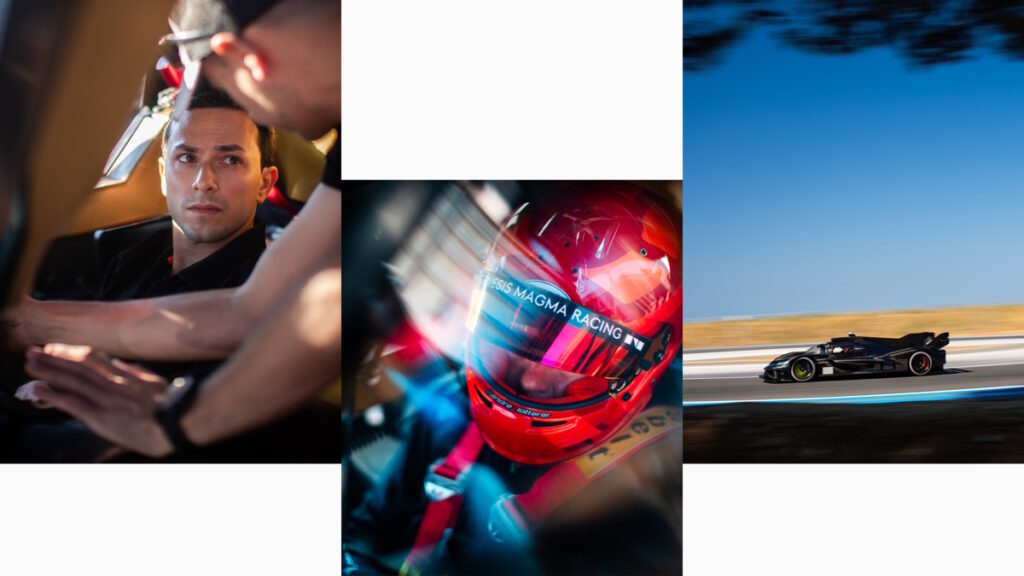
A race car is nothing without the people behind it, and Genesis has been just as ambitious in building its team as it has been in designing the GMR-001. Partnering with IDEC Sport, a French outfit with proven ELMS credentials, Genesis launched what it calls the Trajectory Program, an effort to accelerate experience for its drivers and engineers.
The driver roster is impressive. André Lotterer is a three-time Le Mans winner with Audi and one of the most respected names in endurance racing. Pipo Derani, a Brazilian star, has multiple victories in North American endurance classics. Supporting them are rising talents Jamie Chadwick, Mathys Jaubert, and seasoned Spanish driver Daniel Juncadella. Chadwick brings a historic pedigree of her own, as the inaugural W Series champion and now a barrier-breaking winner in ELMS. Jaubert, just 20, represents the next generation, while Juncadella brings versatility from Formula 3, DTM, and sports car racing.
Together, this lineup blends youth, experience, and outright speed—a vital mix for the unpredictable world of endurance racing, where night stints, sudden weather changes, and split-second strategy calls separate winners from also-rans.
Genesis and IDEC Sport wasted no time putting the Trajectory Program into action. In the European Le Mans Series season opener at Barcelona, the #18 GMR-liveried LMP2 car claimed a class victory. A month later at Le Castellet, on IDEC’s home turf, the team took its first overall win. For Jamie Chadwick, the triumph was historic, marking her as the first woman ever to win outright in the ELMS.
Not everything has gone perfectly. At the 24 Hours of Le Mans, the team’s run ended in heartbreak when a mechanical issue forced retirement in the middle of the night. Later rounds of the ELMS brought setbacks, including a damaged car at Imola and a rain-soaked battle at Spa. Still, these experiences are exactly what Genesis needs: the lessons learned in adversity often shape champions more than easy victories.
GMR-001: A Long Road, but a Clear Direction
For Genesis, the GMR-001 project is about more than results on a timesheet. It is about staking a claim on the global stage, showing that Korean engineering and racing passion belong alongside Ferrari’s red, Porsche’s silver, and Aston Martin’s green. The infrastructure is coming together, from a new Race Base facility at Le Castellet to the recruitment of high-level talent like team manager Anouck Abadie and chief engineer Justin Taylor. Even Gabriele Tarquini, the veteran who once gave Hyundai a touring car world title, has returned as sporting director.
Team Principal Cyril Abiteboul, formerly of Renault F1, summed up the moment: “After planning for and talking about these moments for the last eight months, to be able to see a finished car running exactly as we planned is incredibly exciting.”
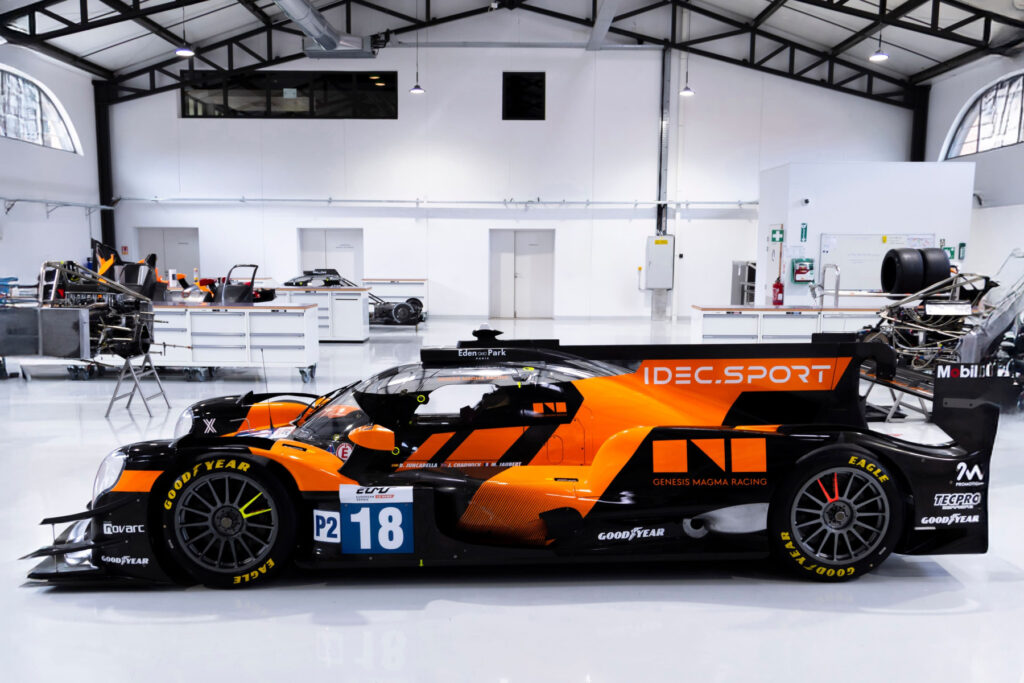
The Future is Orange
Genesis has branded its racing effort in a striking magma-orange livery, a visual statement that this is not a copycat program but a bold new challenger with its own identity. By the time the GMR-001 rolls onto the WEC grid in 2026, it will face the toughest test in motorsport: the 24 Hours of Le Mans, where legends are made and broken in a single sunrise-to-sunset cycle.
If history is any guide, endurance racing rewards those who dare to step into the arena. Genesis Magma Racing has shown that it is willing not just to enter but to fight. And in the process, it may not only redefine how the world views Korean motorsport but also inspire the next generation of fans and engineers.
The charge has already begun, and in endurance racing, it is not always the fastest who win, but the most prepared. Genesis seems intent on being both.
Photos Courtesy of Genesis










Genesis is doing everything Nissan and Infiniti should be
Nice to see other brands getting into LeMans, lets see how they do.
Excellent site, excited to see this car win Lemans