
 Michael Satterfield
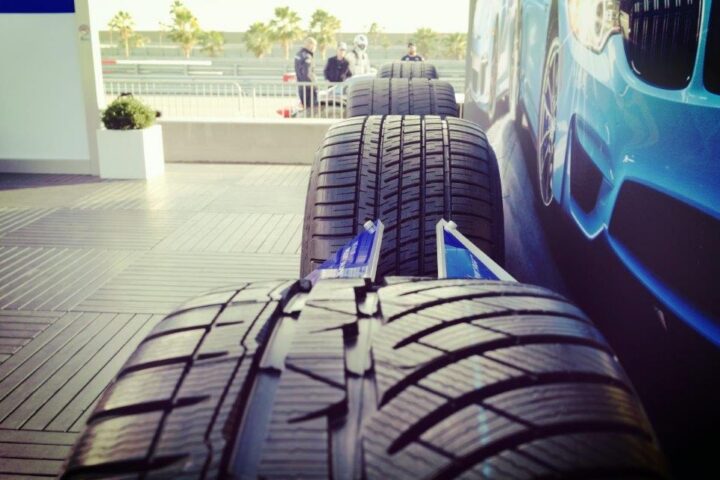
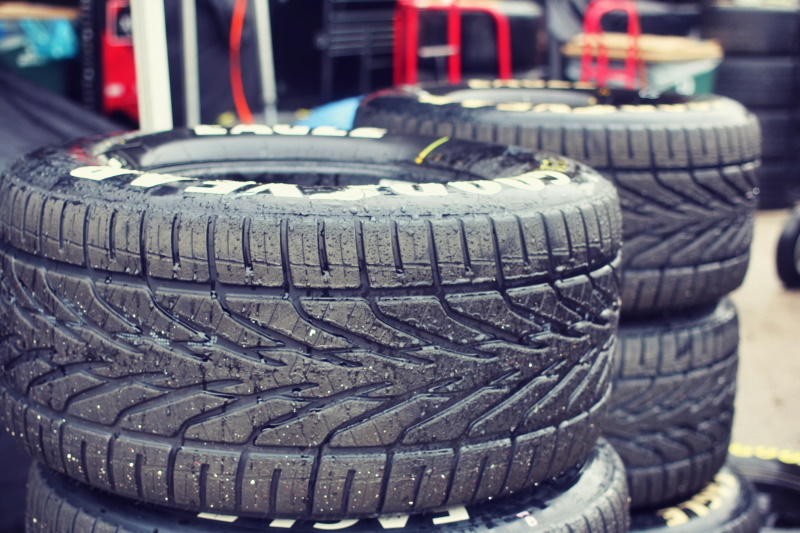
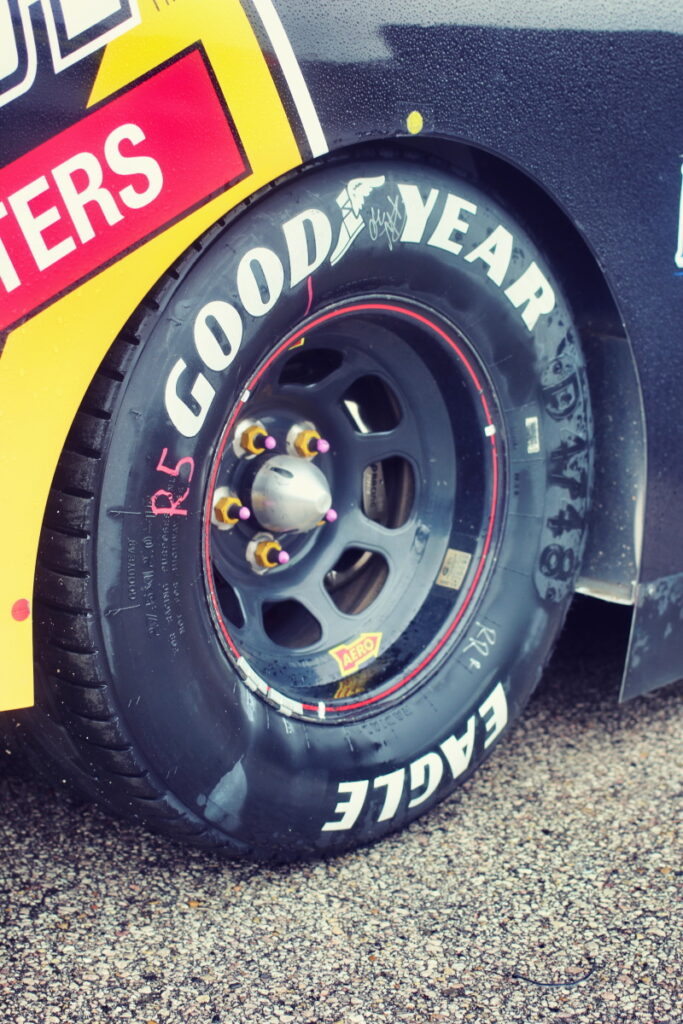
After years of fighting it, NASCAR has officially embraced racing in the rain, other than a Cup race at Road America in 1956, the sport has little history with wet weather. Once moving to slick racing tires in the 1960s, rain racing was no longer even possible. But while the new rain tires have just recently been put to the test, this is a problem NASCAR has been trying to solve since the mid-1990s.
A Brief History of NASCAR and Rain Tires
Dale Earnhardt and Mark Martin first tested Goodyear rain tires at Watkins Glen way back in 1995, and both drivers were impressed with the tires. Terry Labonte would test Goodyear’s rain tires again at Martinsville during a rain delay, he was less enthusiastic about the performance of the tires on an oval.
It wouldn’t be until 1997 that NASCAR would try racing in the rain again, this time while qualifying for an exhibition race held in Suzuka Japan. More testing would happen in 2000 at Watkins Glen, the first sanctioned NASCAR race to run rain tires would be in Montreal Canada, at the 2008 Nationwide (Xfinity) race. The Xfinity series would use rain tires several more times over the years, including at Road America, Mid-Ohio, Watkins Glen in 2018, the Daytona Road Course in 2020, and others. It wouldn’t be until the Charlotte Roval in 2020, that a NASCAR Cup race would run on rain tires.
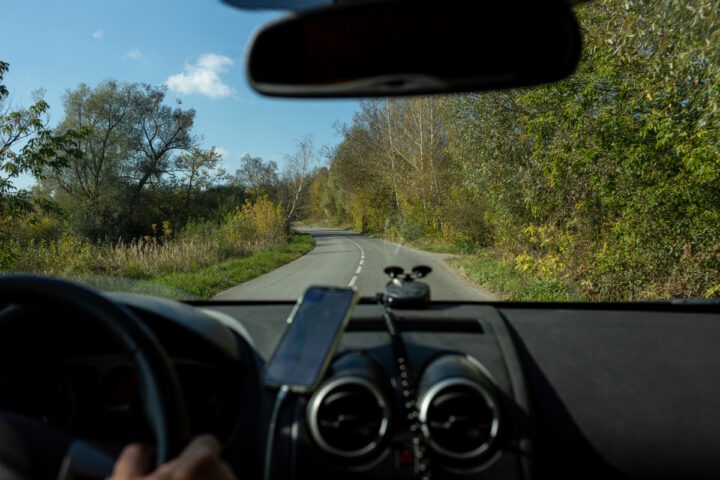
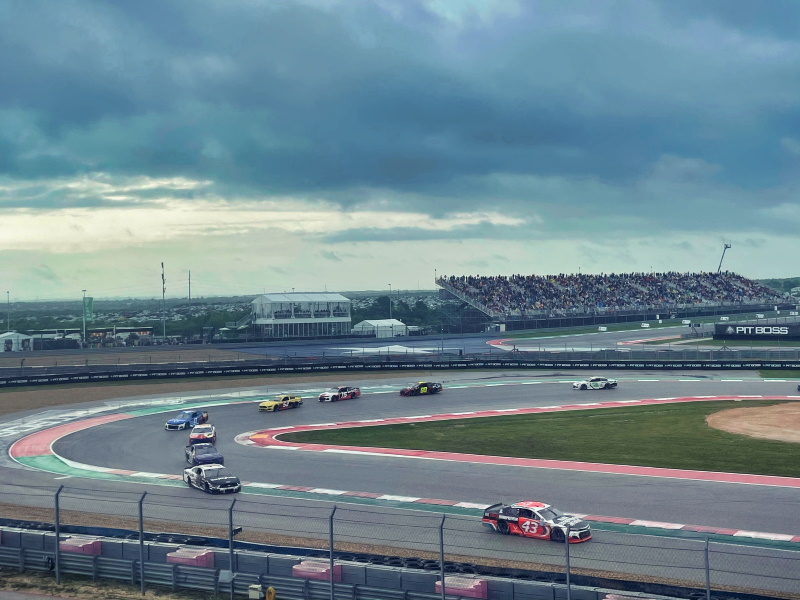
But NASCAR’s Cup race at Circuit of the Americas (COAT) this past weekend was the first race to take place under rainy conditions from start to finish. While the wet conditions did bring the speeds down the tires seemed to be doing their job, the problem, was visibility, something that was brought up drivers back in the 90s and still seems to be NASCAR’s biggest hurdle to overcome.
The First Race In The Rain In Years
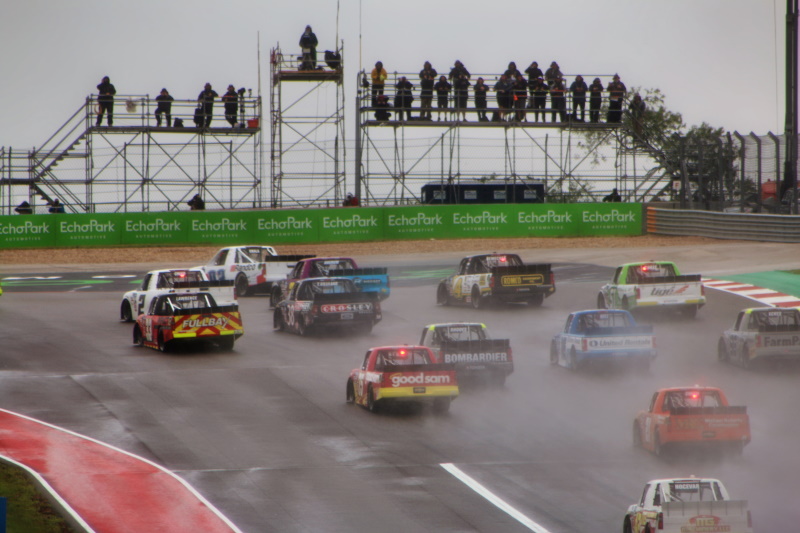
Watching the truck race on Saturday race in the rain, it was apparent the visibility would be an issue and that the wipers didn’t seem to work all that well. But the truck race happened under light rain, the Cup race faced heavy rain, combined with a darkening sky that severely limited driver visibility. Sitting in the grandstands at turn 15 we could see the aftermath of the accident that happened on the backstretch.
While some drivers like Keven Harvick described the race as “the most unsafe thing I’ve ever done in a race car by a lot.” He added, “All I can say is this is the worst decision that we’ve ever made in our sport that I’ve been a part of, and I’ve never felt more unsafe in my whole racing career, period.”
Scott Miller, Senior Vice President of Competition at NASCAR took to SiriusXM NASCAR Radio the following day to discuss the race and the concerns raised by drivers and responded directly to Harvick’s statement saying “Harvick has his right to his opinion, obviously, I don’t think that’s probably an opinion that is universally shared among the drivers.” Miller continued, “It’s a tough job for us to balance, competitive event, a good show for the fans, and with the drivers’ best interest. It’s a tough job. I think rain at a race points out the fact that everybody in this business has a hard job.” Miller does not expect what happened at COTA to put an end to racing in the rain with five more road course events on the calendar, there could be more wet races in 2020.
From a fan perspective racing in the rain allows the fans an option to at least watch the race, and many fans and even some drivers at Circuit of the Americas were disappointed that the race was called early. As a fan who has had to add an extra day on to a trip to return for a Monday race due to rain delays, I like the idea of racing in the rain, it adds a new dynamic to the race and at least fans get to see racing, even if it is a slower speed. It seems that the rain tires are here to stay, but NASCAR has to balance the safety of drivers with putting on a good show for fans.
Quick Facts About NASCAR Racing In The Rain
- Why NASCAR usually stops for rain: Once NASCAR moved to slick tires in the 1960s, rain racing was not possible on slicks.
- Early rain tire testing: Dale Earnhardt and Mark Martin tested Goodyear rain tires at Watkins Glen in 1995.
- Oval test reaction: Terry Labonte tested rain tires at Martinsville during a rain delay and was less enthusiastic about oval performance.
- Return to wet running: NASCAR tried rain running again during qualifying for an exhibition race in Suzuka (1997).
- First sanctioned NASCAR race on rain tires: Montreal, 2008 (Nationwide/Xfinity).
- Xfinity rain tire usage examples: Road America, Mid-Ohio, Watkins Glen (2018), Daytona Road Course (2020), and others.
- First NASCAR Cup race on rain tires: Charlotte Roval, 2020.
- First Cup race run in rainy conditions start to finish: Circuit of the Americas, 2021.
- Biggest remaining hurdle: Visibility, even when tires perform as intended.
FAQ
Can NASCAR race in the rain?
Yes, NASCAR has embraced rain racing on road courses with rain tires, though visibility and heavier conditions remain major safety concerns.
Why doesn’t NASCAR race in the rain on ovals?
Modern NASCAR runs slick tires, and once the sport moved to slicks in the 1960s, rain racing was no longer possible in the traditional setup.
When did NASCAR first test rain tires?
Goodyear rain tires were tested at Watkins Glen in 1995 by Dale Earnhardt and Mark Martin.
When was the first sanctioned NASCAR race to use rain tires?
The first sanctioned NASCAR race to run rain tires was the 2008 Nationwide (Xfinity) race in Montreal.
When did the NASCAR Cup Series first race on rain tires?
A NASCAR Cup race ran on rain tires at the Charlotte Roval in 2020.
What was the first Cup race run in rainy conditions from start to finish?
The Cup race at Circuit of the Americas in 2021 was the first run under rainy conditions from start to finish.
What is the biggest challenge with rain racing?
Visibility, especially in heavier rain and low light, is still the biggest hurdle.