

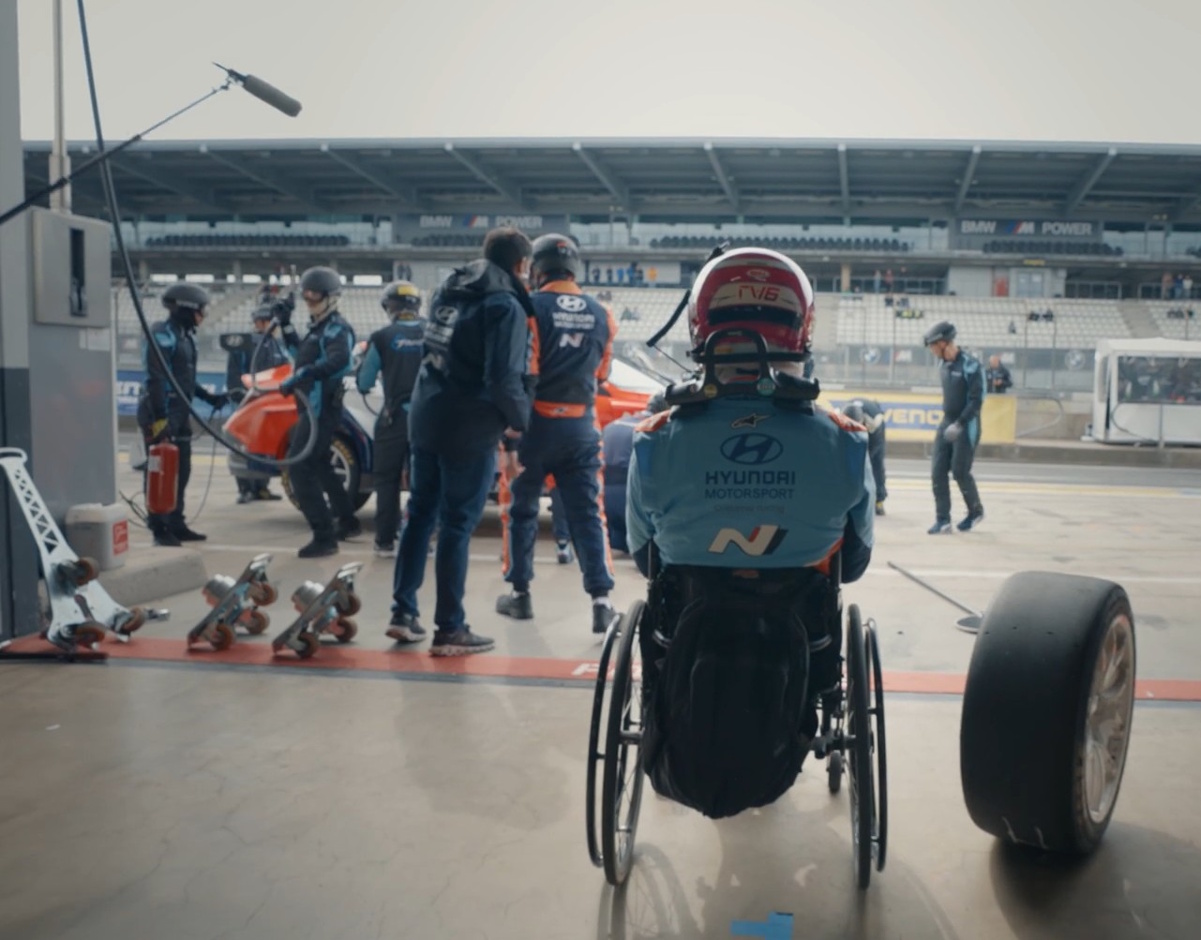
 TGR Staff
There are easier places to make a comeback than the Nürburgring. Easier tracks. Easier races. Easier ways to prove that you still belong in professional motorsport after nearly everything has been taken from you. But Robert Wickens has never seemed particularly interested in easy.
In Hyundai’s new short-form documentary, Faster Than Fear: Wickens Into the Green Hell, the Canadian racing driver returns to one of the most demanding circuits in the world for the ADAC RAVENOL 24 Hours of the Nürburgring, piloting a hand-control-equipped Hyundai Elantra N TCR through 24 hours of chaos, weather, fatigue, and velocity on the infamous Nordschleife.
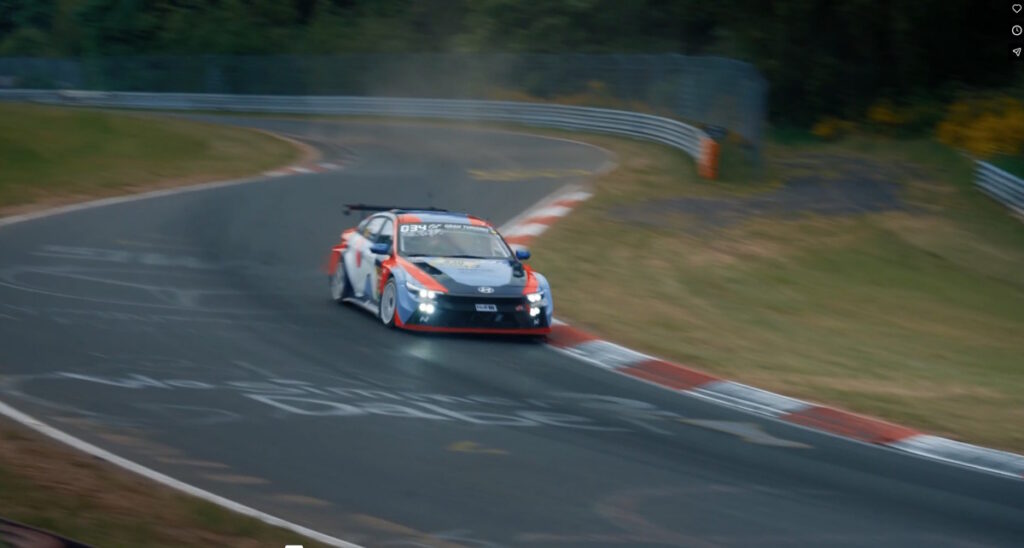
Faster Than Fear
The film, Faster Than Fear, released through Hyundai USA, is about racing, certainly. But more than that, it is about adaptation. About engineering. About stubbornness. About what happens when modern technology meets a driver unwilling to surrender the identity he built long before tragedy interrupted it.
For motorsport fans, Wickens hardly needs an introduction. Before the accident, he was regarded as one of the most naturally gifted racers of his generation. His resume crossed nearly every major discipline: karting, Formula BMW, Formula Renault, DTM, and IndyCar. Quick in anything. Respected by everyone.
Then came Pocono in 2018. A violent IndyCar crash left Wickens with spinal cord injuries that paralyzed him from the waist down. For most drivers, it would have been the end of the story. Motorsport is brutally pragmatic. The grid moves on quickly. Careers disappear overnight. Instead, Wickens began rebuilding.
The documentary traces that journey through archival footage, personal reflections, and behind-the-scenes access as Wickens transitions from recovery to championship-winning touring car competition and eventually to endurance racing at the Nürburgring. The result avoids the glossy, over-produced feel that often plagues modern sports documentaries. There is tension here because the stakes are real.
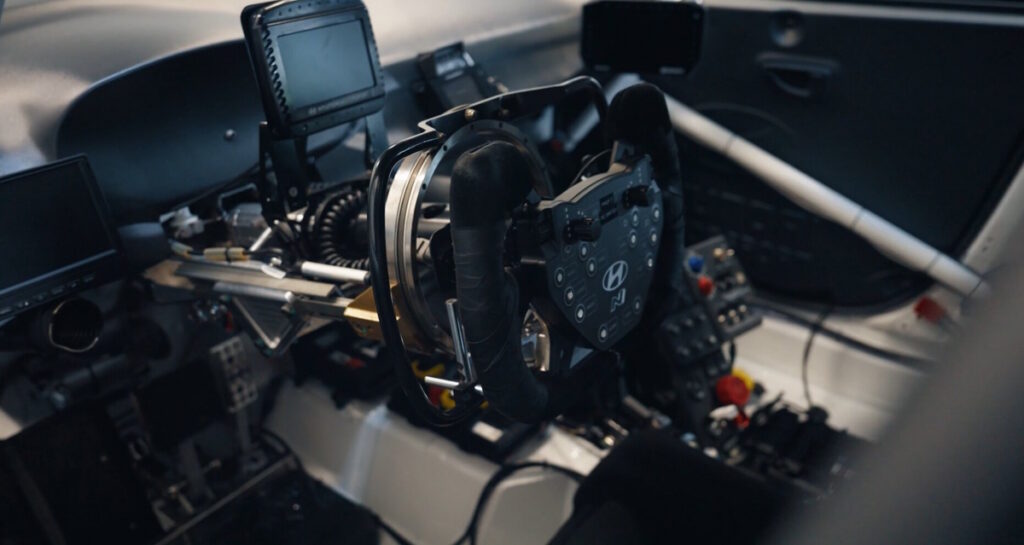
Returning to Nürburgring
And there may be no racetrack in the world more capable of exposing weakness than the Nürburgring Nordschleife. Nicknamed “The Green Hell” by Jackie Stewart, the Nordschleife remains motorsport’s cathedral of consequence. More than 150 corners cut through dense German forest with dramatic elevation changes, unpredictable weather, and little margin for error. During the 24-hour race, traffic becomes its own ecosystem. GT3 cars flash past slower classes at terrifying closing speeds while fog, rain, darkness, and exhaustion settle over the circuit like a second layer of asphalt. It is not merely a race. It is survival with lap times.
That Wickens chose this challenge for one of the biggest moments of his post-accident career feels fitting. Narrated by Chris Harris, the documentary places equal emphasis on the technical achievement required to make the effort possible. Wickens’ Hyundai Elantra N TCR features an advanced hand-control system developed alongside Bryan Herta Autosport and technical partners, allowing him to compete in the same touring car classes as able-bodied drivers.
That detail matters because the film never frames Wickens as separate from the sport. He is not participating in a demonstration. He is competing.
Modern racing increasingly depends on collaboration between drivers, engineers, software developers, and adaptive technologies, and Wickens’ story quietly highlights how motorsport innovation often creates possibilities far beyond the racetrack. What begins as race engineering frequently becomes proof of concept for broader mobility technologies and accessibility solutions.
Still, Faster Than Fear works best when it simply allows Wickens to exist within the environment he loves most. Helmet on. Radio crackling. Rain on the windshield. Brake lights disappearing into the dark forest ahead.
There is a moment many racing drivers describe after serious accidents, the instant they wonder whether fear has permanently rewritten them. Whether the subconscious hesitation will remain forever. Whether the speed that once felt natural now feels foreign. The Nürburgring offers no place to hide from that question.
And perhaps that is why the setting matters so much. A comeback at a club race would have been admirable. A return at Daytona or Sebring would have made headlines. But the Nordschleife carries mythology with it. It is the place where racing drivers go not merely to compete, but to measure themselves.
Hyundai deserves some credit here as well. Automotive marketing has become crowded with hollow declarations about passion and performance, but this project feels grounded in something more authentic. The company’s growing motorsport and N division programs have steadily built credibility over the last decade, and supporting Wickens’ return reinforces a deeper commitment to racing culture rather than surface-level branding exercises.
Faster Than Fear itself is concise by design, built for digital audiences rather than film festivals, but perhaps that works in its favor. It leaves room for the viewer to fill in the emotional weight themselves. Because Robert Wickens’ story does not require embellishment. A driver nearly lost to the sport returns to one of the world’s most dangerous racetracks, adapting both machine and body to continue doing the thing he was born to do. That is compelling enough on its own.
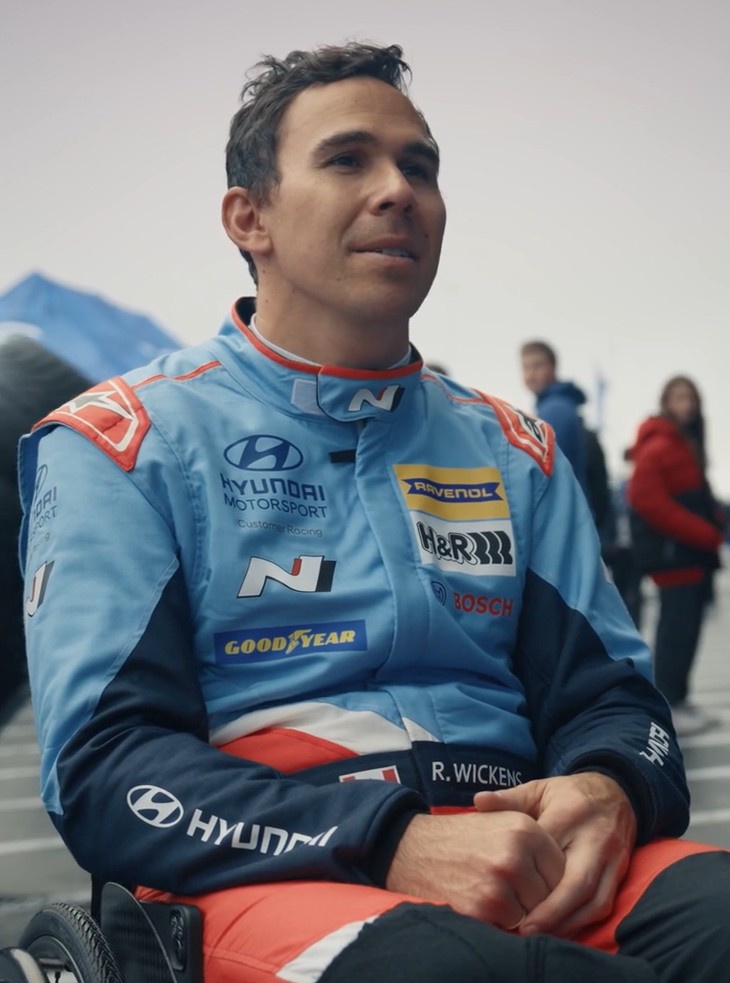
Quick Facts
- Film Title: Faster Than Fear: Wickens Into the Green Hell
- Subject: Robert Wickens
- Released By: Hyundai USA
- Release Date: May 14, 2026
- Narrator: Chris Harris
- Featured Race: ADAC RAVENOL 24 Hours of the Nürburgring
- Race Car: Hyundai Elantra N TCR
- Technical Partner: Bryan Herta Autosport
- Production Company: TangentVector
- Filming Location: Nürburgring Nordschleife
- Focus: Wickens’ return to endurance racing using adaptive hand-control technology
FAQ
What is “Faster Than Fear: Wickens Into the Green Hell”?
It is a short-form documentary, Faster Than Fear, released by Hyundai that follows racing driver Robert Wickens as he returns to endurance racing at the Nürburing 24 Hours after his 2018 IndyCar crash.
Who is Robert Wickens?
Robert Wickens is a Canadian racing driver who competed in IndyCar, DTM, Formula Renault, and touring car racing before suffering life-changing injuries in a 2018 crash at Pocono Raceway.
What happened to Robert Wickens?
In 2018, Wickens was involved in a severe IndyCar crash that resulted in spinal cord injuries and paralysis from the waist down.
What car does Wickens drive in the documentary?
Wickens competes in a Hyundai Elantra N TCR adapted with advanced hand controls for endurance racing.
What is the Nürburgring Nordschleife?
Nürburgring Nordschleife is one of the world’s most famous and difficult racing circuits, often called “The Green Hell” because of its length, technical complexity, and danger.
Who narrates the documentary?
Faster Than Fear is narrated by Chris Harris.
Who produced the film?
The documentary was produced by TangentVector automotive film studio.
Where can I watch the documentary?
The film is available on the Hyundai USA YouTube Channel.
Photos courtesy of Hyundai










Such an amazing story of the human spirit and overcoming adversity.
Just finished watching it, what a great film, hope more car companies put this kind of effort into their content.