Where Cars Meet Culture
May 06, 2026
Subscribe Button

Let’s Go Racing: 1969 Beach SV16

10 months ago
2 mins read
3

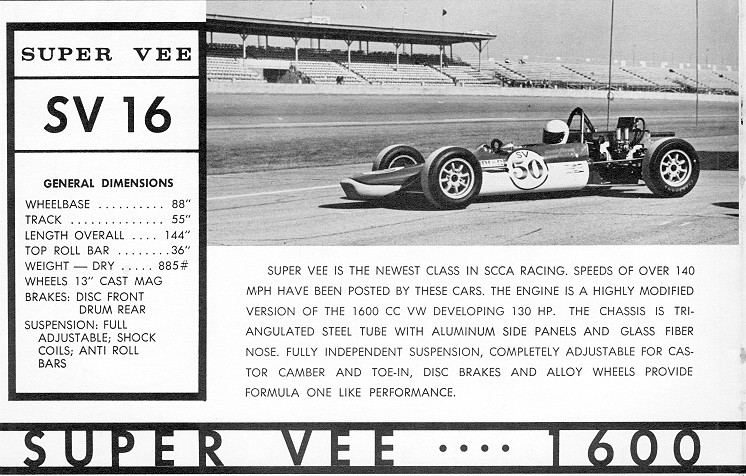
When the roar of engines filled the air at the Daytona 24-Hour race in January 1970, a new race car was on display: the Beach SV16. Commissioned by Jo Hoppen of Volkswagen of America and crafted by the skilled hands of Gene Beach, the SV16 was destined to leave an indelible mark on the world of motorsports. This car, a pioneer in the newly introduced Formula Super Vee category, symbolized a blend of engineering prowess and racing passion that would set the tone for years to come.
Let's Go Racing: 1969 Beach SV16

The story of the Beach SV16 begins with Gene Beach, a name synonymous with innovation in Formula Vee. Gene’s reputation for designing and constructing high-performance race cars was well-established by the late 1960s. When Volkswagen sought to launch the Formula Super Vee, a category meant to bridge the gap between Formula Vee and Formula 3, Gene Beach was the natural choice to lead this endeavor.

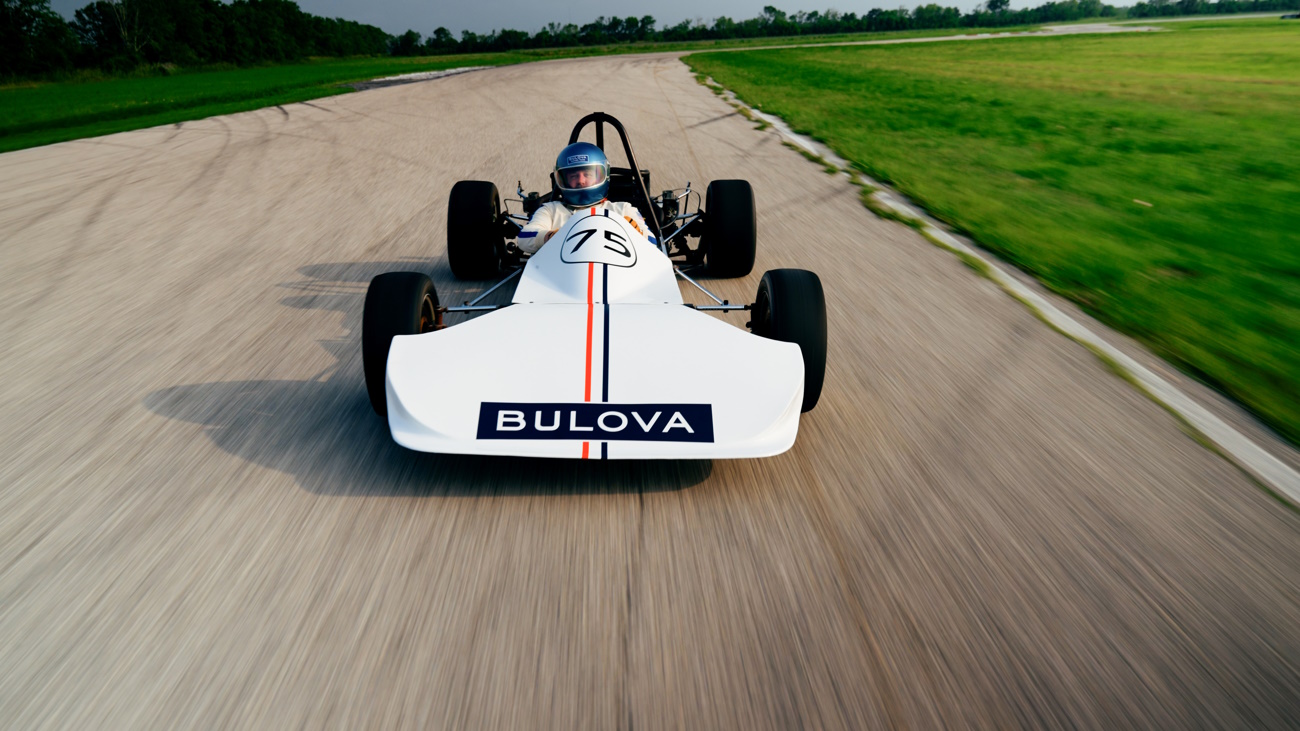
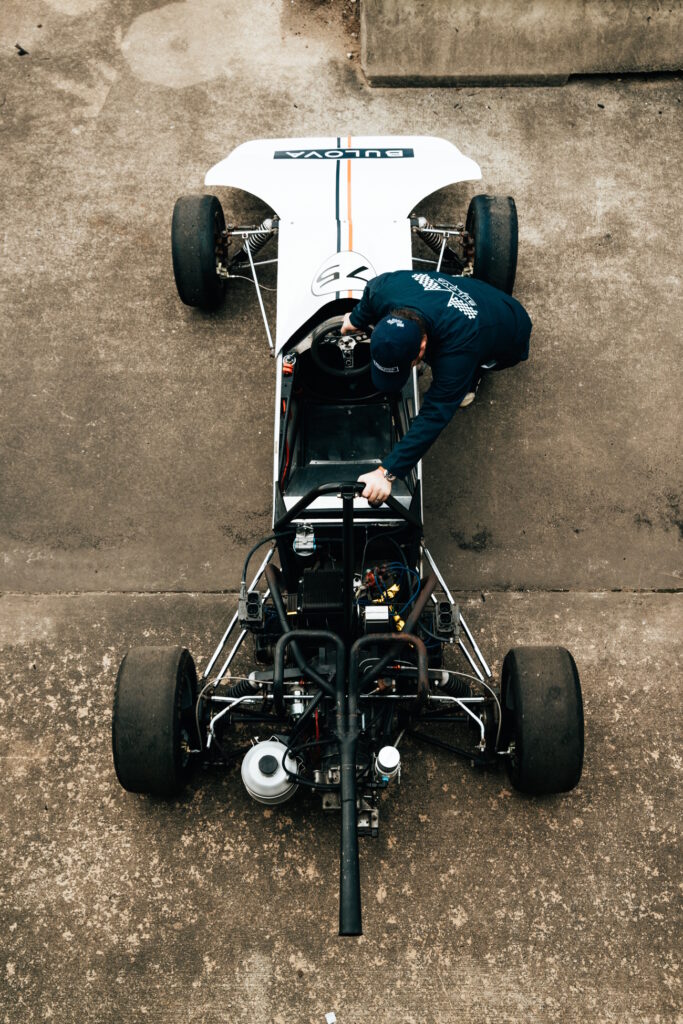
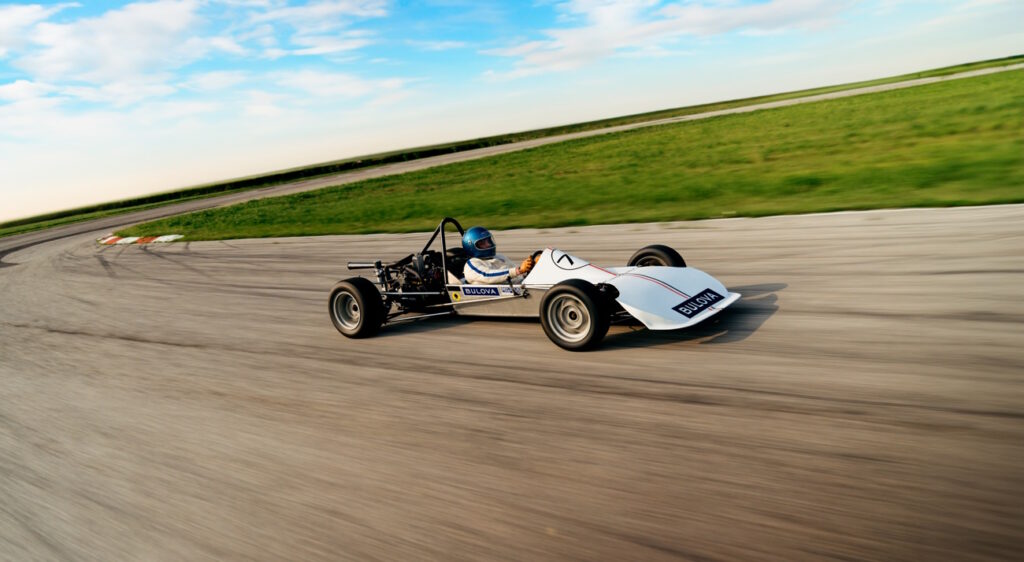
Our Beach SV16 was tucked away in a barn in Texas for the better part of 25 years. It had changed hands a few times, and at some point, someone had damaged or lost the original bodywork and built or adapted the current bodywork on our car today. I first bought the car as a prop for an event with David Gardner’s Jewelers we were hosting, but the car was complete, and the motor turned out to be solid, so it was time to send it down to Apex Auto Works to get it sorted out. The first time I drove the car was for a photo shoot at MSR Houston. It was the first time the car had been on track in at least 25 years. 

The Beach SV16
Let's Go Racing: 1969 Beach SV16

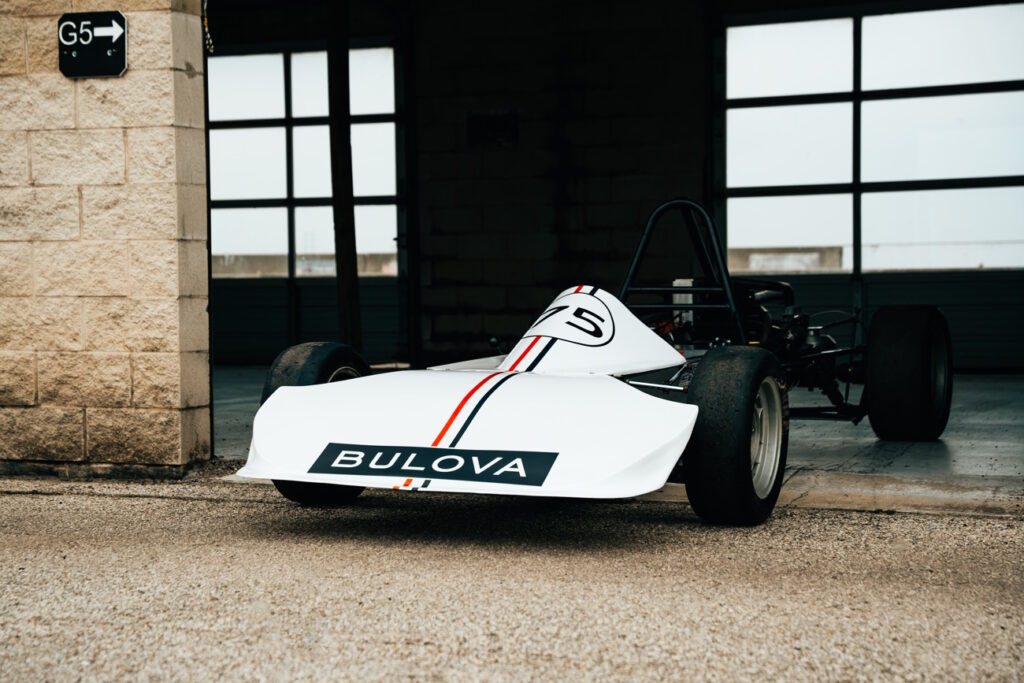
In 1969, Gene began sketching the design for the SV16. The car was built to maximize the performance potential of the VW 1600 engine while adhering to the strict specifications of the new formula. The design was sleek, lightweight, and aerodynamically advanced, embodying the spirit of racing innovation. The car is as barebones as it can get, a true raw driving experience. 

At the heart of the Beach SV16 was the VW 1600 engine, a robust and reliable powerplant that had already proven its mettle in various racing applications. However, Gene Beach’s engineering truly unlocked the engine’s potential. The SV16 featured a mid-engine layout, which provided optimal weight distribution and handling characteristics. The suspension system was another highlight, designed to provide exceptional handling and control. A major improvement over the standard Formula Vee, which used VW suspension, while the Formula Vee was less expensive to build and race, the Super Vee had the potential to keep up with Formula Ford and other open-wheel cars. Aerodynamic considerations were also paramount in the SV16’s design, with sleek lines and carefully crafted bodywork that minimized drag and maximized downforce.
Let's Go Racing: 1969 Beach SV16

One of the SV16’s first major tests came at the Hockenheim circuit (this might be the car used; Beach records are a bit fuzzy), where it was pitted against other formula cars. In a surprising turn of events, the SV16 outperformed its more illustrious competitors, demonstrating the prowess of Gene Beach’s design and the potential of the Formula Super Vee category. 

The Beach SV16’s impact extended far beyond its immediate racing successes. The car was crucial in establishing Formula Super Vee as a respected and competitive racing category. It inspired a new generation of race car designers and engineers, pushing the boundaries of what was possible regarding performance and innovation.
Let's Go Racing: 1969 Beach SV16

Today, Beach cars are beloved among racing aficionados. Restored models are prized possessions, often showcased at vintage racing events and automotive museums. In the modern era, where technology and innovation continue to push the boundaries of motorsport, the Beach SV16 reminds us of a time when ingenuity, passion, and pure bravery were the driving forces behind racing success, and this is the vehicle we have chosen to start our new series called Let’s Go Racing. We will take you along as we prep a vintage race car to run, get licensed, and run in a sanctioned vintage racing event. Check out my video below for more on our Let’s Go Racing series.

Visit the Beach Formula Super Vee Racing Cars page for more detailed information and historical photographs of the Beach SV16.
Michael Satterfield

Michael Satterfield, founder of The Gentleman Racer, is a storyteller, adventurer, and automotive expert whose work blends cars, travel, and culture. As a member of The Explorers Club, he brings a spirit of discovery to his work, whether uncovering forgotten racing history or embarking on global expeditions. His site has become a go-to destination for car enthusiasts and style aficionados, known for its compelling storytelling and unique perspective. A Texan with a passion for classic cars and motorsports, Michael is also a hands-on restorer, currently working on a 1960s SCCA-spec Formula Super Vee and other project cars. As the head of the Satterfield Group, he consults on branding and marketing for top automotive and lifestyle brands, bringing his deep industry knowledge to every project.

3 Comments

Leave a Reply

Your email address will not be published.

Don't Miss

1000 Miglia 2026: the list of accepted cars has been published

The World’s Most Beautiful Grid: Inside The 1000 Miglia 2026 Lineup

With over 400 crews from 29 nations and a field rich in
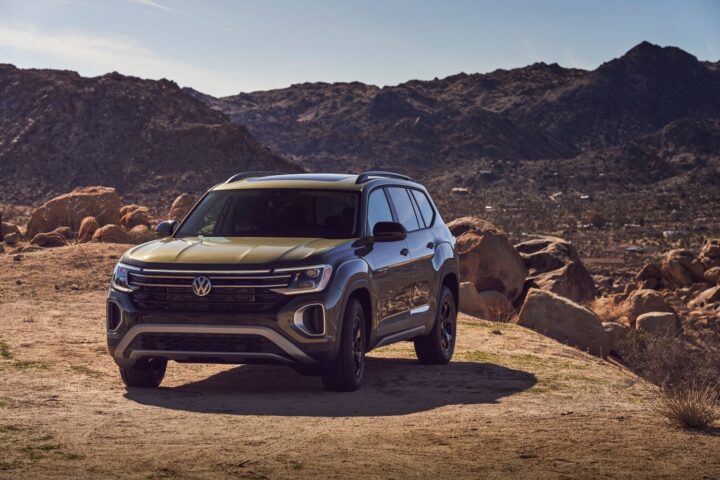
Quick Facts: 2026 Volkswagen Atlas Peak Edition Base Price (Peak Edition): Around $49,000 Base Price (Atlas SE): Around $39,000 Engine: 2.0L turbocharged inline-four Horsepower: 269 hp Torque: 273 lb-ft Transmission: 8-speed automatic Drivetrain: Standard 4Motion all-wheel drive on Peak Edition 0–60 MPH: Approximately 7.3 seconds Fuel Economy: Around 20–22 MPG combined Wheel Size: 18-inch wheels with all-terrain tires (Peak Edition) Infotainment: 12-inch touchscreen with Apple CarPlay and Android Auto Seating: Standard 7 passengers, optional second-row captain’s chairs Interior Highlights: Black leatherette with orange stitching, Peak Edition badging, ambient lighting Exterior Highlights: Avocado Green Metallic paint option, black trim, added body cladding, LED light bars Cargo Access: Hands-free power tailgate Key Safety Features: Adaptive cruise control, blind-spot monitoring, lane change assist, rear traffic alert FAQ: 2026 Volkswagen Atlas Peak Edition What is the Volkswagen Atlas Peak Edition? The Peak Edition is a rugged-styled version of the Atlas based on the SE with Technology Package. It adds off-road inspired design elements such as all-terrain tires, black trim, and unique interior accents while keeping the same drivetrain and core features. What makes the Peak Edition different from the standard Atlas? The Peak Edition adds several visual and functional upgrades including: 18-inch wheels with all-terrain tires Additional body cladding for light off-road use Black exterior trim and roof rails Unique Peak Edition badging Orange interior stitching and special digital cockpit graphics These features give the Atlas a more outdoors-focused look compared to other trims. Is the Peak Edition actually built for off-roading? Not in the traditional sense. While it includes all-terrain tires and protective cladding, it is primarily an appearance and light-adventure package. It is best suited for dirt roads, trails, and rough weather rather than serious rock crawling. What engine powers the 2026 Volkswagen Atlas Peak Edition? All Atlas models use a 2.0-liter turbocharged four-cylinder engine producing 269 horsepower and 273 lb-ft of torque, paired with an eight-speed automatic transmission. Does the Peak Edition come with all-wheel drive? Yes. The Peak Edition comes standard with Volkswagen’s 4Motion all-wheel-drive system, which helps with traction in rain, snow, and light off-road conditions. How fast is the Atlas Peak Edition? The Atlas Peak Edition reaches 0–60 MPH in about 7.3 seconds, which is competitive for a midsize three-row SUV. How many people can the Atlas seat? The Atlas can seat seven passengers with a second-row bench seat. Buyers can also choose second-row captain’s chairs, reducing seating capacity to six. What technology features come standard? Key tech features include: 12-inch infotainment touchscreen Apple CarPlay and Android Auto Digital Cockpit Pro digital instrument cluster Wireless charging and USB-C ports Ambient interior lighting Is the Atlas Peak Edition worth the price over the SE with Technology Package? It depends on priorities. If you want rugged styling and standard AWD, the Peak Edition is a compelling option. If you prefer larger wheels and similar features at a similar price, the SE with Technology Package may be the better value. What vehicles compete with the Atlas Peak Edition? The Atlas competes with midsize three-row SUVs such as: Toyota Grand Highlander Kia Telluride Hyundai Palisade Ford Explorer Honda Pilot Each offers different powertrains and interior finishes, but the Atlas focuses on practicality, space, and everyday usability.

2026 Volkswagen Atlas Peak Edition: Price, Specs, Features, and First Impressions

For the last few years, automakers have been adding off-road appearance packages