

 Michael Satterfield
An Unexpected Discovery in Ojai
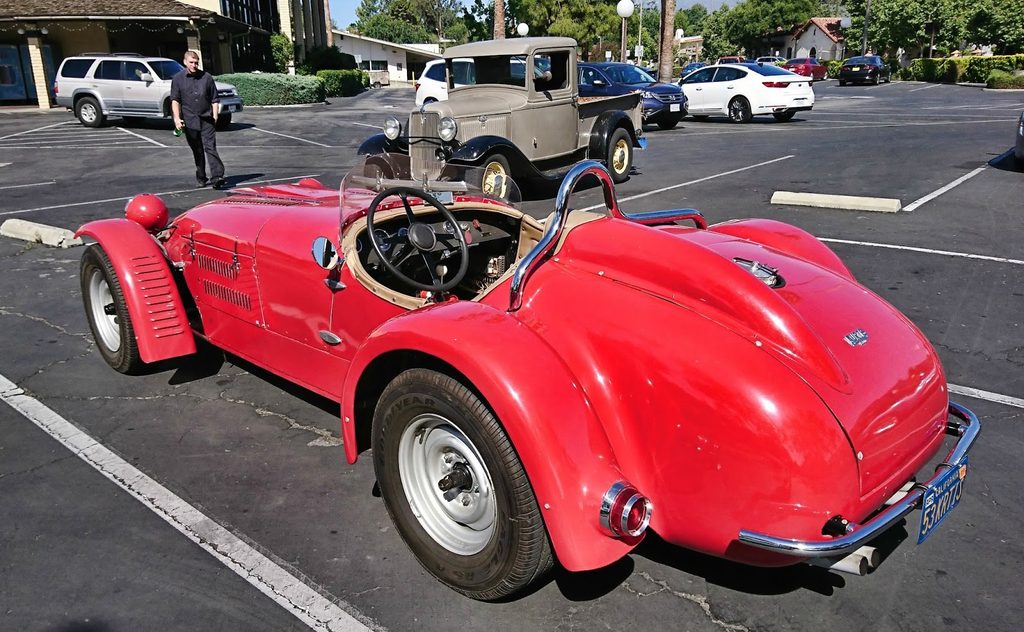
I was driving through Ojai, California, road-testing a new car when something caught my eye. Off to the side of the road was a small gathering of cars, including what looked like an Allard sports car. Naturally, I had to turn around and take a look.
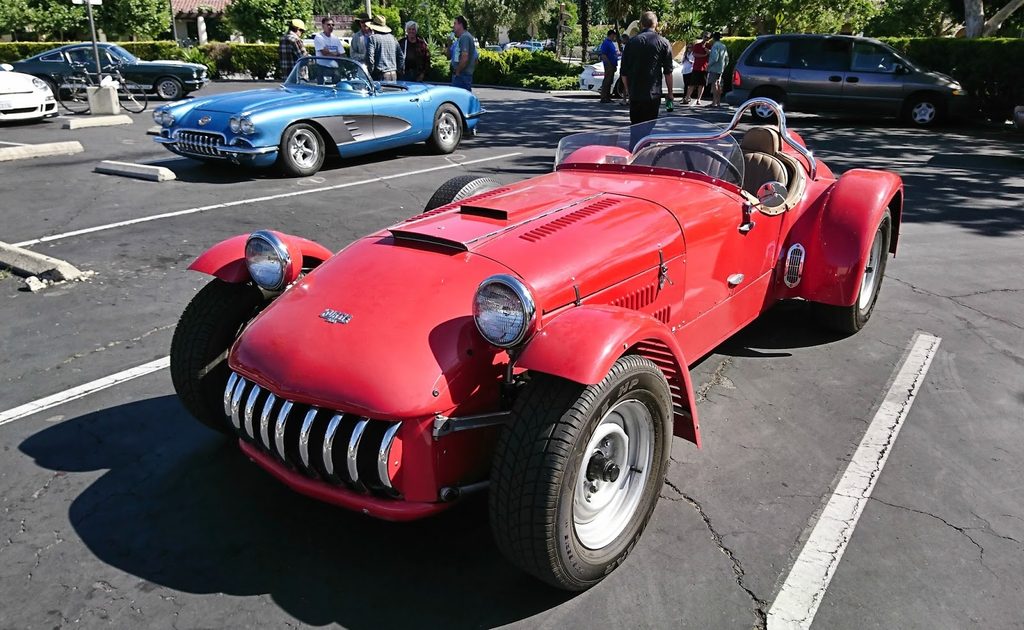
What I discovered was something even more unusual: a Kurtis 500S, one of the most fascinating and overlooked American sports cars of the 1950s. At first glance, I suspected the car might be a replica or continuation rather than an original. Certain details, particularly the wheels and taillights, didn’t appear quite right for a period example. Without examining the chassis and its history, however, it would be impossible to say for certain.
Original or not, seeing a Kurtis 500S sitting along a California road was enough to make the detour worthwhile. After all, this car once challenged the finest European sports racers with a distinctly American approach: lightweight construction, clever engineering, and plenty of horsepower.
Frank Kurtis: The Man Behind the Machine
To understand the Kurtis 500S, you first need to know a little about the man who created it. Frank Kurtis was one of America’s most successful race car constructors. Based in Southern California, his company, Kurtis-Kraft, produced everything from midget and sprint cars to Indianapolis racers and land speed record machines.
Kurtis-built cars dominated American oval-track racing during the postwar years. Between 1950 and 1955, Kurtis-designed machines won the Indianapolis 500 five times, establishing his reputation as one of American motorsports’ most influential builders. But Kurtis had ambitions beyond the oval.
In 1949, he introduced the Kurtis Sport, an American-built two-seat sports car that arrived before Chevrolet’s Corvette. Approximately 36 examples were produced before Kurtis sold the design to colorful California entrepreneur Earl “Madman” Muntz, who developed it into the four-seat Muntz Jet. Kurtis wasn’t finished with sports cars, however. By 1953, he had developed something considerably more aggressive.
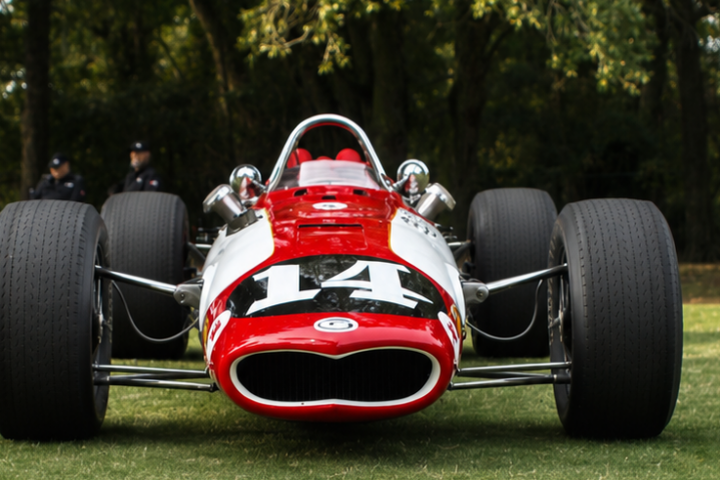
The Kurtis 500S wasn’t simply a conventional roadster with a larger engine. It was effectively a two-seat Indianapolis race car adapted for sports car competition, borrowing much of its engineering philosophy from the machines Kurtis had been building for America’s greatest speedway.
An Indianapolis Race Car for the Open Road
The 500S featured a lightweight steel tubular chassis, solid front and rear axles, and torsion-bar suspension inspired by Kurtis’s championship-winning Indianapolis designs. Many examples used Halibrand quick-change rear ends, letting racers adjust gearing for different circuits. Its distinctive bodywork combined the purposeful proportions of an open-wheel racer with the necessary accommodations for a second seat.
Early cars featured aluminum bodywork and separate cycle-style fenders. Later examples incorporated fiberglass components, while others used combinations of aluminum, steel, and fiberglass. The instantly recognizable nose, featuring a series of curved vertical grille bars, echoed Kurtis’s Indianapolis machines. There was very little unnecessary decoration. The low windscreen, exposed wheels, narrow cockpit, and long hood made its intentions clear.
The 500S could be ordered as a complete car or in various stages of completion, giving customers remarkable freedom to select their preferred engines, transmissions, brakes, and other mechanical components. The first example reportedly went to a Hudson dealer and was equipped with a Hudson six-cylinder engine. Others received Cadillac, Mercury, Ford, Lincoln, Buick, and Chrysler V8 engines, including Chrysler’s increasingly popular Hemi.
This made every Kurtis 500S somewhat unique. Some were built as dedicated competition machines, while others were equipped for road use. It was a formula that would later become famous with the Shelby Cobra: take a lightweight sports car chassis and install a powerful American engine. Kurtis had been proving the concept on racetracks nearly a decade before Carroll Shelby introduced his legendary roadster.
Performance That Embarrassed the Europeans
By the standards of the early 1950s, the Kurtis 500S was outrageously fast.
A Cadillac-powered example producing approximately 300 horsepower was credited with accelerating from 0 to 60 mph in just 4.7 seconds during period testing in 1953. That was extraordinary performance at a time when many celebrated European sports cars required considerably longer to reach the same speed.
The combination of a lightweight chassis, powerful V8, and racing-derived suspension made the 500S particularly formidable on American circuits.
Unlike the refined European sports cars emerging from manufacturers such as Jaguar, Ferrari, and Aston Martin, the Kurtis was unapologetically mechanical. Its solid axles and torsion bars might have looked old-fashioned on paper, but their adjustability and robust construction were perfectly suited to the rough, improvised racing circuits of the era.
It was an American hot rod with the engineering pedigree of an Indianapolis winner.
Dominating the West Coast Racing Scene
The Kurtis 500S quickly established itself as one of the cars to beat in American sports car racing. Legendary racer and automotive engineer Bill Stroppe became one of its most successful drivers. During the 1953 season, Stroppe reportedly won seven of nine races in his Mercury-powered Kurtis, often defeating more expensive European machinery.
Among his victories was the 1953 Moffett Field road race in California, where he drove his 500S to an overall win in the two-and-a-half-hour event. The car was equally impressive at Pebble Beach, back when the famous California destination hosted dangerous and demanding sports car races on public roads through the Del Monte Forest. In 1954, a Kurtis 500S reportedly lowered the course record by five seconds.
The model also appeared in major international competitions, including the Carrera Panamericana in Mexico and the 12 Hours of Sebring in Florida. At Sebring in 1955, a Lincoln-powered Kurtis driven by Ray Crawford finished 13th overall and won its displacement class, a respectable showing against an international field that included Jaguar, Ferrari, Maserati, and Porsche.
The 500S was more than a curiosity built by an Indianapolis specialist. It was a legitimate sports racing machine capable of taking the fight directly to Europe’s established manufacturers.
When George Barris Got Involved
As if the Kurtis 500S didn’t already have enough Southern California character, at least one example received the attention of legendary custom car builder George Barris.
Racer and Buick dealer Bill Murphy owned a Buick-powered 500S that became known as the Murphy Special. Before the 1955 racing season, Murphy commissioned Barris to modify the car’s appearance. Barris created distinctive flying-wing-style front fenders and relocated the headlights into the grille opening, giving the machine an entirely different look while retaining its racing character.
The car even carried Barris Kustom badges, connecting one of America’s most successful independent race car constructors with the man who would become famous for creating some of Hollywood’s most recognizable custom automobiles. It is a perfect example of how closely interconnected the worlds of hot rodding, sports car racing, and Southern California custom car culture were during the 1950s.
A Rare Piece of American Racing History
Despite its considerable success, Kurtis never produced the 500S in large numbers. Approximately 30 examples were built during the model’s original production period, although estimates vary depending on whether unfinished chassis and kits are included.
Kurtis would continue developing sports cars, including the more road-oriented 500M and later competition designs, but the 500S remains one of the clearest expressions of the company’s philosophy. It was a machine built at a time when American ingenuity could put an independent manufacturer on the same starting grid as Europe’s most prestigious marques, often with a fraction of their resources.
Standing beside the car in Ojai, I couldn’t help but appreciate the fact that someone had brought it out rather than keeping it hidden away in a collection. Perhaps it was an original. Perhaps it was a continuation car or a carefully built replica. The wheels and taillights still had me leaning toward the latter. But that hardly diminished the experience.
Cars like the Kurtis 500S were built to be driven, raced, modified, and enjoyed. They represent an era of American motorsport when determined individuals could create something extraordinary using ingenuity, fabrication skills, and a willingness to experiment.
And sometimes, the best automotive discoveries happen when you’re supposed to be reviewing something entirely different.
Kurtis 500S Quick Facts
- Manufacturer: Kurtis-Kraft
- Designer: Frank Kurtis
- Country of origin: United States
- Introduced: 1953
- Production: Primarily 1953-1955, with some chassis delivered later
- Total built: Approximately 30, with estimates varying by source
- Body style: Two-seat open sports racing roadster
- Construction: Steel tubular chassis with aluminum and/or fiberglass bodywork
- Engine options: Hudson inline-six and various American V8 engines, including Cadillac, Mercury, Ford, Buick, Lincoln, and Chrysler
- Transmission: Manual, depending on customer specifications
- Suspension: Solid axles with torsion-bar suspension
- Drivetrain: Front-engine, rear-wheel drive
- 0-60 mph: As quick as 4.7 seconds in a period-tested Cadillac V8 example
- Notable drivers: Bill Stroppe, Bill Murphy, Jack Ensley, and Ray Crawford
- Racing highlights: Numerous West Coast road racing victories, a Pebble Beach course record, and a class victory at the 1955 12 Hours of Sebring
Frequently Asked Questions
What is a Kurtis 500S?
The Kurtis 500S is an American two-seat sports racing car developed by legendary race car constructor Frank Kurtis in 1953. Based on engineering principles used in Kurtis’s successful Indianapolis racers, it combined lightweight construction with a variety of powerful American engines.
How many Kurtis 500S cars were built?
Approximately 30 original Kurtis 500S cars were produced, although historical estimates vary. Some were delivered as complete vehicles, while others were sold as kits or rolling chassis. The often-quoted figure of 36 cars applies to the earlier Kurtis Sport model.
What engines were available in the Kurtis 500S?
The first example reportedly used a Hudson six-cylinder engine. Other cars were equipped with Cadillac, Ford, Mercury, Buick, Lincoln, and Chrysler V8 engines. Engine selection depended on the customer’s requirements.
How fast was the Kurtis 500S?
A Cadillac V8-powered example was credited with reaching 60 mph in 4.7 seconds during period testing in 1953. Performance varied considerably because of differences in engine specifications, gearing, and vehicle construction.
Did the Kurtis 500S win races?
Yes. The Kurtis 500S was highly successful in American sports car racing during the 1950s. Bill Stroppe won numerous West Coast events, and the model also competed in major international races, including the Carrera Panamericana and the 12 Hours of Sebring.
What is the difference between a Kurtis 500S and a Kurtis 500M?
The Kurtis 500S was primarily a competition-oriented roadster with exposed wheels and cycle-style fenders. The 500M was a more conventional sports car designed with greater emphasis on road use, featuring fuller fiberglass bodywork and a more enclosed appearance.
Are there Kurtis 500S replicas or continuation cars?
Yes. Continuation cars and replicas have been constructed using original-style designs and components. Frank Kurtis’s son Arlen also assisted with efforts to preserve and reproduce the design. Verifying an original car requires documentation of its chassis and provenance.









This is my late Uncles car. Barn find. Original body however the chassis and most everything else was rust. He used a big block Chrysler, quick change rear end, and a 4 speed. Drove it all around the country. Love this write up. Our family considers this car just the same as any other family member. My uncle truly loved this car and drove the wheels off of it.