
 Michael Satterfield
Tequila and Mezcal are suddenly in fashion at bars across the US, with drinks like the Mayan Mule and AMF being served up in bars in Manhattan, San Francisco, and Chicago. It seems the mainstream American cocktail scene has finally embraced what Mexico has known since the 16th century, that Tequila and Mezcal are special, complex, and the best ones, like fine wines, have been refined over hundreds of years.
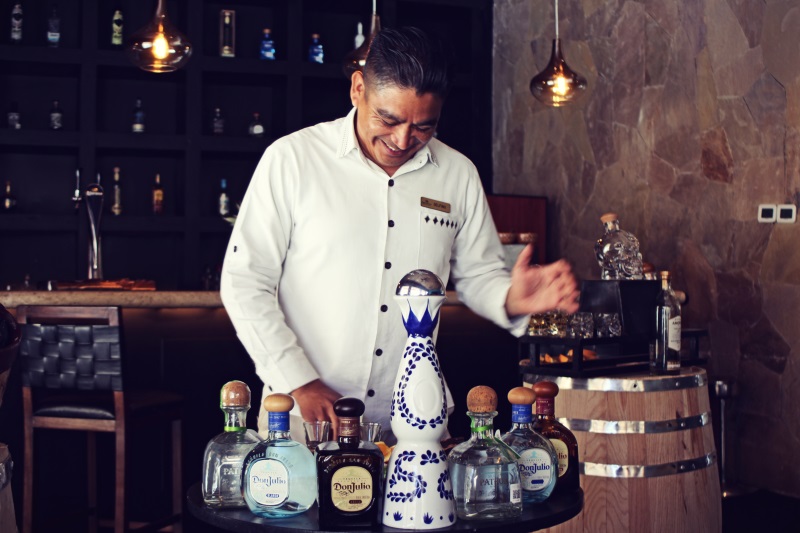
So on my recent trip to Baja, I sat down with Delfino, a Tequila Master at The Towers at Pacifica Golf & Spa Resort, who’s passion is sharing the history and range of Mexico’s native spirits.

What are the differences between Tequila and Mezcal?
Like Champaign, Tequila gets its name from the region where it is produced. To be called Tequila, the spirit must be made from the blue agave plants grown in the Jaliscan Highlands of northwest Guadalajara, home to the city of Tequila. Mezcal is also made from the agave plant, but it is not limited to just the blue agave plant and it is grown in several regions of Mexico. All Tequila is Mezcal, but not all Mezcal is Tequila.

What are the different kinds of Tequila?
- Blanco (white): white spirit, unaged
- Joven (gold): unaged silver tequila that may be flavored with caramel coloring
- Reposado (rested): aged a minimum of two months
- Anejo (aged or vintage): aged a minimum of one year
- Extra Anejo (extra aged): aged a minimum of three years in oak barrels
Each one has its own unique flavor profile and the quality between brands can really be best understood in doing a back to back tasting. Also, drink it neat like they do in Mexico. Like fine wines the better the product the more it costs if you really want to taste the difference try a mass-produced Patrón and compare it to a more boutique brand like Clase Azul.

So why the salt and lime?
According to Delfino, the salt and lime tradition comes from the early days of cheap Tequila, it was a way to mask the bad taste of a cheap drink. But traditional Tequila is meant for sipping, not just a quick shot. It is not uncommon in Mexico to see Tequila being served in brandy snifters or tasting port glasses, people take their time, enjoying the aroma and exploring the flavors.
While most Mexicans take their theirs neat, great Tequila can be enjoyed in mixed drinks, on the rocks, with salt and lime, and even orange and cinnamon. Tequila enthusiasts like Delfino just want people to explore the possibilities of Tequila.

What is with the worm?
The worm has never been used in Tequila, it was originally added as a marketing gimmick from Mezcals made in the state of Oaxaca and it is not historical or traditional to sell any product “con gusano.” The Mexican Tequila Regulatory Council doesn’t allow worms, scorpions, or any other foreign organic matter to be bottled in Tequila. The worm is actually the larva of a moth that lives among the agave plants.

How much should you pay for a bottle?
Tequila like all liquors have a wide range in prices, which are due to a number of factors, it is not uncommon to see $25 bottles and $2,000 bottles from the same distiller. Like a fine wine or expensive whiskey, time is the biggest factor in the cost. Currently, the oldest Tequilas on the market is the 18-year-old Lote Fuenteseca, which I have yet to try. Assuming you want to stick to better quality here are my top five picks for great Tequila.
$359.99
$149.99
$139.99 for 750ml
$99.99 for 750ml
$49.99 for 750ml